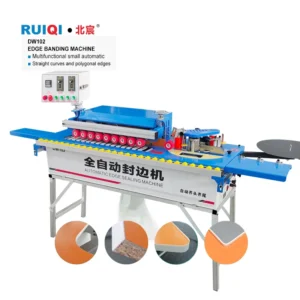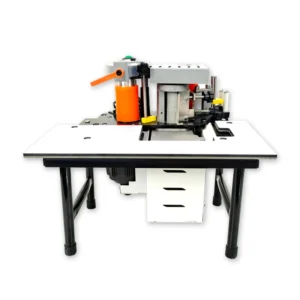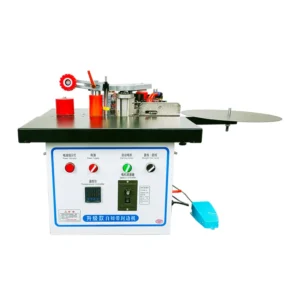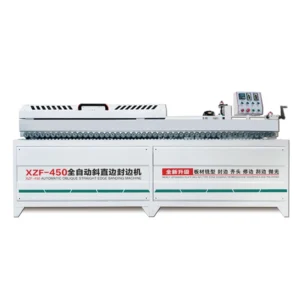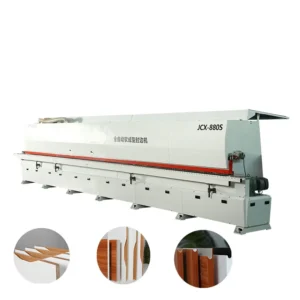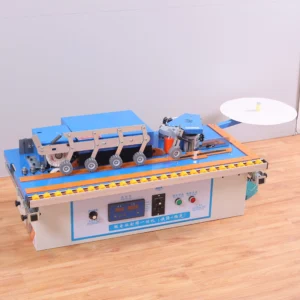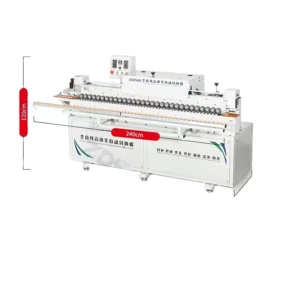
Description
Ready for Dispatch — Every DW1800 automatic edge banding machine ships only after voltage, frequency, and plug type are verified against your facility’s power supply.
Technical Specifications
| Parameter | Value |
|---|---|
| Model | DW1800 |
| Product Type | Automatic Edge Banding Machine |
| Total Power | 4.9 kW |
| Voltage Options | 380V / 220V / 415V (frequency and phase basis to be confirmed) |
| Edge Banding Thickness Range | 0.3–3 mm |
| Edge Banding Height Range | 0–50 mm |
| Feed Speed | 0–14 m/min |
| Glue Pot Capacity | 4000 ml |
| Minimum Sheet Length | 20 cm |
| Minimum Sheet Width | 10 cm |
| Air Source Pressure | 0.4–0.6 MPa |
| Overall Dimensions (L×W×H) | 220 × 65 × 125 cm |
| Net Weight | 320 kg |
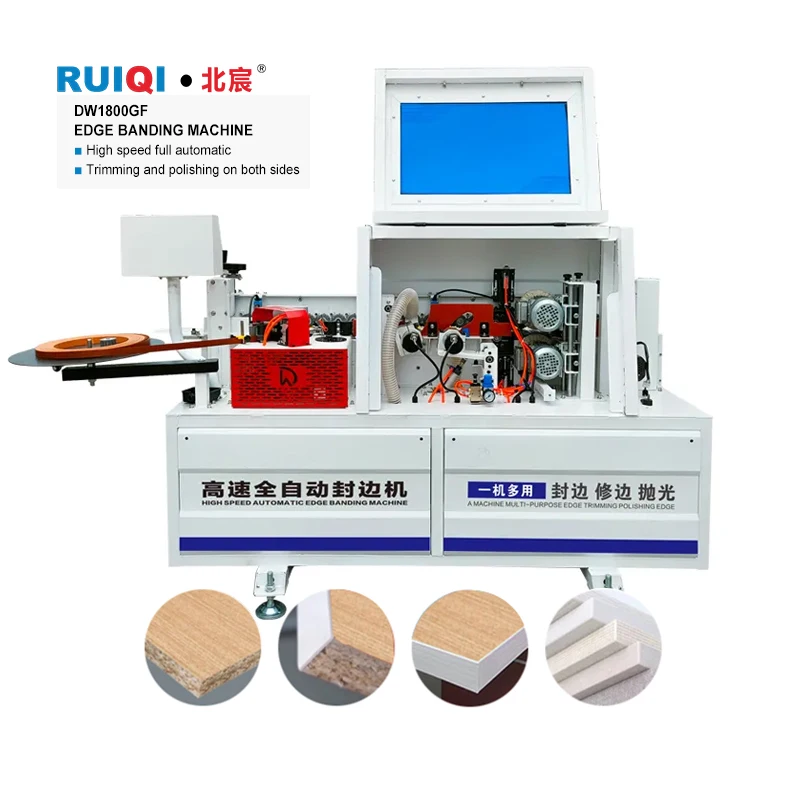
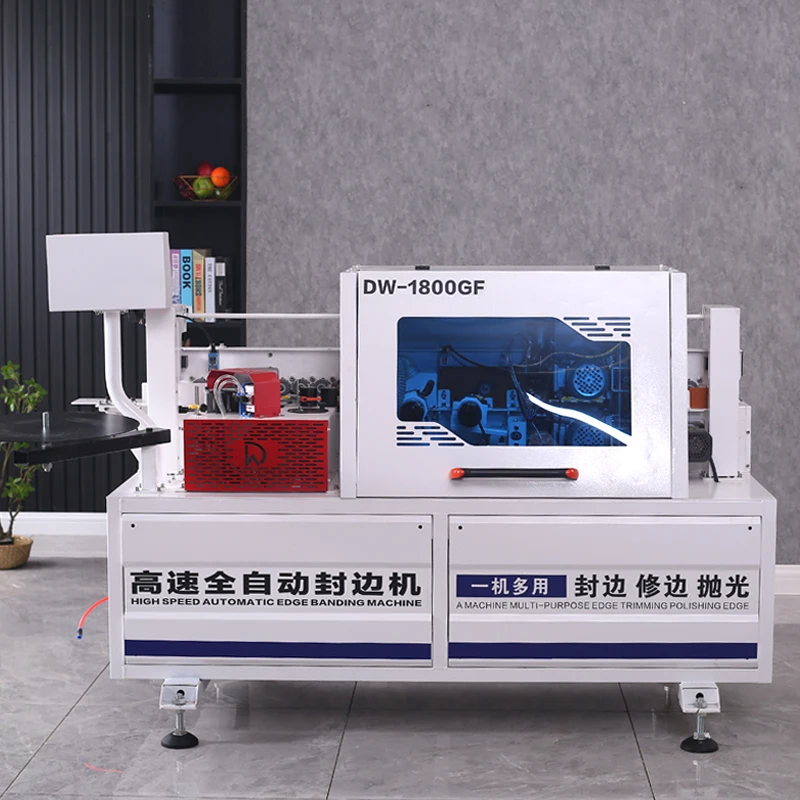
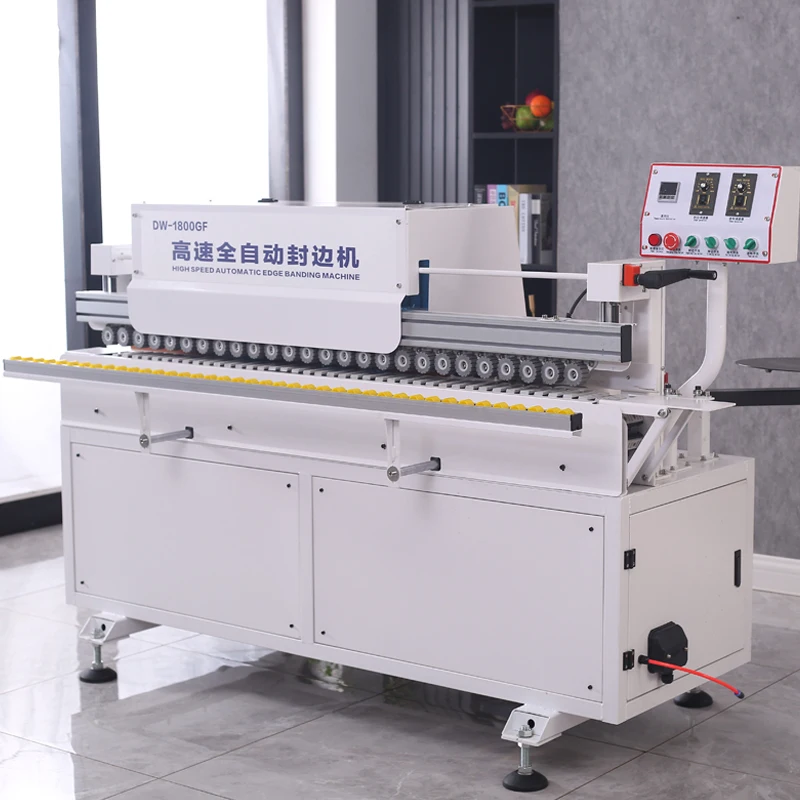
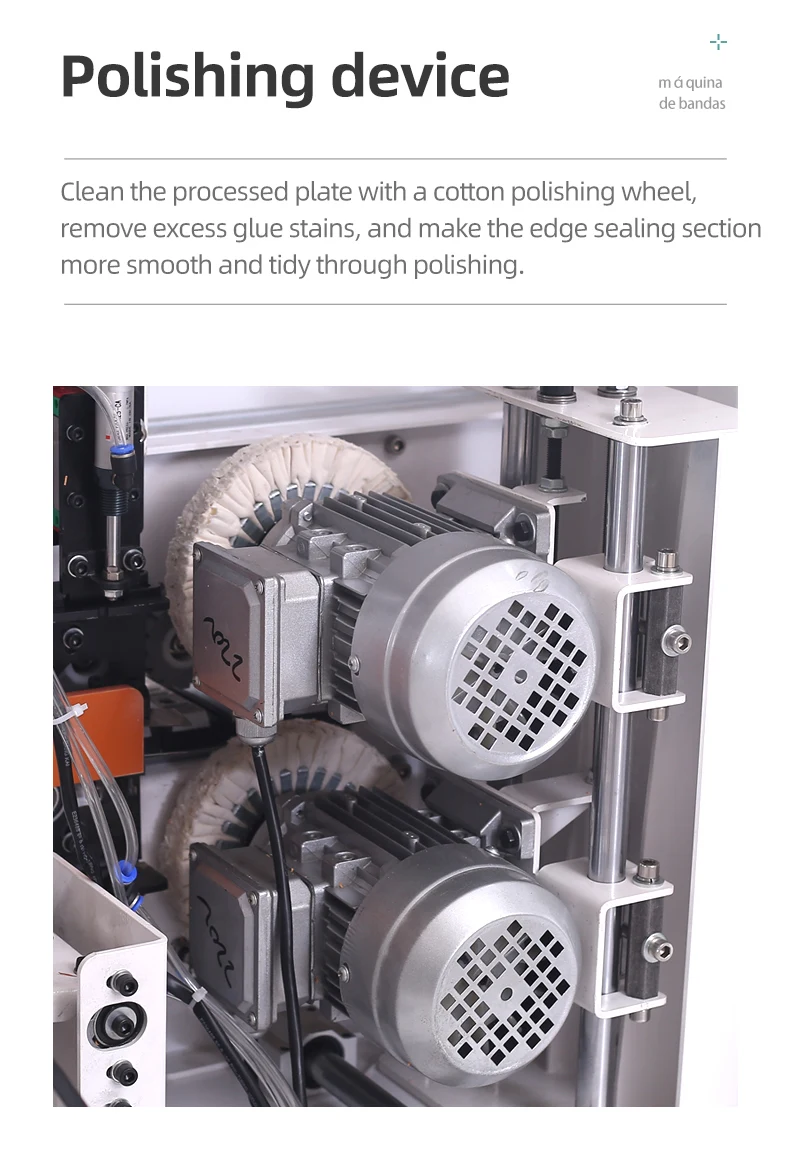
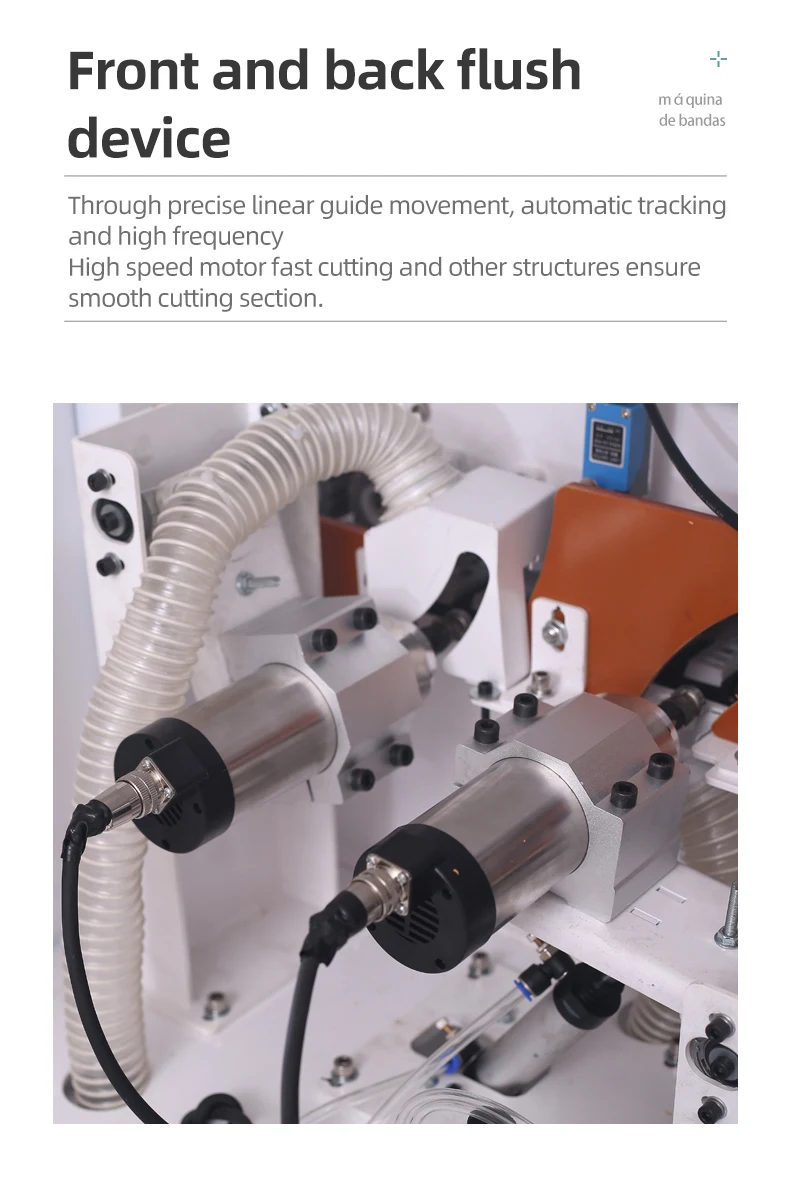
| Key Features | Double-sided gluing, front/rear alignment, top & bottom trimming, flexible edge scraping, top & bottom polishing, dust extraction |
Application Suitability
| Application | Material or Output |
|---|---|
| Custom cabinet door edging | MDF and particleboard with PVC banding |
| Kitchen and wardrobe panel finishing | Plywood and melamine-faced boards |
| Small-batch furniture production | Solid wood panels and veneer edge strips |
| Retail fixture and shelving fabrication | ABB boards and organic glass plates |
Why Voltage Confirmation Must Happen Before You Pay
The DW1800 automatic edge banding machine in stock is configured to your site’s exact electrical standard before it leaves the factory floor.
I coordinated a shipment of edge banders to South Asia last year where the buyer assumed 380V was universal across the region. The local workshop ran on 220V three-phase. The motor burned within the first hour, and the replacement transformer took three weeks to source locally. That machine sat idle while the customer missed delivery deadlines on two cabinet contracts. A voltage mismatch does not just damage components — it stalls your entire production schedule and erodes trust with your own clients. The DW1800 is available in 380V, 220V, and 415V configurations, but the correct choice depends on your facility’s frequency and phase, not just the number printed on your breaker panel [NEED_CITE: voltage and frequency standards by export market].
Stock Availability and Dispatch Timing
When a workshop commits to a production deadline, waiting weeks for a machine to be built is not an option. The DW1800 automatic edge banding machine in stock is fully assembled, tested, and ready for crating once your electrical specifications are locked in. This means the lead time compresses from a typical multi-week build cycle to the window required for voltage verification, pre-shipment testing, and freight booking.
Language and Controls Matched to Your Operators
A control panel in a language your team cannot read turns a straightforward commissioning into a week of guesswork. The DW1800 offers operation panels in Chinese, English, Spanish, or a customized language specified at the order stage. For workshops scaling from manual edge banding to automated finishing, this removes one of the most common barriers to getting a new automatic edge banding machine in stock running on day one. Your operators can follow the interface, adjust feed speed, and monitor glue temperature without waiting for a translator [NEED_CITE: multilingual industrial control panel standards].
How Core Parameters Shape Daily Output
The 0–14 m/min feed speed range lets operators dial in the pace based on material behaviour. Slower speeds suit thicker PVC banding on particleboard where glue penetration needs dwell time, while faster feeds work well on pre-finished plywood with thin veneer strips. The 0.3–3 mm edge banding thickness range covers the majority of PVC, ABS, and veneer materials used in cabinet and furniture production without requiring tooling changes between jobs.
The 4000 ml glue pot capacity supports extended production runs. A smaller pot forces the operator to stop and refill mid-batch, which introduces temperature inconsistency and visible glue lines on subsequent panels. With 4000 ml, a typical run of cabinet doors or wardrobe panels completes without interruption. The double-sided gluing system applies adhesive to both the panel edge and the banding strip simultaneously, which improves bond strength on porous substrates like MDF where single-sided application often leaves dry spots.
Top and bottom trimming at 24,000 r/min produces a flush edge that requires minimal hand finishing. For workshops previously relying on manual trimming, this eliminates the most labour-intensive step in the edge banding process and produces consistent results across every panel in the batch.
The Hidden Cost of Ordering Without a Full Specification Sheet
Buyers who confirm only the model number and price often discover gaps after the crate arrives. The machine may lack the plug type your electrician expected, the air pressure requirement may exceed your compressor’s output, or the control language may default to a setting your operators cannot navigate. Each of these gaps adds days of downtime and unbudgeted costs for adapters, rewiring, or on-site translation. We provide a full electrical schematic, voltage confirmation document, and pre-shipment test record so that your installation team knows exactly what to expect before the machine is uncrated [NEED_CITE: pre-shipment inspection requirements for industrial woodworking machinery].
What Sets This Purchase Apart
Every DW1800 leaves the factory only after a pre-shipment test on your specified panel material and edge banding type, documented with photographs and a signed test record.
Voltage, frequency, phase, and plug type are confirmed in writing before production or dispatch begins, eliminating the on-site electrical surprises that stall commissioning.
The operation panel language is locked at the order stage so your operators face a familiar interface from the first power-on.
A dedicated engineer reviews your production requirements — panel sizes, daily volume, material mix — and recommends configuration adjustments rather than simply shipping a default build.
Single-unit orders from stock are treated with the same verification process as full container loads, because a voltage error costs the same whether it affects one machine or ten.
Documentation & Verification
- Factory test record running your specified MDF or particleboard thickness before dispatch
- Electrical schematic with confirmed voltage, frequency, phase, and plug type annotated
- Operation and maintenance manual in your selected language included in the crate
- Pre-shipment packing photographs showing crating condition and accessory placement
- Spare parts list with reorder codes for trimming blades, glue rollers, and polishing wheels
Installation, Commissioning & Support
- The 220 × 65 × 125 cm footprint fits standard workshop bays; verify ceiling clearance for the 125 cm height plus dust extraction ducting
- Dedicated circuit required matching confirmed voltage and the 4.9 kW total power draw; avoid shared lines with welders or compressors
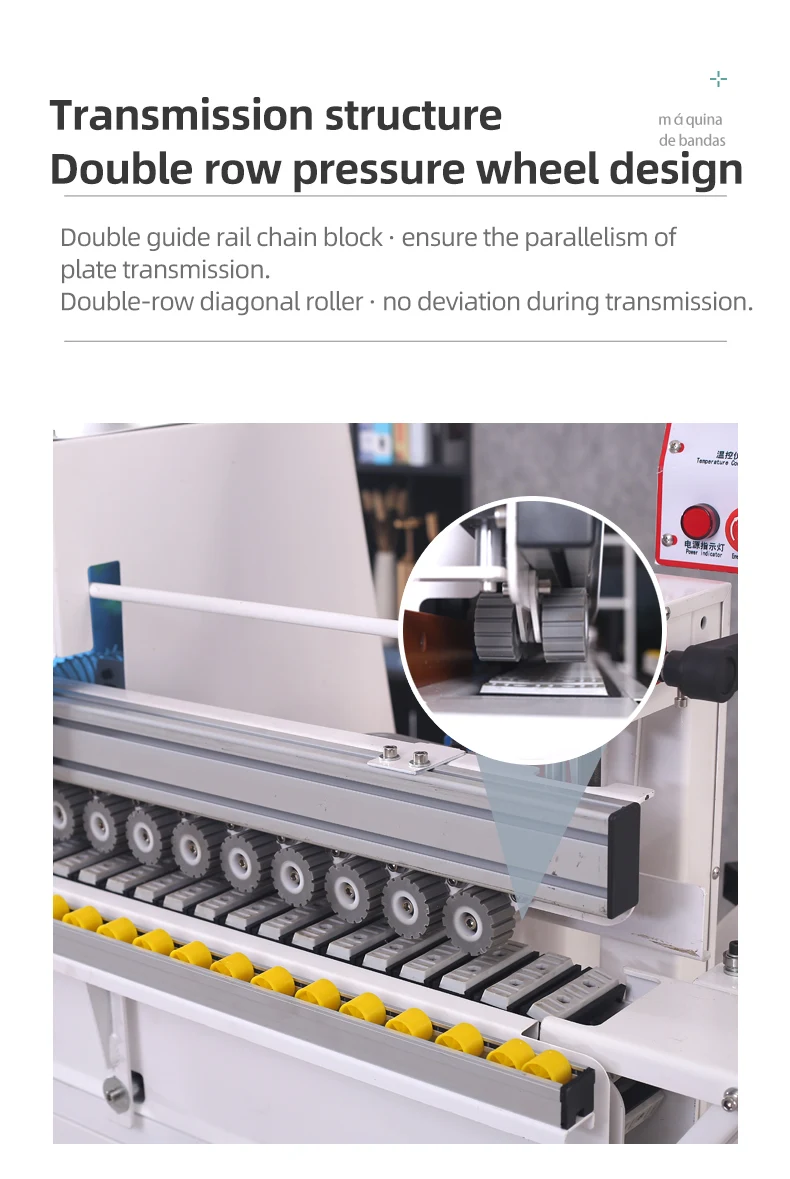
- Arrives fully assembled with mobile table guide; position, level, and connect air supply at 0.4–0.6 MPa before first run
- Initial commissioning includes feed speed calibration and trimming depth adjustment for your primary panel thickness
- Glue pot and roller cleaning schedule provided to prevent adhesive buildup that affects bond quality over time
- Spare trimming blades and polishing wheels ship with the machine; reorder codes listed in the included parts manual
What We Need to Move Your Order Forward
To configure the DW1800 correctly for your facility, share your local voltage, frequency, and phase along with the plug type your electricians use. Let us know the primary panel materials you process — MDF, particleboard, plywood, or solid wood — and the edge banding types you run most often. If your operators require a specific control panel language beyond English or Spanish, specify it at this stage so it is built into the machine before dispatch.
Frequently Asked Questions
Q: Is the DW1800 currently in stock, and how fast can it ship to my country?
A: The DW1800 automatic edge banding machine is stocked and available for immediate configuration. Once your voltage, frequency, and control language are confirmed, pre-shipment testing and crating proceed without a build queue. Actual transit time depends on your destination port and chosen freight method, which we quote at the order stage.
Q: How do I confirm the correct voltage and plug type before ordering?
A: Share your facility’s supply voltage, frequency in Hz, and phase with our team. If you are unsure, a photo of your main breaker panel or a recent utility bill usually contains the information. We then provide a written voltage confirmation document and electrical schematic before the machine ships.
Q: Which edge banding materials work with the DW1800 out of the box?
A: The machine handles PVC, ABS, and veneer edge banding in the 0.3–3 mm thickness range on substrates including MDF, particleboard, plywood, and solid wood panels. For unusual materials like high-gloss acrylic or metal-look banding, share a sample specification so we can confirm trimming and polishing settings.
Q: Can I order a single DW1800, or is there a minimum quantity?
A: Single-unit orders are standard for stocked models. The same voltage verification, pre-shipment testing, and documentation process applies whether you order one machine or a full container. There is no minimum order quantity for the DW1800 when shipped from available stock.