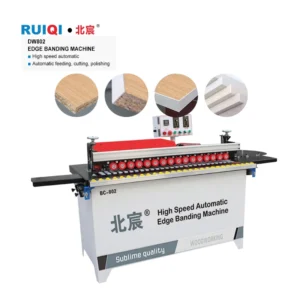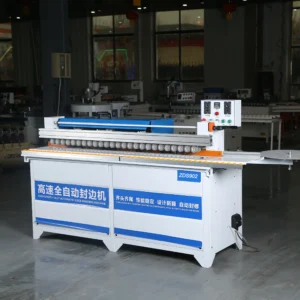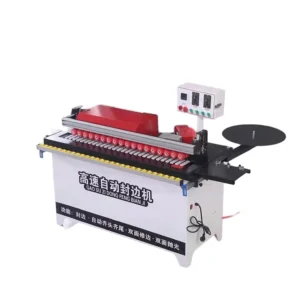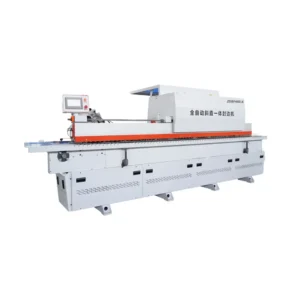


Description
Fast Dispatch Verification — Every ZDSF50 mini edge banding machine ships only after voltage match confirmation and a live powered test on your specified panel material, ensuring it runs on arrival.
Technical Specifications
| Parameter | Value |
|---|---|
| Model | ZDSF50 |
| Product Type | Mini Edge Banding Machine |
| Rated Power | 1.2 kW |
| Rated Voltage | 220 V |
| Edge Banding Speed | 0–6 m/min |
| Sheet Thickness Range | 10–60 mm |
| Strip Thickness Range | 0.5–1.5 mm |
| Glue Pot Capacity | 1000 ml |
| Heating Time | 5–10 min |
| Rated Air Pressure | 0.4–0.6 MPa |
| Overall Dimensions | 54 × 54 × 56 cm |
| Net Weight | 26 kg |
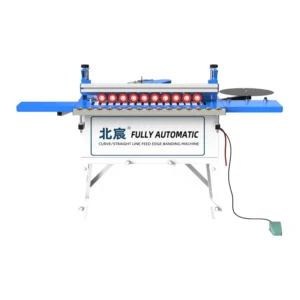
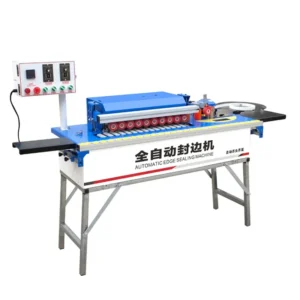
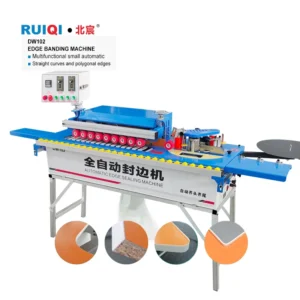
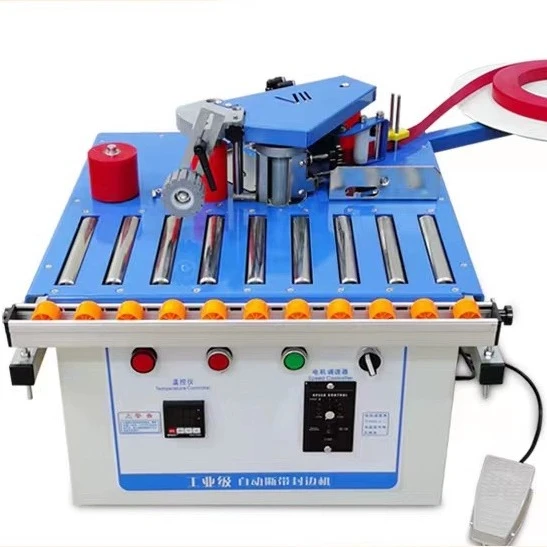
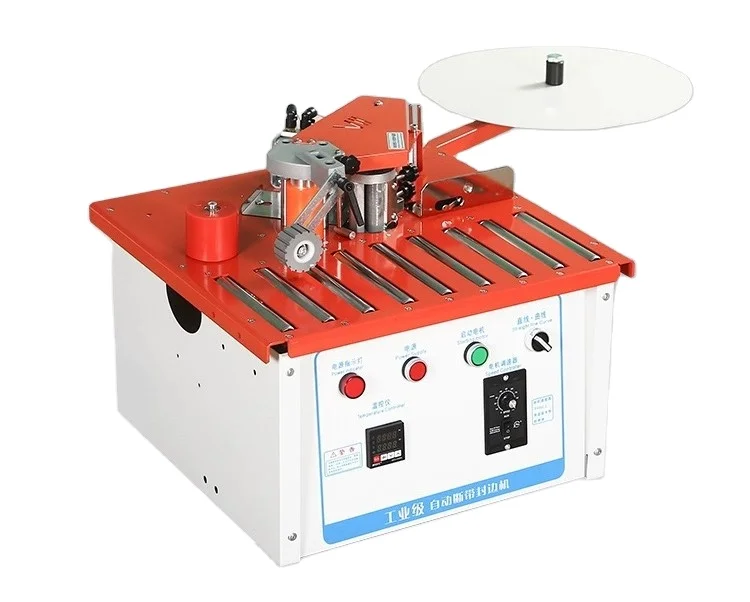
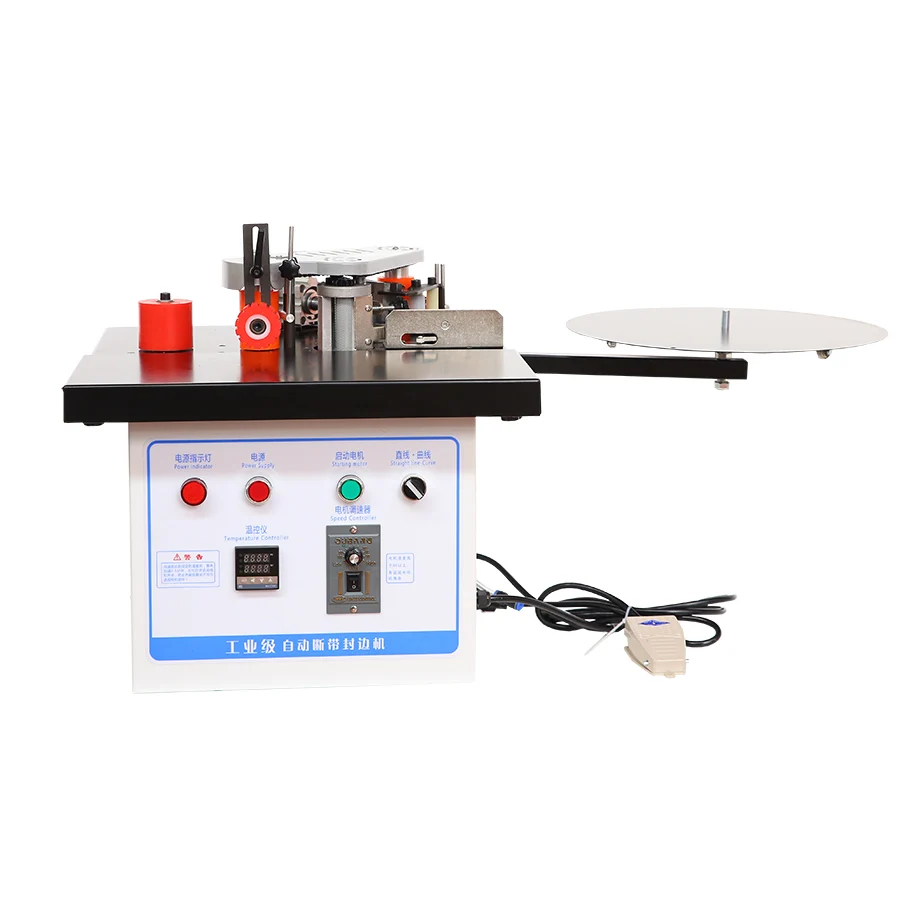
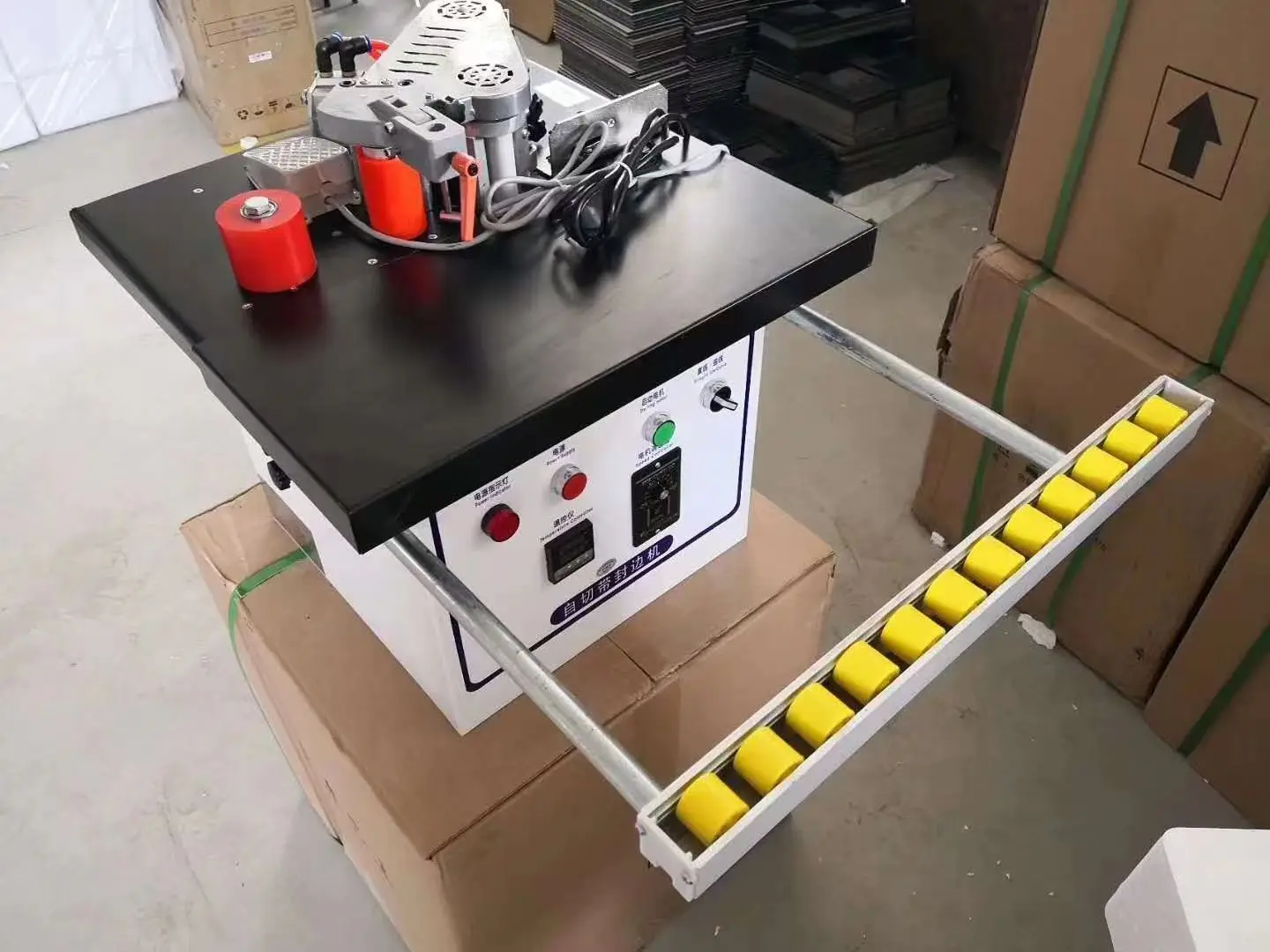
| Key Features | Double-side gluing for straight, curved and shaped edges; pneumatic belt breaking via foot switch |
Application Suitability
| Application | Material or Output |
|---|---|
| Joinery startup edge sealing | MDF and plywood panels with PVC edge banding |
| Custom furniture curved panels | Shaped plywood and particleboard with veneer strips |
| On-site cabinet fitting | Solid wood panels with straight edge profiles |
| Prototype and sample production | Small batches of mixed panel materials up to 60 mm thick |
Why Confirming Voltage Before Ordering Matters More Than You Think
When a mini edge banding machine in stock arrives at your workshop with the wrong voltage rating, the entire production schedule stalls while an electrician rewires the supply or replaces the motor. I once watched a shipment go to a Middle East site where the local single-phase supply was 220 V but the machine had been built for a different configuration — it took two weeks of on-site rewiring before the unit could power up. That delay cost far more than the machine itself.
Voltage confirmation before dispatch is the single most important step in ordering any compact woodworking unit.
The ZDSF50 is rated at 220 V, and every order triggers a three-point check: the motor nameplate is photographed against your declared local voltage and frequency, the wiring is verified at the terminal block, and a powered run test is recorded on video before the crate closes. This is the kind of verification most catalog pages never mention, yet it accounts for a large share of commissioning failures in exported machinery [NEED_CITE: voltage and frequency standards by export market].
Stocked Configuration Built for Immediate Shipment
The ZDSF50 mini edge banding machine in stock is configured for small workshops that need a dependable unit without the lead time of a built-to-order line machine. The 1.2 kW motor and 220 V rating mean it plugs into a standard single-phase circuit — no three-phase supply upgrade, no dedicated transformer, no waiting for an electrical contractor to finish a panel upgrade before you can edge-band your first board.
The compact 54 × 54 × 56 cm footprint and 26 kg weight allow bench-top or floor placement in a tight joinery space, and the unit is light enough to relocate when your shop layout changes. This is a machine designed to sit beside your sliding table saw, not across the warehouse floor.
Double-Side Gluing That Holds on Curved Profiles
Straight edges are straightforward — gravity and a flat fence do most of the work. Curved and shaped profiles are where entry-level edge banders usually fail, because the glue must bond evenly across a changing contour while the strip is under lateral tension. The ZDSF50 addresses this with double-side gluing rollers that coat both the panel edge and the back of the strip simultaneously, so adhesion is uniform regardless of whether the profile is a gentle radius or a tight inside curve.
The pneumatic belt-breaking system, triggered by a foot switch, keeps your hands free to guide the panel around the curve without losing feed control. For a workshop moving from hand-held trimming to machine-assisted banding, this is the operational difference between a usable finish and a strip that peels away at the first sign of stress [NEED_CITE: edge banding adhesion failure on curved panel profiles].
Reading the Numbers That Actually Matter
The 10–60 mm sheet thickness range is wider than most portable edge banders, which typically top out around 40 mm. This matters if you run thick MDF for cabinet carcases or solid-wood panels for worktops, because a machine that physically cannot accept the board thickness will force you back to hand-trimming on your heaviest stock.
The 0.5–1.5 mm strip thickness range covers standard PVC and thin veneer — but not 2 mm or 3 mm ABS, which requires a heavier feed mechanism and more aggressive trimming stations. If your production mix includes thick ABS on high-wear surfaces, this is not the right machine, and knowing that before you order saves a return shipment.
The 1000 ml glue pot with a 5–10 minute heat-up time is sized for intermittent rather than continuous use. At the 0–6 m/min feed speed, you can edge-band a batch of cabinet components in a morning session without the pot running dry, but a full production day of uninterrupted feeding would require refilling and re-heating. This is by design: the pot and heater are matched to the throughput a small workshop actually generates.
The 0.4–0.6 MPa air pressure requirement means you need a basic compressor on site — not an industrial screw compressor, but a unit that can sustain that pressure range consistently. A compressor that drops below 0.4 MPa during cycling will cause the pneumatic belt breaker to stall mid-curve, which is a fault I have seen misdiagnosed as a machine defect when the real issue was undersized air supply.
The Cost of Buying the Wrong Size Machine Twice
A common pattern in small workshops is purchasing the cheapest available edge bander, running it at volumes it was never built to sustain, and then buying a second machine when the first one develops feed inconsistency. The ZDSF50 is positioned transparently for low-volume, prototype, and curved-profile work — not for eight-hour continuous production shifts. Buying it with that understanding means it will serve reliably within its design envelope. Buying it expecting full-line throughput leads to premature wear on the feed rollers and glue pot cycling issues that no amount of maintenance will resolve [NEED_CITE: premature wear on entry-level machines used beyond rated duty cycle].
What You Get When You Order From This Facility
Voltage and specification confirmation happen before production is released, not after — the motor nameplate is cross-checked against your local supply documentation, and any mismatch is caught at the order stage rather than on your workshop floor.
The pre-shipment test record includes a powered run on your specified panel thickness range, recorded and shipped with the machine, so you can verify on arrival that the unit performed correctly at the factory before it was crated.
The operation manual is provided in your agreed language, not a generic multi-language booklet — the control labels, safety warnings, and maintenance schedule match the terminology your operator will actually use.
A dedicated spare parts list specific to the ZDSF50 is packed with the machine, listing wear items like glue rollers, heating elements, and feed belt sections with reorder references so you are not searching for compatible components months later.
Documentation & Verification
- CE declaration of conformity covering the ZDSF50 electrical and mechanical safety requirements
- Factory test record documenting powered run on your specified panel thickness before crating
- Electrical schematic with confirmed voltage and wiring diagram matching your local supply
- Operation and maintenance manual translated into your agreed workshop language
- Spare parts list with reorder references packed inside the shipping crate
Installation, Commissioning & Support
- Requires a dedicated 220 V single-phase circuit rated for at least 1.2 kW continuous draw
- Compressor must sustain 0.4–0.6 MPa at the machine inlet; undersized supply causes pneumatic faults
- Bench-top or floor placement; 54 × 54 × 56 cm footprint fits standard joinery bench depth
- Glue pot first heat-up takes 5–10 minutes; initial fill of 1000 ml included in commissioning guidance
- Double-side roller alignment checked at dispatch; operator recalibration procedure in the manual
- Foot switch and pneumatic belt breaker tested on curved profile before shipment sign-off
Before You Request a Quote
To match the right configuration to your workshop, share the panel materials you process most often — MDF, plywood, particleboard, or solid wood — along with your typical board thickness range. Confirm your local single-phase voltage and frequency so the motor can be verified against your supply before dispatch. Let us know the languages your operators read so the manual and any control labels can be prepared accordingly. If you have existing upstream equipment such as a panel saw, mention the output format so we can confirm the ZDSF50 fits your current workflow.
Frequently Asked Questions
Q: What is the dispatch lead time for this stocked model?
A: The ZDSF50 is held in ready-to-ship configuration. Dispatch timing depends on completing the voltage confirmation and pre-shipment test for your specific panel thickness. Once those checks are done and recorded, the machine is crated and released for shipping. We provide the estimated dispatch window at the quotation stage so you can plan around it.
Q: Does the 220 V rating match my local voltage and frequency?
A: The ZDSF50 is rated at 220 V single-phase. Before any order is released, we cross-check the motor nameplate against your declared local voltage and frequency. If there is any discrepancy — for example, a 60 Hz supply where the standard motor is wound for 50 Hz — we address it before the machine ships, not after it arrives at your workshop.
Q: Can this machine handle my panel thickness and edge strip material?
A: The ZDSF50 accepts sheet thickness from 10 to 60 mm and strip thickness from 0.5 to 1.5 mm in PVC or veneer. It is not configured for 2 mm or 3 mm ABS. Share your typical material combination with us and we will confirm suitability or recommend a different model from the range if your requirements fall outside this envelope.
Q: What is included in the package and do I need to assemble anything?
A: The package includes the ZDSF50 machine, foot switch, pneumatic fittings, a spare parts list, and the operation manual in your agreed language. The unit ships fully assembled; you will need to connect it to your 220 V supply and compressed air line, fill the glue pot, and run the commissioning procedure detailed in the manual before production use.
Q: How do I get spare parts and technical support after delivery?
A: A dedicated spare parts list with reorder references is packed with every ZDSF50. Wear items such as glue rollers, heating elements, and feed belt sections are identified with part numbers for direct reorder. Technical support for commissioning and troubleshooting is available after delivery based on the factory test record shipped with your unit.