
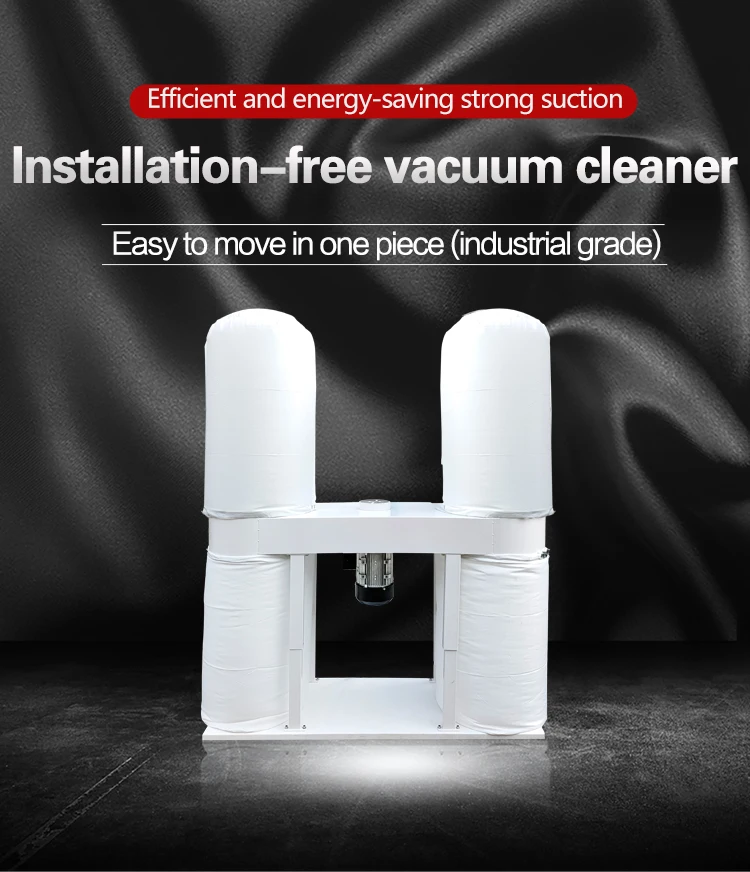
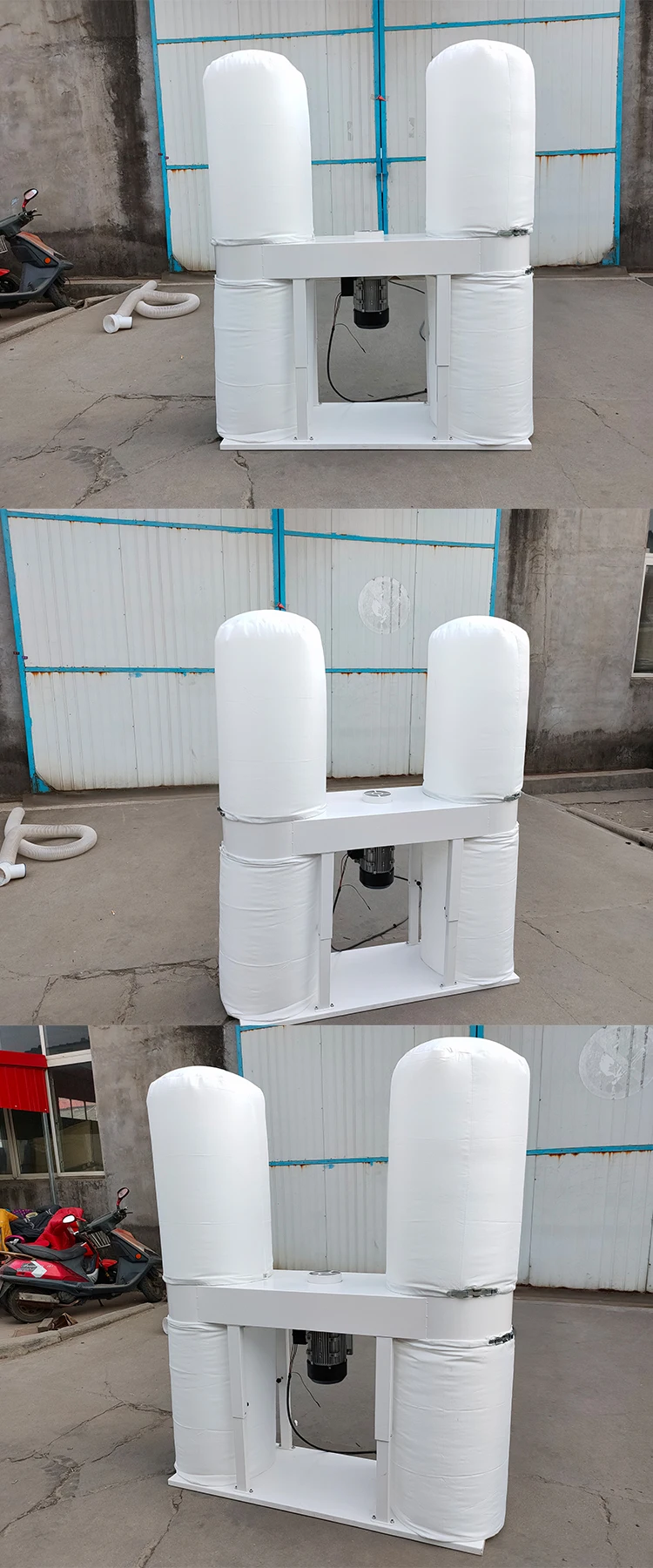
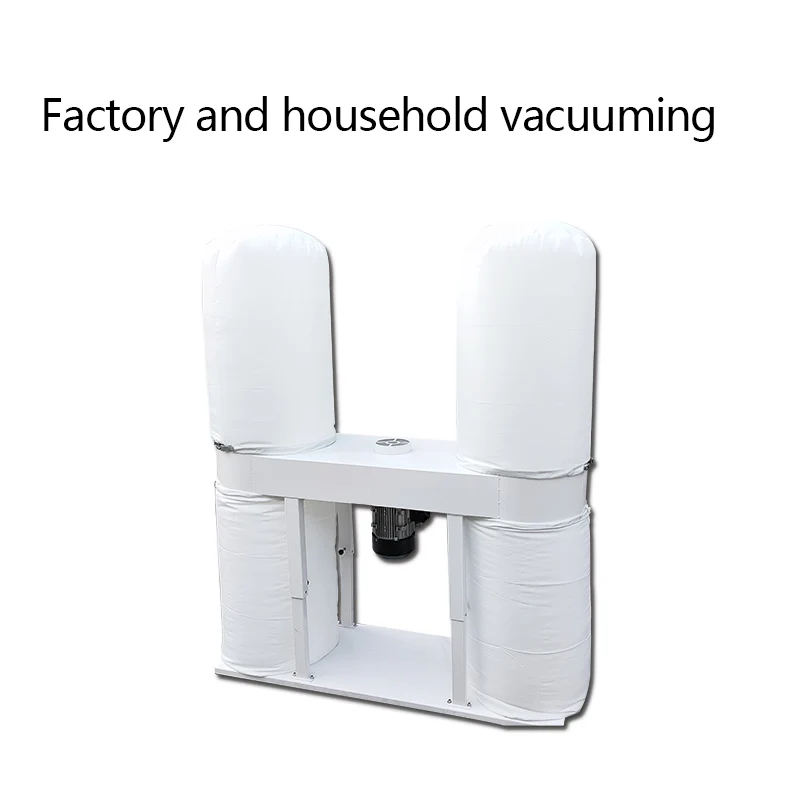
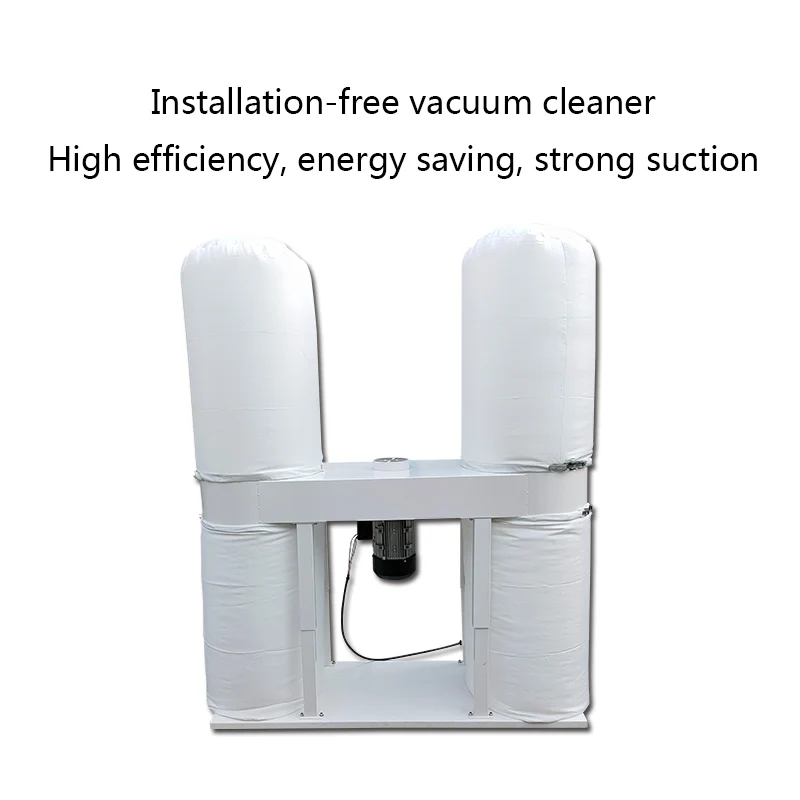
Description
Pre-Shipment Voltage Verification — every dust collector unit is tested against your facility’s electrical standard before it leaves the factory floor, eliminating the most common cause of delayed commissioning.
Technical Specifications
| Parameter | Value |
|---|---|
| Product Type | Industrial Dust Collector for Woodworking Machinery |
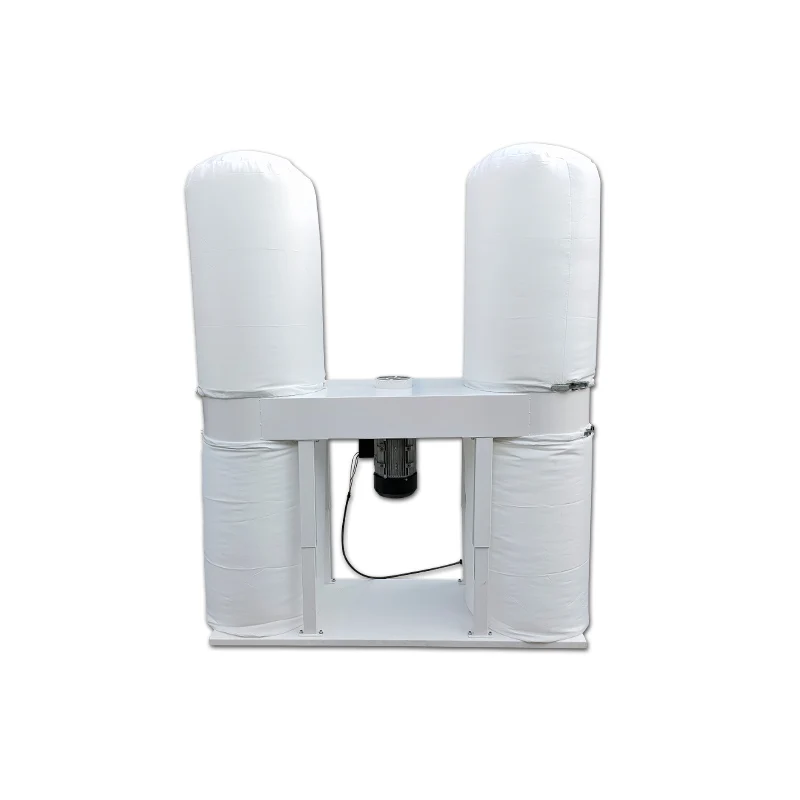
| Filtration Method | Bag filter with diversion device for large particle separation |
| Dust Separation Mechanism | Large particles fall into dust hopper via guide pipe; fine dust adsorbed on filter bag |
| Airflow Design | Multi-warehouse filtration bag configuration with even airflow distribution |
| Voltage & Frequency | Customizable (EU / USA / AU / UK plug options available) |
| Control Panel Language | Chinese and English standard; Spanish and other languages available on request |
| Assembly State | Fully assembled, ready for connection to woodworking machinery |
| Compatible Machinery | CNC router, sander, panel saw, and other woodworking machines |
| Standards | CE, ISO 9001 |
Application Suitability
| Application | Material or Output |
|---|---|
| CNC routing dust extraction | MDF, plywood, particleboard, and solid wood panels |
| Panel saw dust management | Melamine-faced chipboard, raw MDF, plywood sheets |
| Sander dust collection | Solid wood surfaces, veneered panels, lacquered boards |
| General woodworking shop cleanup | Mixed wood dust, PVC edge banding trimmings, composite panel offcuts |
Why Voltage Confirmation Must Happen Before Dispatch
A dust collector in stock is only useful if it can be plugged in and run on the day it arrives.
I remember a Southeast Asian buyer who received a dust extraction unit rated for three-phase 380V, while the workshop ran on 220V three-phase. The machine sat idle for weeks while a transformer was sourced locally. That delay cost more than any price negotiation could save. Every export market has its own voltage and frequency standards [NEED_CITE: voltage and frequency standards by export market], and getting this wrong means your new dust collector in stock becomes a heavy, expensive box in the corner.
Stock Availability and Dispatch Timing
When a workshop decides to add dust extraction, the goal is usually to solve an immediate problem — visible dust in the cutting area, operator complaints, or failing a factory audit. A dust collector in stock at the Shandong facility means the unit is fully assembled and can be prepared for dispatch without waiting for a production slot. The emphasis here is on shortening the gap between order confirmation and the moment the unit is connected to your CNC router or panel saw. Single-unit orders are accepted without minimum order complications.
Plug Type and Electrical Matching at the Order Stage
The most common cause of commissioning delay for imported woodworking equipment is an electrical mismatch. This dust collector is configured before shipping with the plug type and voltage frequency that match your facility — EU, USA, AU, or UK plug options are confirmed at the order stage rather than assumed. The electrical schematic travels with the shipment so your local electrician can verify the connection without guesswork [NEED_CITE: CE machinery directive requirements for industrial equipment]. This removes the scenario where an operator stands in front of a new machine that simply will not power on.
Understanding the Filtration Sequence
The filtration system operates in stages to extend filter bag life and maintain consistent airflow. Large particles — chunks of MDF, sawdust clumps, edge banding trimmings — enter through the guide pipe and are diverted by the diversion device into the dust hopper before they reach the filter bags. This means the bags handle only fine dust, which reduces abrasion and slows the rate at which bags need replacement. The multi-warehouse bag configuration distributes airflow evenly across all bags, preventing one section from becoming overloaded while others remain underused. For a workshop running a CNC router and a panel saw simultaneously, even airflow distribution matters because it keeps suction stable as different machines are switched on and off. The control panel language can be specified beyond the standard Chinese-English bilingual setup, so operators in Spanish-speaking or other markets can read the interface without translation guesswork.
What Happens When Filtration Is Undersized
A dust collector specified without considering the total air volume demand of connected machines will struggle from day one. If a CNC router and a wide-belt sander are both pulling dust into a unit designed for single-machine extraction, suction drops, dust escapes at the cutting head, and the workshop air quality deteriorates. Filter bags clog faster under overloaded conditions, and the motor works harder without delivering the expected performance. Operators begin disconnecting machines from the system to compensate, which defeats the purpose of central extraction [NEED_CITE: industrial dust extraction sizing principles for woodworking].
Purchasing From a Factory That Builds and Ships
This dust collector is manufactured in-house at the Ningjin facility, which means configuration decisions — voltage, plug type, control language — are handled directly on the production floor rather than passed through intermediaries. Pre-shipment testing includes an airflow verification run so the unit is confirmed functional before crating. The four-stage quality control process covers incoming material inspection through to final pre-dispatch checks, catching issues that would otherwise surface at your dock. Factory visits are welcomed for buyers who want to see the assembly line and test the unit in person before it ships.
Documentation & Verification
- Factory test record confirming airflow performance on your specified dust type before dispatch
- Electrical schematic showing voltage, frequency, and plug configuration matching your facility standard
- Operation and maintenance manual provided in the control panel language agreed at order
- Spare parts list detailing filter bag specifications and consumable replacement intervals
- CE declaration of conformity for customs clearance and regulatory compliance
- Packing photographs documenting unit condition prior to crating
Installation, Commissioning & Support
- Unit arrives fully assembled — connect ductwork to CNC router, sander, or panel saw exhaust ports
- Verify dedicated circuit capacity matches the voltage and frequency confirmed on the electrical schematic
- Dust hopper positioned for floor-level access to simplify emptying during daily operation
- Filter bag inspection recommended after initial commissioning run to confirm even airflow distribution
- Replacement filter bags and consumables listed in the spare parts sheet provided with shipment
- Control panel walkthrough included in the multilingual operation manual for operator training
Before You Request a Quote
To match the right dust collector configuration to your workshop, it helps to know which machines will connect to it — CNC router, panel saw, sander, or a combination — and the total number of extraction points. Confirm your facility voltage and frequency so the correct electrical setup is built in. If operators speak a language other than Chinese or English, specify the preferred control panel language at the inquiry stage.
Frequently Asked Questions
Q: What plug and voltage options are available and how are they confirmed before shipping?
A: EU, USA, AU, and UK plug types are available. Voltage and frequency are confirmed at the order stage based on your facility electrical standard. The configuration is verified during pre-shipment testing, and the electrical schematic is included with the shipment so your electrician can cross-check before connection.
Q: Can I order a single unit and what is the dispatch lead time?
A: Single-unit orders are accepted. Ready-stock units can be prepared for dispatch after configuration is confirmed — typically plug type, voltage, and control language. Dispatch timing depends on current stock levels and any customization requested at the time of order.
Q: Which woodworking machines is this dust collector compatible with?
A: This unit connects to CNC routers, panel saws, sanders, and other standard woodworking machines. Compatibility depends on the duct diameter and total air volume demand of the machines you plan to connect. Specify your machine list at inquiry so the configuration can be matched.
Q: How are filter bags replaced and what spare parts come with the unit?
A: Filter bags are accessed through the multi-warehouse housing and can be replaced individually without dismantling the entire unit. A spare parts list with filter bag specifications and consumable details is provided with every shipment so replacements can be sourced or reordered.
Q: Is the control panel available in my language and how do I specify this at order?
A: Chinese and English are standard. Spanish and other languages are available on request. Specify your preferred language when placing the order so the correct panel is installed and the matching operation manual is included in the shipment documentation.