Description
Voltage-Confirmed Dispatch — Every DW102 unit leaves the floor with electrical settings matched to the buyer’s facility, eliminating dead-on-arrival surprises.
Technical Specifications
| Parameter | Value |
|---|---|
| Model | DW102 |
| Product Type | Automatic Edge Banding Machine |
| Total Power | 3800W |
| Voltage Options | 220V / 380V / Custom |
| Edge Banding Height | 0–50 mm |
| Edge Banding Thickness | 0.3–3 mm |
| Minimum Sheet Length | 25 cm |
| Minimum Sheet Width | 5 cm |
| Glue Pot Capacity | 1000 ml |
| Trimming Power | 650W × 2 |
| Polishing Power | 180W × 2 |
| Vacuum Power | 1200W |
| Air Source Pressure | 0.5–0.8 MPa |
| Machine Dimensions | 128 × 47 × 69 cm |
| Machine Weight | 75 kg |
| Control Panel Language | Chinese, English (customizable) |
| Plug Options | EU, USA, AU, UK |
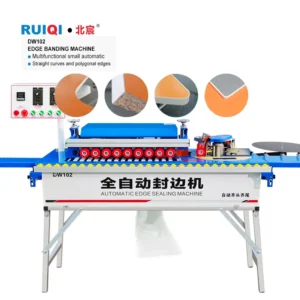
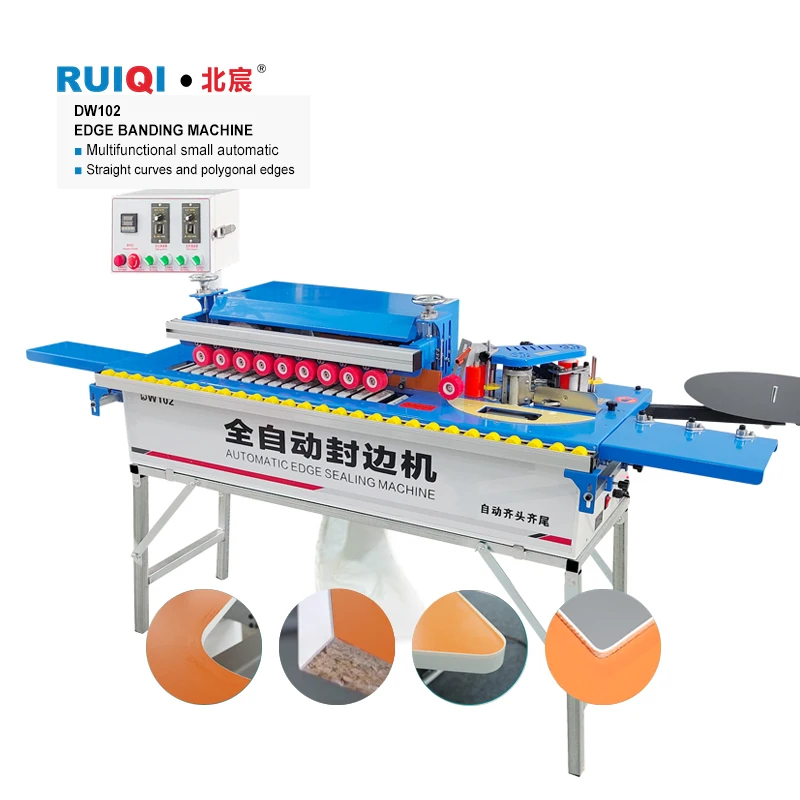
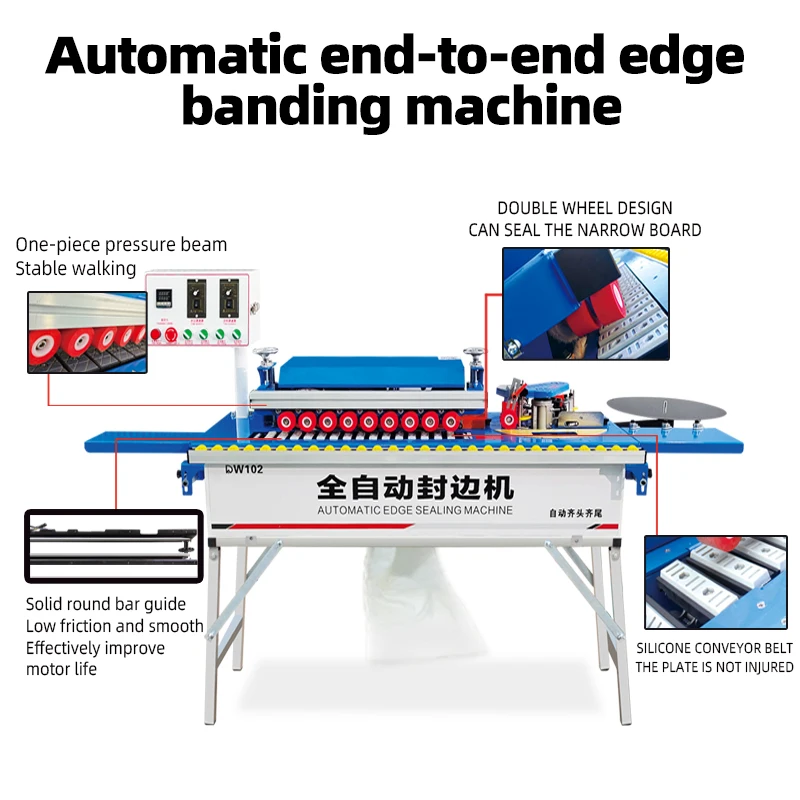
| Key Features | Curved and straight edge banding, edge trimming, polishing, automatic head and tail cutting, integrated vacuum |
Application Suitability
| Application | Material or Output |
|---|---|
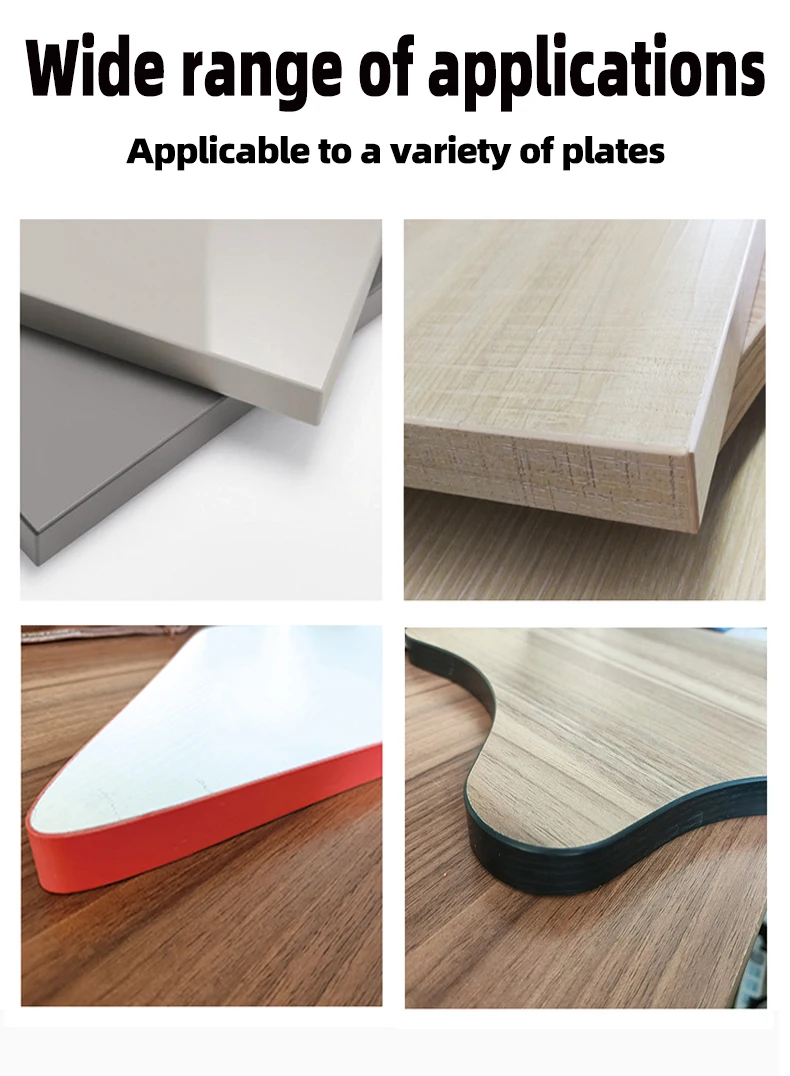
| Cabinet door and carcase panel edging | MDF, particleboard, plywood |
| Custom furniture component finishing | Blockboard, wood panels |
| Polymer door profile banding | PVC and polymer substrates |
| Small-batch joinery production | Solid wood panels with veneer edge banding |
| Replacement or backup banding station | Medium density fiber board, plywood |
Why the Voltage Question Should Come Before the Price
Confirming local voltage and frequency before a machine ships prevents costly on-site failures that no amount of troubleshooting can fix.
I once watched a workshop sit idle for a week because a bander arrived wired for 380V three-phase while the facility only had 220V single-phase supply. The motor hummed, the glue pot never reached temperature, and the local electrician could not bridge the gap without a dedicated transformer. That edge banding machine in stock looked like a bargain until the downtime cost more than the unit itself. Buyers often focus on feed speed and trimming stations, but a machine that cannot power on in your shop is not a machine at all [NEED_CITE: voltage and frequency standards by export market].
Stock Availability Without the Guesswork
When a production bander goes down mid-run, every hour of silence on the floor costs real money. The DW102 is maintained as an edge banding machine in stock so that workshops facing urgent replacement needs can move from order to dispatch without waiting through a full build cycle. Voltage configuration and plug type are confirmed at the time of order, not discovered at the time of uncrating.
Small Footprint, Full Function Set
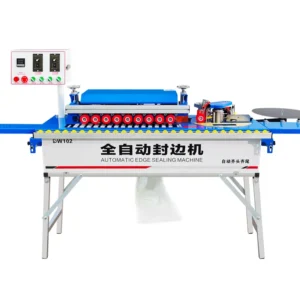
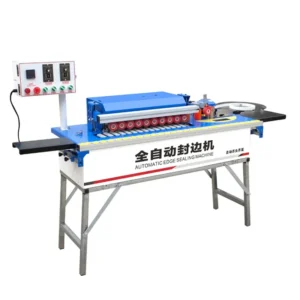
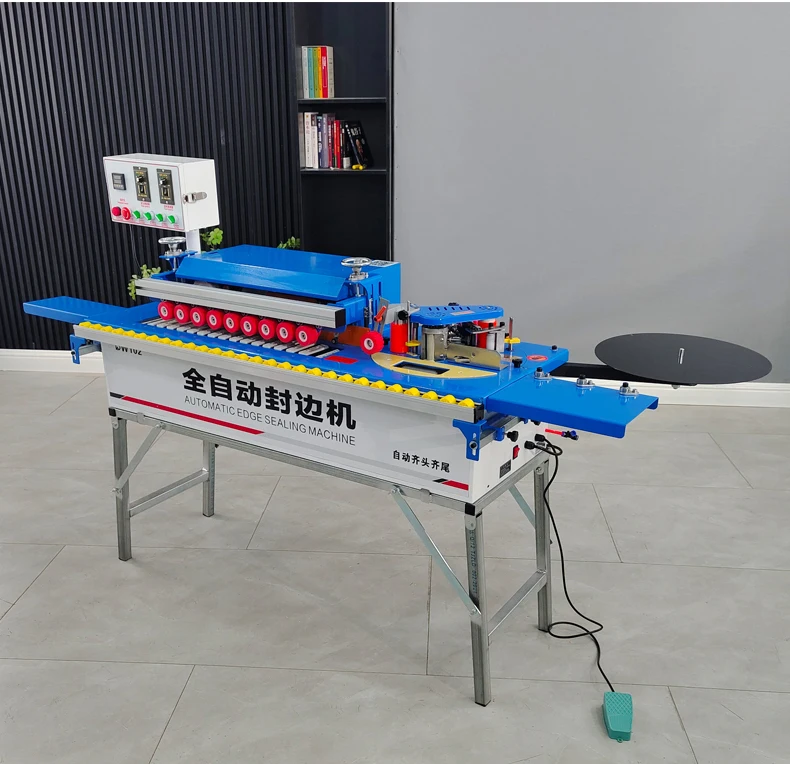
A 128 × 47 × 69 cm footprint means this unit fits against a wall in a compact joinery shop or slots into an existing line where floor space is already committed. Despite the compact frame, it carries curved and straight edge banding, trimming, polishing, and automatic head and tail cutting in a single pass. Workshops that previously outsourced edging or ran it by hand gain a complete finishing station without rearranging the entire floor [NEED_CITE: typical workshop space requirements for small furniture manufacturers].
What the Numbers Mean on the Shop Floor
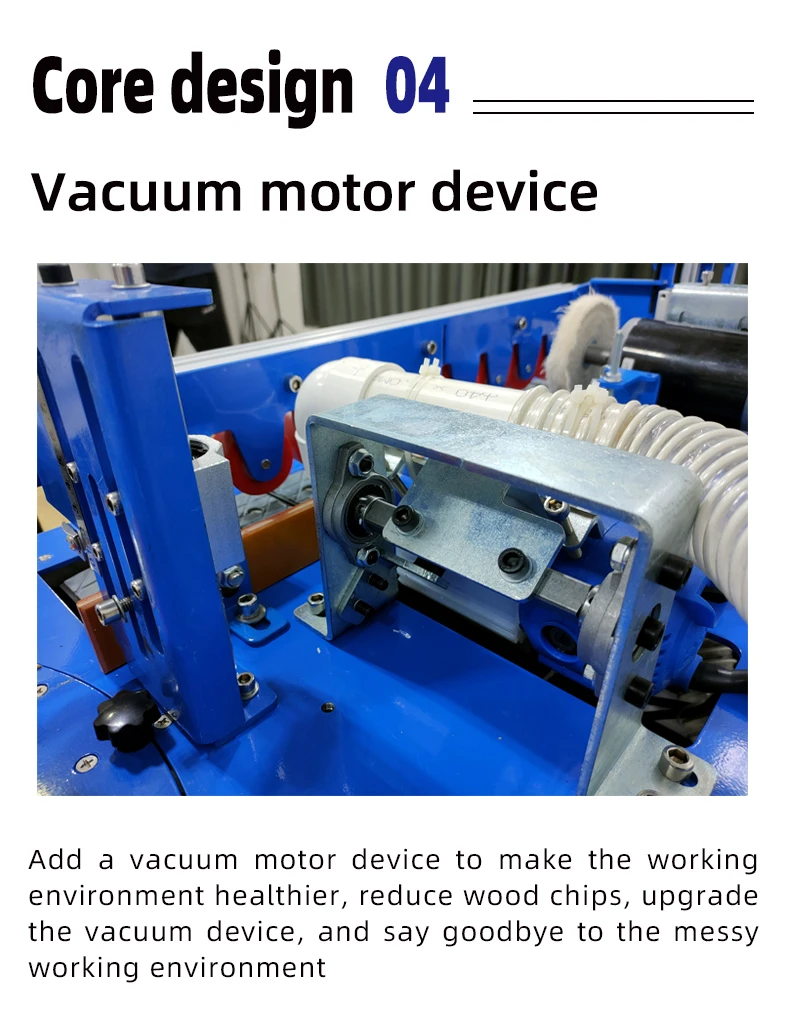
The 0.3–3 mm edge banding thickness range covers thin PVC through thicker solid wood lipping, letting a single machine handle the variety that a custom cabinet shop encounters daily. The dual 650W trimming motors provide enough torque to clean-cut banding on dense particleboard without chatter marks showing on the finished edge. Glue pot capacity at 1000 ml supports sustained runs through a batch of cabinet carcase panels without stopping to refill mid-job. The integrated 1200W vacuum pulls trim waste away from the glue zone, keeping the banding surface clean and reducing the post-process wipe-down that slows throughput on machines without extraction. Edge banding height from 0 to 50 mm accommodates everything from thin shelf stock to thicker worktop profiles within the same setup.
The Hidden Cost of Skipping Configuration Checks
Ordering a bander without verifying air pressure requirements leads to pneumatic cylinders that stroke too slowly, leaving end-cut blades misaligned on the first and last centimetres of every panel. The DW102 requires 0.5–0.8 MPa air supply, and a shop running an undersized compressor will see inconsistent head and tail cuts before they realise the root cause is upstream. Similarly, a control panel in a language the operator cannot read turns a simple thickness adjustment into a trial-and-error exercise, wasting both material and patience [NEED_CITE: operator error rates linked to unfamiliar control interfaces].
Why Source This Model Through This Channel
Stock-held inventory means the DW102 does not enter a production queue — it is allocated, configured, and prepared for dispatch on a compressed timeline. Voltage and plug type are set and documented before crating, so the machine arrives ready for connection rather than rewiring. A factory test record is generated on material matching the buyer’s stated panel type, providing a baseline for on-site commissioning. Single-unit ordering is standard, removing the pressure to bundle unnecessary equipment just to meet a minimum order threshold. Operation manuals are supplied in the agreed language, and a spare parts list ships with the unit so maintenance planning starts on day one.
Documentation & Verification
- Factory test record run on buyer-specified panel thickness and edge material
- Electrical schematic confirming dispatched voltage and plug configuration
- Operation and maintenance manual in agreed operator language
- Spare parts list matched to DW102 component set
- CE declaration of conformity included with shipping documents
- Packing photographs provided before crate leaves the facility
Installation, Commissioning & Support
- Requires a dedicated circuit matching confirmed 220V or 380V supply at rated 3800W total draw
- Compressed air line at 0.5–0.8 MPa with moisture trap installed upstream of the machine
- Arrives as a single 75 kg unit; position on level floor and secure against lateral movement
- First-run glue temperature and feed alignment verified against sample panel provided by buyer
- Trimming and polishing station settings walked through during initial commissioning call
- Spare trimming blades and polishing wheels identified in shipped parts list for reorder planning
What We Need to Move Forward
To match the right configuration to your floor, share the panel materials and edge banding types you run most often, the available voltage and phase at your facility, and your preferred control panel language. If you are replacing an existing bander, note its current feed height and any throughput constraints you want to eliminate.
Frequently Asked Questions
Q: What voltage and plug configurations are available from stock?
A: The DW102 can be dispatched with 220V or 380V wiring and plug types including EU, USA, AU, and UK standards. Voltage and frequency are confirmed against your facility supply before the machine is crated, and the electrical schematic reflecting the final configuration ships with the documentation pack.
Q: How quickly can this model be dispatched after order confirmation?
A: Because the DW102 is held as an edge banding machine in stock, allocation and voltage configuration proceed immediately after specifications are confirmed. Dispatch timing depends on the chosen shipping route and destination, but the unit does not wait for a production build slot.
Q: Can I order a single unit or is there a minimum order quantity?
A: Single-unit orders are accepted as standard. There is no minimum order quantity requirement, so workshops replacing one machine or adding a first banding station can order exactly what they need without bundling additional equipment.
Q: What shipping options are available and how is the machine packed?
A: The 75 kg unit is packed in a protective crate suited to sea or air freight depending on urgency. Packing photographs are shared before dispatch so the buyer can verify crate condition. Shipping route and carrier selection are confirmed during the order process.
Q: Is installation guidance provided after delivery?
A: Remote installation guidance covers positioning, electrical connection, air supply hookup, and first-run parameter settings for the DW102. The operation manual in the agreed language and the factory test record give the operator a clear starting point for independent production runs.