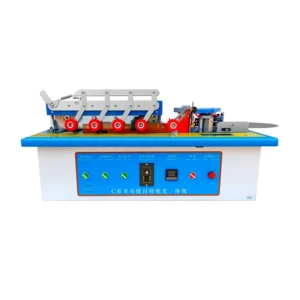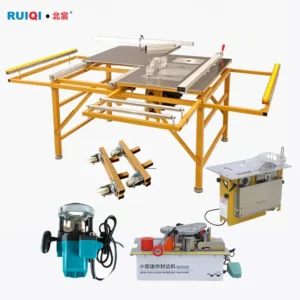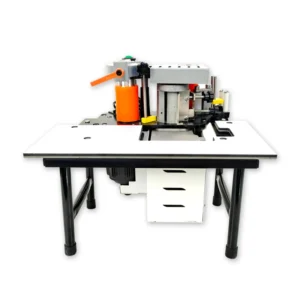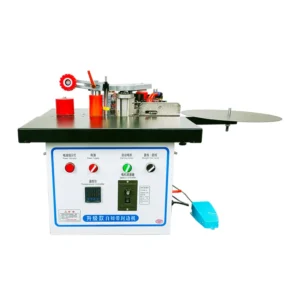

Description
Voltage-verified dispatch — every automatic edge banding machine in stock leaves only after your site’s electrical panel photo matches our output nameplate.
Technical Specifications
| Parameter | Value |
|---|---|
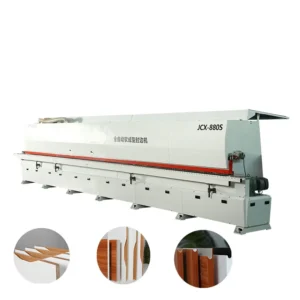
| Product Type | Automatic Edge Banding Machine |
| Voltage | 220V (configurable from 110V to 440V) |
| Total Power | 3300W |
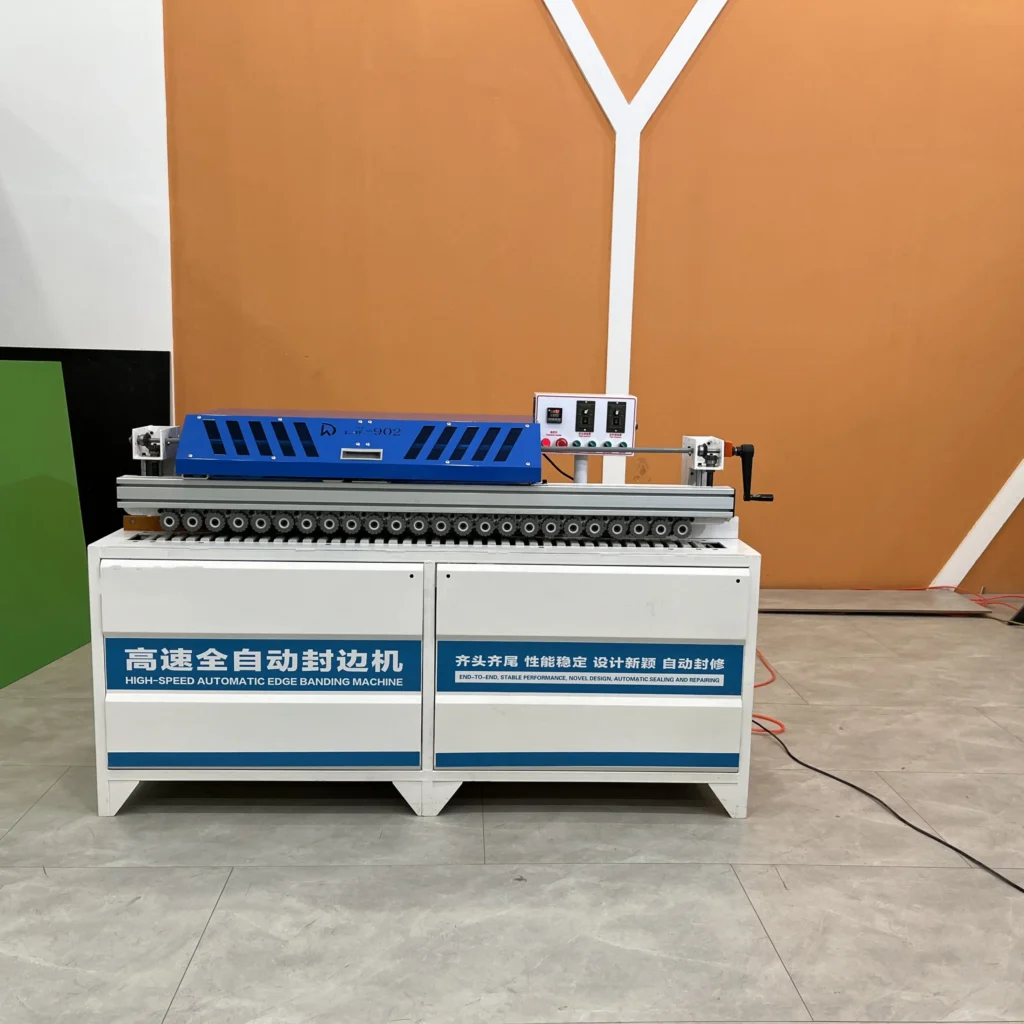
| Equipment Size | 175 × 60 × 112 cm |
| Weight | 240 kg |
| Edge Banding Type | Linear Edge Banding Machine |
| Edge Band Height Range | 0–50 mm |
| Edge Band Thickness Range | 0.3–3 mm |
| Glue Pot Capacity | 4000 ml |
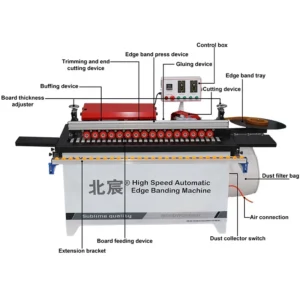
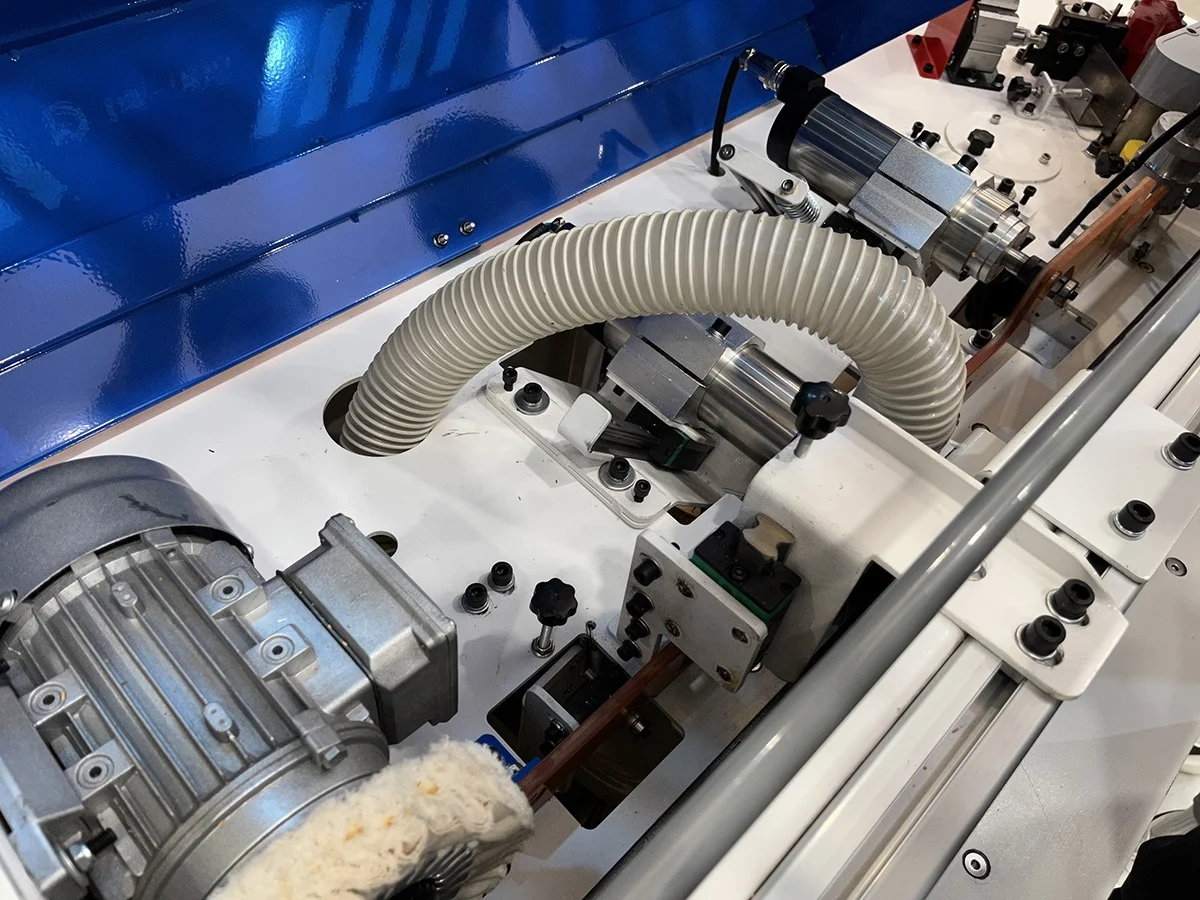
| Trimming Configuration | Double high-speed trimming motors, up and down |
| Polishing Configuration | Up and down polishing motors |
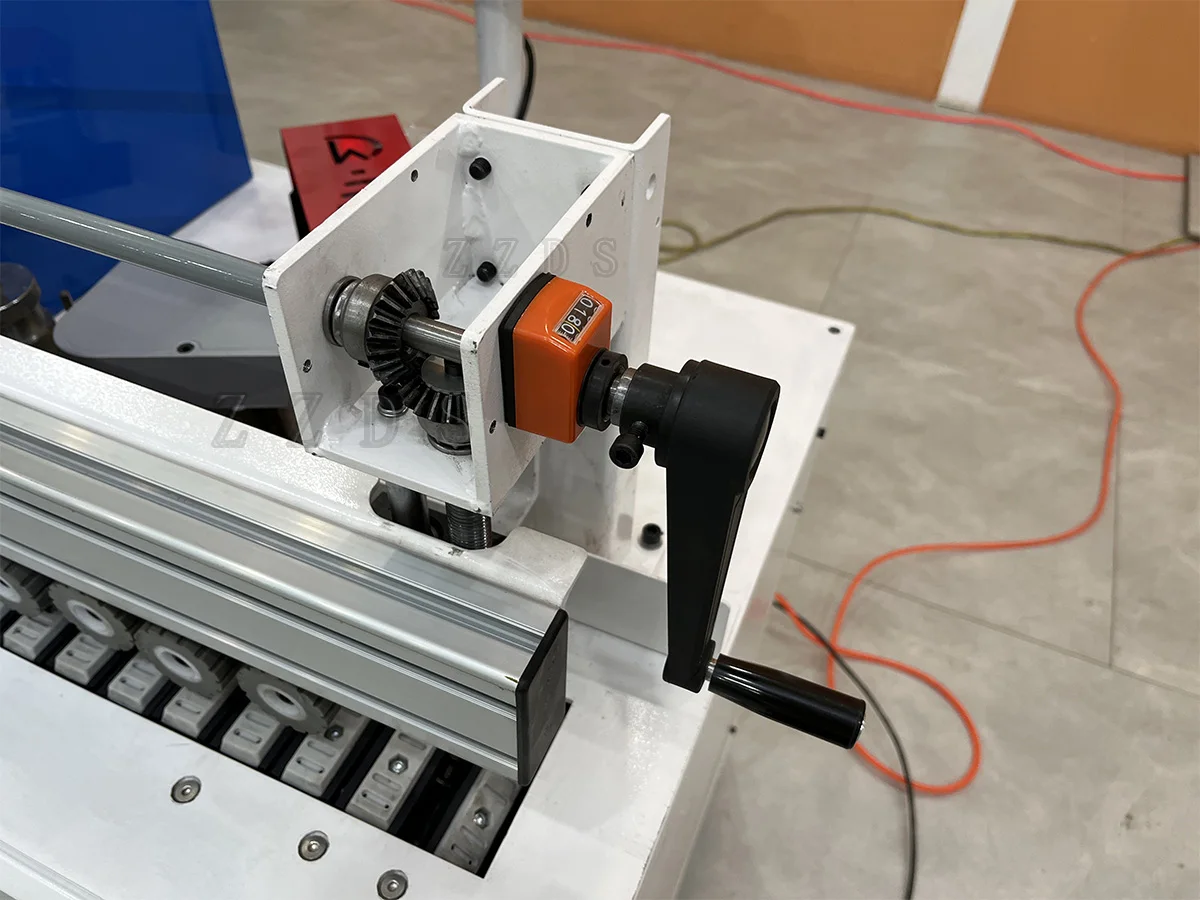
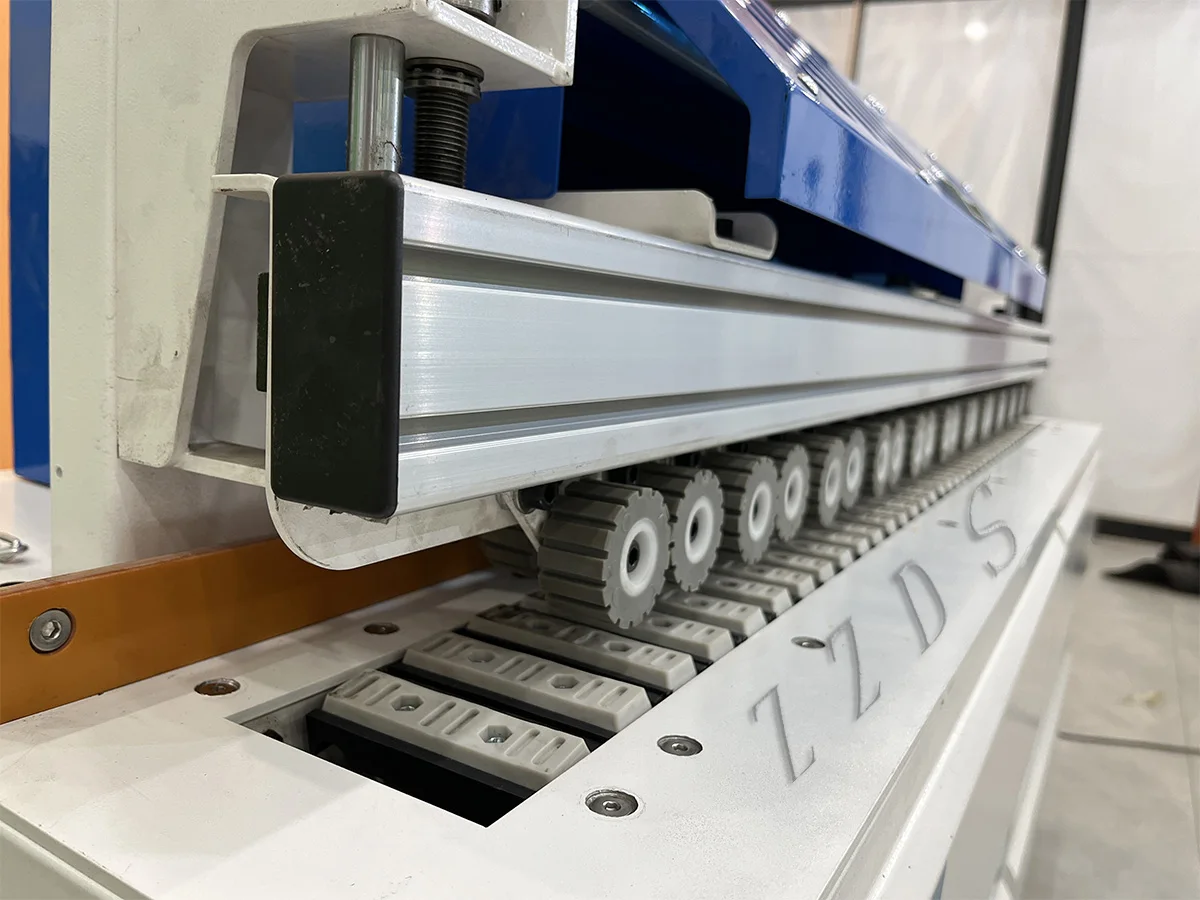
| Pressure System | Integrated pressure beam, double rows of pressure wheels, silicone conveyor belt |
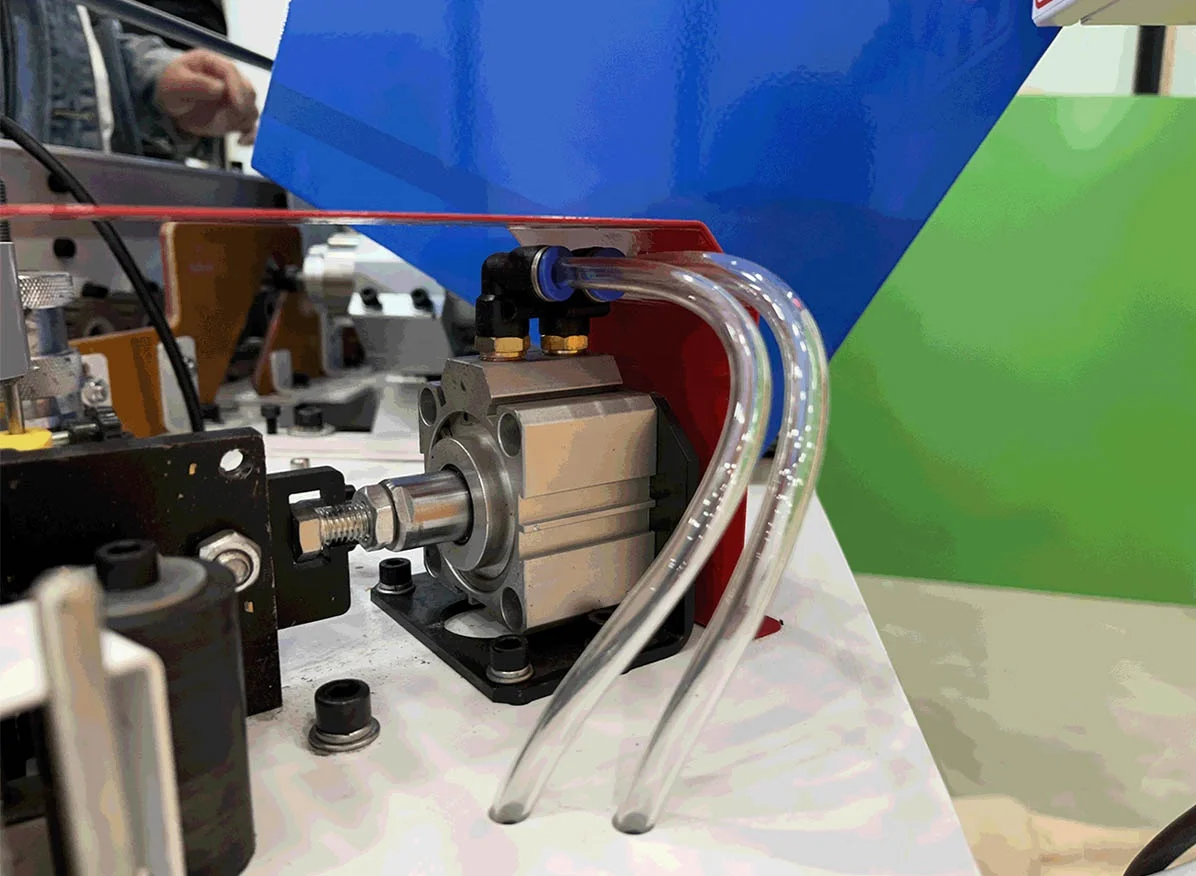
| Edge Strip Cutting | Pneumatically controlled |
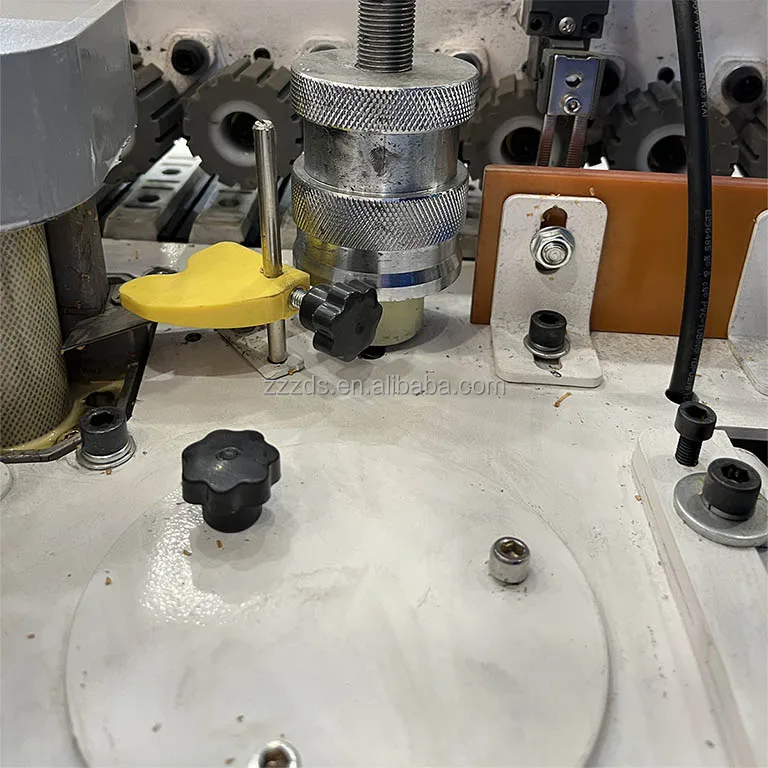
| Pressure Beam Adjustment | Handle-adjustable board height |
| Temperature Control | Intelligent temperature control |
| Key Features | Double-sided gluing, independent operating platform, stable performance |
Application Suitability
| Application | Material or Output |
|---|---|
| Custom cabinet door edge finishing | MDF and plywood with PVC edge banding |
| Small-batch furniture panel sealing | Particleboard with ABS or melamine banding |
| Joinery workshop production scaling | Solid wood panels with veneer edge banding |
| Contract furniture component run | MDF shelving with 0.4 mm PVC band |
Why the Voltage Question Should Come Before the Price on Any Automatic Edge Banding Machine in Stock
Confirming your workshop’s supply voltage and frequency before dispatch prevents the most costly startup failure in edge banding procurement.
I have watched a 380V/50Hz unit arrive at a Dubai site wired for 415V/60Hz. The heating element in the glue pot burned out within minutes of power-on, and the production floor sat idle for nearly two weeks while a step-down transformer was air-freighted from Shenzhen [NEED_CITE: voltage and frequency standards by export market]. That machine was an automatic edge banding machine in stock, shipped fast but shipped wrong. The lesson cost more than the shipping savings ever justified.
Stock Availability With Configuration Accountability
Ordering an automatic edge banding machine in stock usually means accepting whatever voltage and control language the warehouse floor happens to hold. Our approach re-routes that assumption. Before any unit is crated, we request a clear photograph of your workshop’s main distribution board nameplate. If the photographed voltage, phase arrangement, or frequency does not align with the machine’s output configuration, it does not leave the loading bay.
Fast Dispatch Without the Wrong-Fit Penalty
The appeal of ready-stock equipment is lead time, not compromise. This unit carries a 3300W total power rating and a 4000 ml glue pot — enough thermal mass to sustain continuous banding runs without frequent refill stops. The pneumatic edge strip cutter and double high-speed trimming motors handle PVC and ABS banding in the 0.3–3 mm thickness range cleanly. When those specifications match your panel stock, fast dispatch actually translates into fast production. When they do not, speed becomes a liability [NEED_CITE: CE machinery directive requirements for industrial equipment].
Reading the Spec Sheet Against Your Workshop Reality
A 220V single-phase supply is common in smaller joinery shops and startup furniture operations across Southeast Asia, parts of Latin America, and North American light-industrial units. If your facility runs a 380V three-phase bus, this machine can be reconfigured — voltage options span 110V to 440V — but that reconfiguration must happen before the unit ships, not after it is bolted to your floor. The 175 × 60 × 112 cm footprint fits through standard workshop roller doors and positions against a wall without requiring a dedicated enclosure. The 240 kg mass sits on leveling feet rather than a poured foundation, which matters when your production layout is still evolving.
What Mismatched Edge Banding Specifications Cost Downstream
Buyers who source a stock machine based solely on price and delivery date often discover the gap during the first production week. Banding applied at the wrong glue temperature leaves visible seams on MDF end grain, and panels that fail the visual check must be re-run. A machine specified for 0.4 mm PVC cannot cleanly trim 2 mm ABS without motor strain and chatter marks on the workpiece edge [NEED_CITE: edge banding material compatibility and trimming motor load]. Pneumatic cutters designed for lighter banding stock jam when fed heavier material repeatedly, and the resulting downtime erases whatever lead-time advantage the stock purchase was supposed to deliver.
What This Supply Route Actually Provides
Every stock unit ships with a pre-dispatch test record run on panel thicknesses matching your stated range, not a generic bench check. Voltage is locked to your confirmed supply before the crate is closed, so the machine powers on correctly the first time. Operation and maintenance documentation is produced in your operator’s language, eliminating the commissioning stall that occurs when a control panel and manual disagree. A spare parts list specific to this configuration accompanies the shipment, and the four-stage quality verification covers incoming material, in-process assembly, finished product, and pre-shipment run. Engineer-led configuration guidance is available within one working day of your inquiry, even on stock units.
Documentation & Verification
- CE declaration of conformity referencing the edge banding machine category
- Factory test record on your panel thickness and banding material before crating
- Electrical schematic showing confirmed voltage, phase, and breaker sizing
- Operation and maintenance manual produced in your chosen language
- Spare parts list matched to the exact trimming and polishing motor configuration shipped
- Packing photographs documenting machine condition at the loading bay
Installation, Commissioning & Support
- Requires a dedicated 220V circuit rated for at least 3300W continuous draw with a 20A breaker
- 175 cm length needs 250 cm clear floor space for operator access and panel infeed
- Arrives assembled on leveling feet; no foundation pour or anchor bolts required
- Glue pot temperature calibration run on your specific PVC or ABS banding stock at startup
- Pneumatic cutter pressure set to your banding thickness range during commissioning visit
- Silicone conveyor belt tension and pressure wheel alignment verified before first production shift
Before You Request a Quote
Share your primary panel material, typical board thickness, and the edge banding stock you plan to run most often. Confirm your workshop’s supply voltage, phase, and frequency with a photo of the distribution board nameplate. Specify the operator language for the control panel and manual. If your line includes upstream saws or downstream boring stations, note their feed heights so we can verify conveyor compatibility.
Frequently Asked Questions
Q: Can this machine run on a 380V three-phase supply if my workshop does not have 220V single-phase?
A: Yes. The unit is configurable across 110V to 440V, single or three-phase. We confirm the exact voltage and frequency from a photo of your distribution board nameplate before the machine leaves the warehouse. Reconfiguration is completed in-house; no external transformer is needed at your site.
Q: What is the realistic dispatch timeline for a stock unit once voltage is confirmed?
A: Stock units are available for fast dispatch, but the pre-shipment test, voltage reconfiguration if required, and documentation preparation add a short preparation window. We provide a confirmed dispatch date once your electrical details are verified, typically within a matter of days rather than weeks.
Q: Which edge banding materials does the pneumatic cutter handle without adjustment?
A: The pneumatic edge strip cutting device handles PVC and ABS banding in the 0.3–3 mm thickness range. For materials outside that range or significantly different compositions, we review cutter settings and may recommend tooling adjustments before the machine ships to avoid on-site trial and error.
Q: What spare parts should I order with the initial shipment?
A: We include a configuration-specific spare parts list with every shipment. For continuous production environments, the most commonly replaced items are trimming cutters, polishing wheels, and conveyor belt sections. Ordering these with the machine avoids waiting for international freight on a consumable part.
Q: Is on-site installation support available for a single-unit stock purchase?
A: Installation guidance and commissioning support are provided for every shipment regardless of order size. Our team walks through glue pot calibration, pressure beam adjustment, and pneumatic cutter setup remotely or on-site depending on your location and the service arrangement confirmed at order stage.