Description
Ready Stock Configuration — DW702 units pre-tested and crated with voltage locked to your facility’s exact supply, eliminating the three-week transformer wait that stalls commissioning.
Technical Specifications
| Parameter | Value |
|---|---|
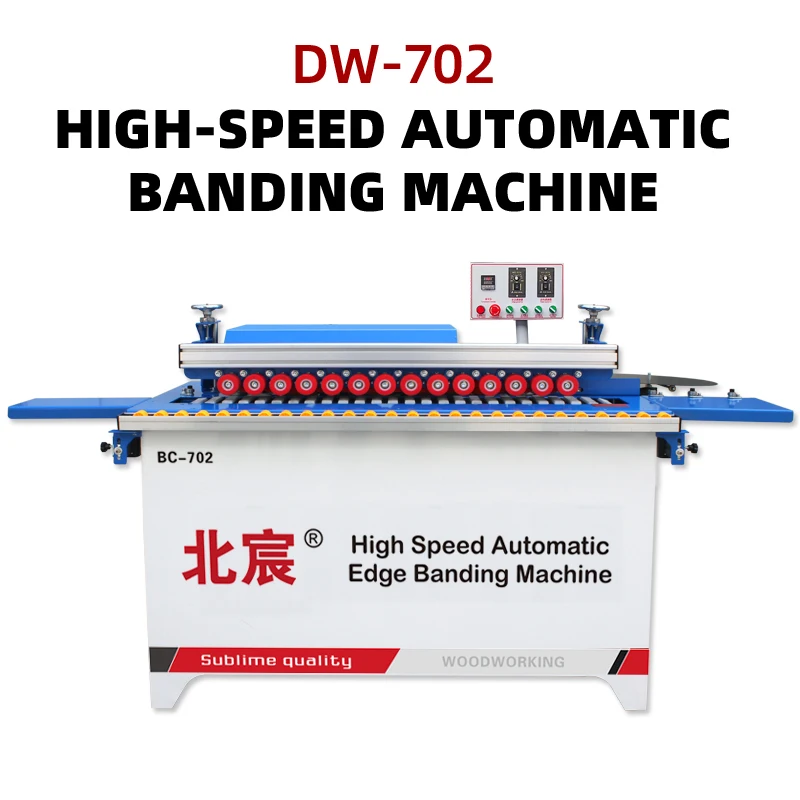
| Model | DW702 |
| Product Type | Automatic Edge Banding Machine |
| Total Power | 3800W |
| Voltage Options | 220V / 380V / Custom Configuration |
| Edge Banding Thickness | 0.3 – 3 mm |
| Edge Banding Height | 0 – 50 mm |
| Minimum Sheet Length | 250 mm |
| Minimum Sheet Width | 100 mm |
| Glue Pot Capacity | 1000 ml |
| Air Source Pressure | 0.4 – 0.8 MPa |
| Machine Dimensions | 1200 × 550 × 1100 mm |
| Machine Weight | 105 kg |
| Control Language | Chinese / English standard; Spanish, French available |
| Plug Standards | EU / USA / AU / UK |
| Key Features | Edge banding, trimming, polishing, automatic head & tail cutting, vacuum hold-down |
Application Suitability
| Application | Material or Output |
|---|---|
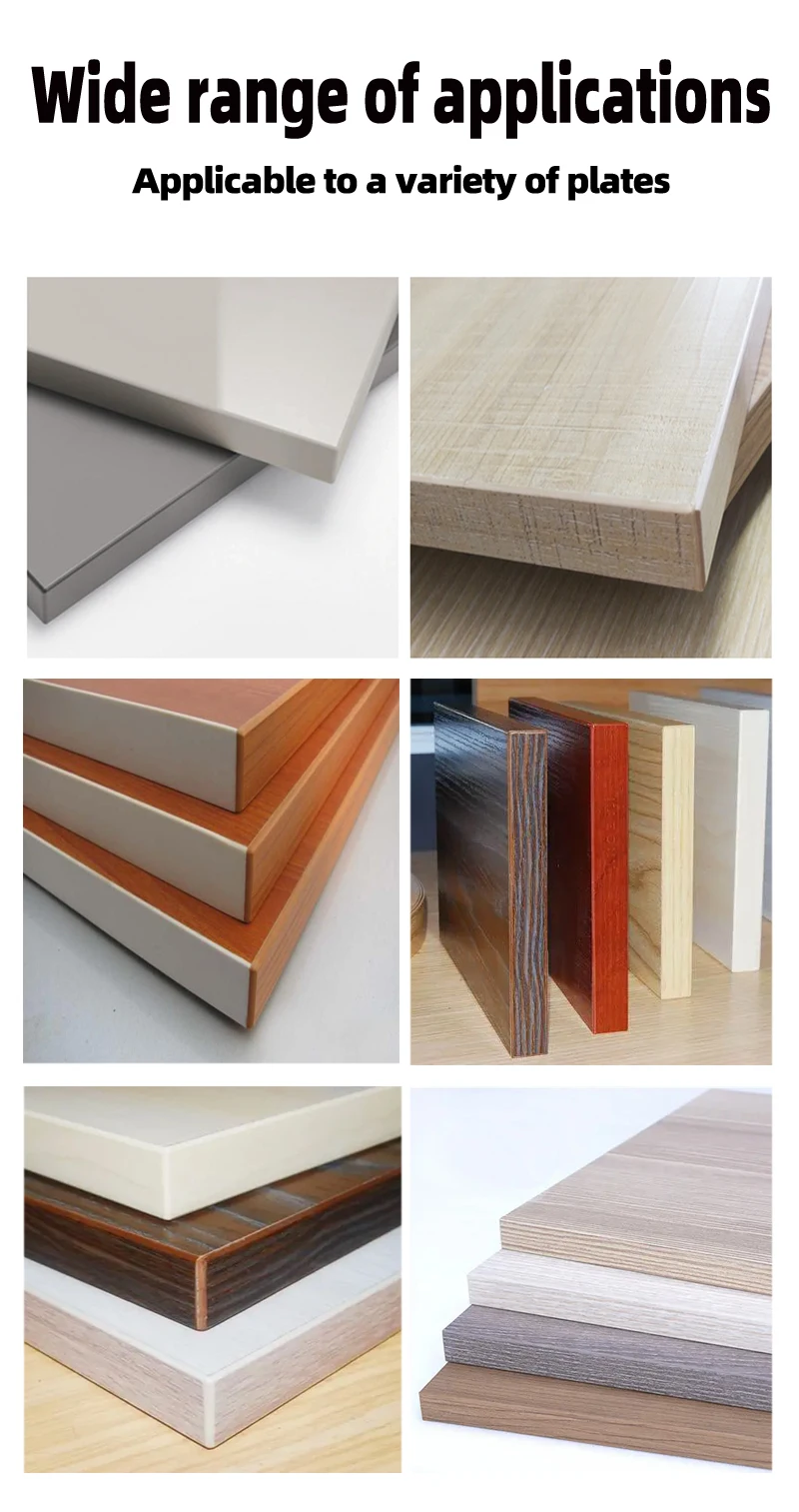
| Cabinet door and carcass edging | MDF and particleboard with PVC banding |
| Shelving and storage unit panels | Plywood and blockboard with wood veneer strip |
| Custom furniture small-batch runs | Polymer door blanks and ecological board |
| Workshop prototype and sample preparation | Solid wood panels up to 50 mm edge height |
Why the Voltage Question Must Come Before the Crate Closes
Every DW702 edge banding machine in stock ships only after your local voltage and frequency are confirmed in writing.
I learned this the hard way early in my export career. A unit identical in class to the DW702 was sent to a customer running 415V three-phase; nobody double-checked the nameplate against the order form, and that machine sat dead on the shop floor for three weeks while a step-down transformer was sourced locally. The customer lost production time, paid extra freight, and questioned every future order. Since then, every single unit I handle gets the voltage, frequency, and plug type documented before the crate is sealed [NEED_CITE: voltage and frequency standards by export market].
When buyers focus on an edge banding machine in stock solely by price and dispatch speed, the electrical mismatch risk gets pushed downstream. A 220V single-phase machine dropped into a 380V three-phase workshop will not simply underperform — it will not start, and repeated incorrect connection attempts can damage the motor windings and control board permanently.
Dispatch Without the Usual Lead-Time Gamble
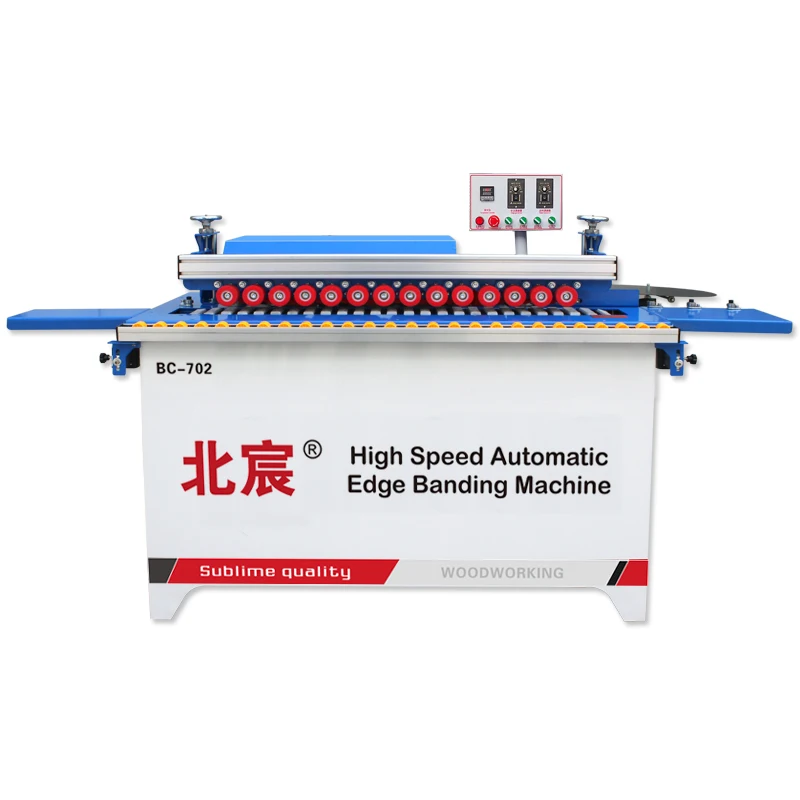
Workshops that need an edge banding machine in stock are usually reacting to a specific production gap — a manual edging bottleneck, a sudden order spike, or a failed legacy unit. The DW702 is held as a stocked all-in-one configuration so that gluing, trimming, polishing, and head/tail cutting are integrated in a single 1200 × 550 mm footprint. There is no separate trimming station to source and no polishing add-on to wire in later.
Stocked inventory means the pre-shipment test cycle has already been scheduled into the warehouse workflow. Your unit is run on representative MDF and particleboard panels before crating, so the edge finish and glue-line consistency are verified against a documented standard rather than assumed from a factory brochure.
Compact Footprint, Full Function Sequence
The 105 kg frame integrates every edging stage without requiring a separate dust extraction manifold or auxiliary conveyor. The 0.3–3 mm banding thickness range covers the PVC and ecological wood strips most cabinet shops run daily, while the 50 mm maximum edge height accommodates thicker solid wood lipping for worktops and shelving [NEED_CITE: typical PVC and veneer edge banding thickness ranges for cabinet production].
A 1000 ml glue pot provides sustained run time between refills, which matters when a small shop is pushing through a batch of cabinet carcasses in a single shift. The vacuum hold-down keeps narrow panels — down to 100 mm wide — stable through the trimming and polishing stations, preventing the chatter marks that appear when lightweight stock lifts off the feed bed.
What the Specification Sheet Actually Means on the Shop Floor
The 3800W total power rating tells you this machine can run on a dedicated single-phase circuit in most small workshops without requiring a three-phase supply upgrade. That distinction alone separates the DW702 from larger edge banders that force a facility to invest in electrical infrastructure before the machine even arrives. The 0.4–0.8 MPa air pressure range is standard for pneumatic clamping and trimming actuators, and most workshop compressors already operate within this band.
Edge banding thickness from 0.3 to 3 mm means you can switch between thin PVC for high-volume cabinet runs and thicker wood veneer strips for visible furniture edges without changing the feed mechanism. The automatic head and tail cutting eliminates the manual knife trimming that introduces inconsistency and operator fatigue across long production runs. Glue pot capacity of 1000 ml is sized so that a full shift of standard cabinet panels can be processed without stopping to refill and re-heat, which would otherwise introduce cold-glue adhesion failures mid-batch.
The Real Cost of Skipping Configuration Verification
A machine arriving with the wrong plug type is a minor delay. A machine arriving with the wrong voltage rating is a capital loss. Control boards damaged by overvoltage are rarely covered under standard warranty because the failure mode is classified as incorrect installation rather than manufacturing defect [NEED_CITE: machinery warranty exclusions for electrical mismatch].
Beyond the hardware damage, there is the scheduling consequence. A workshop that planned production around a delivery date then faces an additional multi-week wait for replacement control components, during which downstream assembly, finishing, and shipping commitments all slip. The cost of the machine itself becomes secondary to the cost of the orders it was supposed to fulfill.
What Stocked Procurement Actually Includes
Pre-shipment testing on your specified panel material and edge thickness is completed and photographed before dispatch. Voltage and frequency are confirmed against your facility’s documented supply, not assumed from a country-level default. The operation and maintenance manual ships in your agreed language — Spanish, French, or English — so the operator reading it on day one is not translating technical terms through a phone app.
Packing photographs and full customs documentation are provided as standard, which matters when a single-unit shipment clears import inspection without a local agent to intervene. Spare parts lists ship with the machine so that consumable items like trimming blades and polishing wheels can be reordered without waiting for a model number lookup [NEED_CITE: standard export documentation requirements for industrial woodworking machinery].
Documentation & Verification
- Factory test record on your specified panel thickness and edge material before dispatch
- Electrical schematic matching your confirmed voltage and plug configuration
- Operation and maintenance manual in your agreed language at shipment
- CE declaration of conformity for import clearance in regulated markets
- Packing photographs documenting crate condition before carrier handover
Installation, Commissioning & Support
- Dedicated circuit rated for 3800W total draw with appropriate breaker sizing
- Compressor line delivering 0.4–0.8 MPa clean dry air to the pneumatic manifold
- Level floor placement within the 1200 × 550 mm footprint with rear access clearance
- First-run calibration of glue temperature and feed pressure on your actual panel stock
- Trimming and polishing wheel alignment verified during initial commissioning
- Consumable spare parts list for blades, polishing wheels, and glue pot seals included
What We Need to Move Your Order Forward
To match the right stocked configuration to your workshop, share your local supply voltage and frequency, the plug standard your electricians use, and the control panel language your operators read. Let us know the primary panel materials you run — MDF, plywood, or particleboard — and the edge banding thickness range you need covered most often. If you have a specific production run waiting on this machine, tell us the panel dimensions and target completion window so we can confirm the DW702 fits your throughput requirement.
Frequently Asked Questions
Q: Is the DW702 currently in stock and what is the dispatch lead time?
A: DW702 units are held as stocked inventory with pre-shipment testing built into the dispatch workflow. Once your voltage, plug type, and language are confirmed, the unit is run on representative panels, photographed, and crated. Typical dispatch follows within a short window after configuration sign-off, avoiding the multi-week production lead times of made-to-order machines.
Q: Can voltage, plug type, and control panel language be confirmed before shipping?
A: Yes. Every unit ships only after your facility voltage and frequency are documented, your plug standard is matched, and your preferred control language is set. Spanish, French, and English panels are available. This prevents the situation where a machine arrives electrically incompatible or unreadable to the operator who must commission it.
Q: What panel materials and edge banding thicknesses does this unit handle?
A: The DW702 processes MDF, particleboard, plywood, blockboard, and polymer door panels. Edge banding thickness runs from 0.3 mm thin PVC up to 3 mm wood veneer or ecological board strips. The 50 mm maximum edge height also covers thicker solid wood lipping used on worktops and heavy-duty shelving units.
Q: How is the machine packed and what shipping options exist for a single unit?
A: Each DW702 is crated with packing photographs taken before carrier handover. Customs documentation is prepared to support single-unit import clearance. The 105 kg weight and compact 1200 × 550 × 1100 mm dimensions allow LCL ocean freight or air cargo depending on your urgency and destination port requirements.
Q: What spare parts ship with the machine and how are replacements ordered?
A: A spare parts list covering consumable trimming blades, polishing wheels, and glue pot seals ships inside the crate. Replacement parts are identified by model number so you can reorder directly without a factory visit. The included operation manual documents maintenance intervals and part replacement procedures for your workshop technicians.