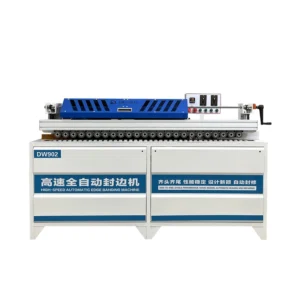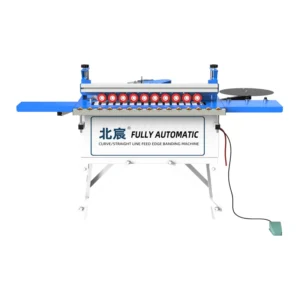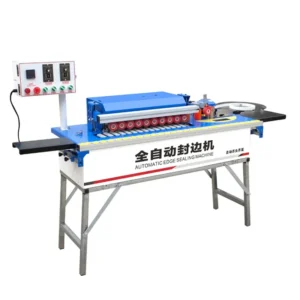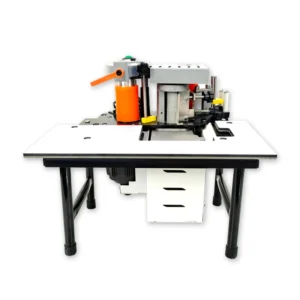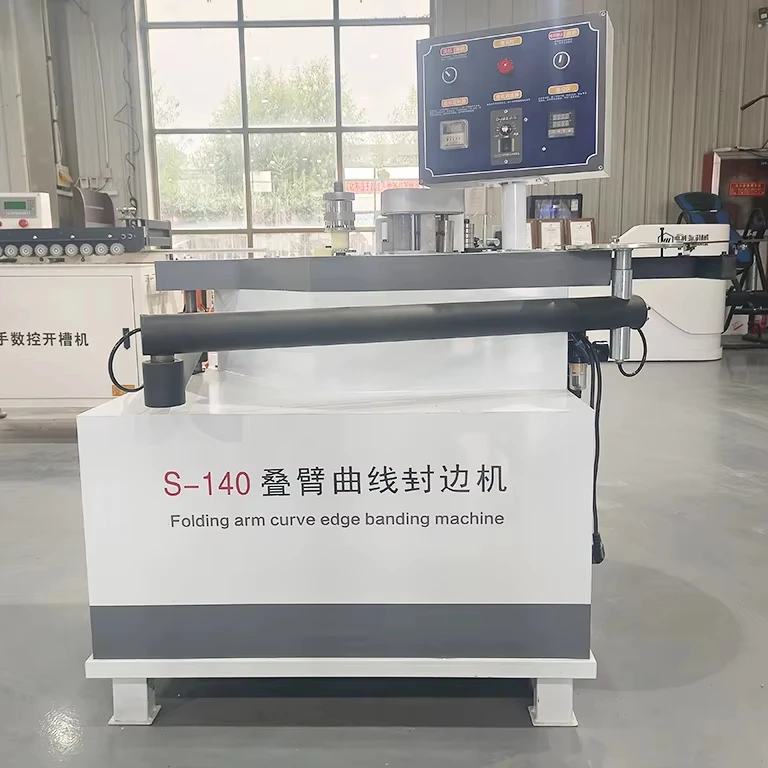
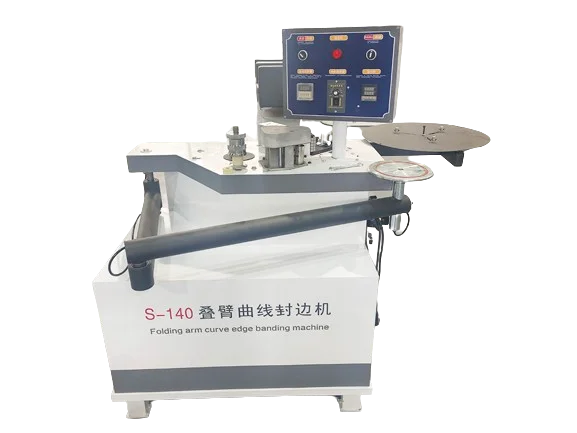
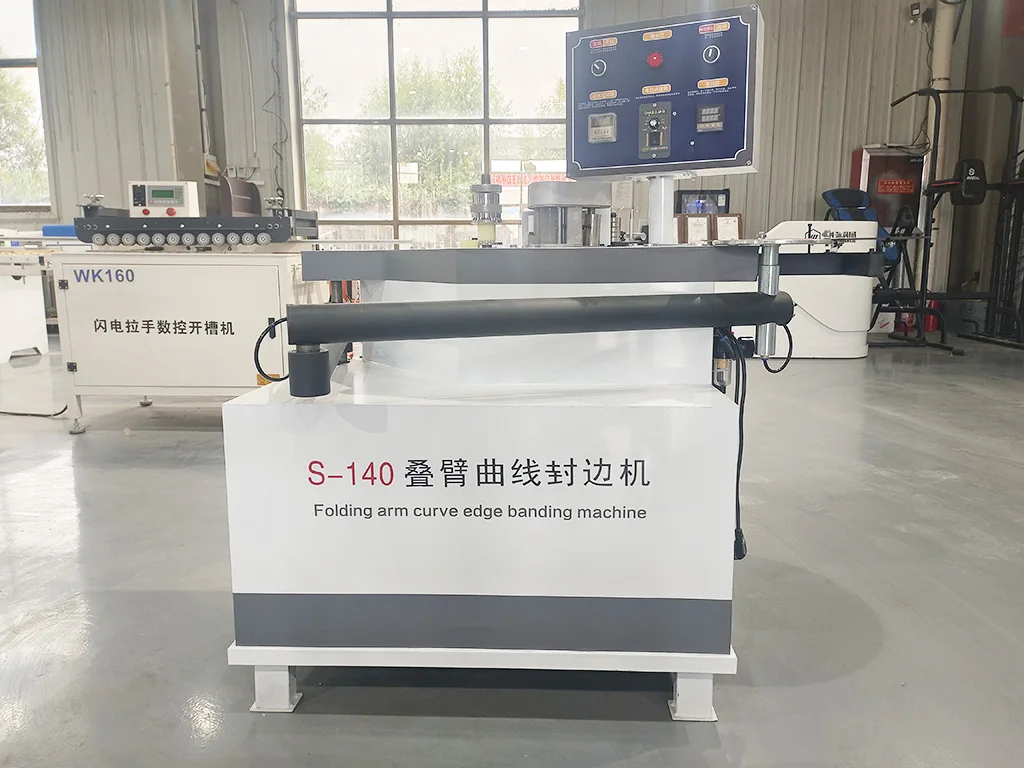
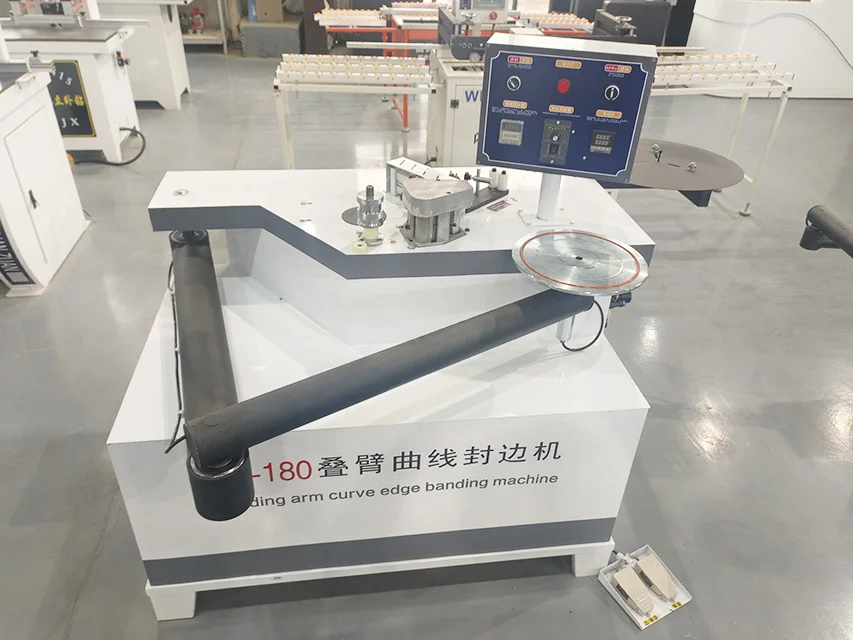

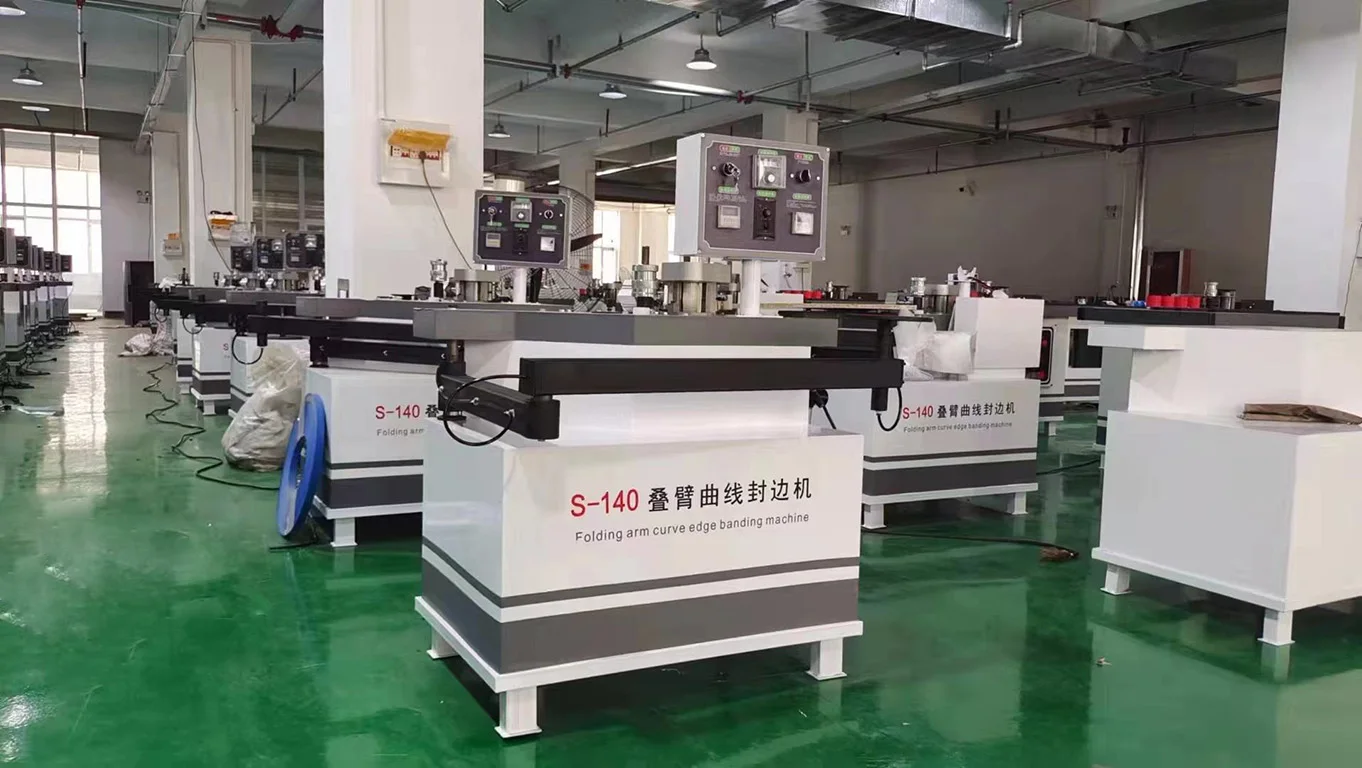
Description
Voltage-Verified Stock Dispatch — every S-140 unit leaves the warehouse with its 220V nameplate cross-checked against your site power documentation before crating.
Technical Specifications
| Parameter | Value |
|---|---|
| Model | S-140 |
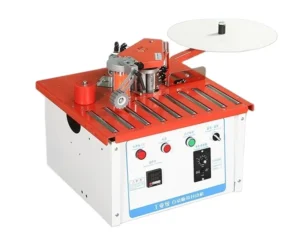
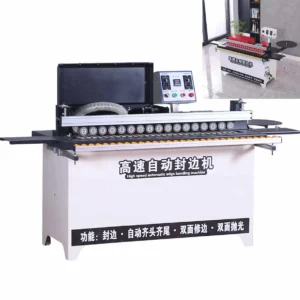
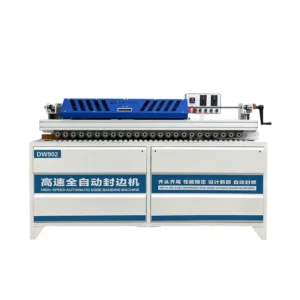
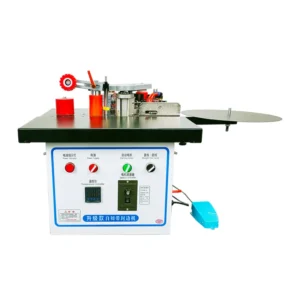
| Product Type | Manual Curve Edge Banding Machine |
| Voltage & Frequency | 220V |
| Total Power | 1.4 kW |
| Air Supply Requirement | 0.5–0.8 MPa |
| Edge Banding Speed | 0–180 mm/s |
| Overall Dimensions | 96 × 62 × 88 cm |
| Machine Size | 105 × 65 × 120 cm |
| Net Weight | 88 kg |
| Suction Cup Size | 200 × 26 mm |
| Edge Band Thickness Range | 0.4–2 mm |
| Edge Band Width Range | 8–50 mm |
| Breaking Method | Automatic tape break via double cylinders |
| Glue Pot Capacity | 1000 ml |
| Gluing Type | Double-sided gluing |
| Application Mode | Straight and curved dual purpose |
| Hot Air Device | Bottom-up hot air heating |
| Control Features | Intelligent temperature control, speed adjustment, timer |
Application Suitability
| Application | Material or Output |
|---|---|
| Custom cabinet and wardrobe production | MDF and particleboard with PVC edge banding |
| Small-batch curved panel furniture | Plywood and MDF with wood veneer strips |
| Office furniture and tabletops | Particleboard with 0.4–2 mm PVC edging |
| Doors, windows, and decorative wood items | Solid wood panels with veneer edge strips |
| Joinery workshop scaling from manual application | MDF and plywood with PVC or veneer banding |
Why Confirming Voltage Before Dispatch Saves Weeks of Downtime
A machine that arrives with the wrong voltage specification is dead weight on your shop floor until the correct components arrive.
I have watched this scenario play out more times than I care to count. A workshop orders a manual curve edge banding machine in stock fast delivery, eager to fill a production gap. The unit ships within days, arrives on schedule, and the operator plugs it in — only to trip the breaker or fry a contactor because the local supply is 415V and the machine was wound for 380V, or the frequency mismatch causes the motor to overheat within the first hour. The machine sits idle while replacement parts cross borders. [NEED_CITE: voltage and frequency standards by export market]
That three-week gap between a wrong-voltage machine and a working one is the reason I now treat the nameplate check as non-negotiable. Before any S-140 leaves stock, the 220V rating is confirmed against the buyer’s documented site electrical specification.
Stock Availability Without the Specification Gamble
Most ready-to-ship edge banders are listed with a single voltage assumption and shipped without a second conversation. The S-140 manual curve edge banding machine in stock fast delivery carries a confirmed 220V configuration, and the dispatch paperwork includes the voltage verification record so there is no ambiguity when the crate arrives at your facility.
Compact Footprint, Dual Functionality
The straight-and-curved dual-purpose design means a small workshop does not need two machines occupying floor space. At 105 × 65 × 120 cm, the S-140 fits against a wall in a tight production area while handling both radius cuts and straight panel edges in the same shift. [NEED_CITE: typical floor space constraints in small custom furniture workshops]
How Glue Pot Capacity and Heating Shape Your Daily Output
The 1000 ml glue pot on the S-140 reduces refill interruptions during a full production run. A smaller pot forces the operator to stop and reload adhesive every few boards, breaking workflow rhythm and introducing cold-start inconsistencies in the glue bead. Double-sided gluing applies adhesive to both the panel edge and the banding strip simultaneously, which improves initial tack and reduces the chance of the strip peeling away on curved sections where centrifugal force works against adhesion.
The bottom-up hot air heating system directs warm air at the joint line just before the banding strip meets the panel. This keeps the adhesive tacky at the moment of contact rather than relying solely on pot temperature, which matters when ambient workshop temperature drops in winter months or when processing thicker 2 mm PVC that absorbs heat differently than thin veneer. [NEED_CITE: hot melt adhesive open time and substrate temperature interaction]
Edge banding speed adjusts from 0 to 180 mm/s, letting the operator slow down on tight curves where the strip needs more dwell time against the panel edge and speed up on long straight runs where consistency matters more than dwell. The intelligent temperature control maintains the glue pot within a narrow range, preventing the adhesive from degrading if the machine idles between batches.
The Hidden Cost of Skipping Pre-Shipment Voltage Verification
When a machine arrives with mismatched voltage, the problem is never limited to a single blown component. The contactor burns out, which trips the upstream breaker, which may damage the control board if the surge is severe enough. You end up waiting for a full electrical assembly rather than a single relay. The workshop that was supposed to start production on Monday is still waiting for parts two weeks later, and the customer order that justified the purchase has slipped past its deadline. [NEED_CITE: impact of voltage mismatch on industrial motor and control component lifespan]
This is why every S-140 shipped from stock goes through a nameplate audit against the buyer’s confirmed electrical specification before the crate is sealed. The extra hour at the warehouse prevents the multi-week recovery that follows a wrong-voltage delivery.
What Stock Purchasing Gets You Here
Voltage confirmation happens before dispatch, not after arrival — the 220V specification on every S-140 is verified against your documented site power before crating.
Pre-shipment test records travel with the machine, so you receive documentation that the unit ran under load and passed functional checks before it left the facility.
Operation and maintenance manuals are supplied in the language your operators read, eliminating the commissioning delay that comes from deciphering an unfamiliar control panel.
A spare parts list accompanies every order, identifying the consumables and wear items specific to your S-140 so you can stock them locally before the first maintenance interval.
Single-unit orders are fulfilled from inventory without a minimum order quantity requirement, which suits workshops buying one machine to fill an immediate gap rather than dealers stocking a full container.
Documentation & Verification
- Factory test record on your specified edge band thickness and material before dispatch
- Voltage and frequency confirmation sheet matching your site electrical specification
- Operation and maintenance manual in your agreed language with illustrated troubleshooting
- Spare parts list with part numbers for suction cups, glue pot components, and heating elements
- Packing photographs showing machine condition and crating integrity before container loading
Installation, Commissioning & Support
- Requires a dedicated 220V circuit rated for at least 1.4 kW continuous draw with proper grounding
- Compressed air supply must deliver 0.5–0.8 MPa cleanly; inline filtration recommended for the glue system
- Machine ships assembled; connect power, air line, and load glue — no structural assembly on site
- First-run guidance covers glue temperature calibration for your specific PVC or veneer thickness
- Speed adjustment from 0–180 mm/s tuned to your operator’s comfort and curve radius requirements
- Consumable wear parts include suction cups and glue pot seals; initial spares ship with the order
Before You Request a Quote
Send your site voltage and frequency so the 220V configuration is confirmed against your actual supply before the order is processed. Include the edge banding materials you plan to run — PVC thickness, veneer type, and the panel substrates — so the glue temperature and speed settings can be recommended in advance. If your workshop has limited floor space, share the area dimensions so the 105 × 65 × 120 cm footprint is verified against your layout.
Frequently Asked Questions
Q: What voltage options are available and is my local frequency compatible?
A: The S-140 in stock ships with a 220V configuration. Before dispatch, your local voltage and frequency are confirmed against the machine nameplate to ensure compatibility. If your site runs a different supply, communicate this during the inquiry stage so alternatives can be evaluated before the order is finalized.
Q: How quickly can the machine ship from stock after order confirmation?
A: Stocked S-140 units are prepared for dispatch once voltage confirmation and payment are settled. The pre-shipment test, documentation assembly, and crating follow a set sequence, after which the machine is handed to the freight forwarder. Exact dates depend on the logistics route to your destination.
Q: What edge banding materials and thicknesses does this machine handle?
A: The S-140 processes edge banding from 0.4 mm to 2 mm thick and 8 mm to 50 mm wide. Compatible materials include PVC edge banding and wood veneer strips, applied to MDF, particleboard, and plywood panels commonly used in cabinet and custom furniture production.
Q: Is assembly required on arrival and what setup support is provided?
A: The machine ships fully assembled. On arrival you connect the 220V power supply, attach the compressed air line at 0.5–0.8 MPa, and load the glue pot. Setup guidance is provided to calibrate temperature and speed for your specific edge banding material and panel substrate.
Q: What spare parts and consumables should I order with the machine?
A: A spare parts list ships with every S-140, identifying wear items such as suction cups, glue pot seals, and heating elements. Ordering a starter set of these consumables with the machine ensures you can perform routine maintenance without waiting for international parts delivery.