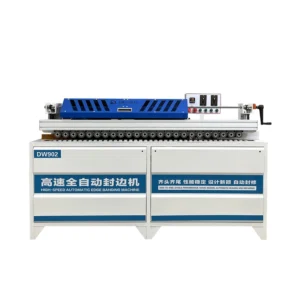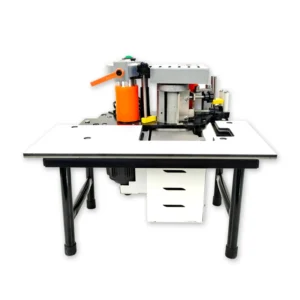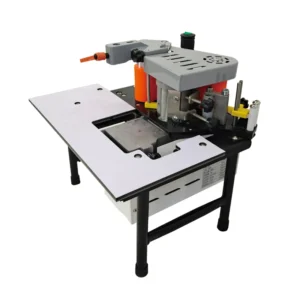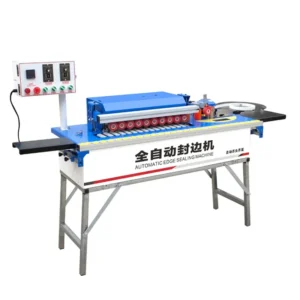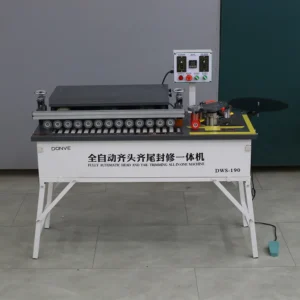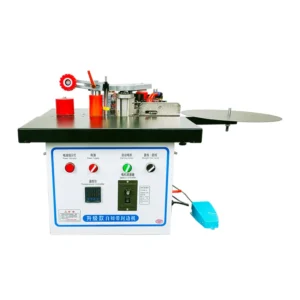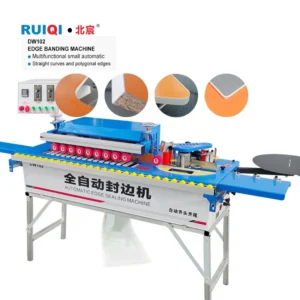
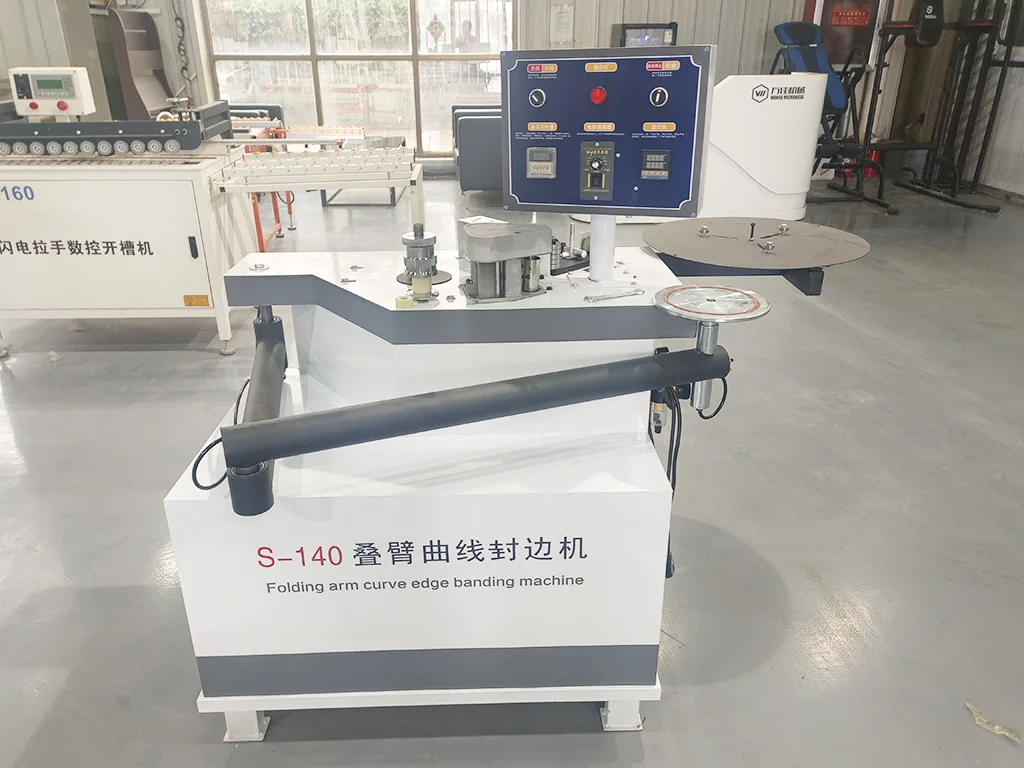
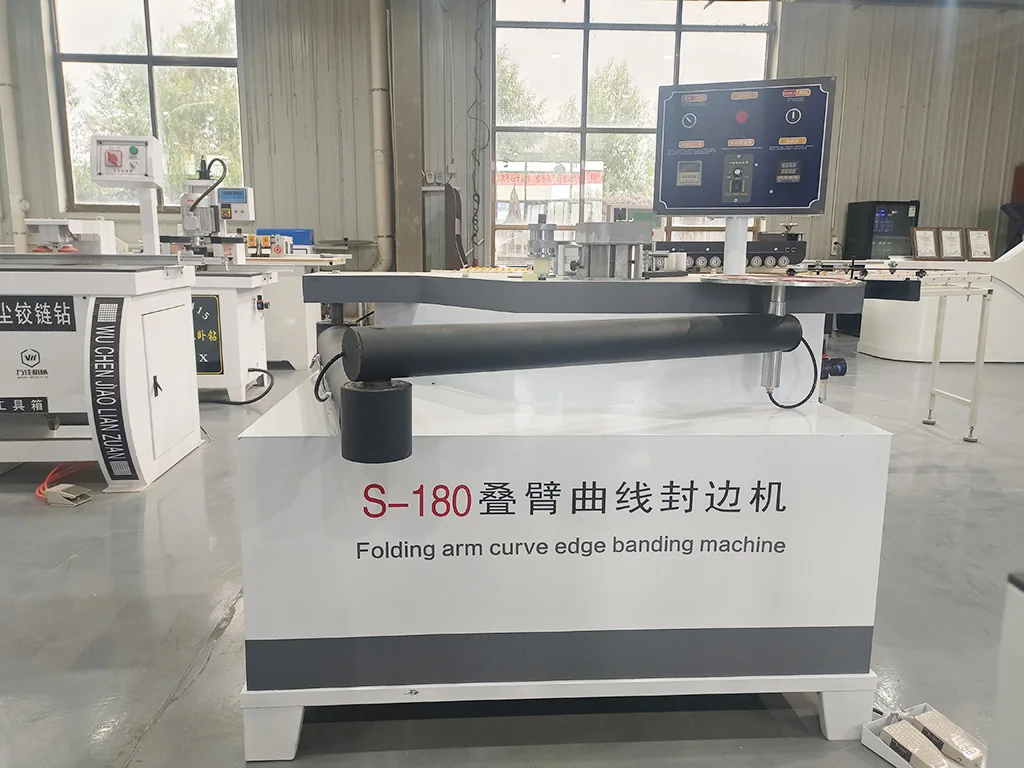
Description
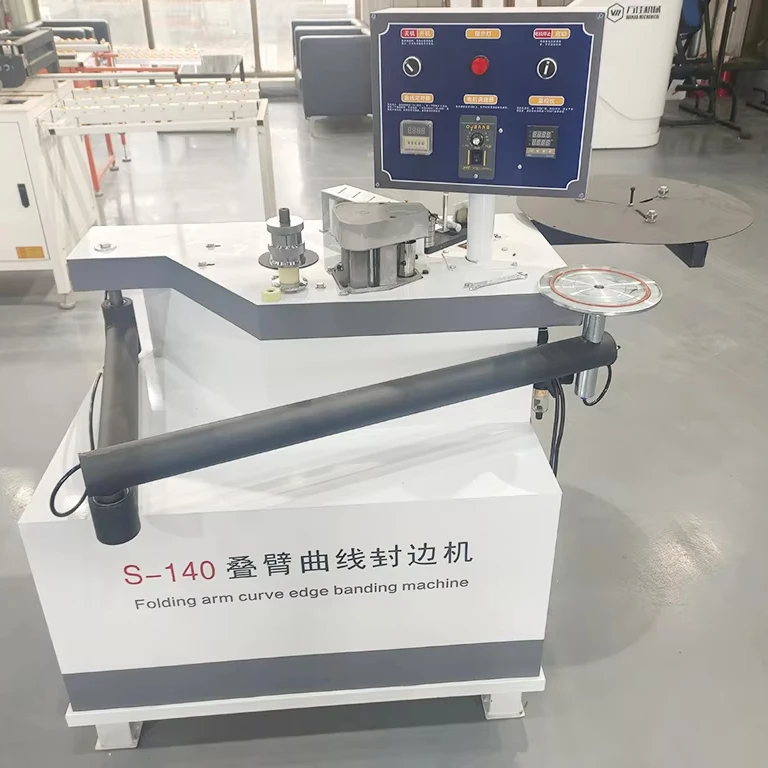
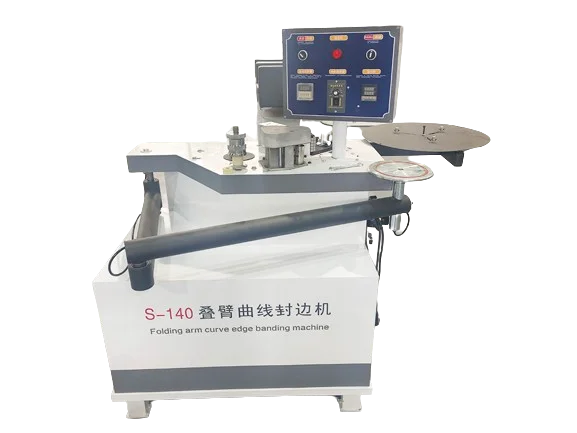
Stocked for Fast Dispatch — The S-140 folding arm curve edge bander ships from ready inventory with voltage and language confirmed before packing, eliminating the wait for custom builds.
Technical Specifications
| Parameter | Value |
|---|---|
| Model | S-140 |
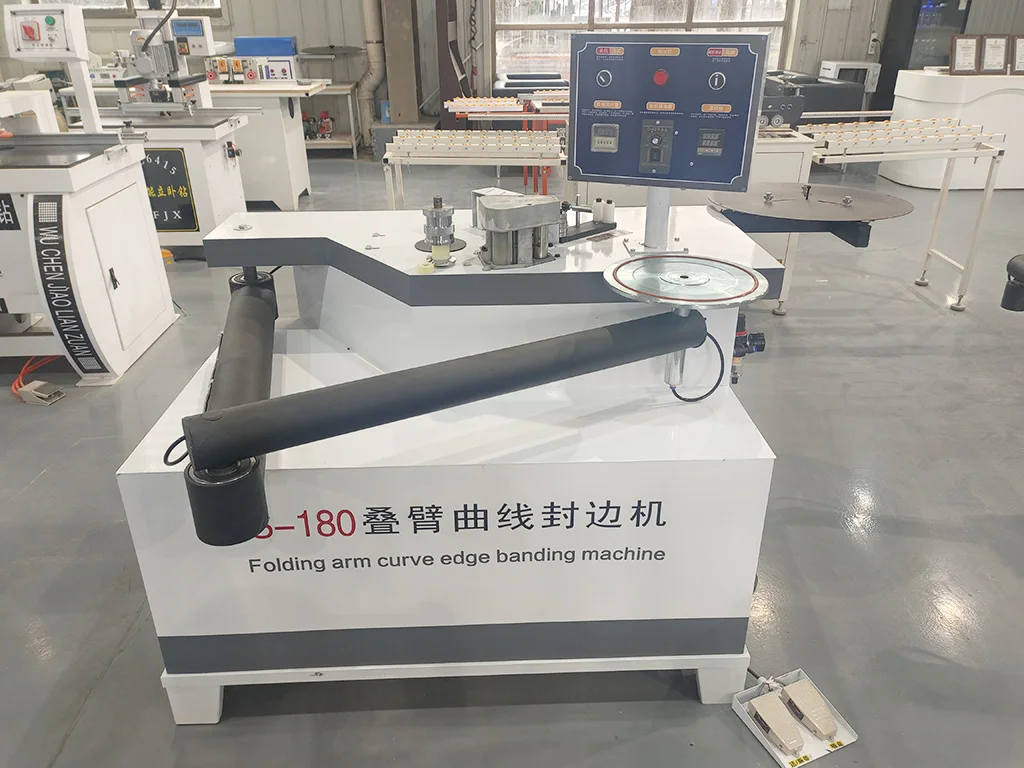
| Product Type | Folding Arm Curve Edge Banding Machine |
| Voltage | 220V |
| Total Power | 1.4 kW |
| Air Supply Pressure | 0.5-0.8 MPa |
| Edge Banding Speed | 0-180 mm/s |
| Machine Dimensions | 105×65×120 cm |
| Net Weight | 88 kg |
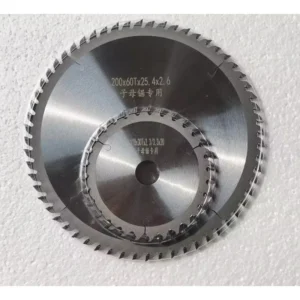
| Suction Cup Size | 200×26 mm |
| Edge Band Thickness Range | 0.4-2 mm |
| Edge Band Width Range | 8-50 mm |
| Breaking Method | Automatic tape break (double cylinder) |
| Glue Pot Capacity | 1000 ml |
| Gluing Type | Double-sided gluing |
| Machine Function | Straight and curved dual purpose |
| Hot Air Device | Bottom-up hot air heating |
| Motor Type | Pure copper motor |
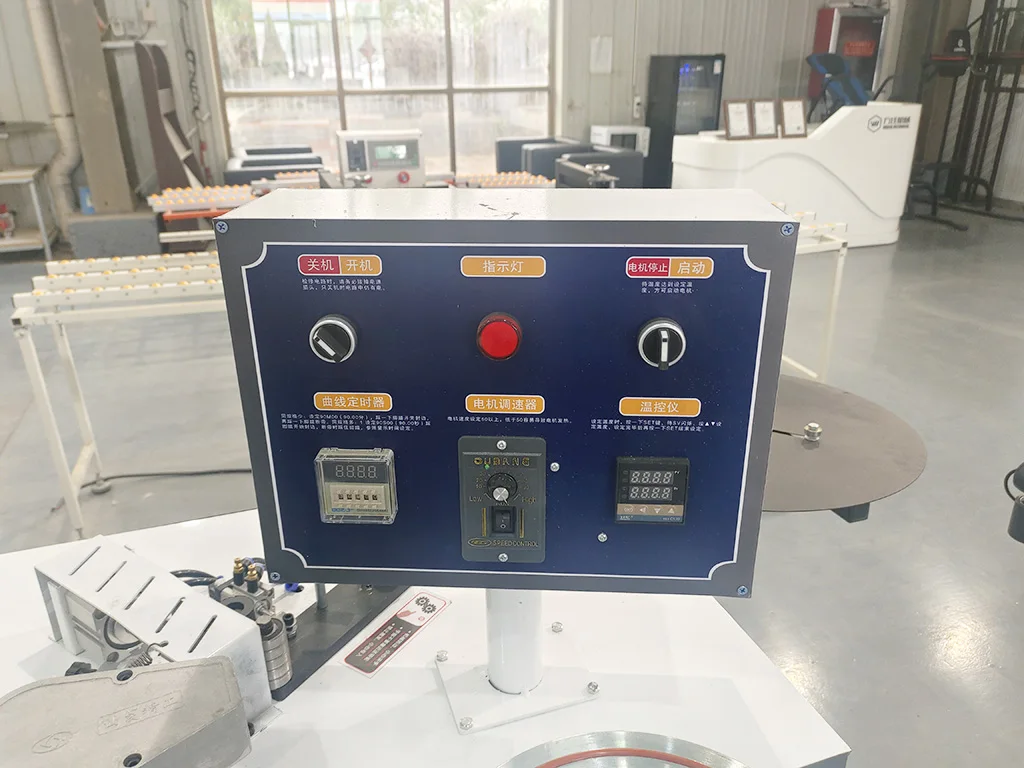
| Control Panel | Intelligent temperature control, speed adjustment, timer |
Application Suitability
| Application | Material or Output |
|---|---|
| Custom cabinet door production | MDF and particleboard with PVC edge banding |
| Wardrobe panel edging | Plywood panels with melamine or veneer strips |
| Curved furniture components | Solid wood panels with 0.4-2 mm banding |
| Office desk and table edging | Particleboard and MDF with 8-50 mm wide strips |
| Small-batch joinery | Mixed substrates requiring straight and curve capability |
Why Voltage Confirmation Must Happen Before You Confirm the Order
A Curve Edge Banding Machine in stock means nothing if it arrives with the wrong voltage for your workshop. Ordering from available inventory should speed up delivery, not create new problems at the unloading dock. [NEED_CITE: voltage and frequency standards by export market]
I once saw a small furniture shop receive a 380V unit when their facility only had single-phase 220V supply. The machine sat idle for weeks while they arranged an industrial electrician to install a dedicated line, turning a fast stock purchase into a project delay. The S-140 is configured for 220V operation, which matches standard single-phase supply in many regions, but we always verify your local voltage and frequency before the unit leaves the warehouse. A quick confirmation eliminates the risk of receiving equipment that cannot be powered on upon arrival.
What "Ready Stock" Actually Means for Your Workshop
When you need a Curve Edge Banding Machine in stock, the lead time matters as much as the specifications. This S-140 unit sits in the warehouse tested and packed, waiting for your voltage and language details to be finalized before dispatch. Unlike made-to-order machines that require weeks on the production floor, a stocked unit can move from confirmation to shipping documentation in a compressed timeframe.
How Single-Unit Orders Simplify Small Workshop Procurement
Many small joinery shops and startup furniture makers do not need a full container of equipment. This S-140 Curve Edge Banding Machine in stock supports single-unit orders, meaning you can add curved edge capability to your workshop without committing to a larger purchase. Shipping options are quoted based on your destination port or address, keeping the procurement process straightforward. [NEED_CITE: typical shipping arrangements for single-unit woodworking machinery]
How the S-140 Specifications Translate to Daily Edging Work
The 0.4-2 mm edge band thickness range covers the PVC and veneer strips that most small workshops use for cabinet and wardrobe production. When you run thin 0.4 mm PVC on a curved panel, the double-sided gluing system applies adhesive to both the strip and the board edge, which helps prevent the lifting that often appears on tight radii. The 1000 ml glue pot holds enough adhesive for a sustained run of panels without frequent refilling interruptions.
The automatic tape break, controlled by double cylinders, produces a clean termination at the end of each edge. For operators moving from hand-applied banding, this removes the inconsistency that comes from manual cutting with a utility knife. The bottom-up hot air device warms the board edge just before the strip contacts the glue, improving adhesion on substrates like MDF and particleboard that tend to absorb heat unevenly.
The 0-180 mm/s speed range gives operators room to slow down on tight curves and increase pace on long straight sections. The intelligent temperature control on the panel maintains glue viscosity within a working range, reducing the cold-start adhesion failures that appear when the pot has not fully reached operating temperature. [NEED_CITE: edge banding adhesion failure causes on engineered wood substrates]
The Cost of Skipping the Pre-Shipment Verification Step
A machine dispatched without a pre-shipment test record can reveal problems only after it is bolted to your workshop floor. I have seen buyers discover that the suction cup does not hold their specific board thickness, or that the glue pot takes longer than expected to reach temperature, only when they run the first panel. These issues are solvable, but catching them at the factory means a correction before shipping rather than a troubleshooting call across time zones. [NEED_CITE: common commissioning issues with imported woodworking equipment]
Every S-140 unit receives a factory test on the buyer’s specified edge band thickness and board material before packing. Packing photographs document the machine condition and crate integrity at the point of dispatch. This verification step takes time, but it prevents the scenario where a workshop loses production days waiting for a replacement part to arrive by air freight.
Why Buyers Source This Machine Through Our Stock Channel
The S-140 is available for fast dispatch because we maintain inventory of this model rather than building each unit against an order. This stock approach works for workshops that need edge banding capability without a multi-week production lead time.
Voltage and language confirmation happens before dispatch, not after arrival. The 220V configuration is verified against your local supply, and the operation manual is prepared in your operator’s language so commissioning does not stall over a language barrier.
The four-stage QC process applies to stocked units the same way it applies to custom builds. Incoming material inspection, in-process checks, finished product verification, and the pre-shipment test all happen before the S-140 is released for packing.
Engineer-led configuration support means you receive guidance on whether this model fits your panel sizes and production volume, or whether a higher-capacity unit would serve your workflow better. The formal quotation arrives within 24 hours of your inquiry with specifications and shipping terms included.
Documentation & Verification
- CE declaration of conformity covering the S-140 for import into regulated markets
- Electrical schematic confirming 220V wiring and component ratings
- Factory test record showing edge banding performance on your specified material
- Operation and maintenance manual in your agreed language for operator reference
- Packing photographs documenting machine condition before crating
Installation, Commissioning & Support
- Requires a dedicated 220V circuit with adequate amperage for the 1.4 kW total power draw
- Air compressor must supply 0.5-0.8 MPa to operate the double cylinder tape break system
- Machine arrives assembled; place on a level floor with clearance around the 105×65 cm footprint
- First run should verify glue pot temperature stability and suction cup hold on your board thickness
- Pure copper motor requires periodic inspection of ventilation openings for dust accumulation
- 1000 ml glue pot should be cleaned after extended idle periods to prevent adhesive curing inside
What We Need to Move Your Order Forward
To confirm whether the S-140 fits your production setup, share your primary board material and thickness range, along with the edge banding strip widths you use most often. Let us know your local voltage and frequency so we can verify compatibility before the unit is released from stock. If you have specific curved panel radii in your product range, provide those dimensions so we can assess whether the suction cup and feed speed will handle the geometry.
Frequently Asked Questions
Q: What is the dispatch lead time for the S-140 from stock?
A: Stocked units can move to packing once your voltage and language details are confirmed. The pre-shipment test on your specified material and final documentation preparation typically require several working days before the machine is handed to the freight forwarder. Exact timing depends on the current order queue and your responsiveness in confirming specifications.
Q: Can I order a single unit, and what shipping methods are available?
A: Single-unit orders are accepted for the S-140. Shipping options include LCL sea freight for cost efficiency or courier services for faster delivery, depending on your destination. The 88 kg net weight and 105×65×120 cm dimensions make this unit suitable for both methods. Shipping costs are quoted based on your delivery address or nearest port.
Q: Is the 220V configuration compatible with my country’s electrical standard?
A: The S-140 is built for 220V operation, which aligns with single-phase supply in many export markets. Before dispatch, we confirm your local voltage and frequency to ensure compatibility. If your facility uses a different standard, we discuss whether this model can be adjusted or whether an alternative configuration is more suitable for your workshop.
Q: What edge banding materials and thicknesses does the S-140 handle?
A: The machine processes edge banding strips from 0.4 to 2 mm in thickness and 8 to 50 mm in width. Compatible materials include PVC, melamine, and veneer strips commonly used in cabinet and furniture production. The double-sided gluing system and bottom-up hot air device support consistent adhesion across these material types on both straight and curved edges.
Q: How is the machine packed, and is assembly required on arrival?
A: The S-140 ships fully assembled in protective crating with packing photographs taken before sealing. On arrival, you position the machine on a level floor, connect the 220V power supply and air compressor line, and load the glue pot. No major assembly is required. The operation manual guides you through initial setup and the first test run.