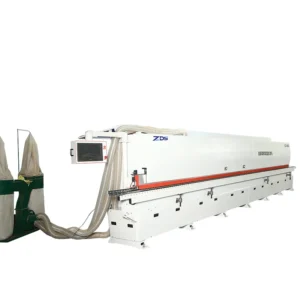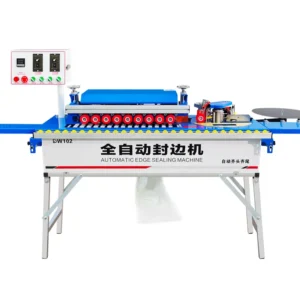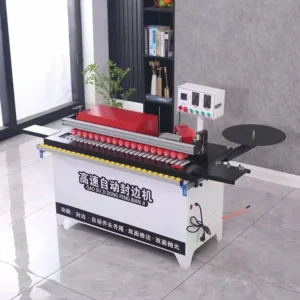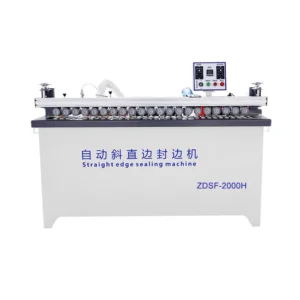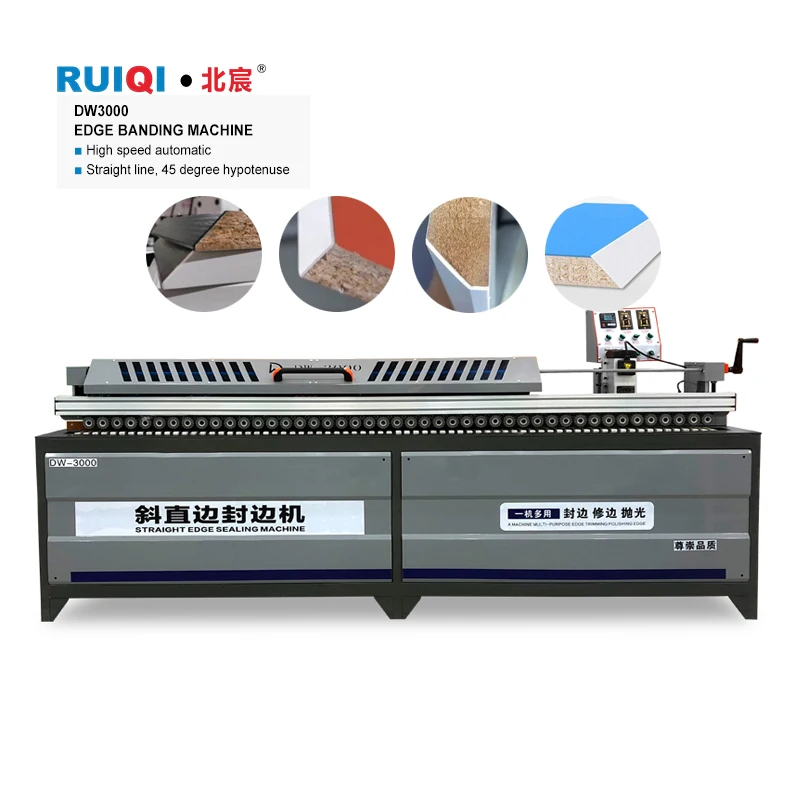
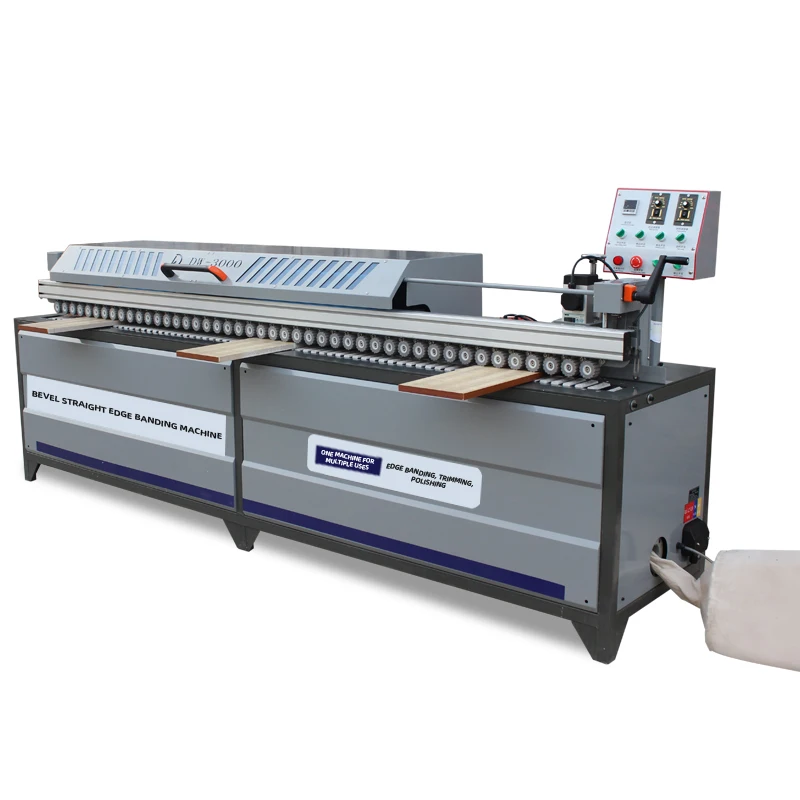
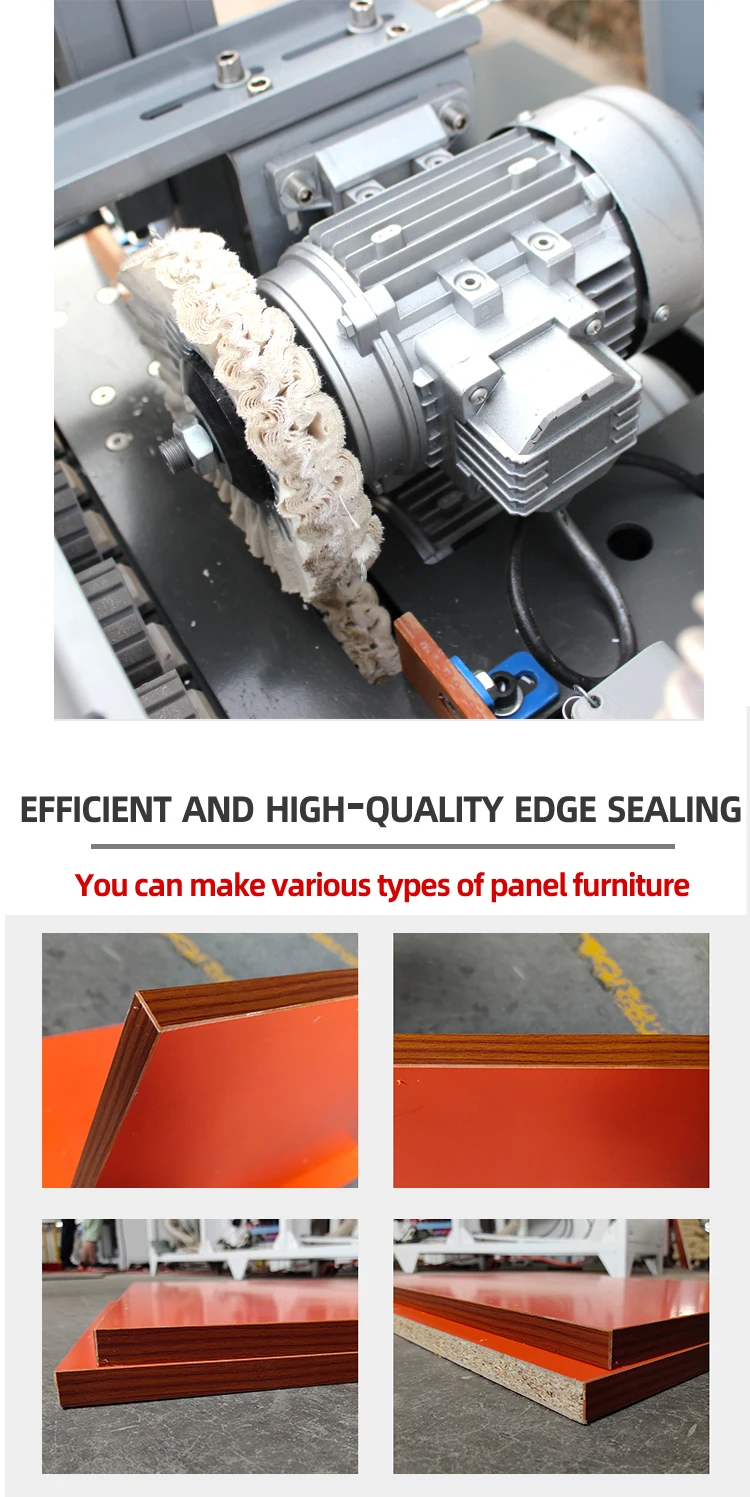
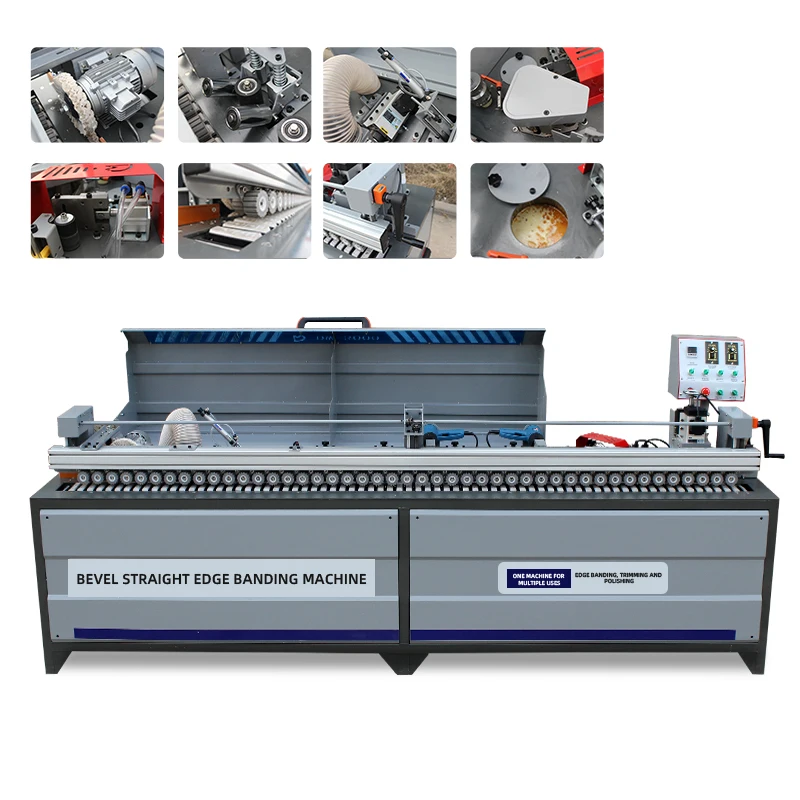

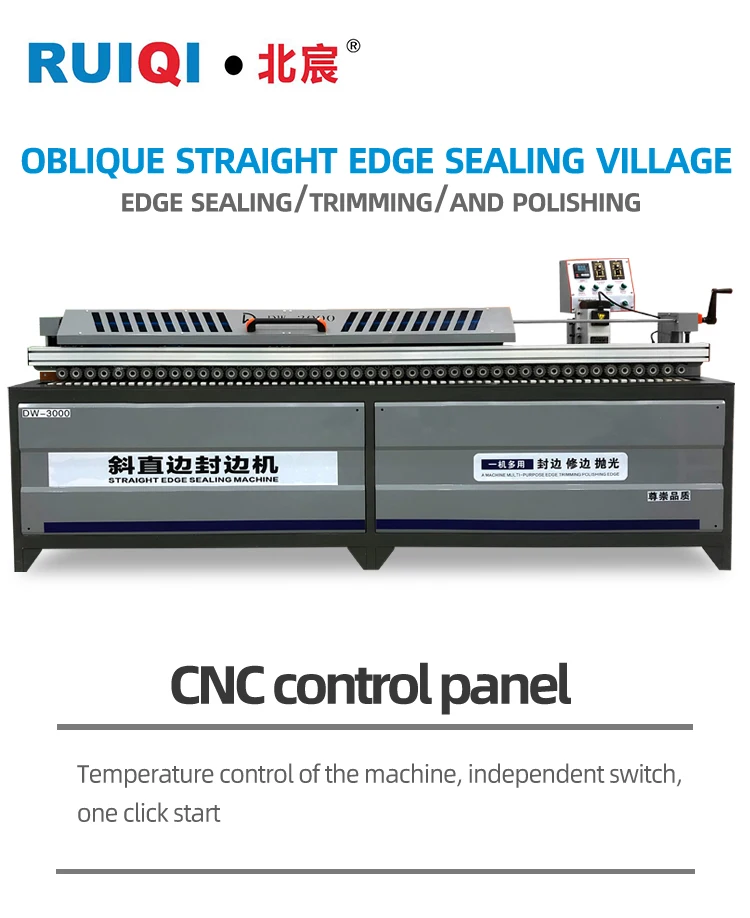
Description
Stocked and Configured — we verify voltage, frequency, and plug type for every DW3000 unit before dispatch, eliminating on-site electrical mismatches that stall commissioning.
Technical Specifications
| Parameter | Value |
|---|---|
| Model | DW3000 |
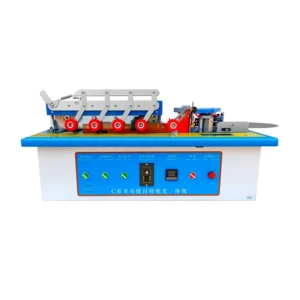
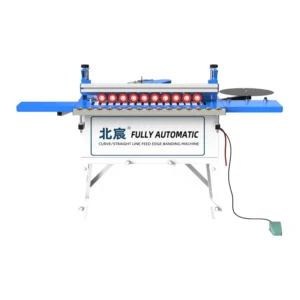
| Product Type | Automatic Edge Banding Machine |
| Total Power | 11 kW |
| Voltage & Frequency | 380V / 415V (frequency to be confirmed per destination) |
| Pre-milling Motor | 2.2 kW |
| Heating Power | 2.2 kW × 2 (double heat gun) |
| Feed Speed | 0–12 m/min (Edge power 160 W) |
| Transmission Speed | 0–12 m/min (Transmission power 180 W) |
| Trimming Power | 2.2 kW × 2 (spindle trimming motor, 3 spindle motors total) |
| Vacuum Power | 550 W |
| Polishing Power | 0.4 kW × 2 |
| Glue Pot Capacity | 4000 ml |
| Air Source Pressure | 0.5–0.7 MPa |
| Edge Banding Height | 0–50 mm |
| Edge Banding Thickness | 0.3–3 mm |
| Minimum Sheet Length | 30 cm |
| Minimum Sheet Width | 15 cm |
| Pressure Wheel | 8 groups, oblique, adjustable 30°–90° |
| Feeding Belt | Double cylinder |
| Overall Dimensions (L×W×H) | 299 × 65 × 130 cm |
| Net Weight | 430 kg |
| Language Options | Chinese, English (other languages customizable) |
| Plug Options | EU, USA, AU, UK |
| Assembly State | Fully automatic |
Application Suitability
| Application | Material or Output |
|---|---|
| Cabinet panel edge banding | MDF, particleboard, plywood |
| Custom door panel fabrication | MDF and plywood with PVC or veneer banding |
| Furniture component edging | Artificial board substrates with straight or 45° bevel profiles |
| Small-batch joinery production | Solid wood panels requiring pre-milling before banding |
Why the Voltage Question Must Come Before the Order
Confirming local frequency and plug standard at quotation stage prevents weeks of on-site rework.
I have watched a container arrive at a Jeddah furniture plant only to find the edge bander wired for 50 Hz while the workshop ran on 60 Hz. The feed motor turned faster than the trimming spindles could follow, leaving torn edges on every panel and forcing a three-week motor swap. Automatic Edge Banding Machine in stock orders move fast, but skipping the voltage sheet costs far more time than a two-minute confirmation call. That single mismatch turned a ready-stock advantage into a stalled production line [NEED_CITE: voltage and frequency standards by export market].
Ready-to-Ship Inventory with Verified Electrical Setup
Every DW3000 held in our warehouse undergoes an electrical checklist before it is crated. We match the motor winding, control transformer, and heater elements to the buyer’s declared supply, so an Automatic Edge Banding Machine in stock reaches the workshop floor ready to power on.
Lead Time That Respects Your Installation Schedule
Stock availability means dispatch happens in days rather than months, yet we still hold each unit through a pre-shipment test run. This balances the urgency of a fast-order channel with the verification a production machine demands before it leaves the factory [NEED_CITE: CE machinery directive requirements for industrial equipment].
What the Spec Sheet Means on the Shop Floor
The 2.2 kW pre-milling motor removes a thin layer from the panel edge before the glue roller engages, giving a fresh, square surface that improves bond consistency on MDF and particleboard alike. With two 2.2 kW heat guns feeding the 4000 ml glue pot, the adhesive stays within its working temperature window even when feed speed reaches 12 m/min. The three spindle trimming motors handle rough trimming, fine trimming, and scraping in sequence, which keeps edge profiles clean on boards ranging from 0.3 mm PVC to 3 mm solid wood banding. Double cylinder feeding belts grip the panel evenly across its width, reducing the chatter marks that single-belt systems leave on thin plywood sheets.
The Hidden Cost of Skipping Configuration Checks
A machine that arrives with the wrong plug or an unreadable control panel sits idle while an electrician fabricates adapters and operators guess at menu labels. Those delays ripple through the rest of the line — the panel saw finishes blanks that cannot be edged, and assembled cabinets pile up waiting for finished components. Rushing a stock order without locking down voltage, frequency, and language creates a bottleneck that erases every day saved on production lead time [NEED_CITE: common causes of commissioning delays in imported woodworking machinery].
Why Source This DW3000 Through Our Stock Channel
Our warehouse keeps DW3000 units configured across multiple voltage bands, so matching your supply does not require a custom build. Pre-shipment test records are photographed on actual panel material and shared before crating. Plug and control-panel language options are confirmed on the order form, not left to assumption. An engineer reviews each configuration against the buyer’s declared panel sizes and production scope before release. Fast dispatch does not mean unchecked dispatch — every unit passes the same four-stage quality gate applied to built-to-order machines.
Documentation & Verification
- Voltage and frequency confirmation sheet signed against your declared supply
- Pre-shipment test photographs taken on panel thickness matching your spec
- Operation manual supplied in your chosen language at dispatch
- Spare parts list cross-referenced to DW3000 assembly drawings
- Packing photographs showing crate bracing and moisture barrier
Installation, Commissioning & Support
- 380V/415V supply requires a dedicated 3-phase breaker rated above 11 kW total draw
- 299 cm footprint needs clear access on both sides for panel loading and trimming maintenance
- 0.5–0.7 MPa air line must be filtered and regulated before connecting to the glue station
- First-run calibration covers pre-milling depth, glue temperature, and trimming spindle offsets
- Eight pressure-wheel groups adjusted to your most common board thickness during commissioning
Before You Request a Quote
Tell us your local voltage and frequency, the panel materials you run most often, and the edge banding thickness range you need. If your workshop handles both straight and bevel edging, note the angle so we set the pressure wheels before crating. Sharing your daily panel count helps us confirm whether the 0–12 m/min feed range aligns with your throughput target.
Frequently Asked Questions
Q: What voltage and plug options are available, and how is compatibility confirmed before shipping?
A: The DW3000 supports 380V and 415V configurations with EU, USA, AU, or UK plug types. Before dispatch, we issue a voltage and frequency confirmation document that matches your declared workshop supply. The motor, control transformer, and heater elements are all verified against that sheet so the machine powers on correctly at arrival.
Q: What is the current dispatch lead time for the DW3000 from stock?
A: Stocked units typically leave the warehouse within days once configuration details are confirmed. The pre-shipment test, packing photographs, and documentation preparation add a short holding window. We provide a firm dispatch date after your voltage, plug, and language selections are locked in.
Q: Can the control panel language be set to English, Spanish, or French before delivery?
A: Yes. Chinese and English are standard, and additional languages are configurable before the machine ships. We confirm the requested language on the order form so operators can read menus and fault codes from the first day of production without relying on translation apps.
Q: What spare parts and consumables ship with the machine?
A: Each DW3000 ships with a spare parts list covering high-wear items such as trimming cutters, pressure wheel surfaces, and glue pot seals. Consumables included in the crate match the packing list agreed at order stage, giving you enough runway to schedule local resupply without interrupting early production runs.
Q: How do I match the DW3000 feed speed and edge banding thickness range to my panel material?
A: The 0–12 m/min feed range and 0.3–3 mm banding thickness cover most MDF, particleboard, and plywood applications. Tell us your typical board thickness and banding material so our engineer can recommend the appropriate feed setting and confirm that the eight pressure-wheel groups are angled correctly for your profile before dispatch.