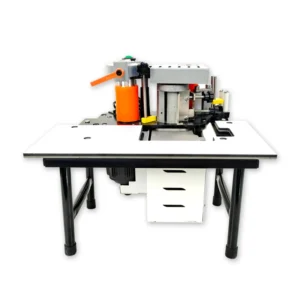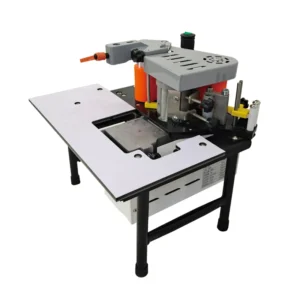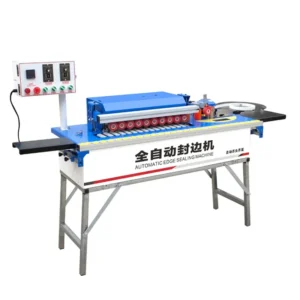
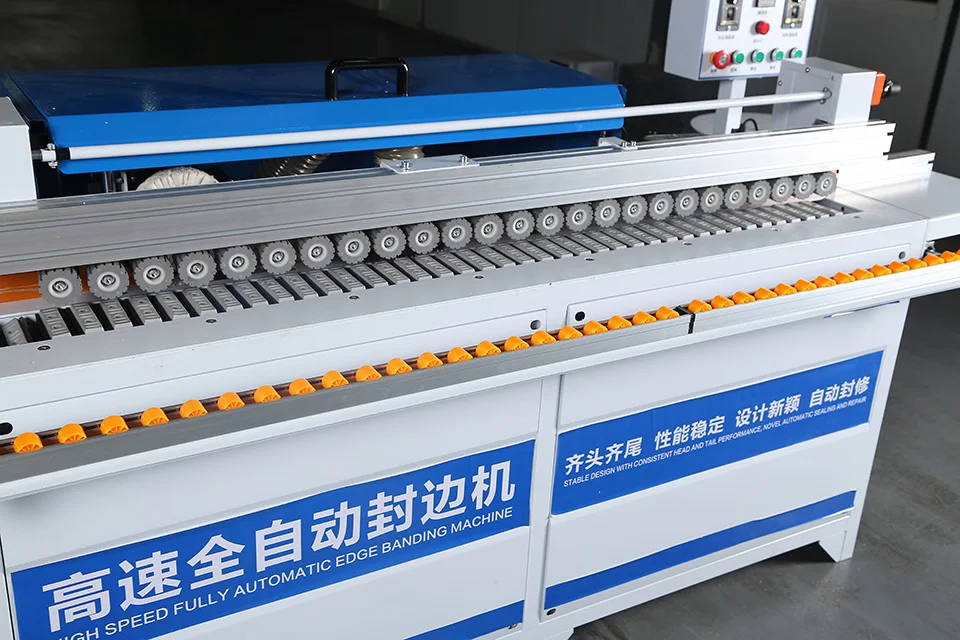
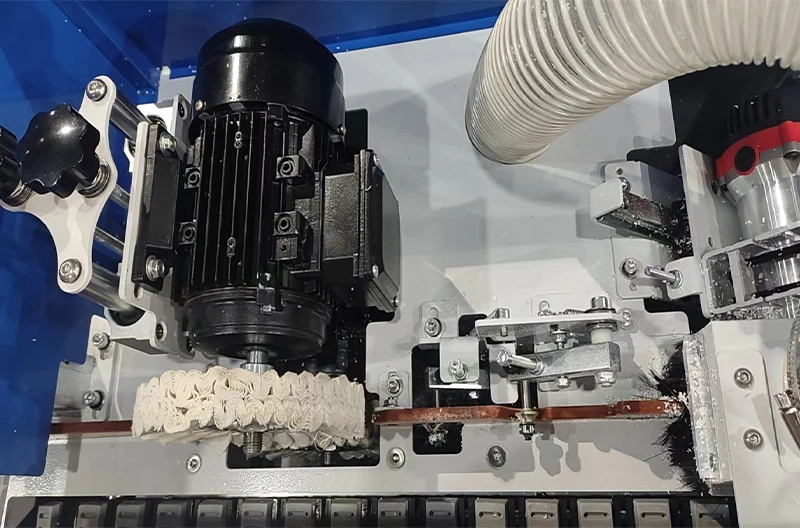
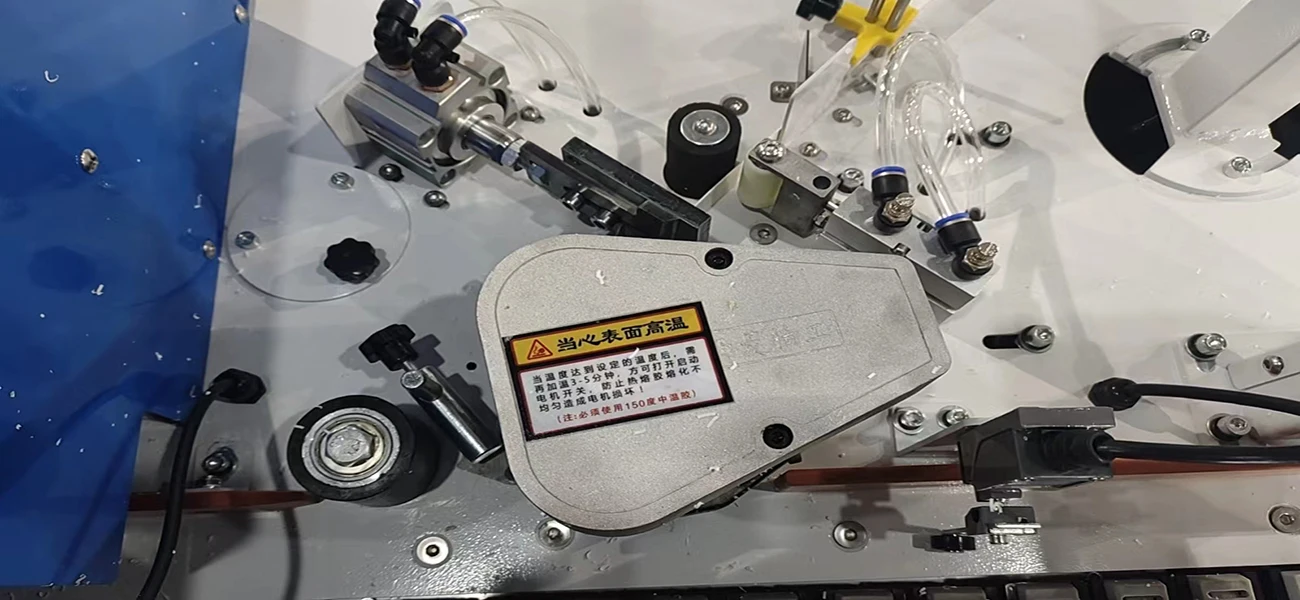
Description
Voltage Confirmed Before Dispatch — Every stocked unit ships only after matching your workshop’s electrical supply, eliminating the three-week transformer delays that stall commissioning.
Technical Specifications
| Parameter | Value |
|---|---|
| Product Type | Automatic Edge Banding Machine |
| Voltage | 220V (frequency and phase to be confirmed per destination market) |
| Total Power | 4200W |
| Equipment Size | 207 × 60 × 122 cm |
| Weight | 245 kg |
| Edge Band Height Range | 0–35 mm |
| Edge Band Thickness Range | 0.5–2.5 mm |
| Glue Pot Capacity | 4000 ml |
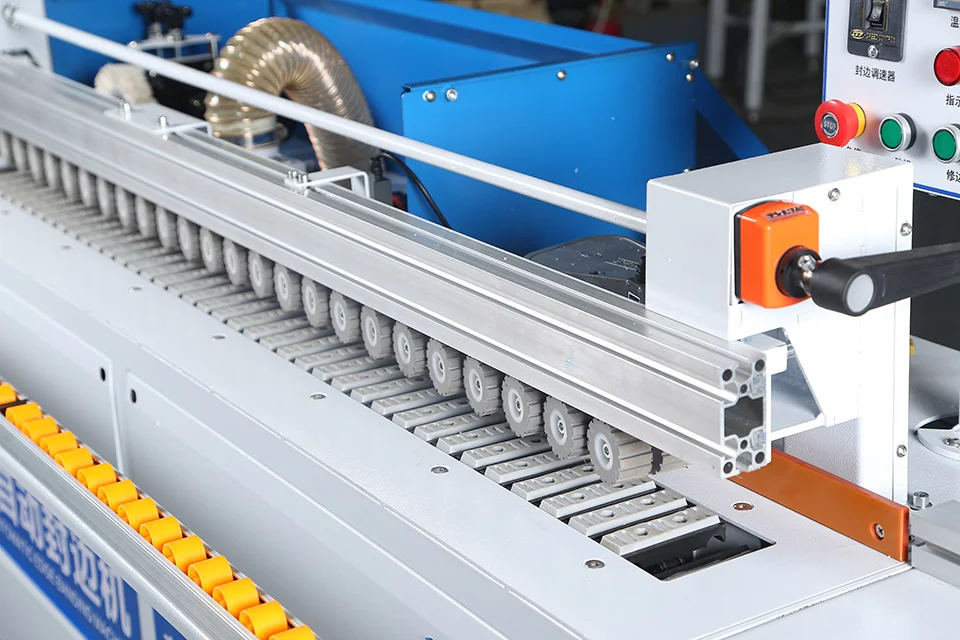
| Pressure Beam | Integrated, double rows of pressure wheels |
| Conveyor Belt | Silicone material |
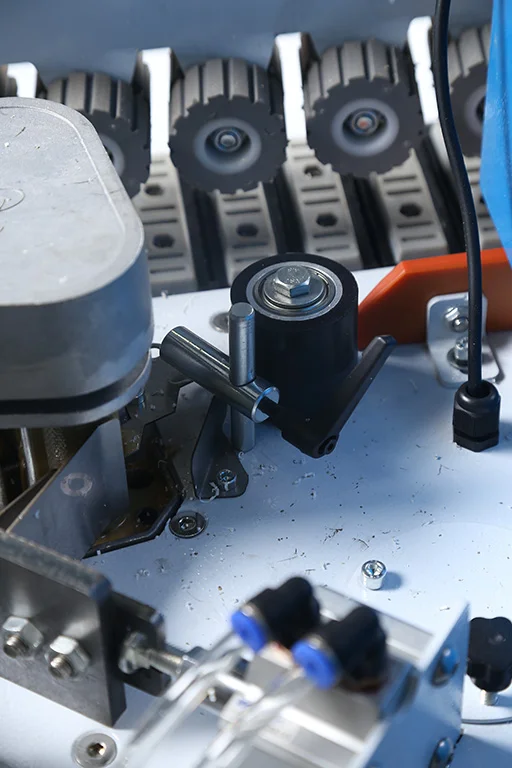
| Edge Strip Cutting | Pneumatically controlled |
| Trimming Configuration | Double high-speed motors, up and down |
| Polishing Configuration | Two motors, up and down |
| Pressure Beam Adjustment | Handle adjustment for arbitrary board height |
| Gluing Method | Double-sided gluing |
| Key Features | Intelligent temperature control, independent operating platform, large capacity glue pot |
Application Suitability
| Application | Material or Output |
|---|---|
| Custom cabinet door edge finishing | Melamine-faced particleboard with PVC edge banding |
| Small-batch wardrobe panel production | MDF with 0.5–2.5 mm veneer or PVC strips |
| Joinery workshop first-machine automation | Plywood and particleboard up to 35 mm band height |
| Furniture component edge sealing | Melamine boards requiring double-sided glue application |
Why the Voltage Question Should Come Before the Price on an Automatic Edge Banding Machine in Stock
Matching your workshop’s supply to the machine’s electrical configuration is the single step that prevents multi-week downtime on arrival.
I once watched a cabinet maker lose three full weeks of production because a machine arrived wired for 440V while the shop only had 380V on the floor. The transformer retrofit cost more than the shipping. With ready-stock equipment, the assumption is often that what you see is what you get — but voltage and frequency vary enormously between regions [NEED_CITE: voltage and frequency standards by export market]. Confirming these details before dispatch keeps the machine running on day one instead of sitting idle under plastic wrap.
Dispatch Timing and What "Ready Stock" Actually Means
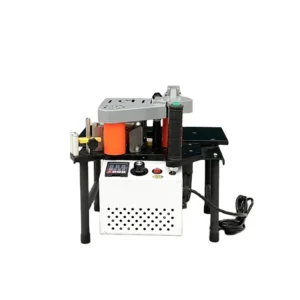
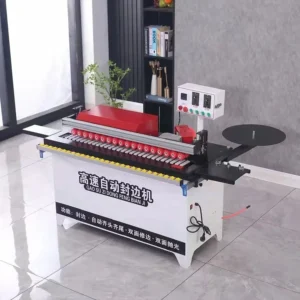
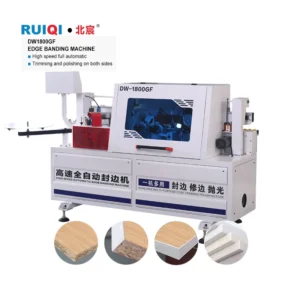
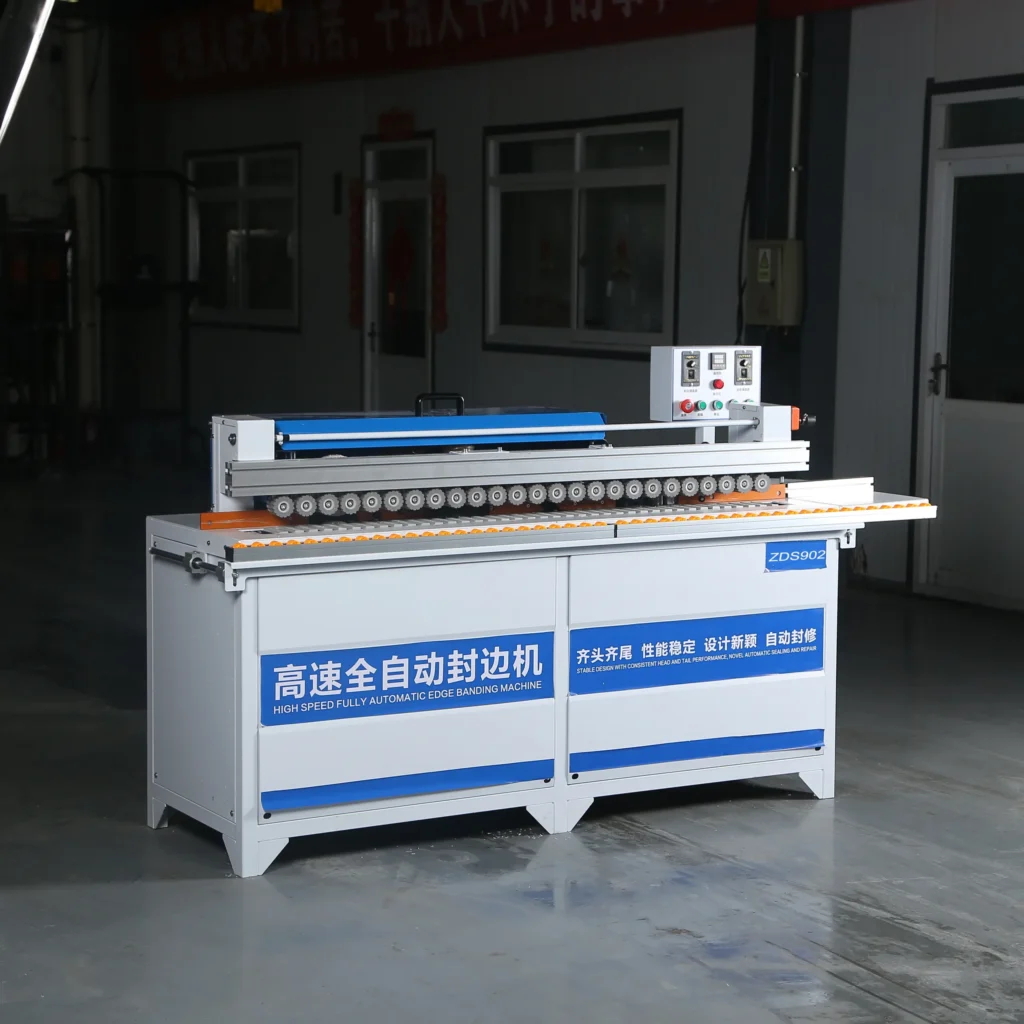
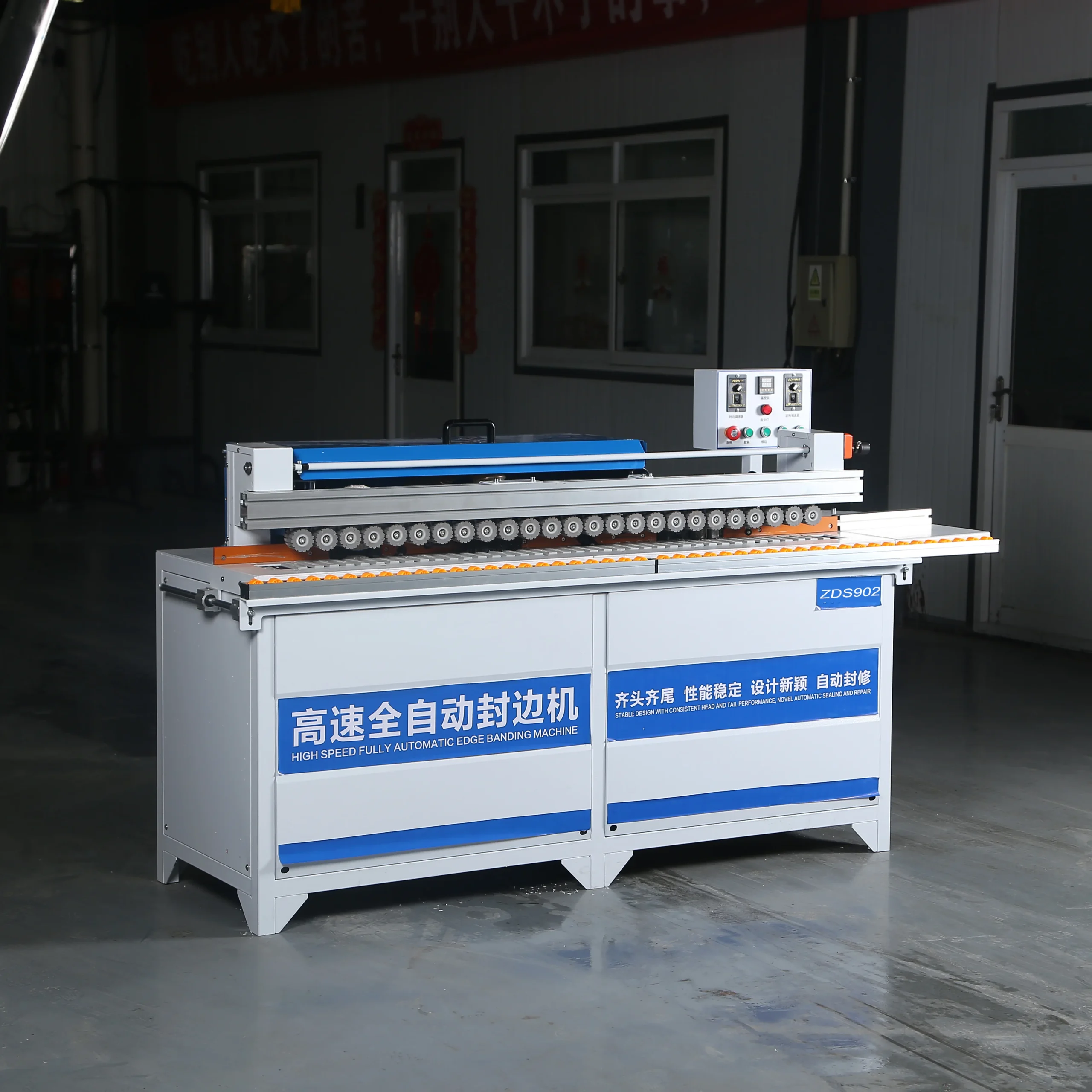
When a workshop needs an Automatic Edge Banding Machine in stock for immediate dispatch, the real question is how fast it can be crated, tested, and handed to the freight forwarder. This model sits in the warehouse configured with a 4000 ml glue pot, dual trimming motors, and pneumatic cutting — standard units ready for pre-shipment verification rather than built-to-order. Typical multi-week lead times for custom builds shrink considerably when the base configuration matches your production need without modification.
What Changes Between Regions and What Stays Fixed
The silicone conveyor belt, double-row pressure wheels, and handle-adjustable pressure beam remain constant across every unit. What does shift is the electrical configuration and the language on the control panel. A unit heading to Southeast Asia may need 220V at 50Hz with an English interface, while one bound for South America might require 220V at 60Hz with Spanish labels [NEED_CITE: CE machinery directive requirements for industrial equipment]. Locking these variables during the ordering conversation avoids the scenario where an operator stares at an unreadable display and production waits.
Reading the Spec Sheet Against Your Production Reality
The 0–35 mm edge band height range and 0.5–2.5 mm thickness range tell you which stock materials this machine will accept. If your shop primarily runs 2 mm PVC on 18 mm particleboard, you are well within the working envelope. The double-sided gluing system and 4000 ml glue pot mean longer continuous runs before stopping to refill — important when you are batching fifty cabinet sides in one session. The pneumatic edge strip cutting device produces a cleaner sever than manual snipping, reducing the visible joint line that customers notice on light-colored melamine.
The Hidden Cost of Skipping Pre-Delivery Verification
Buying a compact edge bander without requesting a factory test record often surfaces problems only after the crate is opened. Panels may feed unevenly if the pressure beam was never adjusted to your specific board thickness during testing. Glue temperature inconsistencies can leave visible seams on dark veneer that passes inspection under factory lighting but fails under the customer’s kitchen downlights [NEED_CITE: common edge banding adhesion failures on melamine substrates]. These are not warranty claims — they are commissioning delays that eat into your delivery schedule.
Why Procurement Through This Channel Works
Every stocked unit undergoes pre-shipment testing with your specified panel material and edge banding type, so the machine you receive has already run the work you intend to do. Voltage and control panel language are confirmed in writing before crating, not discovered at the destination. The four-stage quality check covers incoming components through final packing photographs, giving you a visual record of exactly what left the factory floor.
Documentation & Verification
- Factory test record using your specified melamine panel thickness and PVC banding gauge
- Electrical schematic confirming voltage, phase, and frequency matched to your local supply
- Operation and maintenance manual provided in your operator’s working language
- Spare parts list with part numbers for trimming blades, polishing wheels, and glue pot seals
- Packing photographs documenting crate condition and accessory placement before dispatch
Installation, Commissioning & Support
- Requires a dedicated circuit matching the confirmed voltage and the 4200W total power draw
- 207 × 60 × 122 cm footprint needs clear floor space plus operator access on three sides
- Handle-adjustable pressure beam must be set to your panel thickness range during first startup
- Pneumatic edge strip cutting device needs connection to a compressed air line at the specified pressure
- Intelligent temperature control requires initial calibration to your chosen glue type before production runs
- Silicone conveyor belt inspection and tension check recommended after the first week of operation
What We Need to Move Your Order Forward
Share the panel materials and edge banding types you run most often, along with your workshop’s available voltage and frequency. Let us know the control panel language your operators read and whether you need a test run on your own sample stock before the unit is crated.
Frequently Asked Questions
Q: Is this model currently in stock, and what is the actual dispatch lead time?
A: This configuration with double-sided gluing, dual trimming, and polishing is held as ready stock. After you confirm voltage and language requirements, a pre-shipment test is scheduled, and dispatch typically follows within days rather than weeks. Exact timing depends on how quickly specifications are finalized.
Q: Can the voltage be confirmed to match my local supply before the machine ships?
A: Yes. Voltage, phase, and frequency are confirmed in writing before the unit leaves the warehouse. An electrical schematic is provided so your electrician can verify the dedicated circuit is ready. This step prevents the transformer delays that stall workshops after delivery.
Q: What panel thickness and edge band materials does this machine handle?
A: The machine accepts edge banding from 0.5 to 2.5 mm thick and up to 35 mm in height, applied with double-sided gluing. It works with PVC and veneer strips on melamine-faced particleboard, MDF, and plywood commonly used in cabinet and joinery production.
Q: Is the control panel available in my language, or can it be customized before shipping?
A: The control panel language is confirmed during the ordering process and set before dispatch. Operators receive the interface in a language they can read, along with an operation manual in the same language, so commissioning is not delayed by translation gaps.
Q: What spare parts and consumables are included, and how do I order replacements?
A: A spare parts list with part numbers is included in the shipment, covering high-wear items like trimming blades and polishing wheels. Replacement parts can be ordered directly using these numbers, and the list also identifies local-standard consumables you can source independently.