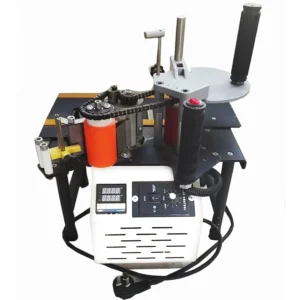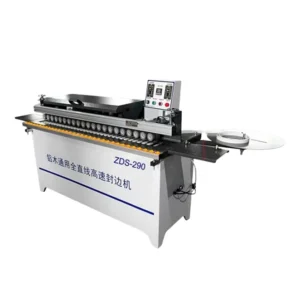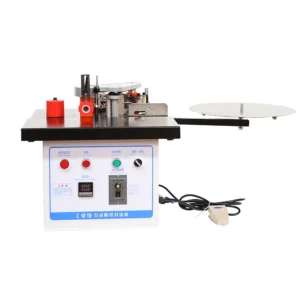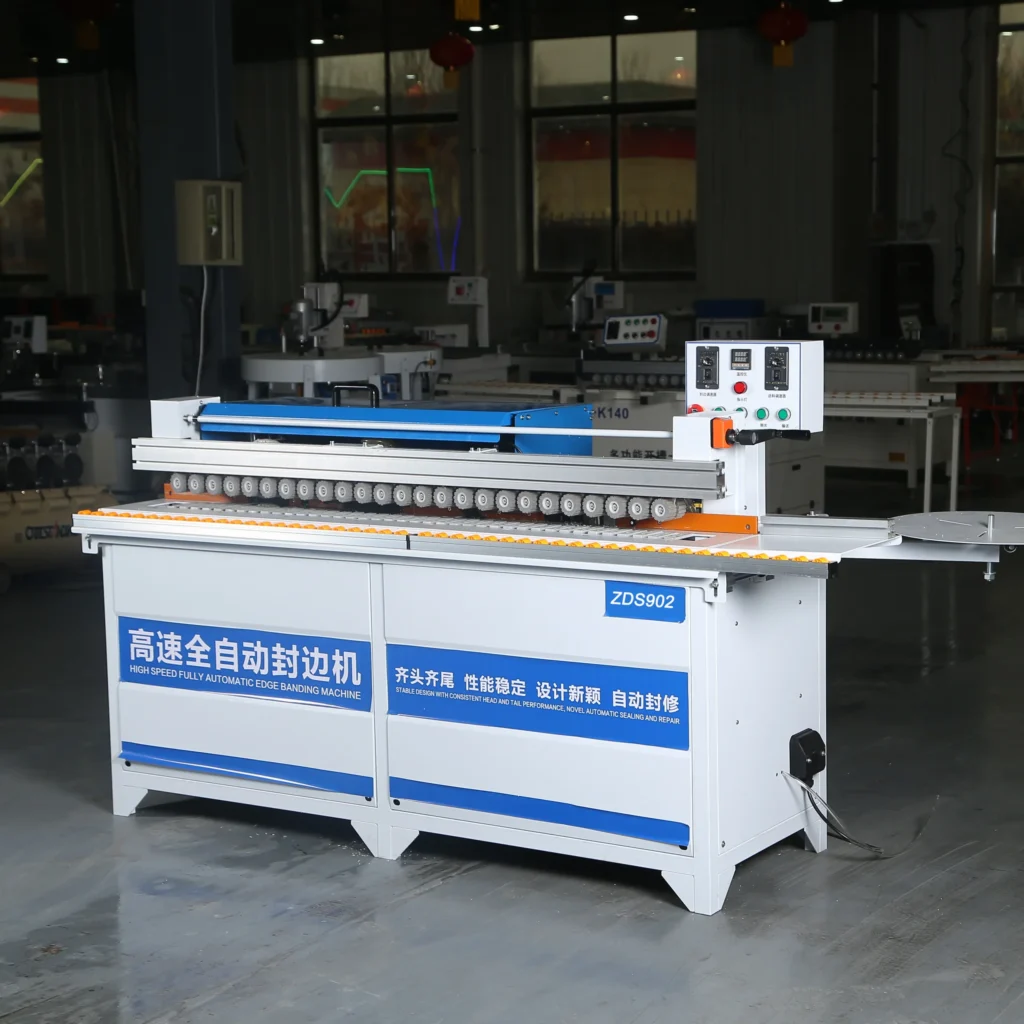
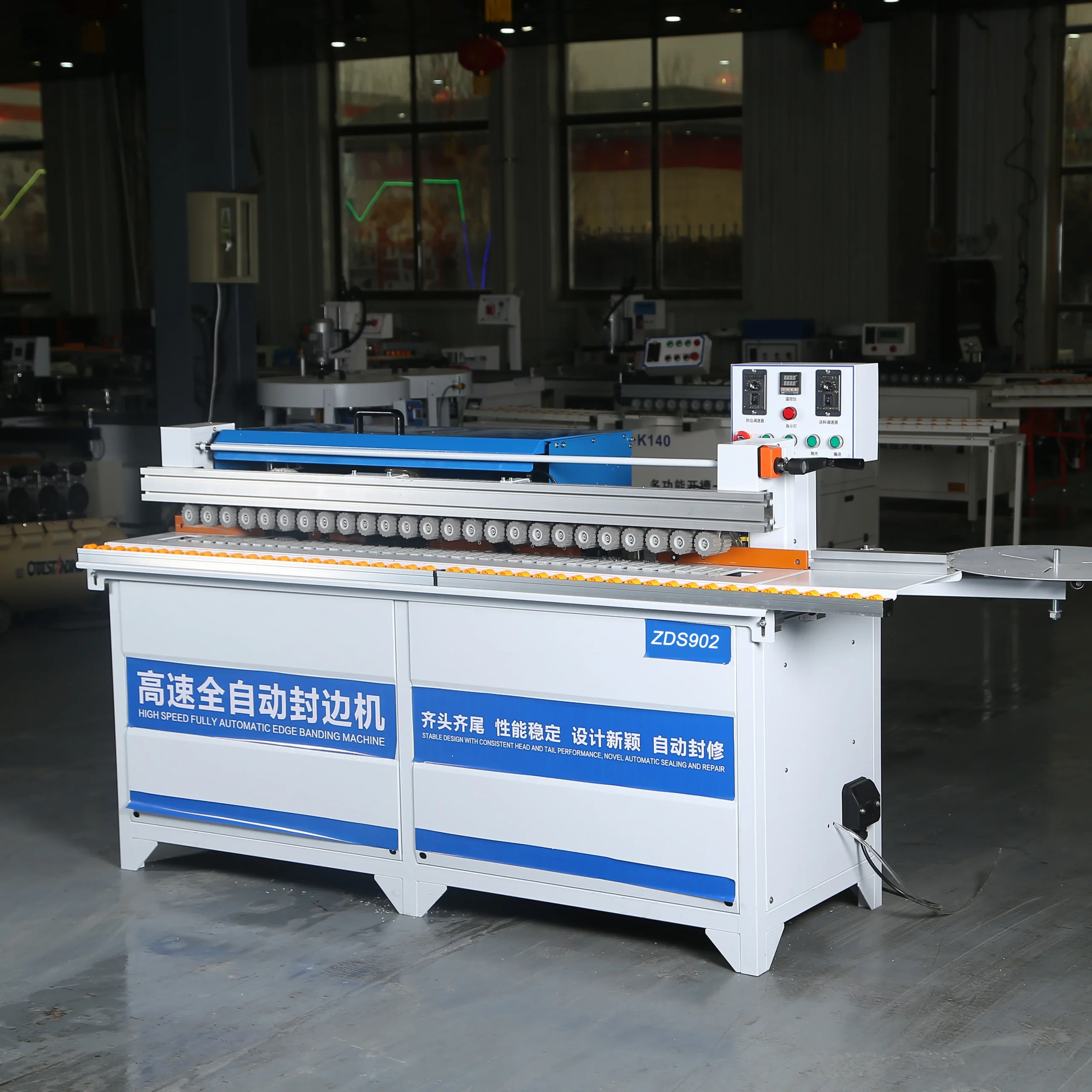
Description
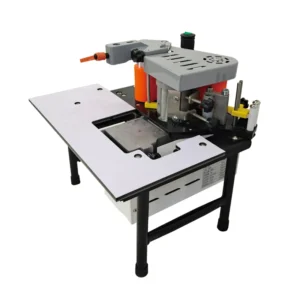
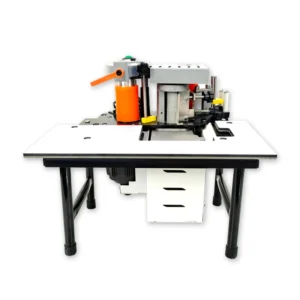
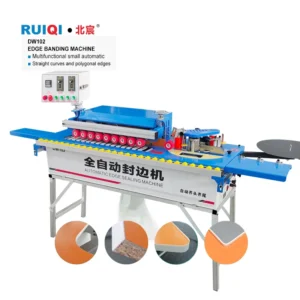
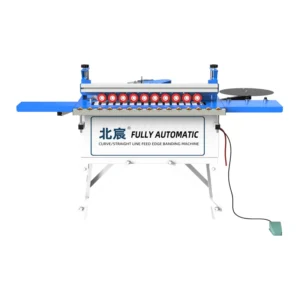
Ready Inventory Fulfillment — single-unit automatic edge banding machines dispatched from stock with voltage confirmation and pre-shipment testing before the crate leaves the floor.
Technical Specifications
| Parameter | Value |
|---|---|
| Product Type | Automatic Edge Banding Machine |
| Voltage | 220V (verify frequency and phase with local supply) |
| Overall Dimensions (L×W×H) | 2070 × 600 × 1220 mm |
| Total Power | 4200W |
| Net Weight | 245 kg |
| Edge Band Height Range | 0–35 mm |
| Edge Band Thickness Range | 0.5–2.5 mm |
| Glue Pot Capacity | 4000 ml |
| Edge Banding Type | Linear Edge Banding Machine |
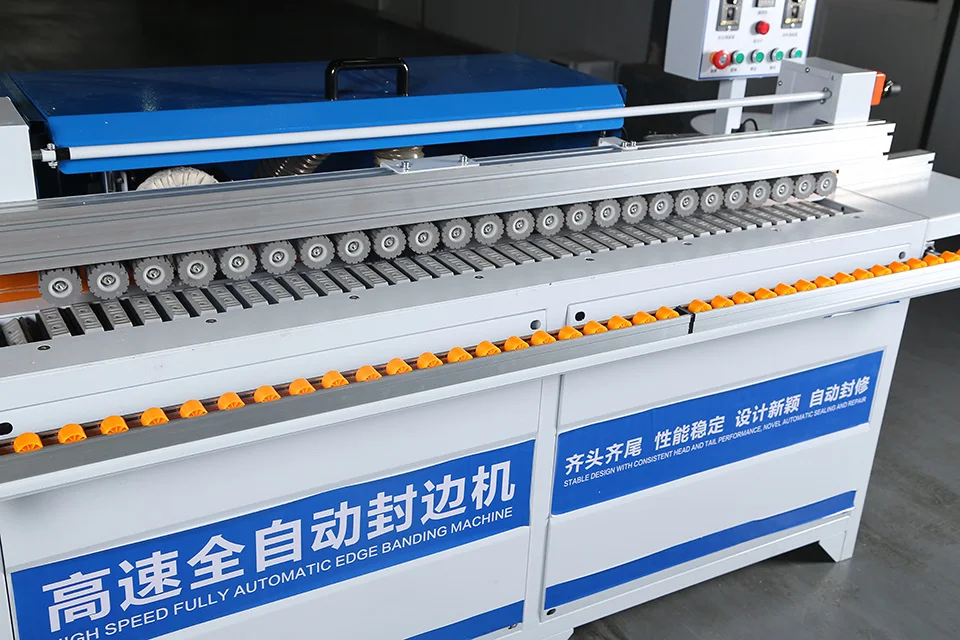
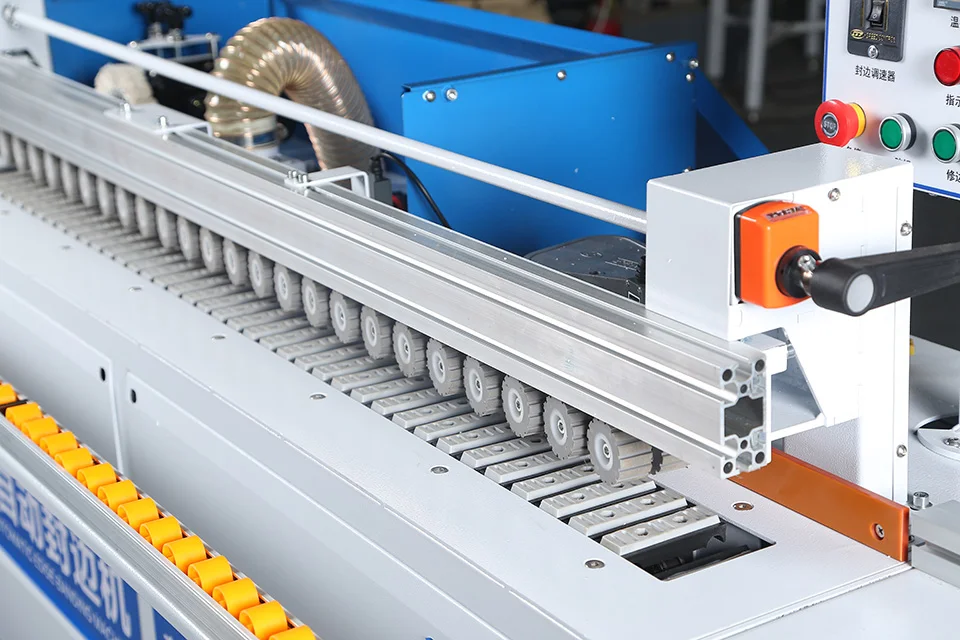
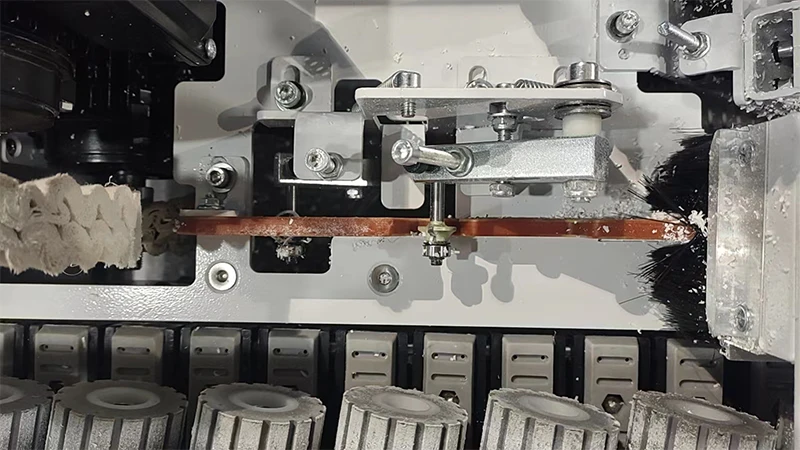
| Pressure Beam | Integrated pressure beam with double rows of pressure wheels, adjustable height via handle |
| Conveyor Belt Material | Silicone |
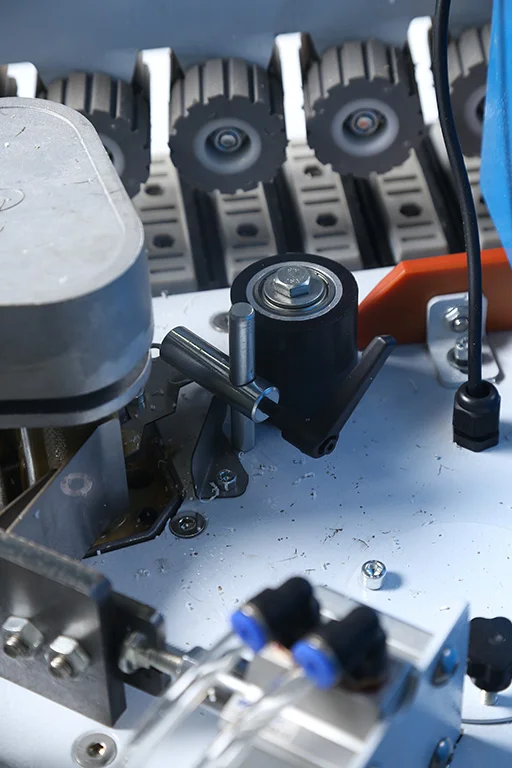
| Edge Strip Cutting Device | Pneumatically controlled |
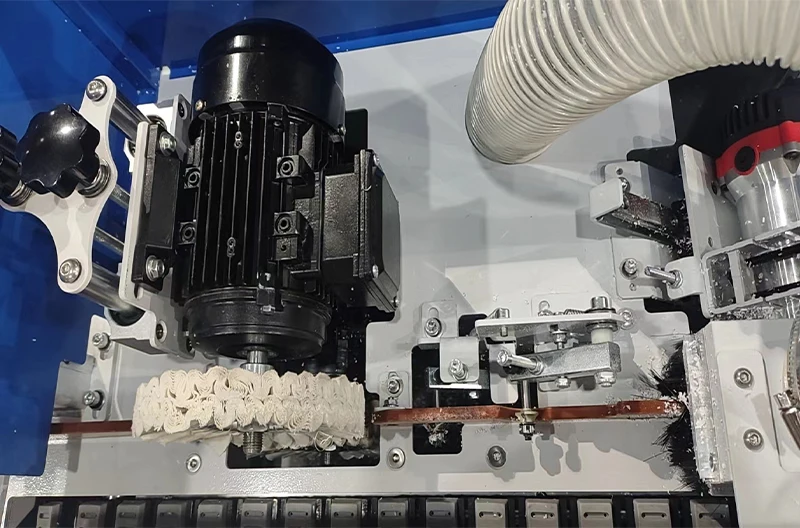
| Trimming Stations | Double high-speed trimming motors, top and bottom |
| Polishing Stations | Two polishing motors, top and bottom |
| Functions | Double-sided gluing, high-speed sealing and repair, independent operating platform, intelligent temperature control, top and bottom polishing, top and bottom trimming |
| Assembly State | Partially assembled; some components require user assembly with manual or video guidance |
| Warranty | 1 year |
| Feed Speed | (basis to be confirmed) |
| Panel Thickness Range | (basis to be confirmed) |
Application Suitability
| Application | Material or Output |
|---|---|
| Custom cabinet edge banding | MDF and particleboard with PVC edge banding |
| Small-batch furniture production | Plywood panels with veneer or PVC strips |
| Workshop transition from manual to machine banding | Pre-cut panel substrates up to 35 mm band height |
| Repair and re-banding of damaged edges | MDF and particleboard with 0.5–2.5 mm band thickness |
Why Voltage Confirmation Must Happen Before the Purchase Order
A 220V machine wired into a 380V three-phase supply will destroy the motor on first startup, and the reverse leaves the unit unable to start at all.
I once watched a custom cabinet shop in the Yangtze Delta sit idle for three weeks because the edge bander they received was configured for a voltage their workshop simply did not have. The electrician had to reroute a dedicated circuit and install a step-down transformer while the rest of the production line waited. Every day of downtime cost them delayed deliveries and penalty clauses on contracted jobs. That is why I now request a workshop electrical schematic before any order is confirmed, no matter how urgent the buyer seems. When sourcing an automatic edge banding machine in stock, the voltage and phase configuration should be the first question asked, not an afterthought once the crate is opened [NEED_CITE: voltage and frequency standards by export market].
Stock Availability and What It Means for Your Timeline
Procurement leads in the woodworking machinery sector often stretch across multiple weeks, sometimes longer if a factory builds to order. This automatic edge banding machine in stock bypasses that waiting period entirely. The unit sits in the warehouse configured with a 4000 ml glue pot, double-sided gluing heads, and pneumatic edge strip cutting, ready to be crated once voltage and documentation requirements are confirmed. For a small workshop facing a sudden increase in orders or a machine breakdown on the existing line, the difference between a stocked unit and a built-to-order one can mean the difference between keeping delivery promises and losing contracts.
Single-Unit Ordering Without Minimum Quantity Barriers
Many manufacturers will only engage on production runs or full-line orders, leaving small joinery shops and startup cabinet makers without a viable purchasing path. This machine is available for single-unit dispatch. A workshop that has been applying edge banding by hand and is ready to mechanize can place one order, receive one machine, and begin producing finished panels without committing to a larger capital outlay than their current volume justifies. The compact 2070 mm footprint fits into workshops where floor space is already allocated to existing table saws and drilling stations.
How the Specifications Translate to Daily Output
The 4000 ml glue pot capacity is significant for a machine in this size class. Smaller pots require the operator to stop and refill during continuous runs, interrupting the feed cycle and introducing temperature inconsistency as fresh cold glue meets the heated reservoir. A larger pot maintains thermal stability across longer sessions, which directly affects adhesion quality on MDF and particleboard substrates. The double-sided gluing system applies adhesive to both the panel edge and the banding strip, improving bond strength on porous substrates like particleboard where single-sided application often leaves dry spots [NEED_CITE: adhesion performance on porous wood-based panel substrates]. The silicone conveyor belt provides consistent grip without marking finished panel surfaces, a practical advantage when running pre-laminated boards where belt scuffing would require secondary cleanup. The pneumatically controlled cutting device produces a cleaner end cut than manual shearing, reducing the amount of trimming work needed at the finishing stations.
What Happens When the Specification Sheet Is Ignored
I have seen edge banders of this class fail in humid workshops where the buyer never checked the compressed air requirement. The pneumatic cutting device needs a stable air supply at the correct pressure; without it, the cutter stalls mid-cycle and leaves jagged band ends that the trimming motors cannot clean up. Another common oversight involves the operating manual language. A control panel labeled entirely in a language the operator cannot read turns a straightforward temperature adjustment into a guessing game, and incorrect glue temperature is one of the fastest routes to delamination complaints from the end customer. These are not manufacturing defects. They are procurement oversights that surface only after the machine is bolted to the floor [NEED_CITE: common causes of edge banding adhesion failure in workshop environments].
Why Procurement Through This Channel Reduces Risk
Voltage customization from 110V to 440V is confirmed at the order stage, not discovered at the unloading dock. Pre-shipment testing includes a documented factory run on the buyer’s specified panel material, so tolerance and edge quality are verified before the machine is crated. The four-stage quality control process covers incoming material inspection through pre-shipment verification, reducing the likelihood of receiving a unit with assembly defects. Engineer-led configuration recommendations mean the machine is matched to the workshop’s actual production requirement rather than sold on maximum spec alone. Operation manuals are prepared in the agreed language before dispatch, so the operator can begin commissioning on day one rather than waiting for a translation.
Documentation & Verification
- CE declaration of conformity covering this edge banding machine model
- Factory test record on your specified panel thickness and banding material before dispatch
- Electrical schematic confirming voltage, phase, and frequency for your local supply
- Operation and maintenance manual in your operator’s working language
- Spare parts list with part numbers matching the pneumatic cutting and trimming assemblies
Installation, Commissioning & Support
- Allocate a floor area exceeding 2070 × 600 mm to allow operator access on both sides of the machine
- Confirm a dedicated 220V circuit capable of sustaining the 4200W total power draw without voltage drop
- Assemble remaining components following the supplied manual or video guidance before first power-on
- Set intelligent temperature control to match your specific PVC or veneer banding material before production runs
- Establish a compressed air connection at the pressure rating specified for the pneumatic edge strip cutting device
- Schedule glue pot cleaning and trimming motor inspection at intervals matching your daily production volume
Before You Request a Quote
Share your workshop’s confirmed voltage, phase, and frequency so the machine can be configured correctly before crating. Provide the panel substrates and edge banding materials you run most frequently, along with typical panel thickness, so the pre-shipment test uses representative stock. Let us know whether you need the operation manual and control panel labels in a specific language for your operators.
Frequently Asked Questions
Q: Is this automatic edge banding machine in stock and what is the dispatch lead time?
A: Yes, this model is held in ready stock and does not require a production lead time. Once voltage configuration, documentation language, and shipping destination are confirmed, the unit moves to pre-shipment testing and crating. Dispatch typically follows within a short window after these details are finalized. Exact timing depends on the shipping method selected and destination port schedules.
Q: What voltage and phase configuration does this machine require?
A: The base specification lists 220V, but frequency and phase must be verified against your local electrical supply before the order is confirmed. The machine can be configured for various voltage requirements ranging from 110V to 440V. Providing your workshop’s electrical specifications at the inquiry stage ensures the correct configuration is built and tested before dispatch.
Q: Can I order just one unit, and what shipping options are available?
A: Single-unit orders are fully supported for this model. Shipping options are quoted at the inquiry stage based on your destination, and lead times are provided alongside the quotation. This allows workshops that need one edge bander immediately to place an order without meeting minimum quantity requirements or waiting for a consolidated shipment.
Q: What edge banding materials and panel substrates does this machine handle?
A: The machine supports PVC and veneer edge banding with a thickness range of 0.5–2.5 mm and a height range of 0–35 mm. Compatible panel substrates include MDF, particleboard, and plywood. The double-sided gluing system is particularly effective on porous substrates like particleboard where consistent adhesive coverage is critical for long-term bond integrity.
Q: Does the machine arrive fully assembled and what installation support is provided?
A: The machine ships partially assembled. Certain components require on-site assembly using the supplied operation manual or video guidance. Installation support is available remotely to assist with first power-on, conveyor belt alignment, pressure beam adjustment, and initial glue temperature calibration for your chosen banding material.