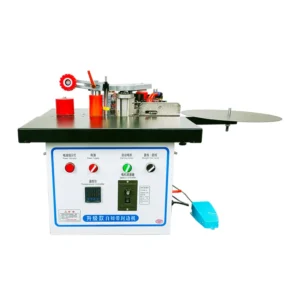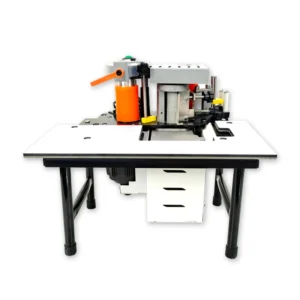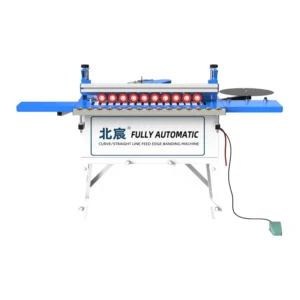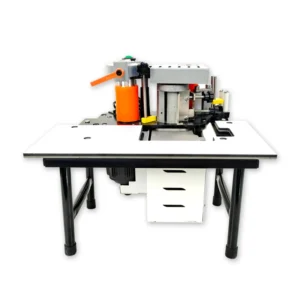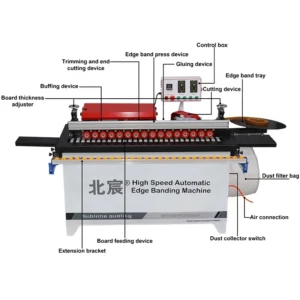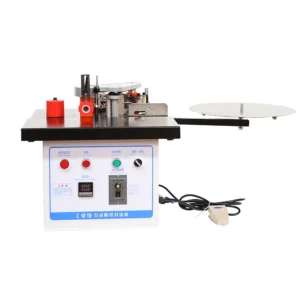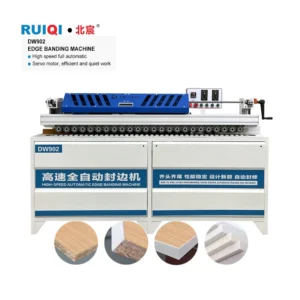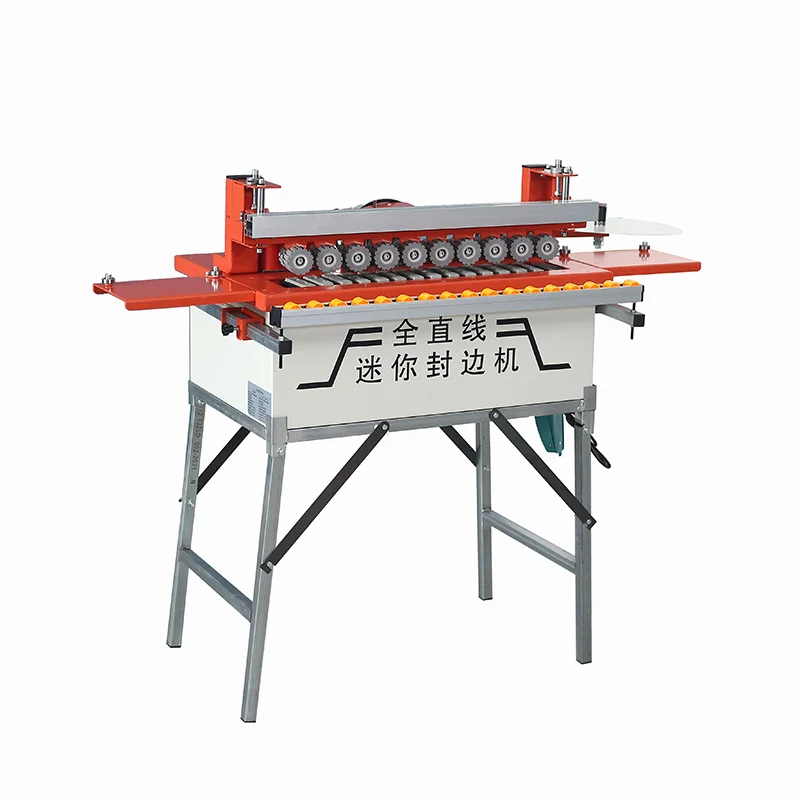
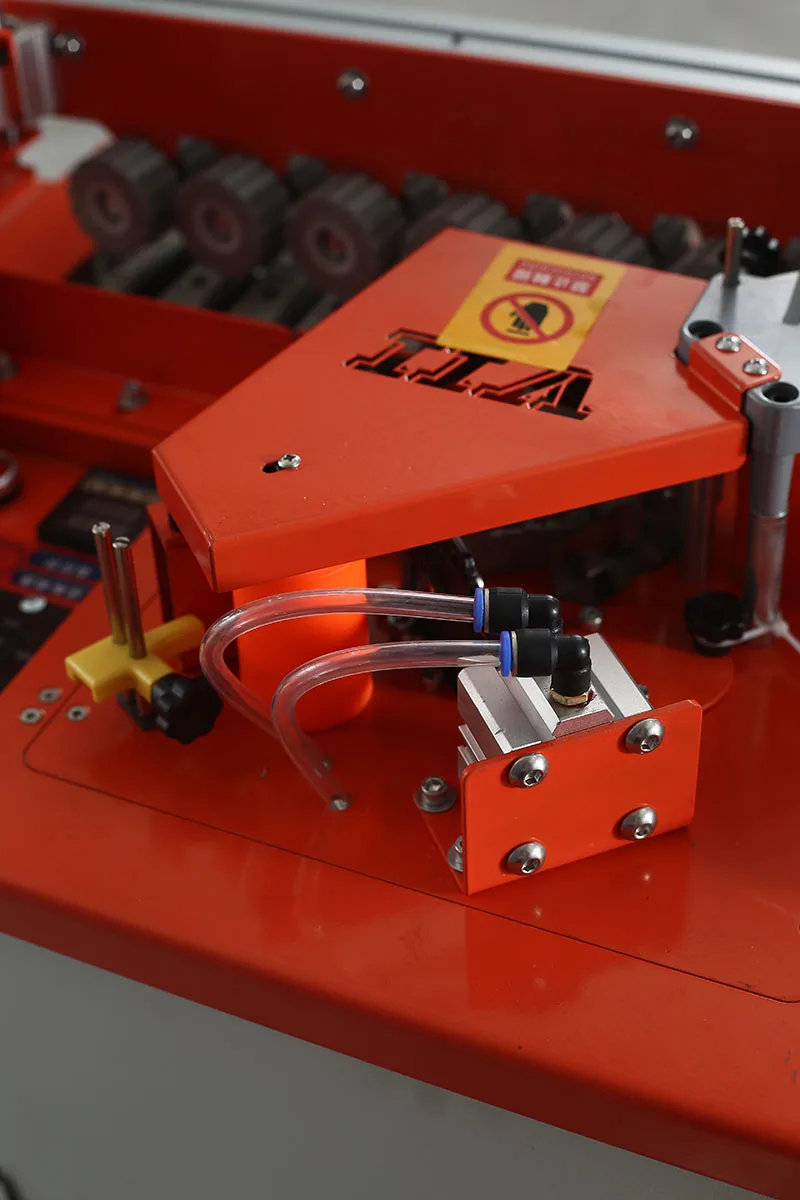
Description
Voltage-Verified Dispatch — every ZDS750 mini edge banding machine in stock undergoes a 220V/Hz output confirmation matched to your destination grid before it leaves the warehouse.
Technical Specifications
| Parameter | Value |
|---|---|
| Model | ZDS750 |
| Product Type | Mini Edge Banding Machine |
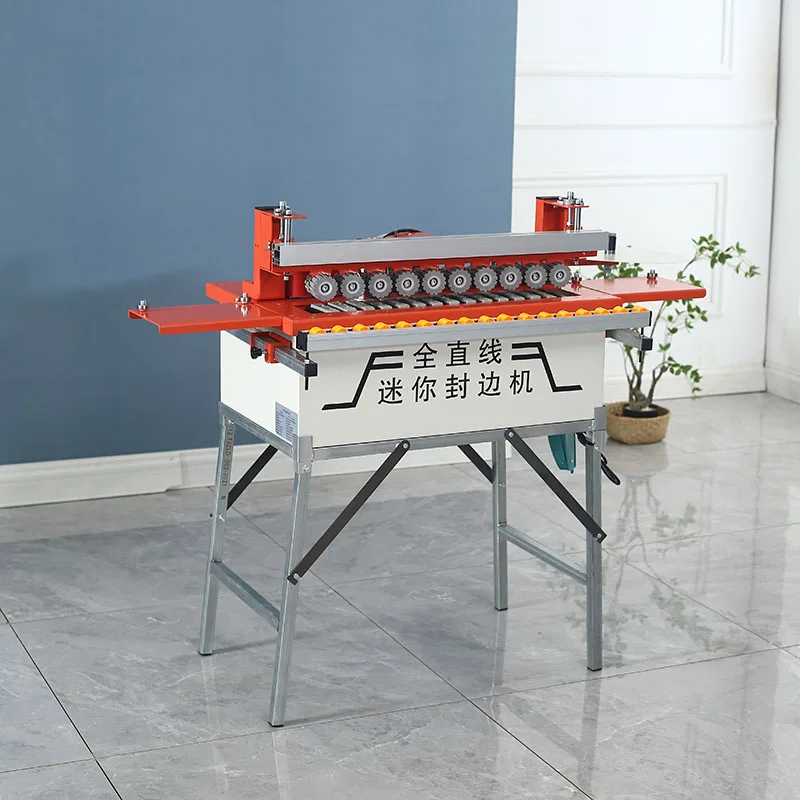
| Function | Automatic straight and curve edge banding, automatic tape breaking, automatic board feeding |
| Widening Bracket | 300 mm stretch |
| Rated Voltage | 220V |
| Rated Air Pressure | 0.4–0.6 MPa |
| Strip Thickness Range | 0.5–2 mm |
| Sheet Thickness Range | 7–50 mm |
| Glue Pot Capacity | 1000 ml |
| Heating Power | 800 W (heat-up time 5–8 min) |
| Plate Feeding Power | 60 W |
| Belt Feeding Power | 25 W |
| Edge Banding Speed | 0–6 m/min |
| Overall Dimensions | 120 × 50 × 50 cm |
| Machine Weight | 50 kg |
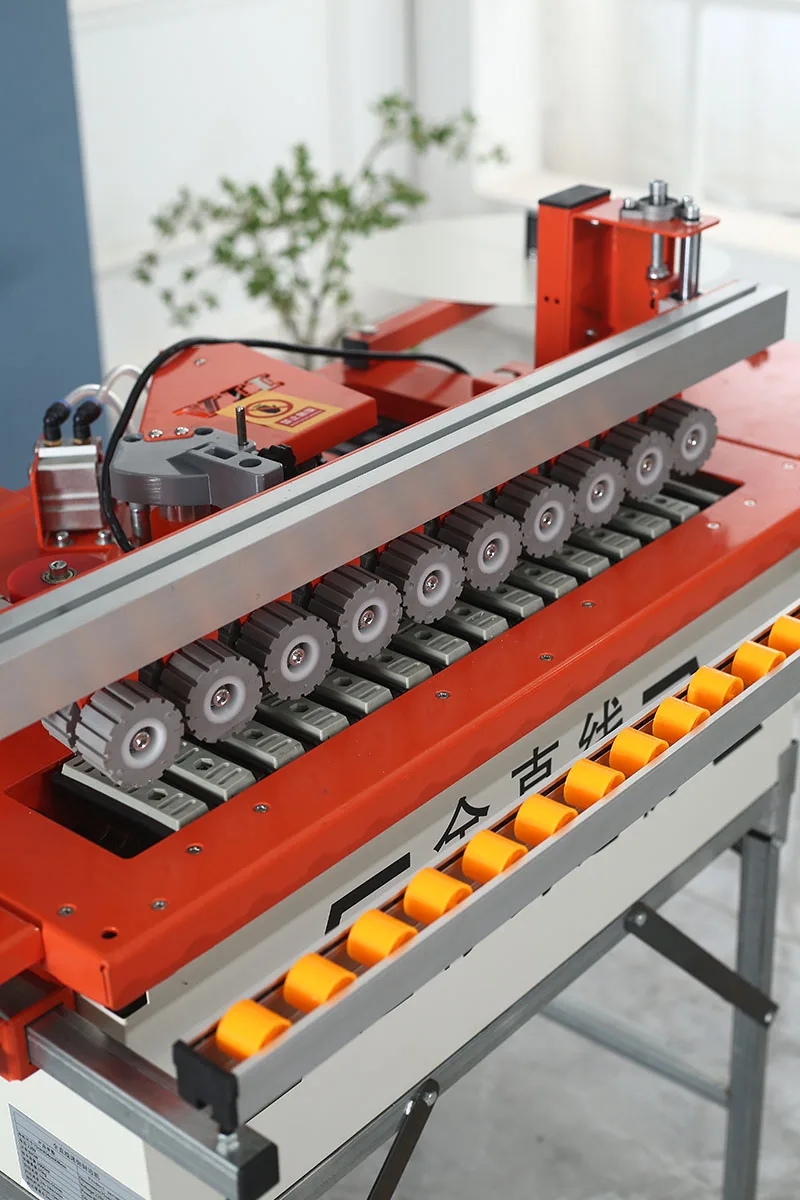
| Pressure Beam | One-piece aluminum alloy, double row of pressure wheels |
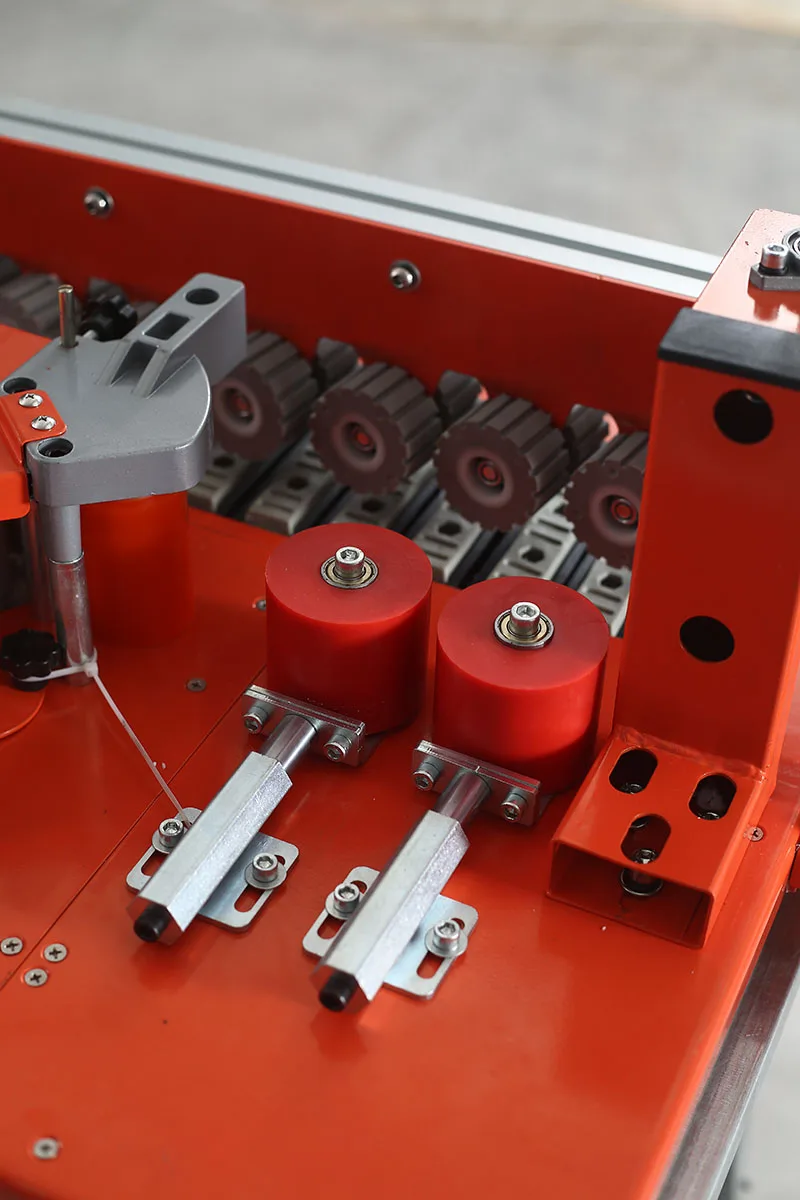
| Pressing Rollers | Multiple elastic profiling pressing rollers |
| Curve Edge Banding | Supported (gluing device rotates 180°) |
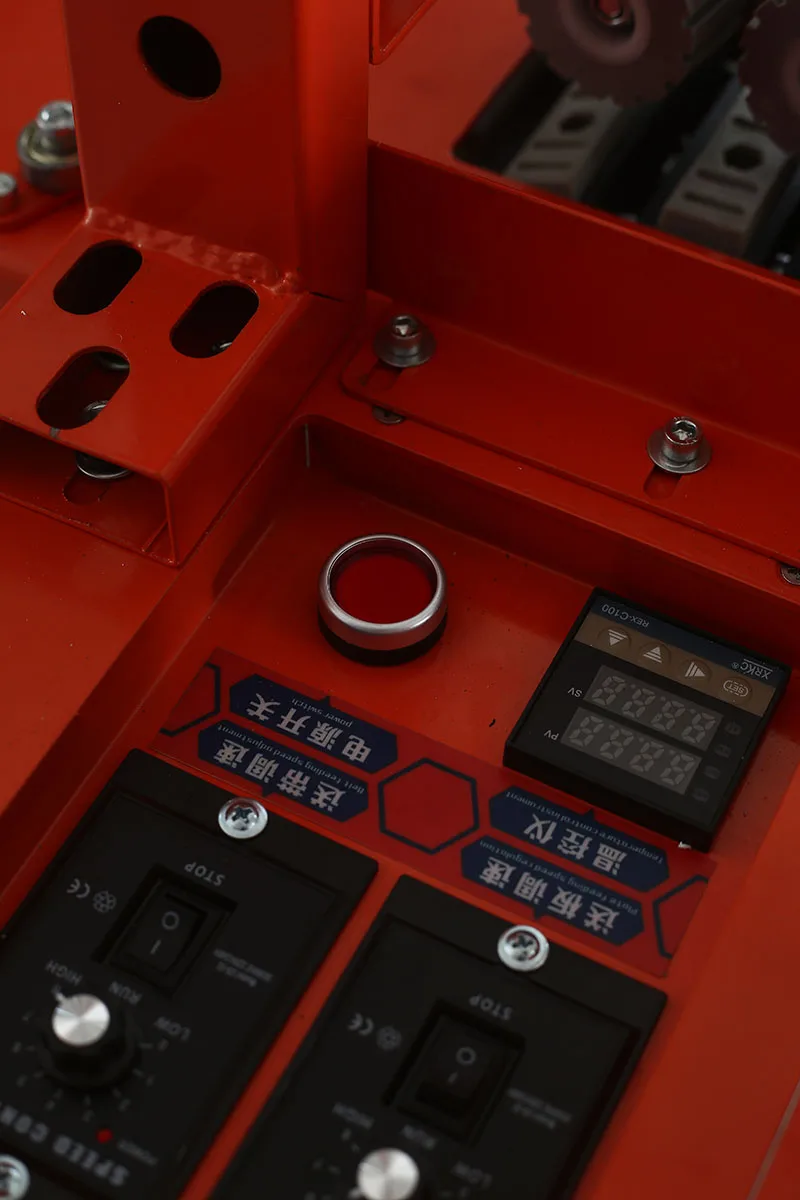
| Control Panel | Inner recessed design |
Application Suitability
| Application | Material or Output |
|---|---|
| Small joinery workshop edge banding | MDF, particleboard, plywood panels |
| Custom cabinet door edging | Solid wood panels with PVC or veneer strip (0.5–2 mm) |
| Curved furniture component sealing | Shaped MDF and plywood with flexible PVC strip |
| Sample-making and repair station | Mixed substrate offcuts for prototype edging |
| Furniture hobbyist or startup production | Low-volume straight and curve sealing on standard sheet stock |
Why Voltage Confirmation Matters Before You Click "Order"
A mini edge banding machine in stock ships fast — but only if the voltage matches your workshop’s supply.
I spent years on the assembly floor here in Shandong before moving into overseas order coordination, and one lesson stuck harder than any other. A customer in Southeast Asia received a semi-automatic edge bander rated at 380V while their site ran on 440V three-phase. The local electrician needed nearly three weeks to rewire the supply. That machine sat idle, collecting dust and frustration, while the production schedule slipped. [NEED_CITE: voltage and frequency standards by export market] Since that incident, every unit I prepare for dispatch goes through a two-step voltage and frequency screenshot verification against the destination country’s grid standard — and a full powered-on test run before crating.
Immediate Availability Without the Guesswork
Buyers evaluating a mini edge banding machine in stock rarely want a six-week build cycle. The ZDS750 sits in the warehouse wired at 220V single-phase, which means it plugs directly into a standard workshop outlet. No three-phase upgrade, no dedicated transformer installation, no waiting for an electrician to certify a new circuit. For a joinery shop moving from hand-applied edge tape to a powered machine for the first time, that simplicity removes the single largest barrier between placing an order and producing finished panels.
Dispatch Timing You Can Plan Around
Stocked units follow a different timeline than built-to-order machines. Once your voltage and frequency are confirmed — typically a 50 Hz or 60 Hz check depending on your country — the ZDS750 moves to pre-shipment testing. [NEED_CITE: typical pre-shipment verification protocols for woodworking machinery exports] The machine runs a full cycle on sample board stock, the heater reaches operating temperature, and the glue feed path is verified. You receive the test record before the crate closes. Dispatch then follows standard freight channels, cutting the lead time that custom-build orders normally demand.
Reading the Specs That Actually Affect Your Output
The 0–6 m/min edge banding speed range gives operators fine control during curve work, where pushing feed rate too fast causes the strip to lift at tight radii. The 800 W heating element brings the 1000 ml glue pot to working temperature in roughly five to eight minutes, which is relevant when you are running short batches and cannot afford a twenty-minute warm-up before every session. Sheet thickness coverage from 7 to 50 mm handles everything from thin cabinet backs to solid-core worktop panels. The 180° rotatable gluing device eliminates the need for a separate curve banding jig — one machine covers both geometries, keeping bench space free in a compact workshop.
What Happens When You Skip the Voltage Check
Ordering any 220V woodworking equipment without verifying your local frequency creates a hidden failure mode. A motor rated for 50 Hz running on 60 Hz supply spins faster than designed, which increases heat buildup inside the winding and shortens the motor’s operational life. The plate feeding motor and belt feeding motor on this unit are small — 60 W and 25 W respectively — but they run continuously during each banding pass. Over weeks of unnoticed over-frequency operation, insulation breakdown becomes a realistic risk rather than a theoretical one. [NEED_CITE: effects of frequency mismatch on induction motor lifespan] The cost of that oversight is never just a replacement motor; it is the downtime while you source one locally.
Why Sourcing This Unit Through Our Stock Channel Works
Every stocked ZDS750 carries a factory test record specific to the panel thickness range you specify in your inquiry, so you see the machine perform on representative material before it ships. Voltage and frequency are confirmed twice — once at order entry and again before crating — with screenshot evidence retained on file. The operation and maintenance manual ships in your agreed language, which matters when the first person to uncrate the machine is the operator, not an engineer. Single-unit orders are accepted without minimum-quantity barriers, removing the risk of committing to inventory you do not yet need. Our in-house manufacturing line holds proprietary cutting mechanism patents that carry through to this compact model’s trimming function.
Documentation & Verification
- CE declaration of conformity covering the ZDS750 low-voltage and machinery directives
- Factory test record showing heater warm-up and banding pass on your specified panel thickness
- Electrical schematic with 220V wiring diagram matched to your destination frequency
- Operation and maintenance manual translated into your agreed working language
- Spare parts list with part numbers for glue pot, feed belt, and pressure wheel replacements
- Pre-shipment photograph set showing packed condition and crate markings
Installation, Commissioning & Support
- Requires a dedicated 220V single-phase circuit rated above the combined 885 W heating and feed load
- 120 × 50 × 50 cm footprint allows benchtop placement in workshops with limited floor area
- Arrives fully assembled — no mechanical reassembly required, only glue pot fill and air line connection at 0.4–0.6 MPa
- First-run guidance covers heater warm-up timing, feed speed dial setting, and pressure wheel adjustment for your strip material
- Elastic profiling pressing rollers and pressure wheel set included as initial spare consumables
- Monthly glue pot cleaning and feed belt tension check recommended for consistent banding adhesion
What to Share When You Are Ready to Order
To confirm whether the stocked ZDS750 fits your workshop, the most useful details are your local voltage and frequency, the primary panel material and thickness you will be edging, and whether your production involves curved components. If you already operate upstream cutting or downstream boring equipment, mentioning their feed heights helps verify line compatibility. We can also arrange a sample banding test on your specific substrate if you send a panel offcut.
Frequently Asked Questions
Q: Is this ZDS750 unit currently in stock, and what is the dispatch lead time?
A: The ZDS750 is held as a stocked unit, meaning it does not enter a production queue after your order. Once voltage and frequency are confirmed against your destination grid, the machine moves directly to pre-shipment testing. Dispatch follows within days after you approve the test record, avoiding the multi-week build cycle typical of custom-configured machines.
Q: Can the voltage be confirmed and matched to my country before shipping?
A: Voltage confirmation is a standard step on every stocked unit before dispatch. We verify that the 220V rating aligns with your local supply and confirm whether your grid operates at 50 Hz or 60 Hz. A screenshot record of this verification is retained on file, and the pre-shipment test is conducted at the confirmed voltage and frequency setting.
Q: What edge banding strip materials and thicknesses does this machine handle?
A: The ZDS750 accepts strip thicknesses from 0.5 mm to 2 mm, covering standard PVC edging as well as thin veneer strips. Both straight and curved applications are supported without accessory changes, as the gluing device rotates 180° for curve work. Sheet thickness range is 7 mm to 50 mm.
Q: How do I switch between straight and curved edge banding on this model?
A: The gluing device rotates 180° to reposition for curved panel edges, while the feed path and pressure wheel arrangement remain the same. Operators adjust the feed speed dial toward the lower end of the 0–6 m/min range during curve work to prevent strip lift at tight radii.
Q: What spare parts and consumables ship with the machine?
A: Each dispatched ZDS750 includes a spare parts list with part numbers for high-wear items such as pressure wheels and the feed belt. The glue pot and heating element specifications are documented so that local consumable sourcing is straightforward. The operation manual details recommended replacement intervals for each component.