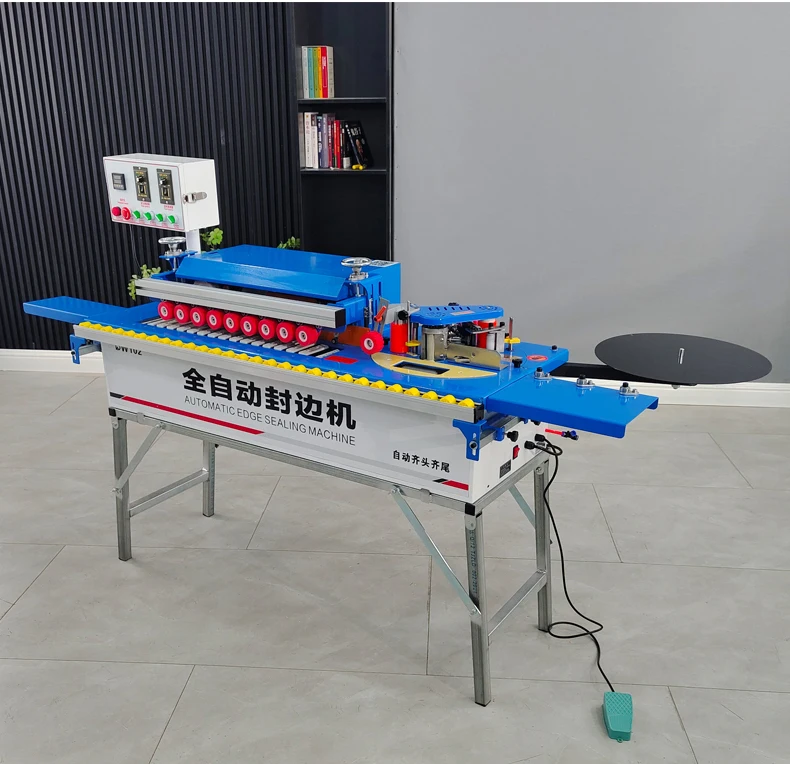
Description
Ready-stock dispatch with verified voltage matching — this DW102 ships only after your site’s electrical photo and frequency are confirmed against the machine’s 220V/380V options, preventing the on-site transformer scramble I once watched delay a North American cabinet line by a full week.
Technical Specifications
| Parameter | Value |
|---|---|
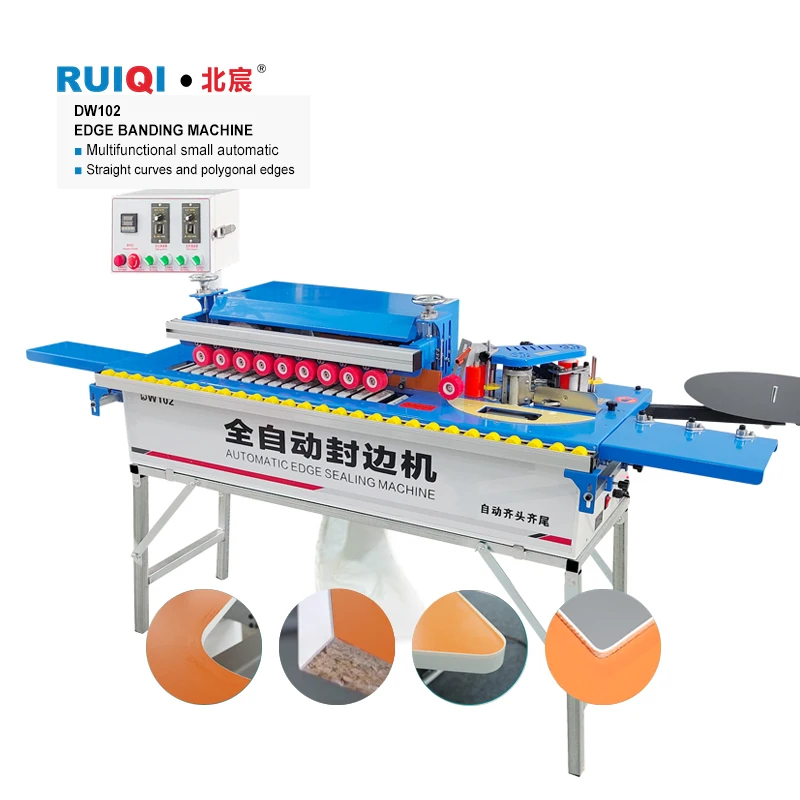
| Model | DW102 |
| Product Type | Automatic Edge Banding Machine |
| Total Power | 3800W |
| Voltage | 220V / 380V / Customization |
| Trimming Power | 650W × 2 |
| Polishing Power | 180W × 2 |
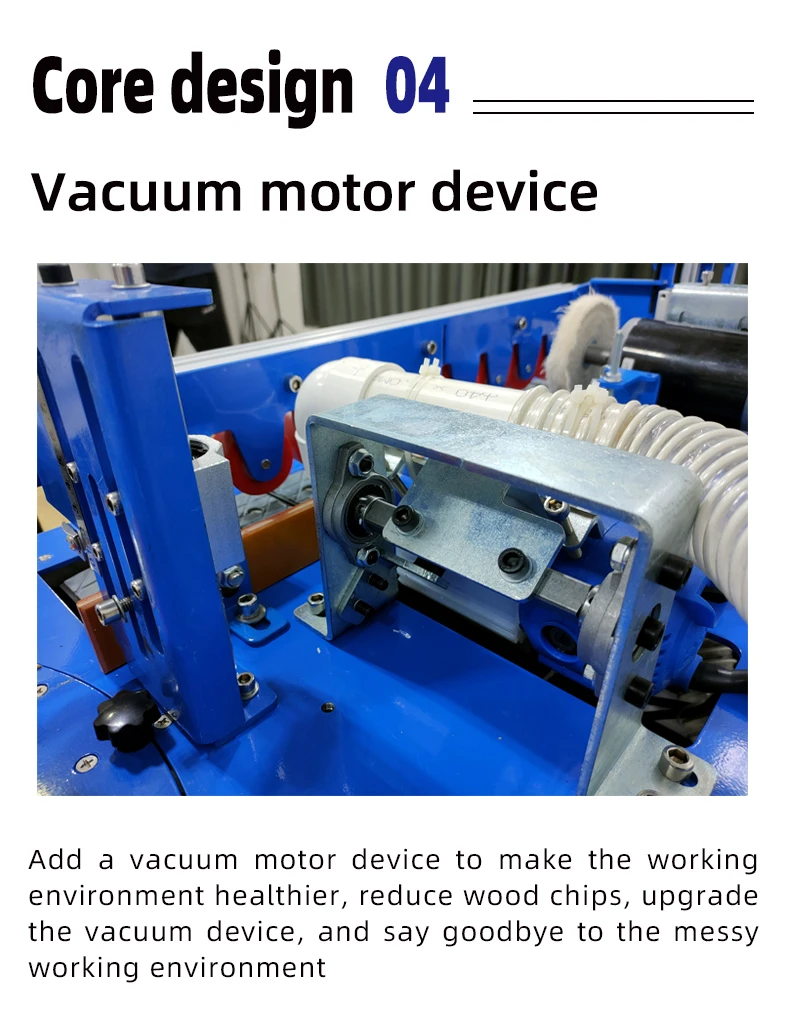
| Vacuum Power | 1200W |
| Edge Power | 20W |
| Transmission Power | 60W |
| Glue Pot Capacity | 1000ml |
| Edge Banding Thickness | 0.3 – 3 mm |
| Edge Banding Height | 0 – 50 mm |
| Minimum Sheet Length | 25 cm |
| Minimum Sheet Width | 5 cm |
| Air Source Pressure | 0.5 – 0.8 MPa |
| Product Size | 128 × 47 × 69 cm |
| Product Weight | 75 kg |
| Language Options | Chinese, English, Spanish, or Customized |
| Plug Options | EU, USA, AU, UK |
Application Suitability
| Application | Material or Output |
|---|---|
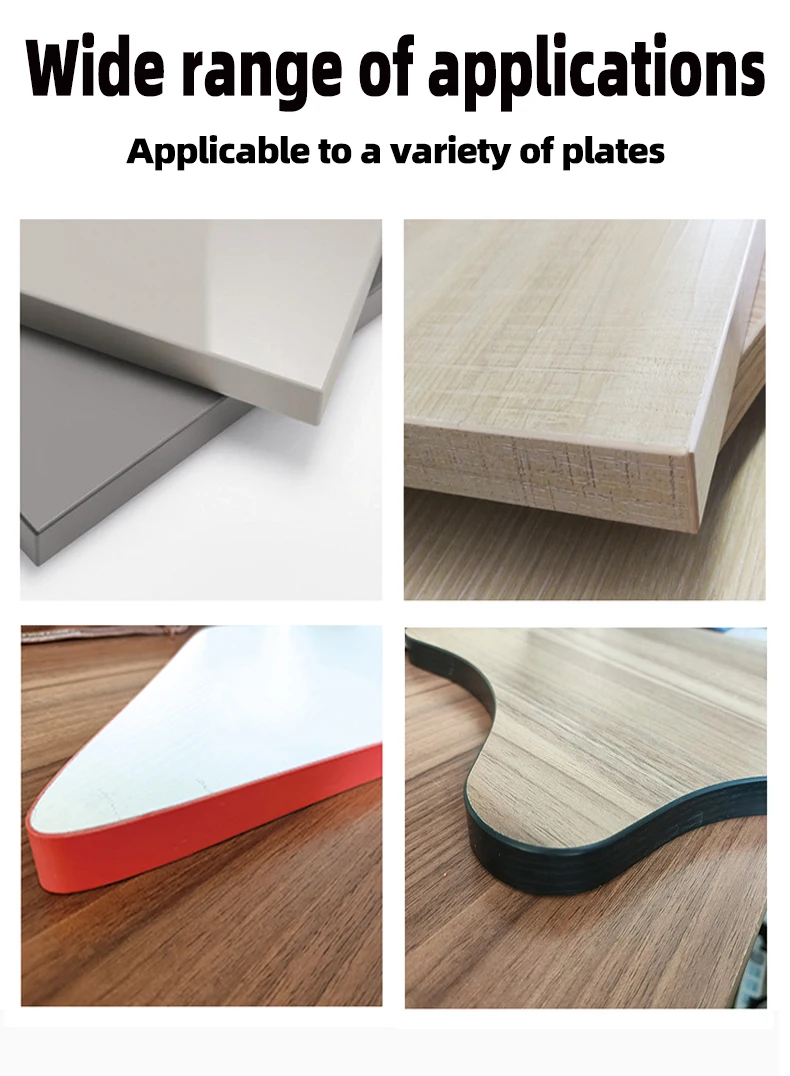
| Kitchen cabinet carcass banding | MDF and particleboard with PVC or melamine edge tape |
| Wardrobe side panel finishing | Plywood and blockboard with 0.3 – 3 mm veneer or PVC |
| Curved furniture components | Polymer door profiles and radius-cut MDF panels |
| Custom furniture batch runs | Mixed wood panel substrates in small to medium workshops |
Why the Voltage Question Must Precede the Dispatch Date
An Edge Banding Machine in stock is useless if its inverter trips on overvoltage the moment you plug it in.
I have stood on a job site where a container had crossed the ocean, the machine was uncrated, and the local electrician spent days chasing fault codes because the supply frequency did not match what the drive expected. A 440V unit on a 480V feed without a step-down transformer turns commissioning into guesswork [NEED_CITE: voltage and frequency standards by export market]. With this DW102, the plug type and voltage are locked in before the crate leaves the loading dock, so the machine that arrives is the machine that runs.
Stocked for Immediate Line Expansion
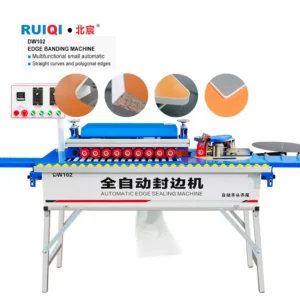
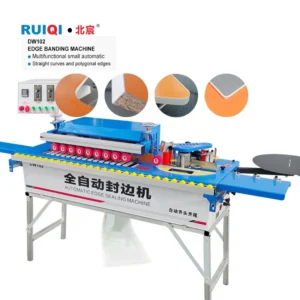
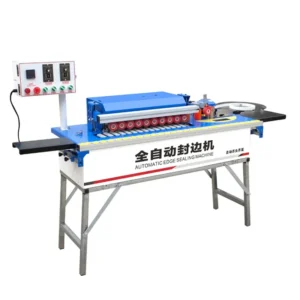
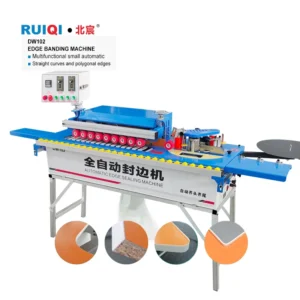
Workshops scaling from manual clamping and contact-glue methods need a machine that shortens the gap between order and first good panel. The DW102 is held in the warehouse as an Edge Banding Machine in stock so that lead time shrinks to logistics rather than production scheduling. Its 128 × 47 × 69 cm footprint fits through standard doorways, letting a small cabinet shop add curved and straight banding capability without rearranging the floor plan.
Dispatch Readiness Without Shortcut Risks
Fast ordering means nothing if the unit ships with an unchecked glue pot or an unverified pneumatic circuit. Every DW102 destined for quick dispatch still passes through a pre-shipment run on sample board before crating [NEED_CITE: CE machinery directive requirements for industrial equipment]. The 1000 ml glue pot is filled and heated, the 0.5 – 0.8 MPa air lines are cycled, and the trimming heads are dressed — so the machine that reaches your dock has already produced edge-trimmed test pieces rather than sitting cold in a box.
Spec Breakdown: What the Numbers Mean on the Shop Floor
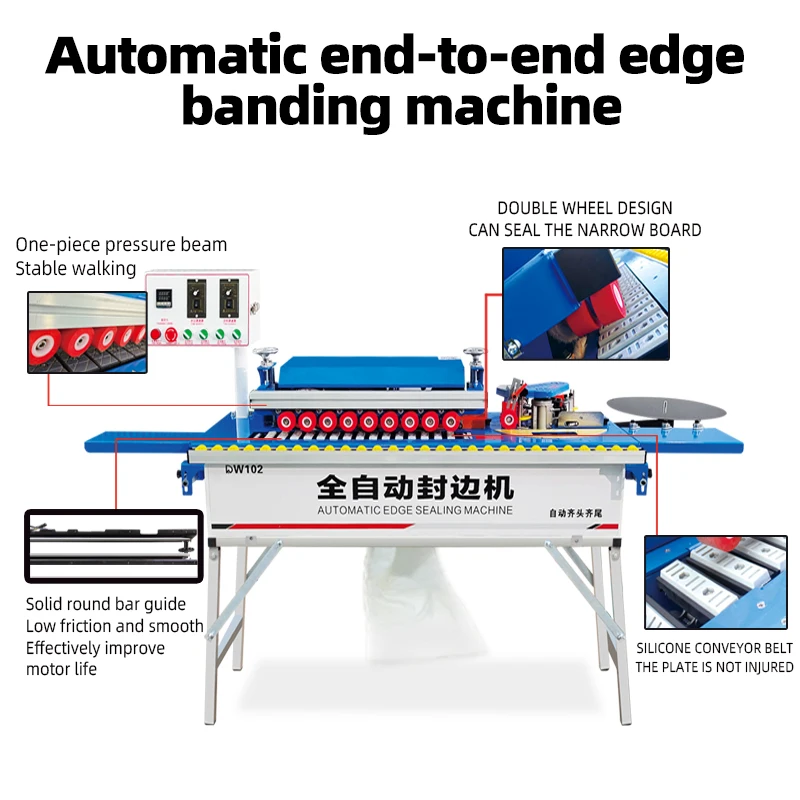
The dual 650W trimming motors give enough torque to shear 3 mm PVC cleanly at feed rates common in cabinet work, reducing the tear-out that shows as a white stress line on dark substrates. A 1000 ml glue pot sustains continuous banding through a typical morning batch without the temperature drop that a smaller reservoir introduces when EVA cools between refills. The 0 – 50 mm edge banding height range covers standard 18 mm board as well as thicker carcass panels used in wardrobes, so one setup handles multiple jobs. Dual 180W polishing wheels follow the trimmers, burnishing any residual micro-line on PVC or veneer to a surface you can run a fingernail across without catching [NEED_CITE: edge adhesion testing on porous substrates].
The Hidden Cost of Skipping Voltage and Language Confirmation
When a control panel arrives in a language the operator cannot read, commissioning stalls while the shop owner hunts for a translator familiar with pneumatic and thermal terminology. Buttons get pressed on assumption, and a mis-set glue temperature can scorch EVA onto the pressure rollers, requiring a teardown before the first paid order runs. Equally, a plug that does not match the local socket means either an adapter rated far below 3800W or a rewired cable that voids warranty. These are not engineering failures — they are paperwork failures that surface only after the machine is on the floor.
Why Procurement Through This Channel Works for Single-Unit Orders
Stock availability means you are not waiting for a build slot behind a full-line project buyer. The DW102 carries customization as standard: voltage from 220V to 380V or a site-specific value, plug format chosen per market, and a control panel in English, Spanish, or another agreed language. Four-stage QC — incoming material, in-process, finished product, pre-shipment verification — runs on stocked units the same way it runs on large-batch orders, so a single machine receives the same documented checks. Engineer-led configuration is confirmed within 24 hours of inquiry, and factory test records travel with the crate.
Documentation & Verification
- CE declaration of conformity matching the DW102 serial number on your crate
- ISO 9001 certificate issued to the manufacturing facility
- Electrical schematic showing confirmed voltage and fuse ratings for your site
- Factory test record on your specified board thickness before dispatch
- Operation and maintenance manual in your chosen language
- Spare parts list with part numbers for trimming blades and polish wheels
Installation, Commissioning & Support
- 3800W total draw requires a dedicated circuit; confirm breaker rating matches 220V or 380V supply
- 0.5 – 0.8 MPa compressed air line needed at the inlet regulator for pneumatic trimmers
- 75 kg weight allows two-person placement onto a level floor without anchoring bolts
- First heat-up of the 1000 ml glue pot should reach stable temperature before first panel feed
- English or Spanish control labels reduce operator error during initial parameter setting
- Trimming blade and polishing wheel are the primary wear items; spares ship inside the crate
What to Prepare Before Requesting Dispatch
To move from inquiry to shipment, share your board material and typical thickness range, the voltage and frequency at your panel, and your preferred plug format. If your operators need a specific control language beyond English or Spanish, confirm that early so the faceplate is printed before crating. Mention whether curved panels are part of your regular output so the vacuum hold and feed path are verified for radius work.
Frequently Asked Questions
Q: What voltage and plug options are available for my country?
A: The DW102 supports 220V, 380V, or a custom voltage matched to your site supply. Plug formats include EU, USA, AU, and UK types. Before dispatch, we confirm the exact voltage, frequency, and plug from a photo of your electrical panel so the machine arrives ready to connect without adapters or transformers.
Q: How quickly can this machine be dispatched from stock?
A: Because the DW102 is held as an Edge Banding Machine in stock, dispatch timing depends on pre-shipment verification and your confirmed voltage specification. Once electrical details and language are agreed, the unit is test-run and crated. Lead time then follows standard freight scheduling to your destination port or address.
Q: What is the minimum sheet size this machine can process?
A: The DW102 handles sheets down to 25 cm in length and 5 cm in width, which covers narrow drawer fronts and small shelving components common in kitchen and wardrobe production. The vacuum hold and automatic head-and-tail cutting maintain edge registration even on these smaller blanks.
Q: Can the control panel language be customized?
A: Yes. Standard options are Chinese, English, and Spanish. If your operators require another language, specify it at the inquiry stage so the control faceplate and digital interface can be prepared before the machine leaves the factory, avoiding commissioning delays on your shop floor.
Q: What edge banding materials and thicknesses does it support?
A: The DW102 processes PVC, melamine, and veneer edge tape from 0.3 mm to 3 mm thick, with a banding height range of 0 – 50 mm. The dual trimming motors and dual polishing wheels handle both thin flexible tape on MDF and thicker rigid PVC on particleboard carcass panels.