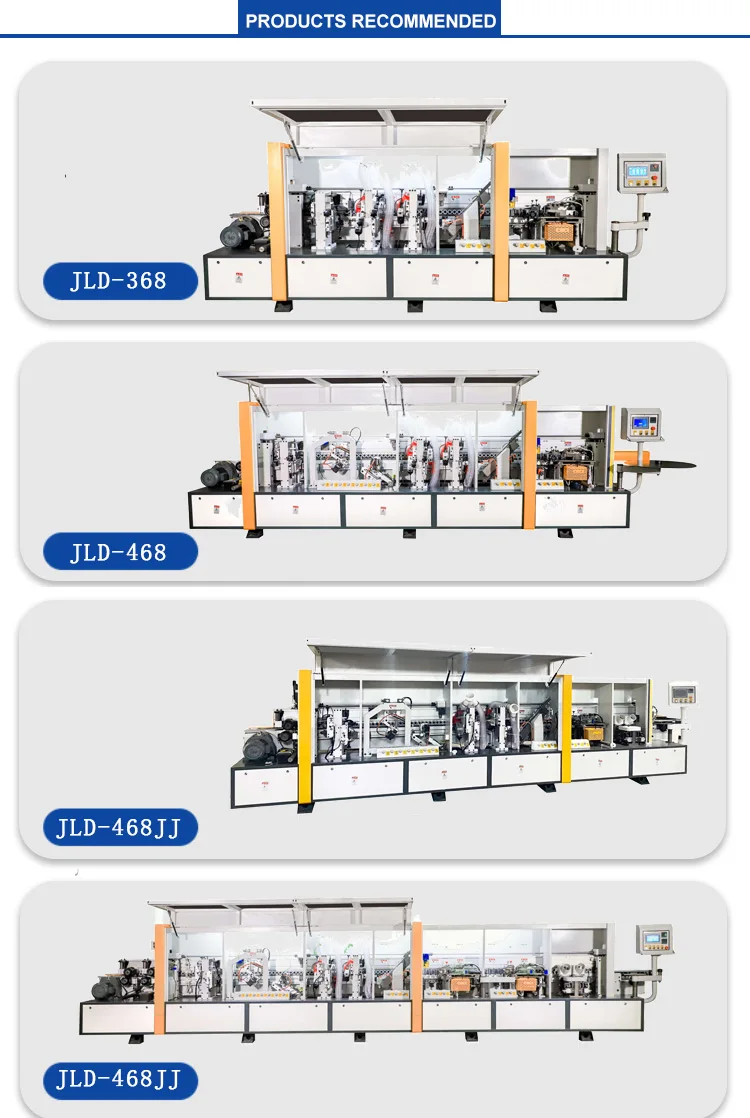
Description
Fast Dispatch With Verified Electrical Specs — every ZDS-468JJ unit ships only after your facility voltage and control panel language are cross-checked against the electrical schematic.
Technical Specifications
| Parameter | Value |
|---|---|
| Model | ZDS-468JJ |
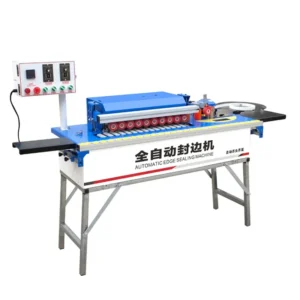
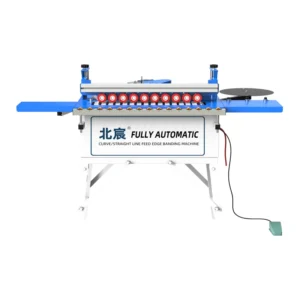
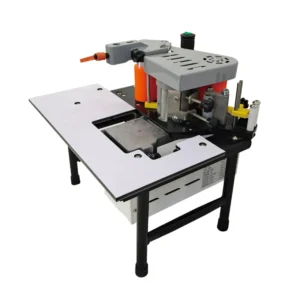
| Product Type | Automatic Edge Banding Machine |
| Total Installed Power | 18.5 kW |
| Machine Dimensions (L × W × H) | 8000 × 900 × 1600 mm |
| Machine Weight | 2300 kg |
| Working Air Pressure | 0.6 MPa |
| Panel Thickness Range | 10–60 mm |
| Edge Band Thickness Range | 0.4–3 mm |
| Minimum Panel Size | 150 × 150 mm |
| Pre-milling Unit | Yes |
| Gluing Configuration | Double Glue Pot (Teflon-coated, anti-carbonization) |
| End Trimming | 0.37 kW × 2 motors, 12000 rpm |
| Rough Trimming | 0.75 kW × 2 motors, 12000 rpm, 6-tooth flat cutters |
| Fine Trimming | 0.75 kW × 2 motors, 12000 rpm, 6-tooth R2 cutters |
| Corner Rounding | Four-motor profiling unit |
| Scraping | Electro-pneumatically controlled |
| Buffing | Double Buffing |
| Pressing Rollers | 4 sets standard (optional 6 sets) |
| Control System | PLC control system |
| Standard Voltage | 3-Phase 380V (configurable 110V–440V) |
| Certification | CE |
| Warranty | 1 Year |
Application Suitability
| Application | Material or Output |
|---|---|
| Cabinet door edge finishing | MDF and plywood with PVC or ABS banding |
| Custom wardrobe panel production | Particleboard with 0.4–3 mm melamine or PVC edge |
| Joinery workshop batch runs | Solid wood panels requiring pre-milling before banding |
| Furniture factory line integration | Panel processing upstream of boring and assembly stations |
Why the Voltage Question Must Come Before Dispatch
An automatic edge banding machine in stock is only useful if it runs the moment it reaches your floor.
I once watched a container sit at a Brazilian port for three weeks because the edge bander inside was wired for 220V while the workshop ran 440V three-phase. The transformer delay cost more than the shipping. That is the kind of mistake a stocked order should eliminate, not repeat. When you are sourcing an automatic edge banding machine in stock, the lead-time advantage disappears the instant the machine sits idle waiting for an electrical fix [NEED_CITE: voltage and frequency standards by export market].
Stock That Ships — After Your Site Is Verified
A stocked ZDS-468JJ moves fast, but fast should never mean unchecked. Before dispatch, the electrical schematic is reviewed against your on-site supply photos. If your facility runs 440V at 60Hz instead of the standard 380V at 50Hz, the motor and control transformer specifications are adjusted before the crate is sealed. This is the difference between a machine that commissions on day one and one that waits for parts.
Ready Configurations Across the ZDS Range
The ZDS series covers entry-level trimming through to the full ZDS-468JJ configuration with pre-milling, double glue pot, corner rounding, and double buffing in a single pass. Stocked units across this range allow single-machine orders without build-to-order waiting periods. For buyers evaluating an automatic edge banding machine in stock before committing to a larger shipment, this means you can run test panels in your own workshop before the next order [NEED_CITE: CE machinery directive requirements for industrial equipment].
Reading the Specs That Matter on the Floor
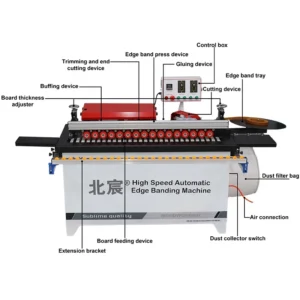
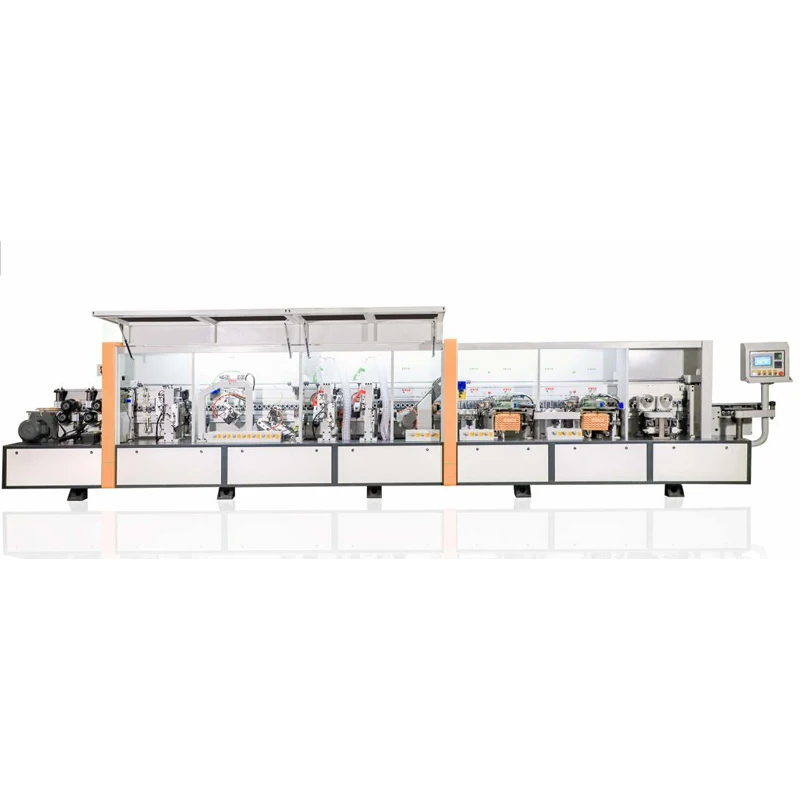
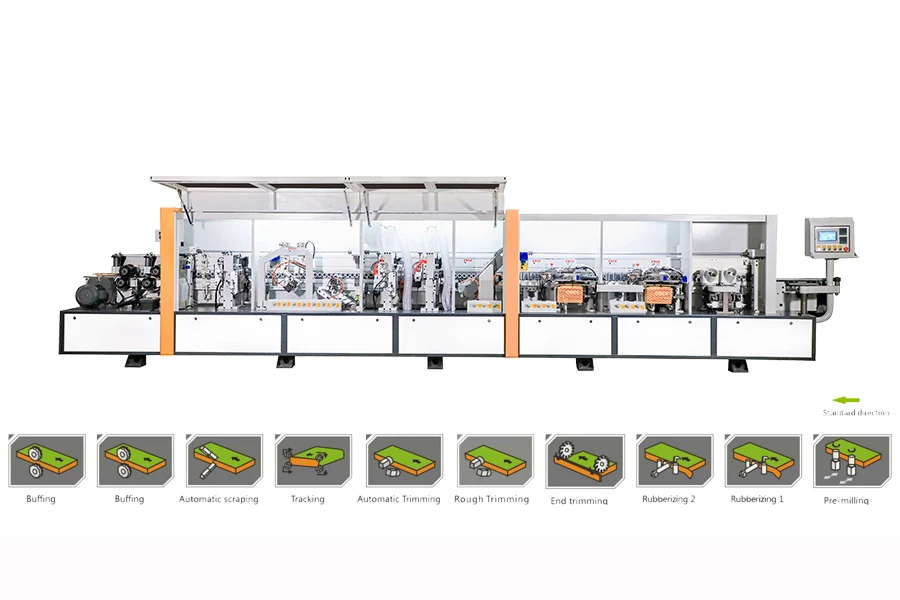
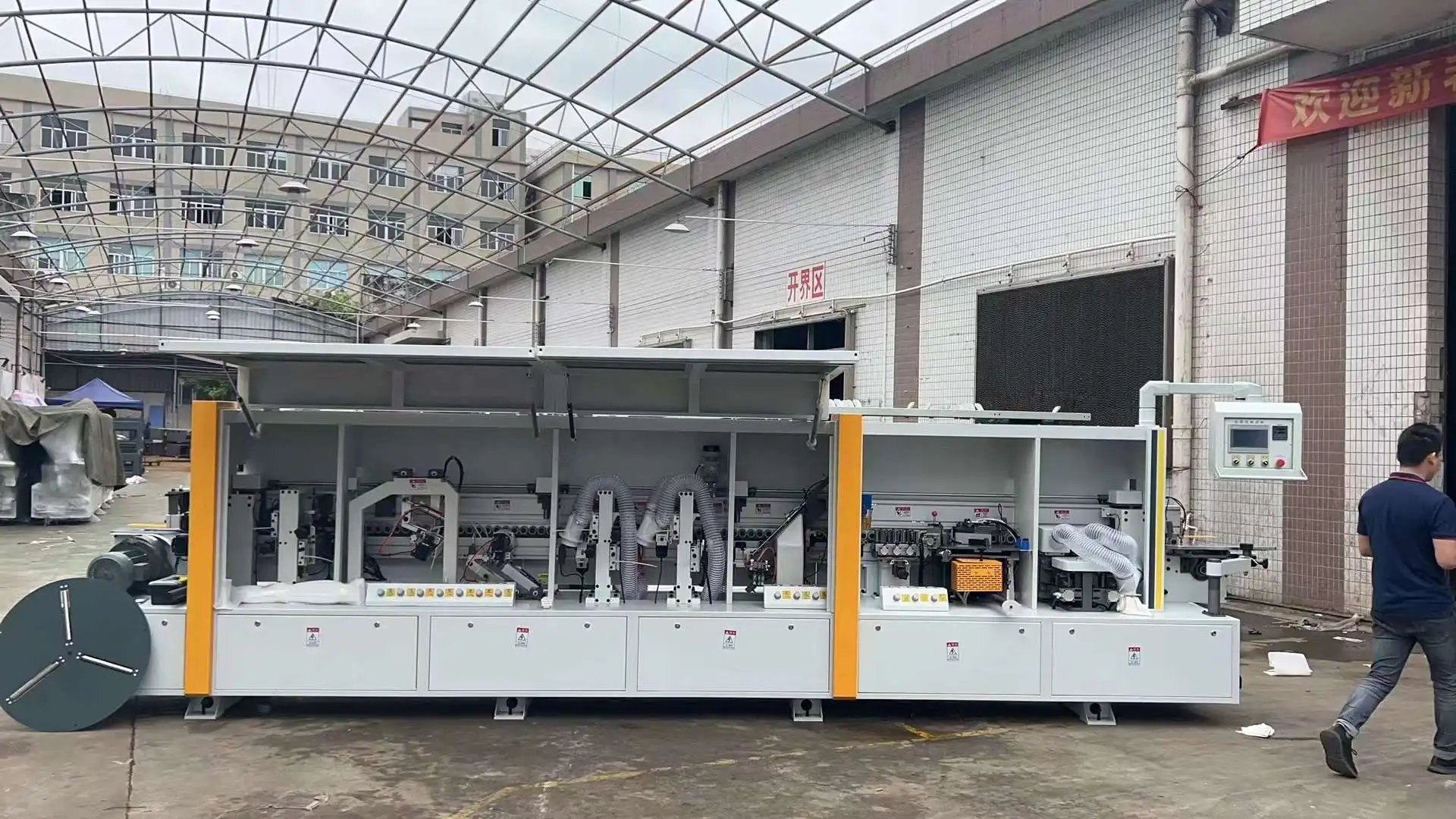
The 8000 mm machine length houses nine working stations — that length is what allows pre-milling, gluing, trimming, rounding, scraping, and buffing to happen sequentially without manual repositioning. The Teflon-coated glue pot with anti-carbonization design maintains uniform adhesive temperature across long shifts, which directly affects how consistently PVC and ABS banding adheres to MDF and particleboard edges. Corner rounding with the four-motor profiling unit eliminates the hand-scraping step that slower workshops still rely on, while double buffing closes the surface finish without a separate station downstream. Panel thickness coverage from 10 to 60 mm means the same machine handles thin cabinet backs and thicker shelving without tooling changeover delays.
What Happens When Configuration Gaps Show Up Late
A machine can be in stock and still be the wrong machine. Buyers who order without confirming minimum panel size discover that narrow drawer sides — below 300 mm on some configurations — cannot feed through reliably. Others find that a single glue pot cannot switch between EVA for standard runs and PUR for moisture-resistant panels without downtime. These are not defects; they are specification mismatches that surface only after the first production week [NEED_CITE: edge banding adhesion failure modes on composite panels].
Why Stocked Orders From This Line Hold Up
In-house manufacturing with patented cutting mechanisms means the trimming units on stocked machines carry the same ±0.02 mm tolerance as built-to-order units. Voltage and language customization is treated as standard configuration, not a special request. A four-stage QC process with pre-shipment verification photographs accompanies every unit regardless of order size. Engineer-led configuration review happens within 24 hours of inquiry, so even a single stocked machine is matched to your actual panel range and local supply conditions before it leaves the floor.
Documentation & Verification
- CE declaration of conformity matched to ZDS-468JJ configuration
- Electrical schematic confirming voltage and frequency for your facility
- Factory test record run on your specified panel thickness range
- Operation manual translated into your agreed language before dispatch
- Pre-shipment verification photographs of machine and packed crate
Installation, Commissioning & Support
- 8000 mm footprint requires level concrete floor with 2300 kg load capacity
- 18.5 kW total draw requires dedicated 3-phase circuit with proper breaker rating
- Machine ships partially assembled; full setup guided by video and manual
- PLC control parameters set during first run against your actual edge material
- Spare parts list includes cutter and scraper blade specifications for local sourcing
- Teflon glue pot cleaning schedule provided to prevent adhesive carbonization buildup
What to Share With Your Inquiry
To match the right stocked configuration to your workshop, send your daily panel volume, the edge banding materials you run most often, and a photo of your main electrical panel. If you are integrating into an existing line, note the feed direction and upstream equipment so throughput can be checked. Confirming your local voltage and operator language at the inquiry stage keeps the dispatch timeline intact.
Frequently Asked Questions
Q: Which ZDS models are currently stocked and how fast can they ship?
A: Stocked models span the ZDS series from basic trimming configurations up to the full ZDS-468JJ with pre-milling and double buffing. Dispatch lead times depend on whether voltage or language customization is needed before shipment. Standard 380V units with Chinese or English panels move fastest.
Q: Can I order a single machine for evaluation before a larger shipment?
A: Single-unit orders are accepted across all stocked configurations. Many buyers start with one ZDS-468JJ to validate edge quality on their own MDF and particleboard before committing to multiple units for a full production line.
Q: Will the voltage be confirmed against my local supply before shipping?
A: Yes. The electrical schematic and your facility photos are reviewed before dispatch. If your workshop runs 440V or 220V instead of the standard 380V, motor and transformer specifications are adjusted accordingly so the machine commissions without a separate transformer.
Q: What edge banding materials work with the stocked configurations?
A: The double glue pot with Teflon coating handles PVC, ABS, and melamine edge banding from 0.4 to 3 mm thickness. PUR glue pot options are available for moisture-resistant applications on plywood and particleboard panels.
Q: How are spare parts and consumable cutters supplied after delivery?
A: A spare parts list with cutter and scraper blade specifications ships with every machine. Consumables for the rough and fine trimming units can be sourced locally if the specifications match regional suppliers, or ordered directly for guaranteed compatibility.