Description
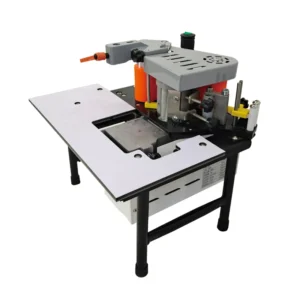
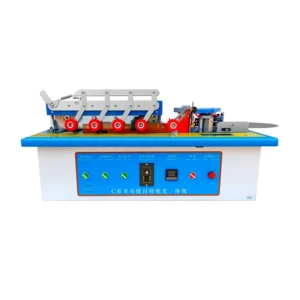
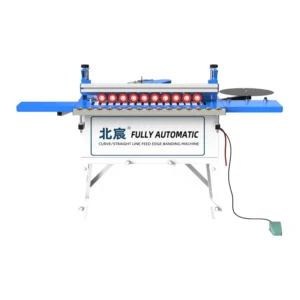
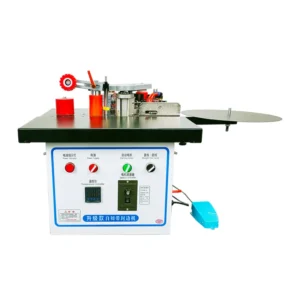
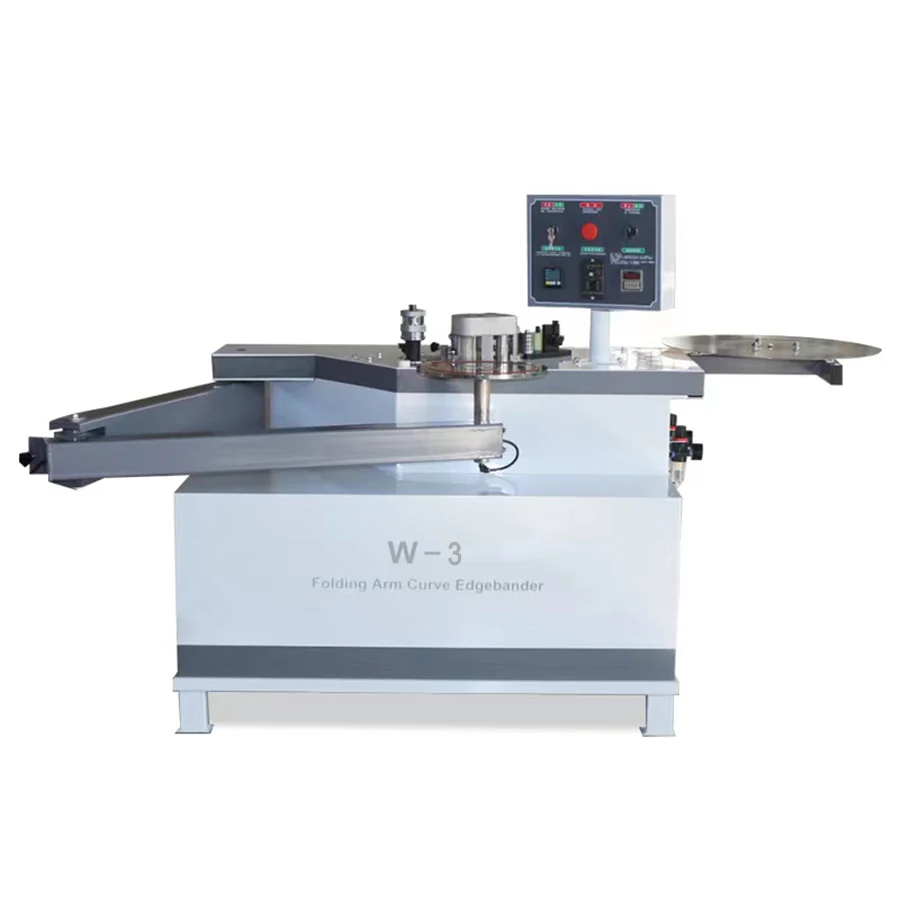
Immediate dispatch of stocked curve edge banding models — W-1, W-2, and W-3 units held in inventory, configured to 220V/50Hz, with pre-shipment testing completed before loading.
Technical Specifications
| Parameter | Value |
|---|---|
| Model | W-1 / W-2 / W-3 |
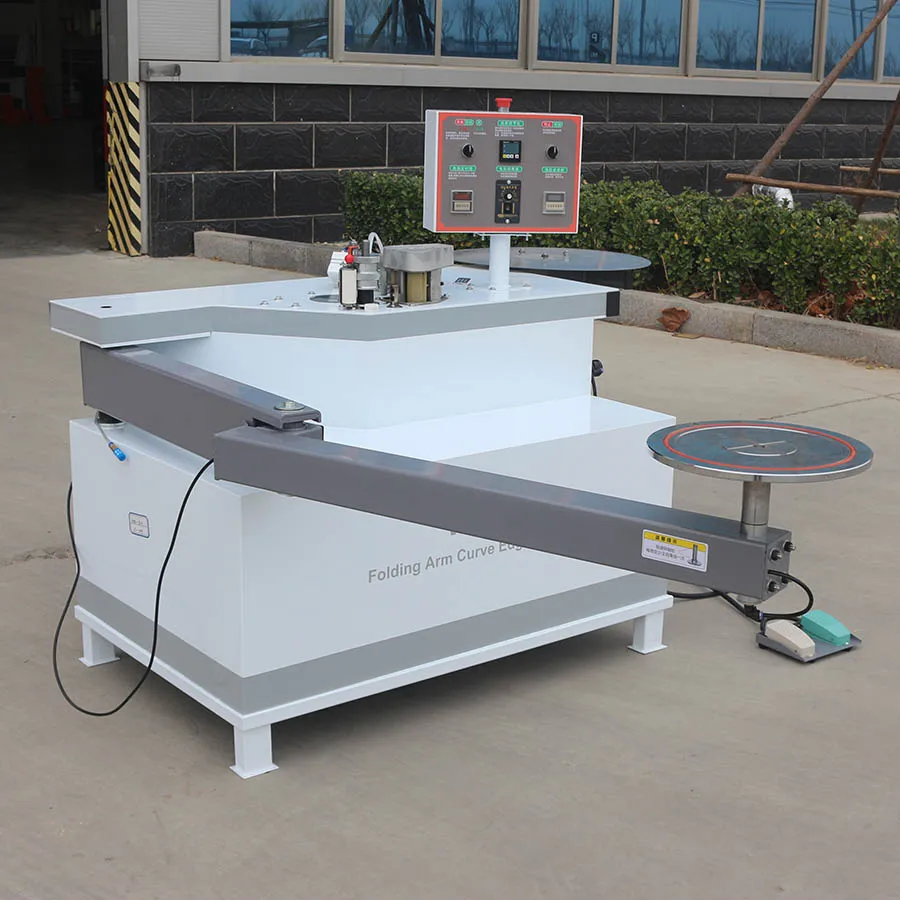
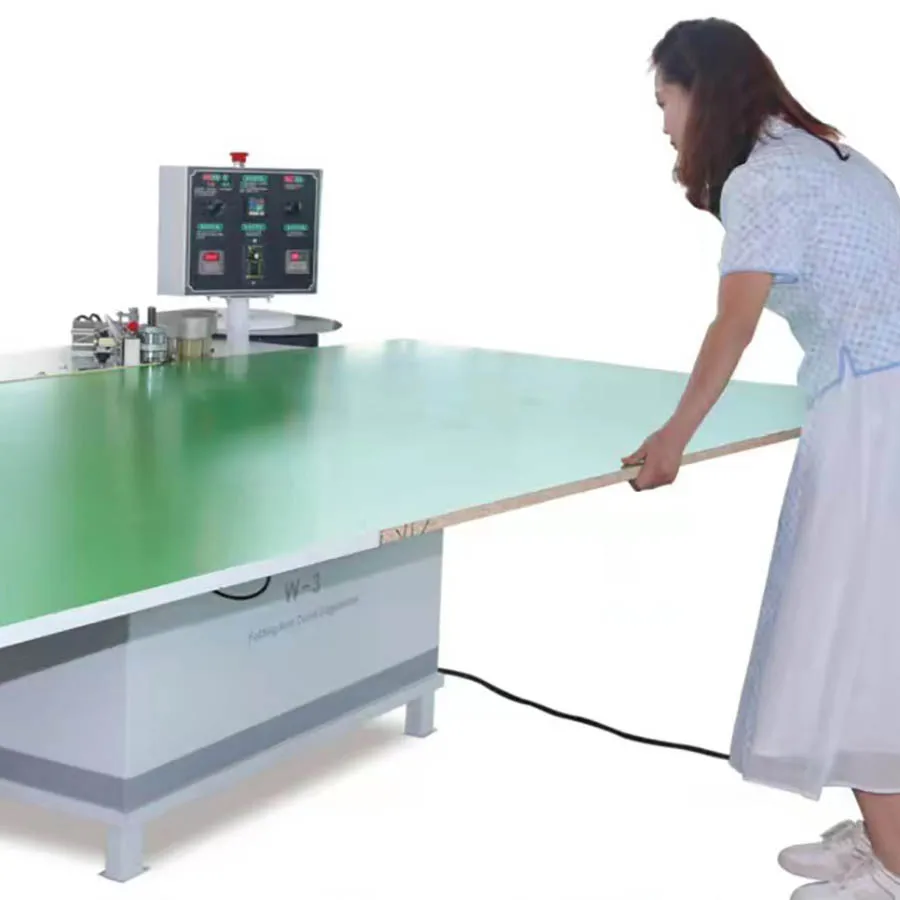
| Product Type | Curve Edge Banding Machine with Folding Arm |
| Voltage & Frequency | 220V 50Hz (all models) |
| Total Power | 1.4 kW (W-1, W-2) / 3.4 kW (W-3) |
| Edge Banding Speed | 0–180 mm/s |
| Air Source Air Pressure | 0.5–0.8 MPa |
| Edge Band Thickness Range | 0.4–2 mm |
| Edge Band Width Range | 8–50 mm |
| Standard Suction Cup Size | 200×26 mm (W-1) / 300×26 mm (W-2, W-3) |
| Overall Dimensions (L×W×H) | 900×620×820 mm (W-1) / 1200×800×1220 mm (W-2) / 1210×1100×970 mm (W-3) |
| Net Weight | 88 kg (W-1) / 152 kg (W-2, W-3) |
| Motor Type | Pure copper motor |
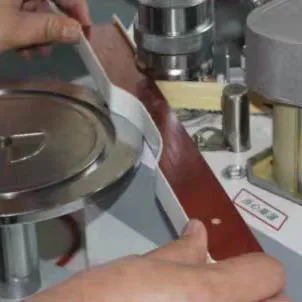
| Key Features | Arm folding device, intelligent temperature control, speed adjustment, timer, enlarged glue pot, automatic double-cylinder belt breaking, bottom-up hot air heating, adjustable edge banding wheel (+0.5 mm) |
Application Suitability
| Application | Material or Output |
|---|---|
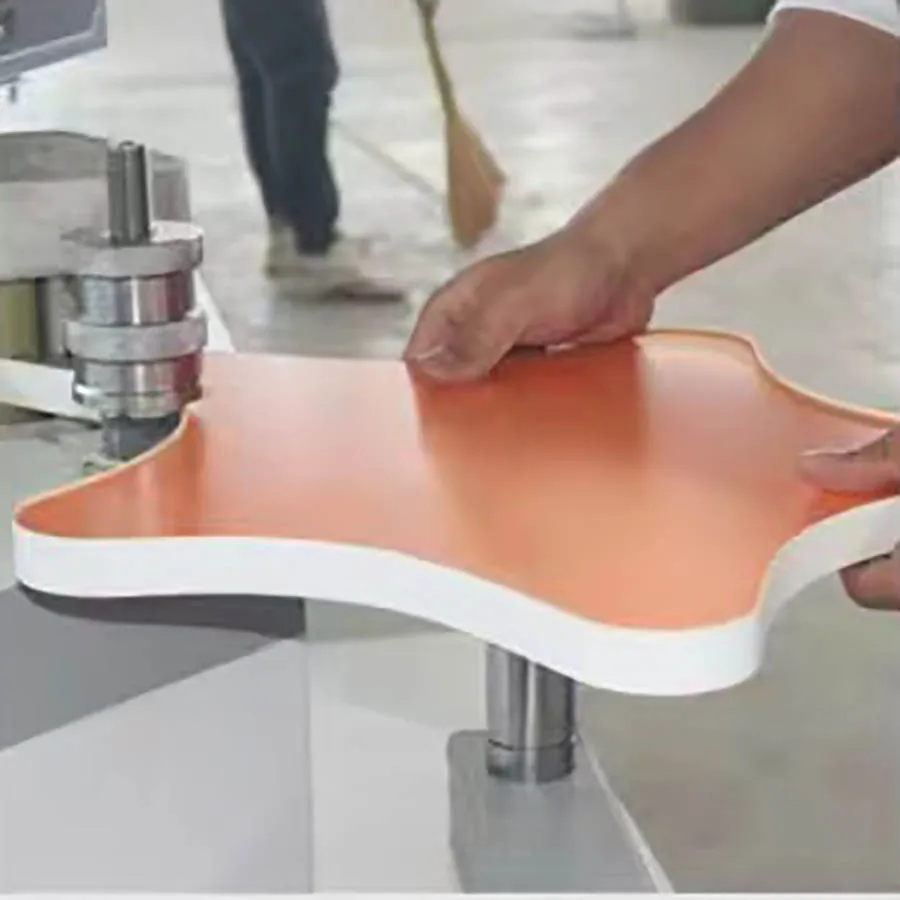
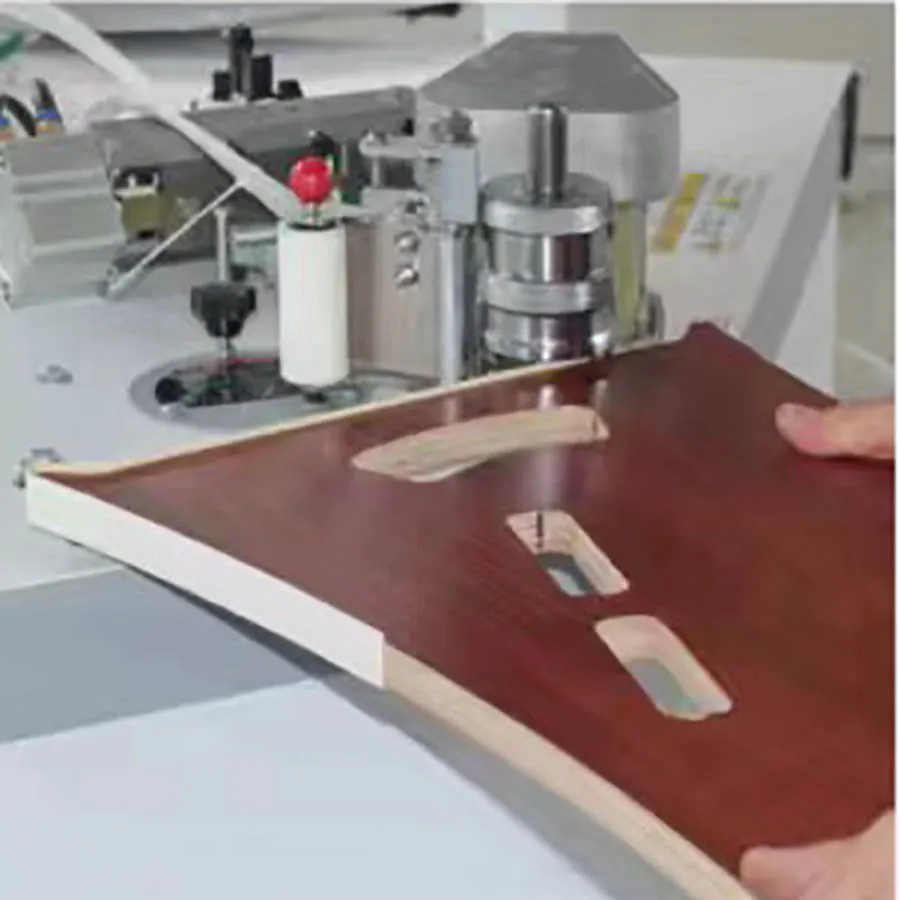
| Curved and shaped panel edge banding | MDF, plywood, particleboard with PVC or veneer edge banding |
| Custom furniture production | Cabinet doors, wardrobe panels, contoured desk tops |
| Office furniture manufacturing | Rounded-edge work surfaces, reception counters, modular partitions |
| Door and window components | Profiled solid wood and composite frame sections |
| Small-batch decorative woodwork | Display shelving, retail fixtures, architectural joinery |
Why the Voltage Question Must Come Before Dispatch
Every curve edge banding machine in stock leaves our floor configured to the buyer’s confirmed supply — not assumed. I spent years on the assembly floor before moving to sales, and one shipment still keeps me up at night. We sent a PVC edge banding unit to a Southeast Asian workshop, and nobody verified the incoming supply. The site ran 380V three-phase, the machine was wired for a different standard, and the customer sat idle for three weeks sourcing a step-down transformer. Commissioning was ruined before it started. That single failure rewired how I handle every order. Now the electrical schematic and site voltage confirmation happen before the crate is closed. A curve edge banding machine in stock is only ready to ship if the electrical match is already solved [NEED_CITE: voltage and frequency standards by export market].
Stocked Units, Not Catalog Promises
The W-1, W-2, and W-3 models are held on the floor, not built to order. When a workshop needs curved-edge capability fast, waiting weeks for a production slot is not an option. Each folding arm edge bander fast delivery unit is tested on representative panel stock before crating, so the buyer receives a machine that has already run edge banding material through its full thickness range.
Single-Unit Orders Without Penalty
Distributors and small workshops often need exactly one curve edge banding machine in stock to fill a gap or test a market. Our stocking model supports single-unit dispatch without inflated lead times. The folding arm mechanism, enlarged glue pot, and intelligent temperature controller ship together as a complete working system, not as a base unit that requires add-on modules to function [NEED_CITE: CE machinery directive requirements for industrial equipment].
Reading the Specifications Against Your Production Reality
The 0–180 mm/s edge banding speed range lets operators slow down on tight inside curves and open up on long straight runs. A 0.4–2 mm edge band thickness range covers standard PVC, ABS, and thin veneer strips used in panel furniture. The 0.5–0.8 MPa air pressure requirement is typical for workshop compressors already running CNC routers or drilling stations. W-1 draws 1.4 kW and weighs 88 kg, fitting a small joinery bench area, while W-3 at 3.4 kW and 152 kg handles higher daily volumes where continuous glue pot operation matters. The adjustable edge banding wheel adds 0.5 mm offset relative to strip width, which prevents lateral drift on radiused edges — a detail that separates acceptable curved-edge work from pieces that show visible misalignment at assembly.
The Cost of Skipping Specification Confirmation
Ordering a curve banding machine without confirming local voltage and frequency is one of the most common reasons equipment sits idle on arrival. A mismatched motor winding cannot be fixed with an adapter plug. Equally, receiving a control panel in a language the operator cannot read stops commissioning until re-labeling or panel replacement is arranged. These are not defect issues — they are configuration gaps that turn a ready-stock advantage into a multi-week delay. Buyers who skip the pre-dispatch verification conversation end up paying for transformer rentals or panel rewires that the original quotation never covered [NEED_CITE: common causes of commissioning delays in imported woodworking machinery].
Why Buyers Source These Ready-Stock Models Here
Our Ningjin facility keeps W-1, W-2, and W-3 units in stock with standardized 220V/50Hz wiring and English-language controls, so dispatch does not depend on a new production cycle. Four-stage quality control — incoming material, in-process, finished product, and pre-shipment verification — is applied to every stocked unit before it is listed as available. Voltage customization beyond the standard 220V configuration is available on request, with the electrical schematic confirmed before the machine leaves Shandong. The patented cutting mechanism and precision-ground components carry through the entire product family, meaning a workshop that starts with a W-1 can move to higher-spec models later without relearning the supplier’s build philosophy. Pre-shipment test records and packing photographs are standard documentation, not optional extras.
Documentation & Verification
- CE declaration of conformity covering curve edge banding machinery scope
- Factory test record on buyer’s specified panel thickness and edge band material
- Electrical schematic with confirmed voltage and frequency before crating
- Operation and maintenance manual in operator’s agreed language
- Spare parts list mapped to W-1, W-2, or W-3 bill of materials
- Packing photographs showing machine condition at point of dispatch
Installation, Commissioning & Support
- Confirm workshop supply matches 220V 50Hz single-phase or arrange voltage customization before dispatch
- Ensure compressed air delivery at 0.5–0.8 MPa reaches the machine’s pneumatic inlet
- Allow floor space per model dimensions: 900×620 mm minimum for W-1 placement
- Verify suction cup size (200×26 mm or 300×26 mm) suits the panel shapes in your production mix
- Calibrate intelligent temperature controller to the specific edge banding adhesive and material on first run
- Review included spare parts list and establish reorder points for consumable wear items
Before You Request a Quotation
Send us the edge banding material type and thickness you run most often, the panel substrates in your daily mix, and your workshop’s confirmed voltage and frequency. If your operators speak a language other than English, tell us which one so the manual and control labels match. Let us know whether this is a single-machine addition or part of a broader line expansion so we can flag throughput compatibility with your existing equipment.
Frequently Asked Questions
Q: Which models are in stock and how quickly can they ship?
A: W-1, W-2, and W-3 curve edge banding machines are held in ready-stock inventory. Dispatch lead time depends on pre-shipment testing and documentation preparation rather than manufacturing. Once voltage, language, and specification details are confirmed between buyer and engineer, the unit moves to packing. Contact the sales team for the current stock position and the earliest available loading date.
Q: Can voltage and control panel language be changed for my market?
A: Standard stock units are configured at 220V/50Hz with English-language controls. Custom voltage settings and multilingual control panels are available on request. The electrical schematic is shared and confirmed before the machine leaves the factory, preventing the kind of supply mismatch that stalls commissioning on arrival. Specify your site voltage, frequency, and operator language at inquiry stage.
Q: What edge banding materials and thicknesses does the machine handle?
A: The W-series accepts edge banding material from 0.4 mm to 2 mm thick and 8 mm to 50 mm wide. PVC, ABS, melamine, and thin veneer strips are all within the working range. The enlarged glue pot supports continuous runs, and the adjustable edge banding wheel compensates for strip width to maintain alignment on curved profiles.
Q: How can I verify edge banding quality before placing a bulk order?
A: Request a pre-shipment test record showing the machine running your specified panel material and edge band type. Our four-stage QC process includes a finished-product verification step with packing photographs. For buyers evaluating multiple units, a sample processing test can be arranged to confirm adhesion quality and edge finish on your actual substrate.
Q: What spare parts and support come with a single-unit purchase?
A: Every shipment includes a spare parts list mapped to the specific model, an operation manual in the agreed language, and installation guidance from our engineering team. After-sales support covers troubleshooting during commissioning and ongoing maintenance questions. The pure copper motor and standardized pneumatic components are widely serviceable in most markets.