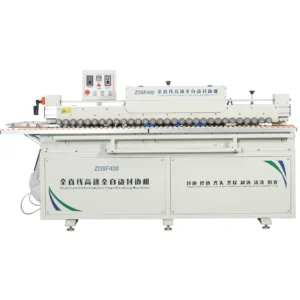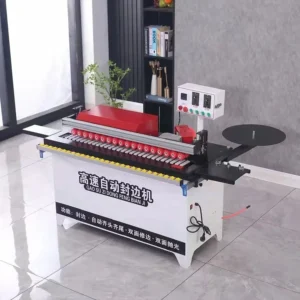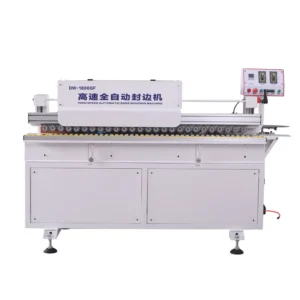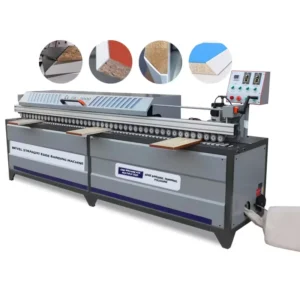
Description
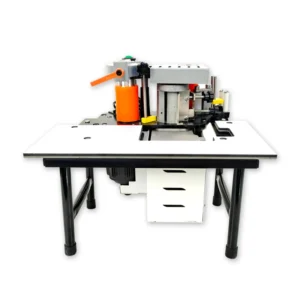
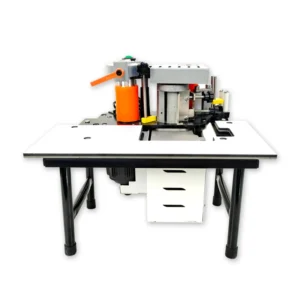
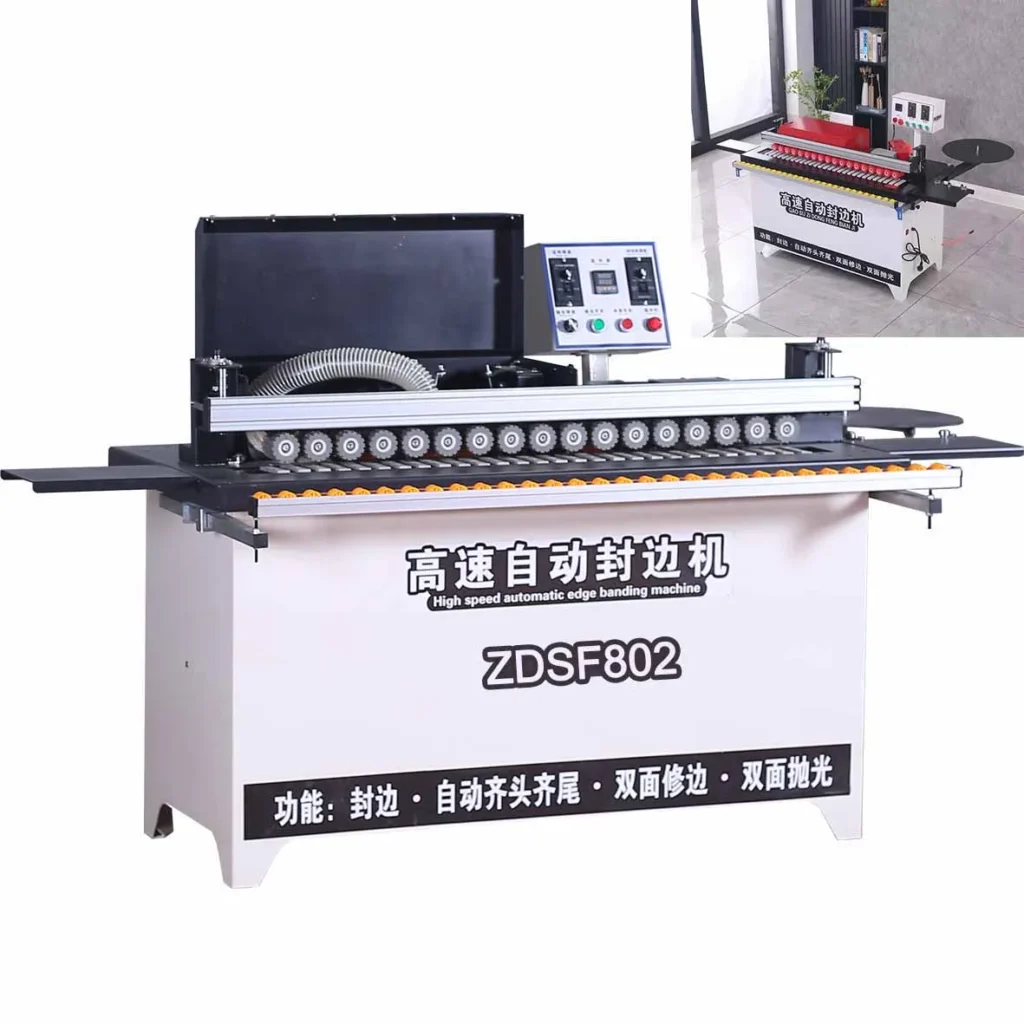
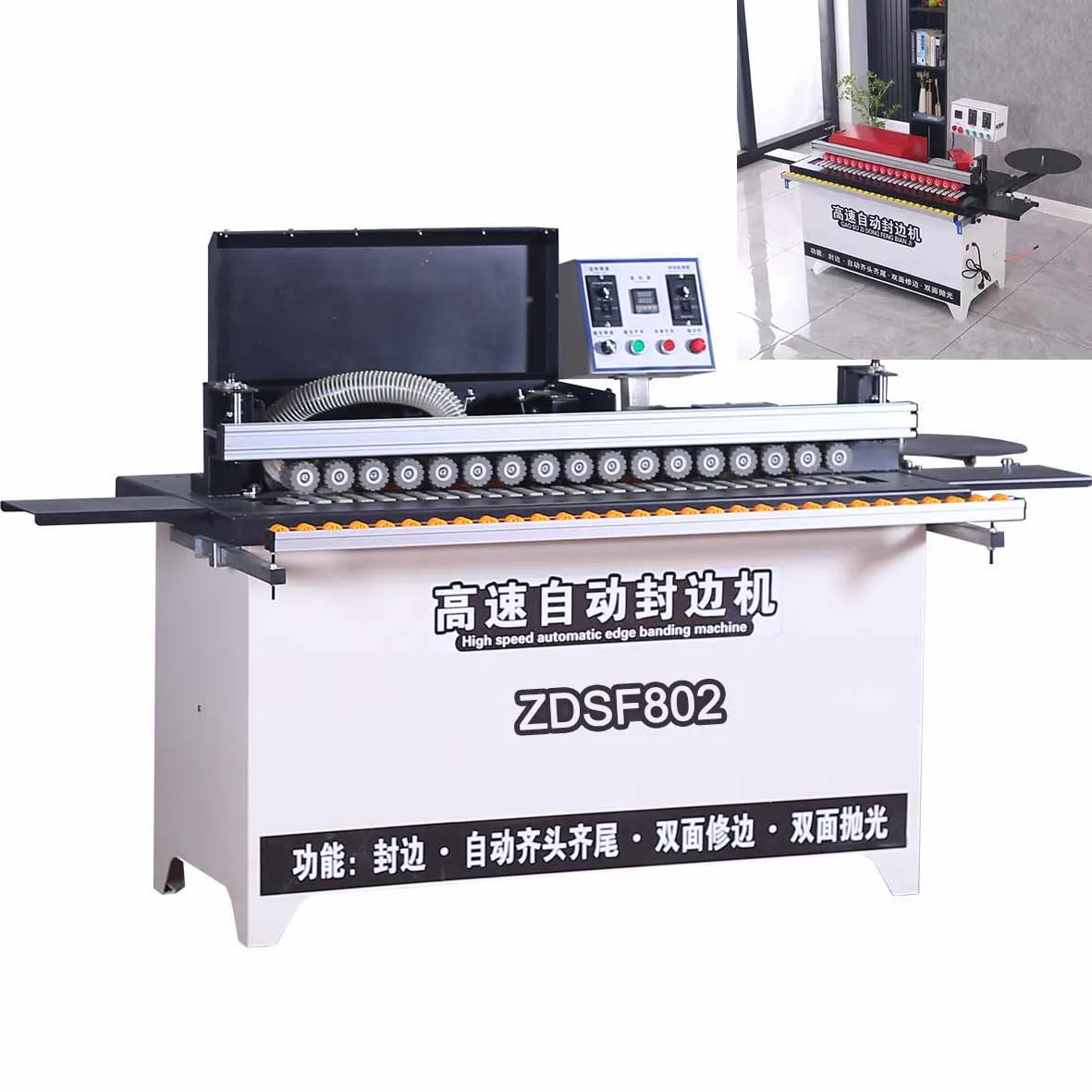
Voltage-Verified Before Loading — every ZDSF802 automatic edge banding machine is cross-checked against your workshop supply spec before it leaves the floor, so it runs on day one.
Technical Specifications
| Parameter | Value |
|---|---|
| Model | ZDSF802 |
| Product Type | Automatic Edge Banding Machine |
| Edge Type | Straight line |
| Rated Voltage | 220V |
| Rated Power | 4kW |
| Trimming Power | 800W × 2 |
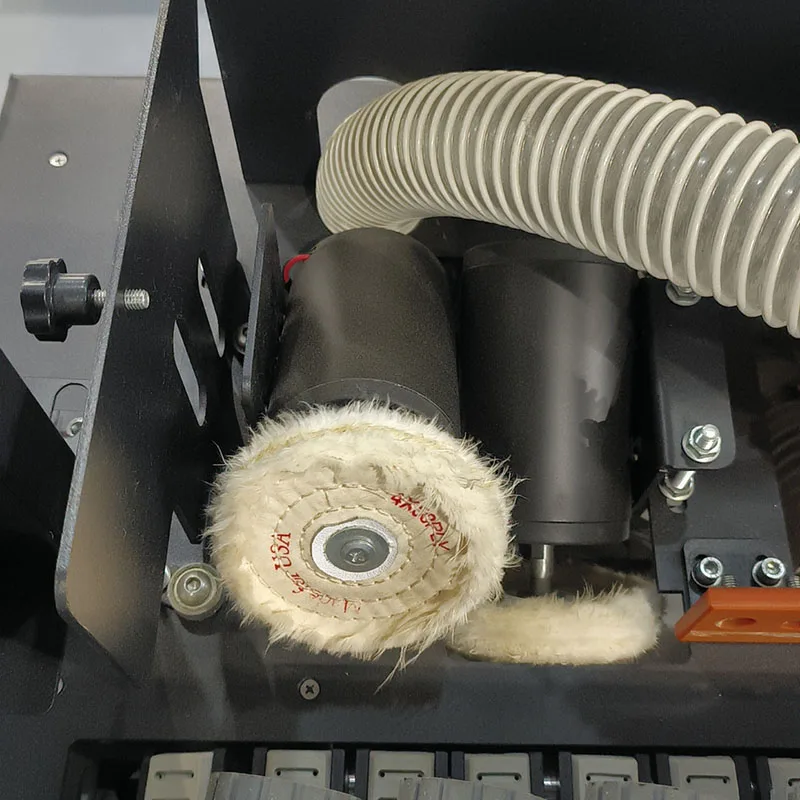
| Polishing Power | 180W × 2 |
| Suction Power | 1200W |
| Heating Power | 1000W |
| Feed Speed | 0-10m/min |
| Conveyor Belt Speed | 0-10m/min |
| Strip Thickness Range | 0.5-2.5mm |
| Sheet Thickness Range | 10-50mm |
| Glue Pot Capacity | 4000ml |
| Rated Air Pressure | 0.4-0.6MPa |
| Overall Dimensions | 130×65×75cm |
| Machine Weight | 150kg |
| Trimming Stations | Double high-speed trimming motors (up and down) |
| Polishing Stations | Up and down two polishing motors |
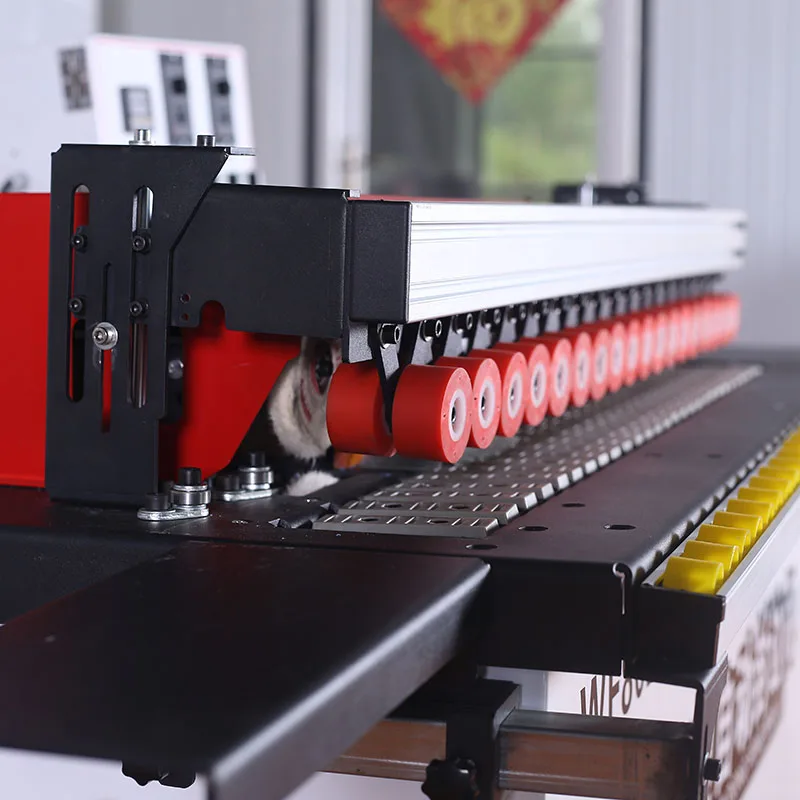
| Conveyor Belt Material | Silicone |
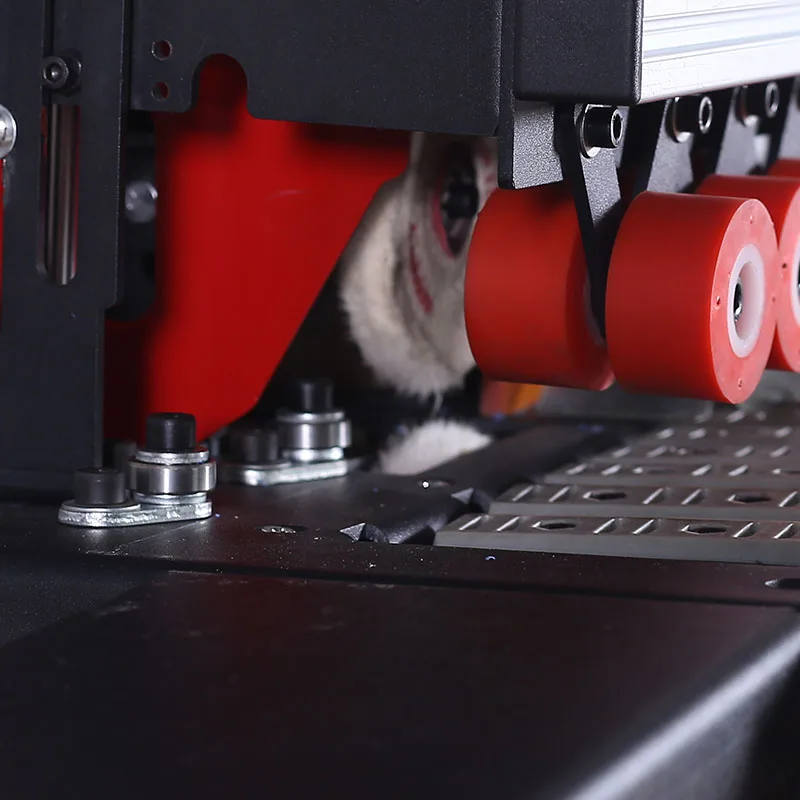
| Pressure Beam | Integrated, double rows of pressure wheels |
| Belt Breaking Method | Pneumatically controlled |
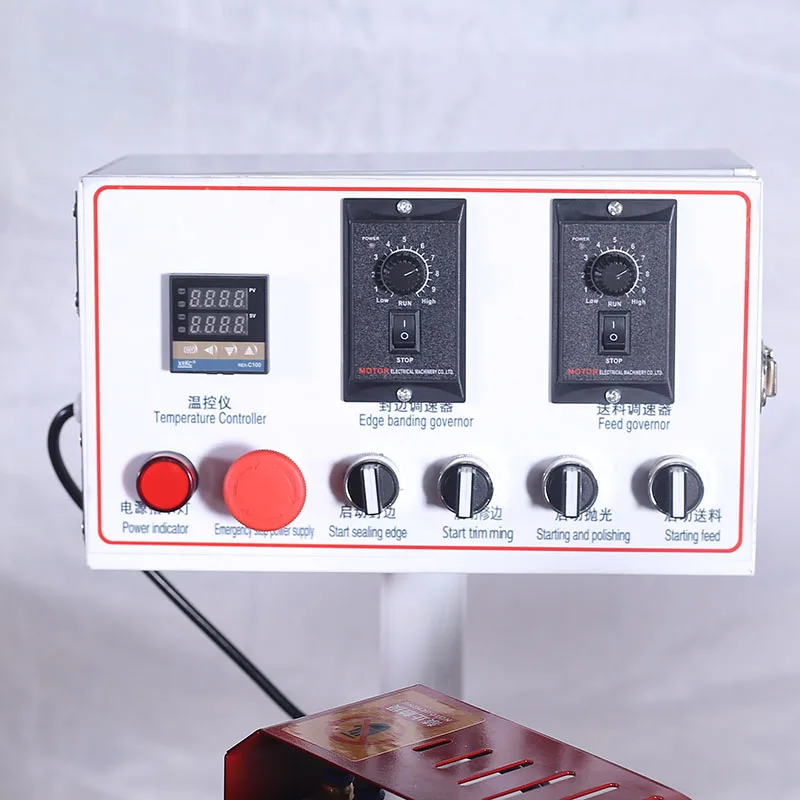
| Control Panel | Digital display of glue pot temperature, independent switch |
| Board Support | Extendable fluent strips for large plates |
Application Suitability
| Application | Material or Output |
|---|---|
| Custom cabinet door production | MDF and particleboard with PVC edge banding |
| Small-batch furniture panel finishing | Plywood and melamine-faced boards with veneer strips |
| Joinery workshop edge treatment | Solid wood panels with 0.5-2.5mm banding material |
| Compact-shop shelving and carcass work | Chipboard and blockboard panels 10-50mm thick |
Why the Voltage Question Must Come Before Dispatch
An edge bander that arrives with the wrong voltage sits idle until a transformer shows up.
I once handled a shipment of an automatic edge bander to a Southeast Asian workshop. The local supply was 220V single-phase, but the machine left our floor configured for 380V three-phase. It sat in the customer’s shop for three weeks waiting for a step-down transformer while production deadlines slipped. That incident changed how every ZDSF802 Automatic Edge Banding Machine in stock is prepared for dispatch — voltage and frequency are now confirmed against the buyer’s actual site supply before the crate is sealed. [NEED_CITE: voltage and frequency standards by export market]
The cost of getting this wrong is not just the transformer. It is the idle operator, the delayed cabinet order, and the lost confidence in the equipment supplier. A 4kW machine like the ZDSF802 draws meaningful current, and plugging it into a mismatched circuit can trip breakers or damage the heating element before anyone realizes the problem.
Stock Availability and Dispatch Timing
When a workshop needs an edge bander, the timeline is usually measured in days, not months. The ZDSF802 is kept in ready-stock configuration so that once voltage, plug type, and control panel language are confirmed, the machine can be loaded without a production lead time. This matters for small joinery shops replacing a failed machine mid-project or cabinet makers adding capacity before a seasonal rush.
Every stocked unit undergoes a pre-shipment run on actual board stock. The glue pot is brought to operating temperature, the feed belt is tracked, and the trimming and polishing stations are adjusted to the specified strip thickness. The unit is then drained, locked, and prepared for crating.
Ordering Simplicity for Single-Unit Buyers
Most ready-stock purchases on this site are single machines going to workshops that do not have a procurement department. The order flow is kept deliberately short: confirm your voltage, confirm your preferred manual language, and the quotation arrives within one working day. The ZDSF802 Automatic Edge Banding Machine in stock ships with its dust collector, extendable board support strips, and a spare parts pack — no hidden line items added at checkout.
For buyers who need to see the machine run before committing, a video call to the factory floor can be arranged so you watch your specific unit process a sample panel. [NEED_CITE: CE machinery directive requirements for industrial equipment]
How the Specifications Translate on the Shop Floor
The 4000ml glue pot is the largest typically found on a machine in this footprint class. In practice, it means an operator can edge-band a full batch of cabinet carcass panels without stopping to refill adhesive — a meaningful difference when you are running thirty or forty panels in a morning session. The 1000W heating element brings the pot to working temperature in five to ten minutes, which aligns with a typical shop startup routine.
Feed speed is adjustable from 0 to 10m/min across the same range as the conveyor belt. For a 1500mm cabinet side panel, that translates to roughly ten to fifteen seconds of travel through the trimming and polishing zones. The sheet thickness range of 10-50mm covers everything from thin MDF shelving to solid wood worktops, and the double-row pressure wheels on the integrated beam keep the panel flat against the silicone belt without leaving surface marks.
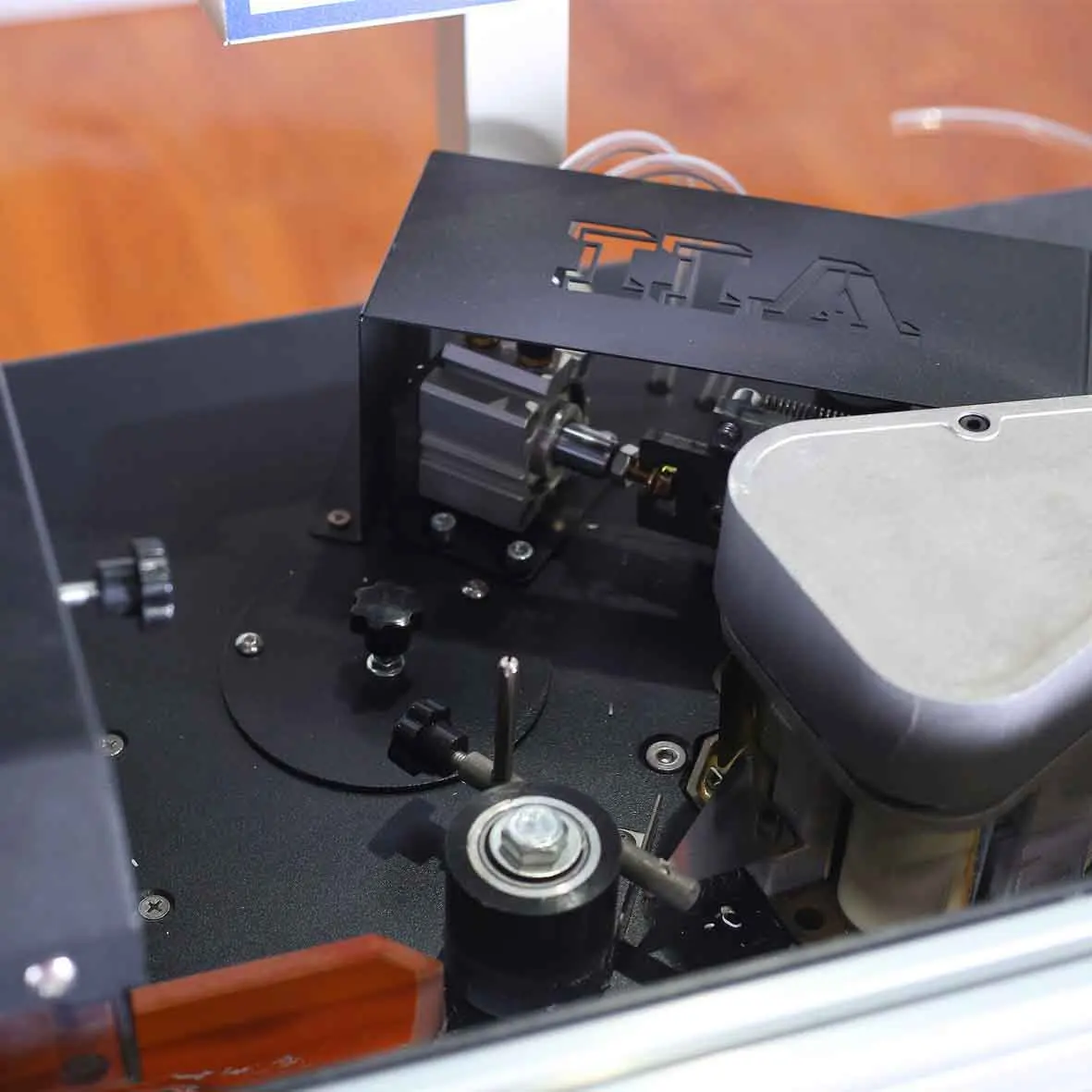
The pneumatically controlled belt-breaking mechanism handles the end cut. Rather than the operator manually snapping the strip at the tail, a pneumatic actuator fires at the right moment, producing a clean break that the downstream trimming motors then finish flush. This removes one of the most inconsistent manual steps in small-shop edge banding.
What Happens When Configuration Is Skipped
The most common complaint from buyers who purchased edge banding equipment elsewhere is not about the machine itself but about the mismatch between the machine and the workshop. A 220V unit sent to a site with only 110V single-phase supply will not heat the glue pot to temperature, producing weak adhesion that fails during assembly. Control panels printed in a language the operator cannot read mean that temperature adjustments and fault codes become guesswork.
Panels processed on a machine with the wrong feed speed setting for the adhesive type show visible glue lines or incomplete trimming, and the fault is discovered only when the cabinet boxes are being screwed together on site. [NEED_CITE: typical causes of edge banding adhesion failure in small workshops] These are not machine defects — they are configuration errors that a proper pre-dispatch check prevents.
What Makes This Purchase Straightforward
Every ZDSF802 is voltage-verified against the buyer’s stated supply before it is cleared for loading, eliminating the transformer-wait scenario. The machine family runs from entry-level units like this one through to full-function pre-milling models, so a workshop that outgrows the ZDSF802 can move up without changing supplier or relearning controls.
Specifications are listed honestly — the feed speed range, glue pot capacity, and motor ratings you see here are what the machine delivers on the floor. Pre-shipment testing includes a run on the buyer’s specified panel material and edge band type, with photographs and a test record included in the dispatch documents. Engineer-led configuration advice is available before you commit, so the right model is matched to your actual daily volume rather than a hopeful projection.
Documentation & Verification
- CE declaration of conformity covering the ZDSF802 edge banding machine
- Factory test record showing glue temperature and trim quality on your specified panel material
- Electrical schematic with confirmed voltage and plug type for your site
- Operation and maintenance manual in your agreed language with illustrated fault-finding section
- Spare parts list with part numbers matching the components on your machine
- Packing photographs taken before crate closure for transit reference
Installation, Commissioning & Support
- Requires a dedicated 220V circuit rated for at least 4kW continuous draw with proper earth bonding
- Overall footprint of 130×65×75cm fits through a standard workshop doorway without disassembly
- Pneumatic connection needs a clean, dry air supply at 0.4-0.6MPa with a local filter-regulator
- First startup includes glue pot heat-up verification and feed belt tracking adjustment
- Extendable fluent strips must be leveled to the conveyor height for large-format panel support
- Silicone conveyor belt inspection and pressure wheel alignment covered in the maintenance manual
Before You Send Your Inquiry
To match the right stock unit to your workshop, share your local voltage and frequency, the panel materials and thicknesses you process most often, and the edge banding type and strip thickness you plan to run. If you have a daily panel count or a specific project deadline, include that so dispatch timing can be confirmed against current stock levels.
Frequently Asked Questions
Q: Is this model in stock and what is the dispatch lead time?
A: The ZDSF802 is maintained in ready-stock configuration. Once your voltage, plug standard, and manual language are confirmed, the unit typically undergoes pre-shipment testing and is prepared for loading within several working days. Exact dispatch timing depends on current stock rotation and your confirmed configuration requirements.
Q: What voltage options are available and how is local supply confirmed?
A: The ZDSF802 is rated at 220V. Before any order is finalized, you provide your site voltage, phase, and frequency. These are cross-checked against the machine configuration, and confirmation is documented in the dispatch paperwork so the machine matches your supply on arrival.
Q: Which panel materials and edge banding types can the ZDSF802 handle?
A: The machine processes MDF, plywood, particleboard, and solid wood panels from 10mm to 50mm thick. Compatible edge banding includes PVC and veneer strips from 0.5mm to 2.5mm. The glue pot temperature is adjustable via the digital display to suit different adhesive and banding combinations.
Q: What is included in the box with the machine?
A: Each ZDSF802 ships with its integrated dust collector, extendable fluent strips for large panel support, a spare parts pack, the operation manual in your agreed language, and full electrical documentation. Packing photographs are provided before dispatch so you can verify contents on receipt.
Q: How do I arrange shipping and is door-to-door delivery available?
A: Shipping can be arranged on an FOB or CIF basis depending on your preference and destination port. Door-to-door delivery is available for certain markets through partnered freight forwarders. Your inquiry should include the delivery address so a logistics quotation can be prepared alongside the machine order.