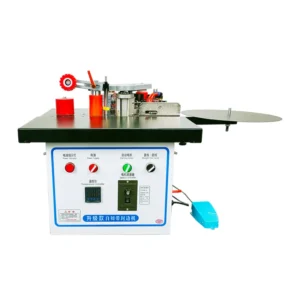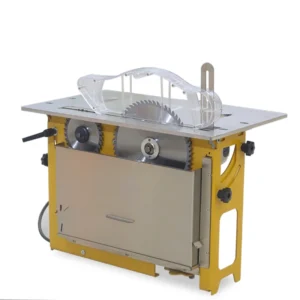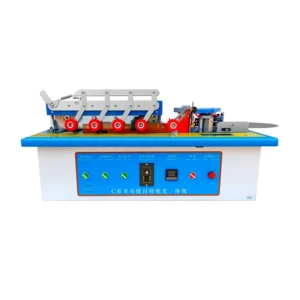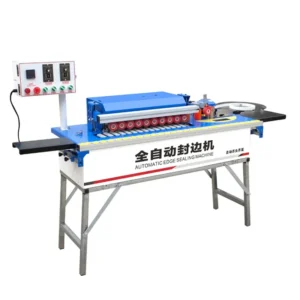

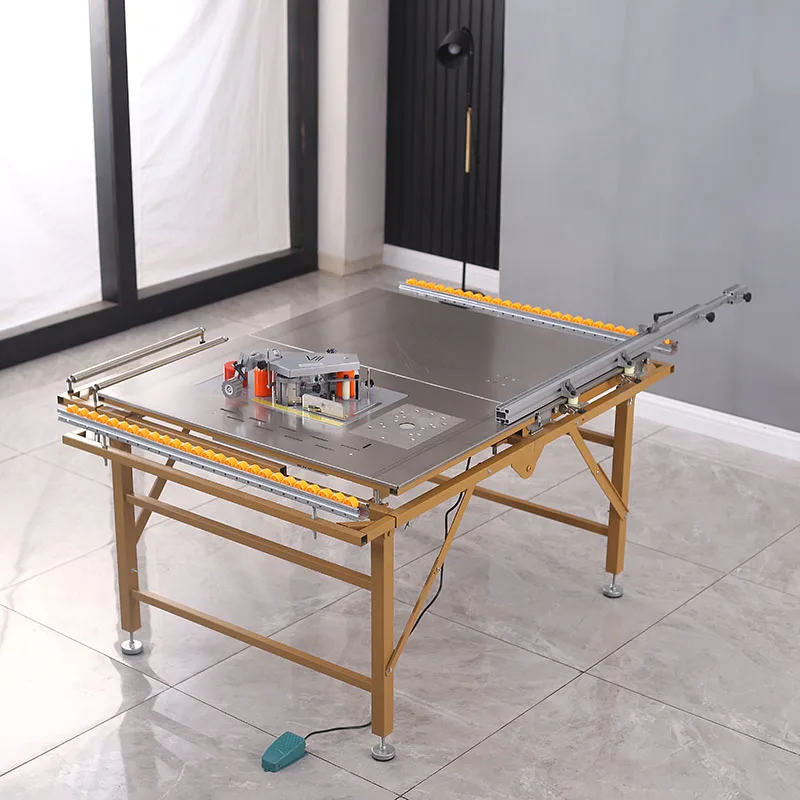
Description
Voltage-Verified Dispatch — every unit tested against your specified 220V/50Hz or 60Hz supply before packing, eliminating the three-week transformer delay that stalls on-site commissioning.
Technical Specifications
| Parameter | Value |
|---|---|
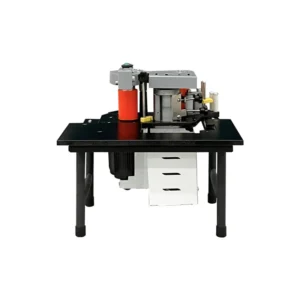
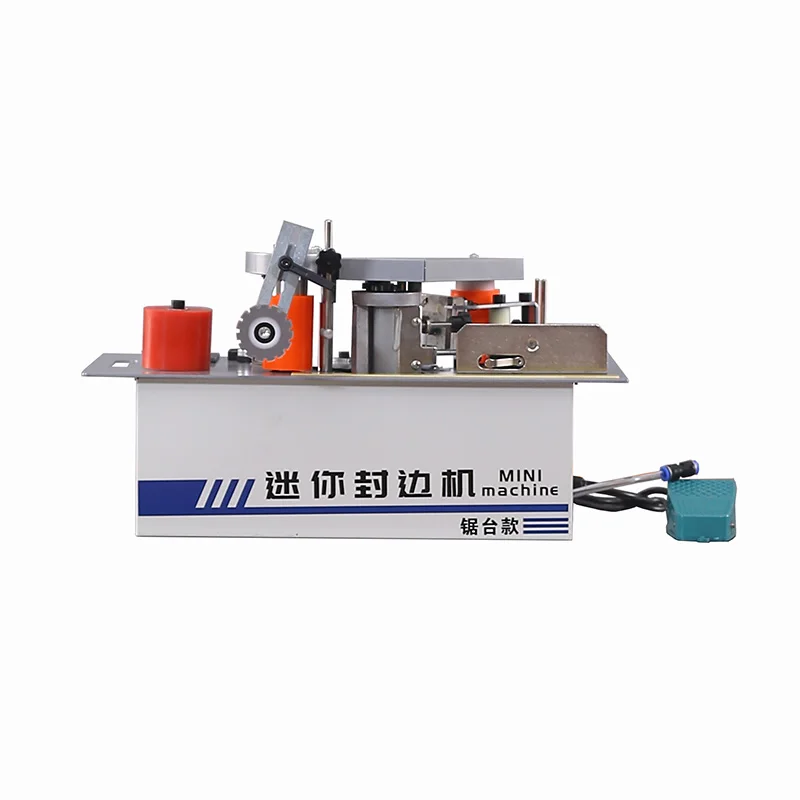
| Product Type | Portable Curve Edge Banding Machine |
| Rated Power | 825 W |
| Voltage | 220 V |
| Glue Pot Capacity | 1000 ml |
| Heating Time | 5–10 min |
| Edge Banding Speed | 0–10 m/min |
| Air Pressure Requirement | 0.4–0.6 MPa |
| Edge Pattern | Curves, straight lines, special shaped lines |
| Overall Dimensions | 50 × 30 × 27 cm |
| Net Weight | 13.5 kg |
| Control System | Manual / basic control (basis to be confirmed) |
Application Suitability
| Application | Material or Output |
|---|---|
| Custom cabinet edge finishing | MDF and plywood curved panel components |
| On-site furniture installation touch-up | Particleboard and melamine-faced boards |
| Small-batch curved furniture production | Solid wood panels with PVC or veneer banding |
| Rework and edge replacement on damaged panels | Returned or chipped laminated substrates |
Why the Voltage Question Must Come Before the Price
A portable curve edge banding machine in stock is only useful if it actually runs when you plug it in.
I spent years on the assembly floor before moving into order fulfillment here in Shandong, and one pattern never changes: the machines that sit idle longest are the ones shipped without a voltage conversation. Last year a buyer received a compact curve bander, plugged it into a 110 V outlet, tripped the breaker, and waited three weeks for a step-up transformer while installation crews stood around. The unit itself was fine. The paperwork was not [NEED_CITE: voltage and frequency standards by export market]. Confirming 220 V single-phase supply and the correct plug type before the crate leaves the warehouse removes that entire failure mode.
Stocked, Tested, and Crated on a Predictable Timeline
Ordering a Portable Curve Edge Banding Machine in stock should not mean waiting for a production slot to open. Units are held in the Ningjin warehouse at 220 V configuration, pulled for a bench-top heat cycle and a short run on sample stock, then crated with foam corner protection and packing photographs sent to the buyer before the courier collects. The goal is a machine that arrives ready for the first panel rather than the first troubleshooting session.
What Fast Dispatch Actually Covers
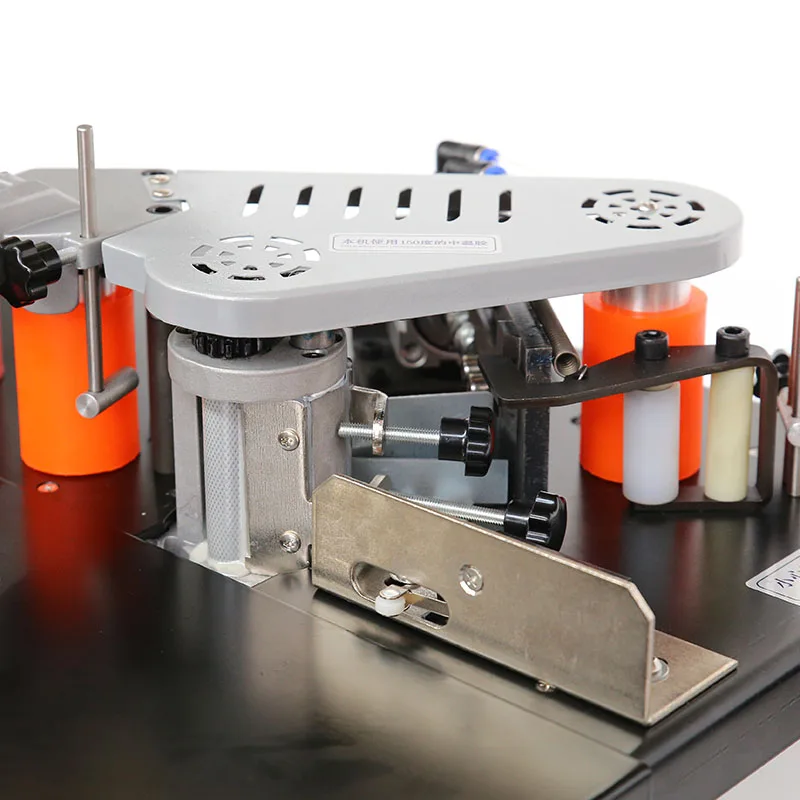
A ready-stock listing only matters if the dispatch process is disciplined. Each unit is checked for glue pot integrity, feed roller tension, and air-line fitting condition. Control labels are verified against the language confirmed at order time [NEED_CITE: CE machinery directive requirements for industrial equipment]. Spare parts — extra heating elements, Teflon scraper blades, and replacement feed wheels — are counted into the carton and itemised on the packing list so nothing is missing when the crate is opened on a job site.
Reading the Numbers That Matter on a Bench-Top Bander
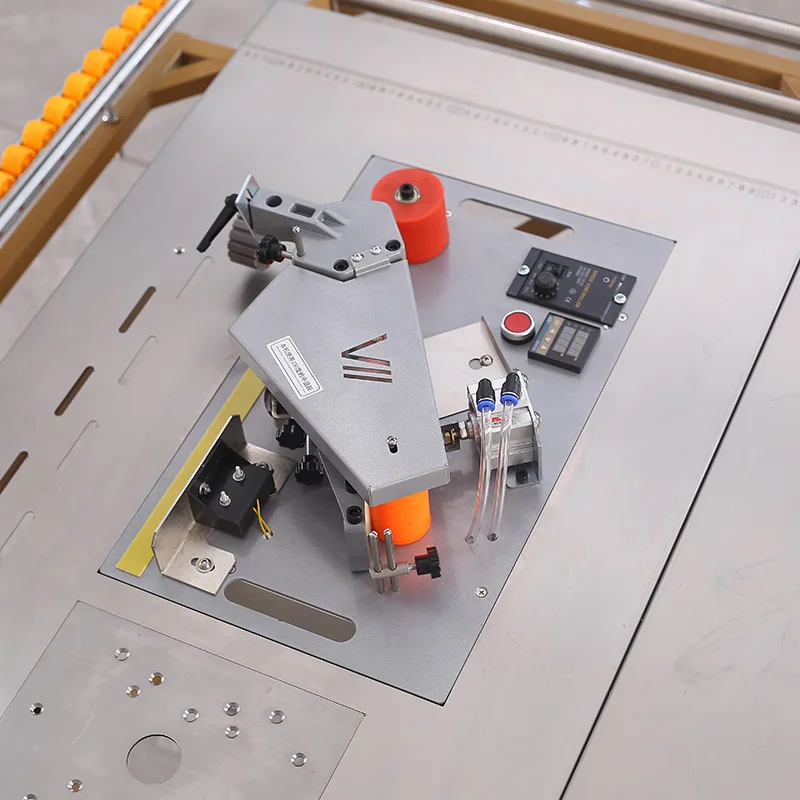
The 825 W rated power places this unit in the single-phase workshop bracket, meaning it shares a circuit with a compressor and a dust extractor without demanding a dedicated three-phase feed. Heating time of 5–10 minutes from cold start sets the pace for the first panel of the day; after that the 1000 ml glue pot holds enough EVA adhesive to run small batches of curved cabinet doors without stopping for refills. The 0–10 m/min feed speed range gives the operator fine control when easing the band around a tight radius on an MDF profile, while the 0.4–0.6 MPa air pressure requirement keeps the pneumatic feed rollers firm without crushing thinner PVC edging. Net weight at 13.5 kg means one person can lift it onto a tailgate or carry it up a staircase to a second-floor installation site.
The Hidden Cost of Skipping Configuration Checks
Skipping a voltage and frequency confirmation on a compact machine feels low-risk because the unit is small. The consequences are not. A mismatched motor winding overheats within the first hour, glaze forms on the commutator, and the feed speed becomes erratic mid-panel — leaving a visible glue line on a curved door that is already cut to final size. Re-cutting the panel, re-banding it, and rescheduling the installer costs far more than the five minutes it takes to verify supply specs before dispatch [NEED_CITE: common causes of edge banding adhesion failure on site].
Why Buyers Source This Unit Through Ruiqi Store
Stock availability is the starting point, not the finish line. Inventory is held at the Ningjin facility so dispatch does not depend on a production queue. Pre-shipment testing runs the glue pot through a full heat cycle and feeds sample banding on curved and straight stock, with the test record included in the crate. Voltage, plug type, and control language are confirmed line-by-line against the purchase order before packing. Documentation — CE declaration, electrical schematic, and operation manual — travels inside the carton in the agreed language. Single-unit orders ship via express courier with tracking provided at booking.
Documentation & Verification
- CE declaration of conformity matched to the portable bander model
- Electrical schematic confirming 220 V wiring and plug type
- Pre-shipment test record showing heat cycle and sample banding run
- Operation and maintenance manual printed in the agreed language
- Spare parts list itemising consumables packed with the machine
- Packing photographs sent before courier collection
Installation, Commissioning & Support
- Requires a 220 V single-phase outlet on a 10 A dedicated circuit for the 825 W load
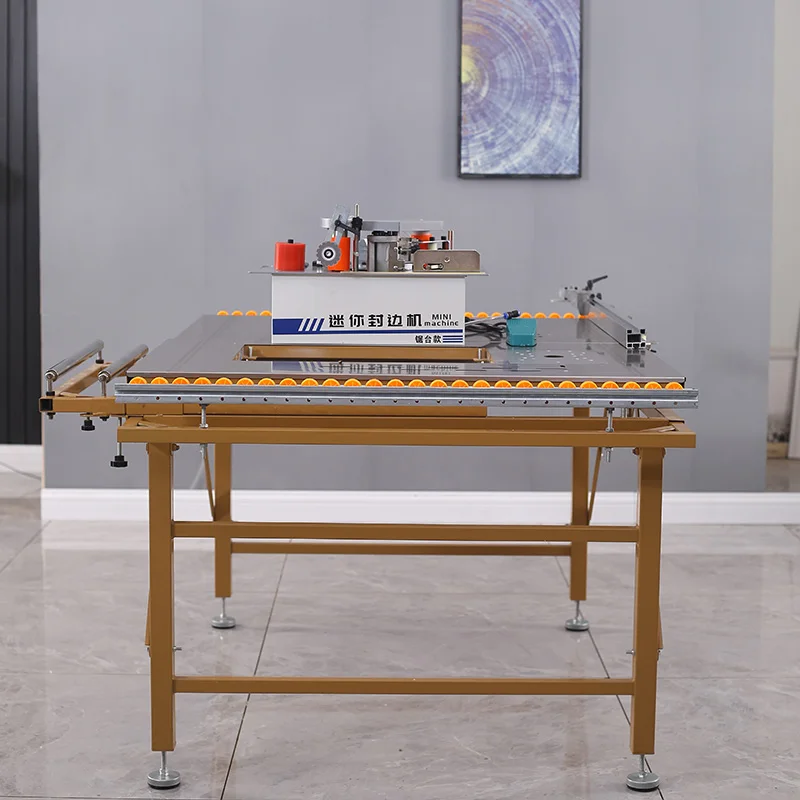
- Place on a flat bench at 50 × 30 cm clear footprint with 27 cm headroom for the glue guard
- Connect a compressed air line regulated to 0.4–0.6 MPa using the supplied quick-fit coupling
- Run a 10-minute heat cycle with an empty glue pot before the first production pass
- Feed scrap panel stock to set roller tension and verify edge tracking on a curve
- Replace Teflon scraper blade at the first sign of adhesive build-up to maintain finish quality
Before You Request a Quote
Tell us your workshop supply voltage and frequency, the plug type standard in your country, and the control-panel language your operator reads. Confirm the panel materials and edge banding types — PVC, veneer, or melamine — you run most often, and whether the unit will stay on a fixed bench or travel to job sites. This information lets us configure the shipment so the machine is productive on day one.
Frequently Asked Questions
Q: Is this portable curve edge banding machine ready to ship and what is the dispatch lead time?
A: Units are held in stock at our Ningjin warehouse in the standard 220 V configuration. After voltage, plug type, and control language are confirmed against your order, the unit goes through a bench test, is crated with packing photographs sent to you, and is handed to the courier. Typical dispatch from confirmation to collection takes several working days.
Q: What voltage and plug options are available from stock?
A: Standard stock is configured at 220 V single-phase. Plug types are fitted to match the destination market when the order is placed. If your workshop runs a different voltage or frequency, let us know at inquiry stage so we can confirm availability or schedule a reconfiguration before the ship date.
Q: Can this portable bander handle my panel thickness and edge material?
A: The unit feeds PVC, veneer, and melamine edging on curved, straight, and special-shaped profiles. Panel thickness capacity depends on the feed-roller gap setting. Share your typical board thickness and edging material at inquiry so we can run a sample pass and include the test record with your shipment.
Q: What spare parts and consumables arrive with the machine?
A: Each crate includes extra heating elements, Teflon scraper blades, and replacement feed wheels, listed on the packing sheet. Adhesive pellets are not included because formulations vary by substrate. We can recommend a compatible EVA hot-melt grade once your panel and edging materials are confirmed.
Q: How do I arrange single-unit shipping and what delivery options exist?
A: Single units ship via express courier or air freight, depending on urgency and destination. The 13.5 kg net weight keeps freight costs moderate. Tracking details are provided once the courier collects. For job-site deliveries, specify whether a tail-lift vehicle or a ground-level drop point is required at the receiving address.