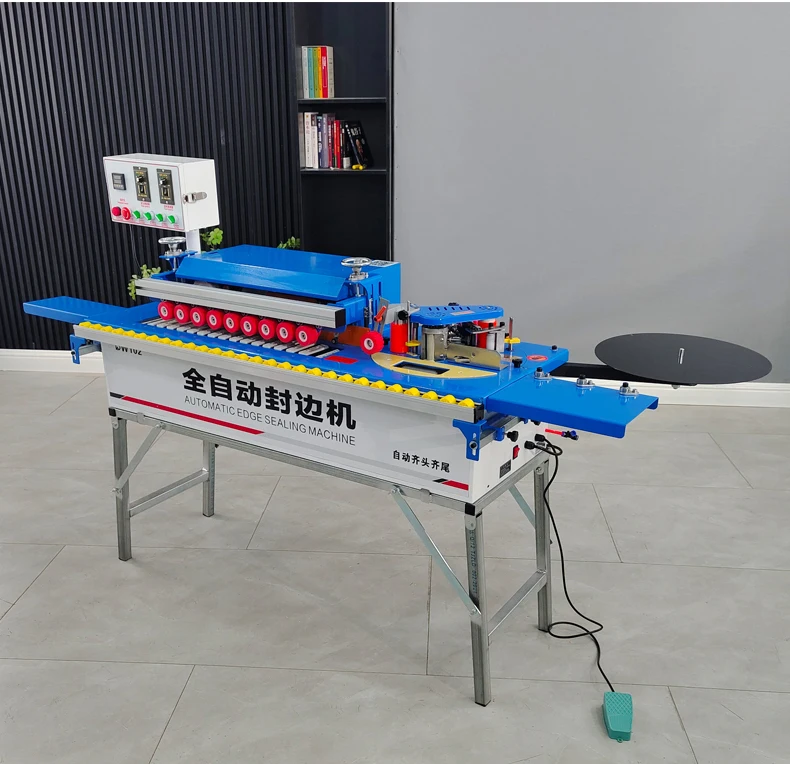
Description
Voltage-Verified Dispatch — the DW102 ships with motor nameplate, frequency, and plug type confirmed against your local grid before crating, eliminating the on-site electrical mismatch that stalls commissioning.
Technical Specifications
| Parameter | Value |
|---|---|
| Model | DW102 |
| Product Type | Automatic Edge Banding Machine |
| Total Power | 3800W |
| Voltage | 220V / 380V / customizable to local supply |
| Edge Banding Thickness | 0.3–3 mm |
| Edge Banding Height | 0–50 mm |
| Minimum Sheet Length | 25 cm |
| Minimum Sheet Width | 5 cm |
| Glue Pot Capacity | 1000 ml |
| Trimming Power | 650W × 2 |
| Vacuum Power | 1200W |
| Polishing Power | 180W × 2 |
| Edge Feed Power | 20W |
| Transmission Power | 60W |
| Air Source Pressure | 0.5–0.8 MPa |
| Product Size | 128 × 47 × 69 cm |
| Product Weight | 75 kg |
| Language Options | Chinese, English (customizable to Spanish or other languages) |
| Plug Options | EU, USA, AU, UK |
Application Suitability
| Application | Material or Output |
|---|---|
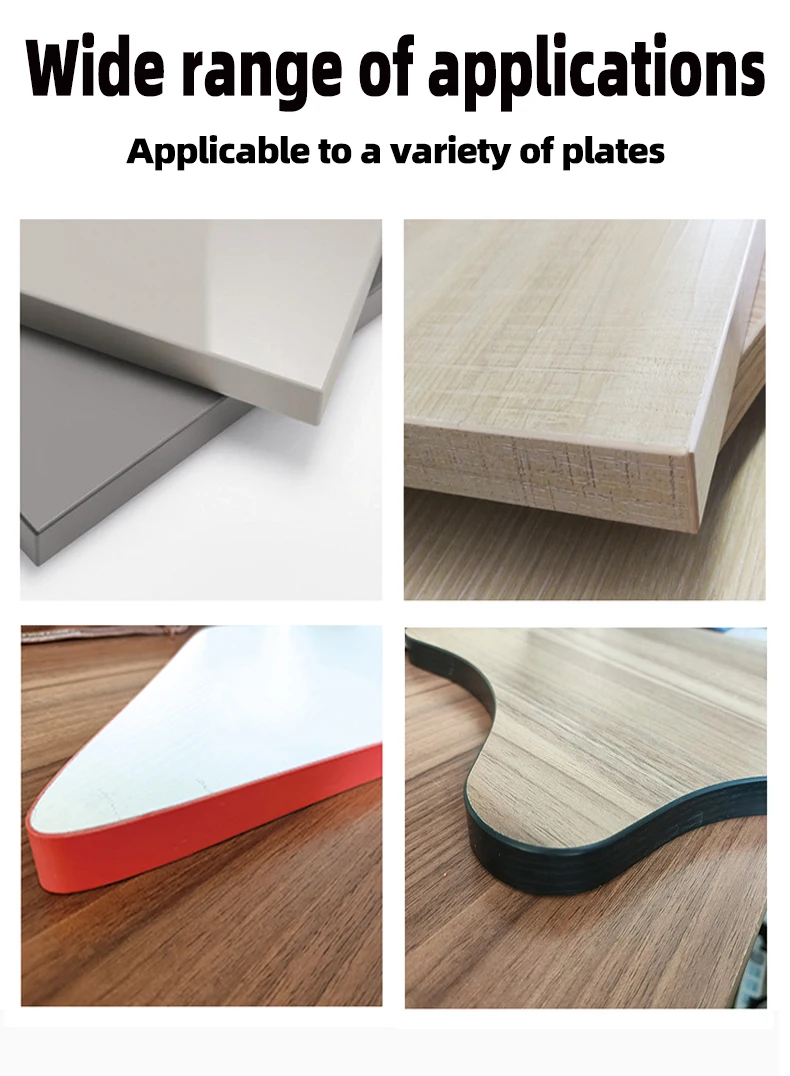
| Cabinet door edge finishing | MDF and plywood panels with PVC or veneer banding |
| Custom furniture panel edging | Particleboard with 0.3–3 mm melamine or PVC strips |
| Small-batch joinery production | Blockboard and solid wood panels requiring curved or straight edges |
| Polymer door frame edging | Polymer substrates compatible with hot-melt adhesive |
Why the Voltage Question Must Come Before the Order
A machine wired for the wrong supply is not a delay — it is a dead asset sitting on your workshop floor.
I watched a shipment go out to South America a few months ago. The buyer confirmed the model, the edge banding spec, the language on the control panel — everything except the local grid. The unit arrived rated for 380V and was connected to a 440V line. The inverter burned within minutes of the first power-on. That workshop ran a panel line, and every downstream station sat idle for three weeks waiting on a replacement drive. The cost of the part was nothing compared to the cost of the stopped line. Now every order I handle gets a voltage and frequency cross-check against the buyer’s national grid standard before we release it to the packing bay [NEED_CITE: voltage and frequency standards by export market].
The DW102 automatic edge banding machine in stock is built for this verification step. With configurable voltage from 220V to 380V and plug options across EU, USA, AU, and UK formats, the electrical configuration is locked in at order confirmation — not guessed at the dock.
Dispatch Without the Multi-Week Wait
When a cabinet maker needs to move from manual edge trimming to machine-assisted finishing, the lead time on a new unit can stretch production schedules thin. This model is held in ready stock, meaning the typical multi-week lead times associated with custom-build cycles do not apply. You confirm the electrical spec, we run a pre-shipment test on your specified panel thickness, and the machine ships. The DW102 automatic edge banding machine in stock is positioned for workshops that cannot absorb a long procurement gap between ordering and first cut.
Compact Footprint, Full Edge Cycle
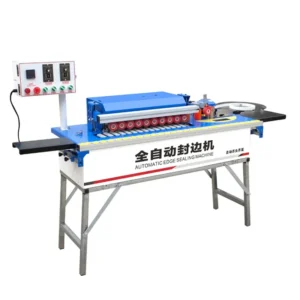
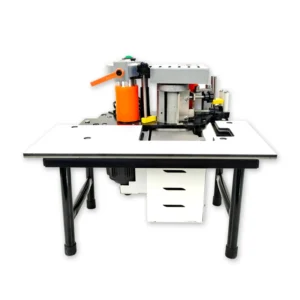
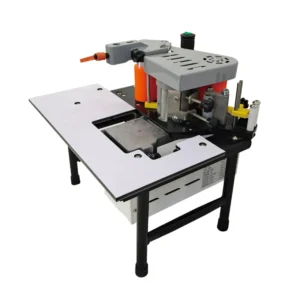
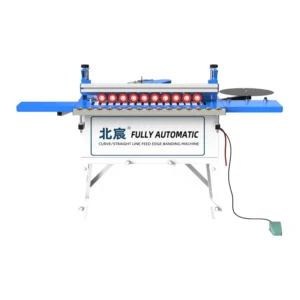
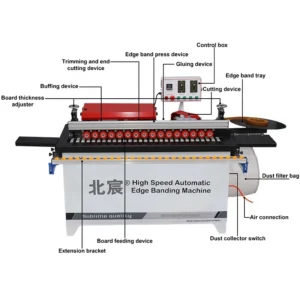
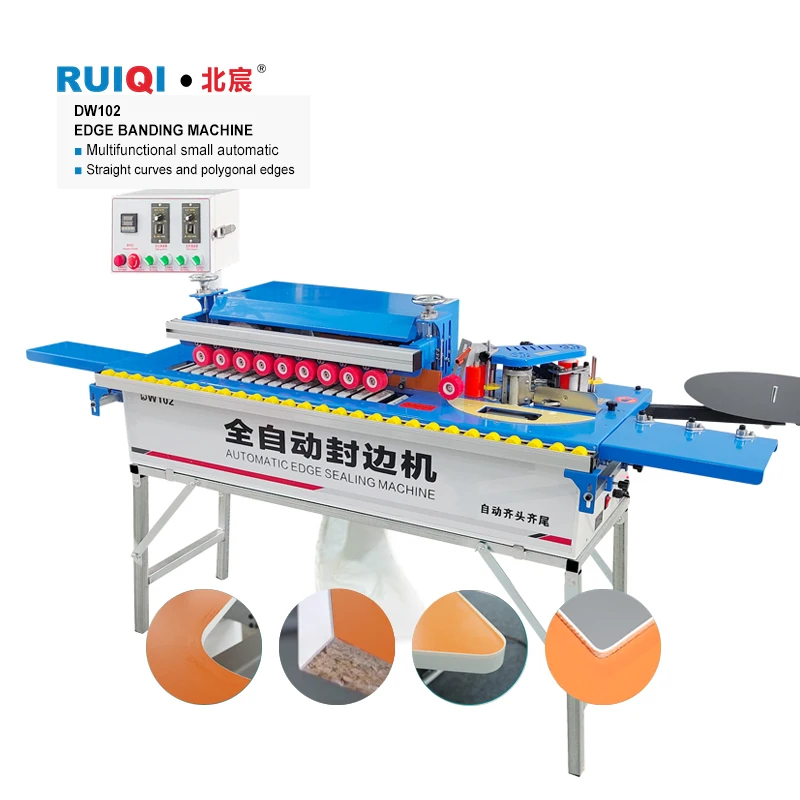
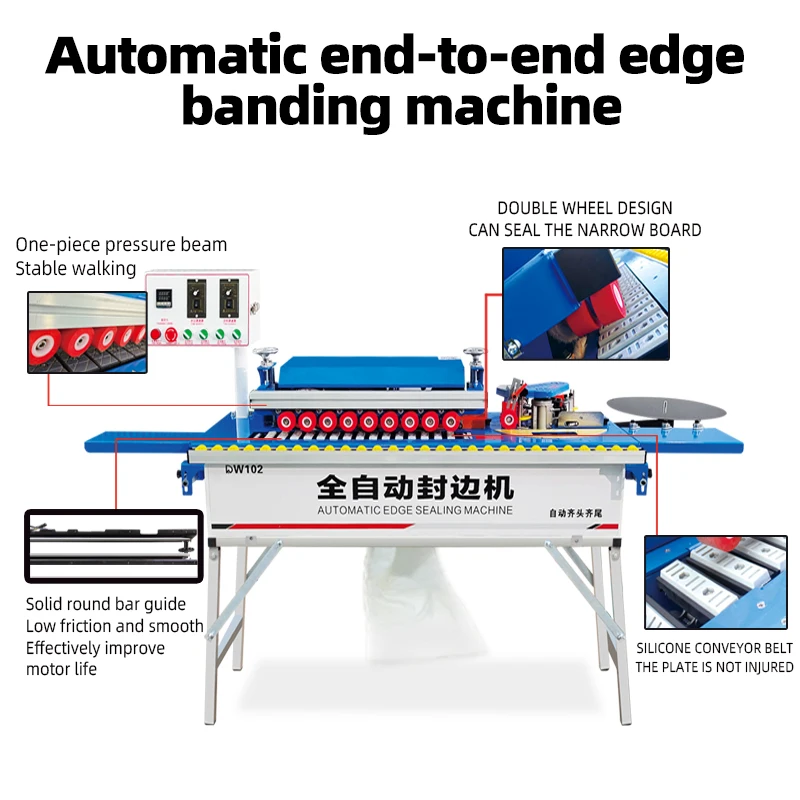
The 128 × 47 × 69 cm footprint means this unit fits into workshops where floor space is already committed to panel saws and boring stations. At 75 kg, it can be repositioned by a single operator when the shop layout needs to change — no forklift call-out, no rigging crew. Despite the compact frame, the edge cycle covers straight and curved banding, head-and-tail trimming, fine trimming, and polishing in one pass. For a small-to-medium furniture operation processing MDF or plywood, that means one machine handles the full edge treatment without requiring a separate curved-edge unit or a standalone polishing station [NEED_CITE: CE machinery directive requirements for industrial equipment].
What the Spec Sheet Numbers Actually Mean on the Shop Floor
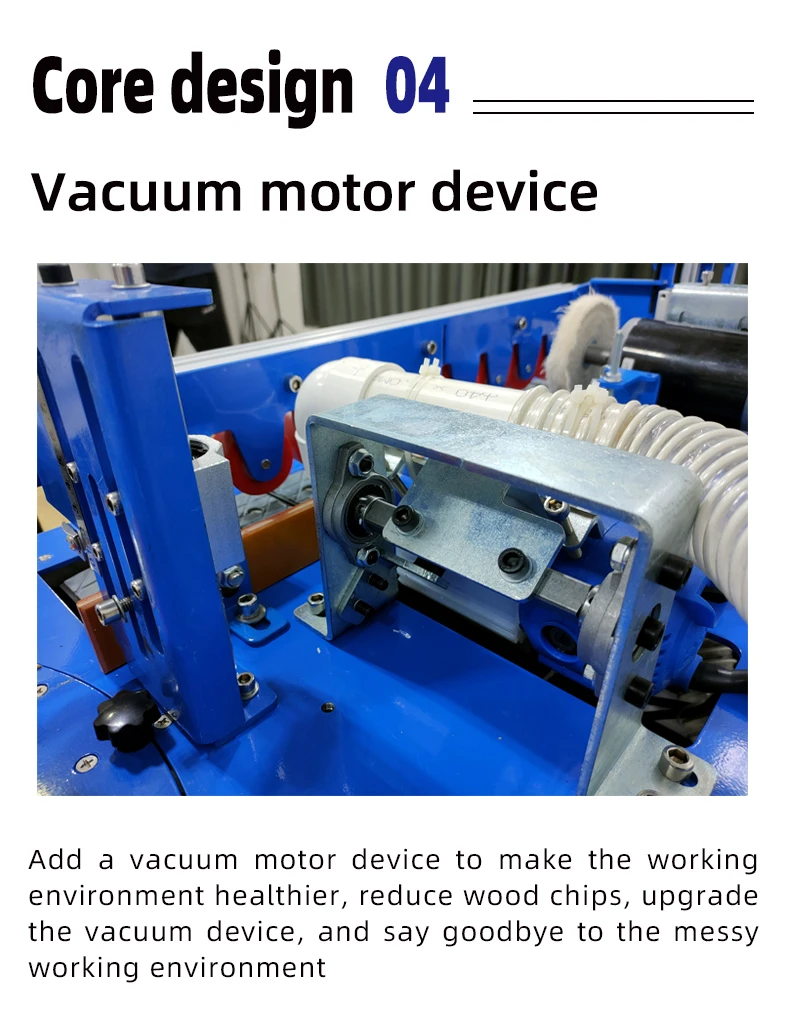
The 0.3–3 mm edge banding thickness range covers the PVC and veneer strips that most cabinet and furniture panels require. Thinner banding at 0.3 mm suits veneer applications where the edge needs to blend flush with laminated surfaces; the 3 mm upper limit handles PVC profiles for high-wear cabinet edges that take impact from daily use. The dual trimming stations at 650W each handle rough and fine trimming sequentially, which is what removes the visible glue line and leaves a clean edge profile ready for assembly. The 1000 ml glue pot holds enough hot-melt adhesive for sustained production runs without frequent refill stops. The 1200W integrated vacuum pulls edge trim waste away from the feed path during operation, reducing the need for an external dust extraction connection in smaller workshops where ductwork is not yet installed. The 0.5–0.8 MPa air pressure requirement is standard for pneumatic feed and trimming actuators — confirm your compressor delivers stable pressure at this range before the machine arrives.
The Cost of Skipping the Configuration Conversation
Machines ordered on catalog specs alone often arrive with mismatches that surface only during installation. A control panel in a language the operator cannot read stalls the commissioning process while translated manuals are sourced. An air pressure requirement that the existing shop compressor cannot meet means the trimming actuators chatter and produce uneven edges. A single machine purchased without checking feed height against upstream panel saws creates a bottleneck that no amount of operator effort can fix. These are not warranty claims — they are configuration gaps that fall outside the supplier’s responsibility once the crate is opened [NEED_CITE: industrial equipment commissioning best practices].
Why Buyers Source This Unit Through This Channel
Every DW102 automatic edge banding machine in stock is verified against a four-stage quality process covering incoming material inspection, in-process assembly checks, finished-product function testing, and pre-shipment verification on your specified panel stock. The electrical schematic provided at order confirmation matches the motor nameplate and control wiring actually installed in the unit you receive — not a generic diagram from the product family. Voltage and plug format are confirmed in writing before the machine enters the packing bay, with photographic documentation of the nameplate and wiring configuration included in the shipment file. Spare parts lists ship with the machine, so consumable reorders for trimmer blades, polishing wheels, and glue pot seals can be placed without waiting for a model lookup. The operation manual is supplied in your agreed language, covering setup, daily maintenance, and troubleshooting procedures specific to this model.
Documentation & Verification
- Electrical schematic matching the confirmed voltage and plug type for your facility
- Factory test record documenting a run on your specified panel thickness and edge material
- Operation and maintenance manual in English, Spanish, or other agreed language
- Spare parts list with part numbers for trimmer blades, polishing wheels, and seals
- Packing photographs showing crating condition and accessory placement before dispatch
Installation, Commissioning & Support
- Requires a dedicated circuit matching the confirmed 220V or 380V supply with appropriate breaker rating for the 3800W total load
- Air supply connection at 0.5–0.8 MPa with a moisture trap installed upstream of the machine inlet
- Arrives fully assembled; position on a level floor and connect power, air, and vacuum before first run
- First-cycle calibration includes glue pot temperature adjustment to match your edge banding adhesive type
- Trimming and polishing station alignment verified during the pre-shipment test and re-checkable on site
- Daily maintenance covers glue pot cleaning, vacuum filter inspection, and trimmer blade condition check
What We Need to Release Your Order
To move from inquiry to dispatch, share your panel material type and typical thickness range, the edge banding material and thickness you plan to run, and your facility voltage and frequency. Let us know the control panel language your operators need and which plug format matches your shop outlets. If you have an existing compressor, confirm its output pressure so we can verify compatibility with the 0.5–0.8 MPa requirement before the machine leaves the floor.
Frequently Asked Questions
Q: Is the DW102 currently in stock and what is the dispatch lead time?
A: This automatic edge banding machine in stock is held for immediate release. Once you confirm voltage, plug format, and control language, we run a pre-shipment test on your panel spec and release the unit to packing. Dispatch typically follows within days of configuration confirmation, not weeks. Exact timing depends on the verification steps required for your electrical standard.
Q: Can I order a single unit, and how is voltage configured before shipping?
A: Single-unit orders are standard for this model. At order confirmation, you provide your local voltage, frequency, and plug type. We configure the motor wiring and control transformer accordingly, document the electrical schematic, and photograph the nameplate before crating. The unit ships matched to your supply — no field rewiring required on arrival.
Q: What panel materials and edge banding thicknesses does the DW102 handle?
A: The machine processes MDF, plywood, particleboard, blockboard, and polymer substrates. Edge banding thickness runs from 0.3 mm veneer through 3 mm PVC, covering most cabinet and furniture edge applications. The 0–50 mm banding height range handles standard panel thicknesses. Curved and straight edges are processed on the same unit without reconfiguration.
Q: How is the machine packed, and what documentation arrives with it?
A: The unit is crated with protective bracing and packed with photographs taken before sealing. Documentation includes the electrical schematic matching your confirmed supply, a factory test record, the operation manual in your agreed language, a spare parts list, and customs support documents. All paperwork travels inside the crate for immediate access on delivery.
Q: What spare parts are included, and how do I reorder consumables?
A: The shipment includes a spare parts list with part numbers for wear items such as trimmer blades, polishing wheels, and glue pot seals. Consumable reorders are placed using these part numbers. The vacuum filter and air system moisture trap are standard maintenance items your local supply chain can typically source if original parts are not immediately available.