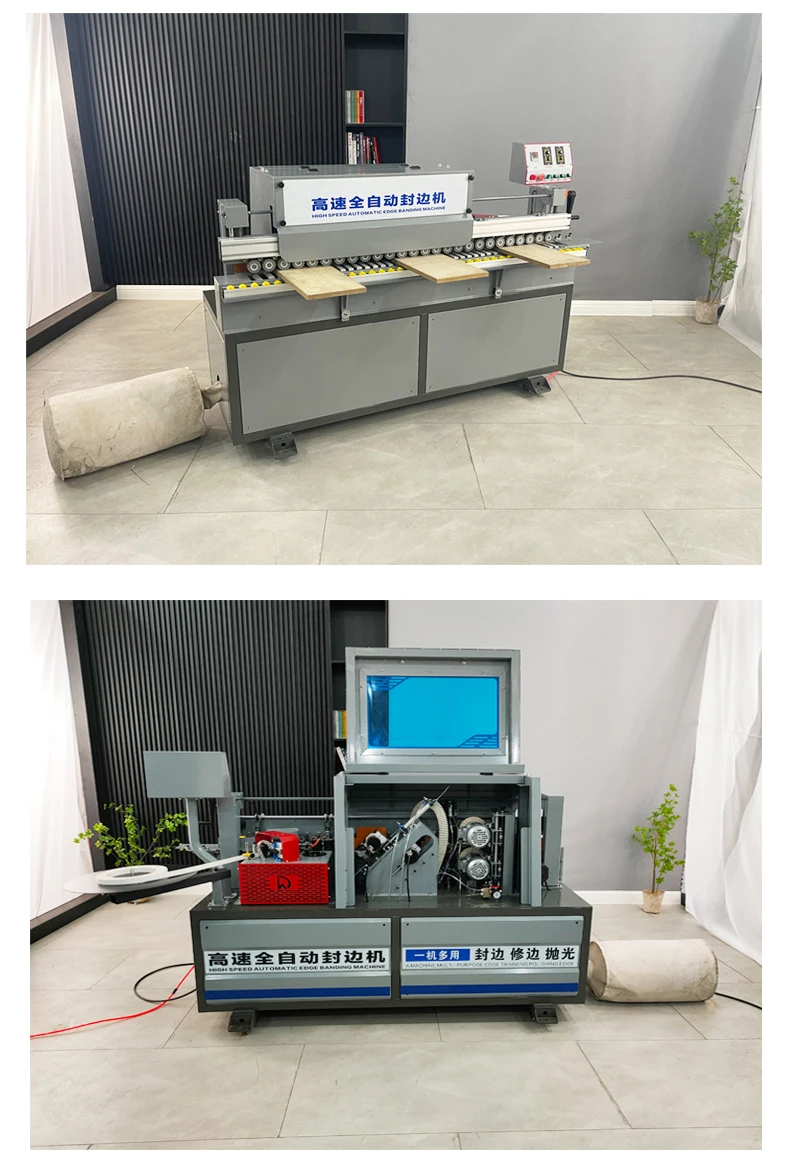
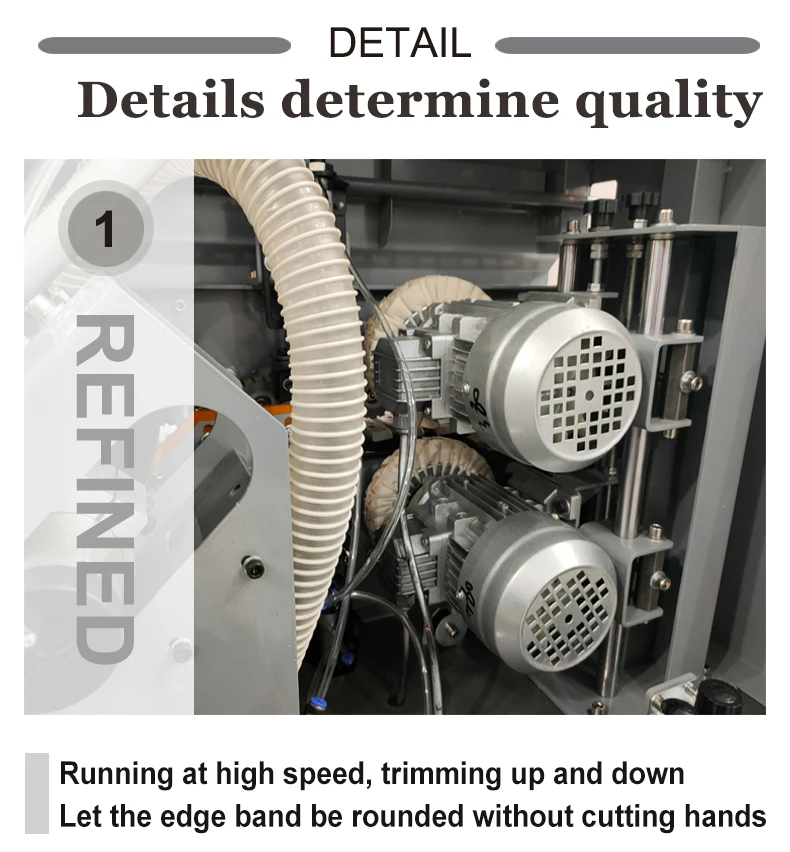

Description
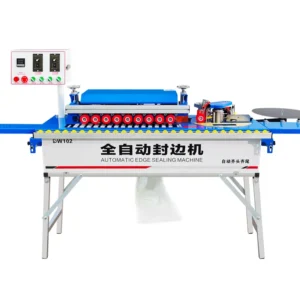
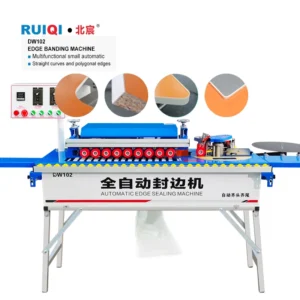
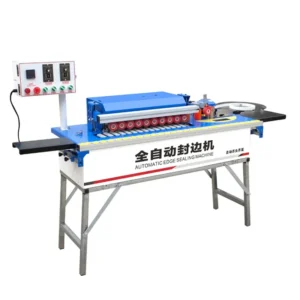
Configured Before Dispatch — Voltage, frequency, and control language are locked in writing for this Edge Banding Machine in Stock before the crate leaves the Ningjin facility, preventing the on-site failures we see when assumptions replace verification.
Technical Specifications
| Parameter | Value |
|---|---|
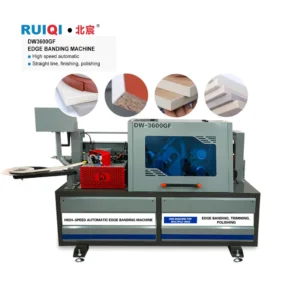
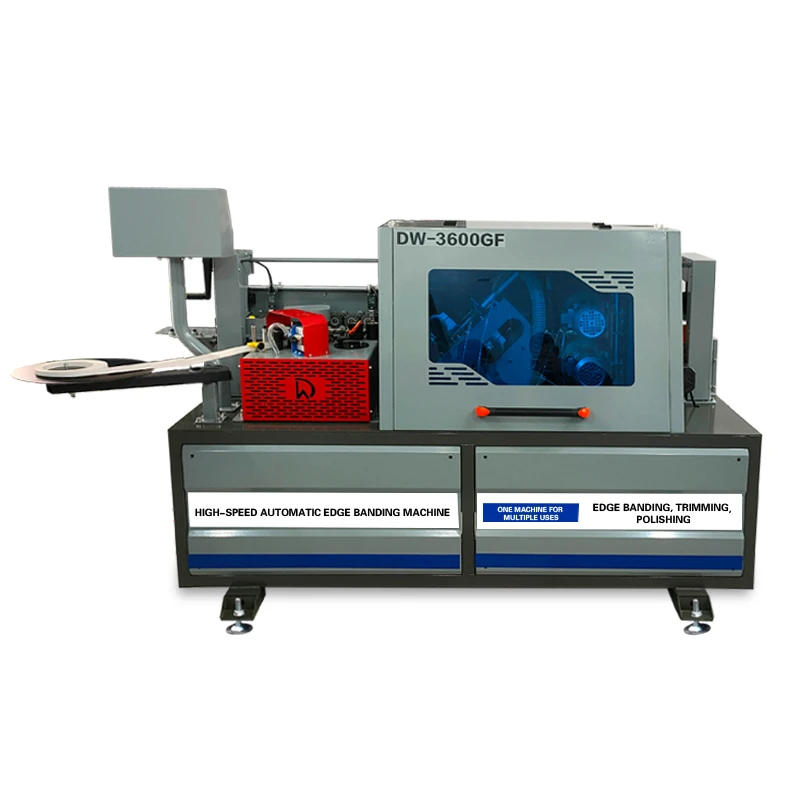
| Model | DW-3600GF |
| Product Type | Fully Automatic Edge Banding Machine |
| Rated Power | 4.9 kW |
| Voltage & Frequency | 380V Three-Phase Four-Wire (configurable 110V–440V) |
| Feed Speed | 0–14 m/min |
| Edge Banding Type | Straight Edge Banding |
| Edge Band Height Range | 0–50 mm |
| Edge Band Thickness Range | 0.3–3 mm |
| Minimum Panel Length | 200 mm |
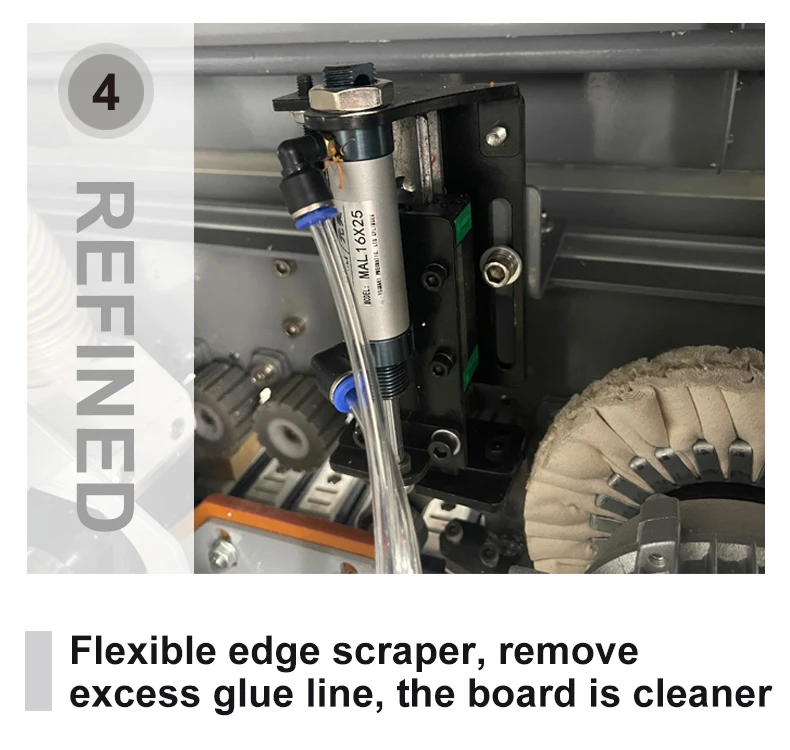
| Trimming Motor Power | 800W × 2 (at 24000 r/min) |
| Polishing Motor Power | 400W × 2 |
| Transmission Power | 180W |
| Gluing Unit Power | 160W |
| Air Pressure Requirement | 0.4–0.6 MPa |
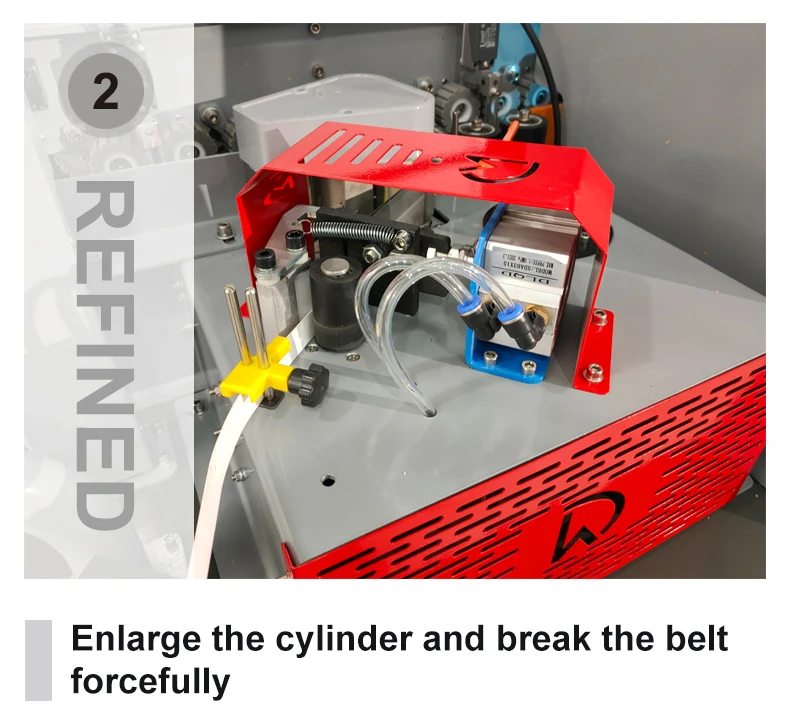
| Standard Functions | Gluing, Trimming (rough + fine), Front/Rear End Trimming, Scraping, Polishing, Vacuuming |
| Overall Dimensions (L×W×H) | 2200×650×1250 mm |
| Net Weight | 320 kg |
Application Suitability
| Application | Material or Output |
|---|---|
| Custom cabinet door production | MDF and particleboard with PVC or veneer edge banding |
| Small-batch furniture components | Plywood panels requiring straight edge finishing |
| Workshop automation transition | Solid wood panels moving from manual to single-pass edge processing |
| Joinery shop output expansion | Pre-cut board stock needing consistent edge quality across varying thicknesses |
Why the Voltage Question Must Precede the Order Confirmation
A machine wired for the wrong grid does not run — it destroys its own control board on the first power cycle.
I spent weeks in Mexico tracing a burned motherboard back to a single oversight: the local facility ran 440V, but the Edge Banding Machine in Stock had been dispatched at a fixed 380V configuration without written confirmation from the buyer. The cost was not just the replacement board; it was three weeks of halted production while the panel line sat idle. [NEED_CITE: voltage and frequency standards by export market] When a workshop purchases a straight edge bander for immediate deployment, the electrical match must be verified in writing before the unit leaves the factory floor, not discovered when the electrician opens the terminal block on arrival.
Ready Stock Means Verified Stock, Not Just Available Stock
The term Edge Banding Machine in Stock often means the frame is assembled, but the electrical cabinet and control interface still require final configuration. For the DW-3600GF, readiness means the gluing unit, dual trimming stations, and polishing heads are mechanically complete, while the voltage transformer selection and plug type (EU, USA, AU, or UK) are finalized against your written specification before crating. This prevents the scenario where a machine arrives physically intact but electrically incompatible with the local three-phase supply.
Lead Time Compression Without Cutting the Pre-Shipment Test
When a joinery shop needs a single-unit order dispatched quickly, the temptation is to skip the factory run-in to save days. The DW-3600GF process retains a pre-shipment test on actual panel stock — running MDF through the full gluing, trimming, and scraping sequence — because this is where feed speed consistency and trimming motor alignment reveal themselves. [NEED_CITE: typical pre-shipment verification procedures for woodworking machinery] A unit that has never processed material before packing is a unit that asks the buyer to perform commissioning diagnostics on their own floor.
What the 14 m/min Feed Speed Actually Dictates Downstream
The variable feed speed (0–14 m/min) on an independent 180W transmission motor is not a throughput number to maximize; it is a tuning parameter matched to edge band thickness and glue open time. At 0.3 mm PVC, higher feed rates work because the trimming motors (800W×2 at 24000 r/min) can cleanly shear the thin material. At 3 mm solid wood veneer, the feed must slow to allow the glue unit (160W) adequate contact time before the rough trim station engages. The minimum panel length of 200 mm further defines the machine’s role: it handles cabinet components and shelf stock, not full-length door panels that require extended infeed tables. The six-function sequence — gluing, rough/fine trimming, end trimming, scraping, polishing, vacuuming — occurs within a 2200 mm footprint, meaning the 320 kg frame must absorb vibration across all stations without flex.
The Cost of Skipping Written Voltage Confirmation
When the voltage and frequency are assumed rather than documented, the failure does not appear gradually. A 380V motor receiving 440V does not run hot over weeks; it fails within the first hour, often taking the frequency inverter and PLC interface with it. The buyer then faces a multi-week parts wait, not a simple rewiring job. [NEED_CITE: industrial motor failure modes under overvoltage conditions] For a small workshop that purchased a single edge bander to replace manual processing, this downtime is not absorbed by other lines — it stops all edge finishing until the replacement board arrives and is programmed.
Why This Purchase Point Reduces Arrival Risk
The DW-3600GF ships with the electrical schematic reflecting the confirmed voltage, not a generic diagram. The operation manual arrives in the agreed language (Chinese and English standard, others customizable), so the operator reading the control panel is reading the same terminology as the documentation. Pre-shipment packing photographs show the actual unit, not a stock image. The four-stage QC process — incoming material, in-process, finished product, and pre-shipment verification — applies to stocked units with the same rigor as built-to-order machines, because a fast dispatch should not mean a skipped inspection.
Documentation & Verification
- Electrical schematic reflecting your confirmed voltage and frequency before crating
- Factory test record showing actual panel run on MDF or particleboard at specified feed speed
- Operation and maintenance manual in your selected language, matching control panel terminology
- Spare parts list identifying consumable trimming cutters and polishing wheels for immediate reorder planning
- Packing photographs of the specific unit with wooden box closure visible before dispatch
Installation, Commissioning & Support
- The 2200×650 mm footprint requires a level concrete pad; the 320 kg weight needs no special anchoring
- Dedicated three-phase circuit matching confirmed voltage; the 4.9 kW draw requires appropriate breaker sizing
- Machine arrives fully assembled in wooden crate; no on-site mechanical assembly required
- First-run parameter setting covers glue temperature, feed speed dial-in, and trimming cutter depth adjustment
- Air supply must deliver stable 0.4–0.6 MPa to the pneumatic cylinders governing end trimming and scraping stations
- Trimming cutters (24000 r/min motors) and polishing wheels are the primary consumables; spare list provided at shipment
What to Specify in Your Inquiry
To configure the DW-3600GF correctly before dispatch, provide your local three-phase voltage and frequency, the primary panel materials you process (MDF, particleboard, plywood, or solid wood), and your preferred control panel language. If your workshop has existing dust extraction infrastructure, note the connection diameter so the vacuuming station integrates without adapter fabrication. Specify whether you require a sample processing test on your own edge banding material before the unit is crated.
Frequently Asked Questions
Q: Is the DW-3600GF in stock, and what is the dispatch lead time for a single unit?
A: The DW-3600GF is a stocked model. Lead time covers final electrical configuration to your confirmed voltage, control panel language setup, and a pre-shipment test run on panel stock. This process takes days, not weeks, but the exact timeline depends on current configuration queue and your responsiveness in providing electrical specifications.
Q: Can you confirm my local voltage and plug type before the machine ships?
A: Yes. Voltage (within the 110V–440V range) and plug type (EU, USA, AU, or UK) are confirmed in writing before production finalization. The electrical schematic included in your documentation package reflects this confirmed configuration, and the pre-shipment test is conducted at that voltage.
Q: Will the control panel be in English (or my language) when it arrives?
A: Chinese and English are standard. Other languages are customizable upon request, and the configuration is completed before dispatch. The operation manual is delivered in the same language as the control panel, ensuring terminology consistency for the operator during commissioning.
Q: What is the minimum panel size this machine can handle, and which edge band thicknesses does it accept?
A: The minimum panel length is 200 mm. Edge band thickness range is 0.3–3 mm, covering PVC and veneer materials. Edge band height range is 0–50 mm. These parameters define the machine’s role in cabinet components and small furniture parts rather than oversized panels.
Q: How is the machine packed, and what shipping options are available?
A: The DW-3600GF ships fully assembled in a wooden box. Packing photographs of your specific unit are provided before dispatch. Shipping options are quoted based on your destination port and preferred transit timeline; the 320 kg weight and 2200×650×1250 mm dimensions determine container loading configuration.