
Description
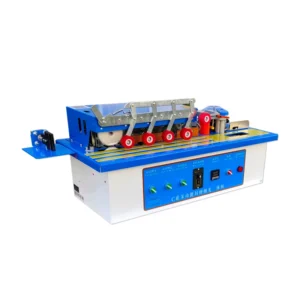
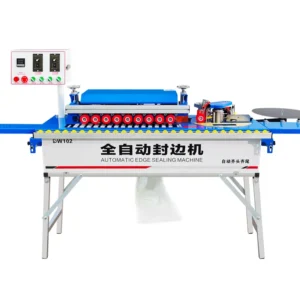
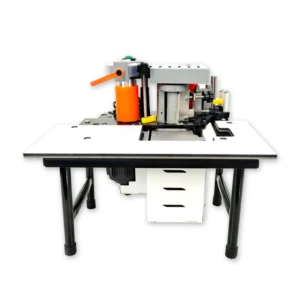
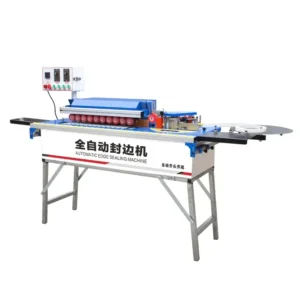
Voltage-Verified Dispatch — DW102 curved and straight edge banding machines ship with electrical configuration locked to your workshop’s grid before crating, eliminating dead-on-arrival equipment.
Technical Specifications
| Parameter | Value |
|---|---|
| Model | DW102 |
| Product Type | Curved and Straight Edge Banding Machine |
| Total Power | 3800W |
| Voltage Options | 220V / 380V / customization available |
| Edge Banding Thickness Range | 0.3–3 mm |
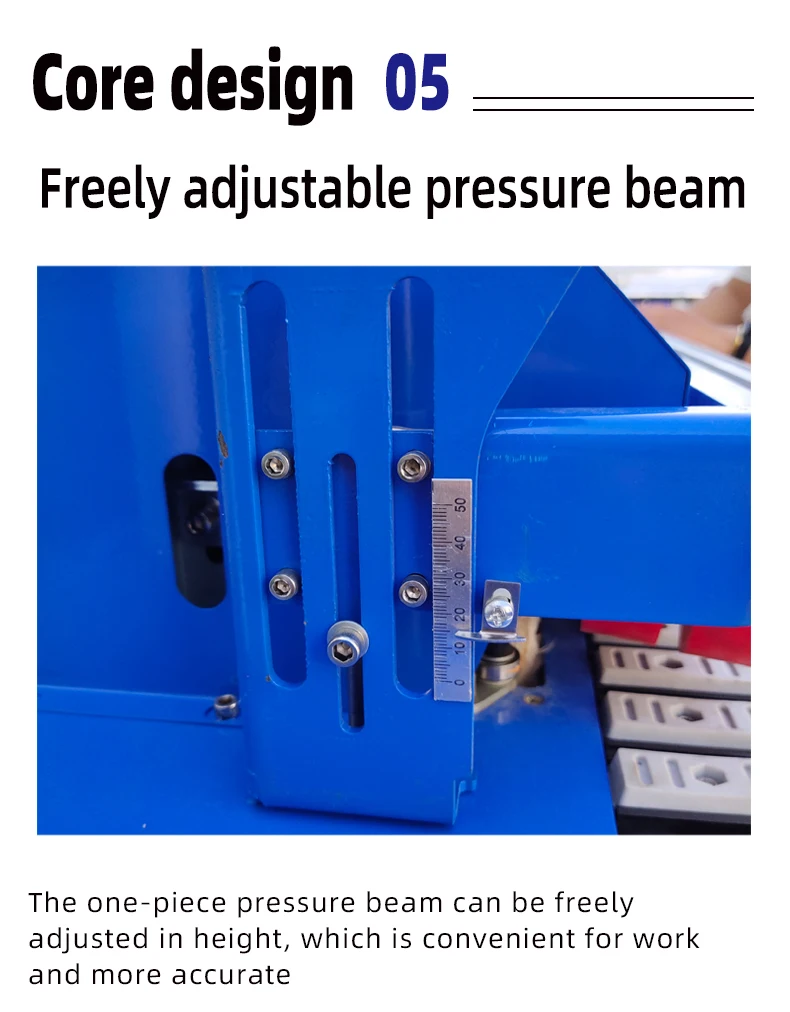
| Edge Banding Height Range | 0–50 mm |
| Minimum Sheet Length | 25 cm |
| Minimum Sheet Width | 5 cm |
| Glue Pot Capacity | 1000 ml |
| Trimming Power | 650W × 2 |
| Polishing Power | 180W × 2 |
| Vacuum Power | 1200W |
| Edge Power | 20W |
| Transmission Power | 60W |
| Air Source Pressure | 0.5–0.8 MPa |
| Machine Dimensions | 128 × 47 × 69 cm |
| Machine Weight | 75 kg |
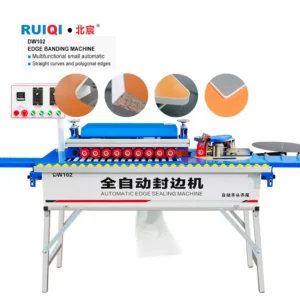
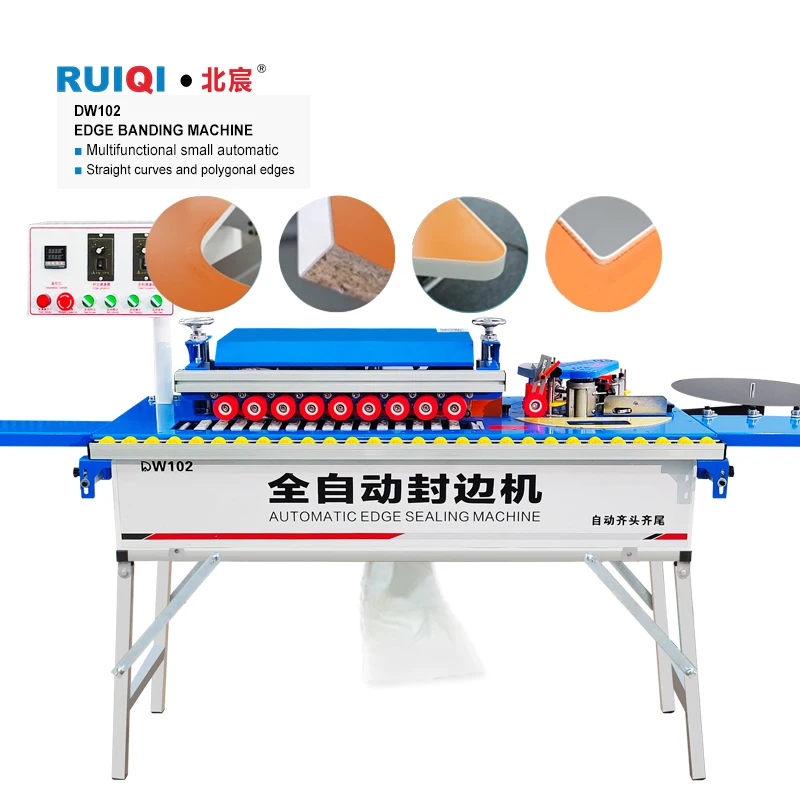
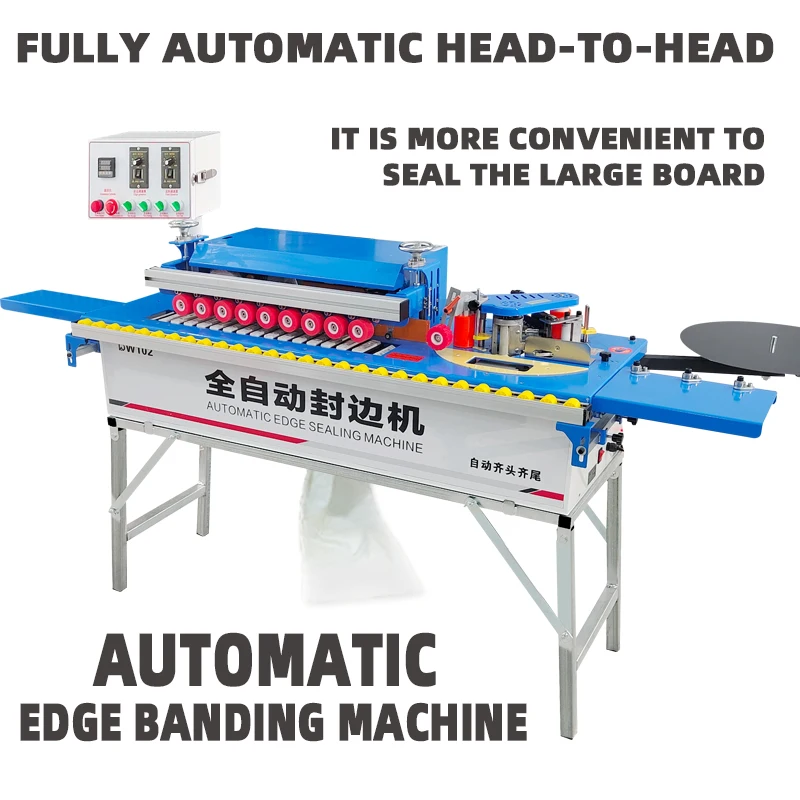
| Key Features | Curved and straight banding, auto head and tail cutting, edge trimming, polishing, integrated vacuum |
| Control Language | Chinese, English; Spanish or other languages on request |
| Standards | ISO Approval |
Application Suitability
| Application | Material or Output |
|---|---|
| Cabinet door edge finishing | MDF and plywood panels with PVC or melamine banding |
| Small-batch curved furniture components | Solid wood and blockboard with veneer edge strips |
| Secondary bander for odd-shaped cut-offs | Particleboard offcuts from CNC nesting operations |
| Polymer door profile trimming | Polymer composite panels with matching edge material |
| Joinery workshop semi-automatic production | Mixed board stock transitioning from hand-applied banding |
Why the Voltage Question Should Come Before the Price on a Curved Edge Bander
Confirming your workshop’s voltage and plug type before ordering a curved edge banding machine in stock prevents the most common commissioning failure we see across Southeast Asian and Latin American installations.
I once watched a Vietnamese cabinet factory unpack an edge bander that arrived with a 380V three-phase motor when the workshop only had single-phase 220V available. The machine sat idle for two weeks while an electrician reconfigured the panel. That kind of delay erases whatever savings a competitive quote offered. When sourcing a curved edge banding machine in stock, the electrical match must be verified against local grid standards — not assumed from a catalog default [NEED_CITE: voltage and frequency standards by export market]. The DW102 ships with voltage and plug configured to your destination, whether that means a European Schuko, a US NEMA, an Australian AS/NZS, or a British BS 1363 connection.
Stock Availability and Dispatch Timing
Workshops that need a curved edge banding machine in stock rarely have the luxury of a multi-week production lead time. The DW102 is held in assembled, ready-to-run condition so that once voltage and language are confirmed, the machine can be crated and dispatched within a short window. This matters most when a primary bander goes down and a temporary replacement is needed to keep orders moving, or when a new product line requires curved-edge capability that the existing equipment cannot handle.
Single-Unit Orders Without Minimums
Small joinery shops and startup cabinet makers typically need one machine, not a container load. The DW102 is available as a single-unit purchase with shipping options quoted at the time of order. Whether the destination is a workshop in Manila, a furniture unit in Ho Chi Minh City, or a carpentry studio in Guadalajara, the ordering process stays the same: confirm specifications, confirm electricals, arrange freight [NEED_CITE: typical export crating and freight options for small woodworking machinery].
What the Specs Mean on the Shop Floor
The 0.3–3 mm edge banding thickness range covers the majority of PVC, melamine, and veneer strips used in cabinet and furniture production. Below 0.3 mm, banding tends to be paper-thin laminate better handled by dedicated laminating lines; above 3 mm, solid wood lipping usually requires a heavier feed mechanism. The 1000 ml glue pot is sized for intermittent small-batch runs rather than continuous high-volume shifts — it keeps the machine compact and avoids the glue degradation that occurs when large pots sit heated for hours without throughput. Dual 650W trimming motors provide enough torque for clean cuts on both straight and curved profiles, while the 1200W vacuum unit captures trimming waste at the source, reducing the dust load on the workshop’s central extraction system. The 0–50 mm banding height range accommodates standard 18 mm board stock as well as thicker panels used in shelving and worktops [NEED_CITE: common panel thickness standards in furniture manufacturing].
The Cost of Skipping Material-Specific Setup
The most frequent complaint I have heard after delivering a compact edge bander is visible glue lines on the first batch of panels. Almost every time, the cause is the same: the machine was threaded with whatever banding strip was on hand, rather than the specific PVC-on-particleboard or veneer-on-MDF combination the shop actually runs. Glue temperature, feed pressure, and trimming speed all shift depending on substrate density and banding material. When these are left at a generic default, the result is uneven adhesion and visible seam lines that only show up after assembly. Running a test sample on your actual material before the machine leaves the factory catches these mismatches early, and it is a step worth insisting on regardless of which supplier you choose.
Why Source This Machine Through This Channel
In-house manufacturing with patented cutting mechanisms means the DW102 is built and tested under one roof, so the specifications in the table above reflect what actually ships. Voltage, plug type, and control language customization is treated as standard procedure rather than a special request, which aligns with how export orders should be handled. The four-stage quality control process — incoming material, in-process, finished product, and pre-shipment verification — applies to every unit before crating. Engineer-led configuration means the recommendation accounts for your panel sizes, banding materials, and production volume rather than pushing a default package. Factory visits are welcomed if you want to witness a test run on your own material before committing [NEED_CITE: ISO 9001 quality management requirements for machinery manufacturers].
Documentation & Verification
- CE declaration of conformity covering the DW102 curved and straight edge bander
- Machine specification sheet with confirmed voltage and frequency for your grid
- Electrical schematic matching the as-built wiring configuration
- Factory test record run on your specified panel and banding material
- Operation and maintenance manual in your agreed language
Installation, Commissioning & Support
- Requires a dedicated circuit matching the confirmed 220V or 380V supply with appropriate breaker rating for the 3800W total load
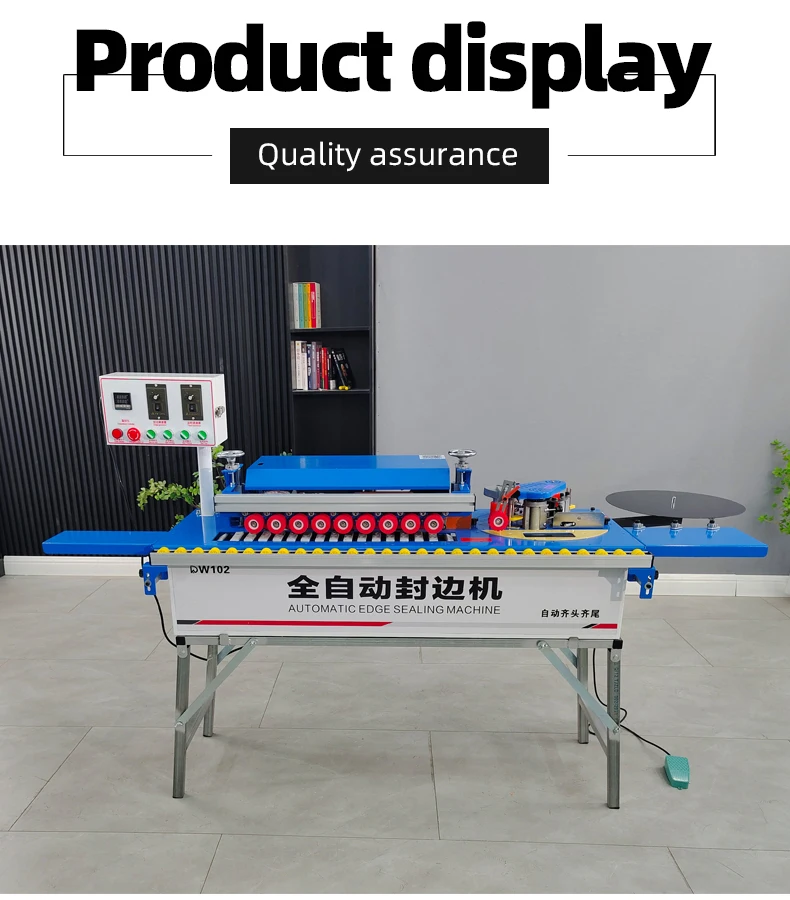
- Compact 128 × 47 × 69 cm footprint fits against a standard workshop wall with clearance for panel infeed
- Arrives fully assembled — connect power, air supply at 0.5–0.8 MPa, and load glue before first run
- Initial commissioning includes glue temperature calibration for your specific banding thickness between 0.3 and 3 mm
- Spare parts list provided at shipment covers trimming blades, polishing wheels, and glue pot seals
- Air source connection requires a standard industrial quick-fit coupling compatible with your compressor line
What to Include in Your Inquiry
To get a matched configuration rather than a generic quote, include your primary panel material and typical board thickness, the edge banding type and thickness you run most often, and your workshop’s exact voltage and phase supply. If you are adding this as a secondary machine alongside an existing straight-only bander, mention the make and model so we can confirm workflow compatibility. For curved work, specify the minimum radius you need to band so we can verify the DW102’s feed path handles it cleanly.
Frequently Asked Questions
Q: Is the DW102 ready to ship, and what is the dispatch lead time?
A: The DW102 curved edge banding machine in stock is held in assembled condition. Once your voltage, plug type, and control language are confirmed, the unit goes through pre-shipment testing on your specified material and is then crated for dispatch. Lead time depends on the customization required and your destination port, but it is measured in days rather than weeks for standard configurations.
Q: How do I confirm the correct voltage and plug for my workshop?
A: Share your country and the electrical specification on your workshop’s main panel — typically 220V single-phase or 380V three-phase, along with frequency. The DW102 is built to match, and the correct plug type for your market is fitted before the machine ships. An electrical schematic is included so your local electrician can verify the connection on arrival.
Q: What panel sizes and edge banding thicknesses can the DW102 handle?
A: The machine accepts panels as small as 25 cm long and 5 cm wide, with edge banding thickness from 0.3 mm to 3 mm and banding height up to 50 mm. This covers standard PVC, melamine, and veneer strips on MDF, particleboard, plywood, and blockboard. For banding outside this range, discuss your specific requirement before ordering.
Q: Can I order a single unit, or is there a minimum order quantity?
A: Single-unit orders are standard for the DW102. Shipping options are quoted at the time of order based on your destination. There is no container-load requirement, making this machine practical for workshops adding curved-edge capability without a large capital commitment.
Q: What spare parts are included, and how do I reorder consumables?
A: Each DW102 ships with a spare parts list covering wear items such as trimming blades, polishing wheels, and glue pot components. Consumables can be reordered directly, and the parts list includes identifiers so you can also source locally if preferred. The operation manual includes a maintenance schedule to guide replacement intervals.