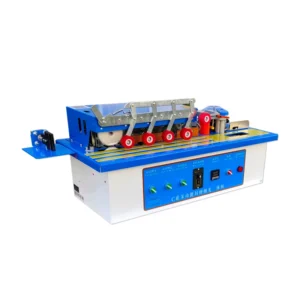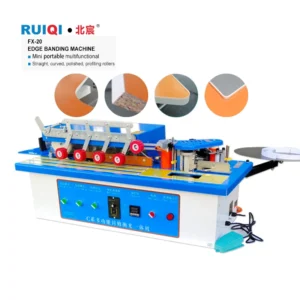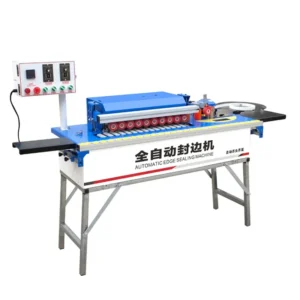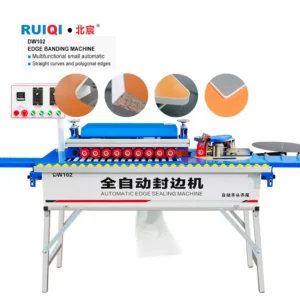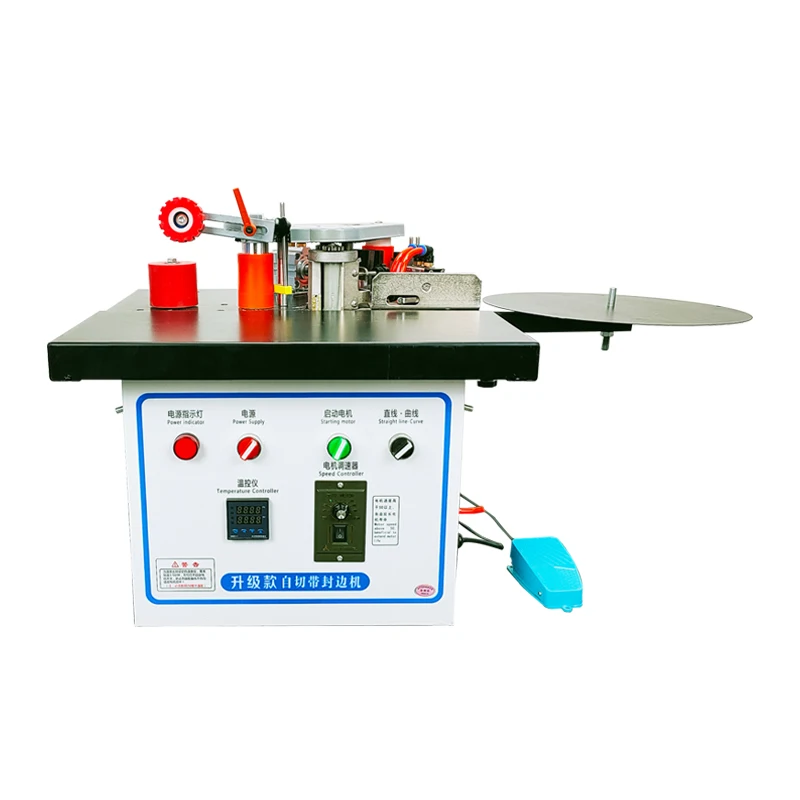
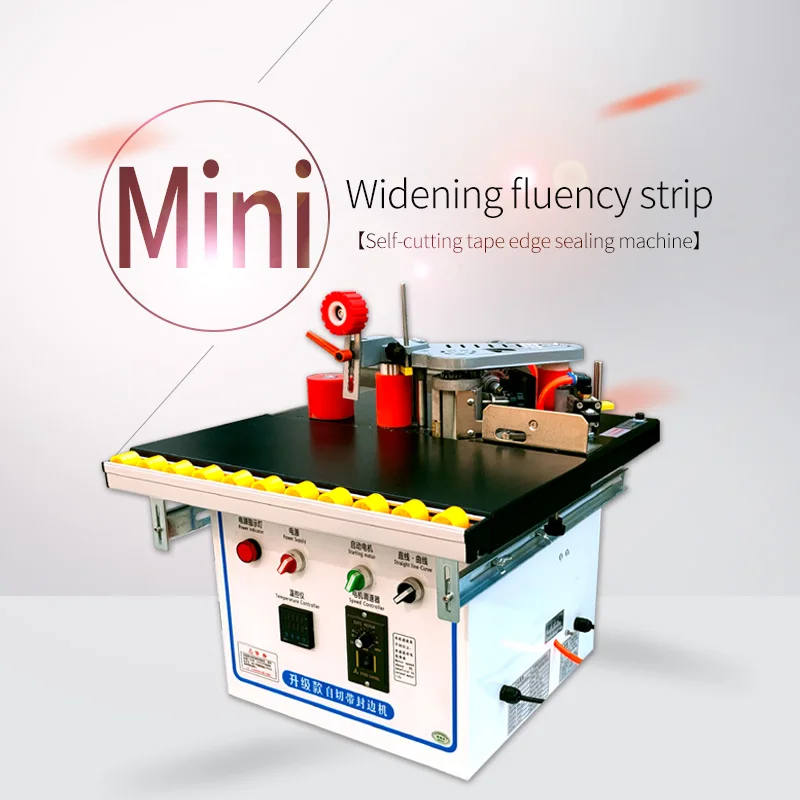
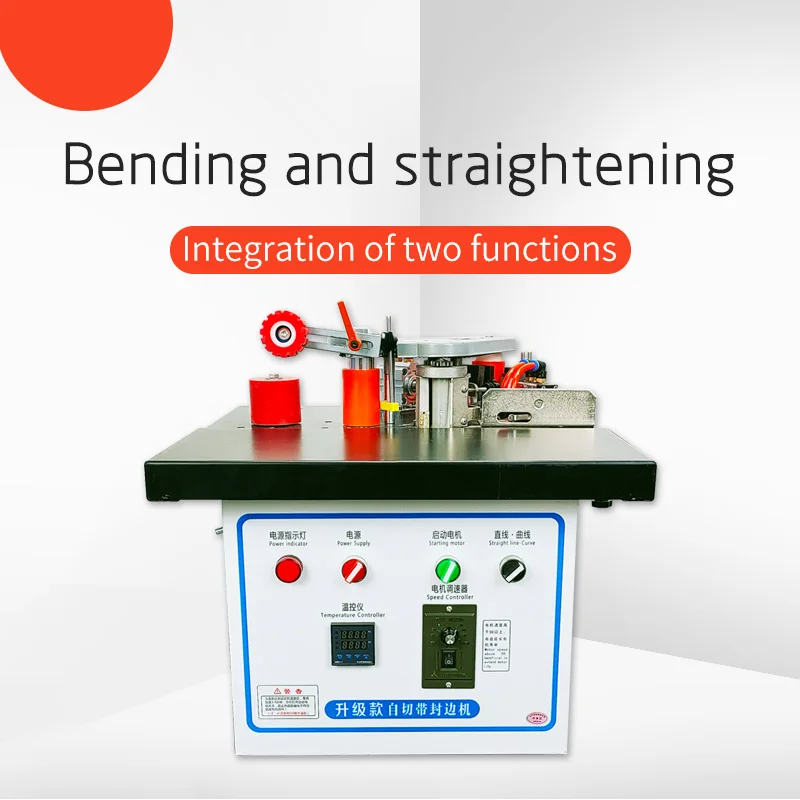
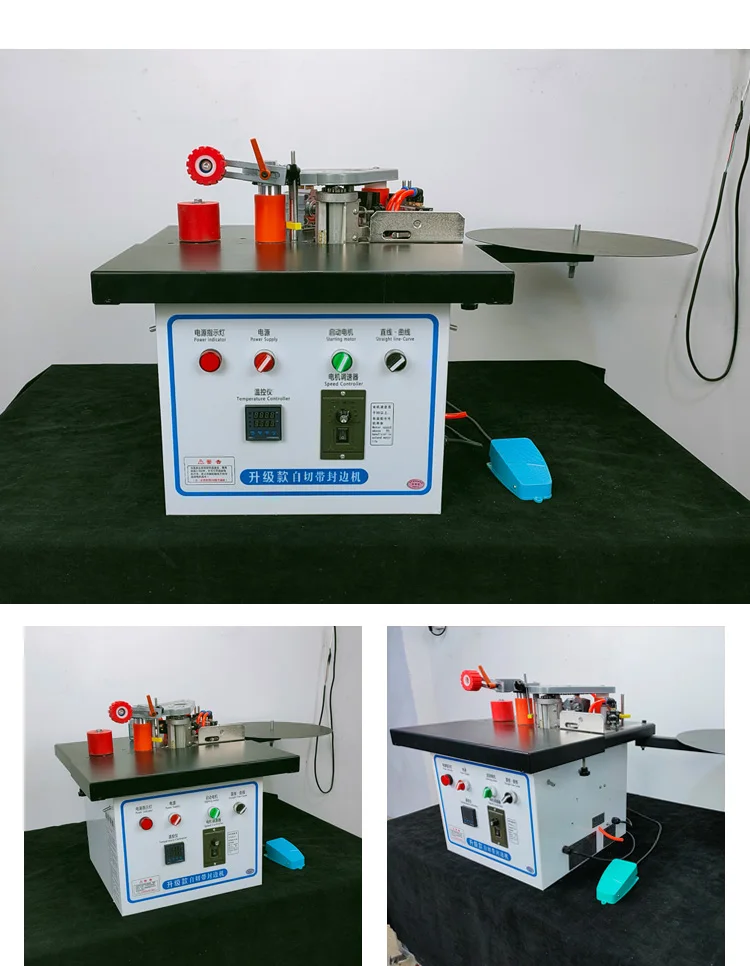
Description
Ready Stock Dispatch — the ST-50 manual edge bander ships from stocked inventory with voltage, plug type, and control panel language confirmed to match your local workshop grid before it leaves the factory floor.
Technical Specifications
| Parameter | Value |
|---|---|
| Model | ST-50 |
| Product Type | Manual Edge Bander |
| Total Power | 1000W |
| Voltage | 220V / 380V / customization |
| Edge Banding Height | 0–50mm |
| Edge Banding Thickness | 0.3–3mm |
| Minimum Sheet Length | 250mm |
| Minimum Sheet Width | 30mm |
| Edge Feed Motor Power | 20W |
| Air Source Pressure | 0.5–0.8 MPa |
| Glue Pot Capacity | 1000ml |
| Machine Dimensions (L×W×H) | 500×500×470mm |
| Net Weight | 22 kg |
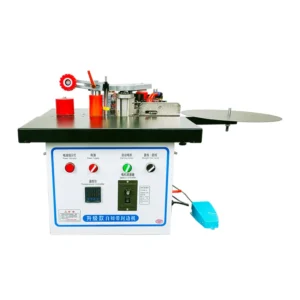
| Standard Features | Curved and straight edge banding |
| Control Panel Language | Chinese / English (other languages customizable) |
| Plug Type | EU / USA / AU / UK available |
| Assembly State | Fully assembled, benchtop unit |
Application Suitability
| Application | Material or Output |
|---|---|
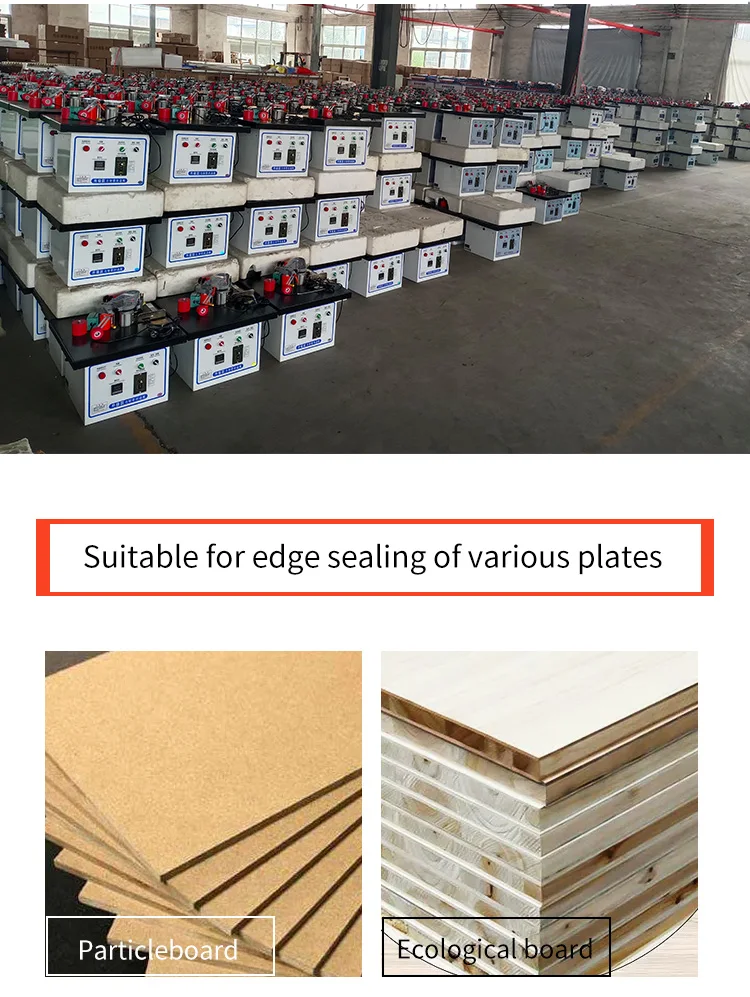
| Small joinery shop edge sealing | MDF and particleboard panels for custom cabinets |
| Furniture repair and restoration | Solid wood boards with curved or straight profiles |
| Home decoration workshop | Plywood and ecological board for shelving and trim |
| Prototype and short-batch production | PVC and veneer edge banding on sample panels |
Why the Voltage Question Must Come Before the Price Quote
Confirming your workshop voltage and frequency before dispatch prevents a machine that arrives dead on the floor.
I spent years shipping compact edge sealers to markets where the grid standard was assumed rather than verified. One shipment to a Riyadh furniture shop sat idle for weeks because the motor was wound for a frequency the local supply could not support. The ST-50 manual edge bander is configurable across voltage ranges, but that flexibility only matters if the right configuration is locked in before the crate is nailed shut. A machine in stock means nothing if it cannot power on when you unbox it [NEED_CITE: voltage and frequency standards by export market].
Stocked and Configured to Your Grid
Ordering a Manual Edge Bander in Stock from our ready inventory does not mean accepting whatever standard unit happens to sit on the shelf. Each ST-50 is pulled and then configured to your declared voltage and plug type before dispatch. The 220V and 380V options cover the vast majority of workshop grids across the Middle East, Southeast Asia, and Latin America, and the matched plug eliminates the need for adapters that introduce connection faults under continuous glue-pot heating cycles.
Single-Unit Orders Without Production Delays
The ST-50 is designed for workshops that need one reliable benchtop sealer, not a full production line. Because this Manual Edge Bander in Stock is held as finished inventory, a single-unit order ships without waiting for a batch production run. The fully assembled state means you unbox it, place it on a stable workbench, connect your air supply at 0.5–0.8 MPa, and begin edge sealing within the same shift it arrives.
Curved and Straight Profiles in One Benchtop Footprint
Most compact edge banders force you to choose between straight-edge and curved-edge capability. The ST-50 handles both within a 500×500mm footprint that fits on a standard joinery bench. The 0.3–3mm banding thickness range covers PVC, melamine, and veneer strips, so a small cabinet maker running short batches does not need separate machines for different edge profiles [NEED_CITE: edge banding material compatibility for small workshops].
Reading the Specs That Actually Matter
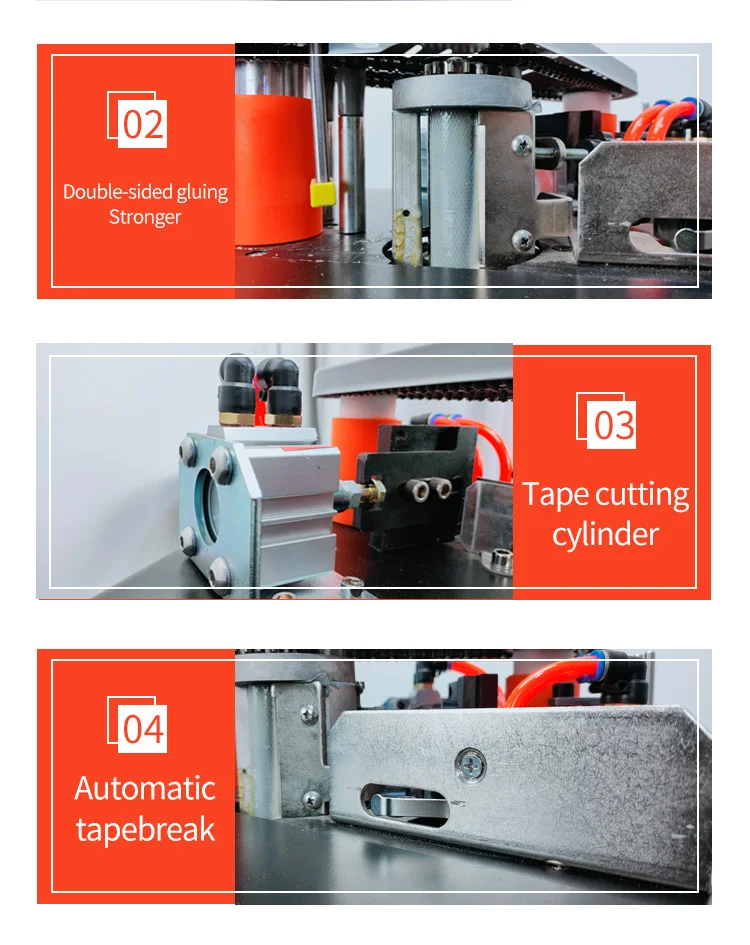
The 1000ml glue pot capacity is sized for continuous small-batch runs without constant refilling, which matters when you are sealing twenty or thirty panels in a session and cannot afford to stop for reheating. The 0–50mm edge banding height range accommodates most standard panel thicknesses used in cabinet and shelving work, from 16mm particleboard up to thicker solid wood stock. The 20W edge feed motor provides steady strip advancement without overwhelming thin veneer edges that tear under aggressive feed pressure. Air pressure at 0.5–0.8 MPa ensures consistent roller contact on both straight runs and curved profiles, which is where most benchtop units produce visible glue lines.
The Hidden Cost of Skipping Pre-Dispatch Voltage Verification
When a machine arrives with the wrong motor winding, the problem is never just a blown fuse. The ST-50 weighs 22 kg and arrives fully assembled — sending it back for rewinding means crating, freight, and weeks of downtime while your workshop runs without edge sealing capability. I have seen small joinery shops try to work around mismatched voltage with external transformers, which introduces heat buildup in the glue pot circuit and degrades adhesive consistency over a working day. Confirming your electrical cabinet setup before the unit ships costs nothing; discovering the mismatch on arrival costs you the entire lead time twice over [NEED_CITE: CE machinery directive requirements for industrial equipment].
Why Procurement Through This Channel Works
Stocked inventory means the ST-50 ships on a timeline measured in days rather than production weeks, which matters when a client deadline depends on finished edge work. Voltage and plug configuration are confirmed in writing against your local grid before dispatch, not guessed from a regional assumption. The control panel language is set to your operator’s requirement so commissioning does not stall on an unreadable interface. A factory test record on your specified panel thickness and banding material accompanies each unit, providing verification rather than a claimed tolerance. Spare parts lists ship with the first order so consumable planning starts on day one.
Documentation & Verification
- CE declaration of conformity covering the ST-50 benchtop edge bander
- Factory test record on your specified panel thickness and edge material before dispatch
- Operation and maintenance manual in the agreed operator language
- Electrical schematic confirming your voltage and plug configuration
- Spare parts list included for glue pot and feed roller consumables
- Pre-shipment packing photographs for condition verification
Installation, Commissioning & Support
- Place the 500×500mm unit on a level workbench rated for at least 30 kg
- Connect to a dedicated circuit matching your confirmed 220V or 380V supply
- Verify air supply at 0.5–0.8 MPa before first glue pot heating cycle
- Run test pieces at your production banding thickness to set feed pressure
- Review the language-specific manual for glue pot cleaning intervals
- Reference the included spare parts list for roller and heating element reorder codes
Before You Request a Quote
Tell us your workshop voltage and frequency, the plug type standard in your country, and the panel materials and thicknesses you seal most often. If your operators require a specific control panel language beyond Chinese or English, declare that at inquiry stage so the interface is configured before the unit ships.
Frequently Asked Questions
Q: How do I confirm the correct voltage and plug for my country?
A: Send a photo of your workshop electrical cabinet or a utility bill showing your local supply standard. We match the ST-50 motor winding and plug type to your grid before dispatch, covering 220V and 380V configurations with EU, USA, AU, and UK plug options available from stock.
Q: Can the ST-50 handle both curved and straight edge profiles?
A: Yes, the ST-50 switches between curved and straight edge banding within the same unit. It handles edge banding thickness from 0.3mm to 3mm across PVC, veneer, and melamine strips on panels as narrow as 30mm and as short as 250mm in length.
Q: How quickly can a single stocked unit ship?
A: Stocked Manual Edge Bander in Stock units are configured for voltage and plug after order confirmation and typically dispatch within a short window. Exact timing depends on the configuration required and destination logistics, confirmed at the quotation stage.
Q: What control panel languages are available?
A: The ST-50 ships with Chinese or English panels as standard. Other languages are customizable at order so your operator can read temperature settings and feed controls on the first day of use without relying on translated paper manuals.
Q: What glue type should I use and how do I maintain the pot?
A: Use EVA hot-melt adhesive rated for your operating temperature. The 1000ml glue pot should be drained and cleaned between production runs to prevent carbonized residue from affecting bond quality on subsequent batches.