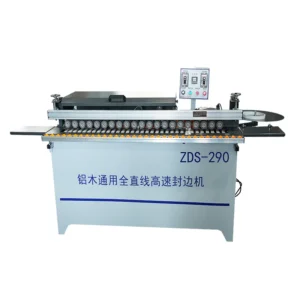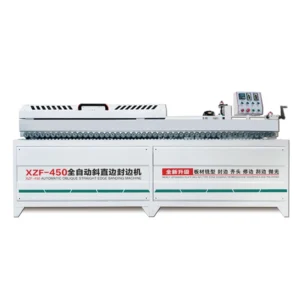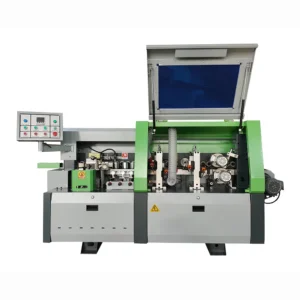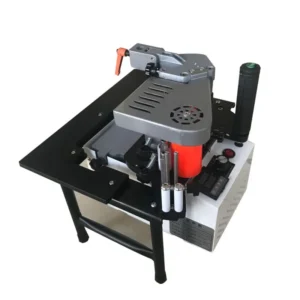
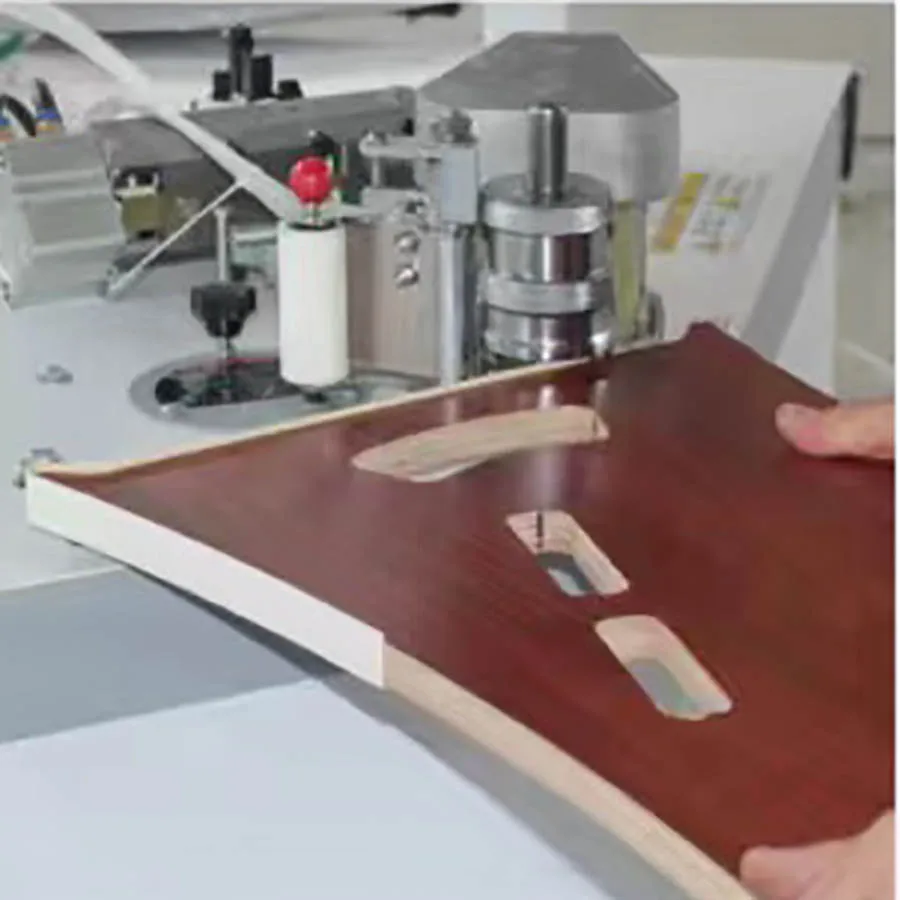
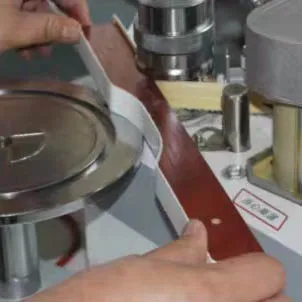
Description
Stocked for immediate dispatch — every curved edge bander leaves our Ningjin facility only after its voltage and frequency are cross-checked against your local grid, so it runs the day it is plugged in.
Technical Specifications
| Parameter | Value |
|---|---|
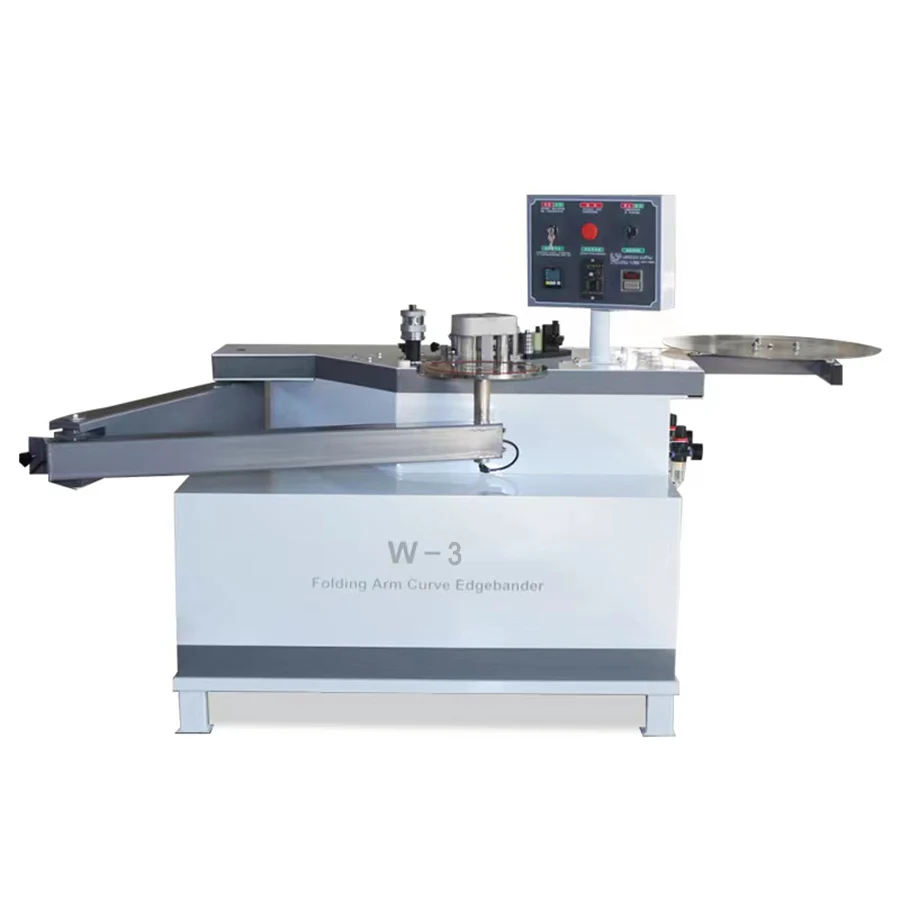
| Product Type | Curved Edge Banding Machine |
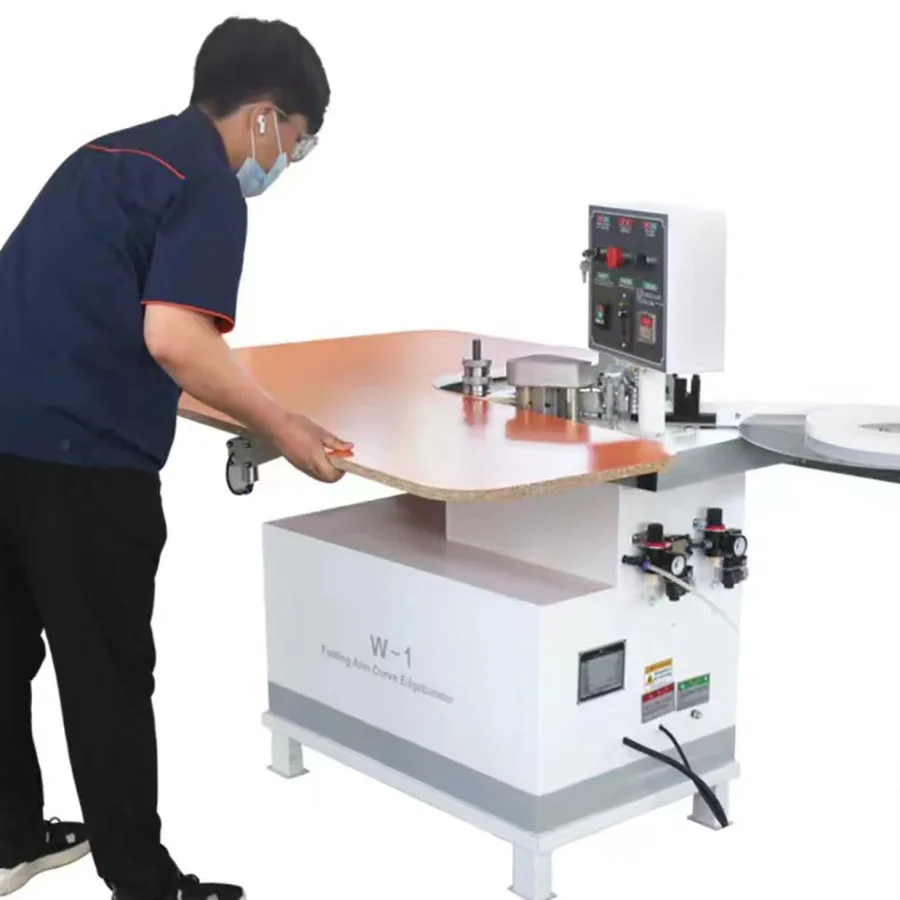
| Available Models | W-1 / W-2 / W-3 |
| Voltage & Frequency | 220V 50Hz (customizable 110V–440V) |
| Rated Power | 1.4 kW (W-1, W-2) / 3.4 kW (W-3) |
| Edge Banding Speed | 0–180 mm/s |
| Edge Band Thickness Range | 0.4–2 mm |
| Edge Band Width Range | 8–50 mm |
| Air Supply Requirement | 0.5–0.8 MPa |
| Suction Cup Size | 200×26 mm (W-1) / 300×26 mm (W-2, W-3) |
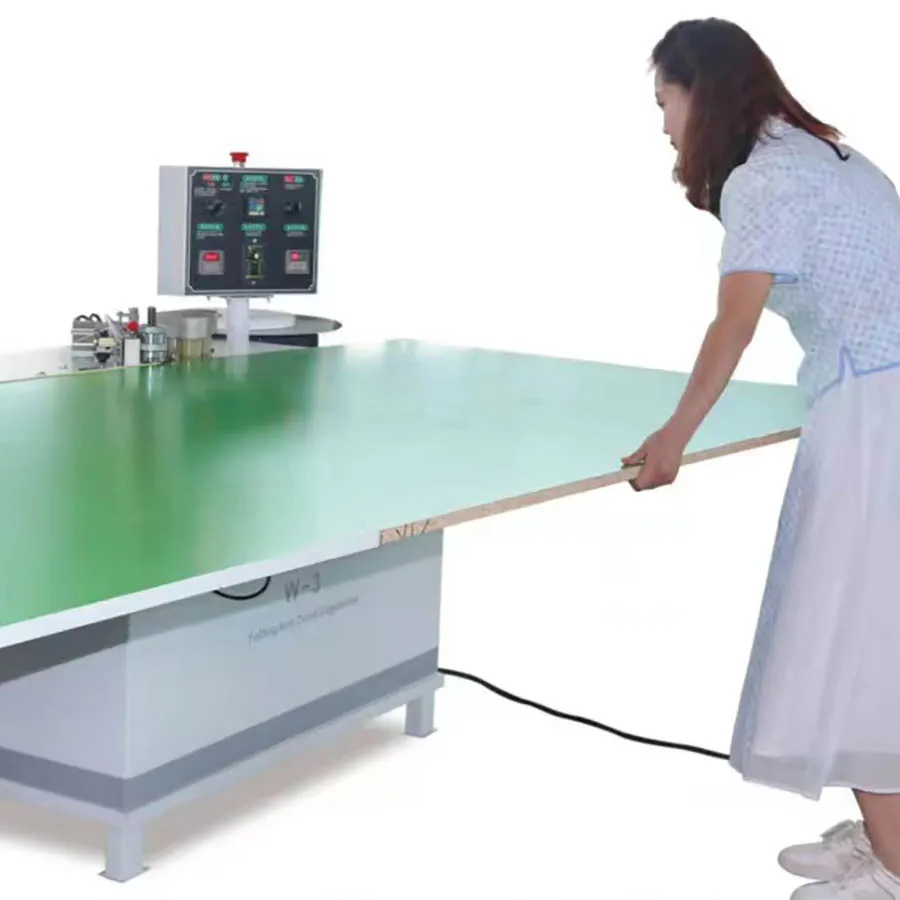
| Overall Dimensions (L×W×H) | 900×620×820 mm (W-1) / 1200×800×1220 mm (W-2) / 1210×1100×970 mm (W-3) |
| Net Weight | 88 kg (W-1) / 152 kg (W-2, W-3) |
| Motor Type | Pure copper motor |
| Control Features | Intelligent temperature control, speed adjustment, timer |
| Glue System | Enlarged glue pot with bottom-up hot air heating |
| Belt Breaking | Automatic belt breaking device controlled by double cylinders |
| Edge Banding Wheel | Adjustable ±0.5 mm to prevent edge strip shifting |
Application Suitability
| Application | Material or Output |
|---|---|
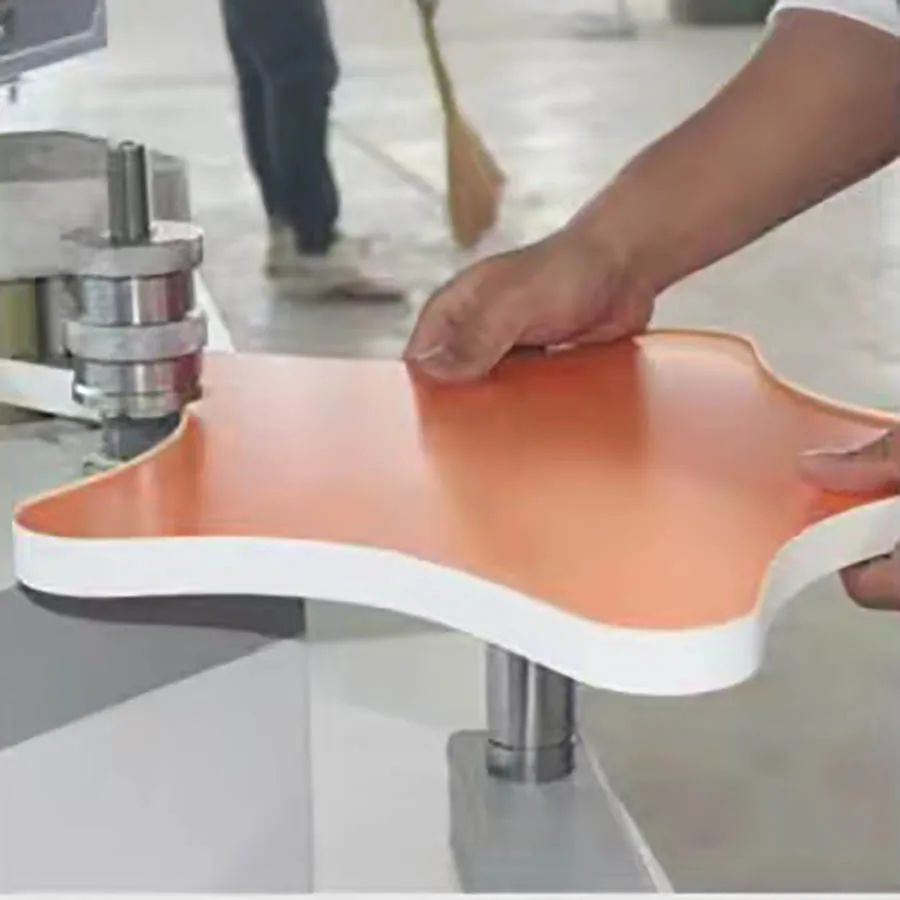
| Custom cabinet doors with arc edges | MDF and plywood with PVC edge banding |
| Rounded desk and table edges | Particleboard with PVC edge banding |
| Shaped shelving and wardrobe panels | MDF and plywood profiles |
| Decorative curved furniture components | Solid wood panels and veneer banding |
| Office furniture with contoured edges | MDF and particleboard substrates |
| Door and window profile finishing | Plywood and MDF with PVC banding |
Why the Voltage Question Should Come Before the Price
A machine that cannot start is worth nothing, no matter how competitive the quote.
I once watched a curved edge bander sit on a dock in Southeast Asia for three weeks because the voltage did not match the buyer’s facility. The transformer had to be sourced locally, the installer flew in twice, and the workshop lost an entire production window. That curved edge banding machine in stock was ready to ship the day it was ordered, but readiness means nothing when the electrical specification is wrong [NEED_CITE: voltage and frequency standards by export market]. Every unit we dispatch is matched against a confirmation sheet that lists your facility’s voltage, frequency, and plug type before it leaves the floor.
Three Model Tiers for Different Workshop Footprints
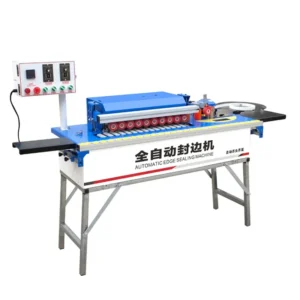
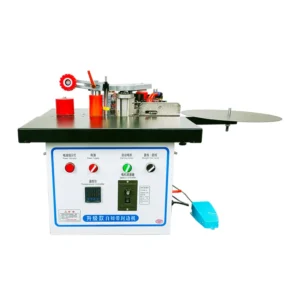
Not every joinery shop needs the same machine size. The W-1 sits under a square meter and draws only 1.4 kW, making it practical for a small workshop that handles curved panels occasionally alongside straight-line work. The W-2 adds a larger suction cup and a taller frame for bigger arc panels without demanding extra floor space. The W-3 at 3.4 kW suits a custom furniture factory where curved edge banding runs daily and throughput matters. Choosing the right tier avoids over-investing in capacity you will not use while keeping the option to move up as orders grow.
Dispatch Speed Without Skipping Verification
Stock availability only matters if the machine you receive actually works in your environment. We keep curved edge banding machine in stock across all three configurations, and dispatch lead times are quoted at the point of order rather than estimated vaguely [NEED_CITE: typical dispatch timelines for stocked woodworking machinery]. Before any unit is crated, the electrical configuration is verified, a sample curved panel is run through to confirm bonding quality, and packing photographs are sent so you see exactly what is on the pallet before it reaches the port.
What the Specification Sheet Actually Means on the Floor
Edge banding speed of 0–180 mm/s gives operators fine control when following tight radii — rushing a curve causes the PVC strip to lift at the apex. The enlarged glue pot reduces refill interruptions during longer runs, and the bottom-up hot air heating keeps adhesive viscosity consistent across the entire arc, which matters when ambient workshop temperature fluctuates between morning and afternoon shifts. The adjustable edge banding wheel with ±0.5 mm tolerance prevents the strip from creeping on compound curves, a common cause of rework on shaped cabinet doors. Suction cup dimensions differ between the W-1 and the larger models because panel mass and overhang increase with arc radius; undersized cups allow the workpiece to drift mid-pass, ruining the bond line.
The Hidden Cost of Specifying the Wrong Configuration
Buying a compact W-1 for a workshop that runs curved panels every day leads to constant glue pot refills and operator fatigue from repositioning smaller suction cups on larger stock. Conversely, placing a 3.4 kW W-3 in a small joinery shop with a limited electrical supply risks tripping breakers or requiring a panel upgrade that delays commissioning by weeks [NEED_CITE: electrical supply requirements for small woodworking workshops]. Mismatched air supply is another frequent issue — if your compressor cannot sustain 0.5 MPa continuously, the double-cylinder belt breaking device will stall mid-cycle, leaving half-banded panels in the queue.
Why Buyers Source This Machine Through Our Stock Channel
Voltage confirmation is not an afterthought — it is a line item on every dispatch checklist, customizable from 110V to 440V based on your confirmed supply. Single-unit orders ship without minimum quantity requirements, which suits workshops adding curved-edge capability for the first time. Pre-shipment testing runs your chosen edge banding material on a sample curved panel so bond quality is verified before crating. The pure copper motor and four-stage inspection process mean the unit that arrives matches the unit that was tested. Operation manuals ship in the language your operators actually read, reducing the commissioning gap between delivery and first production run.
Documentation & Verification
- Voltage confirmation sheet matched to your destination country supply
- Factory test record on curved panel edge banding before dispatch
- Operation and maintenance manual in your agreed language
- Spare parts list with packing photographs for shipment verification
- CE declaration of conformity and ISO 9001 certificate included
- Electrical schematic with confirmed voltage and frequency marked
Installation, Commissioning & Support
- Ensure a dedicated 220V circuit for the W-1 and W-2, or a 3.4 kW rated supply for the W-3
- Compressed air line rated at 0.5–0.8 MPa connected before first start-up
- Machine arrives fully assembled; level the base and verify suction cup seal
- Initial temperature calibration set to your PVC edge banding thickness
- Spare glue pot elements and replacement suction cups listed in the included parts sheet
- Daily glue pot cleaning cycle outlined in the operation manual
What We Need to Move Your Order Forward
Share your workshop’s confirmed voltage and frequency so the electrical configuration is locked before dispatch. Tell us which model tier fits your available floor space and whether your compressor can sustain continuous air supply at the required pressure. If you have specific curved panel profiles in production, send the dimensions and edge banding material so we run a matching sample test before shipping.
Frequently Asked Questions
Q: Which model tier matches my workshop’s panel size and daily output volume?
A: The W-1 suits occasional curved-edge work in compact spaces with 1.4 kW power availability. The W-2 handles larger arc panels with its 300 mm suction cups while keeping the same power draw. The W-3 at 3.4 kW is built for daily curved edge banding runs in custom furniture production where throughput is a priority.
Q: Is the machine in stock and what is the dispatch lead time?
A: All three configurations of the curved edge banding machine in stock are available for order. Dispatch lead time is quoted at order confirmation and includes the pre-shipment voltage verification and sample panel test. Single-unit orders are accepted without minimum quantity requirements.
Q: Will the voltage and frequency match my country’s electrical supply?
A: Every unit ships with a voltage confirmation sheet matched to your facility. Customization from 110V to 440V is available, and the correct configuration is verified before crating. This prevents the situation where a machine arrives and sits idle waiting for a transformer.
Q: Can I order a single unit or is there a minimum order quantity?
A: Single-unit orders are standard through our stock channel. There is no minimum quantity requirement, which suits workshops adding curved-edge capability to complement existing straight-line edge banders or factories replacing a single machine in production.
Q: What shipping options are available and is door-to-door delivery possible?
A: Shipping options are quoted at order confirmation based on your destination port or facility address. Packing photographs are provided before dispatch, and customs documentation support is included. Door-to-door delivery can be arranged depending on your location and access conditions.