


Description
Voltage-Verified Before Dispatch — every ZDSF190 unit undergoes electrical schematic confirmation against your local supply before production starts, preventing the three-week transformer delay that stalls commissioning.
Technical Specifications
| Parameter | Value |
|---|---|
| Model | ZDSF190 |
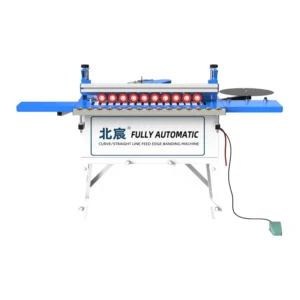
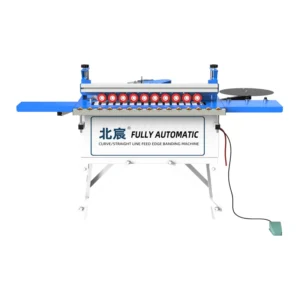
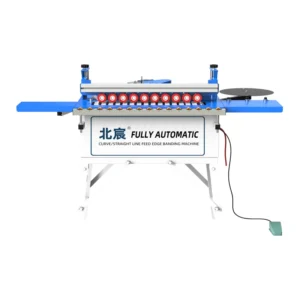
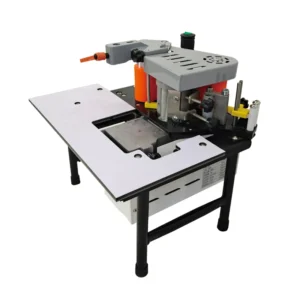
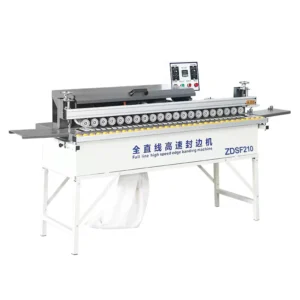
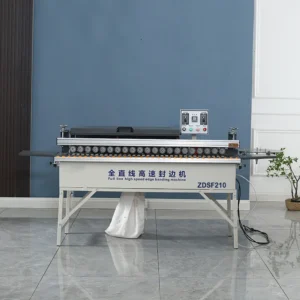
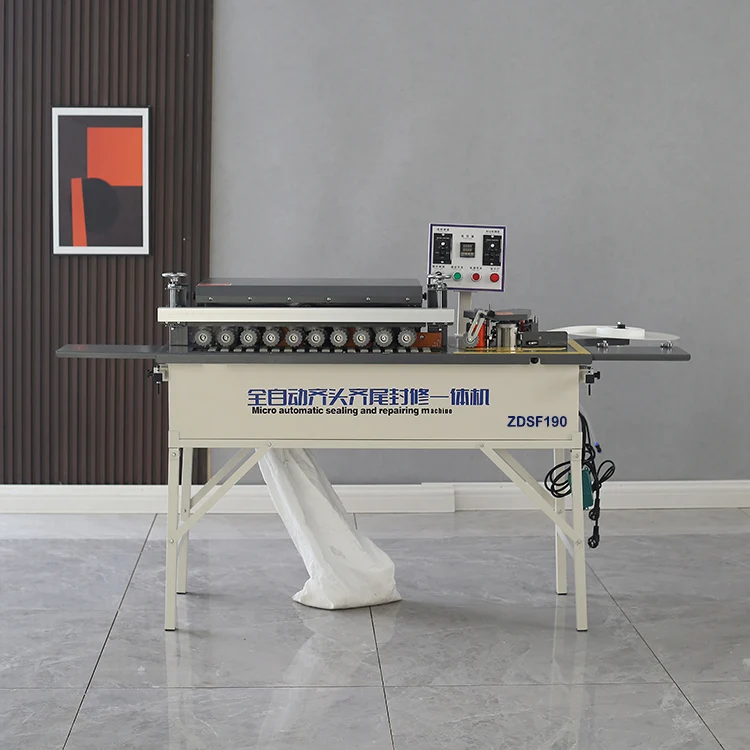
| Product Type | Miniature Fully Automatic Curved and Straight Dual-purpose Edge Banding Machine |
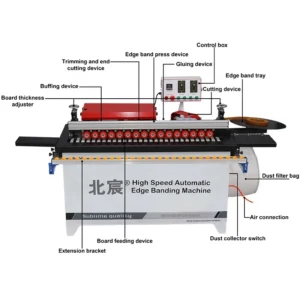
| Function | Automatic plate feeding, automatic belt breaking, double-sided gluing, upper and lower trimming and polishing, curved and straight edge banding, large diameter surrounding vacuum |
| Edge Type | Both curved and straight lines |
| Voltage & Frequency | 220V / 50Hz |
| Rated Power | 4kW |
| Rated Air Pressure | 0.4–0.6 MPa |
| Suction Power | 1200W |
| Belt Power | 25W |
| Transmission Power | 120W |
| Heating Power | 800W |
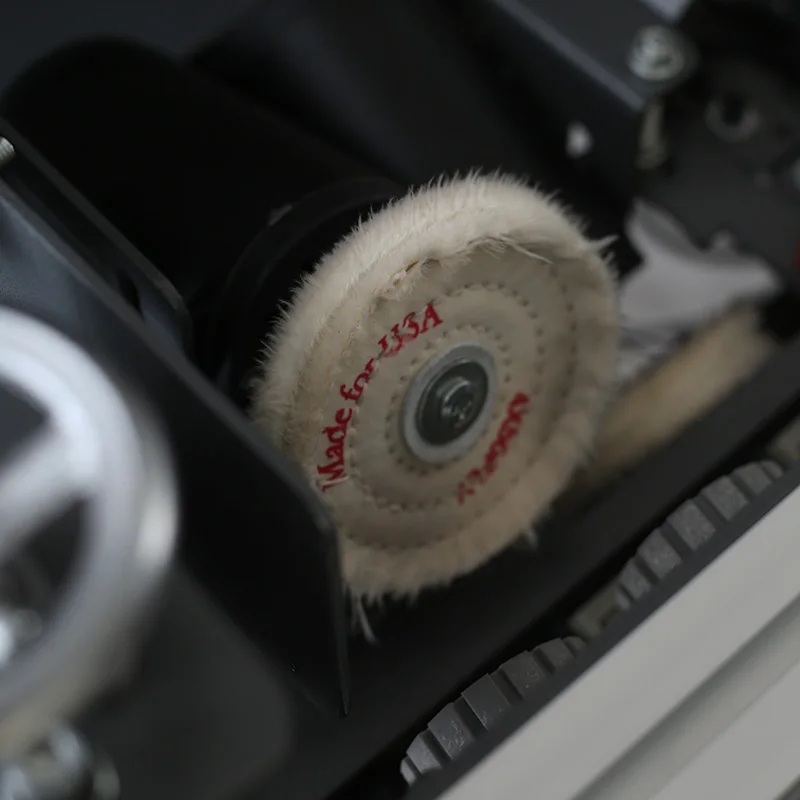
| Polishing Power | 180W × 2 |
| Trimming Power | 800W × 2 |
| Conveyer Belt Speed | 0–14 m/min |
| Feed Plate Speed | 0–14 m/min |
| Sheet Thickness Range | 10–50 mm |
| Strip Thickness Range | 0.5–2.5 mm |
| Glue Capacity | 1000 ml |
| Overall Dimensions (L×W×H) | 1900 × 560 × 1300 mm |
| Weight | 120 kg |
| Trimming Cutter | 4-blade alloy arc knife |
| Dust Collection | Dual large-diameter vacuum collectors (collection effect stated as 99% — basis not stated in source, confirm dust particle type and measurement method) |
| Pressure Beam | Adjustable aluminum alloy |
| Transmission | Crawler transmission with steel rod slide rails |
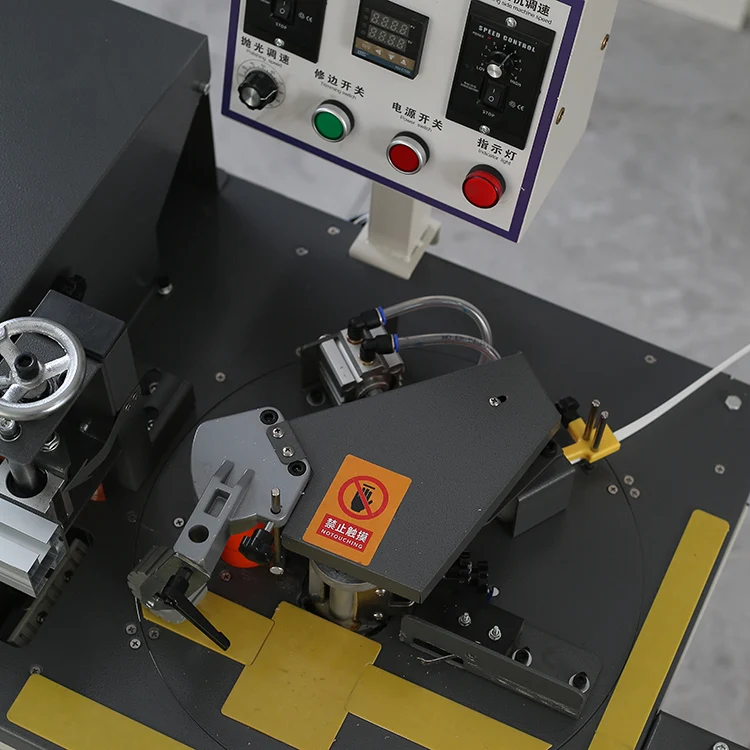
| Edge Strip Cutting Device | Pneumatically controlled |
| Control Panel | Multi-function button operation |
| Warranty | 1 year |
Application Suitability
| Application | Material or Output |
|---|---|
| Custom furniture and cabinet workshops | MDF, particleboard, plywood panel edge finishing with PVC or veneer strips (0.5–2.5 mm) |
| Small-scale joinery shops transitioning from manual to automated edge banding | Both curved and straight panel profiles on a single machine |
| Startup furniture workshops requiring immediate production capability | Single-unit order with fast dispatch, no minimum production run |
Why the Voltage Question Should Come Before the Price on an Edge Banding Machine in Stock
Confirming your workshop’s electrical supply before ordering prevents a machine from sitting idle for weeks.
I worked assembly lines for years before moving into technical sales, and one mistake I saw repeat itself involved a customer who ordered a fully automatic edge bander without verifying the voltage. The machine arrived configured for 380V, but the workshop only had 220V supply. They waited three weeks for a transformer upgrade while the machine gathered dust and orders piled up. That single oversight cost more in lost production time than any price difference between suppliers. [NEED_CITE: voltage and frequency standards by export market] When you are evaluating an edge banding machine in stock for fast dispatch, the first question should never be about cost — it should be about whether your facility can power it the day it arrives.
Ready for Immediate Dispatch Without Custom Build Delays
The ZDSF190 is held as an edge banding machine in stock so that small workshops and cabinet makers can order a single unit and receive it without waiting through a full production cycle. For joinery shops that have just landed a contract and need to start edge finishing immediately, this availability eliminates the typical multi-week lead times associated with made-to-order equipment. The 220V / 50Hz configuration is pre-verified, meaning the electrical schematic is matched to your supply documentation before the crate leaves the factory floor.
Switching Between Curved and Straight Profiles on One Machine
Most compact workshops do not have the floor space or budget for two dedicated edge banders. The ZDSF190 addresses this by rotating 180 degrees to switch between curved and straight edge banding modes, handling both profiles within the same production shift. The adjustable aluminum alloy pressure beam with double-row rubber pressure wheels keeps panels stable whether you are feeding a straight cabinet side or a curved shelf profile. This dual-purpose design is particularly relevant for custom furniture makers who encounter shaped panels across different orders. [NEED_CITE: CE machinery directive requirements for industrial equipment]
How Feed Speed and Panel Thickness Interact in Edge Finishing
The conveyer belt speed range of 0–14 m/min allows operators to slow the feed when working with thicker panels in the 40–50 mm range, giving the glue more contact time for adhesion on heavier substrates. At the lower end of the sheet thickness range, around 10 mm, faster feed speeds become viable because the trimming and polishing stations have less material to remove. The 800W × 2 trimming motors paired with the 4-blade alloy arc knife handle PVC and veneer strips from 0.5 to 2.5 mm, but strip thickness should be matched to feed speed — thicker veneer strips benefit from a slower pass to prevent chipping at the cut point. The dual 180W polishing motors then smooth the trimmed edge, and their effectiveness depends on the operator setting the correct speed for the material combination in use.
What Happens When a Machine Is Specified Without Checking the Workshop
Ordering an edge bander based solely on catalogue specifications, without confirming the local power supply or air pressure availability, leads to predictable failures at commissioning. The ZDSF190 requires 0.4–0.6 MPa rated air pressure to operate the pneumatically controlled edge strip cutting device. Workshops that lack a compressor capable of sustaining this pressure will experience inconsistent strip cuts and misaligned trimming passes. Similarly, a facility with unstable voltage will see the 800W heating element fluctuate in temperature, causing uneven glue application across the panel edge. [NEED_CITE: common causes of edge banding adhesion failure in small workshops] These are not machine defects — they are specification mismatches that surface only after the equipment is on site and the operator is waiting for it to perform.
Why Procurement Through This Channel Reduces Configuration Risk
Stock availability means the ZDSF190 ships from inventory rather than entering a custom build queue, so single-unit orders are fulfilled without minimum quantity requirements. Voltage confirmation is handled through a documented exchange — you provide a photo of your distribution panel, and the electrical schematic is verified against your supply before dispatch. The factory test record covers trimming, gluing, and polishing functions run on material within your specified thickness range, so you can see the machine performing before it is crated. Engineer-led configuration advice is provided within 24 hours of inquiry, ensuring the machine you receive matches your workshop’s actual production conditions rather than a generic catalogue entry.
Documentation & Verification
- CE declaration of conformity applicable to this model class
- Electrical schematic with 220V / 50Hz confirmation matched to your supply photo
- Factory test record showing trimming and polishing on your panel thickness range
- Operation and maintenance manual supplied in your agreed language
- Spare parts list covering wear items including trimming blades and pressure wheels
- Packing photographs documenting machine condition before crating
Installation, Commissioning & Support
- Floor space of approximately 1900 × 560 mm required, with clearance on both sides for curved panel rotation
- Dedicated 220V / 50Hz circuit needed to support the 4kW rated power draw without voltage drop
- Machine arrives fully assembled at 120 kg; position with standard workshop lifting equipment
- First-run calibration of the adjustable aluminum alloy pressure beam to match your panel thickness range
- Pneumatic line connection at 0.4–0.6 MPa to the edge strip cutting device before initial test
- Trimming blade replacement schedule based on strip material hardness and daily run volume
Before You Request a Quote
To match the right configuration to your workshop, share the panel materials you process most frequently along with their typical thickness range. Confirm your local voltage and frequency so the electrical documentation can be prepared in advance. If you run both curved and straight profiles, note the minimum curve radius you encounter so we can verify the machine’s capability against your specific geometry.
Frequently Asked Questions
Q: Is this model currently in stock and how fast can it ship?
A: The ZDSF190 is maintained as an edge banding machine in stock for single-unit orders. Dispatch timing depends on the voltage verification process — once your electrical supply photo is confirmed and the schematic is matched, the unit is prepared for shipment. Factory testing on your specified panel material is completed before crating.
Q: Does the 220V / 50Hz configuration match my local power supply?
A: The standard configuration is 220V / 50Hz. Before ordering, provide a photo of your workshop’s distribution panel so the electrical schematic can be verified against your actual supply. If your facility operates on a different voltage or frequency, alternative configurations may be arranged through the engineering team.
Q: How do I switch between curved and straight edge banding modes?
A: The machine rotates 180 degrees to transition between curved and straight modes. The adjustable aluminum alloy pressure beam and double-row rubber pressure wheels accommodate both profiles. Operators adjust the setup based on the panel geometry before each production run.
Q: What edge banding strip materials and thicknesses work with this model?
A: The ZDSF190 handles PVC and veneer edge banding strips from 0.5 to 2.5 mm in thickness. The 4-blade alloy arc trimming cutter and dual polishing motors are calibrated for these materials. Strip thickness and feed speed should be matched for optimal edge quality.
Q: What spare parts are included and how do I order replacements?
A: A spare parts list is included with every shipment, covering consumable and wear items such as trimming blades and pressure wheels. Replacement orders can be placed directly through the technical sales channel, with parts shipped against your machine’s specific configuration record.