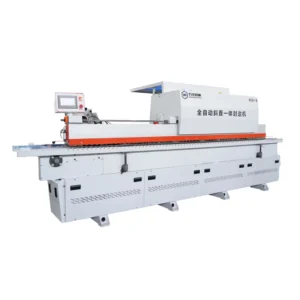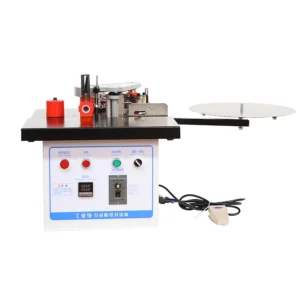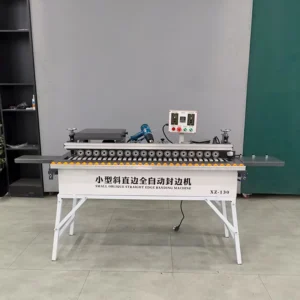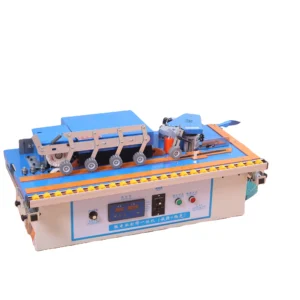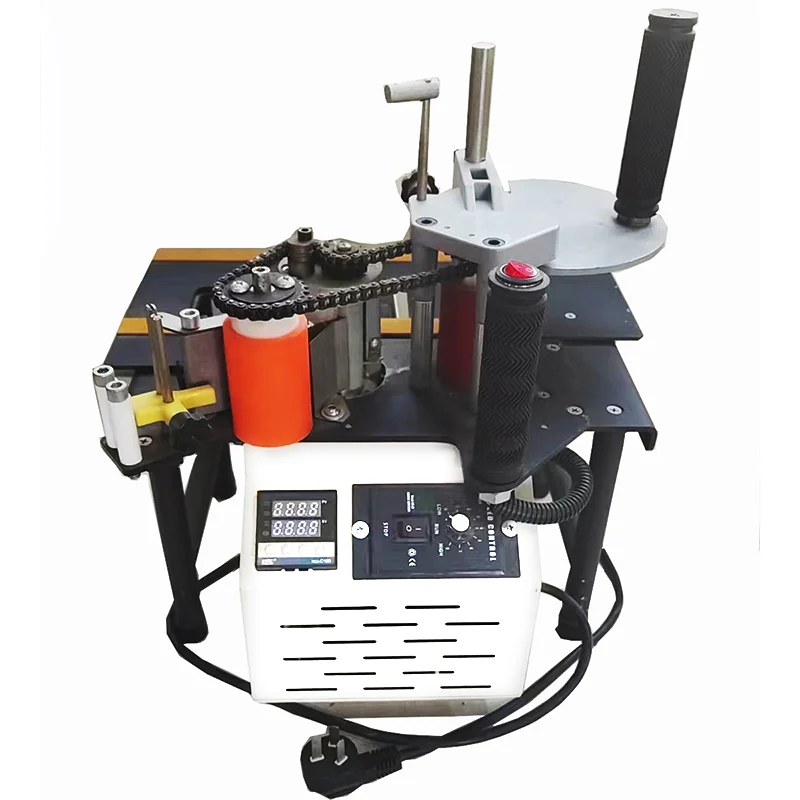
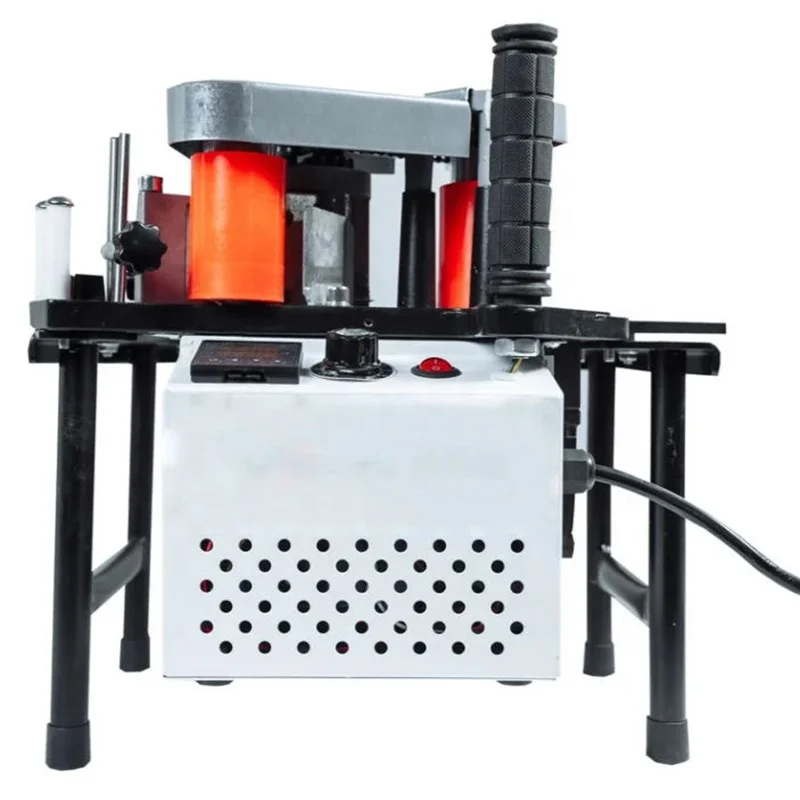
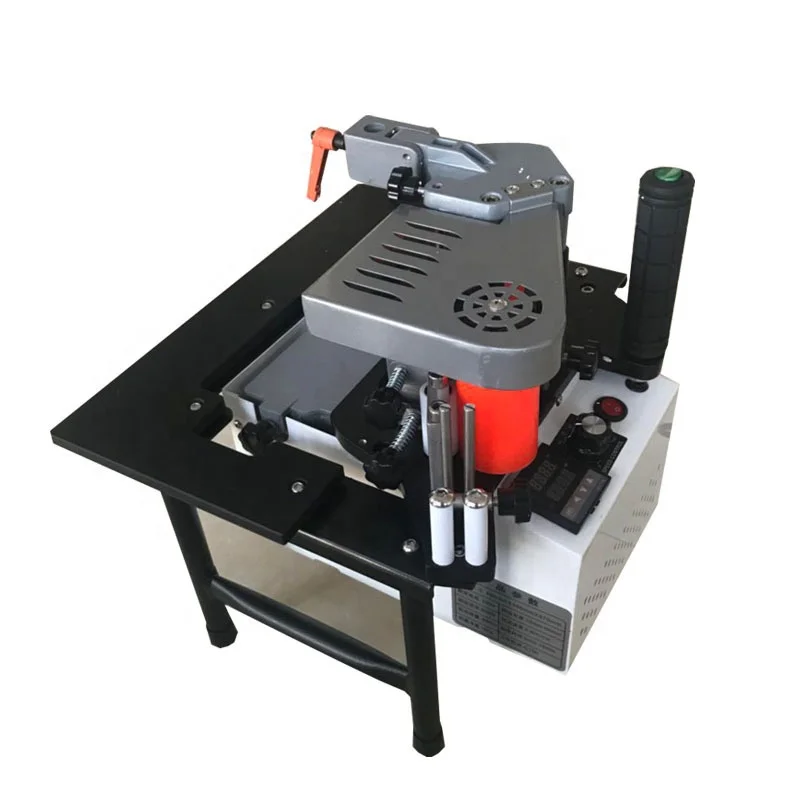
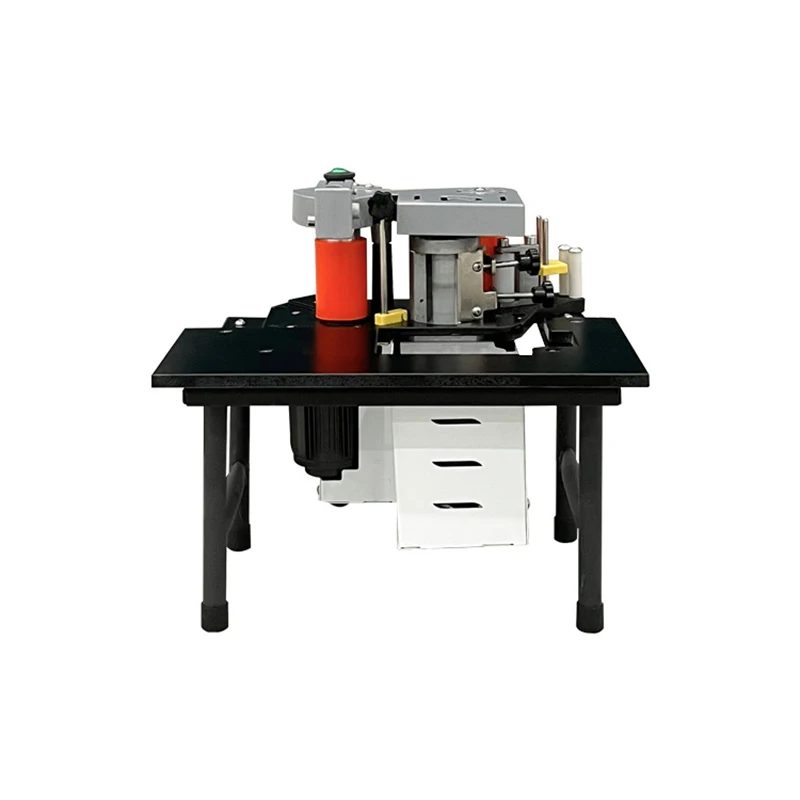
Description
Fast Dispatch Assurance — stocked portable edge banders ship with confirmed plug type and voltage, so your operator can plug in and run on day one.
Technical Specifications
| Parameter | Value |
|---|---|
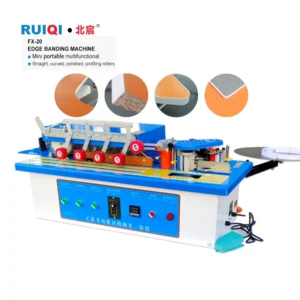
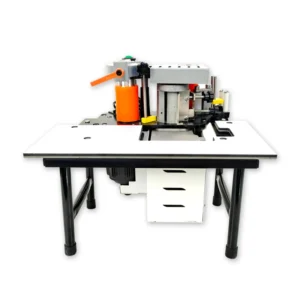
| Product Type | Portable Edge Banding Machine |
| Shape of Edge-banding Plates | Curved, straight and special-shaped sheet |
| Edge Thickness Range | 0.3–3 mm |
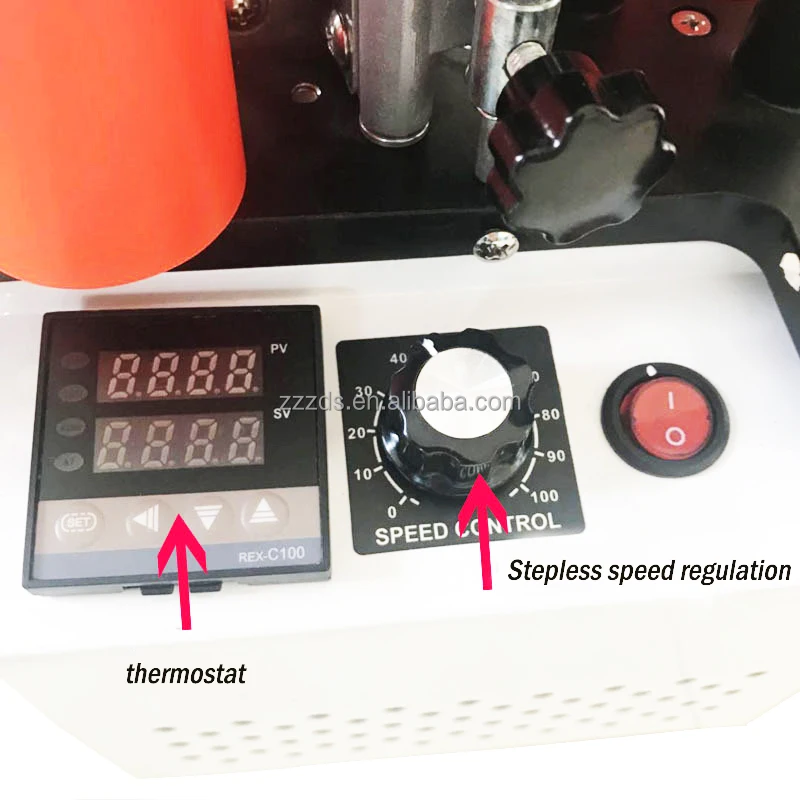
| Edge Sealing Speed | 0–6 m/min |
| Panel Thickness Range | 7–60 mm |
| Gluing Method | Double-sided gluing |
| Glue Pot Volume | 1000 ml |
| Machine Weight (Net) | 14 kg |
| Feed Speed | 0–6 m/min |
| Control System | Manual / portable operation |
| Plug Options | EU / AU / UK / USA / CN |
| Logo Customization | Available |
| Warranty | One year |
Application Suitability
| Application | Material or Output |
|---|---|
| Small workshop edge finishing | MDF, particleboard and plywood panels |
| Custom cabinet on-site banding | Solid wood panels with PVC or veneer edges |
| Joinery startup transitioning from hand trimming | Melamine-faced board with 0.3–3 mm banding |
| Curved and shaped furniture components | Special-shaped panels requiring flexible feed paths |
Why the Voltage Question Should Come Before the Price
Confirming local voltage and frequency before dispatch is the single most effective step to avoid a machine that sits idle on arrival.
I once watched a portable edge bander ship to a Southeast Asian workshop with the voltage label reading 380V but no frequency check. At 60 Hz the spindle speed drifted, the hot-melt glue applied unevenly, and the customer scrapped an entire batch of panels before anyone identified the root cause. A portable edge banding machine in stock means nothing if the electrical supply at your bench does not match the motor winding. Every order we process now goes through a three-round electrical confirmation — voltage, frequency, and plug type — before the unit leaves the packing area [NEED_CITE: voltage and frequency standards by export market].
Dispatch Timing That Matches Workshop Cash Flow
When a small joinery shop commits capital to its first machine, every idle day between payment and production is a cost. Stocking the portable edge banding machine in stock configuration means the unit is assembled, tested, and waiting — not built from scratch after the deposit lands. Single-unit orders ship without waiting for a container to fill, so a cabinet maker adding edge finishing capability can schedule installation around existing jobs rather than around a factory’s batch calendar.
Plug Configuration Verified Before the Crate Closes
Five plug standards — EU, AU, UK, USA, and CN — sit on the shelf next to the units themselves. The correct power cord is matched to the destination country and verified against the frequency requirement before final packing. This removes the scenario where an operator opens a crate, reads an unfamiliar plug shape, and improvises an adapter that introduces resistance and heat at the most critical connection point [NEED_CITE: CE machinery directive requirements for industrial equipment].
What the Numbers Mean on the Workshop Floor
The 7–60 mm panel thickness range covers the majority of furniture and cabinetry substrates — from thin shelving stock to thick worktop cores — without requiring fixture changes between jobs. Double-sided gluing with a 1000 ml pot keeps adhesive coverage consistent across both the panel edge and the banding back, which matters when bonding PVC to particleboard on a curved profile where gravity pulls the glue downward. The 0.3–3 mm edge thickness capacity accommodates veneer for fine furniture through to thick PVC for moisture-resistant kitchen cabinetry, all on the same machine without tooling swaps. At 14 kg net weight, the unit sits on any standard workbench and can be repositioned when floor space is needed for assembly tables or staging racks.
The Cost of Skipping Pre-Shipment Electrical Verification
Workshops that accept a machine without confirming voltage and frequency against their local supply often discover the mismatch only after the first production run. Glue that should melt at a steady rate instead thickens or thins with the frequency-driven speed variation, producing bond lines that fail during assembly or after the customer takes delivery. The rework cost extends beyond the panels themselves — it includes the delivery fuel, the customer’s lost confidence, and the days spent waiting for replacement components to arrive from overseas [NEED_CITE: industrial equipment commissioning failures from voltage mismatch].
Why Source This Unit Through ruiqistore
Stocked inventory means the portable edge bander you see is the one that ships, not a catalog rendering waiting for a production slot. Voltage and plug confirmation happens during the order conversation, not after the invoice is paid. Pre-shipment testing on your sample material — with photo or video evidence — lets you verify glue adhesion and edge finish before the crate closes. Documentation arrives in the language your operator reads, and the spare parts list specifies every consumable so you can reorder locally. One-year warranty coverage is backed by a manufacturer with two decades of woodworking machinery production and ISO 9001 certified processes.
Documentation & Verification
- Factory test record on your specific panel material and edge banding thickness before dispatch
- Electrical schematic confirming voltage, frequency, and plug type matched to your workshop supply
- Operation and maintenance manual written in the language you specify at order confirmation
- Spare parts list with consumable specifications for glue and banding materials
- Packing photographs showing crate condition and accessory completeness before shipment
Installation, Commissioning & Support
- Benchtop placement requires a flat surface rated for at least 20 kg including material load
- Dedicated circuit matching confirmed voltage and plug type prevents shared-line interference
- Unit arrives fully assembled — no mechanical fitting required before first power-on
- Glue pot temperature and feed speed calibrated during pre-shipment test on your sample panels
- Operator training covers double-sided glue loading, curved-edge feed technique, and banding tension
- Consumable reorder schedule aligned with 1000 ml glue pot capacity and edge thickness usage rate
What to Share When You Request a Quote
Tell us the panel materials you process most often, the edge banding type and thickness you run, and the voltage and frequency at your workshop. If you have odd-shaped panels that need curved-edge banding, send a sketch or photo so we can confirm the feed path will accommodate the profile. We will match the plug type and language to your operator’s needs and return a confirmed dispatch date.
Frequently Asked Questions
Q: Which plug types are in stock and how fast can you ship to my country?
A: EU, AU, UK, USA, and CN plugs are stocked alongside the machines. Once voltage and frequency are confirmed, single-unit orders are typically dispatched within days rather than weeks. Shipping duration depends on destination port and carrier selection, which we quote at the order stage so you can plan installation around your workshop schedule.
Q: What panel materials and edge banding types does this portable machine handle?
A: The unit processes MDF, particleboard, plywood, and solid wood panels from 7 to 60 mm thick. Edge banding from 0.3 to 3 mm is supported, covering PVC for moisture-resistant applications, melamine for cost-effective cabinet work, and veneer for fine furniture finishing. Double-sided gluing ensures consistent bond strength across all these material combinations.
Q: How do I confirm the voltage is correct for my workshop before ordering?
A: During the order process we confirm your local supply voltage and frequency through three rounds of verification before dispatch. You provide the electrical specifications printed on your workshop panel or breaker box, and we match the motor winding and plug accordingly. A pre-shipment test under those conditions is documented with photo or video evidence.
Q: Is there an upgrade path to a full-size automatic edge bander as my production grows?
A: Yes. The product family extends from this portable unit through full-function pre-milling automatic models within the same manufacturing system. When your volume outpaces manual feed speed, the transition to an automatic line is supported by the same technical team and documentation standards, without changing your supply relationship.
Q: What consumables should I order alongside the machine?
A: We recommend ordering hot-melt glue granules matched to your banding material and edge thickness range, along with initial rolls of your most-used edge banding in the 0.3–3 mm range. The 1000 ml glue pot capacity determines reorder intervals, and the spare parts list included with shipment specifies every consumable part number for local sourcing.