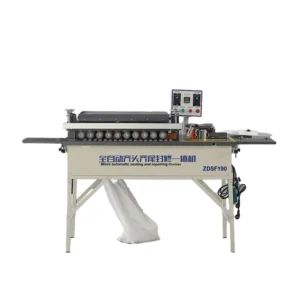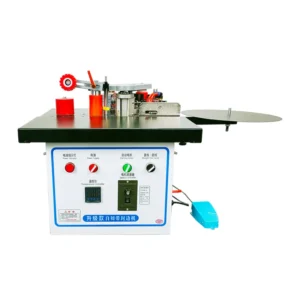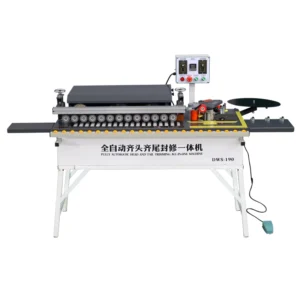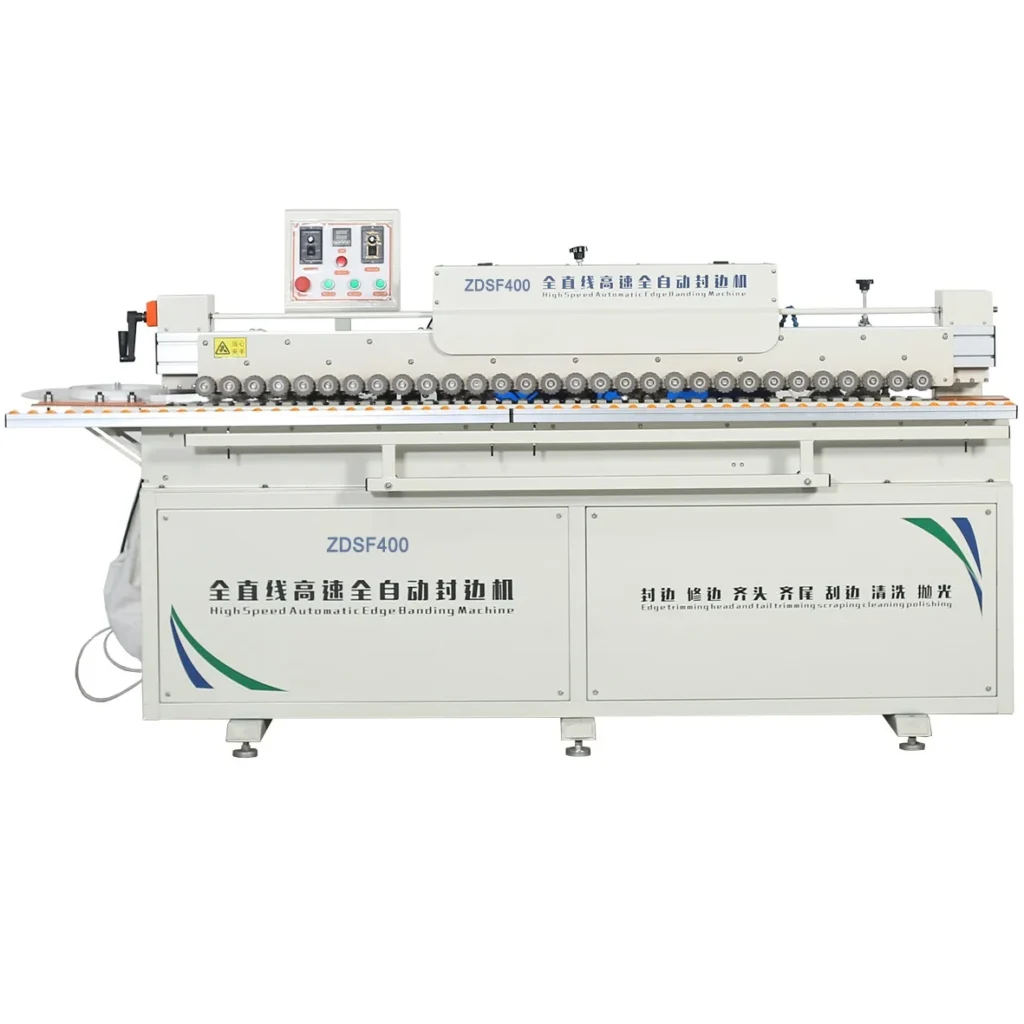
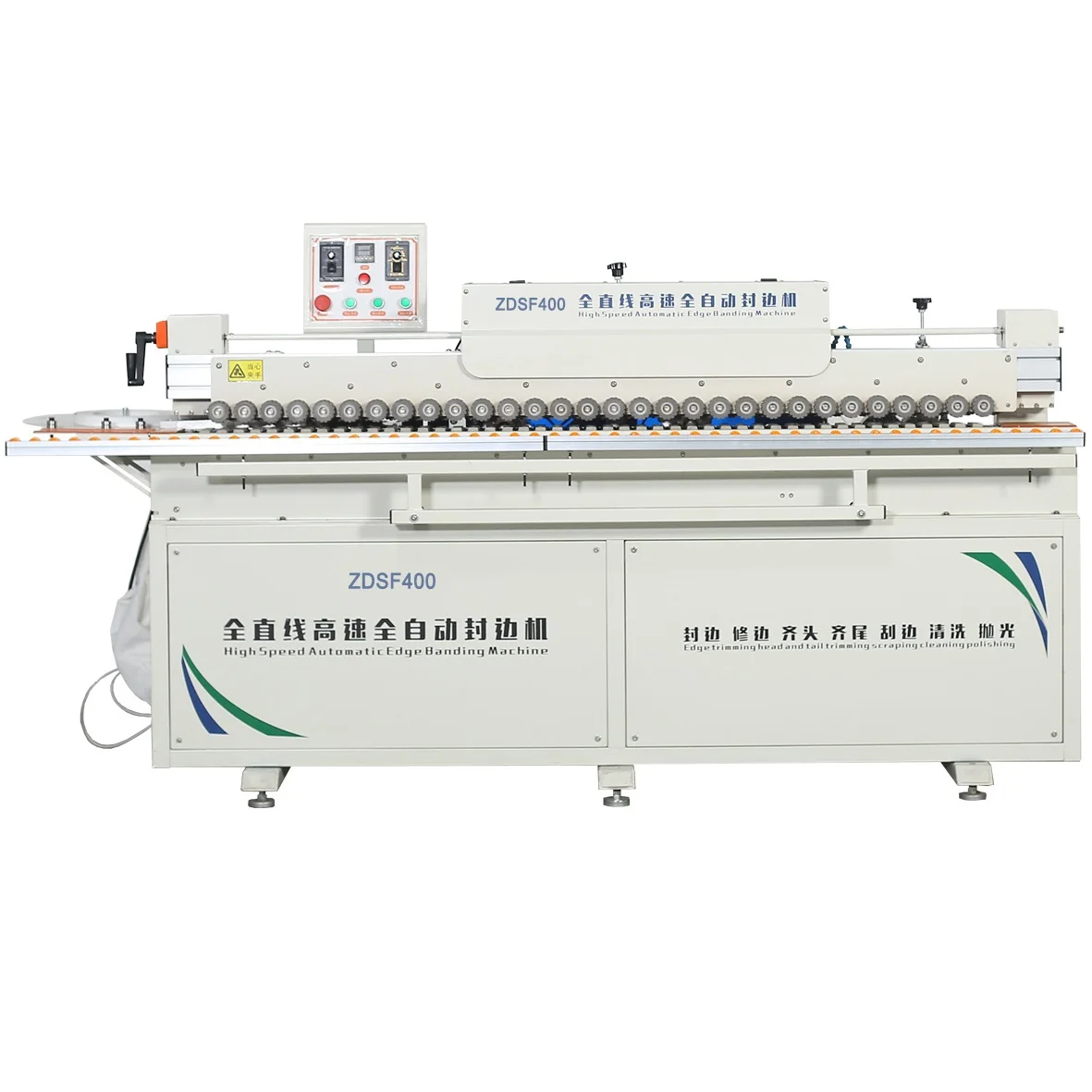

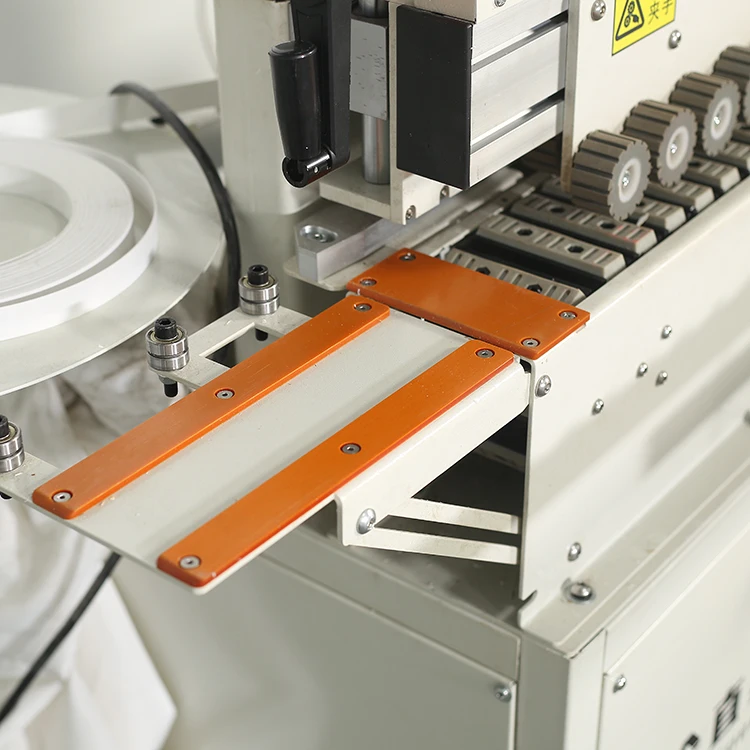
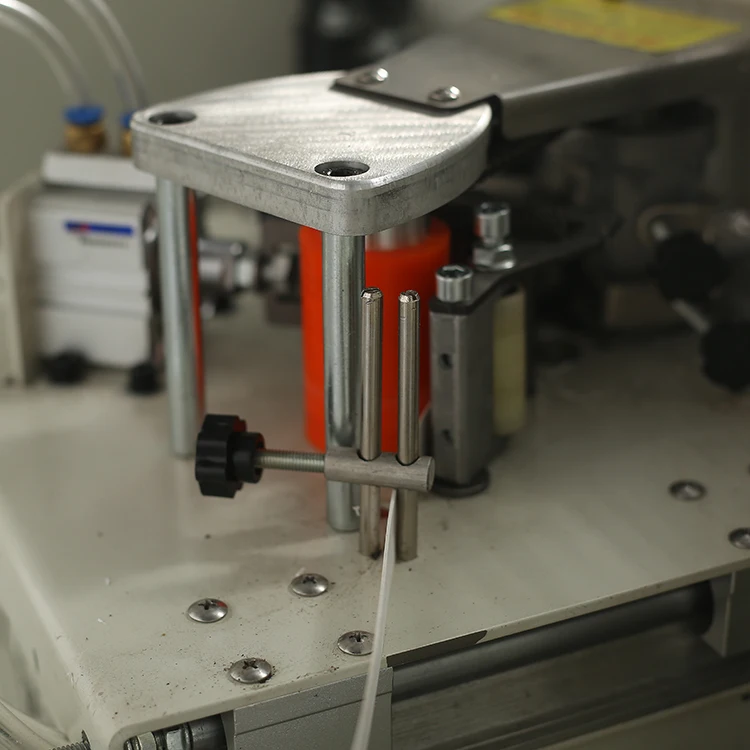


Description
Stocked & Ready to Dispatch — the ZDSF400 ships from warehouse inventory with voltage confirmation documented before crating, eliminating the multi-week production gap that custom-built orders create. [NEED_CITE: machinery procurement lead time risks for small workshops]
Technical Specifications
| Parameter | Value |
|---|---|
| Model | ZDSF400 |
| Product Type | Automatic Edge Banding Machine |
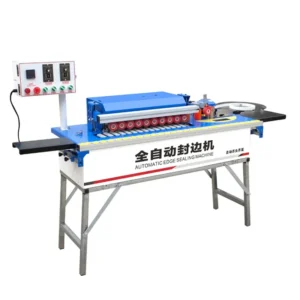
| Function Sequence | Gluing, end cutting, trimming, scraping, polishing, vacuuming |
| Edge Type | Straight lines |
| Voltage & Frequency | 220V 50Hz (regional options to be confirmed before dispatch) |
| Rated Power | 3 kW |
| Rated Air Pressure | 0.4–0.6 MPa |
| Strip Thickness Range | 1–3 mm |
| Panel Thickness Range | 10–55 mm |
| Feed Speed | 0–14 m/min |
| Glue Pot Capacity | 1000 ml |
| Glue Heating Power | 800 W (heat-up time 5–10 min) |
| Trimming Motor | 800 W × 2, 24,000 rpm |
| Polishing Motor | 180 W × 2, 5,500 rpm |
| Suction Power | 550 W |
| Frame Material | Aluminum alloy |
| Position Display | High precision digital display |
| Overall Dimensions | 240 × 70 × 120 cm |
| Machine Weight | 370 kg |
| Warranty | 1 year |
Application Suitability
| Application | Material or Output |
|---|---|
| Custom furniture panel edging | MDF and particleboard, 10–55 mm thick |
| Cabinet carcass production | Plywood panels with PVC edge strips, 1–3 mm |
| Small-batch joinery components | Solid wood panels requiring straight-line banding |
| Workshop transition from manual to machine | Mixed board stock in low-to-medium volume runs |
Why the Voltage Question Must Come Before the Quotation
A 220V machine wired for 50Hz will burn out its glue pot heater on a 60Hz supply within the first production shift.
I learned this after a machine arrived at a Middle East workshop completely unusable — the local supply was 220V but 60Hz, and nobody had asked. The buyer lost weeks returning the unit while their production schedule collapsed. When sourcing an automatic edge banding machine in stock, the first specification to lock down is not feed speed or panel width; it is the exact voltage and frequency at your main breaker panel. [NEED_CITE: voltage and frequency standards by export market]
Dispatch Speed Without the Specification Gamble
The ZDSF400 sits in our warehouse ready to ship, but ready-to-ship does not mean ship-before-you-confirm. Before any automatic edge banding machine in stock leaves the loading bay, we require written confirmation of your local voltage and frequency. This step adds a day to the paperwork but prevents the kind of commissioning failure that shuts down a workshop for weeks.
Single-Unit Orders Treated as Production Equipment
Small workshops often get sold entry-level machines that were designed for hobby use, then pushed into eight-hour shifts they cannot survive. The ZDSF400 carries a 3 kW rated power draw and an aluminum alloy frame weighing 370 kg — specifications that belong to a production machine, not a benchtop unit. When you order a single unit to fill an immediate gap in your line, the machine must be rated for the daily volume you intend to run through it. [NEED_CITE: duty cycle expectations for small-scale panel processing machinery]
What the Feed Speed Range Actually Means on the Floor
A 0–14 m/min variable feed speed sounds broad on paper, but the usable range depends entirely on your glue pot temperature and strip thickness. At 1–3 mm PVC strip thickness, the 800 W glue heater needs to reach a stable working temperature — which takes five to ten minutes from a cold start — before the feed should move past the lower third of the dial. Running cold glue at high feed speed produces the visible glue lines that force panels back to the sanding station, a rework loop I have watched consume entire mornings in furniture workshops.
The Hidden Cost of Skipping the Voltage Check
When a machine arrives with the wrong electrical configuration, the consequences cascade. The motor runs at the wrong speed, the glue pot cannot hold temperature, and the control board faults intermittently — problems that look like manufacturing defects but are actually supply mismatches. The buyer blames the factory, the factory blames the buyer, and the machine sits idle while both sides argue over who should have asked the question first. [NEED_CITE: common causes of commissioning failure in imported woodworking machinery]
What You Get When You Order From This Warehouse
Every stocked ZDSF400 ships with a factory test record generated on panel stock matching your specified thickness range — not on a generic sample board that proves nothing about your actual material. Voltage and frequency confirmation is documented in writing before crating, so the machine that arrives is the machine you can plug in. Spare parts lists ship inside the crate, meaning your first-year consumables — trimming blades, polishing wheels, glue pot seals — are identified before you need to reorder.
Documentation & Verification
- Factory test record run on panel thickness matching your 10–55 mm range
- Electrical schematic confirming 220V 50Hz or your specified regional configuration
- Operation manual translated into the language your floor operators read
- Pre-shipment photographs of edge banding output on your supplied sample material
- Spare parts list with part numbers for first-year trimming and polishing consumables
Installation, Commissioning & Support
- Requires a dedicated 220V circuit rated for the 3 kW continuous draw plus startup surge
- 240 × 70 cm footprint needs a level concrete floor with clearance on both feed and discharge sides
- Arrives fully assembled — connect power, air supply at 0.4–0.6 MPa, and dust extraction to the 550 W port
- First run should use scrap MDF to verify glue pot temperature stability before feeding production panels
- Digital display allows single-operator height adjustment without walking to both ends of the machine
- Trimming spindles at 24,000 rpm require bearing inspection at intervals noted in the maintenance manual
Before You Send an Inquiry
Tell us the exact voltage and frequency at your workshop’s main panel, the thickest panel you run most often within the 10–55 mm range, and the edge strip material and thickness you use daily. If your production schedule has a hard deadline, state it — stock availability changes weekly, and we can hold a unit for a confirmed dispatch window.
Frequently Asked Questions
Q: Is the ZDSF400 in stock and how fast can a single unit ship?
A: The ZDSF400 is held in warehouse inventory for single-unit dispatch. Once voltage and frequency are confirmed in writing and the proforma is settled, crating and handover to the freight forwarder typically takes several working days. Exact timing depends on current stock rotation and your port of destination.
Q: Can the voltage be adjusted before the machine ships to match my local grid?
A: Yes. The machine’s electrical system can be configured for different regional voltages and frequencies before dispatch. We require written confirmation of your supply specifications — both voltage and Hz — before the machine leaves the warehouse to ensure plug-and-play commissioning on arrival.
Q: What panel and strip dimensions does this machine handle in daily production?
A: The ZDSF400 processes panels from 10 mm to 55 mm thick and applies straight PVC edge strips between 1 mm and 3 mm thick. Feed speed is variable up to 14 m/min, though optimal speed depends on glue temperature and strip thickness for clean adhesion without visible glue lines.
Q: How is the machine shipped and are door-to-door options available?
A: The ZDSF400 ships crated at 370 kg with overall dimensions of 240 × 70 × 120 cm. We coordinate with freight forwarders for both port-to-port and door-to-door delivery. You receive packing photographs and customs documentation support to clear import procedures at your destination.
Q: What spare parts ship with the machine and how are replacements sourced?
A: A spare parts list identifying first-year consumables — trimming blades, polishing wheels, and glue pot components — is included in the crate. Replacement parts can be ordered directly with part numbers from that list, and we recommend placing your first reorder before the initial set is fully consumed.