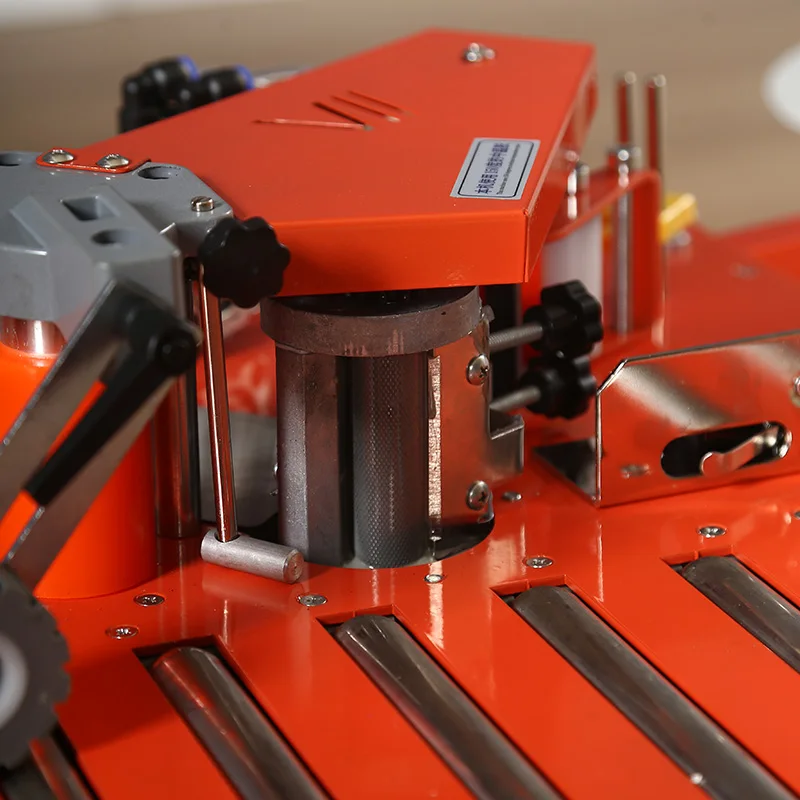
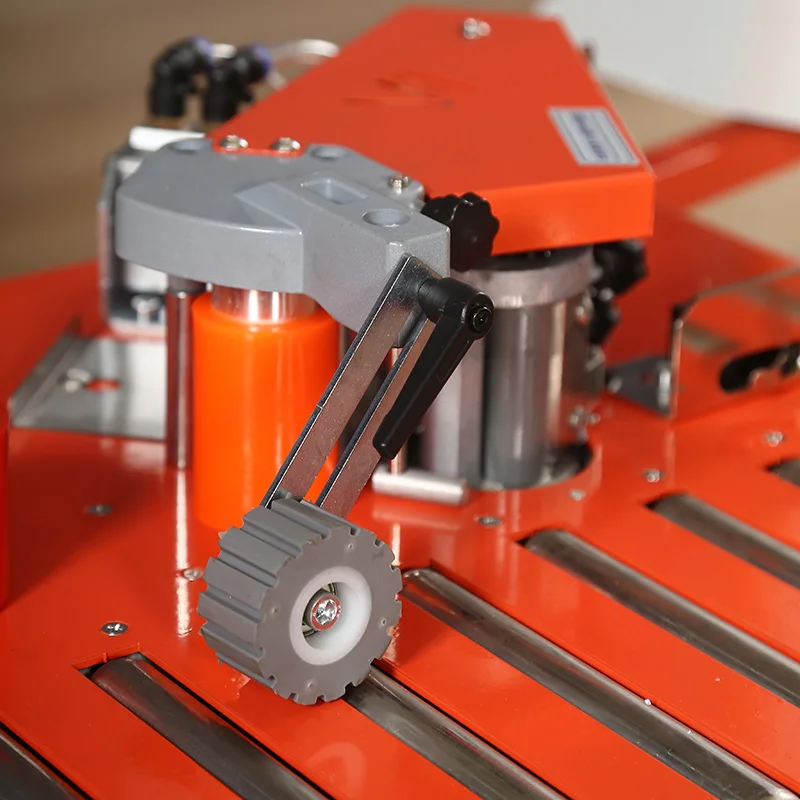
Description
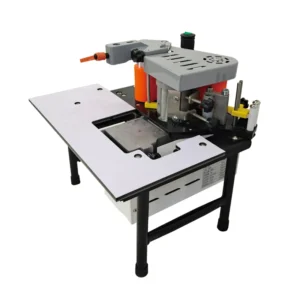
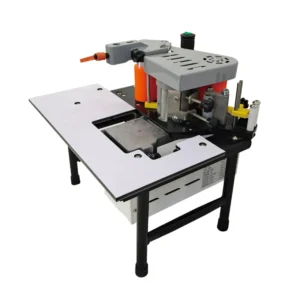
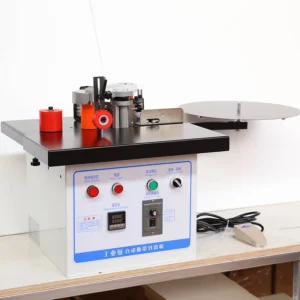
Ready Stock Dispatch — every ZDSF50+ leaves the Ningjin floor with confirmed 220V documentation and pre-shipment test photographs, so small workshops avoid the delay of re-wiring on arrival.
Technical Specifications
| Parameter | Value |
|---|---|
| Model | ZDSF50+ Mini Edge Banding Machine |
| Product Type | Mini Portable Edge Banding Machine |
| Rated Power | 1.2 kW |
| Voltage | 220V (frequency to be confirmed at order) |
| Overall Dimensions | 54 × 54 × 56 cm |
| Net Weight | 28 kg |
| Edge Banding Speed | 0–6 m/min |
| Panel Thickness Range | 10–60 mm |
| Strip Thickness Range | 0.5–1.5 mm |
| Glue Pot Capacity | 1000 ml |
| Glue Heating Time | 5–10 min |
| Air Supply Requirement | 0.4–0.6 MPa |
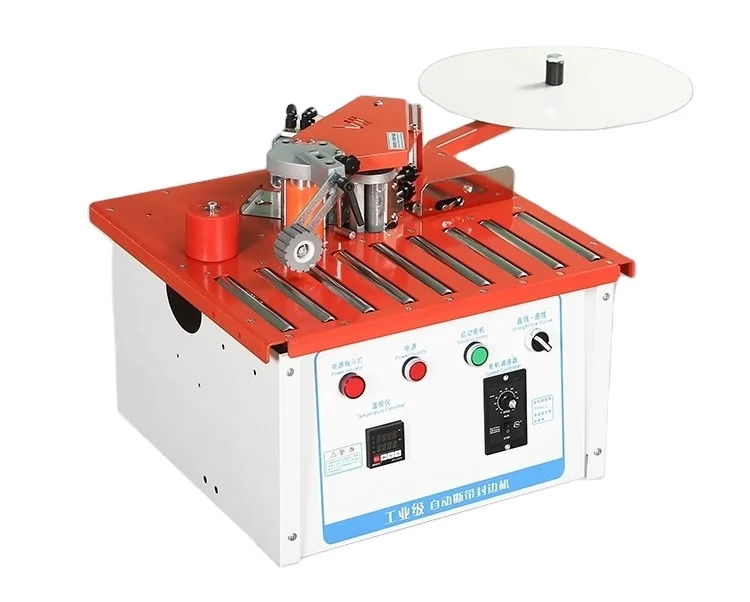
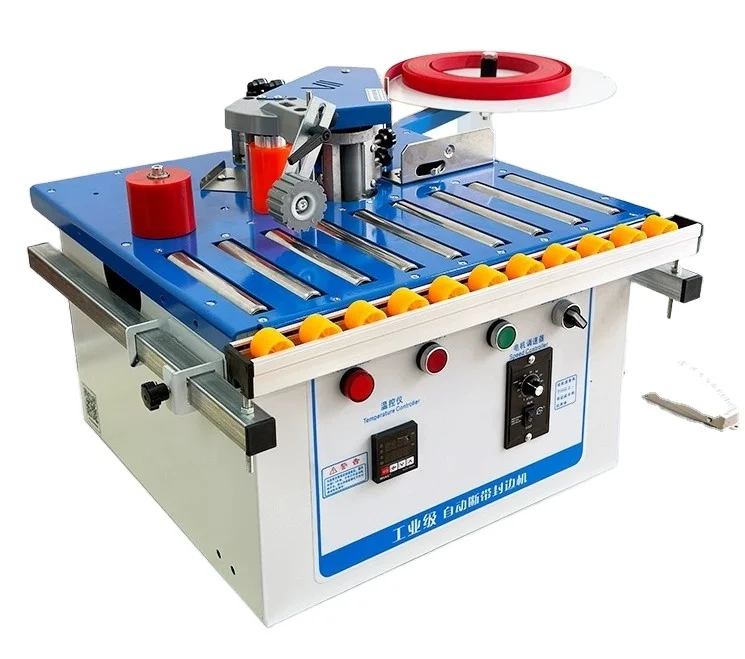
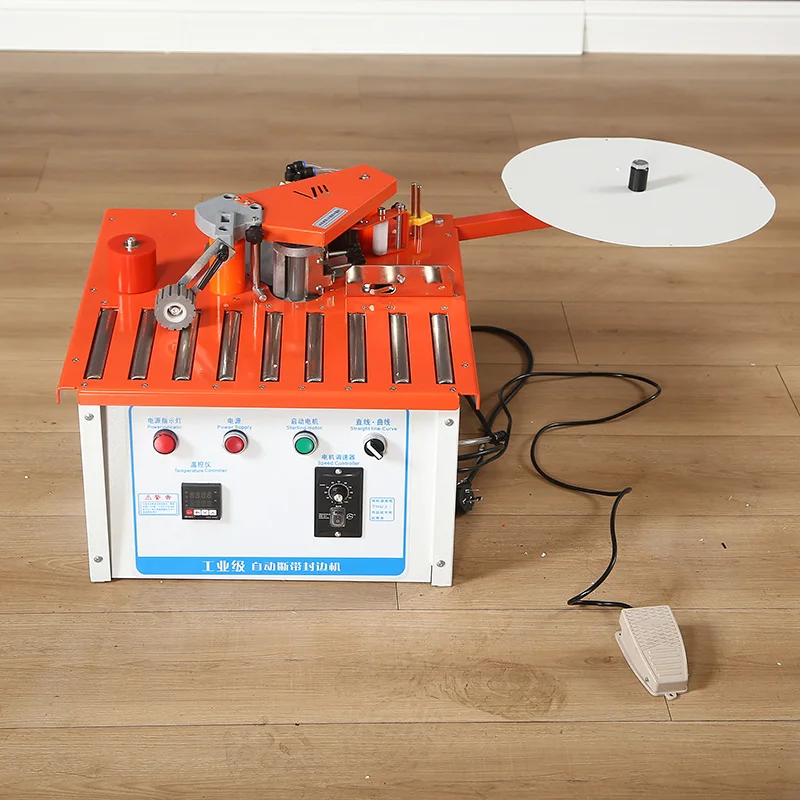
| Control Method | Pneumatic belt breaking with foot switch and travel switch |
| Pressure Roller | Rubber pressing roller with adjustable height |
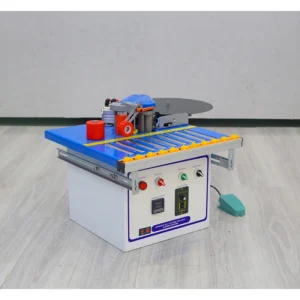
| Function Features | Double-sided gluing, curve and straight line operation, automatic tape breaking |
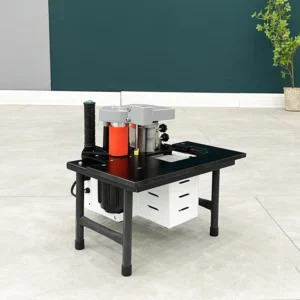
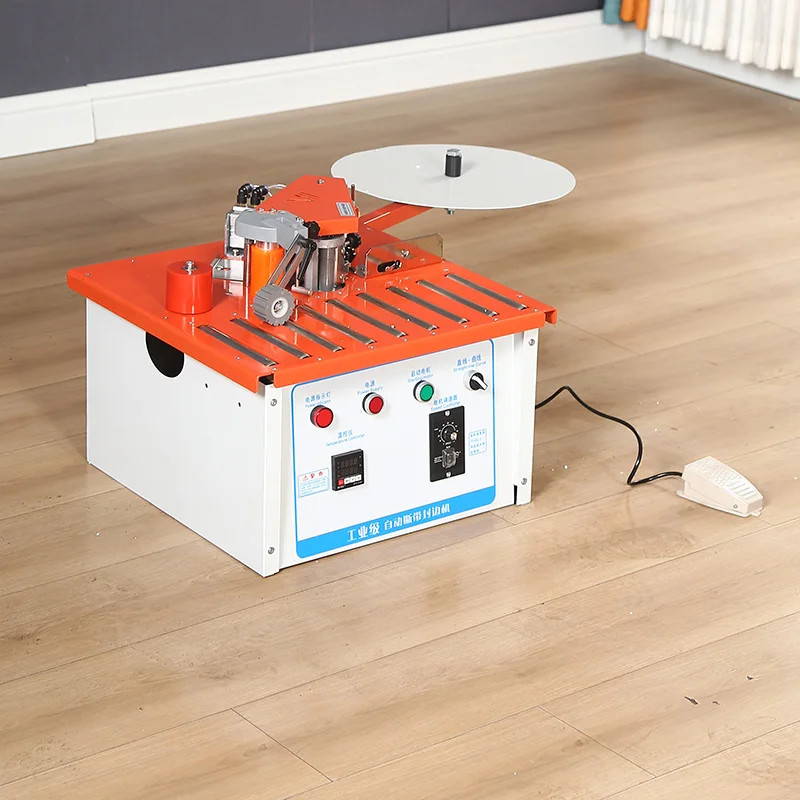
| Assembly State | Portable, single-unit tabletop configuration |
| Warranty | 1 year |
| Standards | CE, ISO 9001 |
Application Suitability
| Application | Material or Output |
|---|---|
| Custom furniture workshop edge sealing | MDF, plywood, particleboard with PVC or veneer banding |
| On-site curved panel repair and finishing | Solid wood panels and shaped cabinet components |
| Small-batch cabinet production | Particleboard and MDF carcass panels |
| Joinery startup transitioning from manual banding | Plywood and blockboard with 0.5–1.5 mm strip |
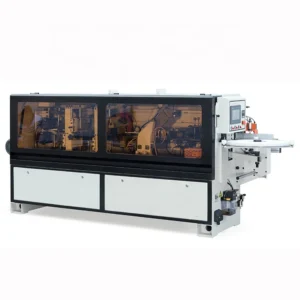
| Secondary station alongside full-line edge bander | Mixed substrate overflow and rework pieces |
Why Voltage Confirmation Must Happen Before Dispatch
Ordering a mini portable edge banding machine in stock without verifying local frequency and plug type turns a fast delivery into a multi-week delay. We confirm voltage and plug configuration against destination country standards before any unit ships.
I once watched a batch of compact banders sit idle in a Southeast Asian workshop for seven days because the plug format did not match the local socket. The customer had single-phase 220V supply, which was correct, but the physical connector was wrong. The machines were technically compatible yet completely unusable until adapters arrived from overseas. Since that shipment, every unit I release goes through a personal voltage and plug check against the destination market before it leaves the loading bay [NEED_CITE: voltage and frequency standards by export market].
Dispatch Speed Without the Usual Gaps
When a workshop needs a mini portable edge banding machine in stock quickly, the typical bottleneck is not production time but documentation and configuration alignment. The ZDSF50+ ships from existing inventory, which means the usual multi-week build cycle does not apply. Single-unit orders are standard here, not an exception that requires special approval.
The real advantage of stocked inventory is that pre-shipment testing happens on the exact unit you receive. There is no substitution of a "similar model" because the specified configuration was unavailable. What you see in the test photographs is what arrives at your dock.
How the Portable Format Changes Workshop Layout
A tabletop edge bander at 28 kg occupies a different role than a stationary line machine. The ZDSF50+ fits beside an existing panel saw or CNC router without requiring dedicated floor space or foundation work. Workshops that previously sent curved panels out for contract edge banding can now handle those pieces in-house on the same day they are cut [NEED_CITE: portable edge banding workflow integration].
The 54 × 54 × 56 cm footprint means the machine moves between workstations on a standard trolley. For joinery shops running mixed straight and curved work, this portability eliminates the material handling time of carrying panels to a fixed machine location.
Reading the Specs Against Your Actual Panel Mix
The 10–60 mm panel thickness range covers standard furniture board through thicker solid wood stock, but the practical sweet spot depends on your typical substrate. MDF and particleboard in the 16–25 mm range run most consistently because the rubber pressure roller maintains even contact across the full strip width. Panels below 12 mm require careful roller height adjustment to prevent the strip from wrapping over the panel edge.
The 0–6 m/min feed speed is operator-controlled, which matters for curve work where you need to slow down around tight radii. The 1000 ml glue pot with four-tube heating reaches working temperature in 5–10 minutes, suitable for intermittent use rather than continuous production shifts. The 0.5–1.5 mm strip range handles PVC and veneer but excludes thicker ABS and solid wood lipping, which require a heavier feed mechanism.
Air supply at 0.4–0.6 MPa drives the pneumatic belt breaking. If your workshop compressor runs multiple tools simultaneously, verify that the volume rating maintains stable pressure at the bander’s connection point. Pressure drops during cutting cycles cause inconsistent break points on the strip [NEED_CITE: pneumatic supply requirements for woodworking machinery].
The Cost of Skipping the Air Supply Check
Workshops that connect a portable edge bander to an undersized compressor discover the problem during the first production run. The pneumatic belt breaking mechanism fires at each panel end, demanding a burst of air that a marginal compressor cannot replenish fast enough. The result is incomplete cuts that leave strip overhang, requiring manual trimming that defeats the purpose of automatic breaking.
Voltage mismatch produces a different failure mode. A machine configured for 50Hz running on 60Hz supply spins the glue pot heater and feed motor faster than designed, accelerating wear on components that were not rated for the higher frequency. The damage accumulates over weeks rather than appearing immediately, making it difficult to trace back to the original specification error.
What Ready Stock Procurement Actually Includes
Stock availability means the ZDSF50+ you order is the unit that ships, with configuration locked at the point of sale rather than adjusted during a build cycle. Voltage and frequency are confirmed against your local supply before dispatch, documented on a verification sheet that travels with the machine.
Pre-shipment testing runs your specified panel thickness and strip material through the machine, with photographs provided before the crate closes. The operation manual ships in the language you confirmed during ordering, not a default language that requires later translation. Spare parts lists and packing photographs arrive before dispatch so your receiving team knows what to expect [NEED_CITE: pre-shipment verification standards for exported machinery].
Engineer-led configuration happens before the order is finalized, not after the machine arrives and does not match your workshop’s electrical infrastructure.
Documentation & Verification
- Voltage confirmation sheet matching destination country frequency and plug type
- Pre-shipment test record with photographs on your specified panel and strip material
- Operation and maintenance manual in agreed language with illustrated adjustment procedures
- Electrical schematic with confirmed voltage and circuit protection ratings
- Spare parts list with part numbers for reorder without machine serial lookup
- Packing photographs showing crate condition and accessory placement before sealing
Installation, Commissioning & Support
- Tabletop placement requires a stable bench rated for at least 40 kg with the machine loaded
- 220V single-phase supply on a dedicated 10A circuit with residual current protection
- Arrives fully assembled; connect air hose to 0.4–0.6 MPa supply and power on for first heat cycle
- First run sets glue pot temperature and pressure roller height against your actual panel thickness
- Foot switch and travel switch adjustment for straight-edge automatic breaking sensitivity
- Daily glue pot cleaning and weekly roller inspection maintain consistent strip adhesion
What to Provide With Your Inquiry
Share your typical panel substrate, thickness range, and the strip material you plan to run so we can confirm the ZDSF50+ covers your workload. Specify your local voltage and frequency along with plug type so the unit ships configured for immediate connection. If you are integrating this machine alongside existing equipment, note the available floor space and whether the compressor capacity can support an additional pneumatic tool.
Frequently Asked Questions
Q: What is the dispatch lead time and can I order a single unit?
A: The ZDSF50+ ships from ready stock, so dispatch follows configuration confirmation and pre-shipment testing rather than a production build cycle. Single-unit orders are standard and do not require a minimum quantity. Typical turnaround from order confirmation to crate release spans a few working days, depending on documentation preparation and testing scheduling.
Q: Is the 220V configuration available for 60Hz markets and how is voltage confirmed?
A: The 220V platform accommodates both 50Hz and 60Hz markets, with frequency confirmed during the ordering process. Every unit ships with a voltage verification sheet documenting the confirmed specification against your destination country requirements. This document travels with the machine and serves as the reference point for your local electrician during connection.
Q: Which edge banding materials and panel substrates does the ZDSF50+ handle?
A: The machine processes PVC and veneer edge banding within the 0.5–1.5 mm strip thickness range on MDF, plywood, particleboard, and solid wood panels between 10 and 60 mm thick. The double-sided gluing system and adjustable transport bayonet accommodate these materials without tooling changes. Thicker ABS strips and solid wood lipping fall outside the machine’s feed mechanism capacity.
Q: Do I need an air compressor and what specification is required?
A: Yes, the pneumatic belt breaking system requires compressed air at 0.4–0.6 MPa. Your compressor should maintain stable pressure at this range while supplying other workshop tools simultaneously. Volume capacity matters as much as pressure rating because each automatic break cycle draws a burst of air that an undersized receiver cannot replenish quickly enough.
Q: What documentation and support materials are included in the shipment?
A: Each shipment includes the operation manual in your confirmed language, voltage verification sheet, pre-shipment test record with photographs, spare parts list, electrical schematic, and customs documentation support. Packing photographs are provided before the crate is sealed so your receiving team can verify contents on arrival against the documented configuration.