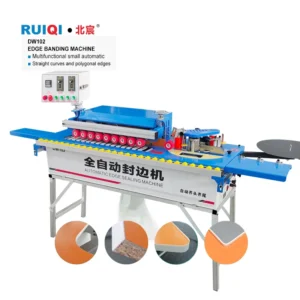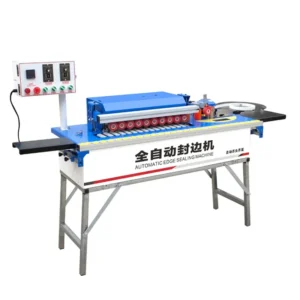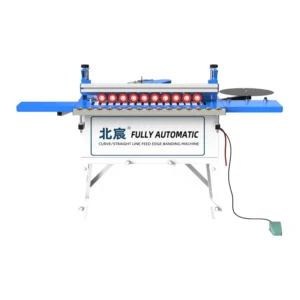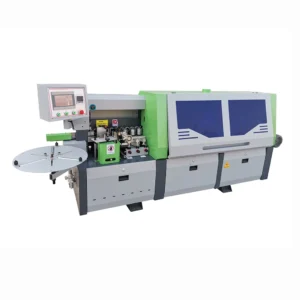
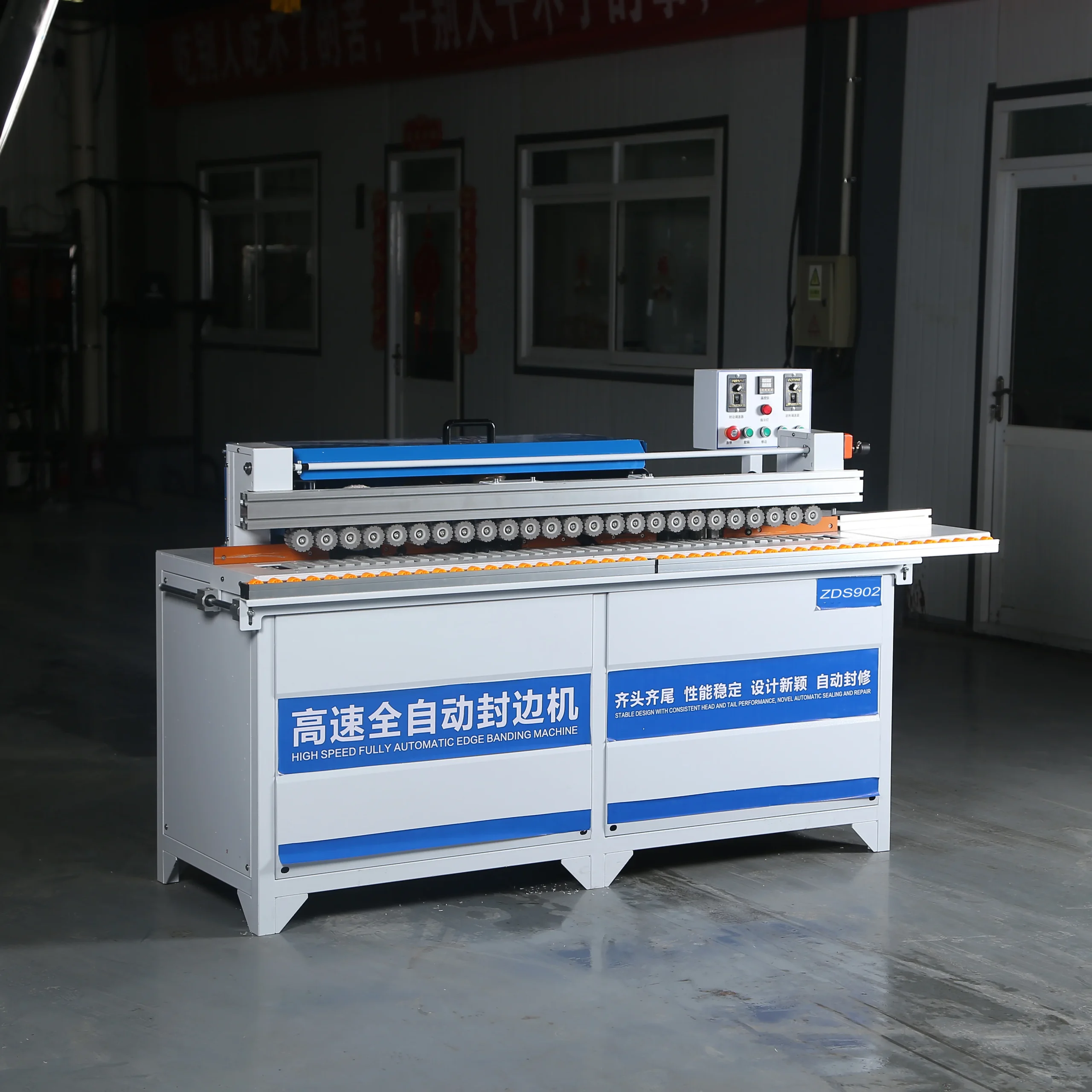
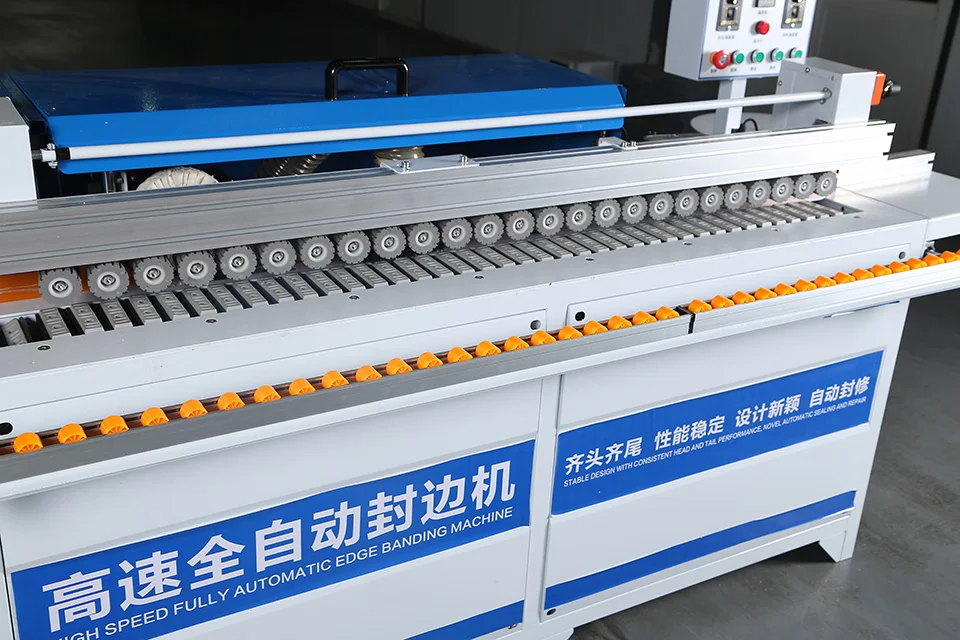
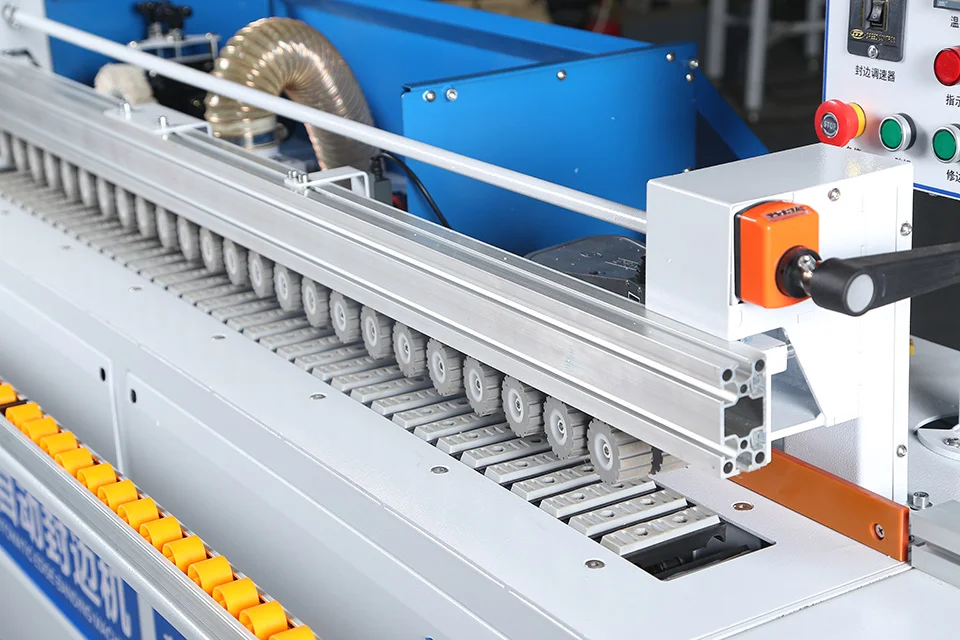


Description
Fast Dispatch on Voltage-Verified Units — every automatic edge banding machine in stock ships only after matching your workshop’s local supply, avoiding the dead-on-arrival surprise of a 440V unit hitting a 208V panel.
Technical Specifications
| Parameter | Value |
|---|---|
| Product Type | Automatic Edge Banding Machine |
| Voltage | 220V (configurable from 110V to 440V before dispatch) |
| Total Power | 4200W |
| Overall Dimensions | 207×60×122 cm |
| Net Weight | 245 kg |
| Edge Banding Type | Linear Edge Banding Machine |
| Edge Band Height Range | 0–35 mm |
| Edge Band Thickness Range | 0.5–2.5 mm |
| Glue Pot Capacity | 4000 ml |
| Glue Pot Feature | Intelligent temperature control, double-sided gluing |
| Trimming Stations | Up and down high-speed trimming motors |
| Polishing Stations | Up and down two polishing motors |
| Pressure System | Integrated pressure beam with double rows of pressure wheels |
| Conveyor Belt Material | Silicone |
| Edge Strip Cutting | Pneumatically controlled |
| Pressure Beam Adjustment | Manual handle for arbitrary board height |
| Feed Speed | (basis to be confirmed) |
| Panel Thickness Range | (basis to be confirmed) |
| Control System | (basis to be confirmed) |
| Warranty | 1 year |
| Assembly State | Requires assembly; manual and video teaching provided |
| Delivery Time | 25–30 days (basis to be confirmed) |
Application Suitability
| Application | Material or Output |
|---|---|
| Custom furniture and cabinet edge banding | MDF, particleboard, and plywood panels with PVC or veneer strips |
| Small to mid-size woodworking workshops | Linear edge banding for straight-edge sealing, trimming, and polishing |
| Joinery operations filling an immediate capacity gap | Single-machine automated solution replacing manual banding workflows |
Why the Voltage Question Should Come Before the Price
Confirming your workshop voltage before placing an order prevents a multi-week standstill that no amount of discount can offset.
I have watched buyers commit to an Automatic Edge Banding Machine in stock only to discover, three weeks into shipping, that their workshop runs on a different voltage and frequency than the unit was wired for. The machine sits under plastic wrap while an electrician sources a step-up transformer. Workers stand around. Orders slip past deadlines. The problem is never the machine itself — it is a two-minute conversation that did not happen before the invoice was signed [NEED_CITE: voltage and frequency standards by export market].
Stock Availability Without the Guesswork
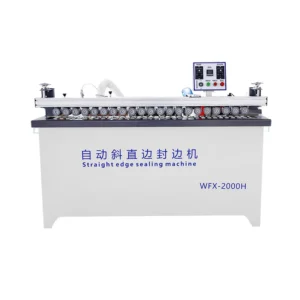
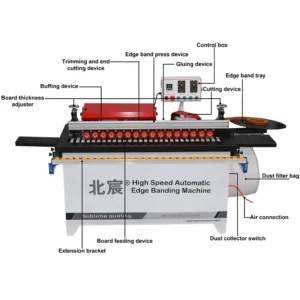
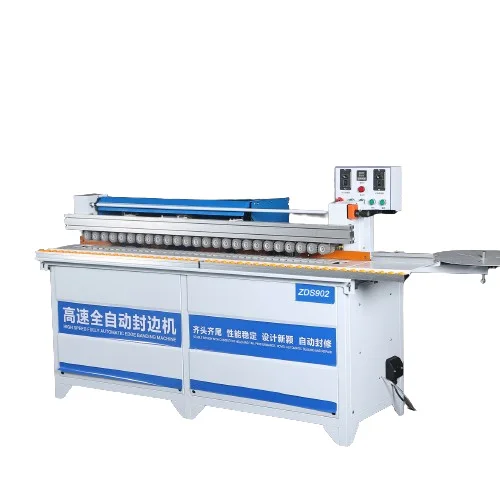
When a cabinet shop needs an edge bander fast, the lead time conversation matters as much as the specification sheet. This automatic edge banding machine in stock configuration covers the core functions — gluing, end cutting, trimming, and polishing — within a single 207-centimeter frame. Shops transitioning from manual banding or replacing a failed unit can place a single-machine order without waiting for a full production-line build cycle. The 4200W total power draw keeps electrical demands within reach of smaller workshop panels.
Shipping Readiness Starts With Verification
Dispatch speed means little if the unit arrives mismatched to local infrastructure. Before any machine leaves the floor, the buyer’s actual voltage and frequency are confirmed against the unit’s wiring. Control panel language is set to match the operator who will run it daily. This verification step is built into the ordering workflow rather than treated as an afterthought, because a machine that cannot start on day one is not a fast-delivery solution — it is a delay in a crate [NEED_CITE: CE machinery directive requirements for industrial equipment].
Reading the Specs That Actually Matter on the Shop Floor
The 4000 ml glue pot with intelligent temperature control and double-sided gluing means adhesive reaches both the panel edge and the banding strip simultaneously, which is what produces a consistent bond line across MDF and particleboard without starved spots or squeeze-out. The up and down high-speed trimming motors remove overhang in one pass, so the operator is not flipping boards or running them through a second station. Pneumatic edge strip cutting delivers a clean end cut each cycle, removing the ragged tails that otherwise require hand trimming before polishing. The silicone conveyor belt grips coated and raw panel surfaces without marring the face, while the double-row pressure wheels on the integrated beam keep the board tracking straight through each station — critical when running narrow cabinet sides that tend to drift on lighter machines.
The Cost of Skipping Configuration Alignment
A workshop that orders a machine without confirming panel thickness range against its actual stock may find the pressure beam cannot accommodate its thickest cabinet panels, forcing a return to hand-finishing on those runs. Similarly, a unit wired for the wrong frequency will run its motors outside their designed speed range, producing chatter marks on trimmed edges that show up under lacquer. These mismatches are rarely caught in the product photograph — they surface only when the first batch of boards fails assembly or finish inspection [NEED_CITE: typical industrial equipment commissioning failure causes].
Why Procurement Teams Source This Machine Here
In-house manufacturing with patented cutting mechanisms means tolerance claims are backed by verified production records, not catalog numbers borrowed from a trading company. The full product family — from entry-level to full-function — allows a workshop to scale its edge banding capacity later without switching suppliers or retraining operators on a different control logic. Voltage and language customization are handled as standard pre-dispatch steps, not as expensive add-on line items. Four-stage quality control with pre-shipment verification ensures every automatic edge banding machine in stock is tested against actual board stock before crating. Engineer-led configuration recommendations arrive within 24 hours of inquiry, so buyers are not waiting through extended quote cycles while production schedules tighten.
Documentation & Verification
- Factory test record on buyer-supplied panel thickness and edge banding material before dispatch
- Electrical schematic with confirmed voltage and frequency matching local workshop supply
- Operation and maintenance manual provided in the operator’s working language
- CE declaration of conformity and ISO 9001 certificate included with shipment documentation
- Packing photographs and spare parts list with consumable reorder codes
Installation, Commissioning & Support
- 207×60×122 cm footprint requires a level floor section with clearance on both sides for board infeed and outfeed
- 4200W total power draw needs a dedicated 220V circuit with appropriate breaker rating at the workshop panel
- Unit ships partially assembled; video-guided setup covers beam alignment and conveyor belt tensioning
- First-run commissioning includes glue pot temperature calibration for the specific PVC or veneer banding in use
- Pneumatic cutting system requires connection to workshop compressed air supply at specified pressure
- Spare trimming blades and polishing wheels ship with the unit for initial operational coverage
What to Include in Your Inquiry
To match the right stock unit to your workshop, share your local voltage and frequency, the panel materials and thicknesses you run most often, and the edge banding materials you use — PVC, veneer, or both. If you have existing upstream saws or downstream boring stations, note their feed heights so the edge bander integrates without a bottleneck. Mention your preferred control panel language so it is configured before the unit leaves the factory.
Frequently Asked Questions
Q: Is this edge banding machine in stock, and what is the dispatch lead time for a single unit?
A: Stock availability varies by configuration. Once voltage, language, and specification requirements are confirmed, dispatch typically follows within 25 to 30 days for a single unit. Pre-shipment testing and documentation preparation are included within that window. Exact timing is confirmed at the point of order based on current stock and your customization requirements.
Q: What voltage options are available, and how is local voltage confirmed before shipping?
A: The machine is configurable from 110V to 440V. Before the order is finalized, you provide a photo of your workshop electrical panel nameplate showing voltage and frequency. The unit is then wired and tested at that exact specification before crating, so it connects directly to your supply without a transformer.
Q: Can you arrange door-to-door shipping, and what are the freight options?
A: Door-to-door shipping is available for single-unit orders. Sea freight suits buyers with flexible timelines and port access, while air freight is offered when production schedules demand faster arrival. Shipping quotations include crating, documentation, and customs paperwork support, provided upfront rather than added at the loading stage.
Q: What assembly is required on arrival, and is setup guidance provided?
A: The machine ships partially assembled to fit standard crating dimensions. On arrival, the buyer reconnects the pressure beam, conveyor belt, and pneumatic lines. A user manual and video-guided setup walkthrough cover each step, and remote support is available during initial commissioning to resolve alignment or calibration questions.