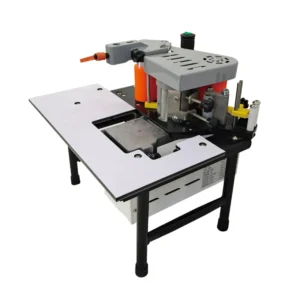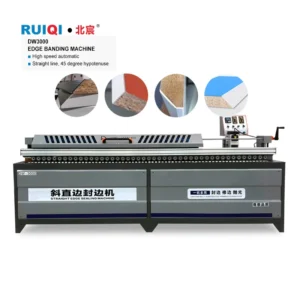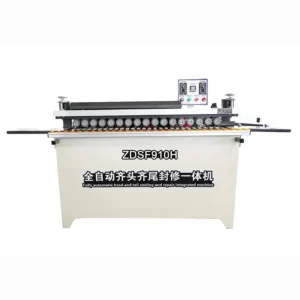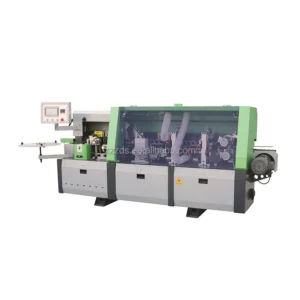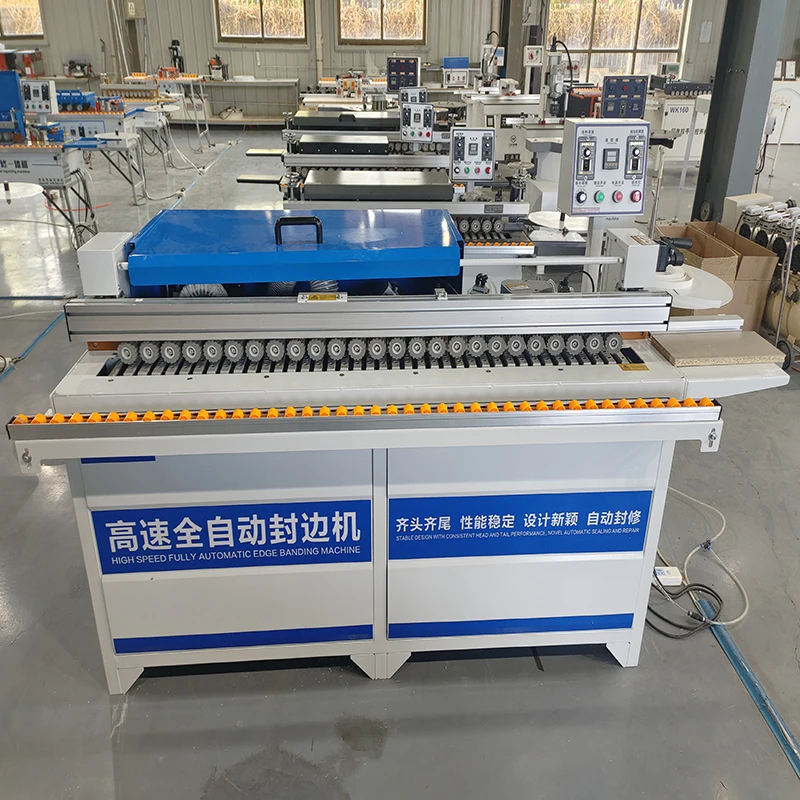
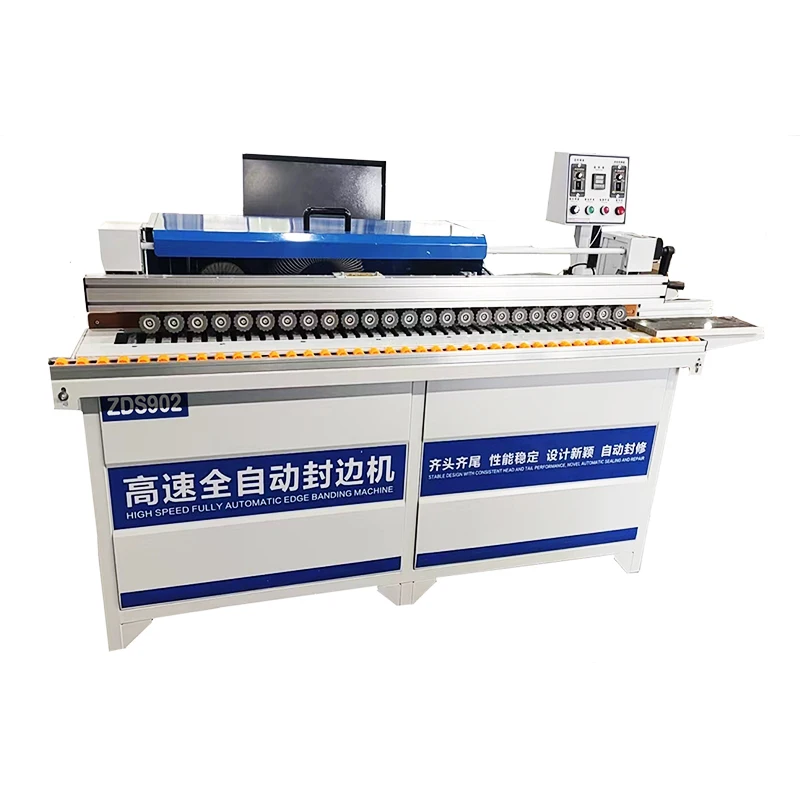
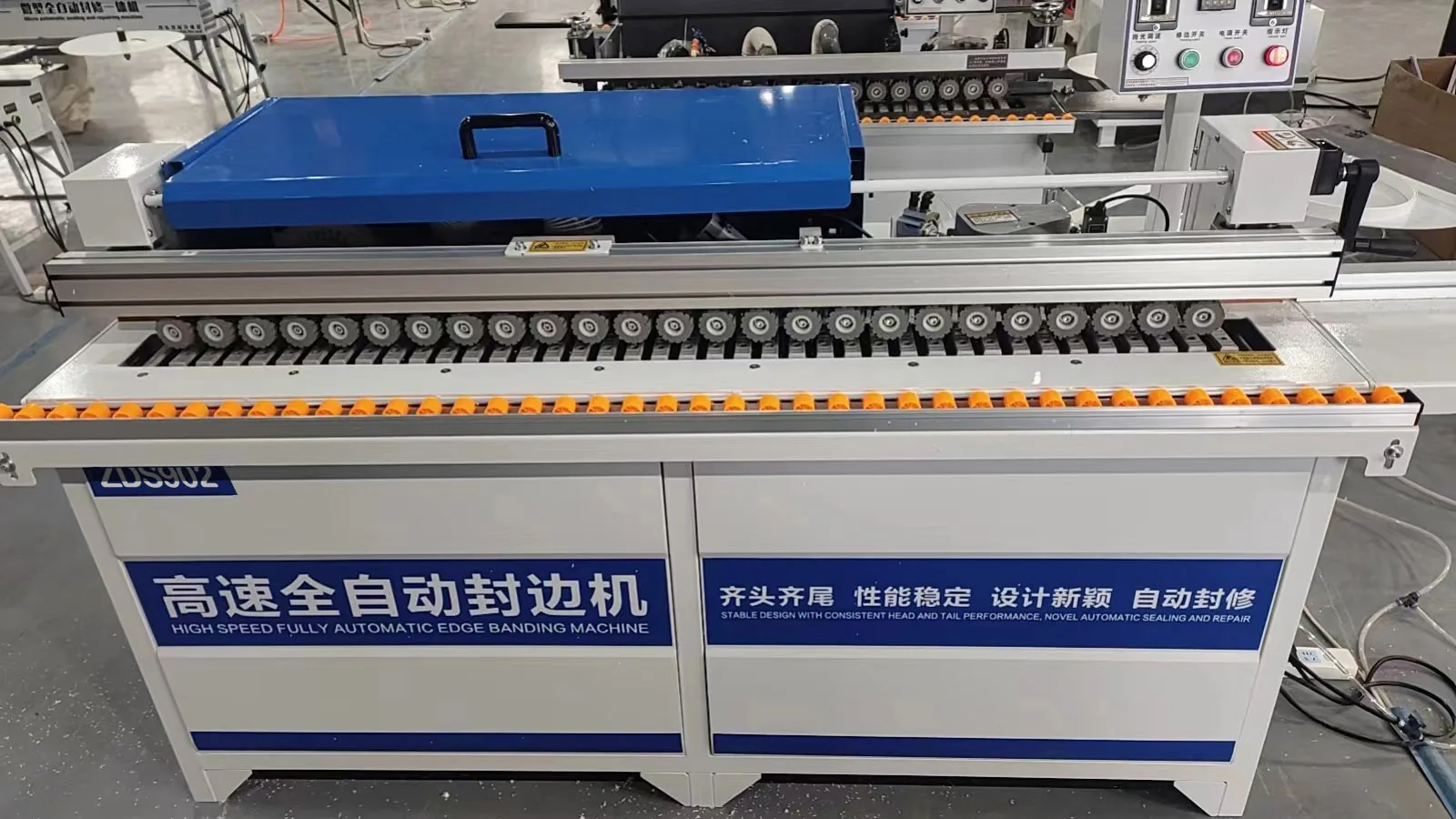
Description
Ready-to-Dispatch Configuration — Stocked automatic edge banding units ship with voltage and frequency verified against your facility’s supply before the crate closes.
Technical Specifications
| Parameter | Value |
|---|---|
| Product Type | Automatic Edge Banding Machine |
| Voltage | 220V (confirm 50Hz or 60Hz before dispatch) |
| Total Power | 4200W |
| Overall Dimensions (L×W×H) | 207×60×122 cm |
| Net Weight | 245KG |
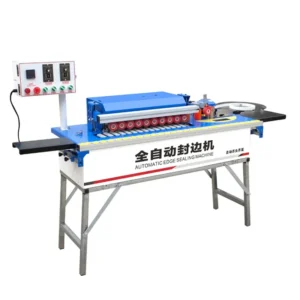
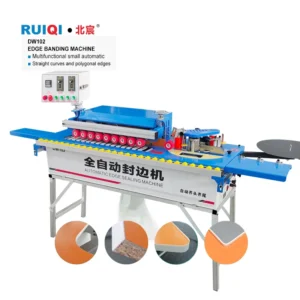
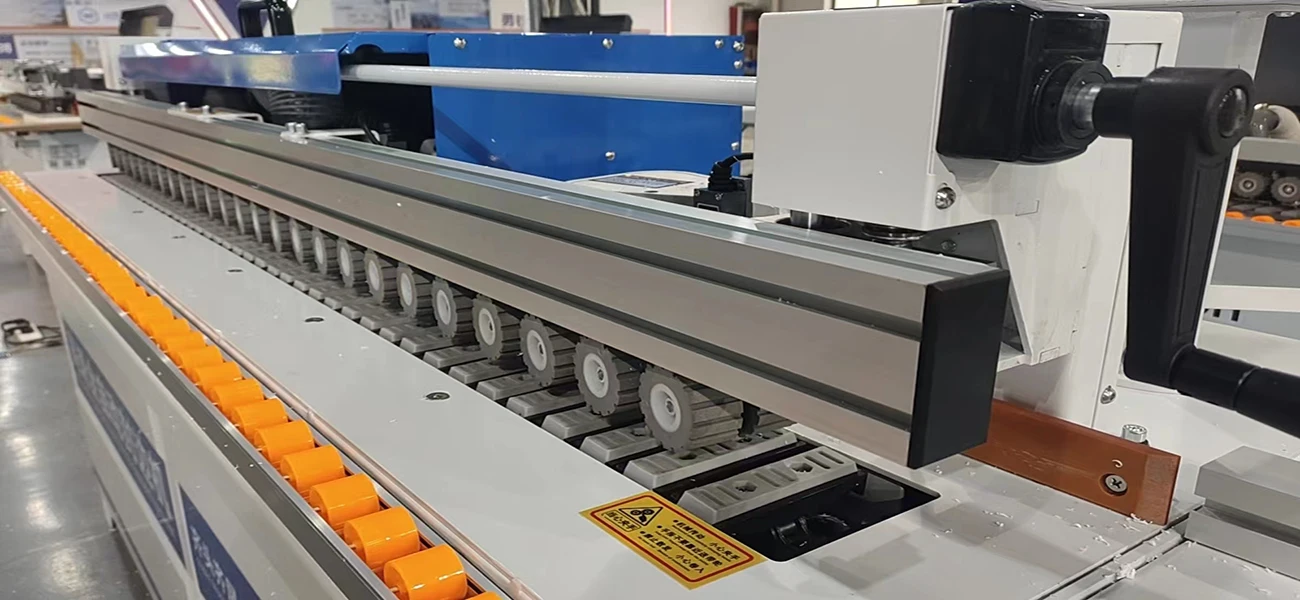
| Edge Banding Type | Linear Edge Banding Machine |
| Edge Band Height Range | 0–35mm |
| Edge Band Thickness Range | 0.5–2.5mm |
| Glue Pot Capacity | 4000ml |
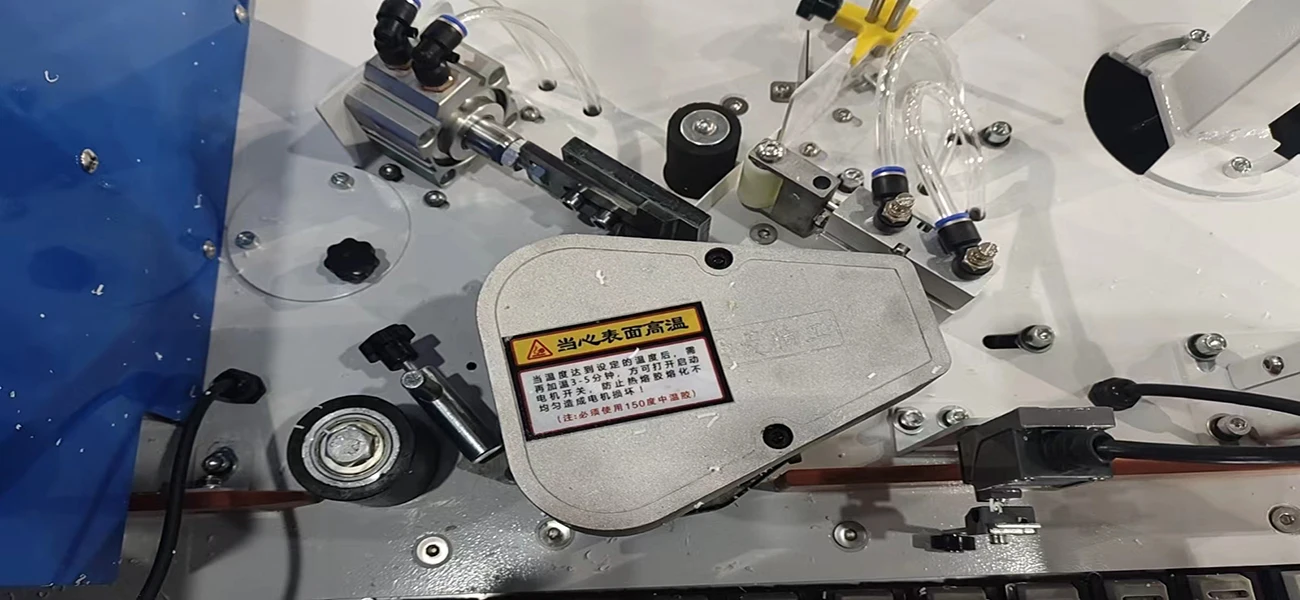
| Gluing System | Double-sided gluing with intelligent temperature control |
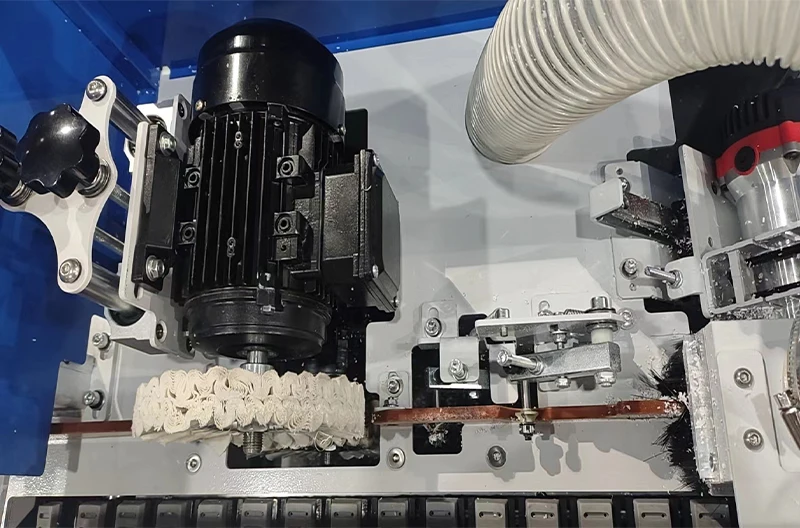
| Trimming and Finishing | Up-and-down trimming, up-and-down polishing |
| Edge Strip Cutting | Pneumatically controlled cutting device |
| Air Supply Requirement | Pneumatic (pressure/CFM to be confirmed) |
| Assembly State | Requires partial assembly (KD packing for some components) |
| Warranty | 1 year |
Application Suitability
| Application | Material or Output |
|---|---|
| Custom cabinet door edge finishing | Melamine-faced particleboard and MDF |
| Small-batch wardrobe panel banding | Plywood panels with PVC or veneer edge banding |
| Joinery workshop semi-automated production | Wood-based panels requiring linear edge treatment |
| Furniture component edge sealing | Laminated substrates up to 35mm band height |
Why the Voltage Question Must Precede the Order
Confirming your local supply before dispatch prevents a machine sitting idle for weeks awaiting a transformer.
I have watched a fully functional automatic edge banding machine in stock sit in a German cabinet shop for three weeks because the unit arrived wired for 220V while the workshop ran on 400V three-phase. The machine was mechanically sound, the edge quality would have been excellent, but none of that mattered until an electrician retrofitted the supply. That delay cost the shop far more than a simple pre-shipment checklist would have. [NEED_CITE: voltage and frequency standards by export market]
When sourcing an automatic edge banding machine in stock from overseas, the voltage and frequency confirmation is the single most important line on the purchase order. A unit configured for 50Hz running on a 60Hz supply will spin motors faster than rated, altering feed behavior and trimming accuracy. Get this wrong and the machine is not just underperforming — it is potentially damaging itself during every shift.
Stocked Units Mean Your Workshop Starts Producing This Month
Lead times on custom-built woodworking machinery can stretch well beyond what a small shop can absorb when orders are backing up. This automatic edge banding machine in stock is configured and tested at the warehouse, so dispatch follows specification confirmation rather than a multi-week build cycle. For a joinery workshop transitioning from manual edge finishing, that difference means panels are leaving the shop with machine-finished edges before the month ends.
Single-Unit Ordering Without the Minimum-Order Headache
Distributors and trading companies often require container-load commitments that make no sense for a workshop buying its first automated edge bander. This unit supports single-unit ordering with shipping options quoted upfront, so a small custom furniture maker can add edge banding capacity without committing to inventory they cannot use. The ordering process stays simple: confirm your voltage, agree on the specification sheet, and the unit ships.
What the Glue Pot and Trimming Stations Actually Mean for Your Edges
The 4000ml glue pot capacity directly reduces how often an operator stops production to refill adhesive during a batch run. For a small shop running fifty cabinet doors in a morning, a smaller pot would mean at least one mid-batch interruption. The double-sided gluing system applies adhesive to both the panel edge and the banding material simultaneously, which improves bond consistency on melamine surfaces where single-sided application sometimes leaves visible glue lines. [NEED_CITE: edge adhesion requirements for melamine-faced substrates]
Intelligent temperature control maintains the glue within its working range across varying ambient conditions — important when a workshop in a cold climate starts production on a winter morning. The up-and-down trimming stations remove excess banding from both faces of the panel in a single pass, while the polishing stations smooth the trimmed edge. The pneumatically controlled edge strip cutting device handles the band cutoff without requiring the operator to manually position a blade, reducing variation between panels.
The Cost of Skipping the Specification Conversation
A workshop that orders an edge bander based on price alone often discovers incompatibilities after the machine arrives. Feed height mismatches with existing table saws or panel sizing equipment mean operators are manually lifting boards onto the feed table, introducing inconsistency and fatigue. An automatic edge banding machine in stock that was never checked against your actual panel thickness range will struggle with boards outside its design envelope, producing chipped edges or incomplete trimming that shows up only during assembly. [NEED_CITE: common edge banding defects from mismatched panel specifications]
Control panels printed in a language the operator cannot read stall commissioning entirely — the machine is physically installed but functionally useless until someone translates the interface. These are not manufacturing defects; they are configuration oversights that a structured pre-order checklist eliminates.
Why This Sourcing Channel Works for Immediate Needs
Voltage and specification confirmation is documented in writing before dispatch, so there is a signed record matching your facility’s electrical supply to the shipped unit. Pre-shipment test records and packing photographs are provided before the crate leaves the warehouse, giving you visibility into the machine’s condition at the point of loading. The operation and maintenance manual is supplied in your agreed language rather than a default that may not match your operators. [NEED_CITE: CE machinery directive requirements for industrial equipment]
A spare parts list ships with the machine, enabling immediate consumable reordering without waiting for a follow-up inquiry. The four-stage quality verification process — covering incoming materials, in-process assembly, finished product inspection, and pre-shipment testing — applies to stocked units with the same rigor as custom builds.
Documentation & Verification
- Voltage and frequency confirmation document matched to your facility supply before dispatch
- Factory test record showing edge banding performance on your specified panel material
- Packing photographs documenting machine condition at point of crate closure
- Electrical schematic with confirmed voltage and wiring configuration for local electrician reference
- Spare parts list with part numbers for immediate consumable reordering
Installation, Commissioning & Support
- Requires a dedicated 220V circuit capable of sustaining the 4200W total power draw continuously
- Floor space of approximately 207×60cm with clearance for panel infeed and outfeed on both sides
- Partial assembly required on arrival due to KD packing of certain components
- Pneumatic line connection needed for the edge strip cutting device — confirm compressor capacity beforehand
- First-run parameter setting for glue temperature and trimming depth based on your specific banding material
- Operator training covers intelligent temperature control adjustment and up-and-down polishing station maintenance
What We Need to Quote Your Configuration
To move from inquiry to dispatch, provide your local voltage and frequency, the panel materials and edge banding types you process most often, and your available floor space for the machine footprint and material flow. If your workshop runs compressed air for other equipment, confirm the available pressure and flow rate so the pneumatic cutting device can be verified against your supply. Let us also know the preferred language for the control panel and operation manual.
Frequently Asked Questions
Q: What voltage options are available, and is my local supply confirmed before shipping?
A: The standard configuration is 220V, but frequency must be confirmed as either 50Hz or 60Hz depending on your region. Before dispatch, a voltage checklist is signed off matching your facility’s documented electrical supply to the machine configuration. This prevents the situation where a machine arrives and cannot be powered on without external transformer equipment.
Q: How quickly can this machine be dispatched from stock?
A: As a stocked unit, dispatch follows specification confirmation and the pre-shipment verification process rather than a production build cycle. The lead time depends on confirming your voltage requirements and completing the factory test record. Shipping timelines then follow your chosen freight method and destination port.
Q: Does it arrive fully assembled, or do I need to set it up myself?
A: Some components are KD-packed for shipping protection, meaning partial assembly is required upon arrival. The operation manual included with the machine covers the assembly steps. The overall footprint is 207×60×122cm once fully assembled, and you will need to connect the pneumatic line for the edge strip cutting device.
Q: What spare parts come in the box, and how do I reorder consumables?
A: A spare parts list ships with the machine, identifying wear items and consumables with their part numbers. This allows you to reorder glue, trimming blades, and polishing pads directly without a separate inquiry. Maintaining a small stock of high-wear parts locally reduces downtime when routine replacements are needed.
Q: Can I place a single-unit order, or is there a minimum order quantity?
A: Single-unit orders are standard for this stocked machine. There is no minimum order quantity requirement, and shipping options are quoted upfront based on your destination. This makes it practical for a small workshop adding its first automatic edge banding machine in stock without committing to multiple units.