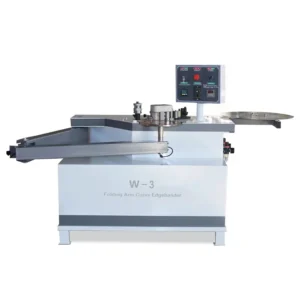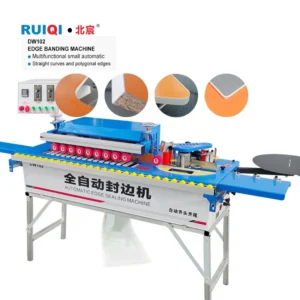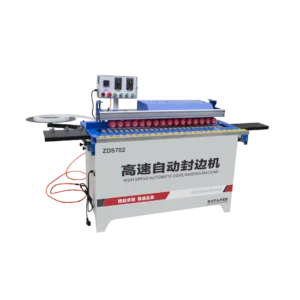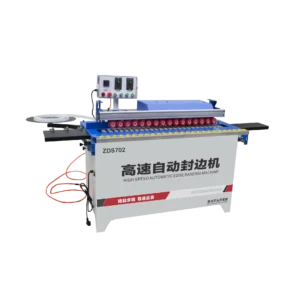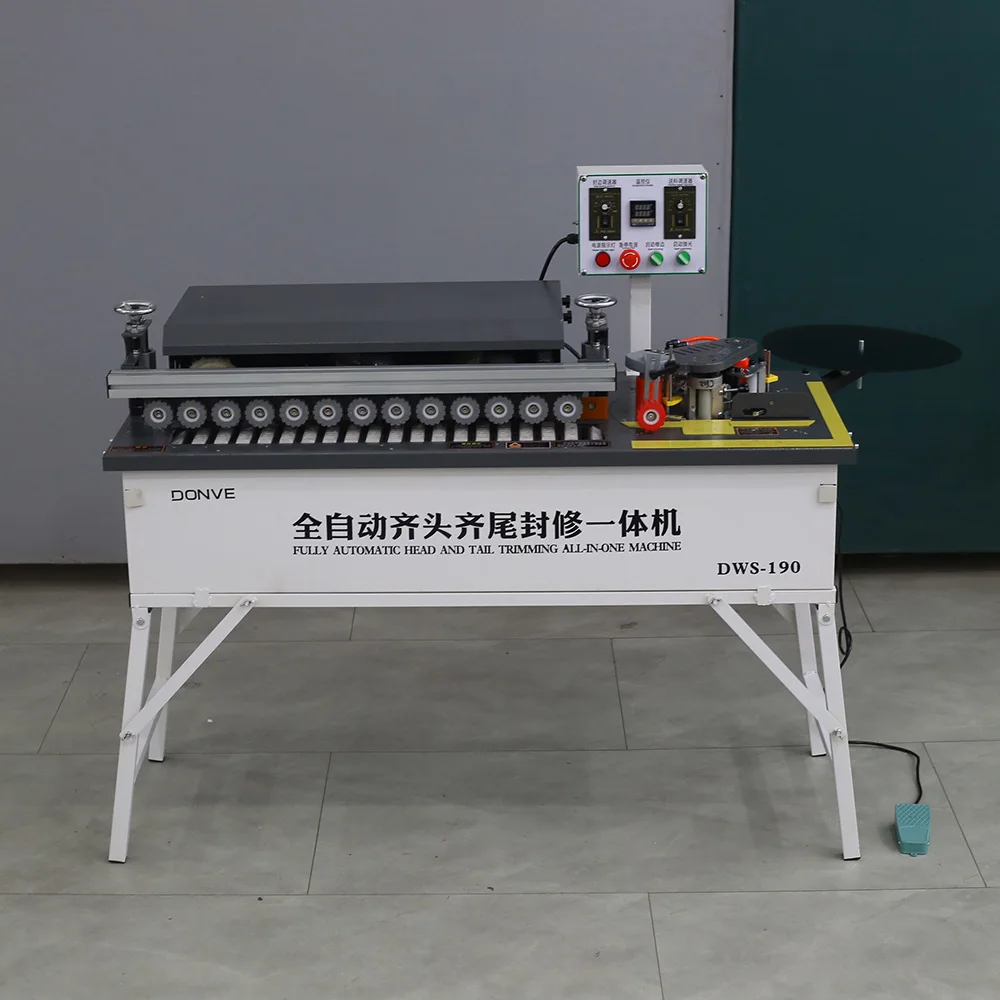
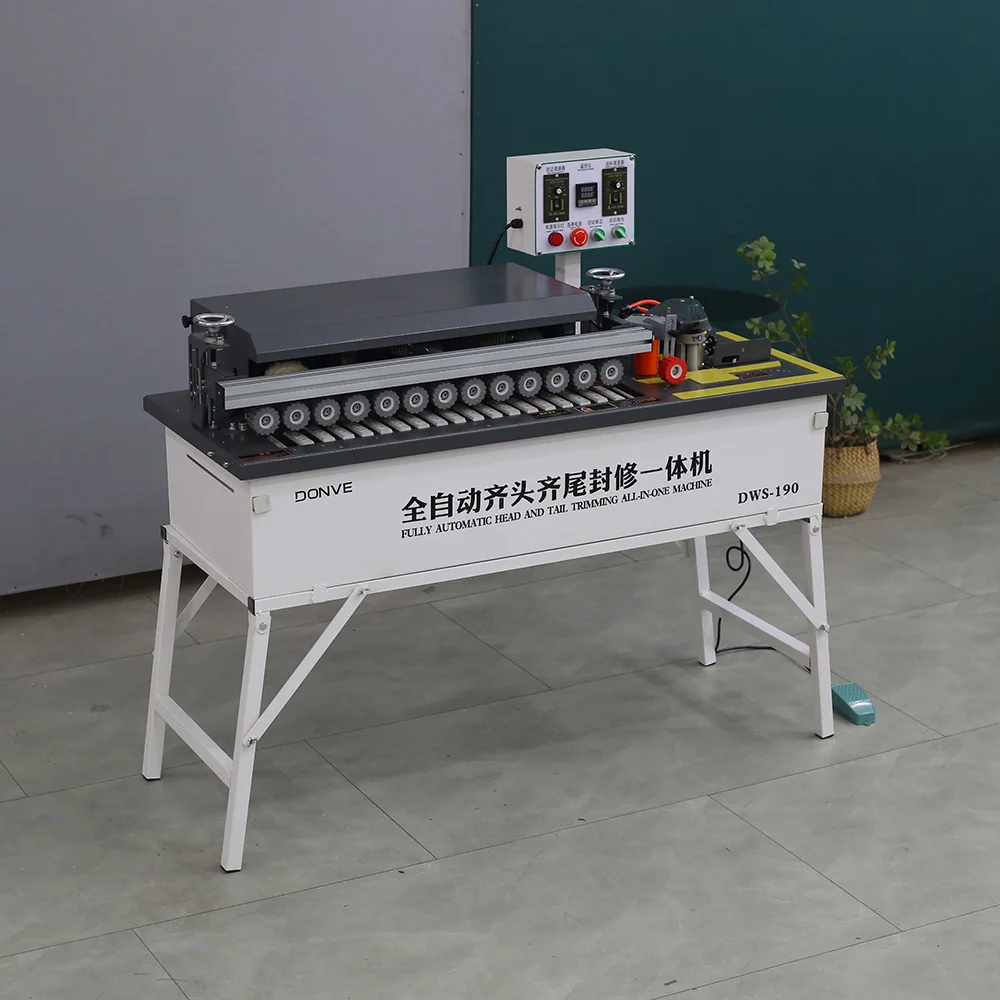
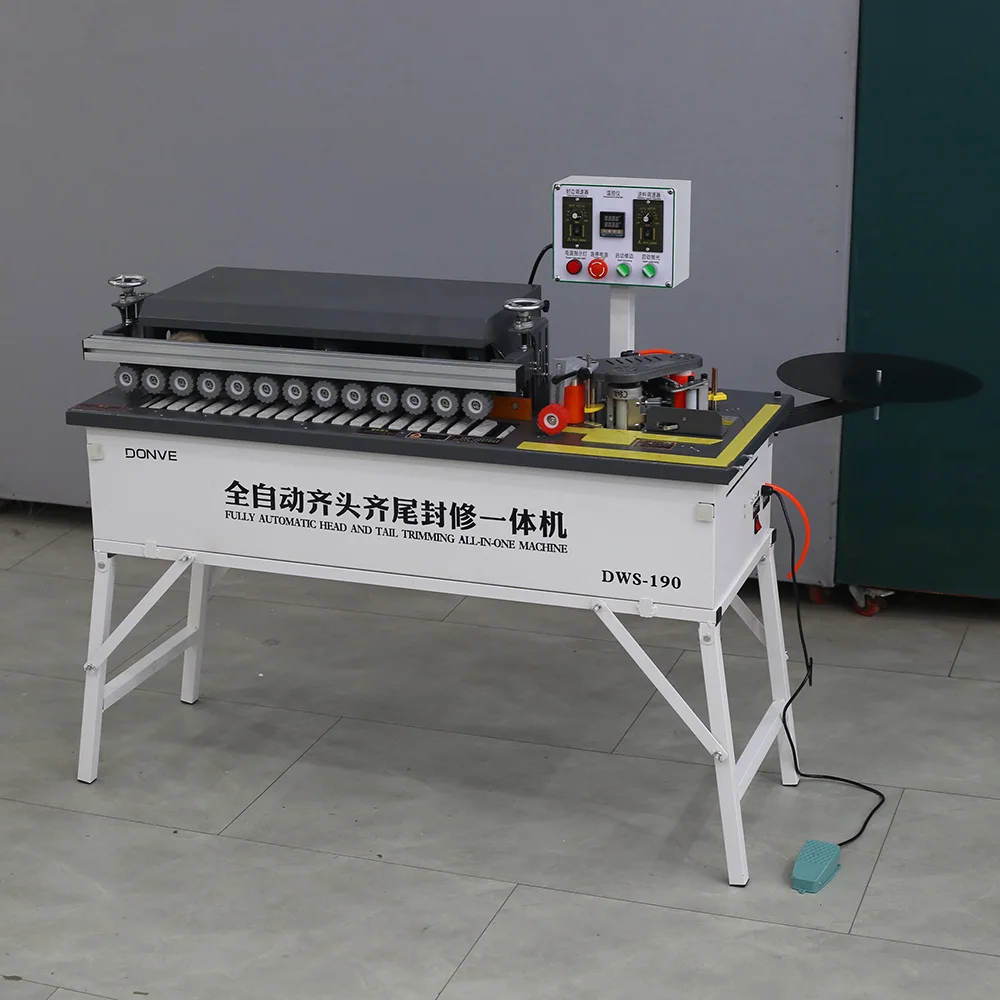
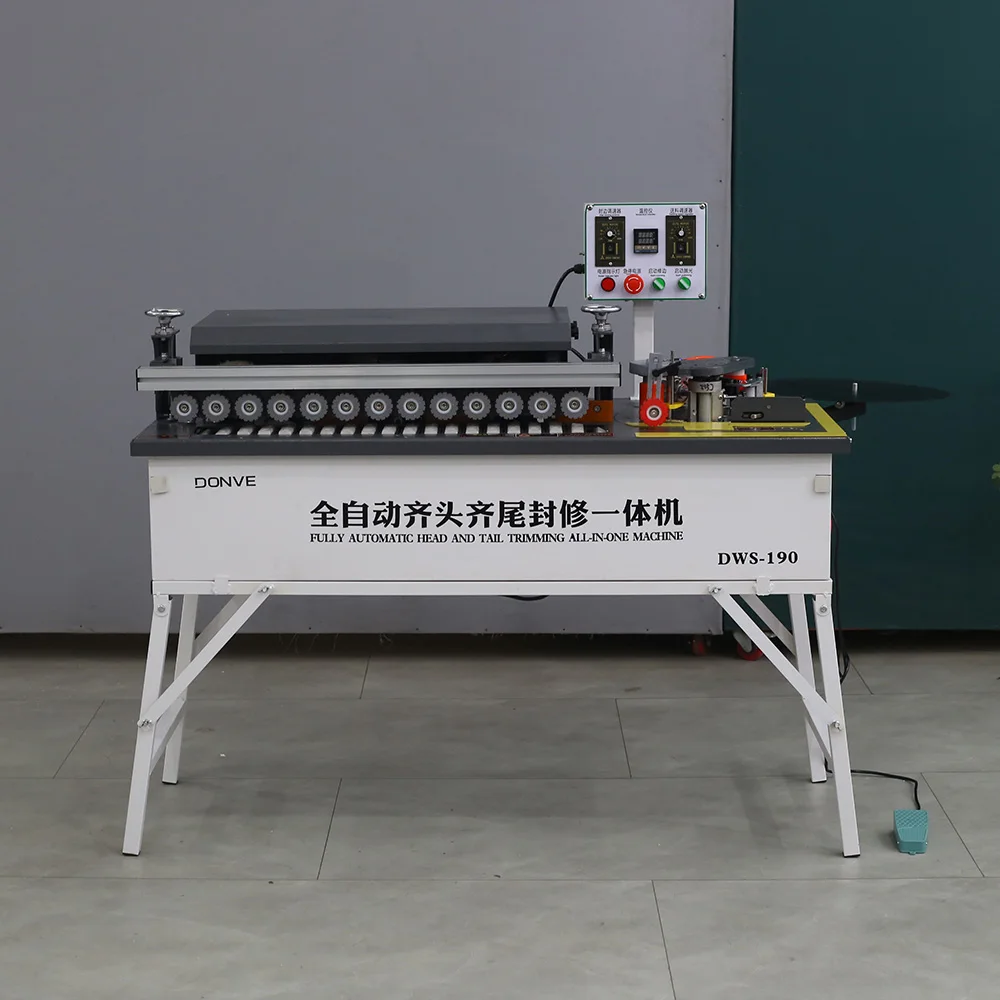
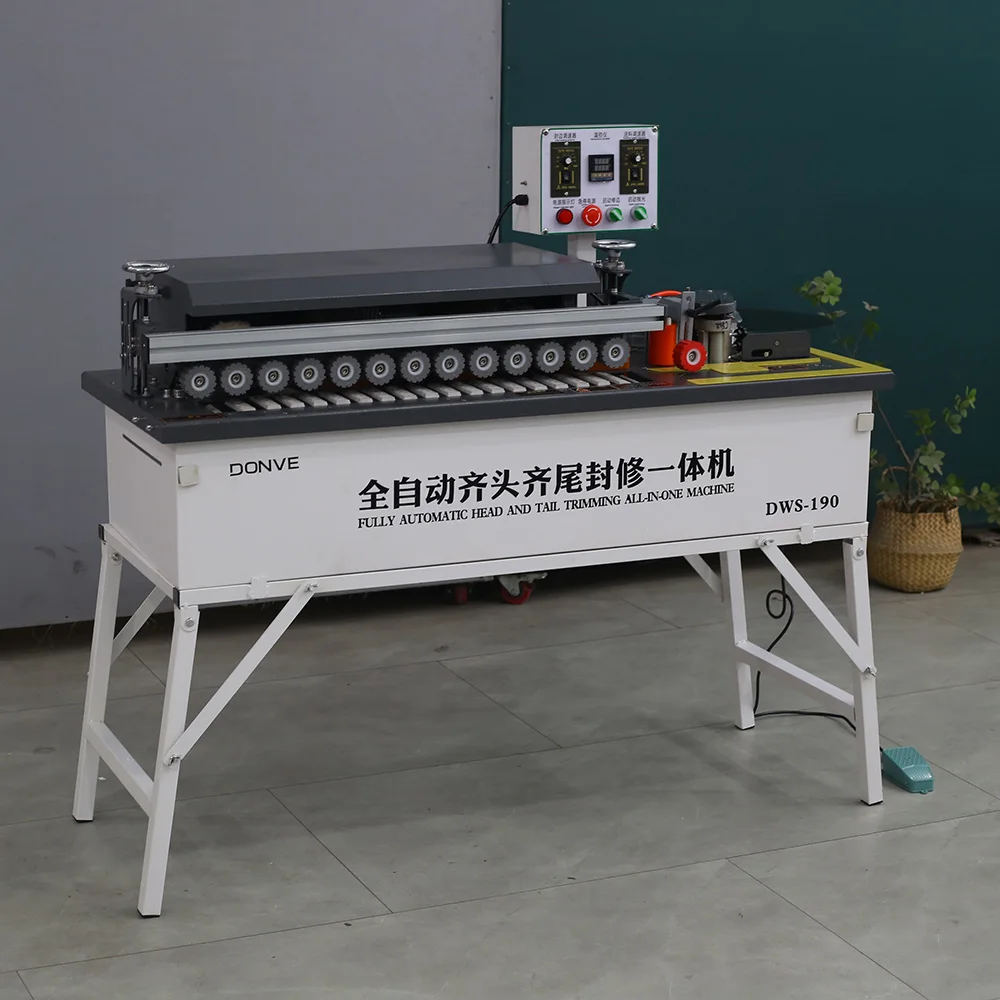
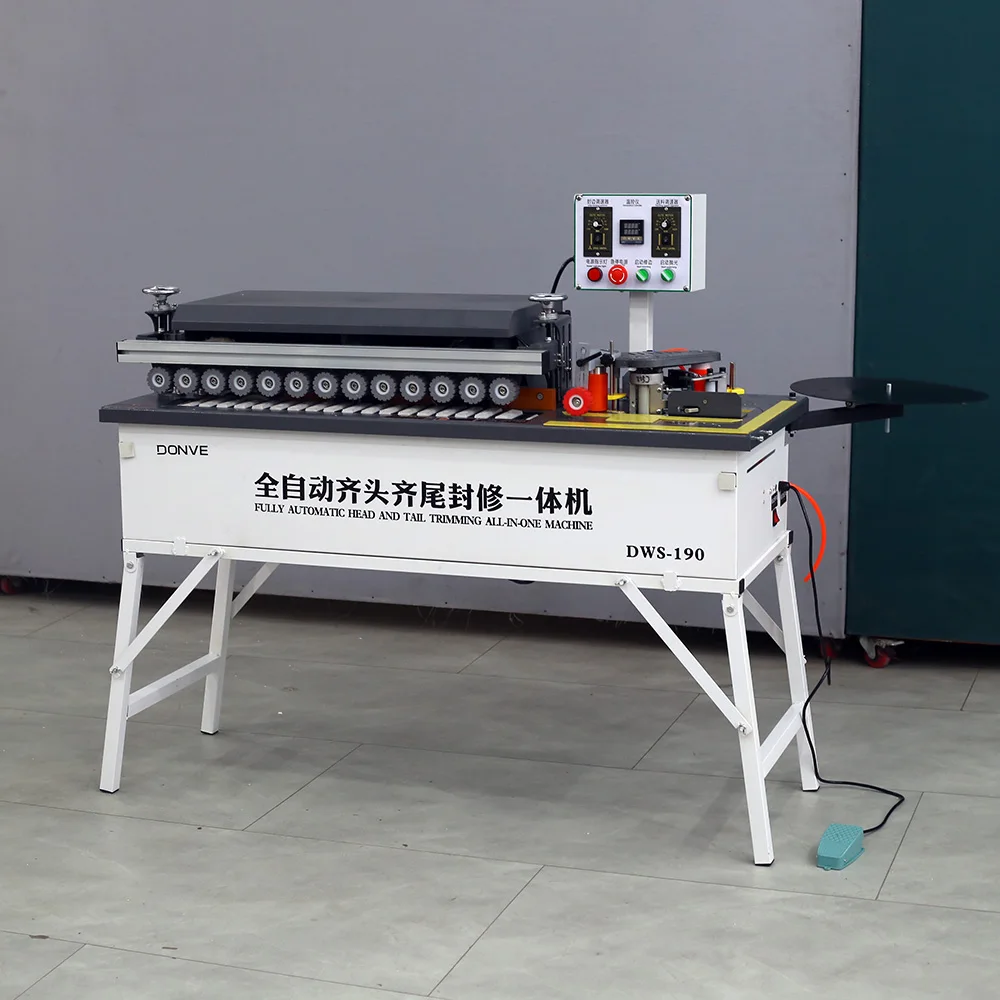
Description
Ready-to-Ship Configuration — Every Automatic Portable Edge Banding Machine in stock ships with voltage and frequency matched to your workshop grid, confirmed before dispatch.
Technical Specifications
| Parameter | Value |
|---|---|
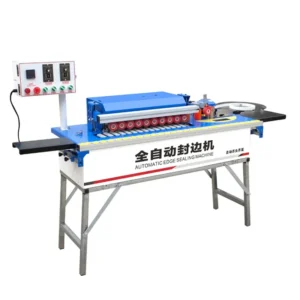
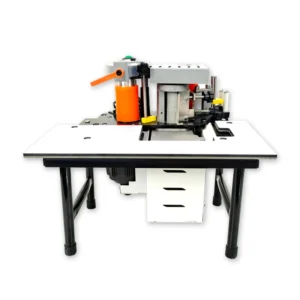
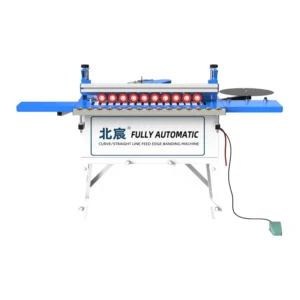
| Product Type | Automatic Portable Edge Banding Machine |
| Function | Automatic feeding, gluing, trimming, polishing, cleaning, vacuuming |
| Edge Type | Both curved and straight lines |
| Voltage | 110V / 220V (frequency 50Hz/60Hz to be confirmed per order) |
| Rated Power | 4 kW |
| Heating Power | 800 W |
| Trimming Power | 800 W × 2 |
| Polishing Power | 180 W × 2 |
| Suction Power | 1200 W |
| Belt Power | 25 W |
| Transmission Power | 120 W |
| Rated Air Pressure | 0.4–0.6 MPa |
| Glue Pot Capacity | 2000 ml |
| Sheet Thickness Range | 10–50 mm |
| Strip Thickness Range | 0.5–2.5 mm |
| Trimming Mechanism | 4-edge alloy arc cutter head |
| Feed System | Crawler transmission with steel rod slide |
| Minimum Panel Width | 3 cm narrow plate sealing without pressure |
| Overall Dimensions (L×W×H) | 1900 × 560 × 1300 mm |
| Dust Extraction Effect | 98% (basis not stated in source) |
Application Suitability
| Application | Material or Output |
|---|---|
| Custom cabinet door edge finishing | MDF and particleboard with PVC banding, straight and curved profiles |
| Small-batch plywood furniture edging | Plywood panels with veneer or PVC strip, curved radius corners |
| On-site installation repair and touch-up | Solid wood and board stock with PVC edge banding on location |
| Joinery workshop upgrade from manual | Mixed board materials requiring consistent glued edge finish |
Why the Voltage Question Should Come Before the Price
An Automatic Portable Edge Banding Machine in stock means little if it arrives wired for a supply your workshop does not have. I watched a unit sit idle on a customer floor for three weeks because it left our Shandong facility at 380V when the shop ran 220V single-phase. The transformer cost more than the freight, and the operator lost nearly a month of production. [NEED_CITE:]
That failure changed how I handle every dispatch. Before any machine leaves the floor now, I pull the electrical schematic, confirm the buyer’s local voltage and frequency in writing, and match the wiring before crating. It takes extra time on our end, but it prevents dead-on-arrival equipment that damages trust and delays a workshop’s schedule.
Dispatch Speed Without the Guesswork
When a joinery shop commits to a purchase, the last thing the owner wants is an open-ended lead time. Stocked units of this portable automatic edge banding machine are pre-configured for common voltage ranges and held ready for rapid dispatch once the electrical match is confirmed. The goal is to move from order to crate within a tight window, so the machine is on the water while your workshop still has capacity for it.
What Fast Shipping Actually Requires
Speed only matters if the machine works correctly the moment it is plugged in. Every unit is tested under power on panels matching the buyer’s specified thickness range before it is bolted to the skid. Packing photographs and a factory test record are sent before the crate is sealed. [NEED_CITE:] This sequence means the buyer sees the edge quality their operator will get, not a generic sample from a different production run.
Reading the Specs That Affect Daily Output
The 10–50 mm sheet thickness range covers the full span of common panel stock used in cabinet and furniture work, from thin MDF shelving to thicker solid-wood components. Staying within that envelope ensures the crawler feed system grips properly and the glue roller maintains even contact across the edge face.
The 4-edge alloy arc cutter head is significant for shops running curved profiles. Each cutting edge can be indexed as it wears, extending time between tool changes and keeping the arc trim consistent across both inside and outside radii on PVC banding.
A glue pot capacity of 2000 ml suits intermittent and small-batch production. It holds enough adhesive for a run of cabinet doors without frequent refill stops, yet it is small enough that glue does not sit long enough to degrade during slower workdays.
The 1200 W suction system pulls trim waste and dust away from the glue line and polishing station. In a small workshop without central extraction, this integrated unit keeps the work area clear and prevents dust contamination on freshly glued edges. [NEED_CITE:]
The Cost of Skipping the Details
A machine that arrives without confirmed voltage is a capital expense sitting on a workshop floor doing nothing. Beyond the transformer cost, the delay pushes delivery commitments to the shop’s own customers and forces manual edge banding in the interim, which produces inconsistent results. [NEED_CITE:]
An operator manual in a language the team cannot read leads to incorrect glue temperature settings, premature cutter wear, and feed speed mistakes that waste both banding material and panels. These are not warranty claims — they are avoidable losses that compound through the first month of ownership.
Why Procurement Through This Channel Works
Stock availability means no waiting for a production slot to open. Configured units are held in inventory specifically for buyers who need equipment on a compressed timeline rather than a standard build-to-order schedule.
Voltage confirmation happens before dispatch, not after arrival. The electrical specification is matched to the buyer’s grid documentation, and the wiring is verified under load during the pre-shipment test.
Operator documentation ships in the agreed language, covering setup, daily operation, and maintenance intervals specific to this model rather than a generic manual covering multiple unrelated machines.
Spare parts lists and customs documentation are prepared as part of the standard dispatch package, reducing import clearance delays at the destination port.
Documentation & Verification
- Electrical schematic and voltage confirmation matched to your workshop grid
- Factory test record on your specified panel thickness and edge material
- Operation and maintenance manual in the operator’s working language
- Pre-shipment packing photographs sent before the crate is sealed
- Spare parts list with part numbers for reordering consumables and cutters
Installation, Commissioning & Support
- Requires a dedicated 4 kW circuit at the confirmed voltage and frequency
- Footprint of 1900×560 mm fits through standard workshop doorways on a flat floor
- Compressed air supply at 0.4–0.6 MPa needed for pneumatic feed and trimming actuators
- First-run calibration includes glue temperature, feed speed, and cutter depth on buyer’s material
- 4-edge cutter head indexing procedure covered in the included operator manual
- Replacement arc cutters and polishing wheels listed in the shipped spare parts document
What We Need to Move Your Order Forward
To get an Automatic Portable Edge Banding Machine in stock dispatched quickly, share your workshop voltage and frequency, the panel materials and thickness range you run most often, and the edge banding strip type and thickness. If you have a target delivery date, let us know so we can align shipping method and transit time accordingly.
Frequently Asked Questions
Q: What voltage configurations are in stock and ready to ship now?
A: Stocked units are configured for 110V and 220V single-phase supplies. Before dispatch, we confirm your local frequency at 50Hz or 60Hz and match the wiring accordingly. The electrical schematic and confirmation document ship with the machine so your electrician can verify the connection on arrival.
Q: How fast is dispatch from order confirmation for stocked models?
A: Once voltage and frequency are confirmed in writing, stocked units go through pre-shipment testing and crating within a short window. We send packing photographs and the factory test record before the crate leaves the facility, so you know the machine condition and edge quality before it reaches the port.
Q: What edge banding materials and thicknesses does this machine handle?
A: The machine processes PVC and veneer edge banding from 0.5 to 2.5 mm thick on both straight and curved edges. Panel thickness range is 10 to 50 mm, covering MDF, particleboard, plywood, and solid wood stock commonly used in cabinet and furniture workshops.
Q: Is the control panel available in my operator’s language?
A: Yes. We provide the operation and maintenance manual in the language you specify at order confirmation. Control panel labeling and display language options are confirmed before dispatch to ensure your operator can set glue temperature, feed rate, and trimming parameters without translation barriers.
Q: What spare parts ship with the machine, and how do I order replacements?
A: Each shipment includes a spare parts list with part numbers for consumables such as arc cutter heads, polishing wheels, and glue roller components. Replacement parts can be ordered directly through us using those numbers, and we keep common wear items in stock for fast dispatch to your location.