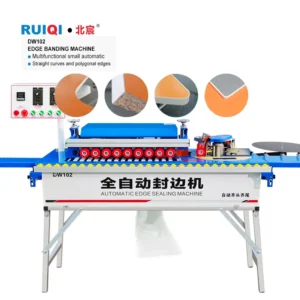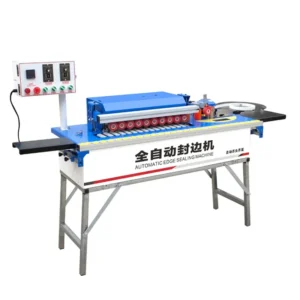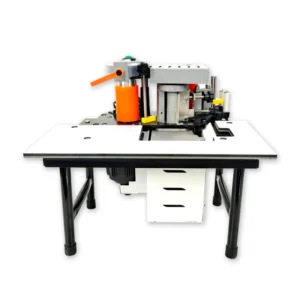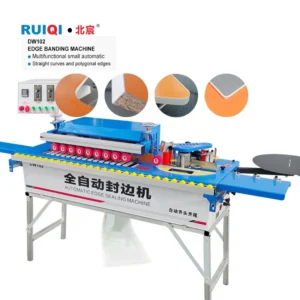


Description
Fast Dispatch Readiness — stocked DW400 units ship with voltage and language confirmed before the crate is sealed, eliminating the on-site surprises that stall workshop commissioning.
Technical Specifications
| Parameter | Value |
|---|---|
| Model | DW400 |
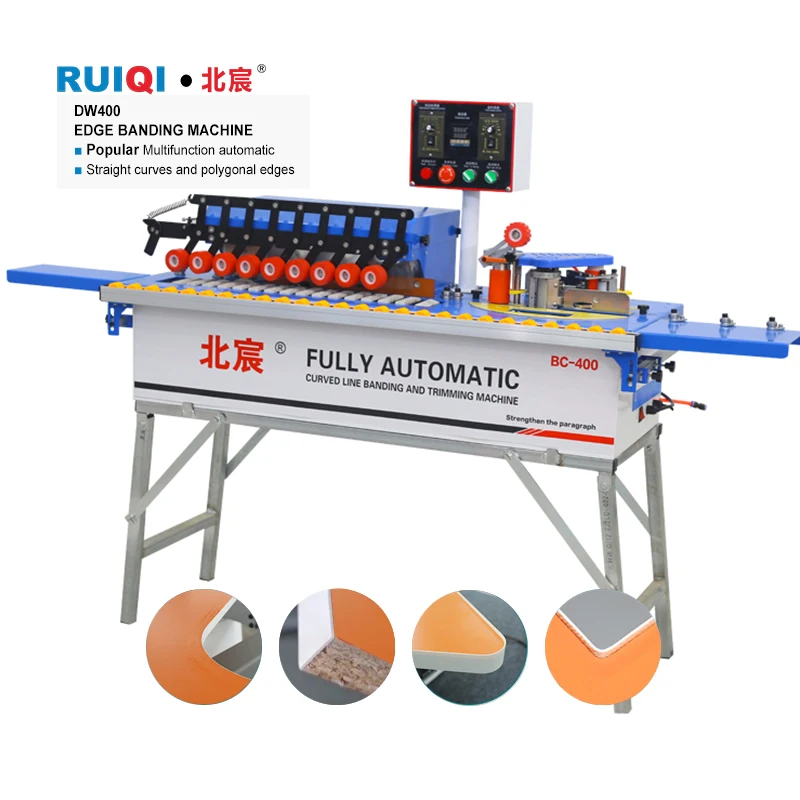
| Product Type | Desktop Automatic Edge Banding Machine |
| Total Power | 3800W |
| Voltage Options | 220V / 380V / customization |
| Edge Banding Thickness Range | 0.3–3 mm |
| Edge Banding Height | 0–50 mm |
| Minimum Sheet Length | 25 cm |
| Minimum Sheet Width | 10 cm |
| Glue Pot Capacity | 1000 ml |
| Trimming Power | 650W × 2 |
| Polishing Power | 180W × 2 |
| Vacuum Power | 1200W |
| Edge Power | 20W |
| Transmission Power | 60W |
| Air Source Pressure | 0.5–0.8 MPa |
| Product Size | 116 × 47 × 69 cm |
| Product Weight | 70 kg |
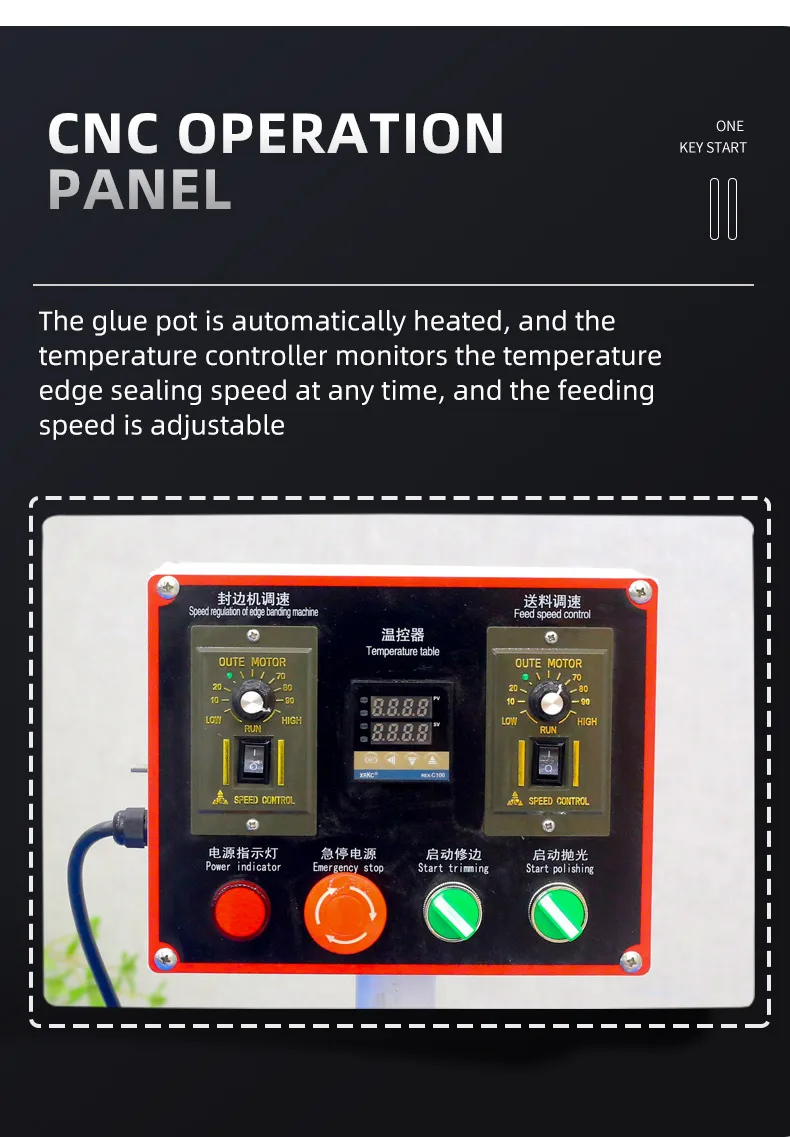
| Control Panel Language | Chinese, English, customizable |
| Plug Options | EU, USA, AU, UK |
| Assembly State | Fully assembled |
Application Suitability
| Application | Material or Output |
|---|---|
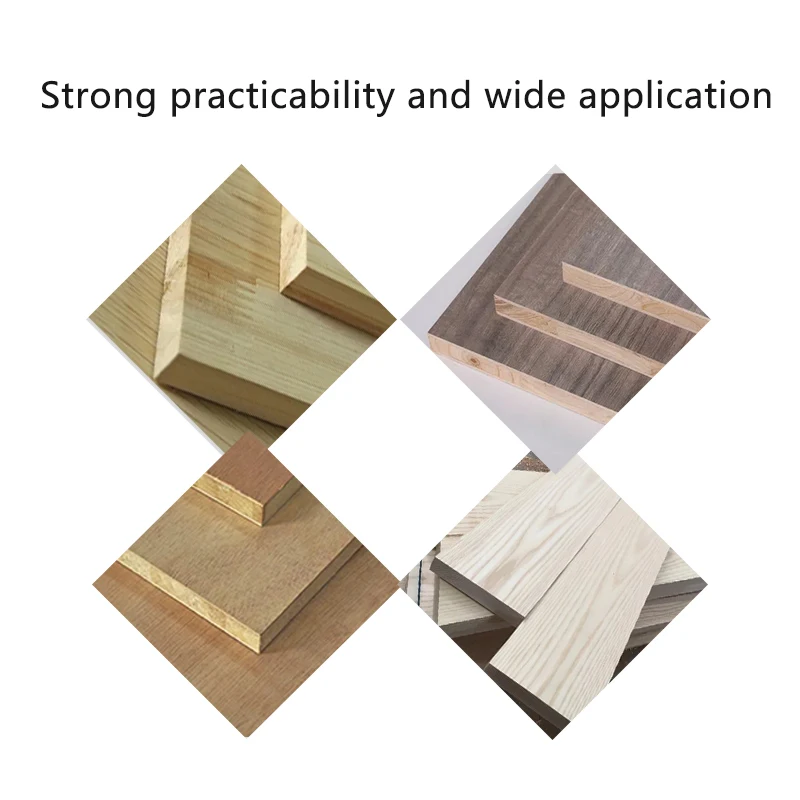
| Custom cabinet door edging | MDF and plywood panels with PVC or veneer banding |
| Small-batch furniture production | Particleboard and blockboard with 0.3–3 mm edge tape |
| Joinery workshop short runs | Medium density fiberboard with straight edge profiles |
| Polymer door finishing | Polymer substrates compatible with hot-melt adhesive |
| Workshop prototyping | Solid wood panels up to 50 mm edge height |
Why the Voltage Question Must Come Before You Hit "Order"
A desktop edge banding machine in stock is only useful if it actually powers on when it arrives.
I once shipped an automatic edge bander to a buyer overseas without double-checking the local grid frequency. The machine sat on the workshop floor for three weeks while the electrical system was reconfigured. The carpenters were idle, the delivery schedule collapsed, and the buyer’s confidence took a hit that no discount could repair. Since that job, every unit I handle — including this DW400 — goes through a written voltage and frequency confirmation before it leaves the floor. [NEED_CITE: voltage and frequency standards by export market]
The risk is not theoretical. Workshops in regions with 110V/60Hz grids regularly receive machines wired for 380V/50Hz, and the mismatch is only discovered when the operator throws the breaker. A desktop edge banding machine in stock should mean ready to run, not ready to be rewired.
Dispatch Speed Without the Configuration Guesswork
When a joinery shop decides to move from hand-edging to machine-assisted production, the window of momentum is narrow. The team is ready, the panels are cut, and the floor space is cleared. A desktop edge banding machine in stock that arrives with the wrong plug type or an unreadable control panel stalls that momentum immediately. This unit ships with plug options covering EU, USA, AU, and UK standards, and the control panel language is locked in before dispatch so operators can read the interface from the first shift.
Lead Time That Means Working Hours, Not Calendar Weeks
Stocked inventory matters most when a cabinet maker has a batch deadline and the current manual edging process is the bottleneck. The DW400 arrives fully assembled — no on-site mechanical build, no belt tensioning from scratch, no glue pot calibration without guidance. The operator unpacks, connects power and air, loads the edge tape, and runs the first panel. That same-day commissioning is the difference between catching a delivery window and explaining another delay to a client. [NEED_CITE: typical commissioning challenges for imported woodworking machinery]
What the Numbers Mean on the Workshop Floor
The 0.3–3 mm edge banding thickness range covers the two materials small workshops use most: thin PVC tape for cabinet carcasses and thicker veneer or ABS for visible door fronts. Switching between them requires adjusting the glue pot temperature and trimming pressure, both accessible on this unit without tools. The 1000 ml glue pot capacity supports continuous short-run jobs — roughly a full morning of cabinet edging before a refill is needed, depending on panel perimeter and glue consumption rate.
The dual 650W trimming motors handle both sides of the panel in one pass, which matters when you are edging batch after batch of shelving components where a hand-trimmed inconsistency would show up during assembly. The 180W × 2 polishing wheels follow immediately, removing the micro-scratch left by trimming and leaving the edge ready for inspection without a secondary hand-finishing step. The 1200W vacuum unit captures trim waste at the source, keeping the workbench area clear of PVC offcuts that can jam the feed path on smaller desktop machines.
The Cost of Overlooking the Details That Are Not on the Spec Sheet
A workshop that buys a desktop automatic edge banding machine without confirming air pressure requirements may find their existing compressor falls below the 0.5 MPa minimum. The result is inconsistent trimming pressure — edges that look acceptable on the first panel but show chatter marks by the tenth. Similarly, buying a unit with fixed voltage and then discovering the workshop only has single-phase 220V available forces an electrician visit and a production pause. [NEED_CITE: common installation failures in small woodworking workshops]
These are not machine defects. They are configuration mismatches that surface only after the crate is opened. The time lost to diagnosing the issue, sourcing a local transformer or compressor upgrade, and re-scheduling the operator is time that was entirely preventable with a pre-shipment checklist.
Why Source This Unit Through This Channel
Every DW400 leaves with a factory test record photographed on actual panel stock, so you see the edge quality before the machine is crated. Voltage and plug configuration are confirmed in writing against your local grid specification, not assumed from the destination country alone. The operation manual and control panel language are matched to your operator team before the machine ships. Spare parts lists and electrical schematics are included in the crate, not promised as a later email. Engineer-led configuration recommendations are available within one working day if your production scope changes between inquiry and order.
Documentation & Verification
- Factory test record captured on your specified panel thickness and edge material
- Electrical schematic reflecting confirmed voltage and plug configuration
- Operation manual printed in the agreed control panel language
- Spare parts list with reorder codes for trimming blades and polishing wheels
- Pre-shipment verification photographs of assembled and running unit
- CE declaration of conformity included with customs documentation
Installation, Commissioning & Support
- Requires a dedicated circuit matching confirmed 220V or 380V supply at rated 3800W total draw
- Air compressor must sustain 0.5–0.8 MPa at the machine inlet for consistent trimming
- Arrives fully assembled with no mechanical build required on the workshop floor
- Glue pot first-fill and temperature calibration guided by included operation manual
- Trimming and polishing alignment verified at factory; field adjustment instructions provided
- Spare trimming blades and polishing pads listed for immediate reorder planning
What to Include With Your Inquiry
To configure this desktop edge banding machine in stock for your workshop, share your local voltage and frequency, the edge banding materials you run most often, and the panel thickness range you process. If your operators need a specific control panel language, note that upfront. Mention any existing air compressor capacity so we can confirm compatibility before dispatch.
Frequently Asked Questions
Q: What voltage options are in stock and how fast can they ship?
A: The DW400 is stocked in 220V and 380V configurations, with other voltages available on request. Before dispatch, we confirm your local voltage and frequency in writing to prevent on-site electrical mismatches. Stocked units typically ship within days of configuration confirmation, not weeks. Exact dispatch timing depends on the selected plug type and language customization required for your order.
Q: Can the control panel language be changed before dispatch?
A: Yes. The standard options are Chinese and English, and other languages can be configured before the machine ships. We confirm the required language during the order process and verify it appears correctly on the panel display during the pre-shipment factory test. This ensures your operators can read all settings and alerts from their first shift.
Q: What panel and edge banding thickness does this unit handle?
A: The DW400 handles edge banding thickness from 0.3 mm to 3 mm, covering PVC, ABS, and veneer tape. Edge banding height accommodates panels up to 50 mm. Minimum sheet dimensions are 25 cm in length and 10 cm in width, making it practical for both full cabinet sides and smaller shelf components commonly produced in small to mid-size workshops.
Q: How is the machine packed and what is the lead time?
A: Each unit ships fully assembled in protective crating designed for the 116 × 47 × 69 cm footprint and 70 kg weight. Stocked configurations dispatch rapidly once voltage, plug type, and language are confirmed. Custom configurations require a short additional lead time for electrical and interface setup. Packing photographs are provided before the crate is sealed for your records.
Q: What spare parts come with the machine and how do I reorder?
A: The machine ships with a spare parts list identifying consumable items including trimming blades, polishing pads, and glue pot components. A starter set of high-wear parts is included in the crate. Reorder codes are printed on the parts list so you can request replacements directly by part number, reducing the chance of receiving incorrect components.