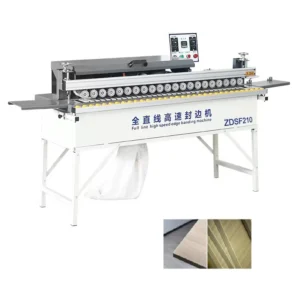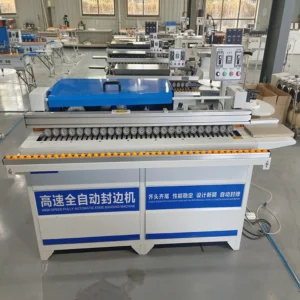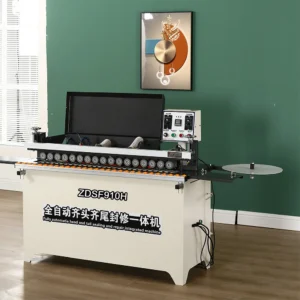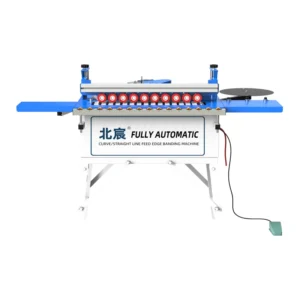
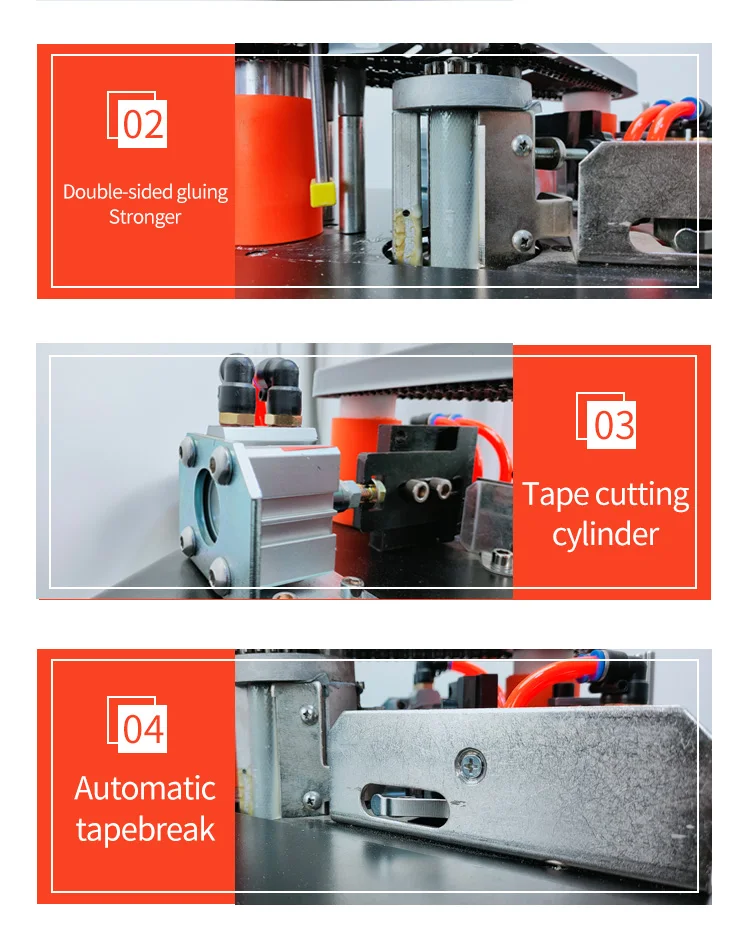

Description
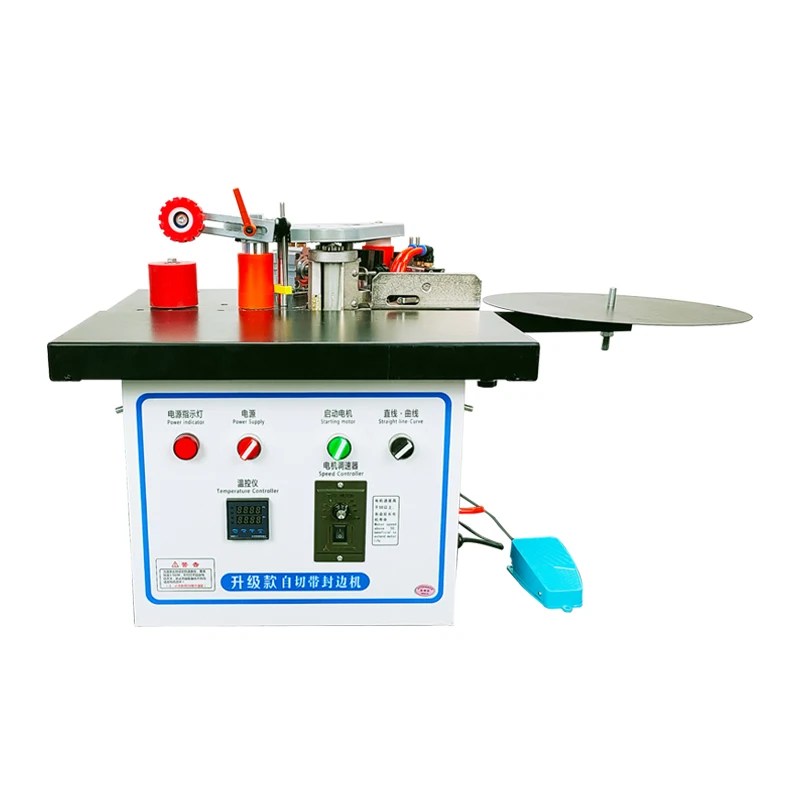
Ready-Stock Configuration — ST-50 units are prepared for dispatch with your site’s voltage and plug type verified before crating, avoiding the two-week electrician delay I once watched a cabinet shop endure after a 380V machine landed on a 220V floor.
Technical Specifications
| Parameter | Value |
|---|---|
| Model | ST-50 |
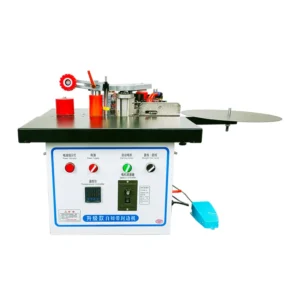
| Product Type | Manual Edge Banding Machine |
| Total Power | 1000W |
| Edge Trimming Power | 20W |
| Voltage Options | 220V / 380V / customization |
| Plug Options | EU, USA, AU, UK |
| Edge Banding Height | 0–50mm |
| Edge Banding Thickness | 0.3–3mm |
| Minimum Sheet Length | 25cm |
| Minimum Sheet Width | 3cm |
| Glue Pot Capacity | 1000ml |
| Air Source Pressure | 0.5–0.8 MPa |
| Product Dimensions | 50 × 50 × 47 cm |
| Product Weight | 22kg |
| Control Language | Chinese, English (Spanish and others on request) |
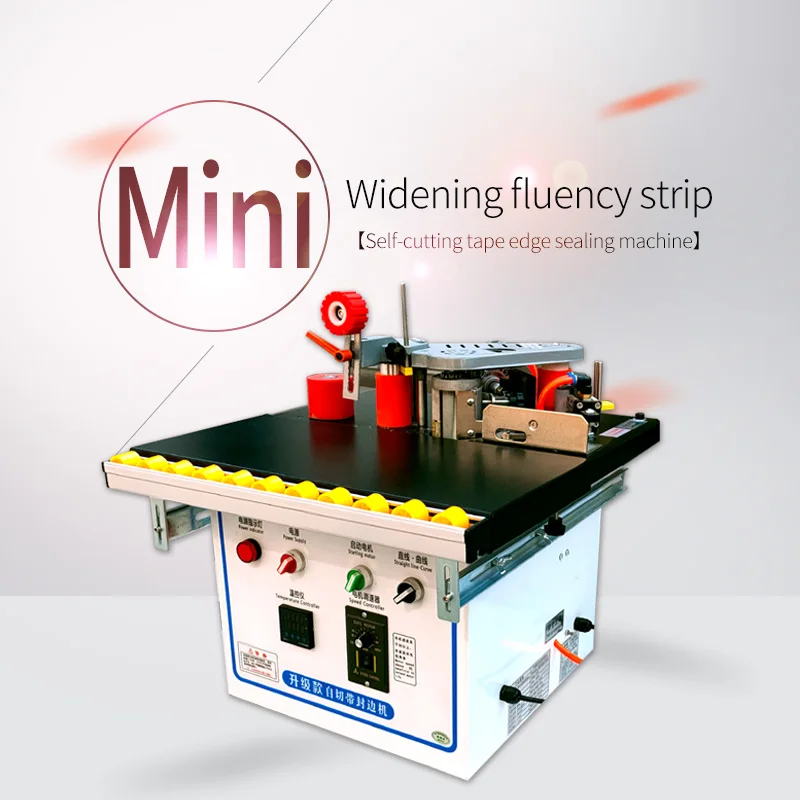
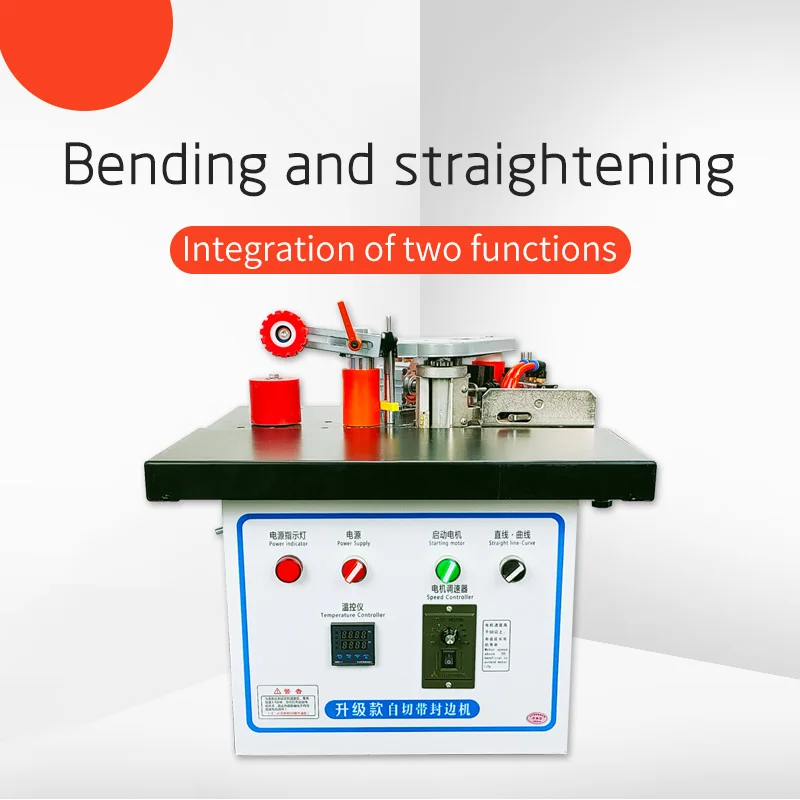
| Key Features | Curved and straight edge banding in one unit |
Application Suitability
| Application | Material or Output |
|---|---|
| Custom furniture edge finishing | MDF and particleboard panels |
| Home decoration on-site repair | Ecological board and plywood |
| Small workshop straight-edge production | PVC and melamine edge strips 0.3–3mm |
| Curved contour banding for cabinet doors | Solid wood board with veneer strips |
| Prototype and sample edge sealing | Mixed substrate offcuts |
Why the Voltage Question Should Come Before the Price on a Manual Edge Banding Machine in Stock Fast Delivery
Confirm the circuit before you confirm the order — a mismatched motor is a silent project killer.
I worked a technical sales case years ago where a custom cabinet buyer selected a semi-automatic edge bander, paid the deposit, and took delivery — only to discover the machine demanded 380V three-phase while the workshop ran a single-phase 220V line. The electrician’s retrofit took two weeks. Installers stood idle, the client’s kitchen fit-out slipped past its handover date, and the shop owner called me every morning asking when the machine would actually run. [NEED_CITE: voltage and frequency standards by export market]
That single mismatch taught our team to ask for a photo of the buyer’s distribution board before any quotation goes out. When sourcing a Manual Edge Banding Machine in stock fast delivery, availability means nothing if the unit cannot plug into your existing panel. We now lock voltage and plug type at the enquiry stage so the ST-50 arrives as a working tool, not a crate full of expensive frustration.
Stocked Units, Not Catalogue Promises
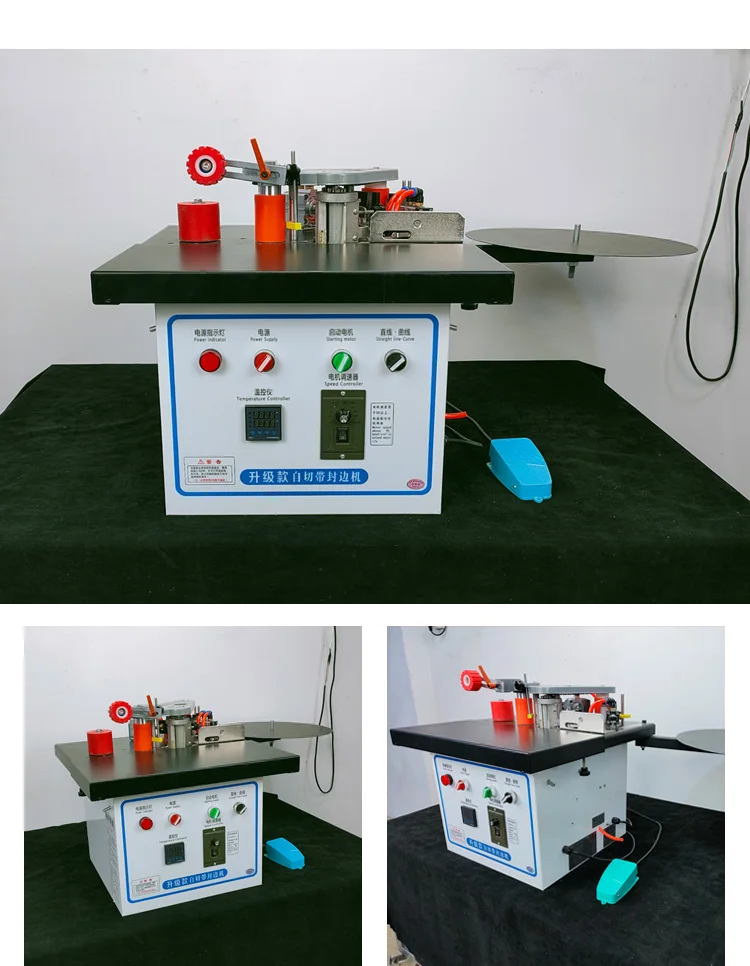
The ST-50 sits in our ready-dispatch pool specifically because small workshops cannot absorb the typical multi-week lead times associated with custom-built machinery. Inventory is held in the configured base state — straight and curved banding heads assembled, glue pot tested, motor bench-run — so once your voltage and plug are confirmed, final wiring and language loading on the control panel finish the unit. A Manual Edge Banding Machine in stock fast delivery must ship as a complete, site-ready asset, and the ST-50’s 50 × 50 × 47 cm footprint means it travels by standard parcel freight rather than requiring a dedicated container slot.
What "Ready Stock" Actually Covers
Holding stock is only half the promise. Each ST-50 in the warehouse undergoes the same four-stage verification as a made-to-order unit: incoming component check, in-process assembly inspection, finished-product bench test, and pre-shipment run on the buyer’s specified edge material. [NEED_CITE: CE machinery directive requirements for industrial equipment] The glue pot is filled and cycled to confirm the 1000ml capacity seals without weeping at the valve, and the 20W edge-trim motor is loaded against a sample PVC strip to prove the 0.3–3mm thickness range holds across both straight and curved passes.
How the Specifications Shape Daily Output
The 0–50mm banding height covers the full range of panel thicknesses a small shop encounters — from 9mm MDF shelving up to 40mm solid-wood worktops — so one machine replaces the temptation to buy two dedicated units. The 1000W total power rating keeps the ST-50 within the draw of a standard 16A single-phase circuit, which matters in rented workshops where landlords restrict three-phase installations. Glue pot capacity of 1000ml is sized for intermittent production; operators running short batches of custom cabinet fronts can complete a morning’s work without pausing to refill. The 0.5–0.8 MPa air requirement aligns with the small reciprocating compressors already present in most joinery shops, avoiding a separate compressor investment. Minimum sheet dimensions of 25cm length and 3cm width let the operator band narrow drawer-side strips that larger automatic feeders simply cannot grip.
The Hidden Cost of Skipping Configuration Checks
Shops that purchase entry-level banders without matching the machine to actual throughput often discover the glue roller cannot keep pace when daily volume climbs. Adhesive cools in the pot between passes, bonding weakens, and edge lift appears on panels that looked fine at the bench. Operators then blame the material, switch adhesive brands, and still see failures — never realising the duty cycle has simply outgrown the unit. [NEED_CITE: adhesive open-time behaviour on small-capacity glue pots] The ST-50 is positioned for low-to-medium volume work; buyers planning continuous eight-hour production should discuss scaling to a higher-capacity model before committing.
Why Sourcing This Model Through Our Ready-Stock Channel Works
In-house manufacturing with patented cutting mechanisms means the ST-50 is built on the same production line as our full-function automatic banders — precision-ground components and multi-stage inspection apply regardless of price tier. Voltage, plug type, and control language are customised as standard, not treated as a special-order surcharge. The four-stage QC process with pre-shipment verification gives buyers a documented test record before the crate closes. Engineer-led configuration recommendations arrive within 24 hours of enquiry, and because the unit is held in base stock, dispatch follows final wiring rather than a full production slot. Factory visits are welcome for buyers who want to watch their specific ST-50 undergo its final bench test.
Documentation & Verification
- CE declaration covering the ST-50’s electrical and mechanical safety envelope
- Factory test record run on your specified panel thickness and edge material
- Voltage confirmation sheet matched to your photographed distribution board
- Operation manual in your chosen language with illustrated threading sequence
- Spare parts list identifying consumables by OEM part number
Installation, Commissioning & Support
- Bench space of 50 × 50 cm with 47 cm headroom required; no floor anchoring needed for the 22kg chassis
- Dedicated 16A single-phase circuit for the 220V variant; confirm phase rotation on 380V units before first start
- Machine ships fully assembled — unbox, connect air line at 0.5–0.8 MPa, and power on
- First-run glue temperature setting guided by included manual for PVC, veneer, and melamine strips
- Operator familiarisation covers curved-guide adjustment and glue-pot refill procedure
- Consumable spares pack includes replacement edge-trim blade and glue-pot seal ring
Before You Request a Quote
Send a photo of your workshop’s distribution board and note the available circuit rating so we can lock the correct voltage and plug type. Tell us the panel materials and edge strip types you run most often — MDF with PVC, plywood with veneer, or a mix — so the correct glue formulation is loaded during the pre-shipment test. If curved profiles are part of your daily mix, share a sample radius and we will verify the adjustable guide covers it on the bench.
Frequently Asked Questions
Q: Can the ST-50 handle both straight and curved edges without changing attachments?
A: Yes. The machine integrates a fixed straight guide and an adjustable curved guide on the same chassis. Operators switch between the two by loosening the guide knob and repositioning the fence, which takes a few seconds. No separate jig or add-on module is required for curved profiles down to typical cabinet-door radii.
Q: What happens if my workshop voltage is not 220V or 380V?
A: The ST-50 supports custom winding within a broad range. Send a photo of your distribution board and state your supply frequency; our engineering team will confirm motor compatibility and label the unit accordingly before dispatch, so the machine energises correctly on arrival.
Q: Is the 1000ml glue pot large enough for a full production day?
A: Capacity suits intermittent and batch production typical in small workshops. For continuous high-volume runs, operators may need a mid-shift refill. We recommend discussing your daily panel count during the enquiry so we can advise whether the ST-50 matches your throughput or a higher-capacity model is more appropriate.
Q: Which languages are available on the control panel?
A: Chinese and English are standard. Spanish and additional languages can be loaded during the pre-shipment preparation stage. Confirm your preferred language at the order point so the firmware is flashed before the unit is crated.
Q: What air supply does the machine need?
A: The ST-50 requires a compressed air source between 0.5 and 0.8 MPa. A small reciprocating compressor already present in most joinery workshops is sufficient. Connect via the standard quick-fit coupling on the rear panel and verify pressure with the regulator before the first production run.