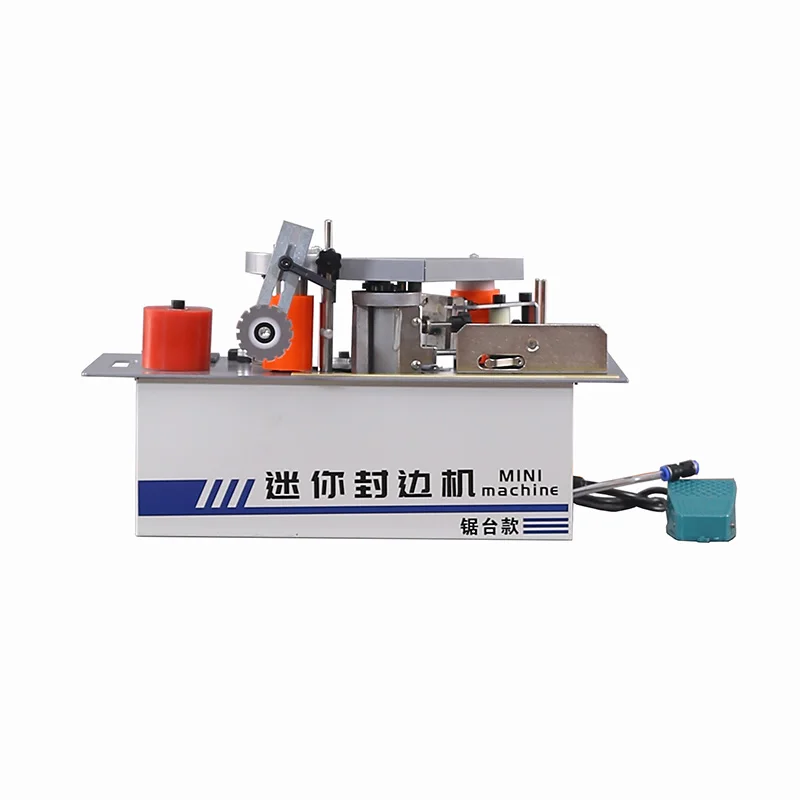
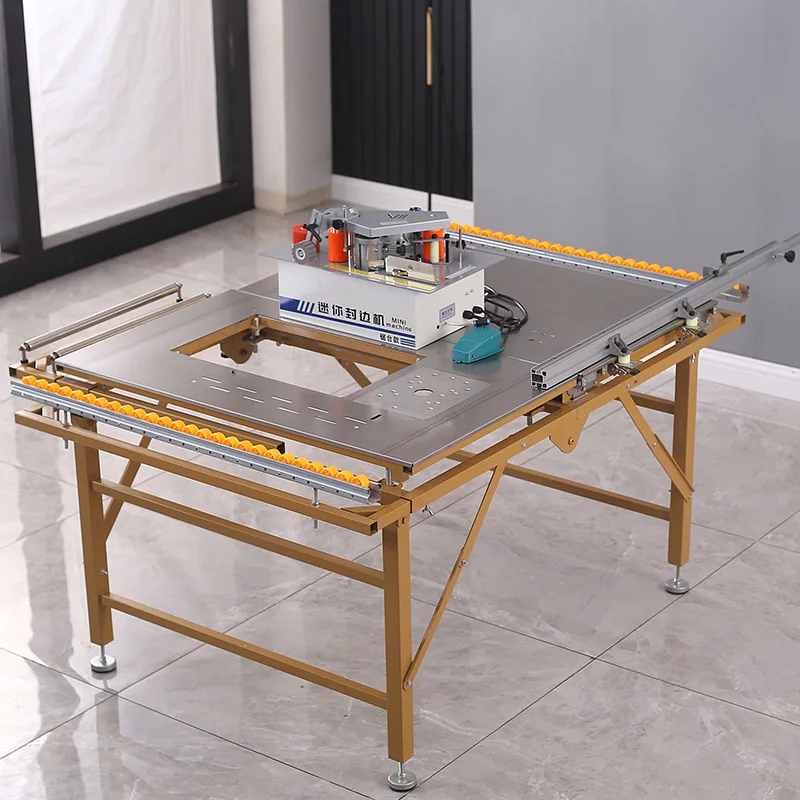
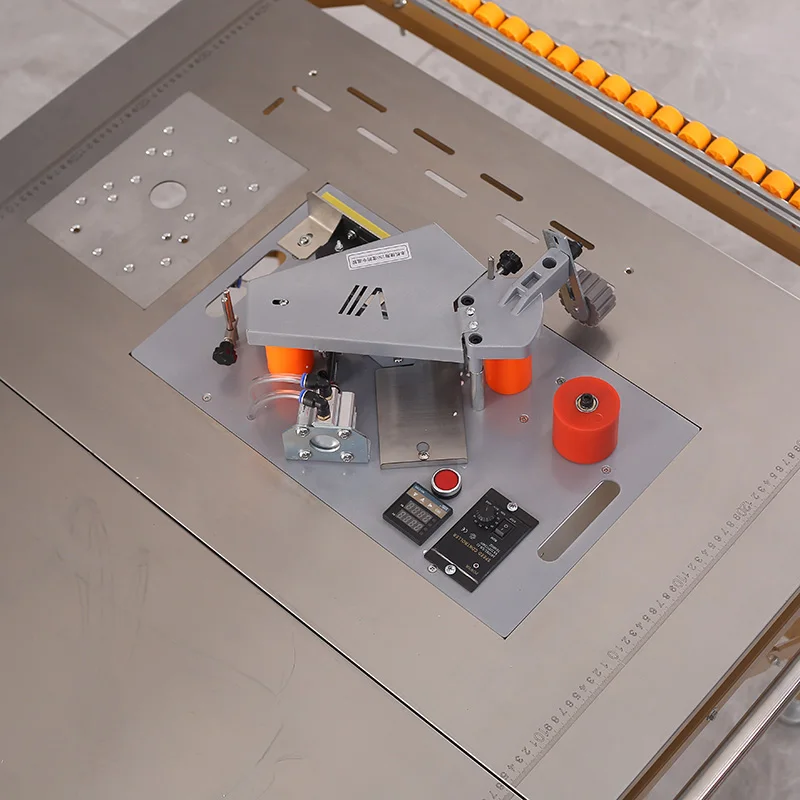
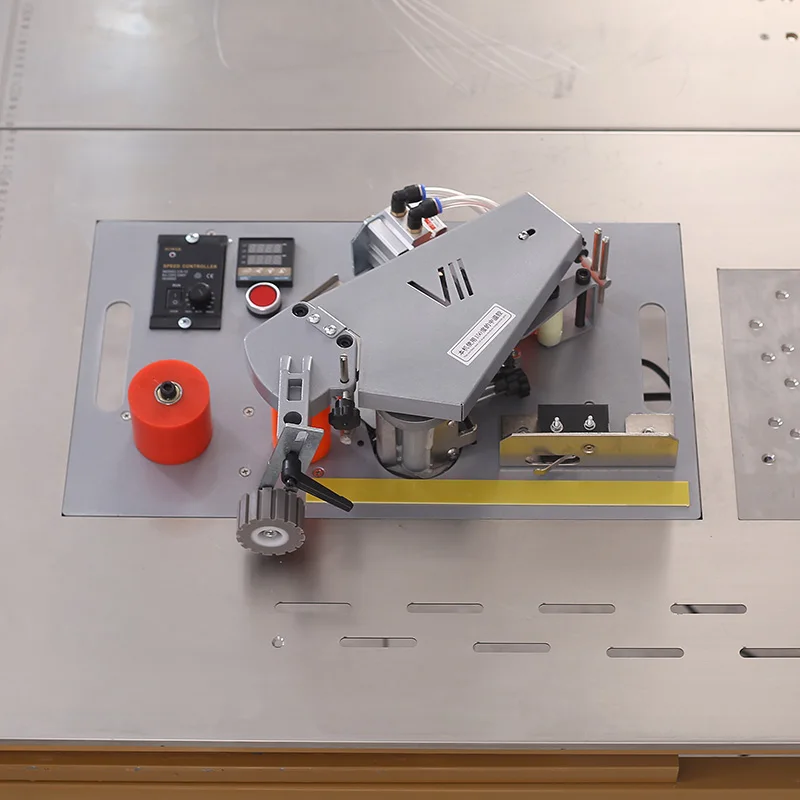
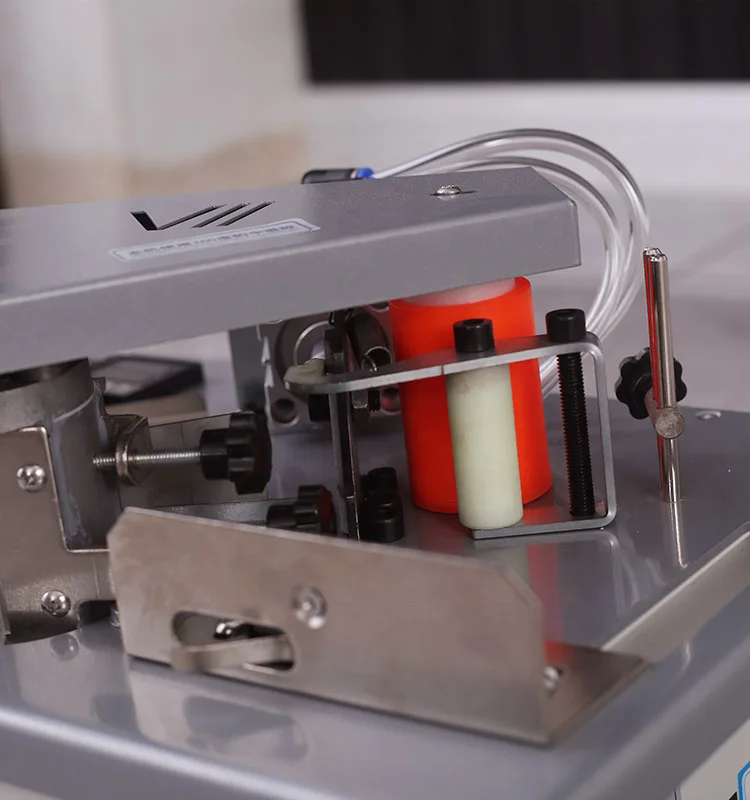
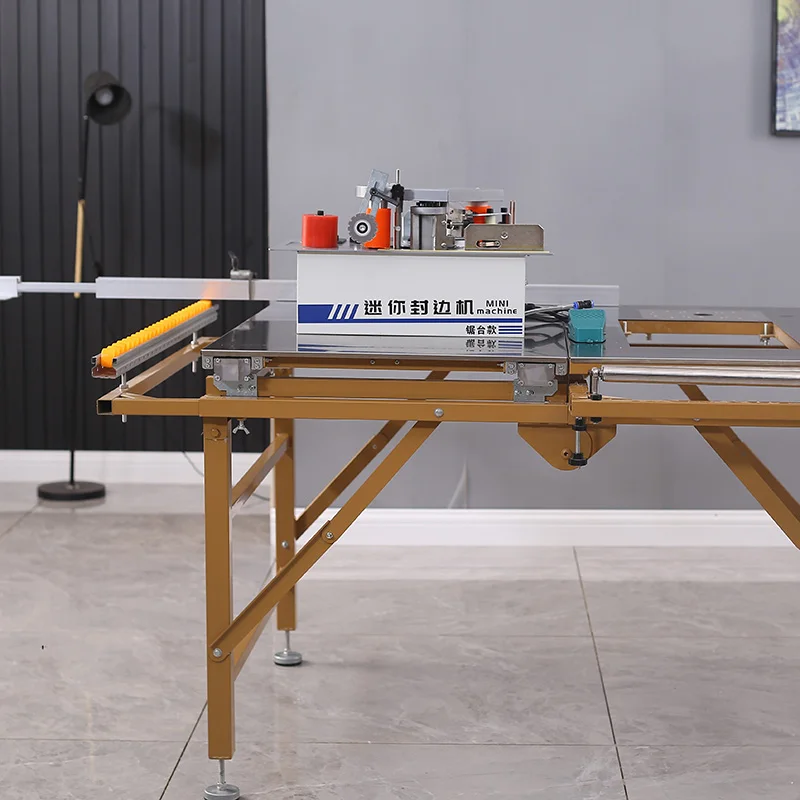
Description
Ready-to-Dispatch Inventory — portable edge banders pulled from stock, tested at your voltage, and loaded for shipment within days, not weeks.
Technical Specifications
| Parameter | Value |
|---|---|
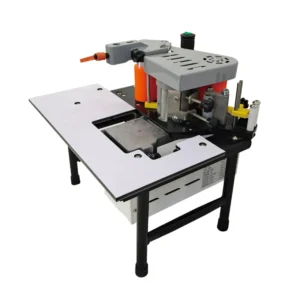
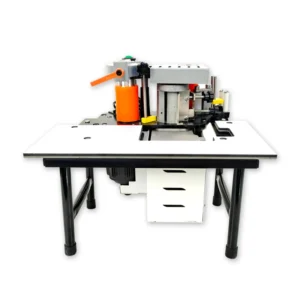
| Product Type | Portable Edge Banding Machine |
| Voltage | 220V (other voltages available on request) |
| Rated Power | 825W |
| Heating Time | 5–10 min |
| Air Pressure Requirement | 0.4–0.6 MPa |
| Glue Pot Capacity | 1000 ml |
| Edge Banding Speed | 0–10 m/min |
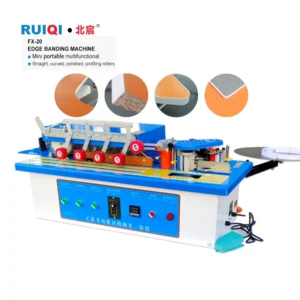
| Edge Pattern | Curves, straight lines, special shaped lines |
| Overall Dimensions | 50 × 30 × 27 cm |
| Net Weight | 13.5 kg |
| Control System | Manual / handheld operation |
| Assembly State | Portable / benchtop unit |
Application Suitability
| Application | Material or Output |
|---|---|
| Small workshop furniture edging | MDF and particleboard panels with PVC edge banding |
| Custom cabinet curved-edge finishing | Plywood and MDF with veneer or PVC banding |
| On-site touch-up and repair work | Solid wood panels and pre-cut board edges |
| Startup batch production runs | Particleboard shelving and cabinet components |
Why the Voltage Question Should Come Before the Price
Confirm your workshop supply voltage before you confirm the order.
A portable edge banding machine in stock is only useful if it survives the first power-on. I have watched a compact edge bander sit unopened on a Lagos workshop floor for three weeks because the local supply was 415V three-phase, the machine arrived wired for 380V, and the control board burned out within seconds of connection. The transformer had to be air-freighted in while an entire panel line waited on that single station [NEED_CITE: voltage and frequency standards by export market]. That delay was not a logistics failure — it was a specification failure that a two-minute conversation about the workshop’s distribution board would have prevented.
Stock Availability and Dispatch Timing
This portable edge banding machine in stock moves from warehouse to crate quickly because it requires no custom line integration. Single-unit orders ship on the same timeline as larger batches, so a joinery workshop adding its first edge bander does not wait behind a factory-scale project. Benchtop units like this one leave the facility tested and boxed, with the operation manual packed in the language you confirmed at quotation stage.
Ordering Simplicity for First-Time Buyers
The purchasing path stays short. You state your panel material, your edge banding type, and your workshop voltage — we return a formal quotation with shipping options and dispatch lead time within one working day. No production line layout is needed, no throughput matching between stations, no phased investment plan. The Portable Edge Banding Machine in stock arrives as a self-contained unit: plug it into a compatible outlet, load the glue pot, and begin edging [NEED_CITE: CE machinery directive requirements for small woodworking equipment].
What the Numbers Actually Mean at the Bench
The 0–10 m/min feed speed range matters most on curved and irregular edges, where a fixed-speed feed would push the operator past the curve radius and cause banding lift. A manual handheld feed lets the operator slow down through tight radii and speed up on straight runs without adjusting any dial. The 1000 ml glue pot holds enough adhesive for short production runs and one-off repairs without requiring mid-job refills, and the 5–10 minute heat-up time means a cabinet maker can power on the unit while preparing panels and start edging almost immediately. At 825W on 220V single-phase, this machine draws from a standard workshop outlet without a dedicated circuit — a practical advantage in rented spaces where electrical modifications are restricted. The 50 × 30 × 27 cm footprint occupies less bench space than a sliding table saw fence extension, and at 13.5 kg the unit can be relocated between workstations or carried to a job site.
The Cost of Skipping the Compatibility Check
Single machines bought without verifying feed height, power supply, or edge banding material compatibility often become expensive bench weights. A portable edge bander wired for the wrong voltage will not simply underperform — it will destroy its heating element or control board on first energization, and the warranty will not cover a specification mismatch the buyer was asked to confirm. Similarly, ordering a unit that handles only straight edges and then discovering the production schedule includes radiused cabinet doors means a second machine purchase before the first has paid for itself [NEED_CITE: common causes of edge banding adhesion failure on curved substrates]. These are not rare edge cases. They are routine procurement oversights that a single pre-order checklist eliminates.
What Sets This Purchase Apart
Voltage confirmation happens before production, not after — you provide a photo of your workshop distribution board and we match the machine wiring accordingly. Pre-shipment testing runs the glue pot through a full heat cycle and verifies edge adhesion on your specified panel material, with photographs included in the dispatch documentation. The operation manual arrives in the language your operator reads, eliminating the commissioning stall that occurs when instructions and control labels are in an unfamiliar script. Spare parts — glue roller, trimming blade, heating element — ship with the machine so the first reorder conversation happens months later, not days after arrival.
Documentation & Verification
- CE declaration of conformity covering portable woodworking machinery
- Factory test record showing glue temperature stability on your panel type
- Operation and maintenance manual in your confirmed operator language
- Electrical schematic with voltage and wiring configuration documented
- Spare parts list with reorder codes for consumable components
Installation, Commissioning & Support
- Place the 50 × 30 × 27 cm unit on any stable workbench — no floor mounting required
- Confirm 220V single-phase outlet compatibility or request alternative voltage before dispatch
- Connect air supply at 0.4–0.6 MPa using standard workshop compressor fittings
- Load glue pot, allow 5–10 minute heat-up, and run test piece on scrap panel
- Inspect spare parts kit for glue roller, trimming blade, and heating element on arrival
Send Us the Details That Matter
To move from inquiry to quotation, share your primary panel material and thickness range, the edge banding type and thickness you plan to run, and your workshop supply voltage with a photo of the distribution board nameplate. If your operators require the control interface and manual in a specific language, state that upfront so documentation is prepared before dispatch.
Frequently Asked Questions
Q: Is this portable edge bander in stock and ready to ship?
A: Yes. Stock units are available for dispatch on short lead times. Each machine undergoes a pre-shipment test covering glue temperature stability and edge adhesion before crating. Single-unit orders are accepted, and shipping options with estimated transit times are quoted alongside the formal quotation.
Q: What voltage options are available and will it work in my country?
A: The standard configuration is 220V single-phase. Other voltage configurations are available on request to match local supply standards. We ask every buyer to photograph their workshop distribution board nameplate before order confirmation so the machine arrives wired correctly and avoids control board damage on first power-on.
Q: What edge banding materials and thicknesses can this machine handle?
A: This unit handles PVC and veneer edge banding on MDF, plywood, particleboard, and solid wood panels. It processes curves, straight lines, and special shaped edges. The manual feed speed range of 0–10 m/min gives the operator control over feed rate on irregular profiles where consistent banding adhesion depends on pace adjustment.
Q: How do I assemble and commission the unit — is there a video guide?
A: The machine ships as a benchtop unit requiring no assembly beyond connecting the air supply and loading the glue pot. An operation manual in your confirmed language is included, covering first start-up, glue temperature adjustment, and basic trimming technique. Video guidance is available on request to walk your operator through commissioning.
Q: What spare parts ship with the machine and how do I reorder?
A: Each shipment includes a spare parts kit containing a glue roller, trimming blade, and heating element. The accompanying parts list includes reorder codes for each item. Reorder requests are fulfilled from stock, and we recommend establishing your consumable requirements after the first production week.