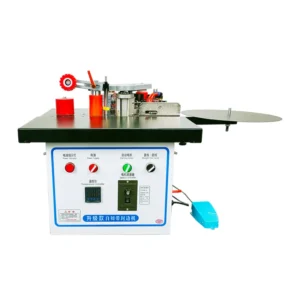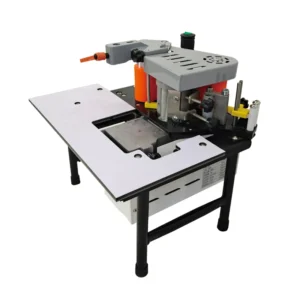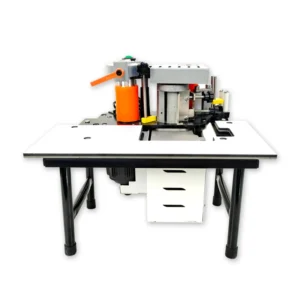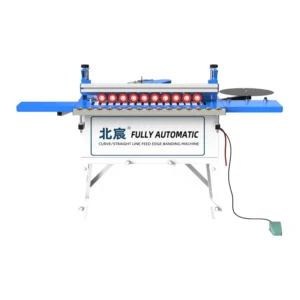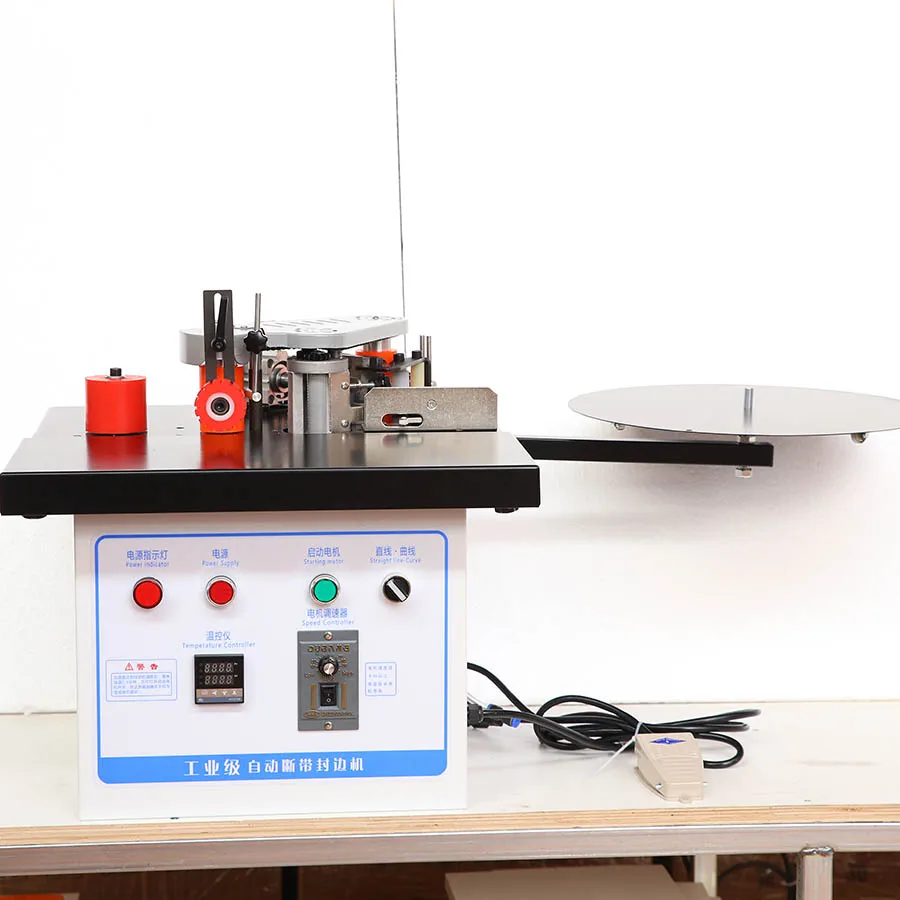

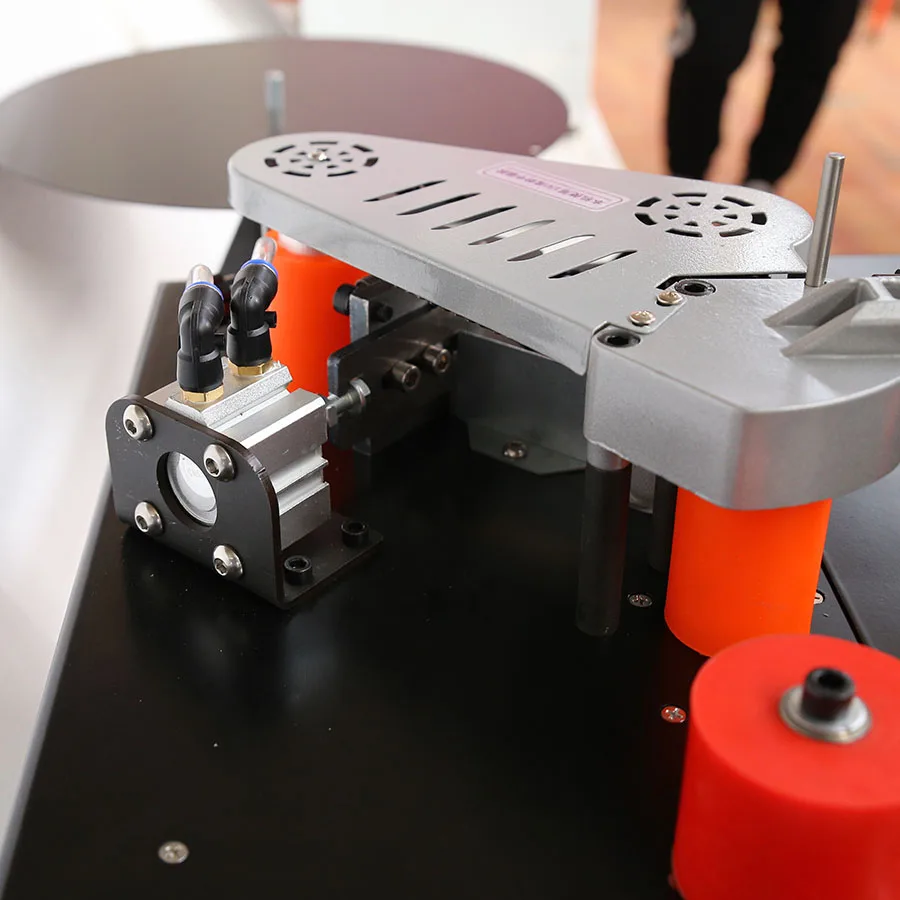
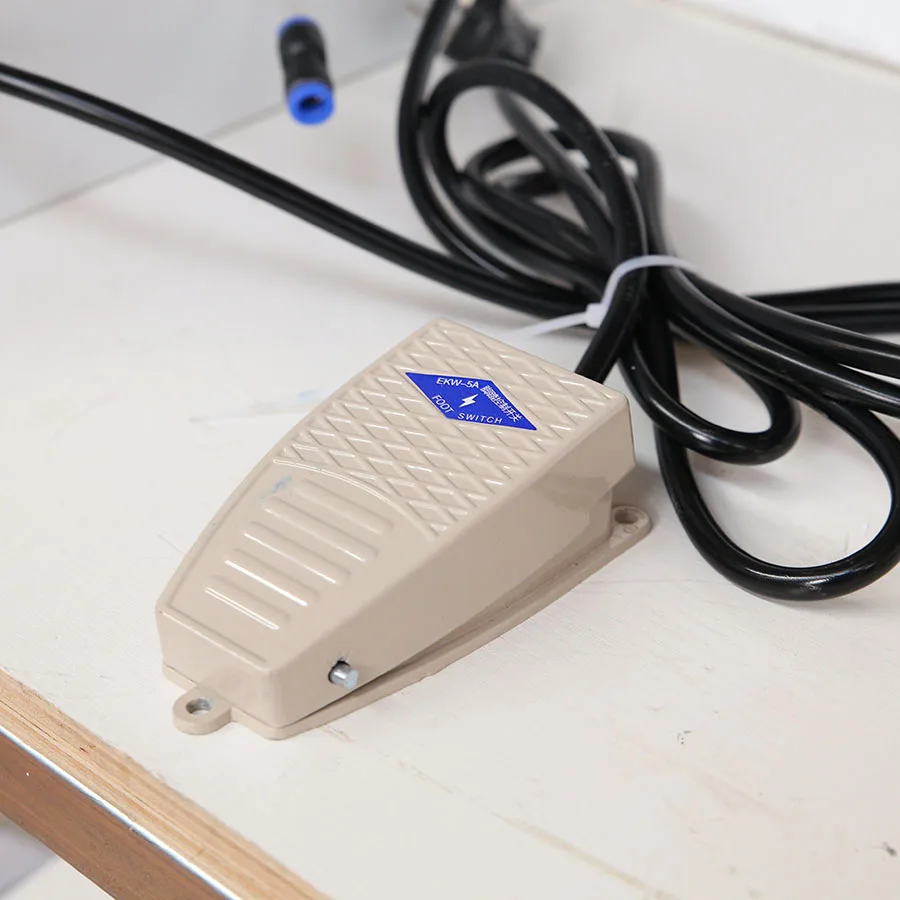
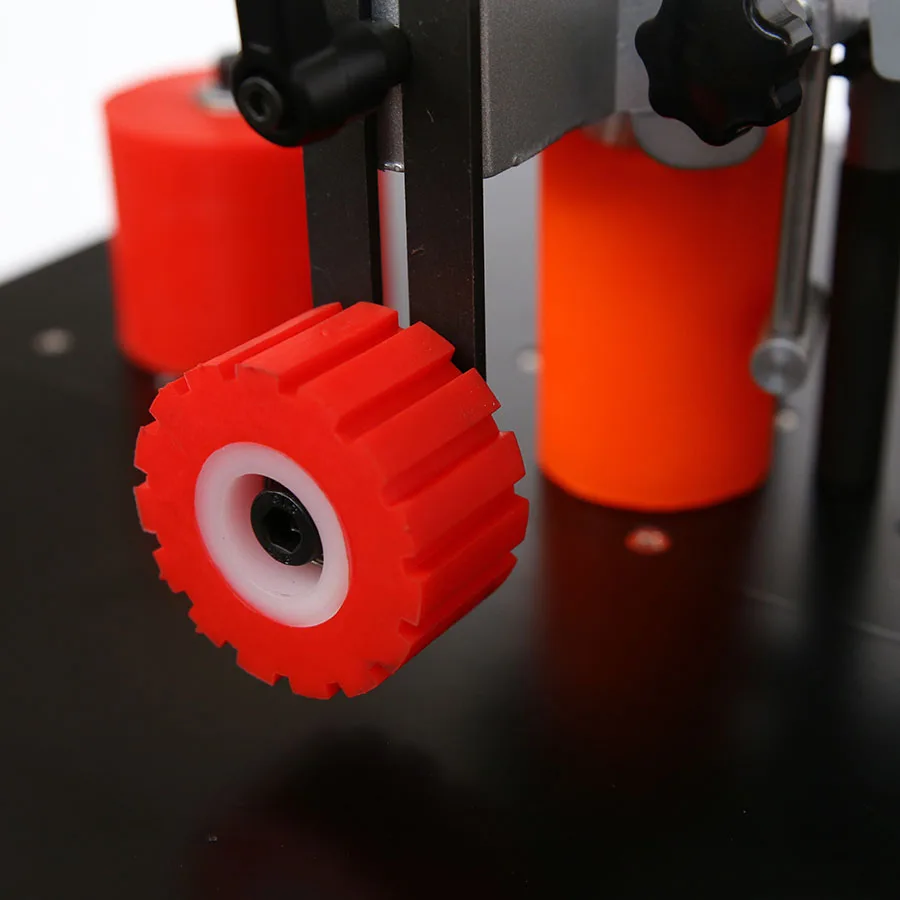
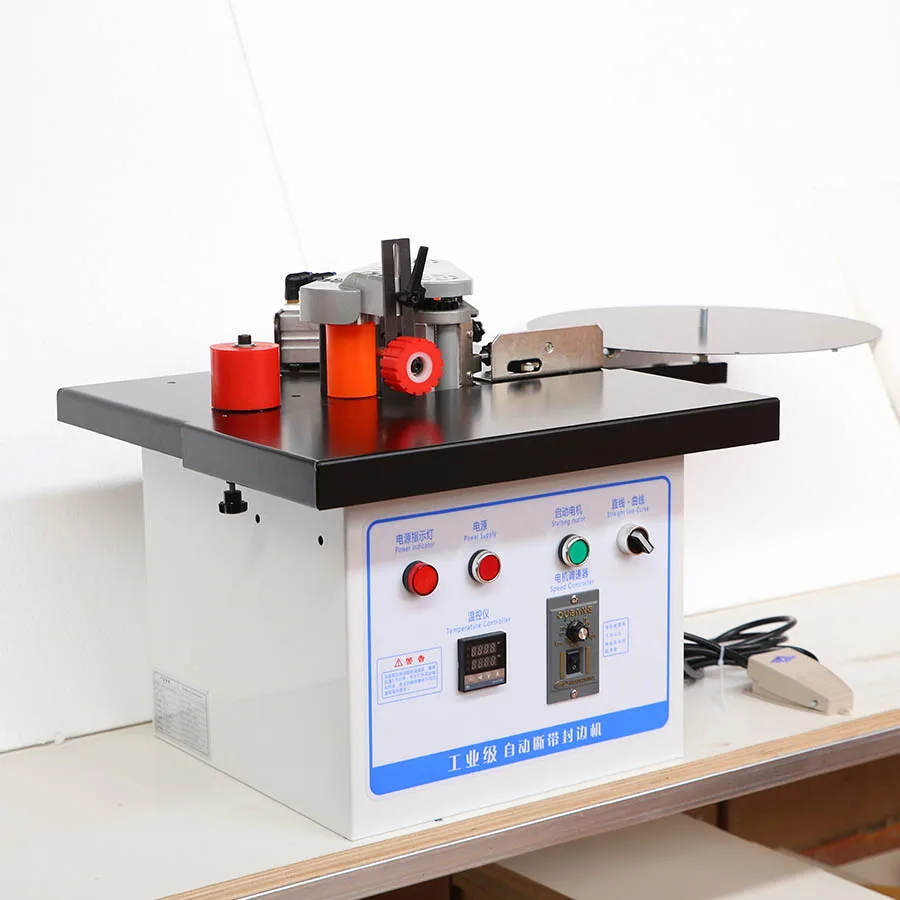
Description
Fast Dispatch — Every ZDSF-60 mini edge banding machine in stock ships with voltage and electrical schematic verified to your site before dispatch.
Technical Specifications
| Parameter | Value |
|---|---|
| Model | ZDSF-60 |
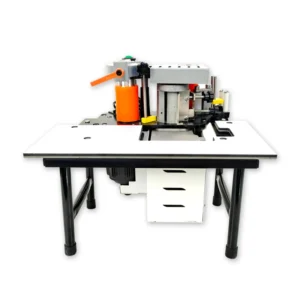
| Product Type | Mini PVC Edge Banding Machine |
| Rated Voltage | 220V (customizable) |
| Heating Power | 800W |
| Glue Pot Capacity | 1000 ml |
| Glue Heating Configuration | 4 heating tubes |
| Rated Air Pressure | 0.4–0.6 MPa |
| Edge Strip Thickness Range | 0.5–2 mm |
| Maximum Sheet Thickness | 50 mm |
| Edge Banding Speed | 0–6 m/min |
| Gluing Method | Double-sided via glue-coated rollers |
| Tape Breaking Control | Pneumatic with foot switch and travel switch |
| Pressure Roller | Adjustable rubber pressing roller |
| Edge Strip Transport | Adjustable bayonet for height alignment |
| Edge Profile Compatibility | Straight, curved, and shaped edges |
| Overall Dimensions | 54 × 54 × 56 cm |
| Machine Weight | 26 kg |
| Certification | CE, ISO 9001 |
Application Suitability
| Application | Material or Output |
|---|---|
| Small-batch cabinet door production | MDF and particleboard with PVC edge banding |
| Custom joinery and fitted furniture | Plywood panels with veneer or PVC strips |
| On-site furniture installation and retrofit | Solid wood panels requiring curved edge profiles |
| Repair and rework of damaged edges | Shaped and contoured panel edges up to 50 mm thick |
| Startup workshop transitioning from manual banding | Straight and curved edges on standard sheet stock |
Why Voltage Confirmation Matters Before You Pay
A portable edge bander that arrives with the wrong voltage rating is a heavy paperweight sitting on your shop floor. The ZDSF-60 is configured and documented to match your local supply before it leaves the factory. [NEED_CITE: voltage and frequency standards by export market]
I once watched a customer spend weeks troubleshooting glue adhesion on a portable PVC bander, only to discover the heating element was running below rated temperature because the local supply frequency did not match the machine nameplate. The glue never reached proper viscosity. That kind of problem does not show up on a spec sheet — it appears only after you have paid, received the machine, and tried to run production. When you source a mini edge banding machine in stock, the expectation is that it works the day it arrives, not after a round of electrical corrections.
Stock Availability Without the Guesswork
Ordering from ready inventory eliminates the typical multi-week production wait. This mini edge banding machine in stock is allocated and prepared for dispatch as a single unit or in small batches, which suits workshops adding capacity incrementally rather than committing to a full line purchase.
The ordering sequence is straightforward: confirm your voltage and frequency, specify the operator language for the manual and control labels, and the machine is tested against those parameters before crating. There is no minimum order requirement beyond a single unit.
What Fast Dispatch Actually Includes
Fast dispatch is only valuable if the machine arrives configured correctly for your environment. Every ZDSF-60 unit prepared for shipment goes through a pre-dispatch test run on the substrate and edge strip material you specify. [NEED_CITE: pre-shipment inspection standards for woodworking machinery exports]
This means the glue temperature profile, feed speed, and roller pressure are adjusted and recorded before the machine is packed. You receive the test record with your shipment, so the operator has a documented baseline to work from during commissioning rather than starting calibration from zero.
Reading the Specs That Affect Daily Output
The 1000 ml glue pot with four heating tubes reaches operating temperature in five to eight minutes, which matters in a small shop where the machine may be powered on and off several times a day rather than running continuously. A single-tube pot of similar capacity would take noticeably longer to recover between batches, extending idle time.
Double-sided gluing through coated rollers applies adhesive to both the panel edge and the strip simultaneously, improving bond consistency compared to single-sided application, particularly on porous substrates like particleboard where glue absorption is uneven. The 0.5–2 mm strip thickness range covers standard PVC and thin veneer, while the 50 mm maximum sheet thickness accommodates most panel stock used in cabinet and furniture work.
The pneumatic tape-breaking system uses a foot switch for curved and shaped edges where the operator controls the break point manually, and a travel switch for straight runs where consistent break positioning reduces material waste. Adjustable pressure from the rubber roller ensures contact across varying strip widths without leaving compression marks on softer PVC.
The Cost of Skipping Pre-Shipment Verification
Machines that ship without substrate-specific testing create problems that surface only in production. Edge banding that looks acceptable on the first panel may delaminate after the batch has acclimated to shop humidity, because the glue temperature and roller pressure were never tuned to your specific board density. [NEED_CITE: common causes of edge banding adhesion failure in humid environments]
Workshops that buy a portable bander based on price alone often discover the machine was never tested on their actual material. The result is weeks of trial-and-error adjustment, wasted edge strip, and panels that fail when they reach the assembly bench. That downtime is a hidden cost that does not appear on any quotation.
Why Sourcing Through This Channel Works
Every ZDSF-60 in inventory can be customized for voltage from 110V to 440V with the corresponding frequency, documented in the electrical schematic before dispatch. This is standard practice, not a special request.
Control panels and operation manuals are produced in the language your operators actually read, which removes the commissioning delay that occurs when instructions must be translated on the shop floor.
Pre-shipment testing runs your specified panel material and edge strip through the machine, generating a test record that travels with the shipment and gives your team a verified starting point.
The four-stage quality control process covers incoming components, in-process assembly, finished product inspection, and final pre-shipment verification, which is applied to every unit whether it is a single stock order or a bulk shipment.
Engineer-led configuration support means the recommendation you receive accounts for your production volume and material mix, not just the model with the shortest lead time.
Documentation & Verification
- CE declaration of conformity covering the ZDSF-60 portable edge bander
- Electrical schematic confirming your site voltage and frequency before dispatch
- Factory test record on your specified panel material and edge strip thickness
- Operation and maintenance manual in your agreed operator language
- Spare parts list covering glue rollers, heating tubes, and pneumatic components
Installation, Commissioning & Support
- 220V single-phase supply with a dedicated 15A circuit for the 800W heating element
- Requires 0.4–0.6 MPa clean dry air from a shop compressor or standalone unit
- 26 kg weight and 54 × 54 × 56 cm footprint allows bench-top or floor placement
- First-run calibration of glue temperature and roller pressure using your panel stock
- Multilingual control labels and manual provided to match operator language
- Spare glue rollers and heating tubes identified in the shipped parts list
Before You Request a Quote
Provide your panel material type and thickness range, the edge strip material and thickness you plan to run, and your local voltage and frequency. If you are working with curved or shaped profiles, note the minimum radius so we can confirm compatibility with the adjustable bayonet and pressure roller travel.
Frequently Asked Questions
Q: Is the ZDSF-60 currently in stock and how quickly can a single unit ship?
A: The ZDSF-60 is held in ready inventory for single-unit and small-batch orders. Dispatch timing depends on the voltage and language configuration required, as each unit undergoes pre-shipment testing on your specified material before crating. Once configuration details are confirmed, stock units typically ship within days rather than weeks.
Q: Can the 220V rating be adjusted for my local voltage and frequency?
A: Yes. The machine is configurable across a range from 110V to 440V with the corresponding frequency for your market. The confirmed voltage and frequency are documented in the electrical schematic that ships with the machine, and the heating element and motor are matched to that supply before dispatch.
Q: Which edge banding materials and panel substrates does this machine handle?
A: The ZDSF-60 runs PVC and veneer edge strips from 0.5 to 2 mm thick on MDF, particleboard, plywood, and solid wood panels up to 50 mm thick. It handles straight, curved, and shaped edge profiles. If you work with unusual substrates, a pre-shipment test on your actual material is recommended.
Q: What if the control panel and manual are not in a language my operators read?
A: Control panel labels and the full operation manual are produced in your agreed language before shipment. This is confirmed during the ordering stage so that operators can commission and run the machine without relying on external translation during setup.
Q: What spare parts are included and how are replacements sourced?
A: Each shipment includes a spare parts list identifying glue rollers, heating tubes, and pneumatic components specific to the ZDSF-60. Replacement parts can be ordered directly and shipped separately. Having the parts list on hand allows you to plan maintenance intervals and stock critical consumables locally.