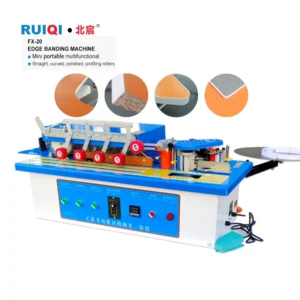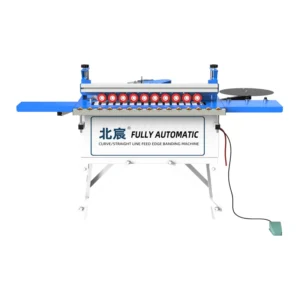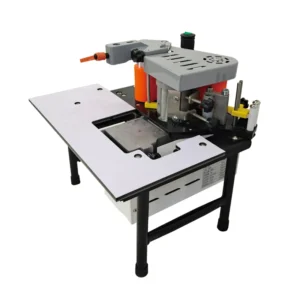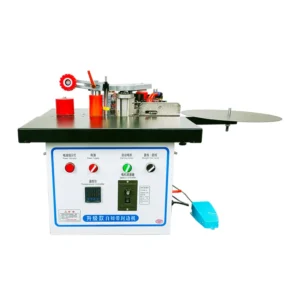
Description
In-stock dispatch with confirmed electrical compatibility — every unit undergoes voltage verification and a live run test against your specified panel material before leaving the warehouse.
Technical Specifications
| Parameter | Value |
|---|---|
| Product Type | Automatic Edge Banding Machine |
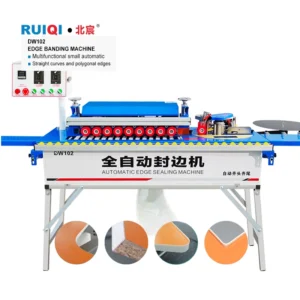
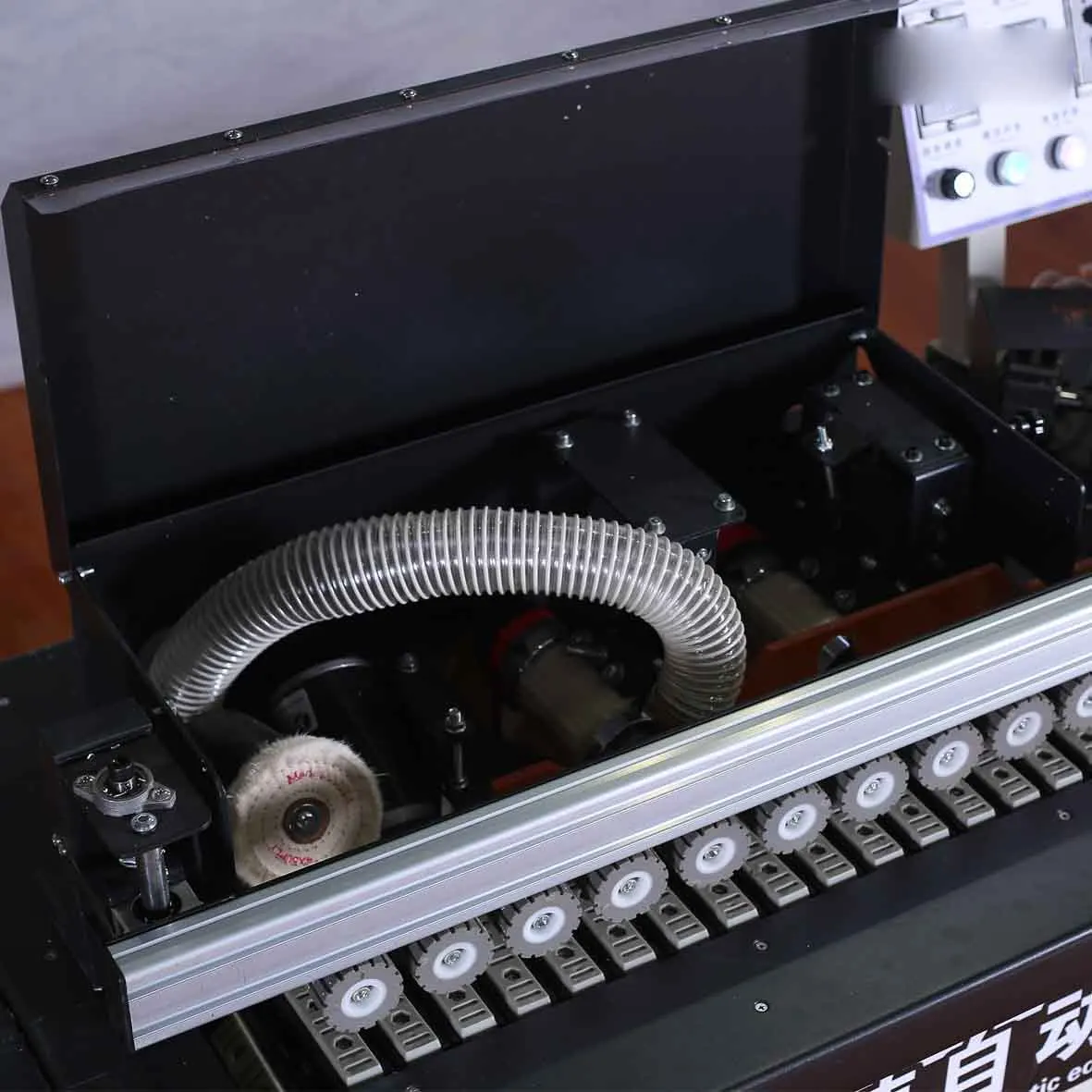
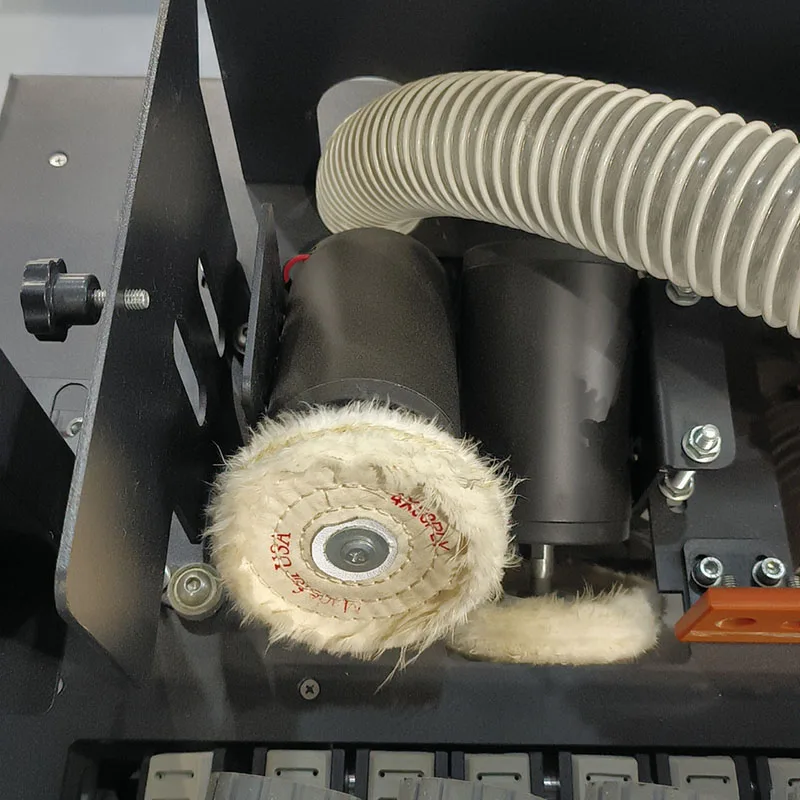
| Function Sequence | Automatic plate feeding, end cutting, upper and lower polishing, automatic head and tail trimming |
| Edge Type | Straight line |
| Rated Voltage | 220V |
| Rated Power | 4 kW |
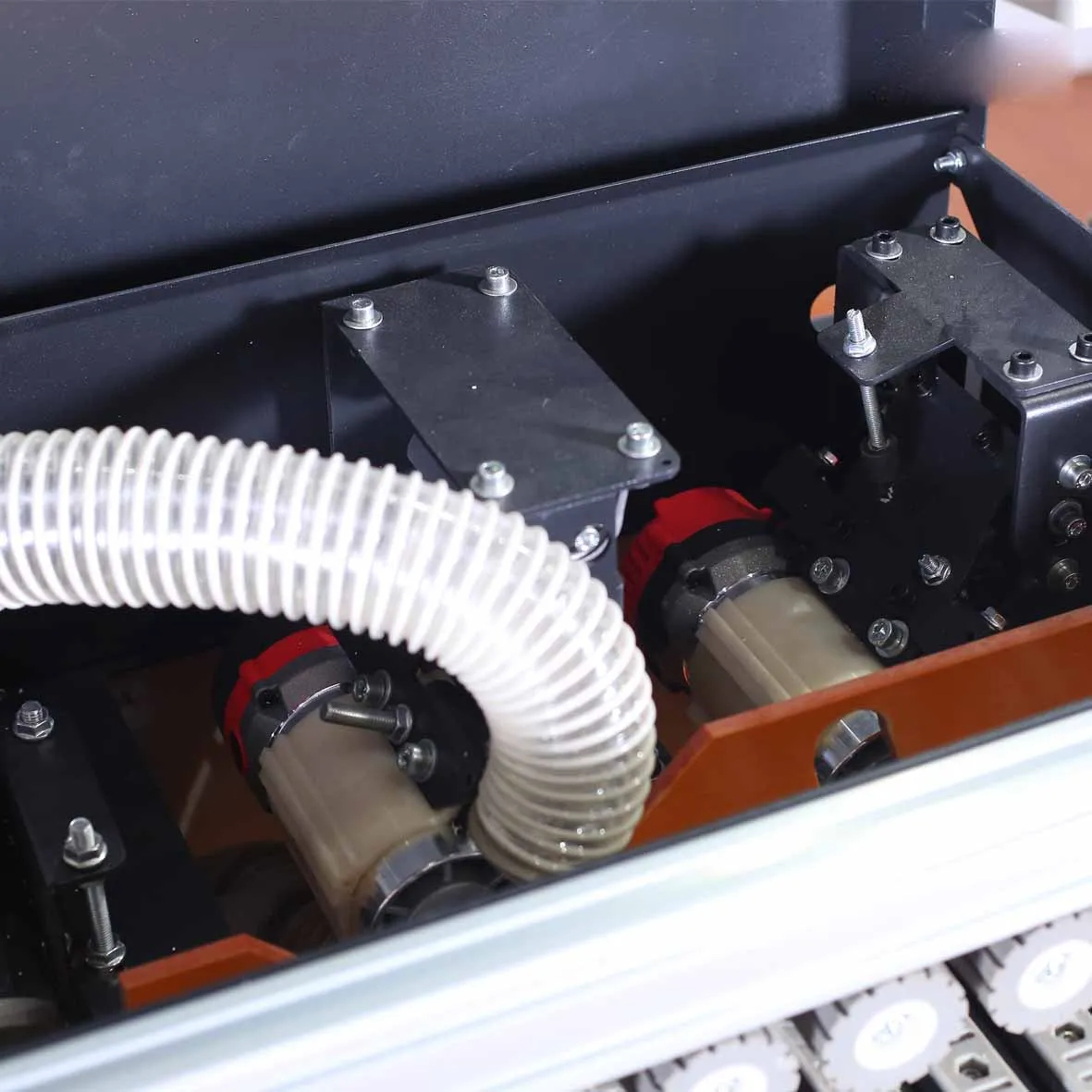
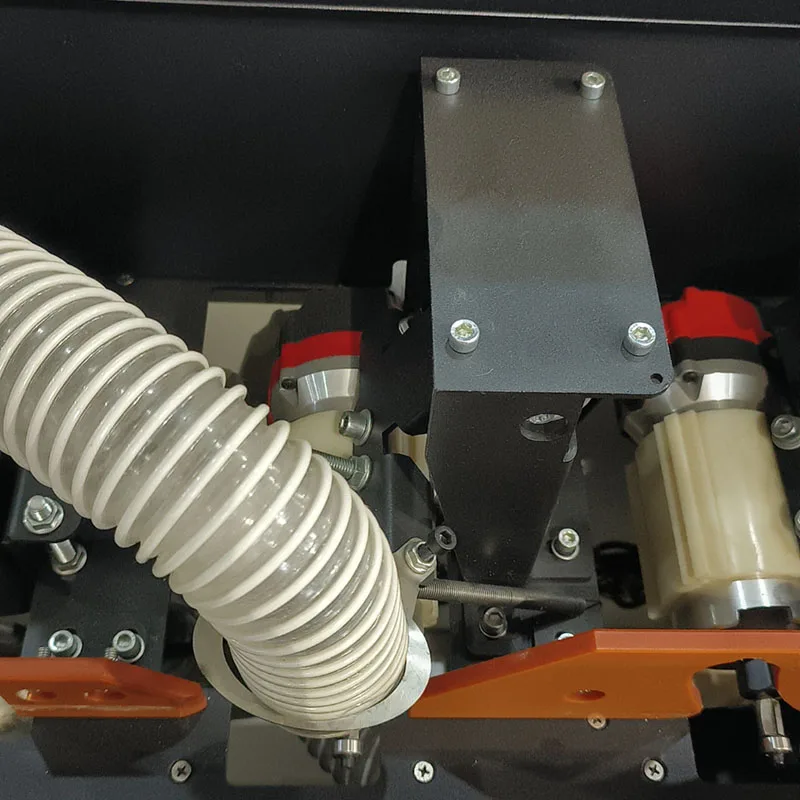
| Trimming Power | 800 W × 2 |
| Polishing Power | 180 W × 2 |
| Suction Power | 1200 W |
| Heating Power | 1000 W (5–10 min warm-up) |
| Glue Pot Capacity | 4000 ml |
| Strip Thickness Range | 0.5–2.5 mm |
| Sheet Thickness Range | 10–50 mm |
| Feed Speed | 0–10 m/min |
| Conveyor Belt Speed | 0–10 m/min |
| Rated Air Pressure | 0.4–0.6 MPa |
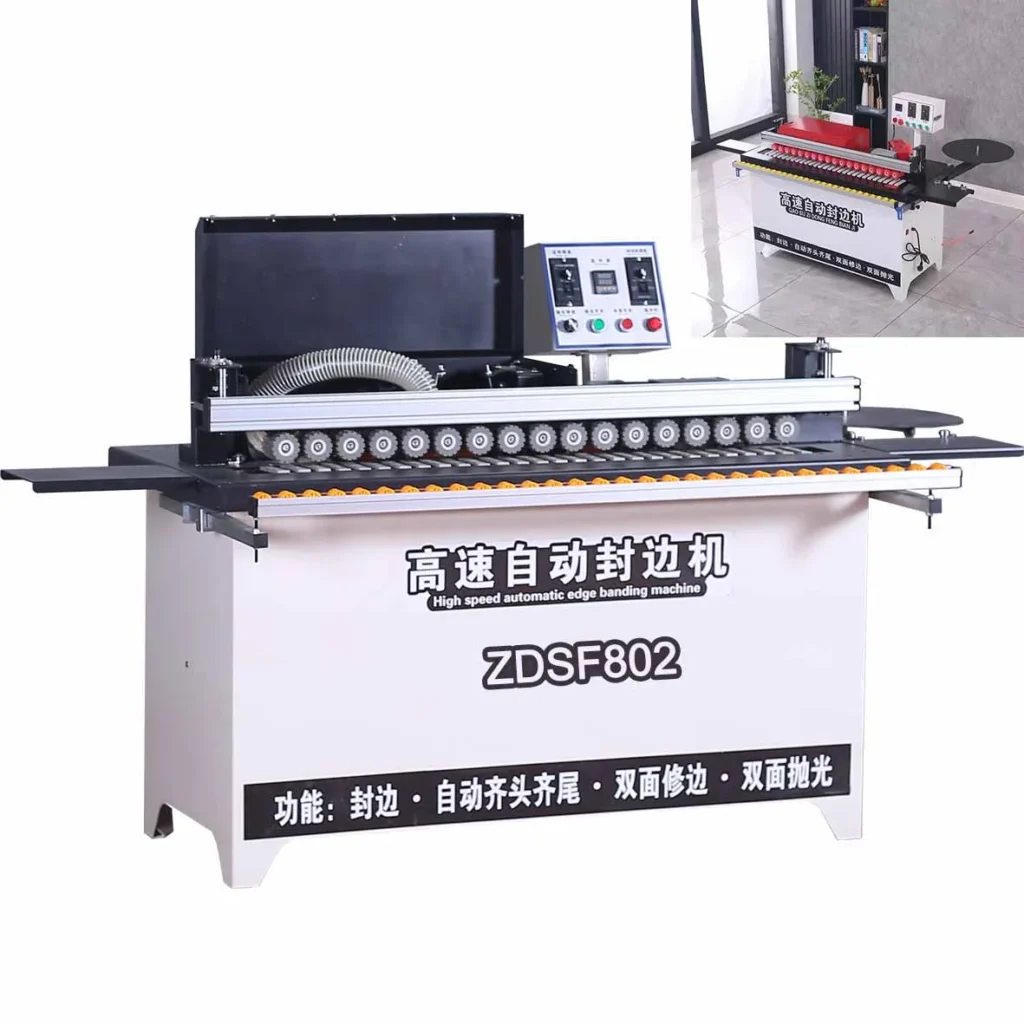
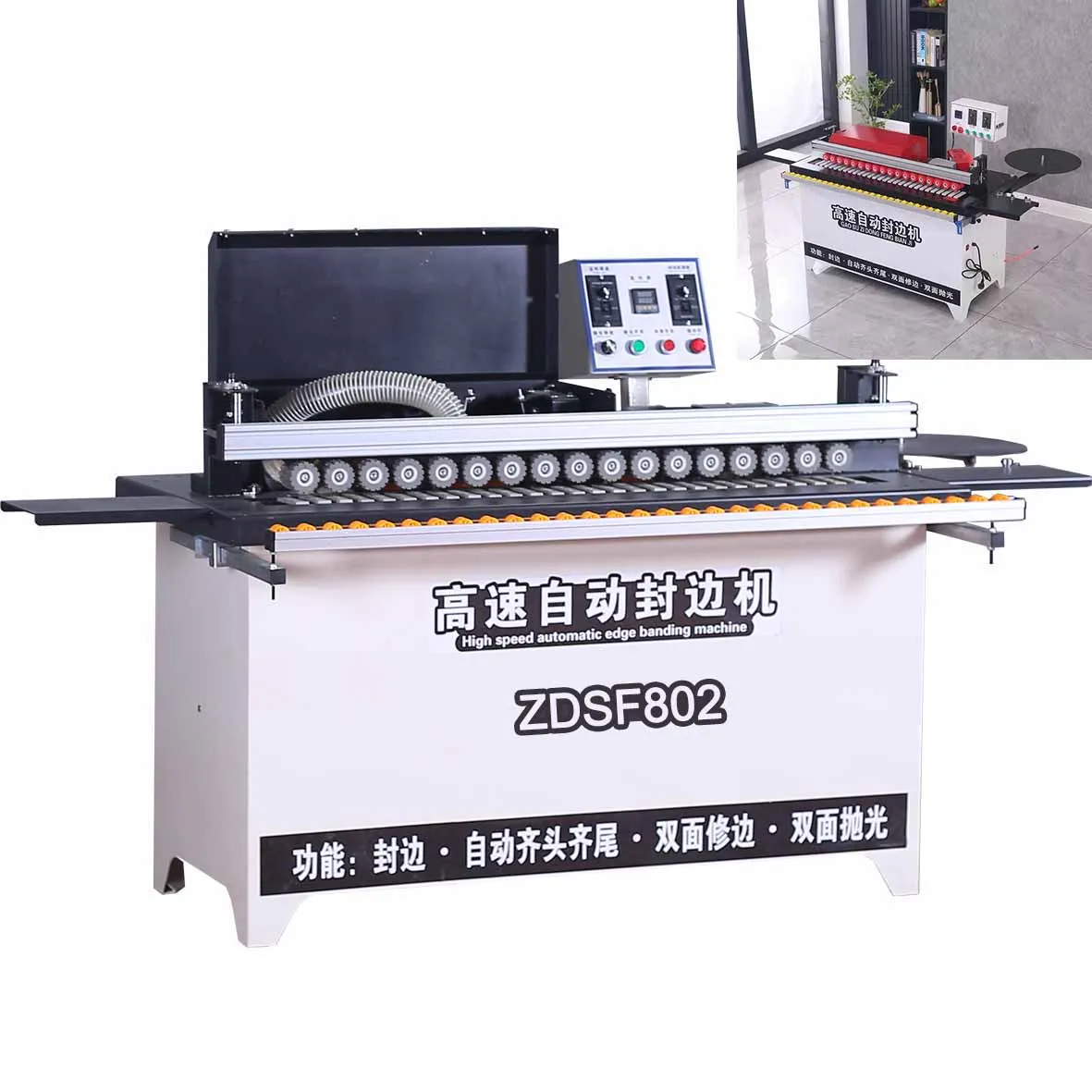
| Overall Dimensions (L×W×H) | 1300 × 650 × 750 mm |
| Machine Weight | 150 kg |
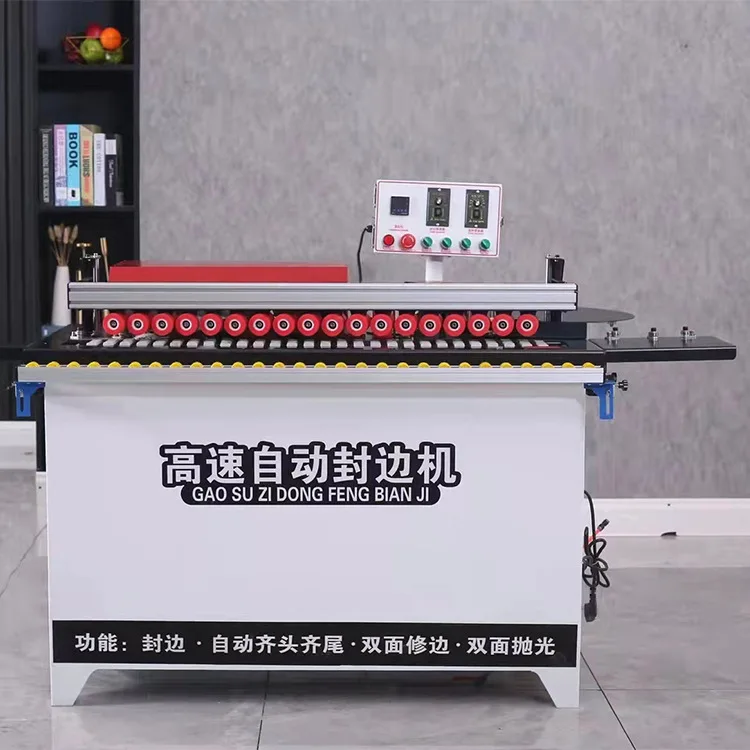
| Pressure Beam | One-piece, double rows of pressure wheels |
| Conveyor Belt Material | Silicone |
| Control Panel | Digital display for glue pot temperature, independent switches |
| Belt Breaking Method | Pneumatically controlled |
| Extension Support | Extendable fluent strips for large panels |
| Dust Collection | Built-in dust collector |
Application Suitability
| Application | Material or Output |
|---|---|
| Custom furniture and cabinet edge finishing | MDF and particleboard with 0.5–2.5 mm PVC edge banding |
| Small to mid-size joinery workshop production | Plywood and solid wood panels with veneer edge banding |
| Secondary or backup edge banding for panel plants | Straight-line MDF, particleboard, and plywood panels 10–50 mm thick |
| Batch production for bespoke shelving and enclosures | Laminated boards requiring head-and-tail trimming and polishing |
Why the Voltage Question Should Come Before the Price on an Automatic Edge Banding Machine in Stock Fast Delivery
A machine that cannot power on in your workshop is dead weight, regardless of how competitive the quotation was.
I spent years running site installations, and the most frustrating calls were not about mechanical faults — they were about electrical mismatches. A batch of edge banders once shipped out without tight voltage confirmation, and the customer’s workshop ran on 220V single-phase while the machines were set for a different configuration. The units sat unopened for three weeks waiting for inverter modifications. That experience shaped how I handle every dispatch now: the electrical schematic and the site’s supply standard get cross-checked before any crate is sealed. When you search for an automatic edge banding machine in stock fast delivery, the speed advantage disappears entirely if the machine needs field rewiring on arrival [NEED_CITE: voltage and frequency standards by export market].
Dispatch Readiness Without Custom-Build Delays
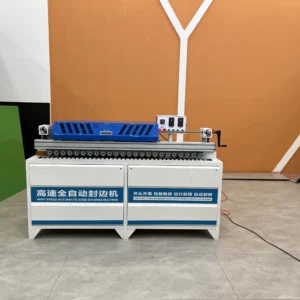
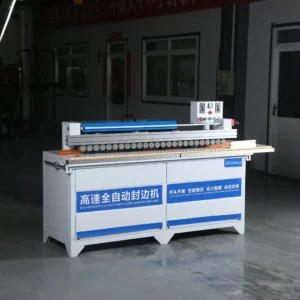
Workshops that need to bring an edge bander online quickly often cannot wait through a full production cycle. This unit ships from available inventory, meaning the typical multi-week build schedule is eliminated entirely. The 1300 × 650 mm footprint fits through standard workshop doors and onto a flat concrete floor without special foundation work. An automatic edge banding machine in stock fast delivery is only useful if it actually runs on day one — which is why each unit goes through a live panel feed test before crating.
Compact Footprint With Full Trimming and Polishing Stations
Smaller workshops often assume they must sacrifice finishing stations to fit a machine into limited floor space. This model packs end cutting, double trimming motors at 800 W each, and upper-and-lower polishing into a 150 kg frame. The one-piece pressure beam with double-row silicone wheels keeps panels stable without surface marking, even at the 0–10 m/min feed range. For a joinery shop moving from hand-held routers to automated edge finishing, the difference in consistency shows up immediately on the assembly bench [NEED_CITE: edge banding quality standards for panel furniture assembly].
How Glue Pot Size and Heating Power Affect Your Daily Run
The 4000 ml glue pot paired with a 1000 W heating element means the adhesive reaches working temperature within 5 to 10 minutes and sustains it through extended batch runs. Smaller pots require frequent refills that interrupt production rhythm and introduce temperature fluctuation each time cold adhesive enters the reservoir. The digital temperature display on the control panel lets operators monitor the glue state without guesswork. For shops running PVC banding at 0.5–2.5 mm thickness, consistent melt viscosity is what separates a clean glue line from one that shows visible seepage on light-colored substrates.
Panel Thickness Range and Conveyor Behavior
The 10–50 mm sheet thickness range covers the vast majority of furniture-grade MDF, particleboard, and plywood used in cabinet and shelving production. The silicone conveyor belt grips without scratching finished surfaces, and the pneumatically controlled belt breaking mechanism stops the strip cleanly at the panel end. Extendable fluent strips support oversized panels that would otherwise sag past the machine’s main bed. Matching feed speed to material density matters: heavier particleboard at 50 mm thickness typically runs better at the lower end of the 0–10 m/min range, while lighter 10 mm MDF handles the upper range without feed slip.
The Cost of Skipping Pre-Shipment Electrical Verification
Machines that arrive with the wrong voltage configuration do not just sit idle — they consume project timeline and installer confidence. A workshop that planned a commissioning week around the machine’s arrival suddenly has carpenters standing around while an electrician sources a step-up transformer or a compatible inverter. In some regions, modifying the electrical cabinet on-site voids the original wiring certification. I have watched installation schedules collapse over a single unchecked nameplate, and the frustration compounds when the fix requires parts that are not locally available [NEED_CITE: CE machinery directive requirements for industrial equipment].
Why Sourcing This Machine From Available Stock Makes Sense
The warehouse holds units ready for immediate allocation, so your procurement timeline shrinks from a production cycle to a logistics cycle. Every machine undergoes a documented pre-shipment test against your specified panel material and edge banding type before dispatch. Voltage and plug configuration are confirmed against your local supply standard and recorded on the electrical schematic. The operation and maintenance manual ships in your agreed language so operators can begin commissioning without translation delays. Spare parts lists are included with each dispatch, identifying consumables for your first reorder. Engineers provide configuration guidance matched to your workshop’s daily panel volume and material mix.
Documentation & Verification
- Factory test record confirming run performance on your panel thickness and edge banding type
- Electrical schematic with voltage label matching your confirmed local supply standard
- Operation and maintenance manual supplied in your agreed language at operator level
- Spare parts list identifying consumables and wear items for immediate reorder planning
- Packing photographs documenting machine condition at the point of dispatch
Installation, Commissioning & Support
- Requires a level concrete floor supporting 150 kg with clearance around the 1300 × 650 mm footprint
- Dedicated 220V circuit rated for 4 kW continuous draw with proper grounding
- Arrives as a single-unit assembly requiring only conveyor extension and dust hose connection
- Digital glue pot display calibrated during pre-shipment test for your specific banding material
- Pneumatic system requires 0.4–0.6 MPa clean dry air supply at the machine inlet
- Silicone conveyor belt and trimming cutters identified as primary wear items on spare parts list
What We Need to Confirm Before Dispatch
To ensure the machine arrives ready for your production floor, share your panel material types and typical thickness range, the PVC or veneer strip thickness you run most often, and your workshop’s confirmed voltage and frequency standard. If you have specific edge finish requirements or plan to run the machine alongside existing saws or boring units, let us know the upstream and downstream workflow so the configuration recommendation fits your line.
Frequently Asked Questions
Q: What is the dispatch lead time for in-stock units, and can I order a single machine?
A: In-stock units ship on a logistics timeline rather than a production timeline, and single-unit orders are accepted without minimum quantity requirements. Once your voltage and panel specifications are confirmed, the machine goes through pre-shipment testing and moves to dispatch preparation. Lead time depends on your destination port and chosen shipping method.
Q: How do I confirm this 220V machine matches my workshop’s voltage and frequency?
A: Before dispatch, we request your workshop’s exact voltage and frequency rating and cross-reference it against the machine’s electrical schematic. The voltage label on the cabinet is verified to match your supply standard. If any discrepancy exists, it is resolved at the factory rather than on your floor after arrival.
Q: What edge banding materials and panel substrates are compatible with this model?
A: This machine handles PVC and veneer edge banding in the 0.5–2.5 mm thickness range, applied to MDF, particleboard, plywood, and solid wood panels between 10 and 50 mm thick. The 4000 ml glue pot and digital temperature control maintain consistent adhesive performance across these material combinations during straight-line runs.
Q: What spare parts ship with the machine, and how fast can replacements be ordered?
A: Each dispatch includes a spare parts list identifying consumables such as trimming cutters, polishing wheels, and silicone belt sections. Replacement orders can be placed directly and ship on standard logistics timelines. We recommend reviewing the list before installation so you can plan your first reorder based on expected production volume.
Q: Is installation guidance provided, and what are the air supply requirements on my floor?
A: Installation guidance is provided to help position the machine, connect the dust extraction hose, and set up the pneumatic feed. The machine requires a clean dry air supply at 0.4–0.6 MPa connected to the rated inlet. The 150 kg weight and compact footprint allow placement on a standard workshop floor without reinforced foundation work.