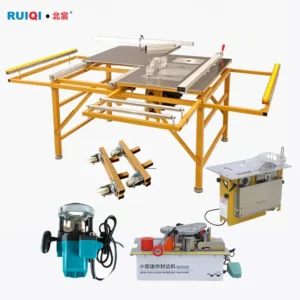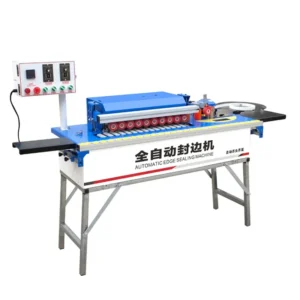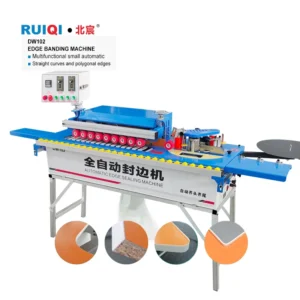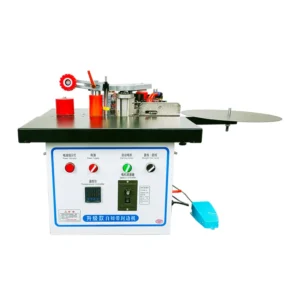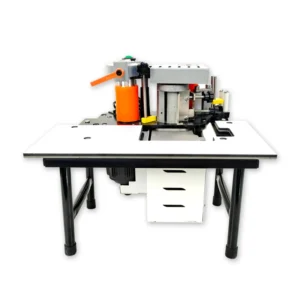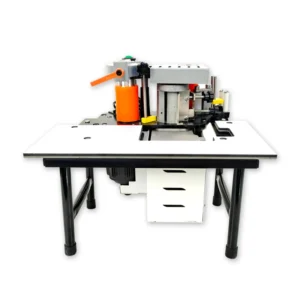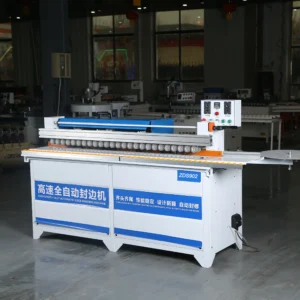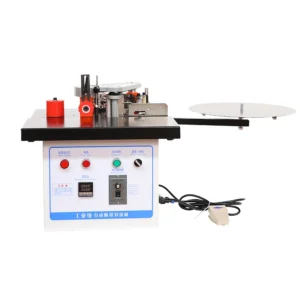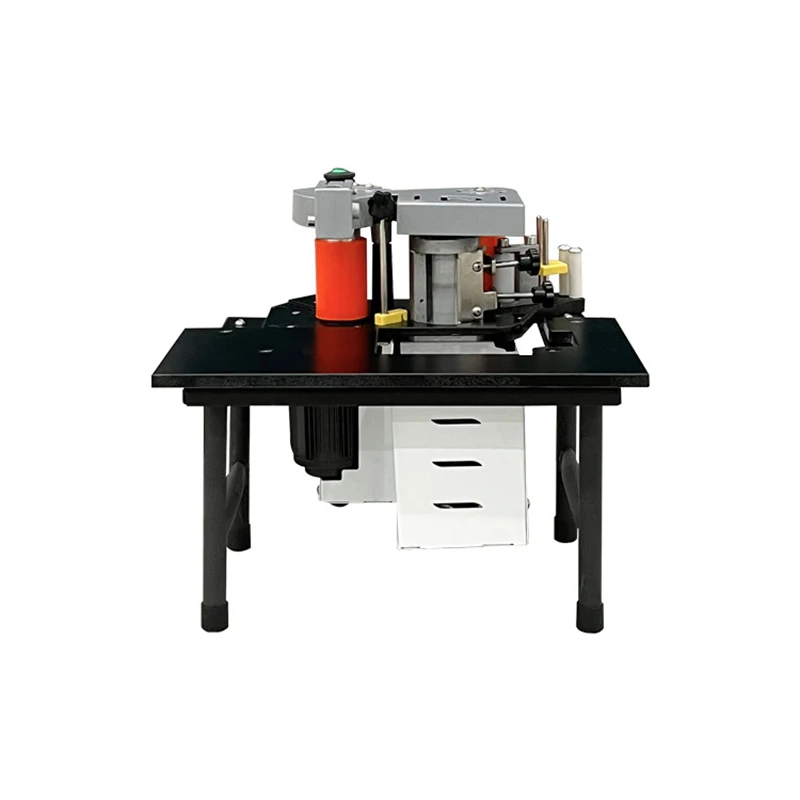
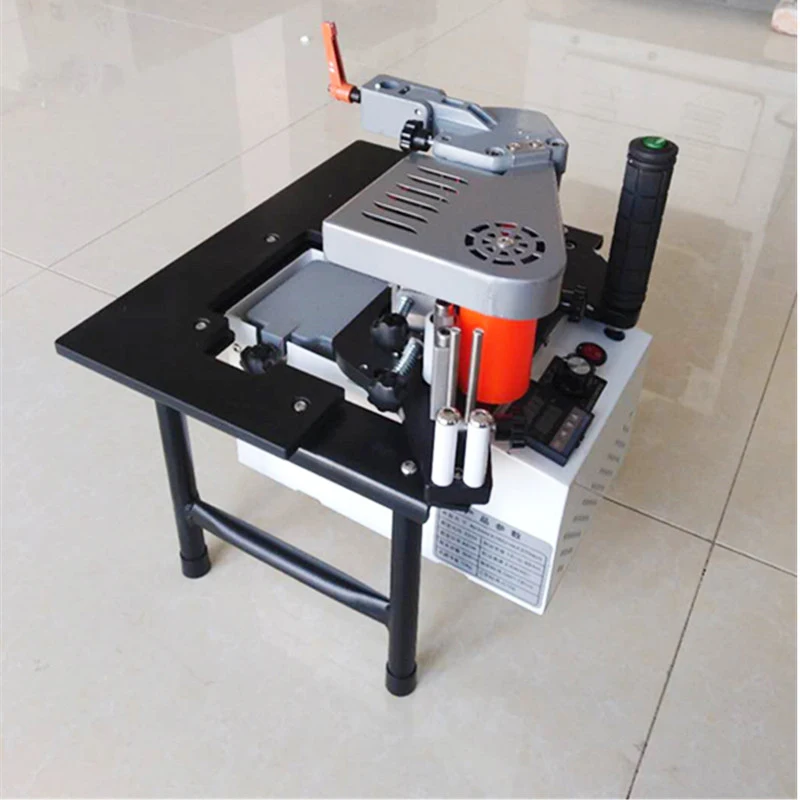
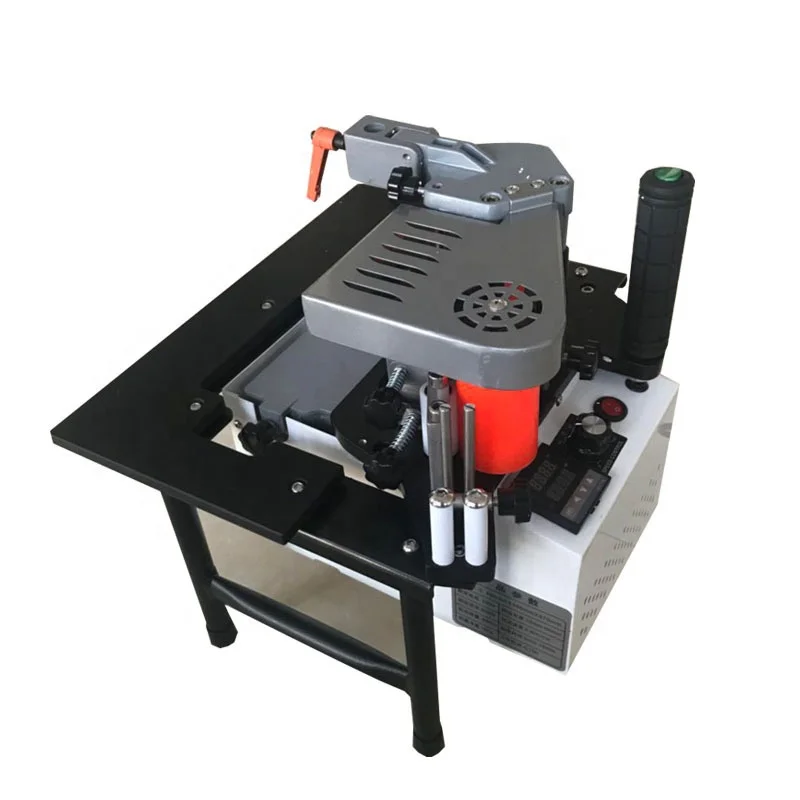
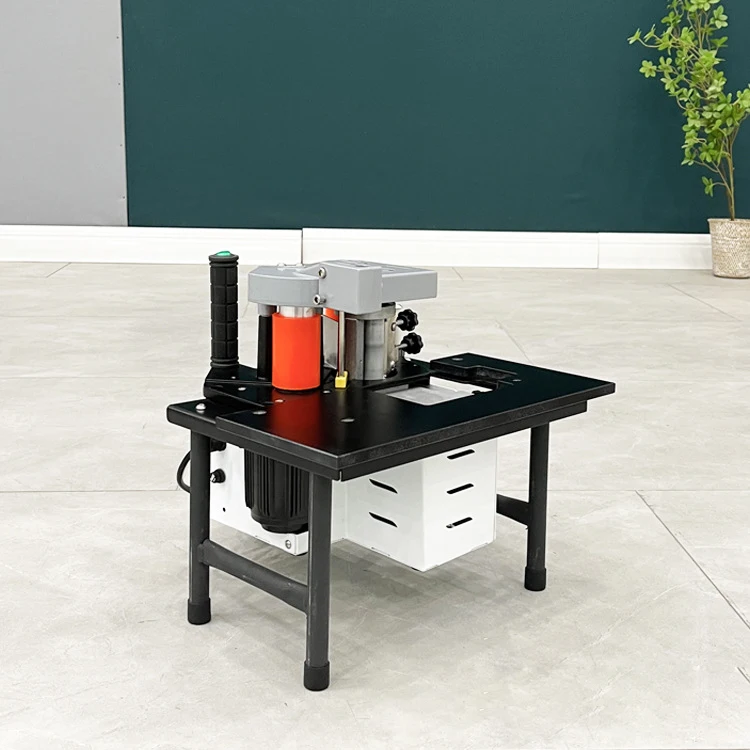
Description
Dispatch-Ready Configuration — every portable edge bander leaves our Shandong floor with confirmed voltage, plug standard, and a pre-shipment test record matched to your panel stock.
Technical Specifications
| Parameter | Value |
|---|---|
| Product Type | Portable Edge Banding Machine |
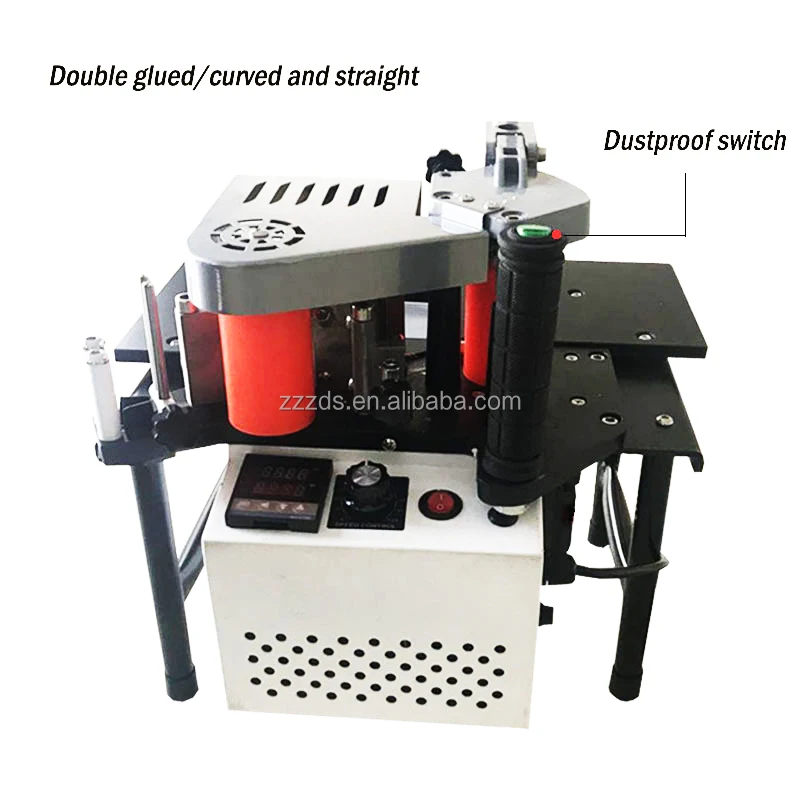
| Shape of Edge-Banding Plates | Curved, Straight, and Special-shaped Sheet |
| Edge Thickness Range | 0.3–3 mm |
| Edge Sealing Speed | 0–6 m/min (basis not stated in source) |
| Edge Sealing Height (Panel Thickness) | 7–60 mm |
| Gluing Method | Double-sided gluing |
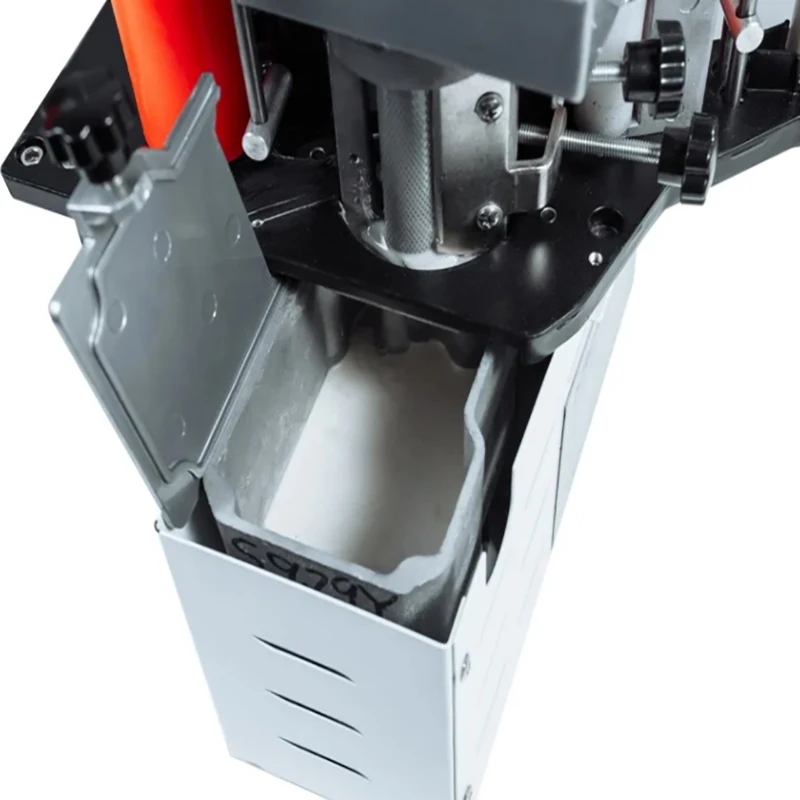
| Glue Pot Volume | 1000 ml |
| Machine Weight | 14 kg |
| Plug Options | EU / AU / UK / USA / CN |
| Logo Customization | Available |
| Warranty | One year |
Application Suitability
| Application | Material or Output |
|---|---|
| Small-batch custom furniture edge finishing | MDF and plywood panels with PVC banding |
| On-site cabinet installation touch-up | Particleboard with veneer edge banding |
| Curved panel edge sealing for joinery shops | Solid wood panels with 0.3–3 mm banding |
| Startup workshop transitioning from manual trimming | Standard 7–60 mm thick board stock |
Why Plug Type Must Be Settled Before the Portable Edge Banding Machine in Stock Ships
A machine that cannot power on the day it arrives is not a delivery — it is a delay.
I spent years on the assembly floor before moving into order fulfillment, and one job still sits with me. A small panel furniture shop ordered a compact edge bander, and nobody on either end double-checked the local supply frequency. The unit arrived, the motor hummed but would not reach operating speed, and the glue pot never stabilized at working temperature. We flew out, swapped the contactor and transformer, and lost two weeks of their production window. Since then, every dispatch from our floor carries a signed electrical confirmation sheet. A portable edge banding machine in stock is only useful if it actually runs in your workshop on day one [NEED_CITE: voltage and frequency standards by export market].
Stock Availability and Lead-Time Reality
Workshops that outgrow hand trimming rarely have the luxury of waiting eight weeks for a custom build. This portable edge banding machine in stock is staged for fast dispatch, meaning the typical gap between order confirmation and crate handover to the freight forwarder is measured in days rather than months. The trade-off is that stock units move on a first-confirmed basis, so securing the right plug and voltage combination early in the conversation matters.
Dispatch Preparation and Electrical Verification
Before any unit leaves the Shandong facility, the electrical cabinet is opened and the voltage setting is physically verified against the buyer’s written confirmation. The correct plug is fitted and labeled, and a short run test on sample board stock is recorded. This step takes under an hour but eliminates the most common cause of commissioning failure for small machines shipped across borders. Buyers receive the test record with their shipping documents [NEED_CITE: CE machinery directive requirements for industrial equipment].
Reading the Numbers That Actually Matter on the Shop Floor
The 7–60 mm panel thickness window covers the majority of stock board used in cabinet and shelving work, from thin 7 mm backs to 60 mm solid-wood bench tops. Double-sided gluing applies adhesive to both the panel edge and the banding simultaneously, which matters most when running PVC on MDF where single-sided application often leaves starved glue lines at the top edge. The 1000 ml glue pot holds enough hot-melt adhesive for continuous runs through a typical morning shift before a refill is needed. Edge thickness compatibility from 0.3 to 3 mm lets a workshop switch between thin veneer for visible faces and thicker PVC for high-wear carcase edges without changing machine. At 14 kg, the unit is light enough to carry to an installation site, yet the weight is sufficient to stay planted on a bench during curved-edge work where lateral pressure is higher.
The Cost of Skipping the Voltage Conversation
When a buyer focuses solely on sealing speed and overlooks electrical compatibility, the consequences arrive in sequence. First the machine will not start, then an electrician is called who may lack experience with glue-pot heating elements, then the original supplier is contacted across time zones, and finally a replacement transformer or control board is shipped at everyone’s expense. The production schedule that depended on that edge bander slips by weeks. This pattern repeats more often than any mechanical fault in small woodworking machines [NEED_CITE: common causes of commissioning delay in imported machinery].
What Buying from This Floor Actually Gets You
Voltage and plug configuration are confirmed in writing before the crate is closed, so there is no guessing at the destination. A pre-shipment test record travels with the shipping documents, showing the machine ran on board stock within your thickness range. The operation manual is supplied in the language your operator reads, not a generic English-only booklet. Spare parts are listed with part numbers at the time of delivery, so reordering a heating element or feed roller months later does not require photos and guesswork. Factory visits are welcomed if you want to see the four-stage QC process in person before committing.
Documentation & Verification
- CE declaration of conformity matched to the portable edge bander class
- Electrical schematic confirming your ordered voltage and plug type
- Pre-shipment test record on your specified panel thickness
- Operation manual in the language agreed at order stage
- Spare parts list with reorder codes included at dispatch
Installation, Commissioning & Support
- Requires a single dedicated circuit matching the confirmed voltage and frequency
- Bench-mounted setup with no foundation or anchor bolt requirement
- Arrives fully assembled; only the glue guard and banding guide need fitting
- First heat-up cycle should run empty to verify glue pot thermostat response
- Feed roller pressure adjustment shown in the supplied multilingual manual
- Spare heating elements and feed rollers listed for easy reorder
What to Share When Requesting a Quote
Tell us the board materials you run most often, the typical panel thickness range, and whether curved edges are a regular part of your output. Confirm your workshop voltage, phase, and frequency so the correct electrical configuration is staged. Let us know the language your operators read so the manual and any control labels are prepared accordingly.
Frequently Asked Questions
Q: What plug and voltage options can I order?
A: The unit ships with EU, AU, UK, USA, or CN plug types, and voltage is confirmed in writing before dispatch. We verify your local supply frequency at the same time to avoid motor or heating element mismatch on arrival.
Q: How quickly can the machine ship after I confirm?
A: Because this is a stocked model, dispatch lead time is measured in days once your voltage and plug selection are confirmed in writing. The pre-shipment test and crate preparation add a short but fixed window before carrier handover.
Q: Will it seal both curved and straight edges cleanly?
A: Yes. The machine handles curved, straight, and special-shaped panel profiles. Double-sided gluing keeps adhesive coverage even on curves where single-sided application often leaves visible gaps at the outer radius.
Q: Which banding materials and thicknesses are supported?
A: Edge thickness from 0.3 to 3 mm is supported, covering standard PVC and veneer banding. Panel thickness from 7 to 60 mm fits most cabinet, shelving, and custom furniture board stock used in small workshops.
Q: How do I reorder spare parts later?
A: A numbered spare parts list ships with the machine, covering wear items such as heating elements, feed rollers, and glue pot seals. You reference the part number when contacting us, so no photos or measurements are needed.