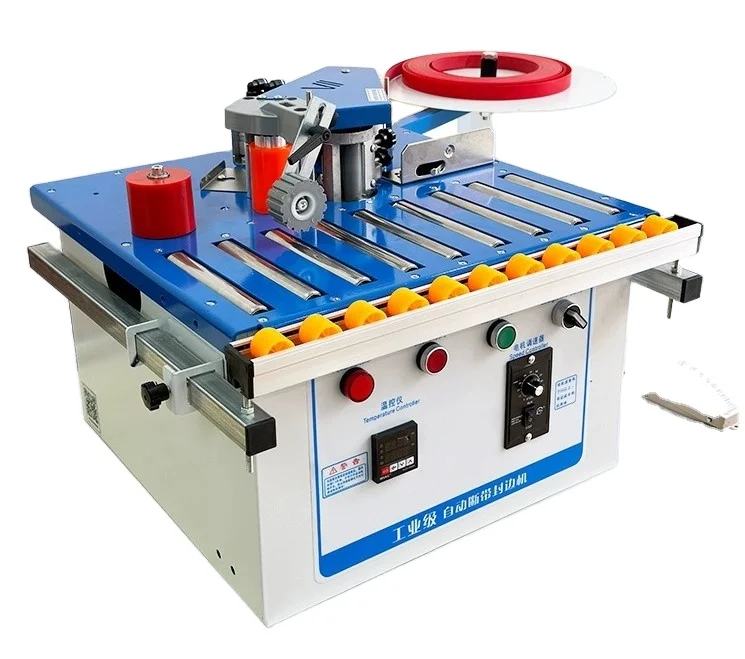
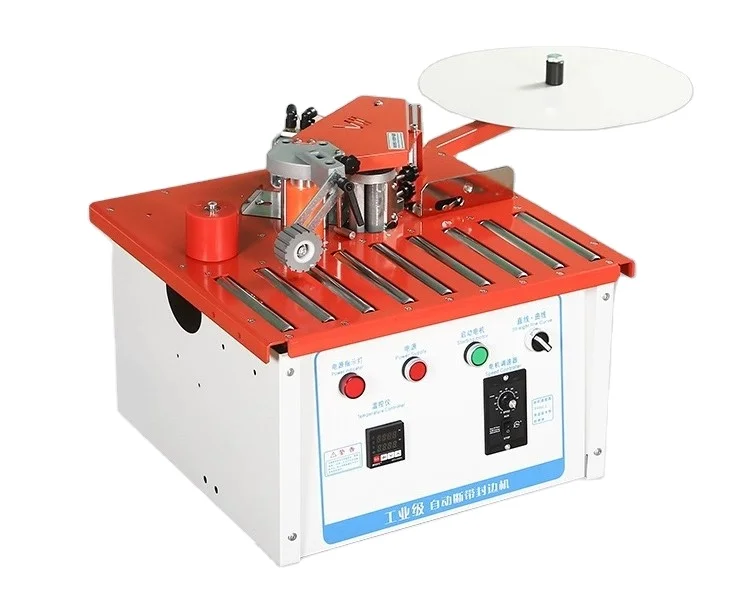
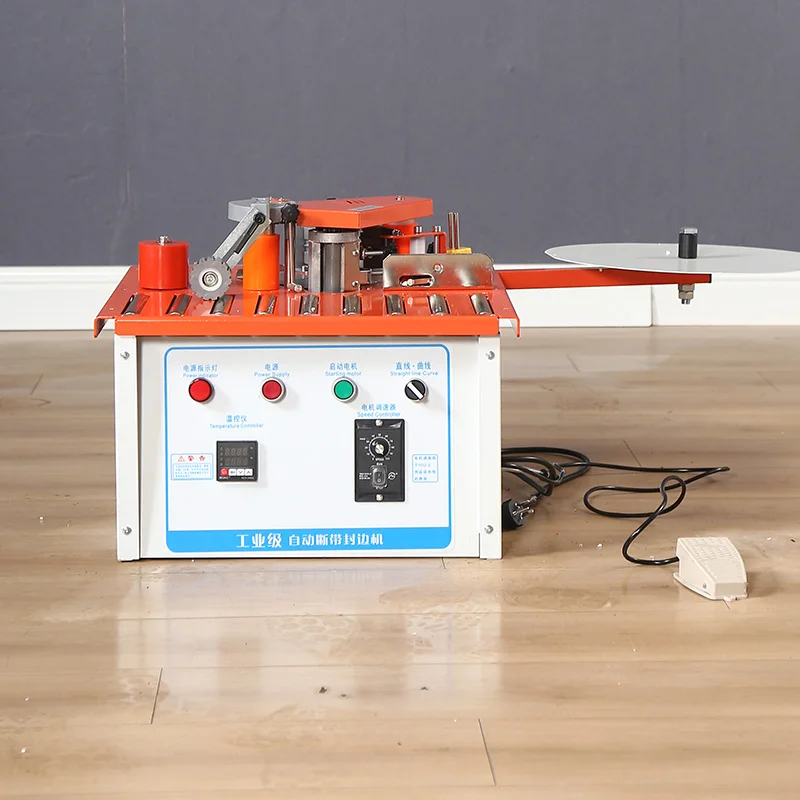
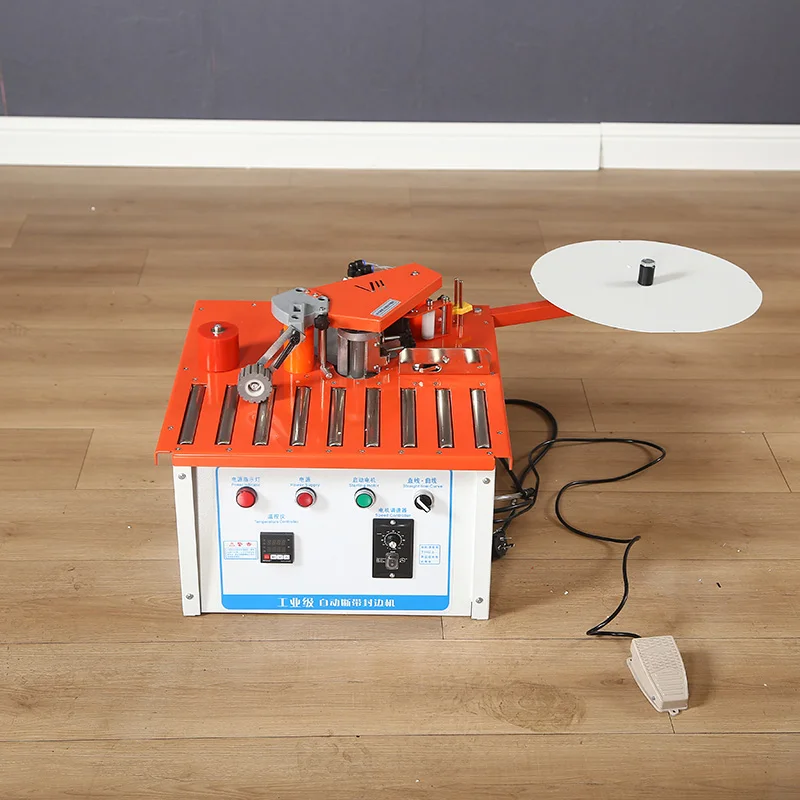
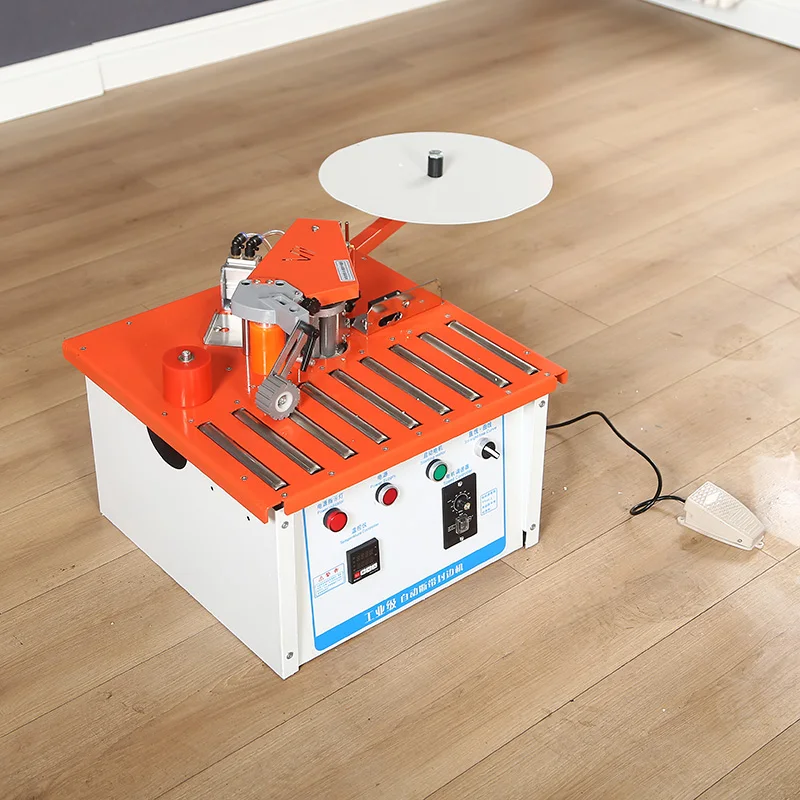
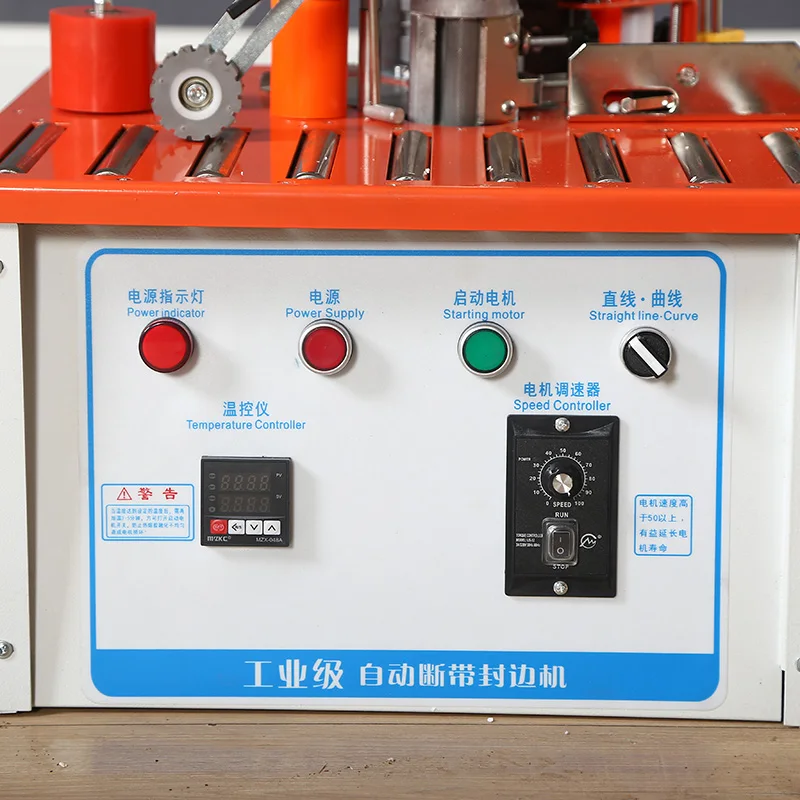
Description
Quick Dispatch — stocked ZDSF50+ units ready for immediate testing and shipment, confirmed for your local voltage before the crate leaves the floor.
Technical Specifications
| Parameter | Value |
|---|---|
| Model | ZDSF50+ |
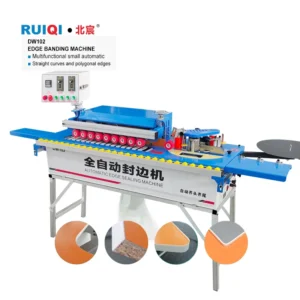
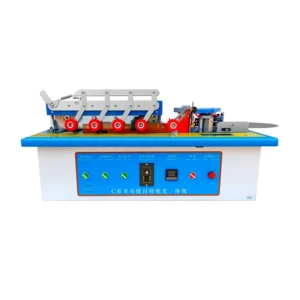
| Product Type | Mini Edge Banding Machine |
| Rated Power | 1.2 kW |
| Rated Voltage | 220 V (confirm local frequency at order) |
| Control System | Pneumatic belt breaking with foot switch and travel switch |
| Overall Dimensions | 54 × 54 × 56 cm |
| Net Weight | 28 kg |
| Edge Banding Speed | 0–6 m/min |
| Sheet Thickness Range | 10–60 mm |
| Strip Thickness Range | 0.5–1.5 mm |
| Glue Pot Capacity | 1000 ml |
| Glue Heating Method | 4 heating tubes, medium-temperature granular glue 150–180 °C |
| Heating Time | 5–10 min |
| Rated Air Pressure | 0.4–0.6 MPa |
| Gluing Type | Double-sided with glue-coated rollers |
| Pressure Rollers | Adjustable, rubber material |
| Straight-Line Belt Break | Automatic via travel switch |
| Curve Edge Banding | Foot switch assisted |
Application Suitability
| Application | Material or Output |
|---|---|
| Small workshop straight edge banding | MDF, particleboard, plywood panels 10–60 mm thick |
| Curved profile edge banding | Custom cabinet doors and shaped furniture components |
| On-site portable banding for installers | Solid wood panels and veneer-faced boards |
| Low-volume joinery production | PVC and melamine edge strips 0.5–1.5 mm |
Why the Voltage Question Must Come Before the Crate Is Sealed
Confirming your local supply specification avoids a machine that arrives dead on the dock.
I have watched a container arrive at a Southeast Asian port only for the buyer to discover the motor was wound for 50 Hz while the local grid runs 60 Hz. The Mini Edge Banding Machine in stock sat uncrated for weeks while a replacement motor was sourced. Voltage and frequency mismatches remain one of the most common reasons imported woodworking equipment fails to commission [NEED_CITE: voltage and frequency standards by export market]. A quick confirmation at the order stage eliminates this entire category of delay.
Stock Availability and Dispatch Timing
Most ZDSF50+ units sit assembled and tested on our floor, not queued behind a production backlog. When you need a Mini Edge Banding Machine in stock for a small workshop ramp-up or a replacement unit after a breakdown, the typical path from order confirmation to crate sealing is measured in days rather than weeks. We run a live pre-shipment test on your specified panel thickness before dispatch, so the machine is proven working against your actual material before it leaves.
Single-Unit Orders Without Minimum Quantity Pressure
This model is built for workshops ordering one machine at a time. You do not need to bundle a full line or commit to a container load. Each ZDSF50+ ships with its own packing photographs, operation manual in your agreed language, and a spare parts list covering consumables like glue rollers and heating tubes. The KD packing format keeps freight dimensions compact, and the optional bracket lets you mount the unit to an existing workbench rather than dedicating floor space [NEED_CITE: CE machinery directive requirements for small woodworking equipment].
Reading the Numbers That Actually Matter on the Shop Floor
The 1.2 kW motor and 1000 ml glue pot define what this machine can handle in a single shift. A smaller glue pot would force frequent refills when banding long runs of particleboard shelving. The 150–180 °C heating range covers standard EVA granular glue used for PVC and melamine strips; if you plan to run PUR adhesive for moisture-resistant applications, that requires a different temperature profile and a sealed glue system not offered on this model. The 0.4–0.6 MPa air pressure requirement means any standard workshop compressor with a regulator will supply the pneumatic belt-breaking cylinder. Panel thickness from 10 to 60 mm covers everything from thin drawer sides to thick workbench tops, but feed speed should be reduced toward the upper end of that range to let the glue transfer fully before the pressure rollers engage.
The Real Cost of Skipping Configuration Checks
I once supplied a manual curve bander to a custom cabinet shop that was running high-density particleboard at full feed speed. The glue temperature was not matched to the board density, and within three months the edge strips were lifting across an entire batch of installed wardrobes. The rework cost far exceeded what a quick pre-shipment material test would have caught. Entry-level machines sold without confirming the substrate and strip combination regularly end up producing inconsistent glue lines or, worse, damaging the workpiece surface [NEED_CITE: edge banding adhesion failure causes in panel processing]. Matching the machine to the material is a five-minute conversation that prevents months of warranty disputes.
Why Procure This Unit Through This Channel
Stocked inventory means your ZDSF50+ is not waiting behind other orders in a production queue — it is tested and crated from the floor. Voltage and control panel language are confirmed at order time, not discovered after arrival. The four-stage quality check includes a pre-shipment test run documented with photographs and a factory test record specific to your panel range. Engineer-led configuration advice is provided within one working day of your inquiry, covering whether this compact model suits your volume or whether a step up to a full-function automatic bander is warranted. Single-unit orders ship with complete documentation and spare parts, so your technician is never waiting on a consumable that should have been in the box.
Documentation & Verification
- CE declaration of conformity covering the ZDSF50+ portable edge bander
- Factory test record run on your specified panel thickness and strip material
- Electrical schematic confirming 220 V wiring and frequency match
- Operation and maintenance manual translated into your workshop language
- Spare parts list with part numbers for glue rollers, heating tubes, and bayonet guides
Installation, Commissioning & Support
- Requires a dedicated 220 V circuit rated for at least 1.2 kW with appropriate breaker protection
- KD packing means on-site assembly following the included step-by-step manual
- Compressed air supply at 0.4–0.6 MPa needed for the pneumatic belt-breaking cylinder
- First-run glue temperature calibration against your specific strip and board combination
- Rubber pressure rollers inspected and adjusted for your sheet thickness range before daily operation
What We Need to Move Your Order Forward
Tell us the board materials you will be banding most often and their typical thickness range. Confirm your local voltage and frequency so we wire the unit correctly before it ships. Let us know if you need the operation manual and control labels in a specific language, and whether you want the optional workbench bracket included in the crate.
Frequently Asked Questions
Q: Is the ZDSF50+ currently in stock and how fast can it ship?
A: Units are held in ready-to-ship inventory. After you confirm voltage, frequency, and language requirements, we run a pre-shipment test on your panel material and dispatch within a short window. Exact timing depends on current stock levels and your destination port, but there is no production queue to wait behind.
Q: What voltage and frequency does this machine need?
A: The ZDSF50+ is rated at 220 V. You must confirm your local grid frequency, either 50 Hz or 60 Hz, at the time of order so the motor and heating elements are matched correctly. We verify the configuration on the factory floor before crating and include a confirmation record in the shipment documentation.
Q: Do I need an air compressor to run this edge bander?
A: Yes, the pneumatic belt-breaking system requires a compressed air supply between 0.4 and 0.6 MPa. A standard small workshop compressor with a pressure regulator and moisture filter is sufficient. The air line connects to a single inlet on the machine frame.
Q: How does the machine switch between straight and curved edge banding?
A: For straight edges, the travel switch triggers automatic belt breaking at the end of the panel. For curved profiles, you use the foot switch to control feed and belt breaking manually, keeping both hands free to guide the workpiece along the curved path. The glue-coated rollers and adjustable pressure system handle both modes without reconfiguration.