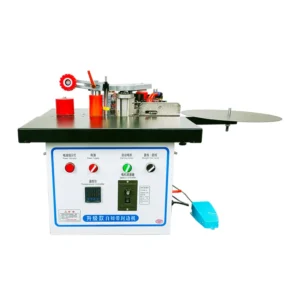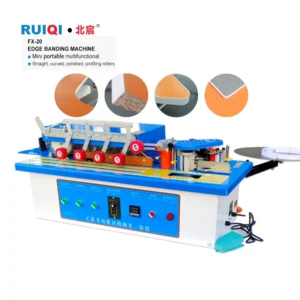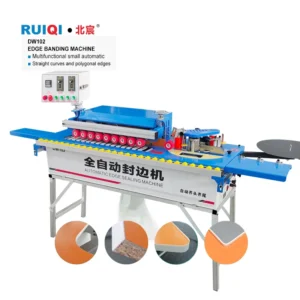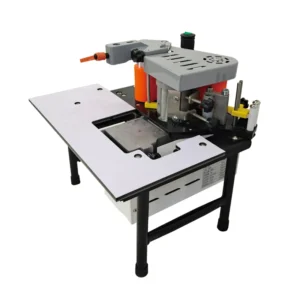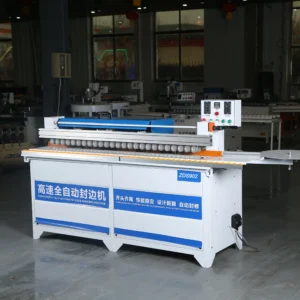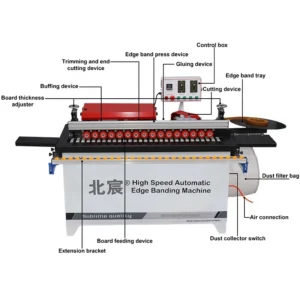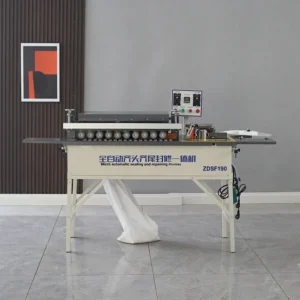


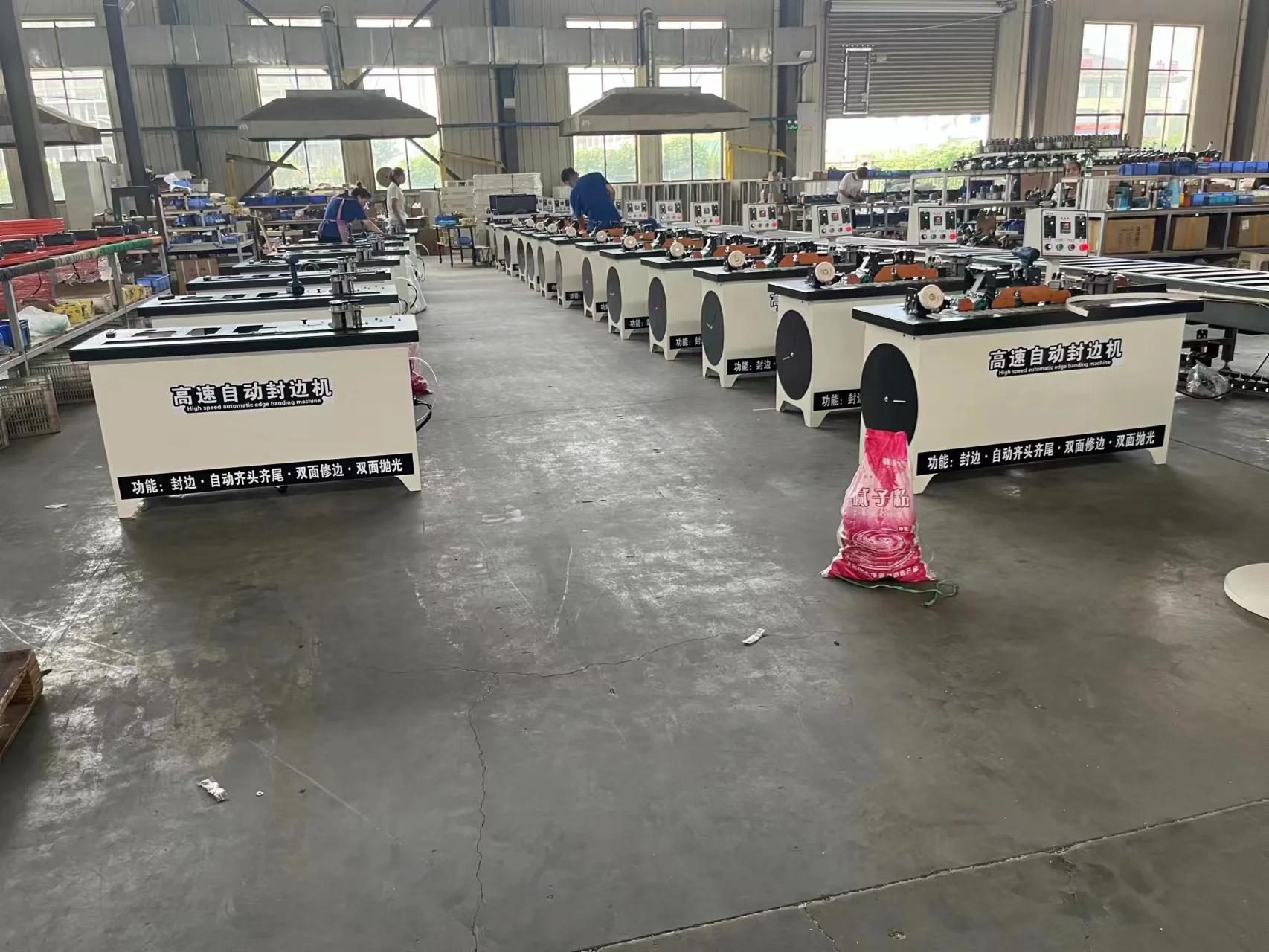
Description
Fast Dispatch Confidence — Every Model 802 automatic edge banding machine in stock ships only after your local voltage and frequency are confirmed in writing, avoiding the three-week transformer delay that once stalled a Southeast Asian production line.
Technical Specifications
| Parameter | Value |
|---|---|
| Model | 802 |
| Product Type | Automatic Edge Banding Machine |
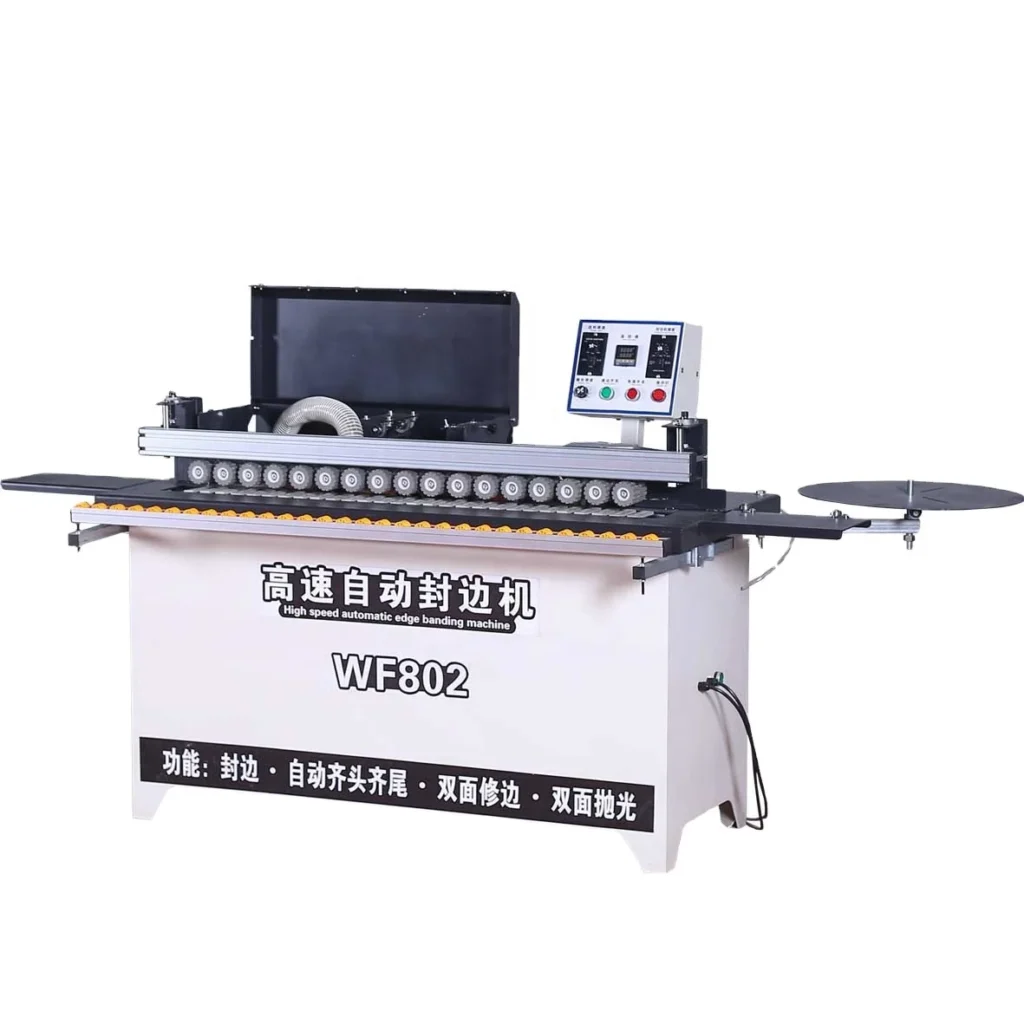
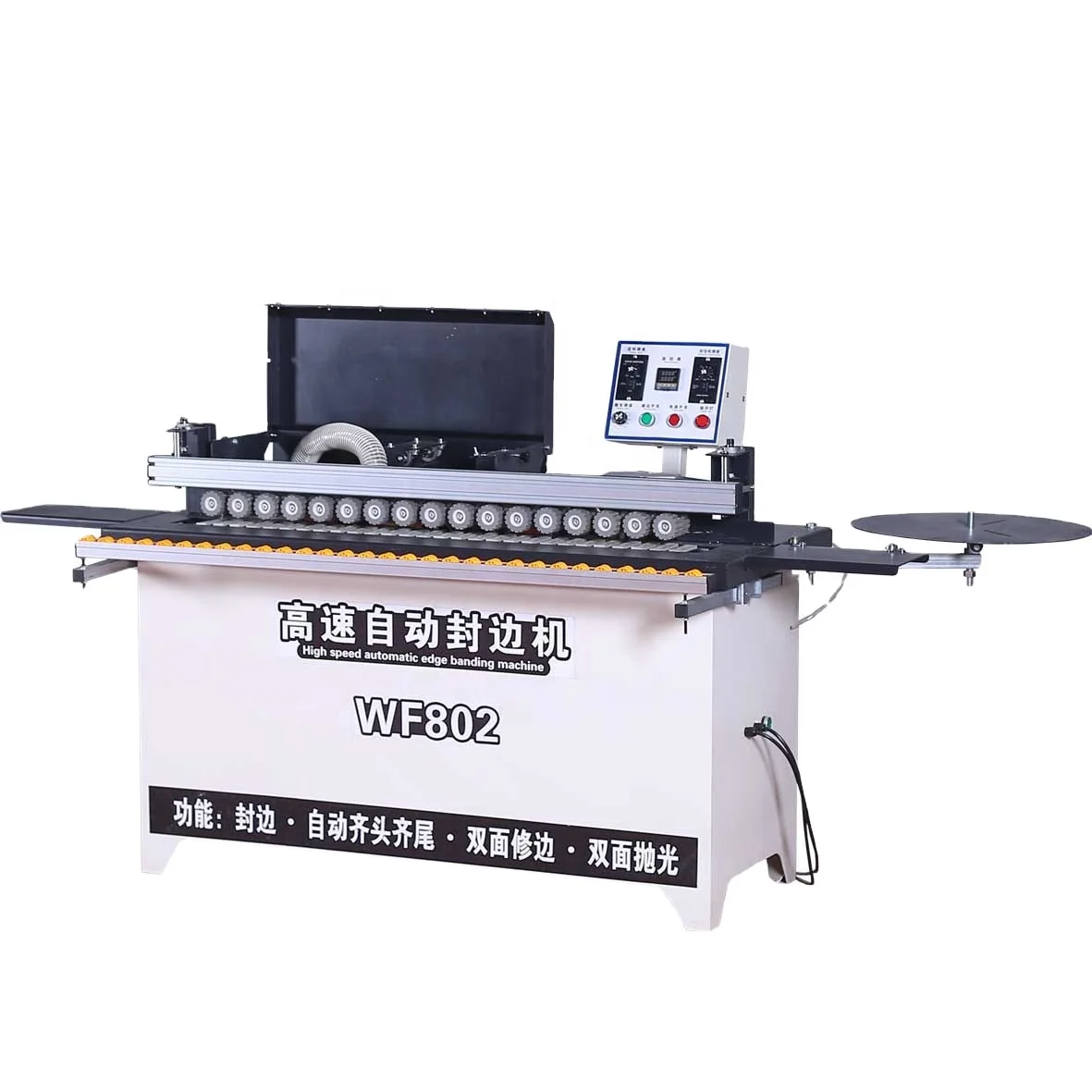
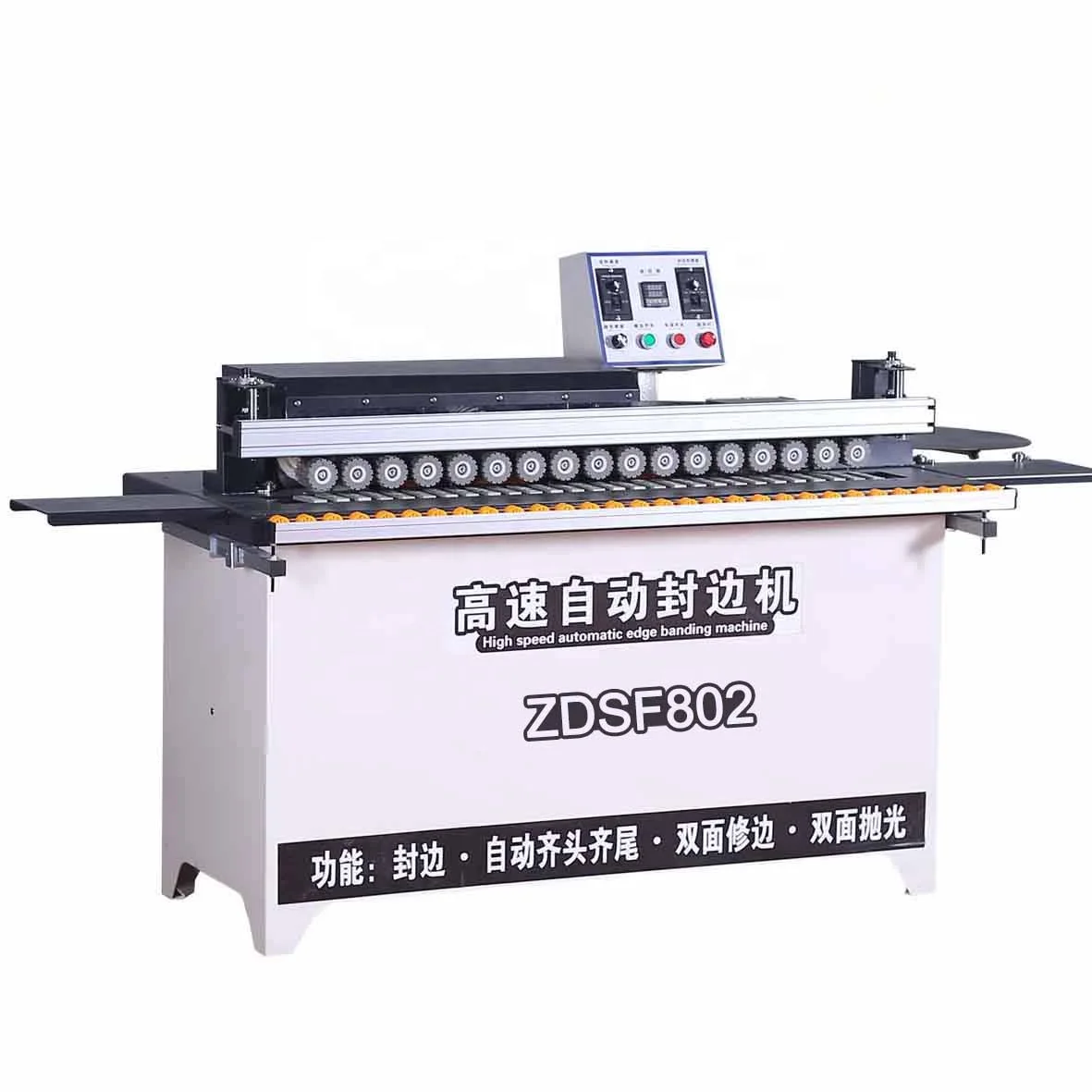
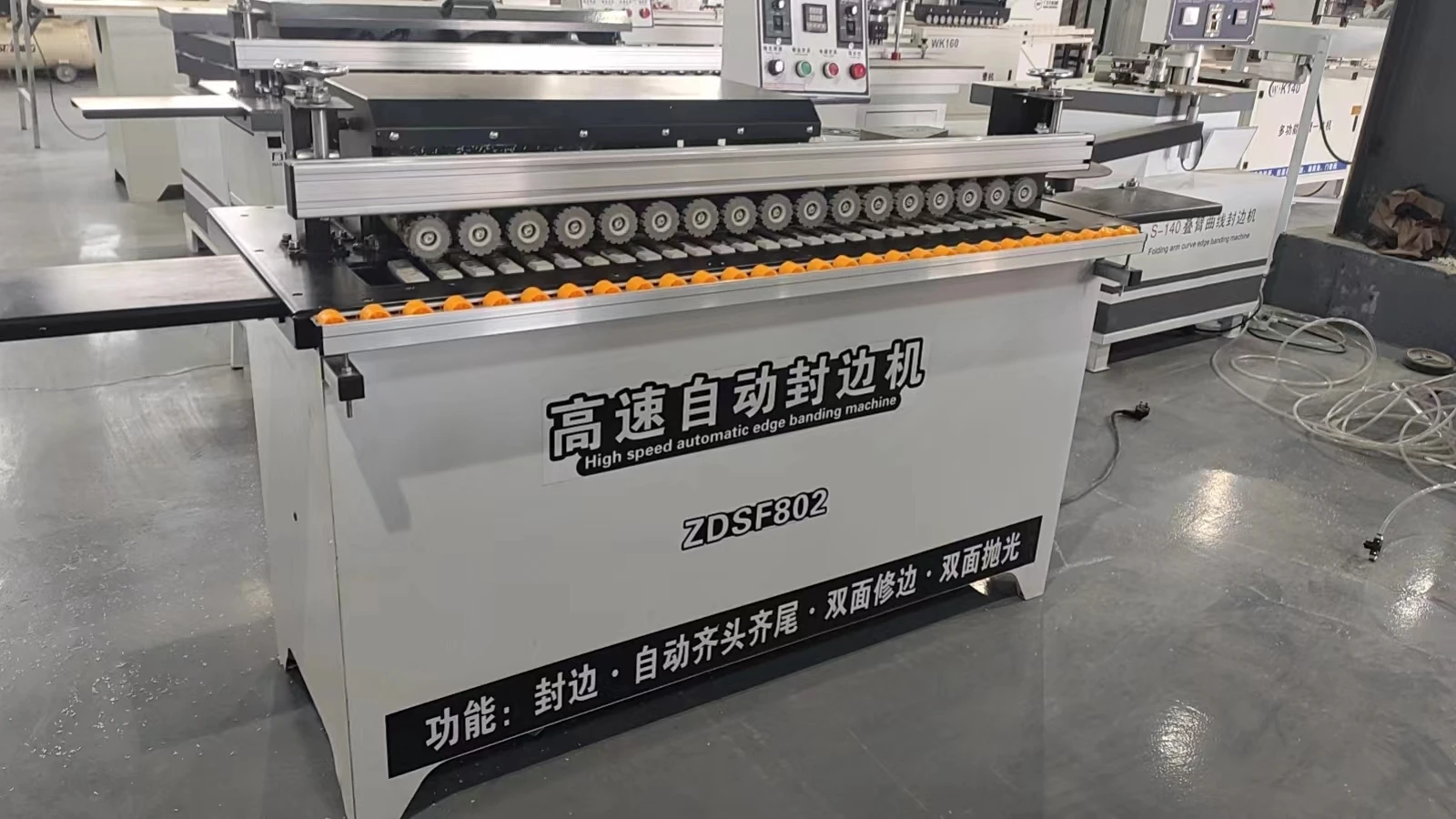
| Function | Automatic plate feeding, end cutting, upper and lower polishing, head and tail trimming |
| Edge Type | Straight line |
| Rated Voltage | 220V |
| Rated Power | 4 kW |
| Trimming Power | 800 W × 2 |
| Polishing Power | 180 W × 2 |
| Suction Power | 1200 W |
| Heating Power | 1000 W (5–10 min warm-up) |
| Feed Speed | 0–10 m/min |
| Strip Thickness | 0.5–2.5 mm |
| Sheet Thickness | 10–50 mm |
| Glue Capacity | 4000 ml |
| Rated Air Pressure | 0.4–0.6 MPa |
| Pressure Beam | One-piece pressure beam, double rows of pressure wheels |
| Conveyor Belt Material | Silicone |
| Control System | Digital display of glue pot temperature, independent switch |
| Dust Collection | Integrated dust collector (1200 W suction) |
| Overall Dimensions | 130 × 65 × 75 cm |
| Machine Weight | 150 kg |
Application Suitability
| Application | Material or Output |
|---|---|
| Custom cabinet door edge finishing | MDF and particleboard panels with PVC edge banding |
| Small workshop furniture production | Plywood and melamine-faced board, straight-line profiles |
| Joinery transition from manual to automated | Solid wood panels and veneer banding within 10–50 mm thickness |
| Batch shelving and carcass edging | Particleboard substrates with 0.5–2.5 mm PVC strips |
Why the Voltage Question Must Come Before the Price
A machine that cannot plug into your workshop grid is not a bargain — it is a liability sitting on your floor.
I watched a fully paid automatic edge banding machine in stock sit idle for three weeks at a customer site in Southeast Asia because the factory ran 415V three-phase and the unit left our floor at 380V. The transformer took longer to arrive than the machine took to ship. The entire edge banding line stopped and waited. That silence in a factory costs more than any price negotiation saves [NEED_CITE: voltage and frequency standards by export market]. Since then, no unit leaves our warehouse without a signed voltage confirmation sheet — not even when a buyer is in a hurry.
Ready Stock Means Confirmed Stock, Not Promised Stock
When you source an automatic edge banding machine in stock, the first question should always be whether the exact configuration on the floor matches what your workshop needs. The Model 802 is held as a stocked unit at 220V, which suits single-phase grids common in small workshops and light industrial zones. Before dispatch, we cross-check the rated frequency — 50 Hz or 60 Hz — against your local standard and flag any mismatch before the crate is closed.
Dispatch Speed Without the Commissioning Penalty
Fast shipping means nothing if the operator cannot read the control panel on arrival. Every Model 802 dispatched from stock is paired with an operation and maintenance manual produced in the language your team actually uses. The digital display shows glue pot temperature in clear numerals, and the independent switches are labeled to match the documentation, so commissioning does not stall on translation gaps [NEED_CITE: CE machinery directive requirements for industrial equipment].
Reading the Numbers That Matter for a Small Workshop
The 4 kW rated power places this machine within the reach of a standard single-phase supply without requiring a dedicated three-phase line or a heavy-duty breaker panel. The 1000 W heating element brings the 4000 ml glue pot to working temperature within five to ten minutes, which means your first panel of the day is not delayed by a long warm-up cycle. The 0–10 m/min variable feed speed lets operators slow down for thick PVC banding on MDF and speed up for thin veneer on plywood, matching throughput to material behavior rather than forcing one speed across all substrates. The integrated 1200 W dust collector eliminates the need for a separate extraction system, keeping the footprint at 130 × 65 × 75 cm — a meaningful advantage when floor space is the constraint it always is in a growing workshop.
The Hidden Cost of Skipping Pre-Shipment Verification
A machine that runs perfectly on the factory floor can behave differently once it crosses a border. Electrical frequency affects motor speed, which in turn affects feed rate and trimming quality. If the pressure beam and conveyor belt speed are not calibrated for the actual operating frequency, edge banding adhesion can become inconsistent across a run. We test every unit under the voltage and frequency conditions of the destination country before it ships, and we supply the test record so you can see the results yourself [NEED_CITE: effects of supply frequency on AC motor speed and driven equipment].
Why Procurement Through This Channel Works for Stock Orders
The Model 802 sits within a full product family, so a workshop that starts with this stocked unit can later scale to higher-throughput models from the same supplier without relearning controls or renegotiating spare parts supply. Every unit carries a pre-shipment test record and packing photographs, giving buyers visibility before the crate is sealed. Voltage, language, and specification adjustments are handled as standard order steps rather than special requests. An engineer reviews each order to confirm the configuration fits the buyer’s panel thickness range and production volume before the dispatch is authorized.
Documentation & Verification
- Factory test record on your specified panel thickness and edge material before dispatch
- Electrical schematic and voltage confirmation sheet matching your local grid standard
- Operation and maintenance manual in your operator’s working language
- Machine specification sheet with verified feed speed and power ratings
- Packing photographs showing crate condition and accessory placement before collection
Installation, Commissioning & Support
- 220V single-phase supply required — confirm dedicated circuit capacity for the 4 kW rated draw
- 130 × 65 × 75 cm footprint fits standard workshop layouts without special floor preparation
- 0.4–0.6 MPa air supply needed — connect to existing compressor or install a dedicated unit
- Glue pot first fill and temperature calibration performed during initial start-up guidance
- Silicone conveyor belt inspection and pressure wheel alignment checked at commissioning
- Spare parts list provided covering trimming blades, polishing wheels, and glue pot elements
Before You Request a Quote
Tell us the panel materials you run most often — MDF, particleboard, plywood, or solid wood — and the edge banding type and thickness you use. Confirm your workshop’s supply voltage and frequency so we can match the electrical configuration before dispatch. Let us know the language your operators need for the control panel labels and the manual. If you are integrating this unit into an existing line, share the upstream and downstream equipment so we can advise on feed height and throughput alignment.
Frequently Asked Questions
Q: Is the 802 model currently in stock and what is the dispatch lead time?
A: The Model 802 is held as ready stock for fast dispatch. Lead time depends on destination port and any pre-shipment configuration adjustments such as voltage matching or manual translation. Once voltage is confirmed and documentation is prepared, the unit is typically released for collection within a short window. We provide packing photographs and test records before the shipment leaves.
Q: Can the 220V configuration be adapted to my country’s voltage and frequency standard?
A: The Model 802 is stocked at 220V single-phase. If your local grid differs, we confirm your exact voltage and frequency in writing before dispatch and advise on compatibility. Where adaptation is needed, we outline the options and any lead time involved so the machine arrives ready to run rather than waiting for a transformer.
Q: What panel materials and strip thicknesses does this machine handle?
A: The machine processes MDF, plywood, particleboard, and solid wood panels from 10 to 50 mm thick. It applies straight-line PVC and veneer edge banding from 0.5 to 2.5 mm. Feed speed is variable from 0 to 10 m/min, allowing operators to adjust for different material combinations.
Q: Is the control panel and manual available in my operator’s language?
A: Yes. The digital temperature display uses universal numerals, and we produce the operation and maintenance manual in your agreed language. Control panel labeling can be matched to the manual so operators can cross-reference instructions during commissioning and daily use.
Q: How is the machine packed and what installation guidance is included?
A: Each unit is crated with packing photographs taken before collection. We supply an electrical schematic, specification sheet, and spare parts list. Installation guidance covers the 220V connection, air supply setup at 0.4–0.6 MPa, and initial glue pot calibration for your chosen banding material.