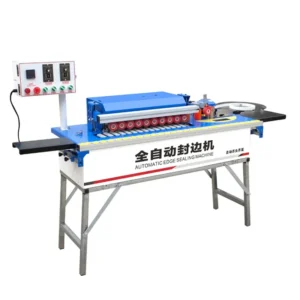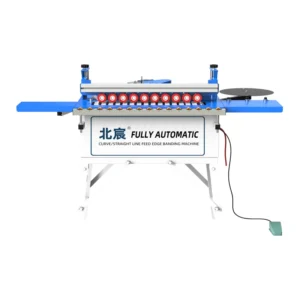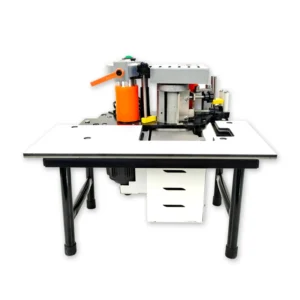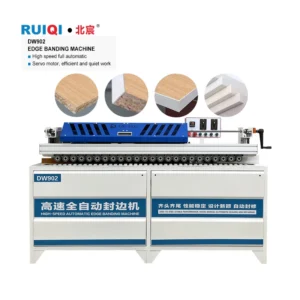
Description
Voltage-verified stock dispatch — every ZDS290 unit is tested against confirmed local electrical standards before it leaves the warehouse, eliminating the rewiring delays that stall workshop commissioning.
Technical Specifications
| Parameter | Value |
|---|---|
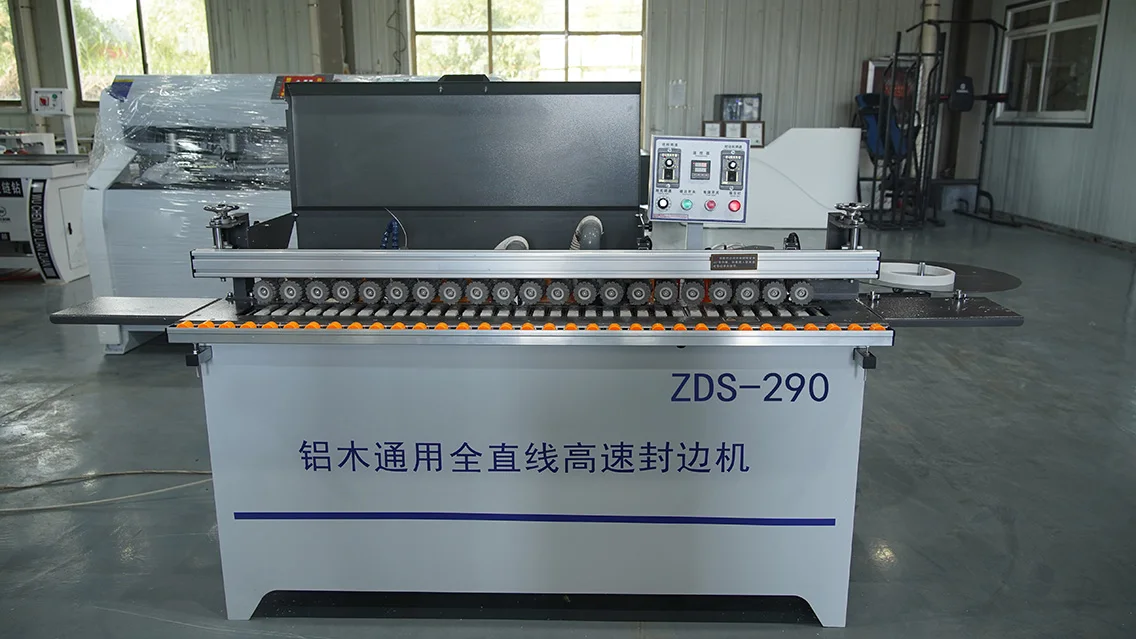
| Model | ZDS290 |
| Product Type | Automatic PVC Edge Banding Machine |
| Rated Voltage | 220V |
| Rated Power | 4165W |
| Edge Banding Speed | 6m/min |
| Strip Thickness Range | 0.5–2.5mm |
| Sheet Thickness Range | 10–50mm |
| Conveying Motor Power | 180W |
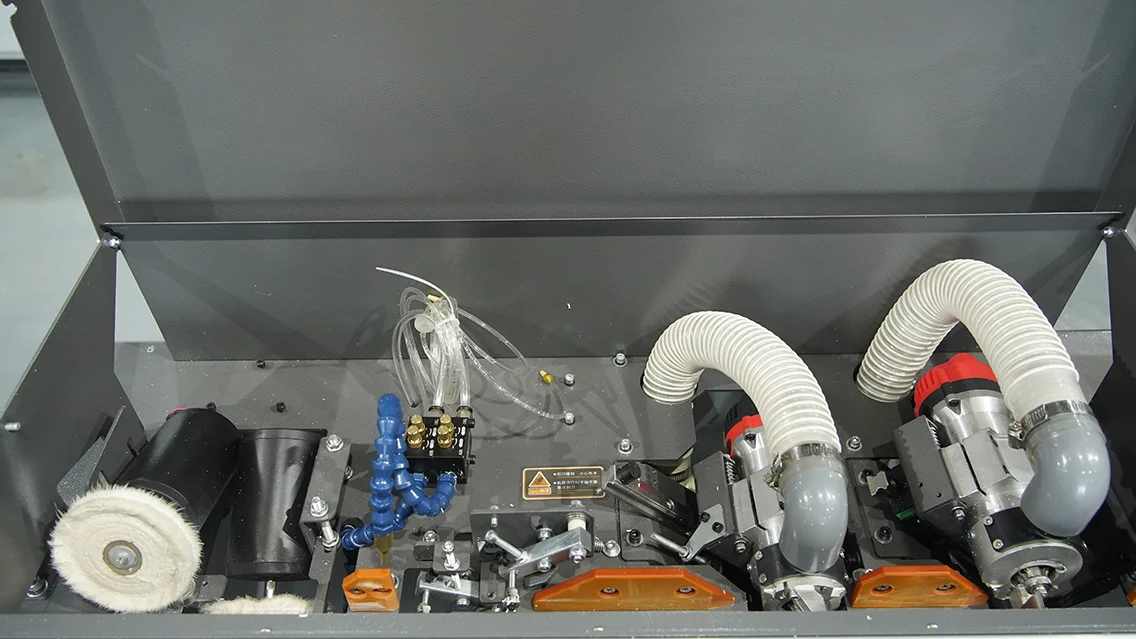
| Trimming Motor Power | 800W × 2 |
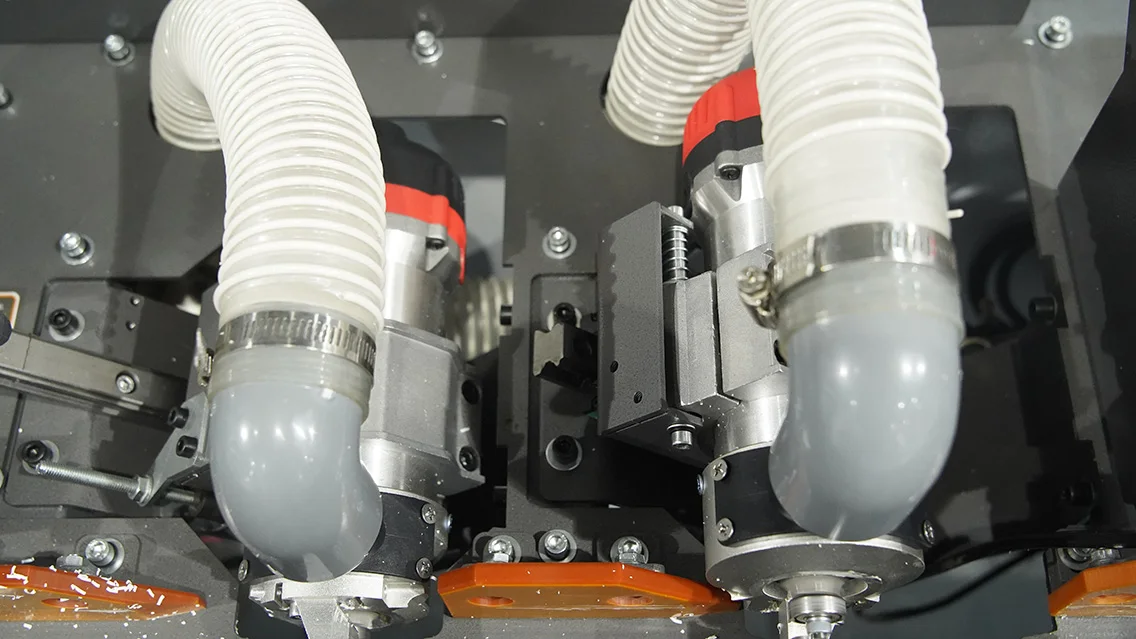
| Polishing Motor Power | 180W × 2 |
| Vacuuming Power | 1200W |
| Heating Power | 800W |
| Glue Pot Capacity | 1000ml |
| Rated Air Pressure | 0.6–0.8MPa |
| Machine Size | 150 × 57 × 96 cm |
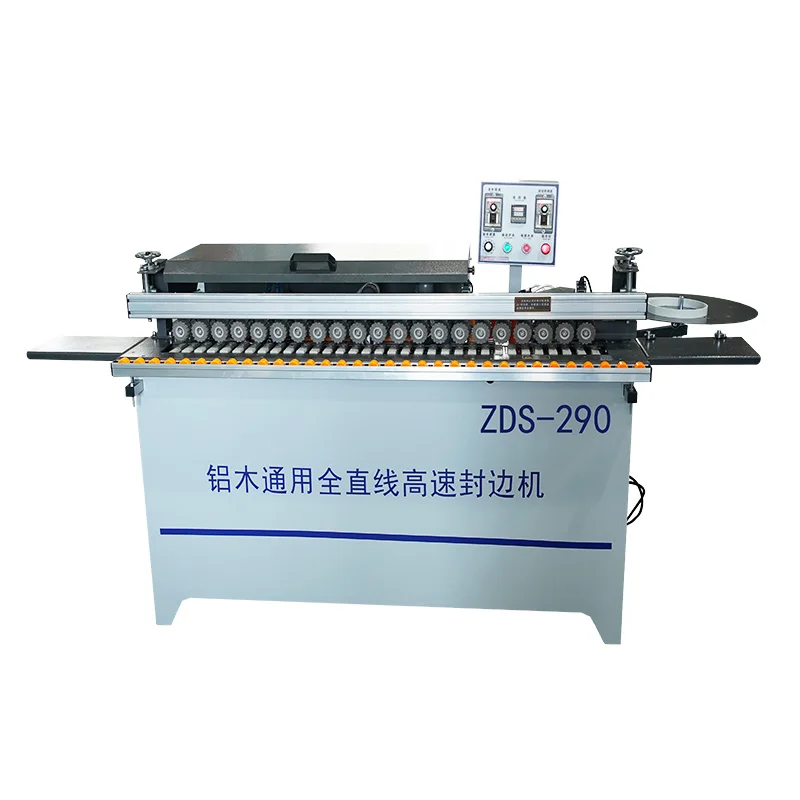
| Pressure Beam | Integrated thickened aluminum alloy |
| Pressure Wheel | Double-row inclined |
| Board Thickness Display | Digital display |
| Pressure Beam Adjustment | Hand-crank wheel |
| Glue Pot Type | Imitation glue pot with concave-convex gum wheel |
| Secondary Processing | Secondary scraping and cleaning |
Application Suitability
| Application | Material or Output |
|---|---|
| Honeycomb aluminum panel edge banding | Aluminum composite sheets 10–50mm thick |
| Wood-aluminum composite panel edging | Hybrid substrates with PVC strip application |
| Custom joinery and cabinet production | MDF, particleboard, and plywood with 0.5–2.5mm PVC or veneer banding |
| Small-batch panel furniture runs | Single-station processing for workshops transitioning from manual edging |
Why the Voltage Question Must Come Before the Order
The ZDS290 ships at a confirmed 220V with pre-dispatch electrical verification, so your workshop does not face weeks of idle downtime waiting for a rewired shop.
I once watched a cabinet workshop receive an edge bander that matched their production needs perfectly — except the voltage was wrong for their facility. The machine sat idle for weeks while electricians reconfigured the entire shop supply [NEED_CITE: voltage and frequency standards by export market]. That scenario repeats far more often than buyers expect, and it is entirely preventable. The ZDS290 Automatic Edge Banding Machine in stock is dispatched only after the buyer’s local voltage and frequency are documented and confirmed against the machine’s electrical configuration. This step happens before crating, not after arrival.
Dispatch Timing That Matches Workshop Urgency
When a small joinery shop decides to move from manual edge trimming to automated banding, the gap between order and production matters. The ZDS290 is held in ready stock, meaning no production scheduling delays and no waiting for a factory build slot. For workshops processing honeycomb aluminum panels or standard wood-based boards, having an Automatic Edge Banding Machine in stock translates to a machine that can be inspected, tested with sample material, and dispatched within a short handling window.
Single-Unit Orders Without Minimum Quantity Pressure
Not every buyer is equipping an entire production line. Many workshops need one reliable edge bander to handle their daily output. The ZDS290 accommodates single-unit orders directly from stock, so a cabinet maker or small panel processor can acquire exactly the machine they need without committing to a bulk purchase [NEED_CITE: typical procurement patterns for small woodworking workshops]. This matters for shops scaling gradually from hand tools to their first automatic station.
How the Pressure Beam and Feed System Handle Composite Panels
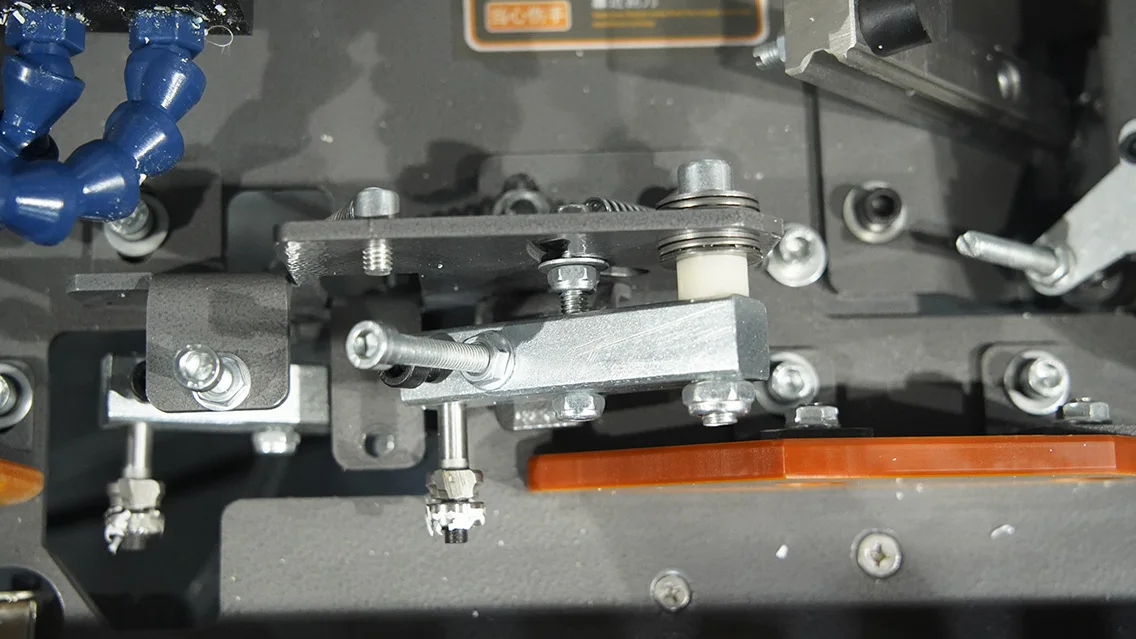
Honeycomb aluminum panels behave differently under pressure than solid MDF or plywood. The integrated thickened aluminum alloy pressure beam on the ZDS290 distributes clamping force evenly across the panel surface, reducing the risk of crushing the internal honeycomb core. The double-row inclined pressure wheels maintain consistent strip contact along the edge, even when the substrate has slight surface irregularities common in composite materials. This combination is what allows the machine to handle both rigid wood panels and delicate aluminum composites without swapping tooling between jobs.
Glue Application Consistency Across Strip Materials
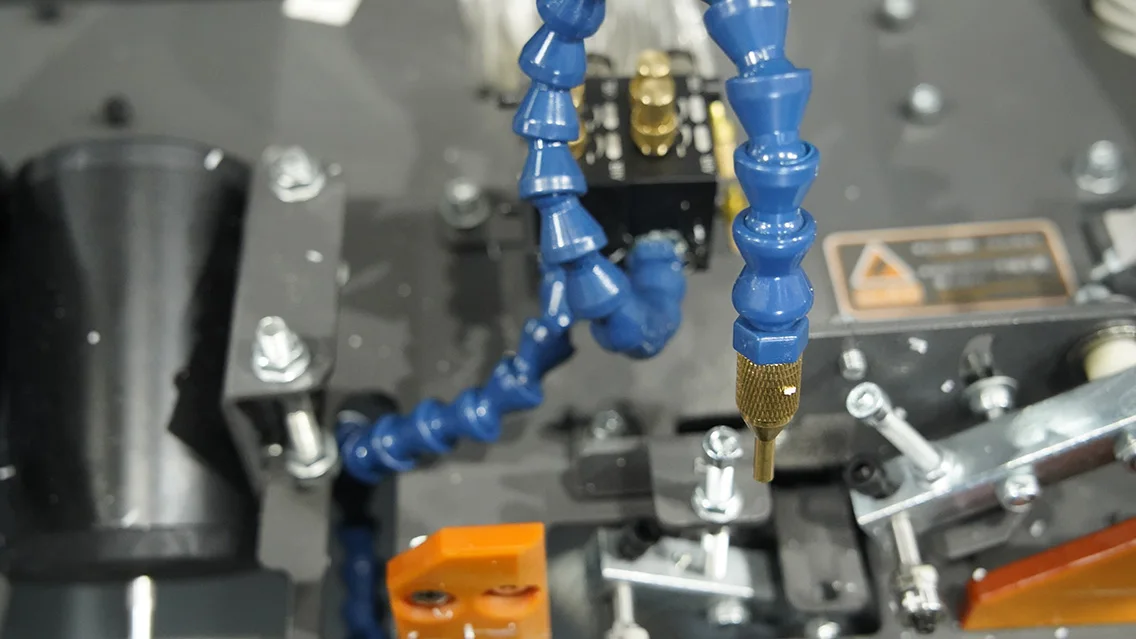
The concave-convex gum wheel design in the glue pot ensures that adhesive transfers evenly onto PVC strips ranging from 0.5mm to 2.5mm thick. Uneven glue distribution is a frequent cause of visible bond lines on finished edges, particularly when switching between thin PVC and thicker veneer strips [NEED_CITE: common edge banding adhesion failures in panel processing]. The 1000ml glue pot capacity with an 800W heating element reaches operating temperature within a short warm-up window, reducing idle time at the start of each shift.
Reading the Specs That Actually Affect Your Output
The 10–50mm sheet thickness range paired with a digital board thickness display means operators can dial in the exact panel dimension without trial-and-error passes. For a workshop running both 18mm MDF shelving and 40mm honeycomb aluminum door panels, this eliminates manual gauge checks and reduces setup time between batches. The dual 800W trimming motors handle flush trimming on both soft PVC and harder aluminum edge profiles, while the secondary scraping and cleaning stations remove residual adhesive in the same pass — so panels move directly to assembly or packaging without a secondary finishing step. The 0.6–0.8MPa air pressure requirement is standard for most workshop compressors, but confirming your compressor’s sustained output is worth doing before installation.
What Happens When Configuration Details Get Overlooked
A machine that arrives with the wrong control panel language stalls commissioning while operators try to interpret unfamiliar menus. An edge bander spec’d without checking the workshop’s air supply may trip pressure drops during trimming cycles, producing inconsistent edge finishes across a batch [NEED_CITE: compressed air supply requirements for pneumatic woodworking machinery]. These are not catastrophic failures — they are preventable configuration gaps that cost workshops days of lost production and erode confidence in the purchase.
Why Procurement Through This Channel Works
The ZDS290 benefits from the same four-stage quality control process applied across the full product family, covering incoming material inspection through pre-shipment verification. Voltage and frequency are confirmed against the buyer’s documented local supply before dispatch, not assumed from the destination country. Each unit ships with a pre-shipment test record, packing photographs, and an operation manual in the agreed language. Engineer-led configuration guidance is available within 24 hours of inquiry, ensuring the machine matches the workshop’s actual panel materials and production volume rather than a generic specification sheet.
Documentation & Verification
- Voltage confirmation document matched to your local supply before dispatch
- Pre-shipment test record with sample panel edge quality verification
- Operation and maintenance manual in your specified language
- Spare parts list with part numbers for reordering
- Packing photographs provided before crate sealing
Installation, Commissioning & Support
- Requires a dedicated 220V circuit rated for the 4165W total draw
- Compressed air supply must sustain 0.6–0.8MPa at the machine inlet
- Arrives as a single-station unit; position on a level floor near your panel storage
- Digital thickness display calibration verified during pre-shipment testing
- Glue pot warm-up procedure and temperature settings covered in the manual
- Trimming and polishing wheel replacement intervals listed in the spare parts schedule
Before You Request a Quote
To match the ZDS290 to your workshop, share the panel materials you process most frequently, your typical board thickness range, and the edge strip materials you use. Confirm your facility’s voltage and frequency so the electrical configuration is locked before dispatch. If you are replacing a manual edging process, note your current daily panel volume so the feed speed aligns with your throughput expectations.
Frequently Asked Questions
Q: Is the ZDS290 in stock and what is the dispatch lead time?
A: Yes, the ZDS290 is held in ready stock for fast dispatch. Once your voltage and panel specifications are confirmed, the unit undergoes a pre-shipment test and is prepared for shipping. Lead time depends on destination and shipping method, but there is no factory build wait since the machine is already assembled and available.
Q: Can the voltage be confirmed against my local supply before shipping?
A: Absolutely. Before any ZDS290 leaves the warehouse, your local voltage and frequency are documented and verified against the machine’s 220V electrical configuration. A voltage confirmation document is included in the shipping package so there is no ambiguity upon arrival at your facility.
Q: What is the minimum order — can I buy a single unit?
A: Single-unit orders are standard for the ZDS290. Many buyers are small workshops or cabinet makers acquiring their first automatic edge bander, and the stock-and-dispatch model is built around that purchasing pattern with no minimum quantity requirement.
Q: What panel thickness and edge strip range does the ZDS290 handle?
A: The ZDS290 processes sheet thicknesses from 10mm to 50mm and applies edge strips from 0.5mm to 2.5mm thick. This covers standard MDF and plywood panels as well as thicker honeycomb aluminum composite boards used in furniture and interior applications.
Q: Is assembly required on arrival and what support is provided?
A: The ZDS290 ships as a complete single-station unit requiring placement and utility connection rather than full assembly. You receive an operation manual in your language, a spare parts list, and guidance on electrical and pneumatic hookup. Support is available for commissioning questions after installation.