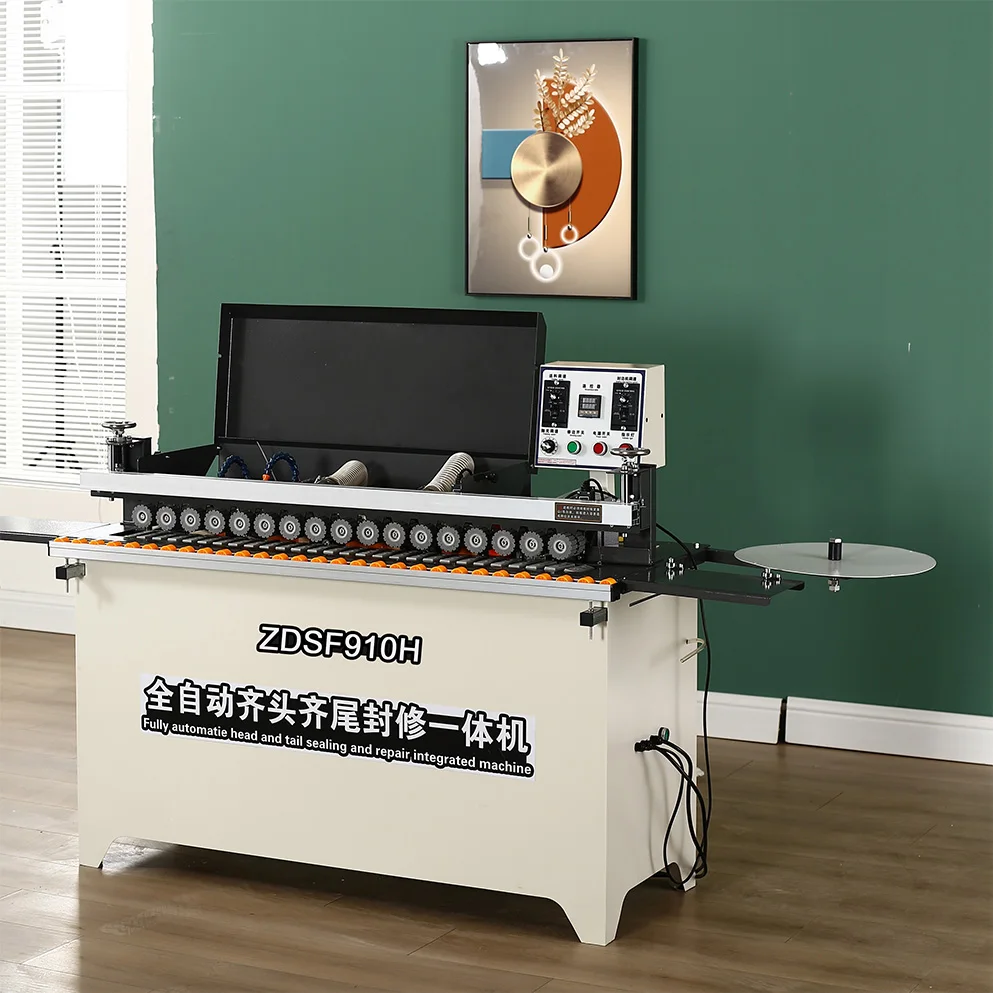
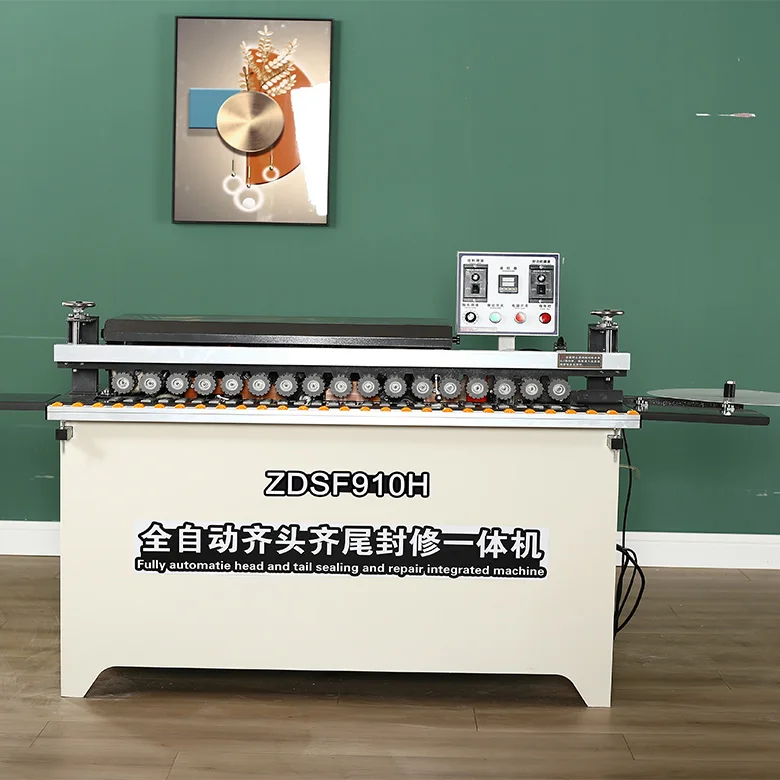
Description
Stocked for Quick Dispatch — Every 910H unit undergoes voltage confirmation and pre-shipment test running before it leaves the floor, so you receive a machine that powers on and produces from day one.
Technical Specifications
| Parameter | Value |
|---|---|
| Model | 910H |
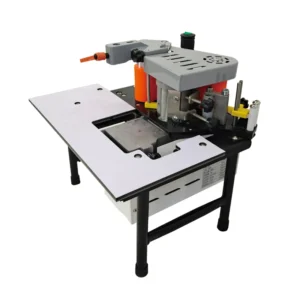
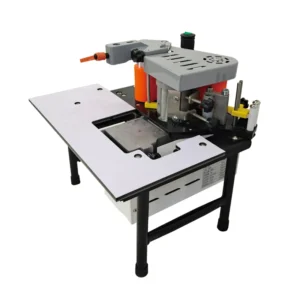
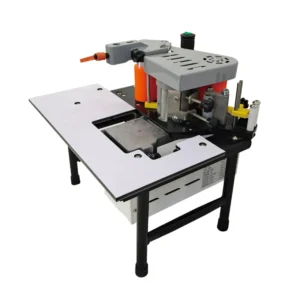
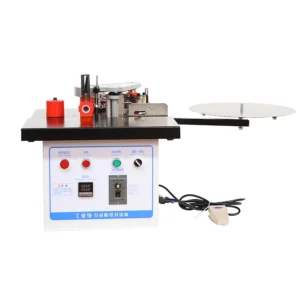
| Product Type | Miniature Automatic Curved and Straight Edge Banding Machine |
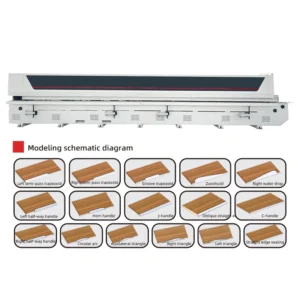
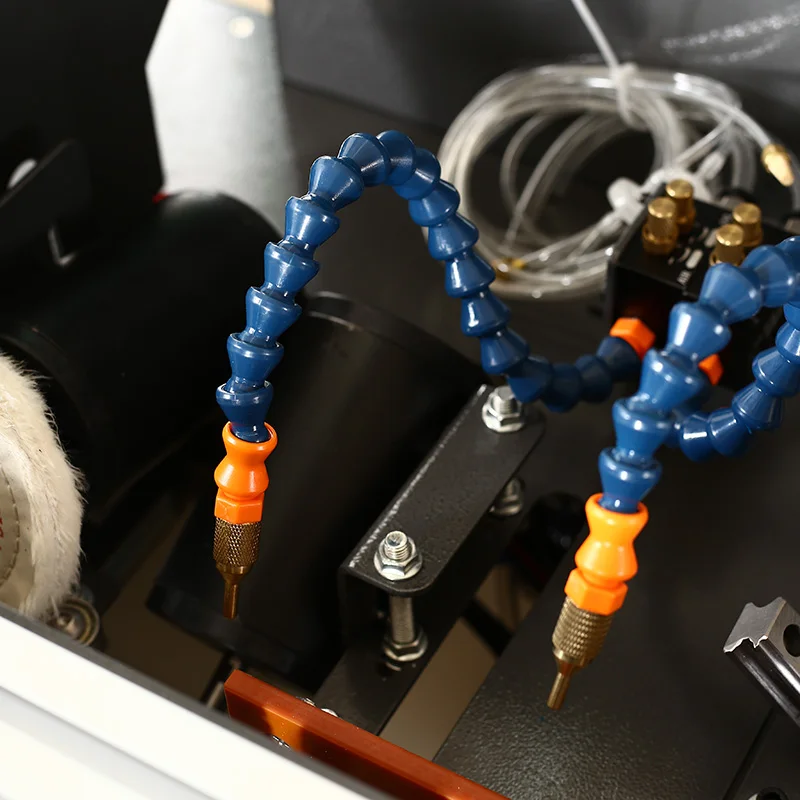
| Function | Automatic plate feeding, double-sided gluing, upper and lower polishing, automatic head and tail trimming, curved and straight edge banding |
| Edge Type | Both curved and straight lines via 180-degree rotation |
| Voltage & Frequency | 220V 50Hz (customizable 110V–440V on request) |
| Rated Power | 4 kW |
| Heating Power | 800 W |
| Polishing Power | 180 W × 2 |
| Trimming Power | 800 W × 2 |
| Suction Power | 1200 W |
| Belt Power | 25 W |
| Transmission Power | 120 W |
| Rated Air Pressure | 0.4–0.6 MPa |
| Sheet Thickness Range | 10–50 mm |
| Strip Thickness Range | 0.5–2.5 mm |
| Minimum Board Width for Edge Sealing | 2.5 cm |
| Glue Capacity | 1000 ml |
| Overall Dimensions (L×W×H) | 1300 × 560 × 1090 mm |
| Net Weight | 140 kg |
| Transmission | Crawler transmission with steel rod slide rails |
| Pressure Beam | Adjustable aluminum alloy pressure beam |
| Feed Mechanism | Double-row rubber pressure wheels, automatic plate feeding |
| Cutter Head | 4-edge arc-shaped alloy cutter head |
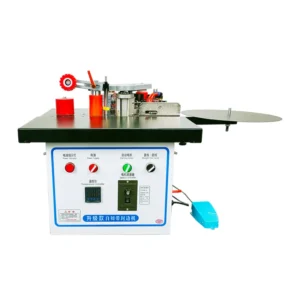
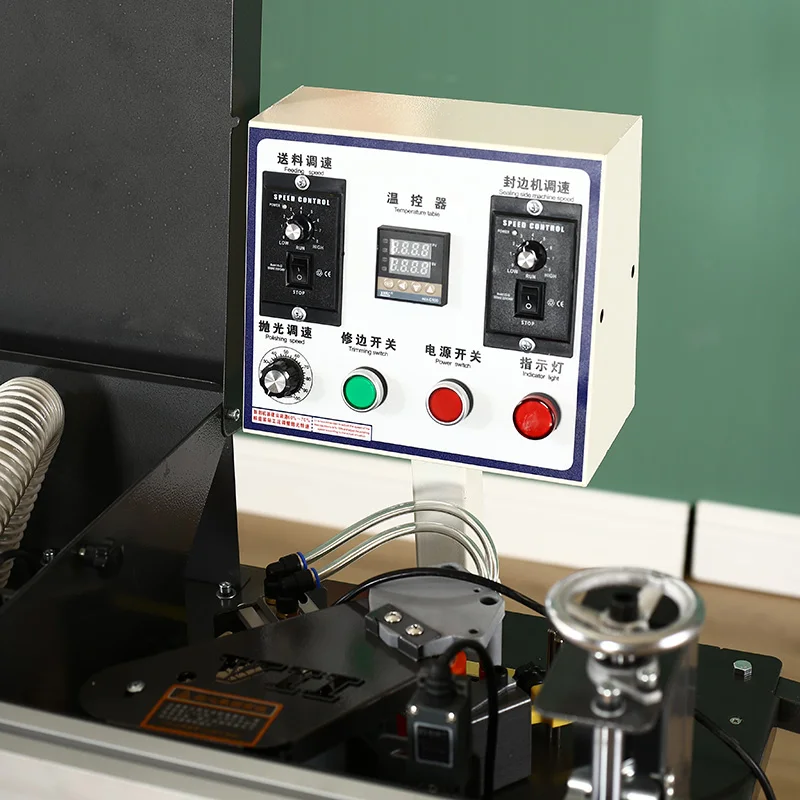
| Control System | Multi-function button operation panel |
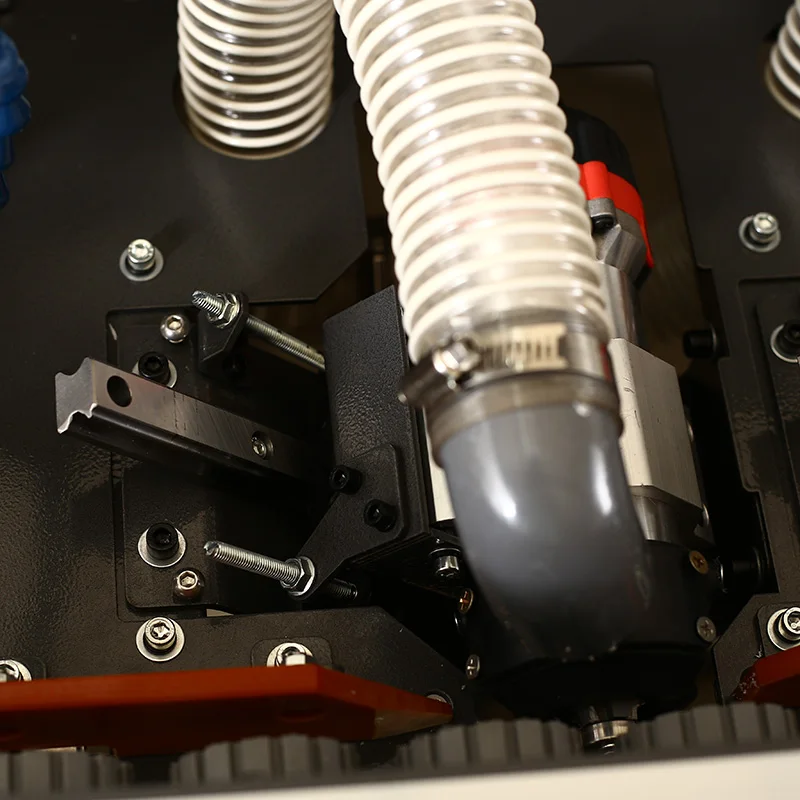
| Dust Extraction | 2 × large-diameter dust collector ports |
| Warranty | 1 year |
Application Suitability
| Application | Material or Output |
|---|---|
| Custom furniture panel edge banding | MDF, particleboard, plywood with PVC or melamine strips |
| Small-batch cabinet door production | Solid wood panels with veneer edge banding up to 2.5 mm |
| Curved-edge shelving and countertop profiles | Plywood and MDF with curved PVC or ABS strips |
| Prototyping and sample preparation | All board types within 10–50 mm thickness range |
| Joinery workshop short-run orders | Mixed straight and curved profiles without machine changeover |
Why the Voltage Question Must Come Before the Dispatch Date
An automatic edge banding machine in stock fast delivery means nothing if the machine cannot power on when it arrives.
I spent years on the assembly floor and moved into order delivery coordination. Last year a batch of edge banders went out to a Southeast Asian customer without anyone double-checking local frequency. The machines sat on their dock for three weeks while transformers were sourced. That delay cost the customer production time and cost us credibility. Now every unit I clear for shipment carries a signed voltage confirmation sheet matched to the buyer’s local supply [NEED_CITE: voltage and frequency standards by export market]. When you order a 910H from ready stock, the first question I ask is your facility voltage and phase — not the ship-to address.
Ready Stock Means Your Machine Is Already Built and Tested
The 910H sits on the floor assembled and tested, not as a bill of materials waiting for a production slot. When your order lands, the machine goes through a final power-on verification at the confirmed voltage, a test run on sample panels, and packing within a typical multi-day window. This is the difference between ordering an automatic edge banding machine in stock fast delivery and commissioning a build that enters the queue behind larger contracts.
Single-Unit Orders Welcome Without Minimums
Many workshops need exactly one edge bander to fill a gap — perhaps replacing a failed unit or adding curved-edge capability for a new product line. The 910H ships as a single unit with the same pre-dispatch verification as a multi-machine order. There is no container minimum, no requirement to bundle with auxiliary equipment, and no production run waiting period [NEED_CITE: typical buyer ordering patterns for small-format woodworking machinery].
Reading the Spec Sheet Against Your Production Reality
The 4 kW total rated power keeps this machine within the capacity of a standard single-phase workshop circuit, avoiding the need for a dedicated three-phase supply or panel upgrade. The 10–50 mm sheet thickness range and 0.5–2.5 mm strip thickness range cover the vast majority of furniture-grade MDF, particleboard, and plywood that a small shop processes daily. The 1000 ml glue pot capacity supports continuous short-run production without frequent refills, and the adjustable glue volume roller lets the operator dial in coverage for different strip materials — PVC requires a different application rate than thin veneer. The 4-edge arc-shaped alloy cutter head provides multiple cutting surfaces before rotation or replacement is needed, reducing consumable changeover during a production run.
The Cost of Skipping Pre-Dispatch Verification
Machines quoted without confirming local voltage and frequency arrive as dead weight. A 220V/50Hz unit plugged into a 60Hz supply runs its motors at a different speed than designed, affecting feed rate and trimming accuracy — and eventually burning out windings. Workshops that discover this mismatch after delivery face weeks of downtime while transformers are sourced or motors are rewound. Control panels in a language the operator cannot read stall commissioning further, because glue temperature and feed parameters must be set correctly before the first panel runs [NEED_CITE: CE machinery directive requirements for industrial equipment]. These are not manufacturing defects — they are ordering-process failures that are entirely preventable.
What Changes When You Buy From the Factory Floor
The 910H ships from the same facility that designed and assembled it, which means specification questions go directly to the technicians who built the machine rather than through a trading desk. Voltage customization from 110V to 440V is handled on the production line before final assembly, not retrofitted in a crate. The four-stage quality check — incoming material, in-process, finished product, and pre-shipment verification — applies to every stock unit the same way it applies to custom orders. Spare parts are drawn from the same inventory that feeds the assembly line, so reorder lead times stay short. Operation and maintenance manuals are prepared in the language you specify before packing, not sourced from a generic template library [NEED_CITE: machinery export documentation requirements].
Documentation & Verification
- Voltage and frequency confirmation sheet matched to your local supply before dispatch
- Factory test record showing the 910H running on sample panels at your specified thickness range
- Operation and maintenance manual prepared in your agreed language with illustrated parts diagrams
- Spare parts list packed inside the crate for immediate reordering reference
- Electrical schematic showing motor wiring and heater circuit for local electrician verification
Installation, Commissioning & Support
- The 140 kg net weight and 1300 × 560 mm footprint allow placement through standard workshop doors without a forklift
- A dedicated 220V circuit rated for at least 4 kW continuous draw is required — confirm amperage with your electrician
- The unit ships fully assembled; connect the two dust extraction ports to your shop vacuum or collector system
- First-run parameter setting covers glue pot temperature, feed wheel pressure, and trimming depth for your strip material
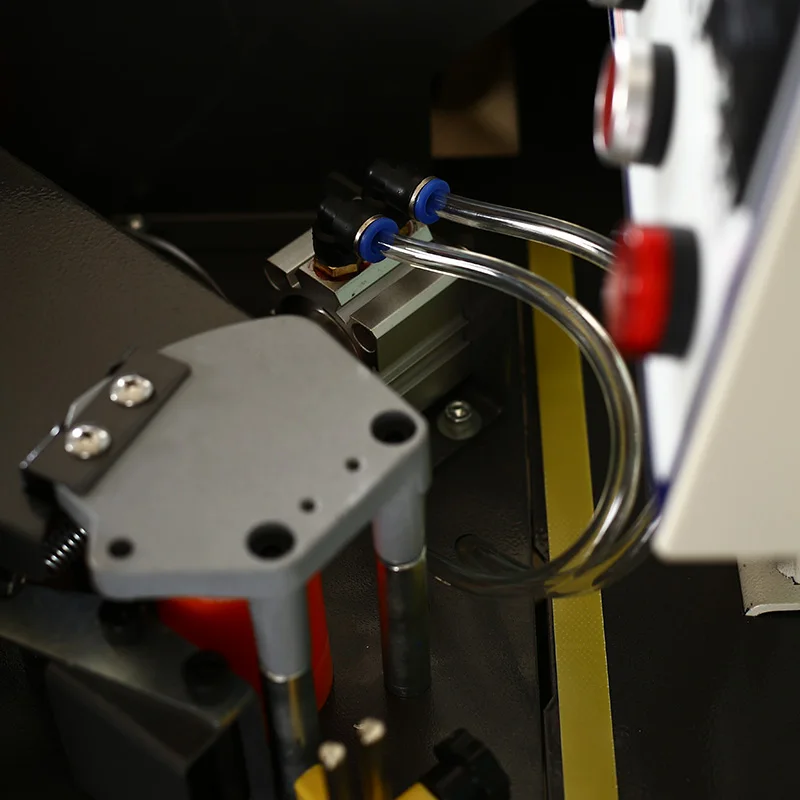
- The 0.4–0.6 MPa air pressure requirement means any standard workshop compressor with adequate CFM will supply the pneumatic cutter
- Wear items include the 4-edge alloy cutter head and rubber pressure wheels — reorder from factory inventory using the packed parts list
What to Include With Your Inquiry
Send your panel material types and the thickness range you run most often so we can confirm the 910H covers your daily production. Include your facility voltage and frequency so the correct electrical configuration is locked in before dispatch. If you process curved-edge components regularly, let us know the typical curve radius so we can advise on feed technique for the 180-degree curved banding mode.
Frequently Asked Questions
Q: Is this model in stock and what is the dispatch lead time?
A: The 910H is held in ready stock on our floor. After your voltage and frequency are confirmed, the unit goes through a final test run and packing. Dispatch typically follows within a matter of days, not weeks. Single-unit orders are processed the same way as larger shipments.
Q: Can voltage and frequency be changed from the default 220V/50Hz?
A: Yes. The 910H supports voltage configuration from 110V to 440V. Custom voltage units are adjusted on the production line before final assembly and testing. Lead time may extend slightly depending on the specific transformer and motor winding combination required.
Q: What is included in the shipment?
A: Every 910H ships with an operation manual in your agreed language, a spare parts list, a voltage confirmation sheet, and a factory test record. The machine arrives fully assembled with the dust extraction ports and extended feed plate installed. Pneumatic fittings for your air supply are included.
Q: Can I order a single unit, or is there a minimum order quantity?
A: Single-unit orders are standard. There is no minimum order quantity for the 910H. Whether you need one machine for a joinery workshop or several for a production line, each unit receives the same pre-dispatch verification and documentation package.
Q: Do you offer door-to-door shipping and what are the options?
A: We arrange shipping to your facility and provide customs documentation support. Ocean freight, air freight, and express options are available depending on your timeline and budget. The 140 kg weight and compact dimensions keep freight costs manageable for single-unit shipments.