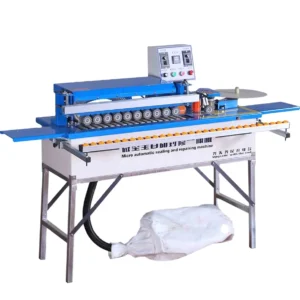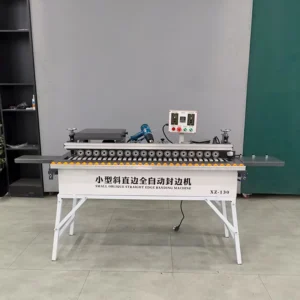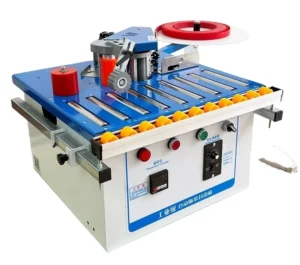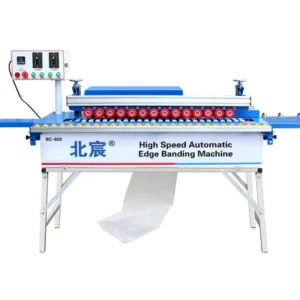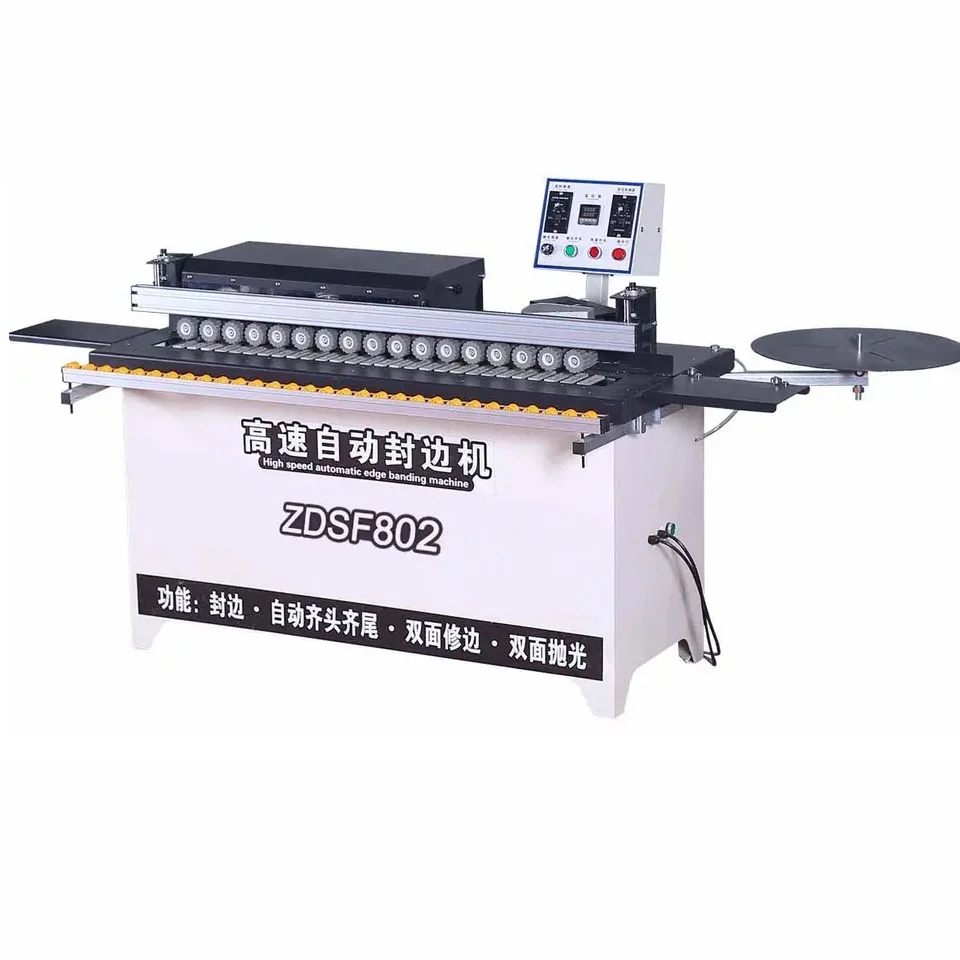
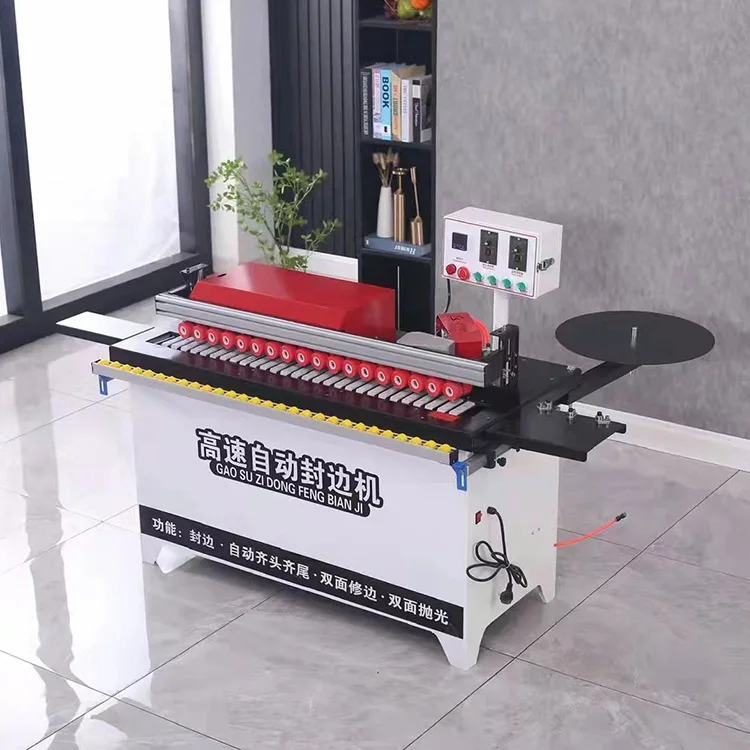
Description
Voltage Verified Before Dispatch — every ZDSF802 is checked against your local power grid standard prior to shipping, eliminating the costly on-site rewiring delays that plague cross-border equipment orders.
Technical Specifications
| Parameter | Value |
|---|---|
| Model | ZDSF802 |
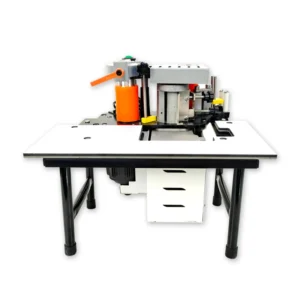
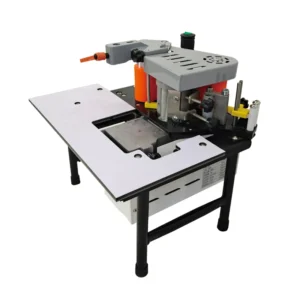
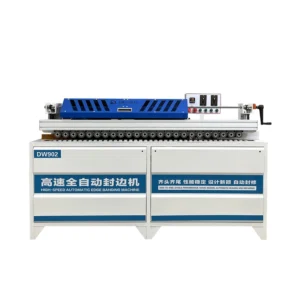
| Product Type | Automatic Edge Banding Machine |
| Rated Voltage | 220V (configurable 110V–440V) |
| Rated Power | 4 kW |
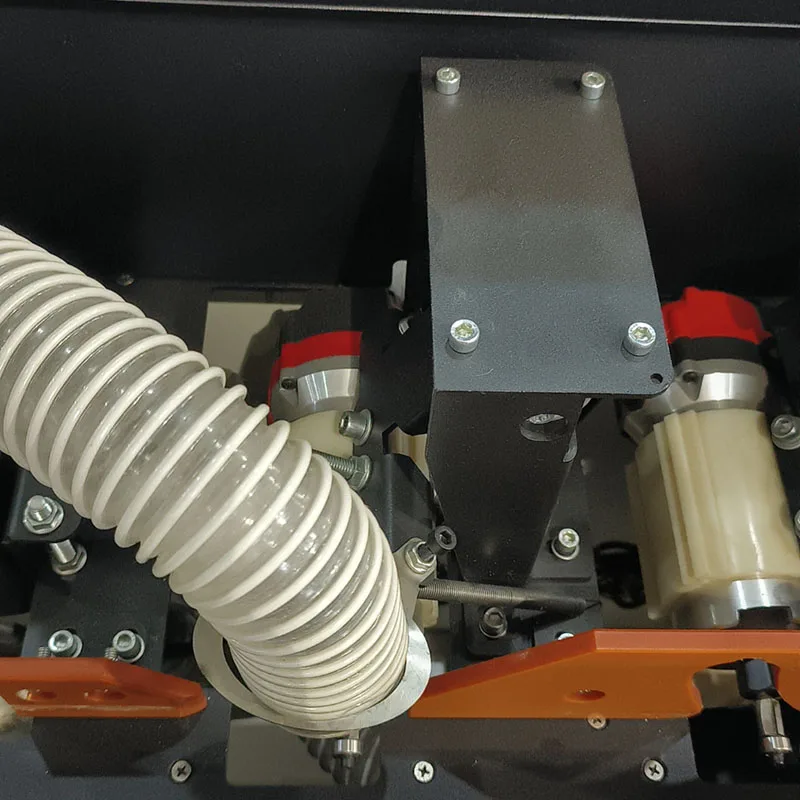
| Trimming Power | 800W × 2 |
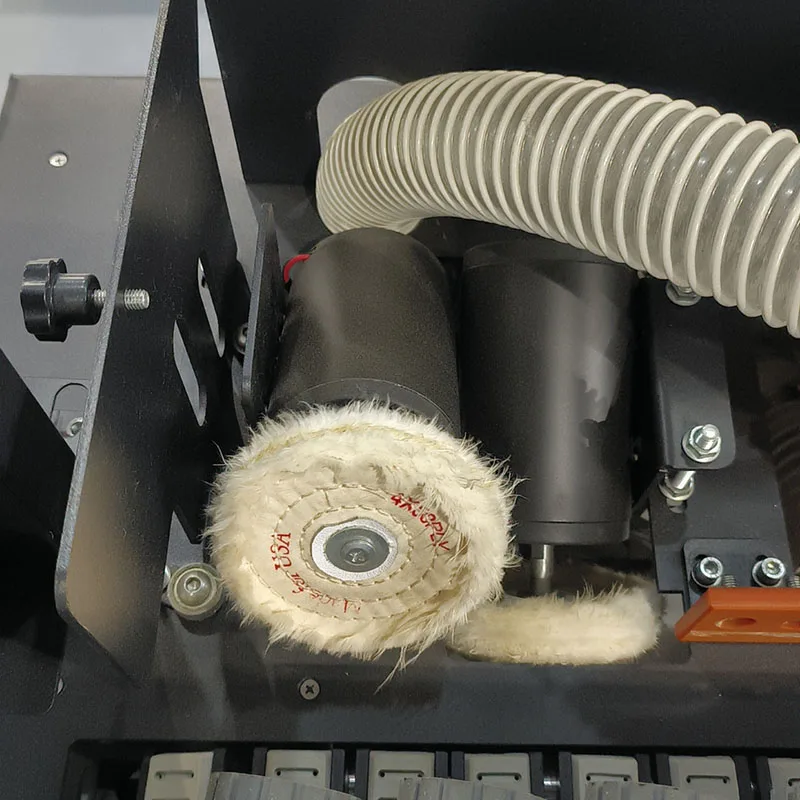
| Polishing Power | 180W × 2 |
| Suction Power | 1200W |
| Heating Power | 1000W (5–10 min heat-up) |
| Feed Speed | 0–10 m/min |
| Conveyor Belt Speed | 0–10 m/min |
| Strip Thickness Range | 0.5–2.5 mm |
| Sheet Thickness Range | 10–50 mm |
| Glue Pot Capacity | 4000 ml |
| Gluing Method | Double-sided gluing |
| Rated Air Pressure | 0.4–0.6 MPa |
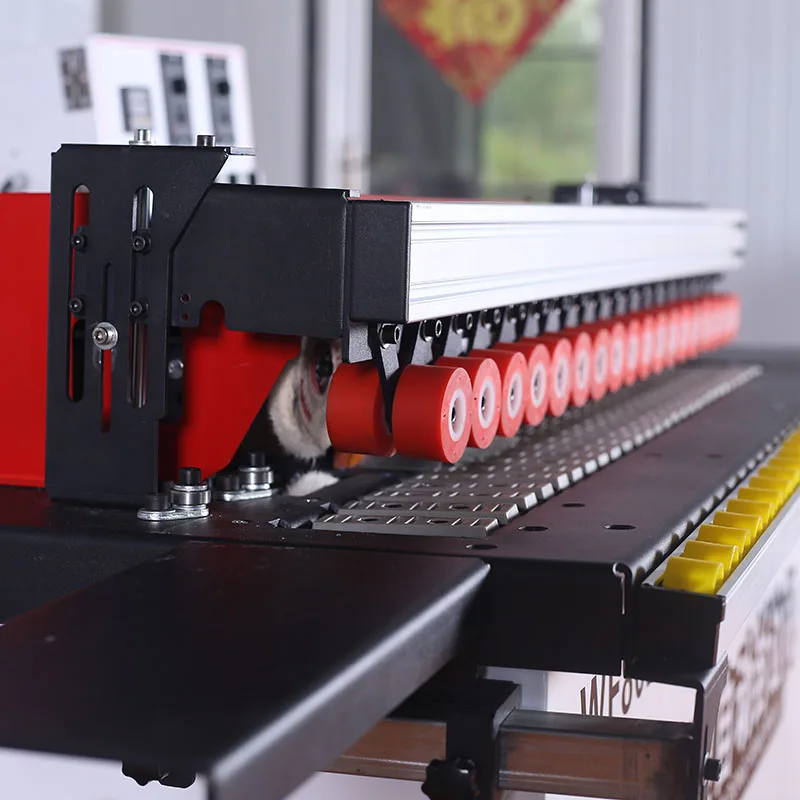
| Pressure Beam | Integrated pressure beam with double-row pressure wheels |
| Conveyor Belt Material | Silicone (anti-scratch) |
| Belt Breaking Method | Pneumatically controlled |
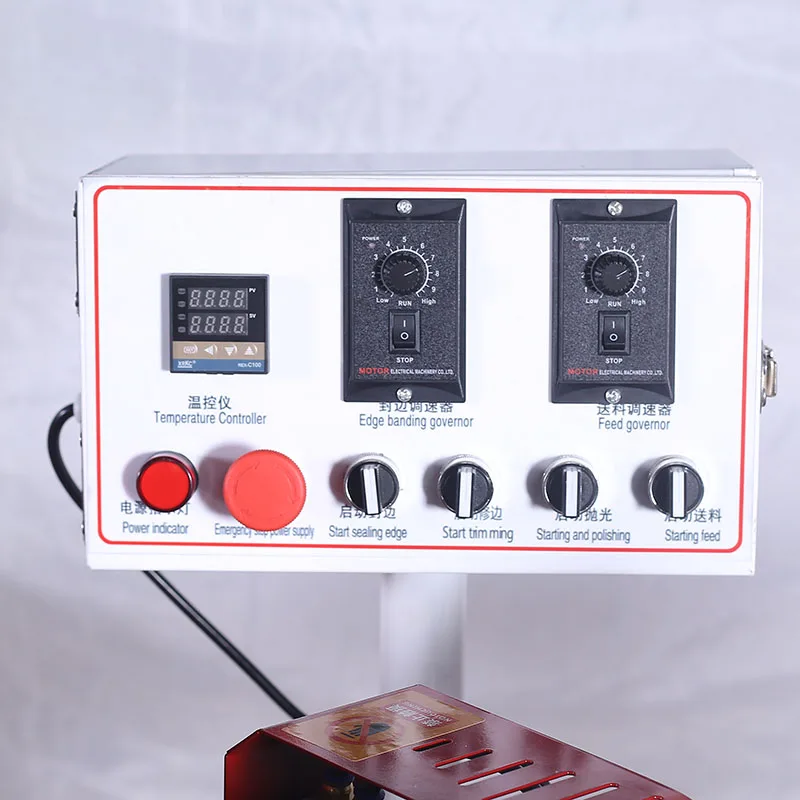
| Control Panel | Digital display for glue pot temperature, independent switches |
| Extendable Support | Fluent strips for large plate stability |
| Dust Extraction | Built-in vacuum cleaner |
| Overall Dimensions (L×W×H) | 130 × 65 × 75 cm |
| Machine Weight | 150 kg |
Application Suitability
| Application | Material or Output |
|---|---|
| Cabinet door edge finishing | MDF and particleboard with PVC edge strips |
| Custom furniture panel banding | Plywood and blockboard with veneer or PVC strips |
| Small-batch joinery production | Solid wood panels requiring straight-line edge banding |
| Workshop transition from manual trimming | Boards 10–50 mm thick with 0.5–2.5 mm edge strips |
Why the Voltage Question Must Precede the Order
Specifying local voltage and frequency at inquiry stage prevents motor burnout and weeks of on-site troubleshooting.
I have watched a 380V motor fry within seconds when connected to a 440V supply at a customer’s workshop. The transformer retrofit took three weeks to source locally, and the machine sat idle the entire time. For an Automatic Edge Banding Machine in stock fast delivery, the stock itself means nothing if the electrical system does not match the installation site. Confirming the supply standard before dispatch is the single most effective step in avoiding field failures [NEED_CITE: voltage and frequency standards by export market]. The ZDSF802 ships with voltage configurable from 110V to 440V, but the correct configuration must be locked in before the unit leaves the warehouse.
Stock Availability Without Electrical Guesswork
Keeping the ZDSF802 Automatic Edge Banding Machine in stock fast delivery is only half the equation. The other half is ensuring that what leaves the warehouse actually runs on arrival. Before any unit is crated, we pull the electrical schematic and cross-reference your site voltage and frequency. The digital control panel is configured with temperature displays and switch labels in the operator’s working language, so commissioning does not stall over an unreadable interface.
From Warehouse Floor to Workshop Floor
The dispatch process for this machine covers more than physical packing. Each ZDSF802 undergoes a powered run-off test on panel material matching your production stock. Photos of the edge banding result — glue line thickness, trimming clean-up, and polishing finish — are sent for your approval before the machine is released to freight. This pre-shipment verification step is what turns an Automatic Edge Banding Machine in stock fast delivery into a unit that produces acceptable output from the first hour [NEED_CITE: pre-shipment inspection standards for woodworking machinery]. The silicone conveyor belt and integrated pressure beam are checked for feed consistency across the full 10–50 mm board thickness range.
Reading the Spec Sheet Against Your Production Reality
The 4000 ml glue pot capacity is sized for continuous runs across multiple panels without mid-batch refills, which matters when you are edging cabinet components in sequence. The double-sided gluing method applies adhesive to both the board edge and the strip simultaneously, improving bond consistency on porous substrates like particleboard compared to single-sided application. Feed speed is adjustable from 0 to 10 m/min, allowing operators to slow down for thick veneer strips that need longer contact time with the heated glue, or speed up for thin PVC on standard MDF panels. The two 800W trimming motors handle head and tail trimming in one pass, while the 180W × 2 polishing stations remove residual adhesive and smooth the edge profile. The built-in 1200W vacuum collector captures trim waste and dust at source, reducing the need for a separate extraction system in compact workshops where floor space is limited.
What Happens When Configuration Is Skipped
Ordering a stock machine without verifying electrical compatibility or panel feed height creates problems that surface only after installation. A conveyor set too low for your board thickness causes jamming at the infeed, while incorrect air pressure at the trimming station produces ragged cuts that reject panels at assembly. The pneumatic belt breaker and double-row pressure wheels rely on correct air supply to maintain consistent strip contact pressure. Workshops that skip the configuration conversation often spend days chasing feed marks and glue gaps that trace back to a parameter that should have been set before the machine shipped [NEED_CITE: common commissioning faults in imported woodworking equipment].
Why Sourcing This Model Through This Channel
In-house manufacturing with patented cutting mechanisms means the trimming and polishing stations on the ZDSF802 are built and tested under one roof, not assembled from sourced sub-components with unknown provenance. The four-stage QC process covers incoming material inspection through pre-shipment verification, so the glue pot heating element and conveyor drive you receive have been individually validated. Voltage, control panel language, and specification adjustments are handled as standard configuration items rather than special engineering requests. A formal quotation with confirmed specifications arrives within 24 hours of inquiry, and factory visits are available for buyers who want to witness a test run on their own panel stock. Every stocked unit ships with documentation matched to the configured machine, not a generic manual pulled from a shared folder.
Documentation & Verification
- Factory test record showing banding result on your specified panel thickness and edge strip material
- Electrical schematic confirming configured voltage and circuit protection ratings for your ZDSF802 unit
- Operation and maintenance manual written in your agreed operator language with illustrated station layout
- Spare parts list with part numbers for trimming cutters, polishing wheels, and conveyor belt segments
- Packing photographs documenting machine condition and crate sealing before handover to freight forwarder
Installation, Commissioning & Support
- Requires a dedicated 220V circuit rated for the 4 kW total draw with appropriate breaker sizing
- Air supply must deliver 0.4–0.6 MPa clean dry air to the pneumatic belt breaker and pressure beam
- Machine footprint of 130 × 65 cm allows placement against a workshop wall with infeed access clearance
- Glue pot heat-up takes 5–10 minutes from cold start before the first panel can be fed through
- Fluent strip extensions should be deployed when banding panels wider than the conveyor bed for stability
- Built-in dust collector bag should be emptied at regular intervals to maintain 1200W suction performance
What We Need to Match the Right Configuration
To confirm which ZDSF802 configuration fits your line, share your primary panel material and thickness range, the edge strip type and thickness you run most often, and your workshop’s available voltage and phase supply. Let us know if your operators require control labels and documentation in a specific language. If you are integrating this machine with existing saws or boring equipment, provide the infeed and outfeed height so we can verify conveyor alignment. For buyers evaluating output quality before committing, we can arrange a sample banding test on your supplied panel stock prior to order confirmation.
Frequently Asked Questions
Q: Is this model currently in stock and how quickly can it ship?
A: The ZDSF802 is held in ready stock for dispatch without production lead time. Once your voltage and panel requirements are confirmed, the unit undergoes a pre-shipment test run, and the crated machine is released to your chosen freight forwarder. Typical warehouse-to-port handover completes within days of test approval rather than weeks.
Q: Can you match the machine voltage to my local power supply before shipping?
A: Yes. The ZDSF802 supports voltage configuration from 110V to 440V. Before any stock unit is prepared for dispatch, we confirm your site voltage, phase, and frequency, then verify the motor winding and control transformer match. An electrical schematic reflecting the confirmed configuration ships with the machine documentation package.
Q: What panel materials and edge strip types does the ZDSF802 handle?
A: This machine processes MDF, particleboard, plywood, and solid wood panels in the 10–50 mm thickness range. It applies straight-line edge banding using PVC and veneer strips from 0.5 to 2.5 mm thick. The double-sided gluing method and adjustable feed speed accommodate both porous and dense substrates.
Q: Will the control panel and manual be in a language my operators can read?
A: The digital temperature display and independent station switches are configured with labeling in your specified language before dispatch. The operation and maintenance manual is also produced in the agreed language, covering startup sequence, parameter adjustment, and routine maintenance for each of the banding stations.
Q: What spare parts ship with the machine and how do I reorder?
A: Each shipment includes a spare parts list with part numbers for consumable items such as trimming cutters, polishing wheels, and conveyor belt sections. The list identifies recommended initial spares based on your expected production volume. Reorders are placed directly against the part numbers provided, with lead time confirmed at time of order.