
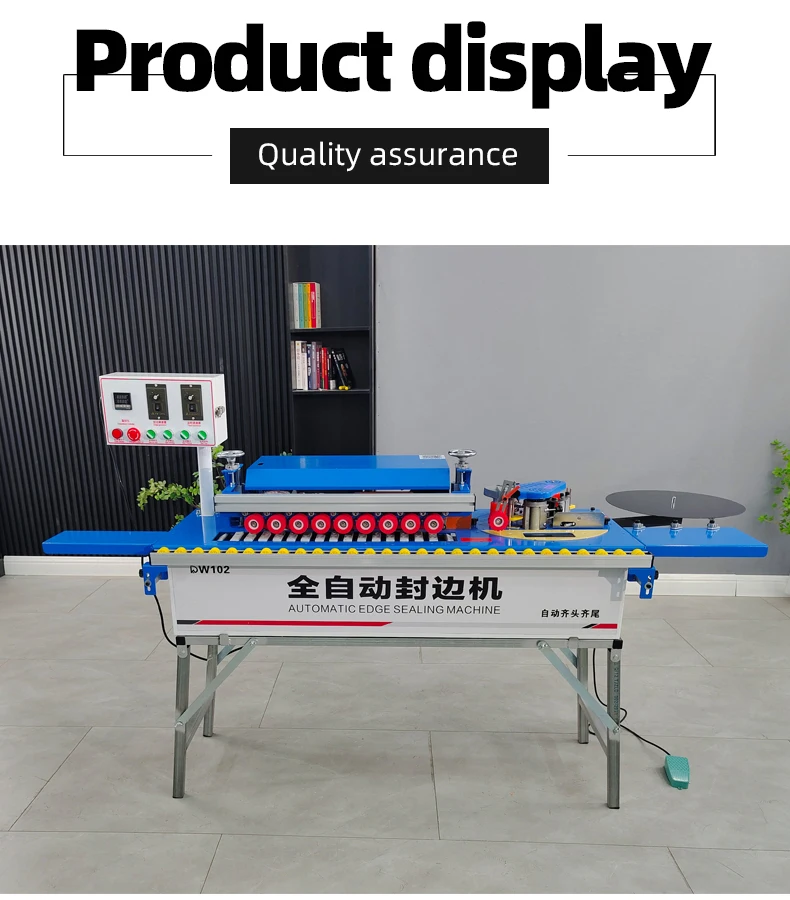
Description
Voltage Locked Before Dispatch — every DW102 order ships only after written confirmation of local voltage and frequency, with a live-run test recorded before crating.
Technical Specifications
| Parameter | Value |
|---|---|
| Model | DW102 |
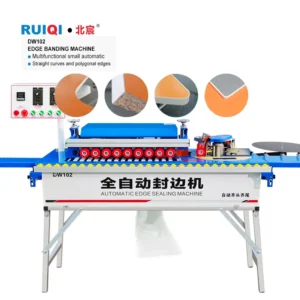
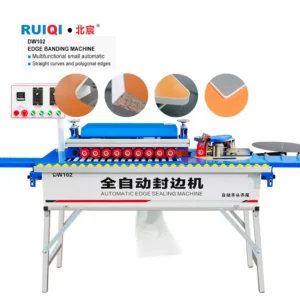
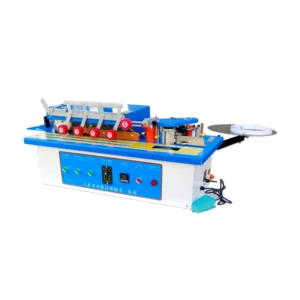
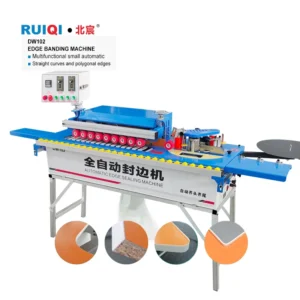
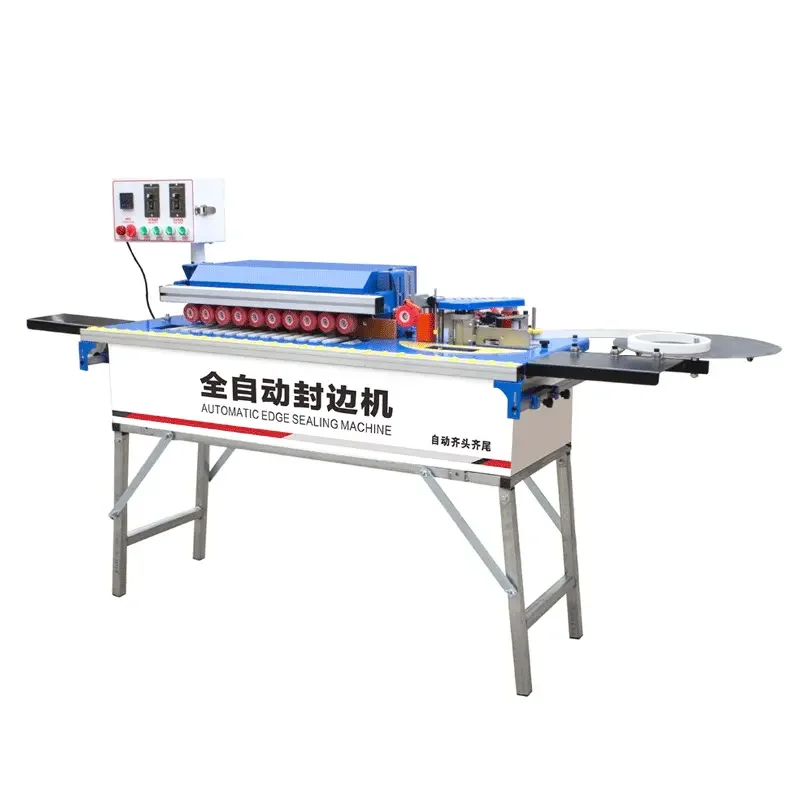
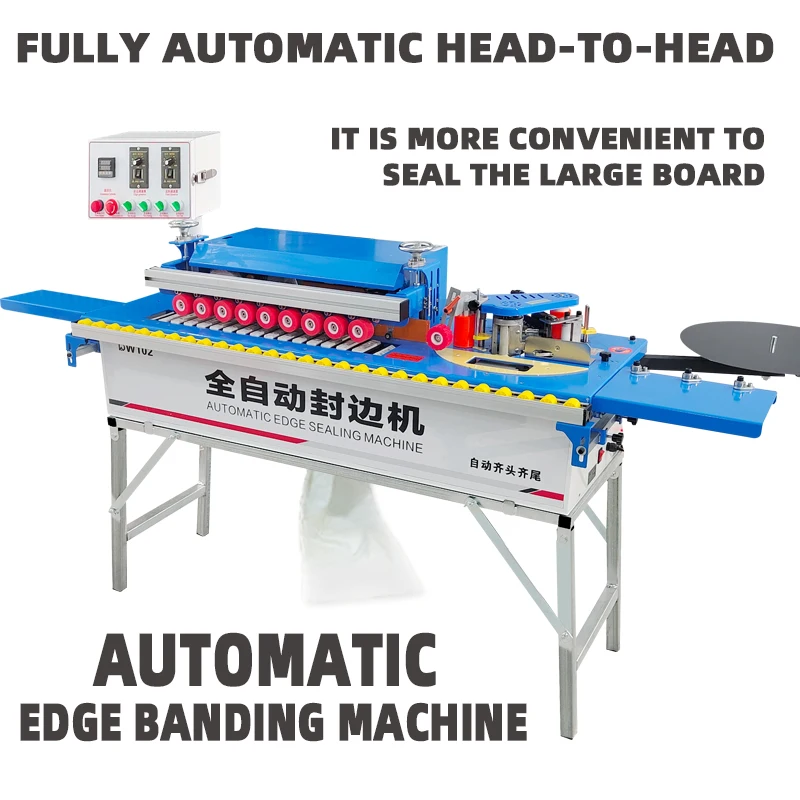
| Product Type | Automatic Mini Edge Banding Machine |
| Total Power | 3800W |
| Voltage Options | 220V / 380V / customization |
| Trimming Power | 650W × 2 |
| Polishing Power | 180W × 2 |
| Vacuum Power | 1200W |
| Transmission Power | 60W |
| Edge Heating Power | 20W |
| Glue Pot Capacity | 1000ml |
| Edge Banding Height Range | 0–50mm |
| Edge Banding Thickness Range | 0.3–3mm |
| Minimum Sheet Length | 25cm |
| Minimum Sheet Width | 5cm |
| Air Source Pressure | 0.5–0.8 MPa |
| Product Size | 128 × 47 × 69 cm |
| Product Weight | 75 kg |
| Plug Options | EU / USA / AU / UK |
| Language Options | Chinese / English (other languages customizable) |
| Key Features | Curved and straight edge banding, edge trimming, polishing, automatic head-and-tail cutting, vacuum feed |
| Feed Speed | (basis to be confirmed) |
Application Suitability
| Application | Material or Output |
|---|---|
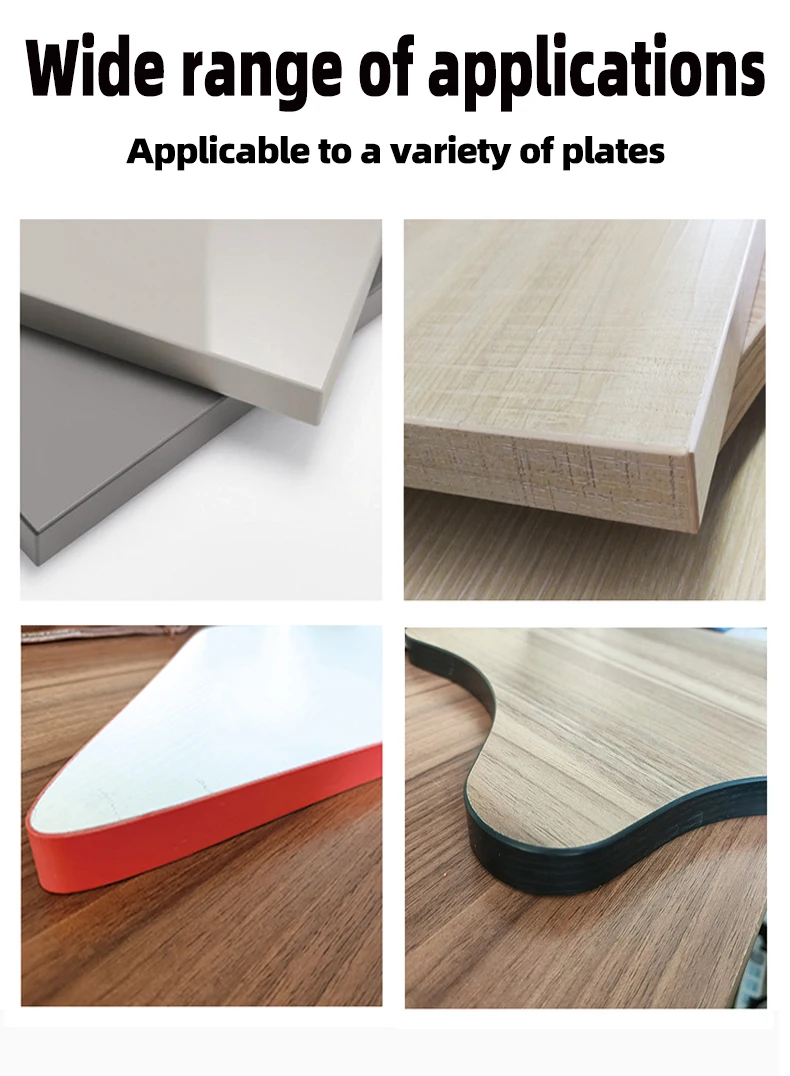
| Cabinet door edge finishing | MDF and particleboard panels with PVC or veneer banding |
| Small-batch shelving production | Plywood and blockboard with melamine edge strips |
| Workshop offcut reworking | Narrow solid wood components down to 5cm width |
| Custom furniture prototypes | Polymer door blanks and curved panel sections |
| Secondary banding station | Short-run jobs on a backup machine for larger furniture operations |
Why the Voltage Question Should Come Before the Price on an Edge Banding Machine in Stock
Confirming your facility voltage in writing before dispatch prevents weeks of idle crating at the destination port.
I watched a small workshop in South America sit on an unpowered edge bander for three weeks because the supplier shipped a 380V unit into a 220V-only shop. The transformer they scrambled to source locally cost more than the freight surcharge would have. When buyers focus first on landing cost and leave electrical compatibility to a checkbox, the machine arrives as dead weight. An edge banding machine in stock is only useful if it runs the day you plug it in [NEED_CITE: voltage and frequency standards by export market].
Stocked Configurations With Verified Electrical Matching
The DW102 sits on the floor ready to ship, but ready stock does not mean one-size-fits-all. Each unit is matched to the buyer’s declared voltage and plug type before it leaves the warehouse. Whether your shop runs on 220V single-phase or 380V three-phase, the machine is rewired and load-tested at the correct frequency so the motor and heating elements draw within rated current. This is what separates a genuine edge banding machine in stock from a catalogue placeholder.
Compact Footprint Without Sacrificing Process Stations
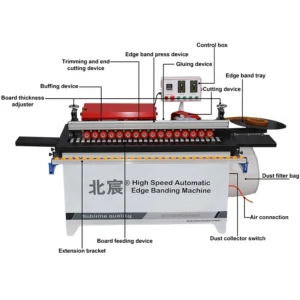
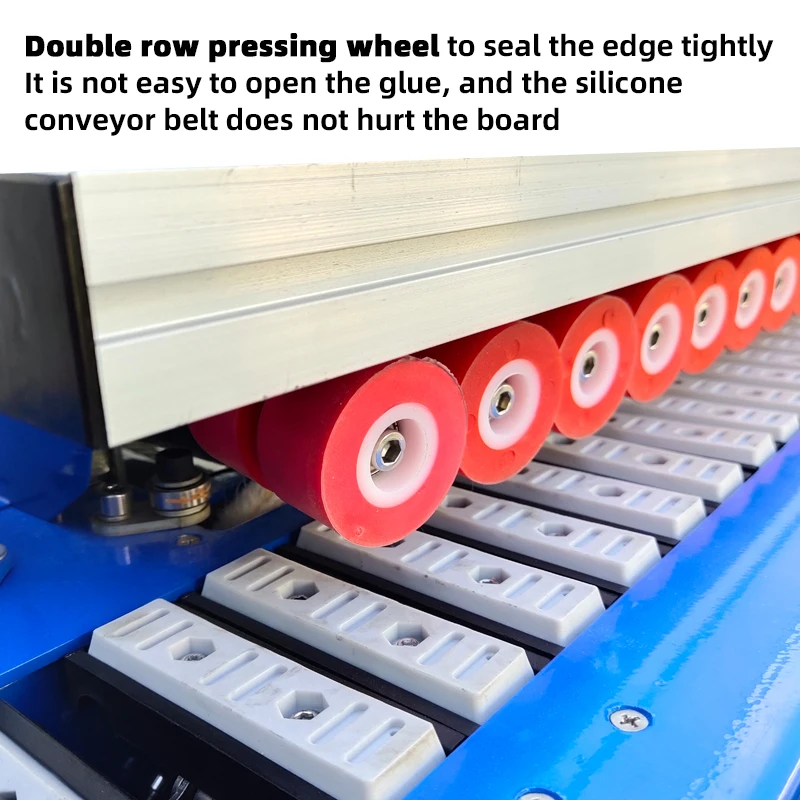
Despite its 128cm length and 75kg weight, the DW102 carries the full sequence: gluing, head-and-tail cutting, dual trimming, and dual polishing. A joinery startup can place it against a wall in a shared workspace and still produce finished panels that move straight to assembly. The 1000ml glue pot handles a full shift of small-batch work without constant refills, and the vacuum feed holds narrow stock steady where gravity alone would let the panel drift.
How the Specs Translate to Daily Workshop Output
The 0.3–3mm edge thickness range covers the PVC strips most cabinet shops use daily as well as thicker solid-wood lipping for visible furniture edges. Trimming at 650W per side gives enough torque to shear through rigid PVC cleanly without chipping the substrate, while the 180W polishing motors bring the trimmed edge to a smooth finish in the same pass. The 25cm minimum sheet length means you can band the short offcuts that usually pile up beside the panel saw — drawer sides, shelf brackets, and filler strips — without feeding them through an oversized machine that demands a two-person lift just to load [NEED_CITE: edge banding thickness standards for PVC and wood veneer].
The Hidden Cost of Skipping Pre-Dispatch Verification
A bander that arrives with the wrong plug or an incompatible control panel language does not just sit idle — it delays every downstream order that depended on finished panels. Cabinet boxes stack up unfinished, hardware installation waits, and the fitter crew stands around. In a small workshop there is no second machine to absorb the overflow. That single electrical mismatch cascades into missed delivery dates and eroded customer trust far beyond the machine’s purchase price [NEED_CITE: CE machinery directive requirements for industrial equipment].
Why Buyers Source This Model Through Ruiqi Store
Single-unit ordering is standard here — you do not need to commit to a container load to access stock. Voltage, plug type, and control language are confirmed in writing before the machine moves off the floor. Each DW102 goes through a pre-shipment run on the panel material you specify, so you receive a test record alongside the packing photos. Spare parts ship in the same crate, and the operation manual arrives in the language your operators actually read.
Documentation & Verification
- Factory test record run on your specified panel thickness and edge material before dispatch
- Electrical schematic matching your confirmed voltage and plug configuration
- Operation and maintenance manual printed in your chosen language
- Packing photographs showing crate condition and accessory placement before collection
- Spare parts list cross-referenced to the DW102 serial number in your unit
Installation, Commissioning & Support
- Single 220V or 380V dedicated circuit rated above the 3800W total draw with appropriate breaker sizing
- Compressed air supply delivering 0.5–0.8 MPa through a filtered line to the machine inlet
- Level floor placement using the 128 × 47cm footprint with clearance on both feed and exit sides
- First-run parameter setting for glue temperature, feed speed, and trimming depth on your actual stock
- Spare trimming blades and polishing pads included for immediate consumable rotation
What to Share When You Request a Quote
Tell us the panel materials and edge banding types you run most often, along with typical sheet dimensions. Confirm your workshop voltage, phase, and frequency so we can match the motor and transformer. Let us know your preferred control panel language and plug type, and whether you need a sample panel processed and shipped for approval before the machine leaves.
Frequently Asked Questions
Q: Is the DW102 in stock and how quickly can it ship?
A: The DW102 is stocked for single-unit dispatch. Once your voltage, plug type, and language are confirmed in writing, the machine is rewired if needed, run-tested, crated, and handed to your freight forwarder. Typical turnaround from order confirmation to port departure is measured in days rather than weeks, though exact timing depends on the customization scope you specify.
Q: What voltage and plug options are available for my country?
A: The DW102 supports 220V and 380V configurations with further customization available. Plug options cover EU, USA, AU, and UK standards. We confirm your local voltage and frequency in writing before the machine is prepared, so the motor wiring, heating elements, and transformer are all matched to your grid before the unit is crated.
Q: Can the control panel display English or another language?
A: Chinese and English are available as standard, with additional languages customizable on request. We confirm the language at order stage so the control panel is loaded and tested before dispatch. Your operators will see familiar labels from the first power-on rather than waiting for a field software update.
Q: What edge banding thickness and panel materials does the DW102 handle?
A: The machine accepts edge banding from 0.3mm to 3mm thick and processes MDF, particleboard, plywood, blockboard, and polymer door blanks. It handles both straight and curved edges, with a minimum sheet width of 5cm. The dual trimming and dual polishing stations deliver a finished edge suitable for visible cabinet and furniture components.
Q: How is the machine packed and what happens if damage occurs during transit?
A: Each DW102 is secured in a crate sized to its 128 × 47 × 69cm dimensions, with packing photographs taken before the crate is closed. If external damage is visible on arrival, document it with the carrier before accepting delivery. The pre-dispatch photos provide a condition baseline for any freight insurance claim you need to file.