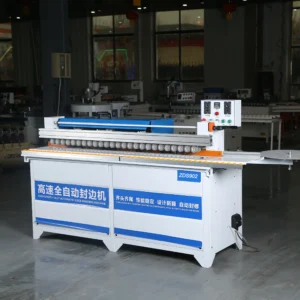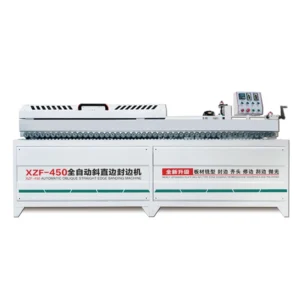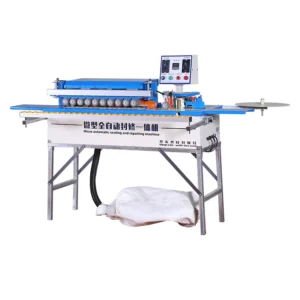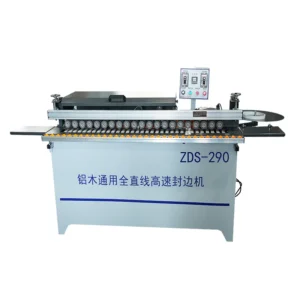
Description
Dispatch-Ready Inventory — every 910H unit undergoes pre-shipment voltage verification and nameplate photography before leaving our Shandong warehouse, eliminating the electrical mismatch delays that stall workshop commissioning.
Technical Specifications
| Parameter | Value |
|---|---|
| Model | 910H |
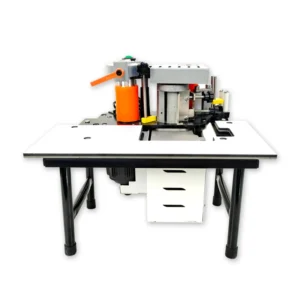
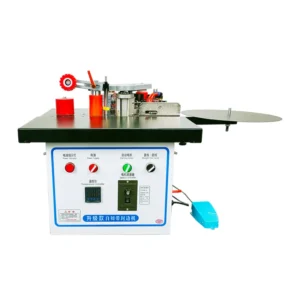
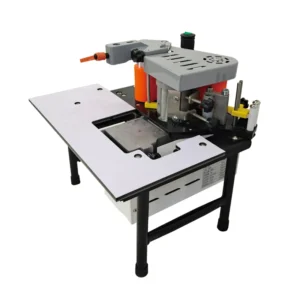
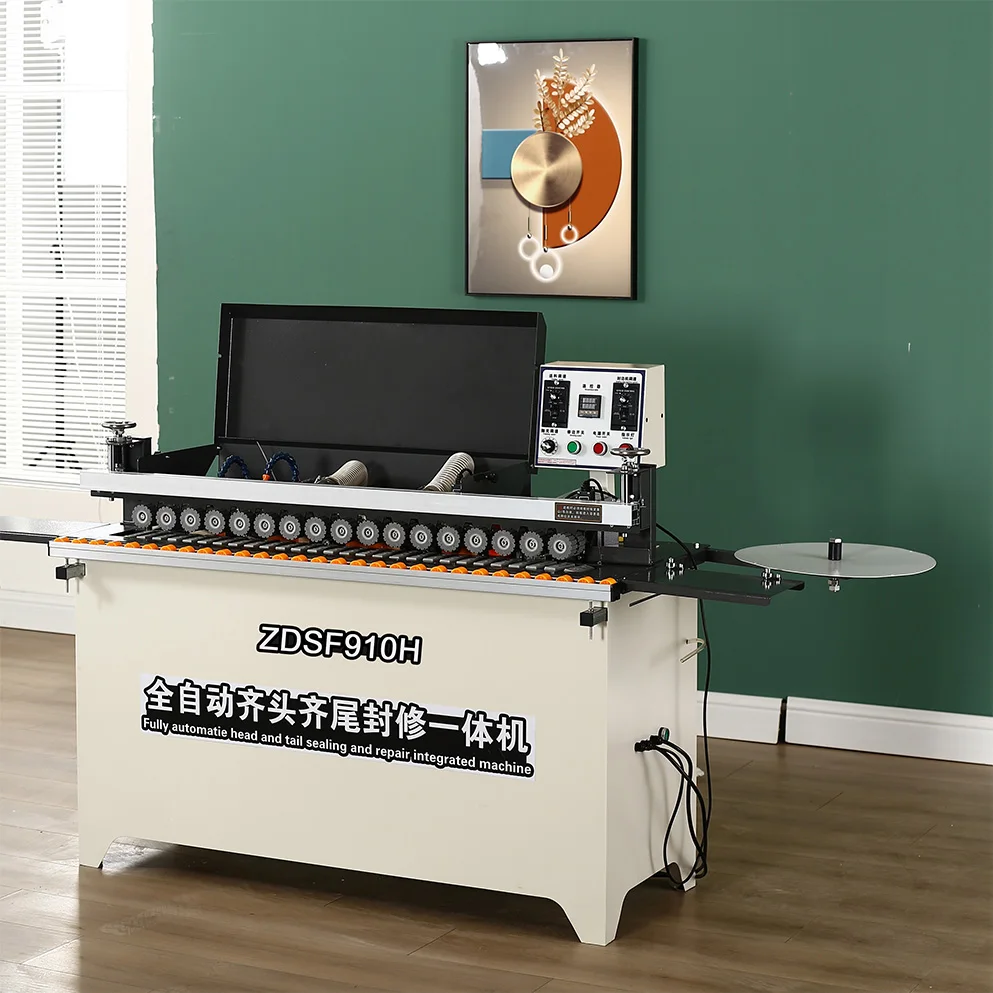
| Product Type | Small Automatic Curved and Straight Edge Banding Machine |
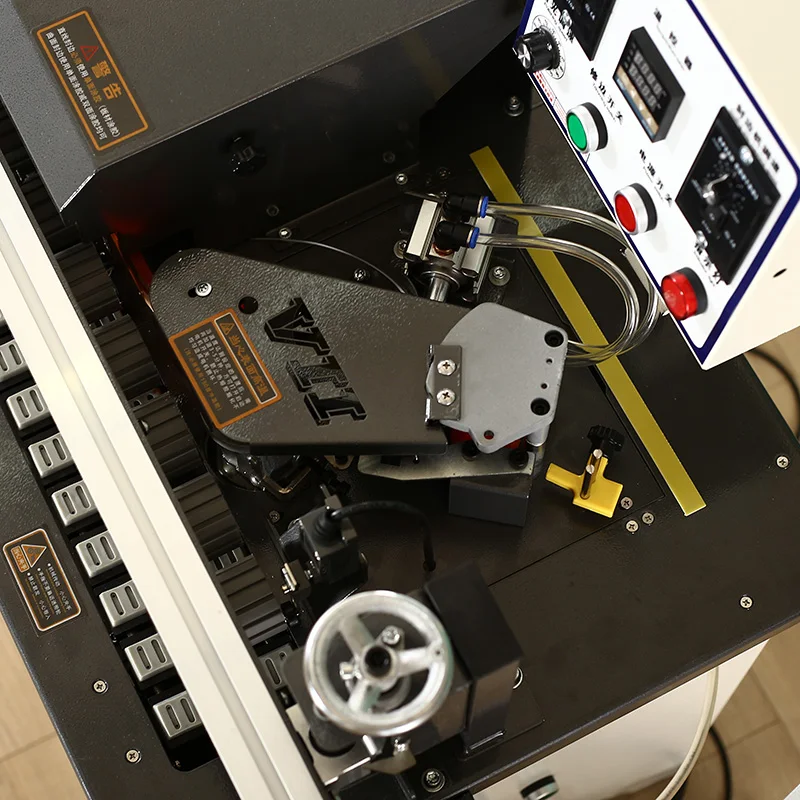
| Function | Automatic plate feeding, double-sided gluing, upper and lower polishing, automatic head and tail trimming, curved and straight edge banding |
| Edge Type Capability | Both curved and straight lines |
| Voltage & Frequency | 220V 50Hz |
| Rated Power | 4kW |
| Heating Power | 800W |
| Trimming Power | 800W × 2 |
| Polishing Power | 180W × 2 |
| Suction Power | 1200W |
| Belt Power | 25W |
| Transmission Power | 120W |
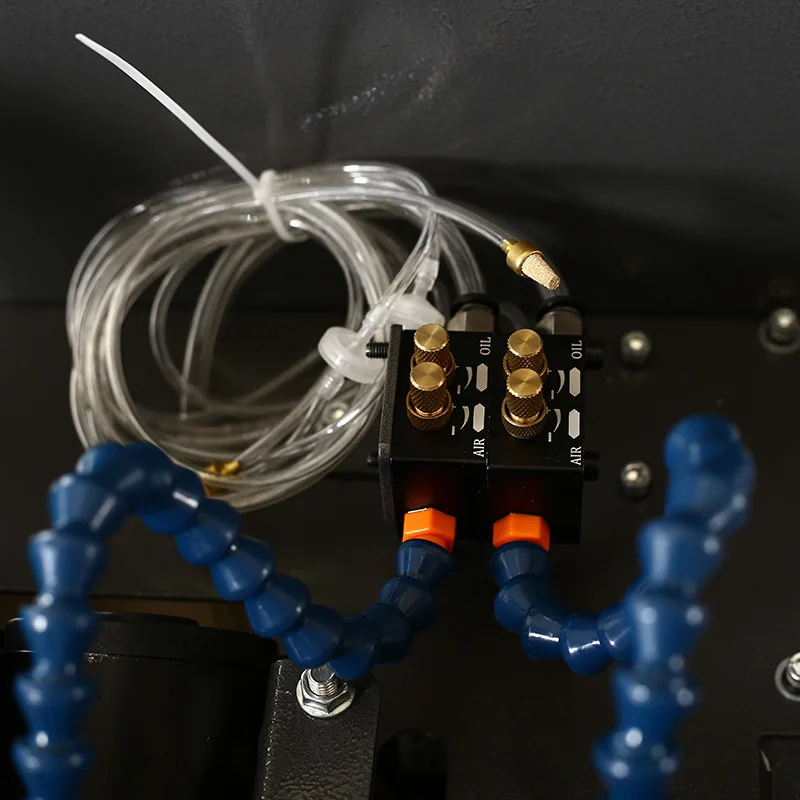
| Rated Air Pressure | 0.4-0.6 MPa |
| Sheet Thickness Range | 10-50mm |
| Strip Thickness Range | 0.5-2.5mm |
| Glue Pot Capacity | 1000ml |
| Feed Mechanism | Double-row rubber pressure wheels, automatic plate feeding |
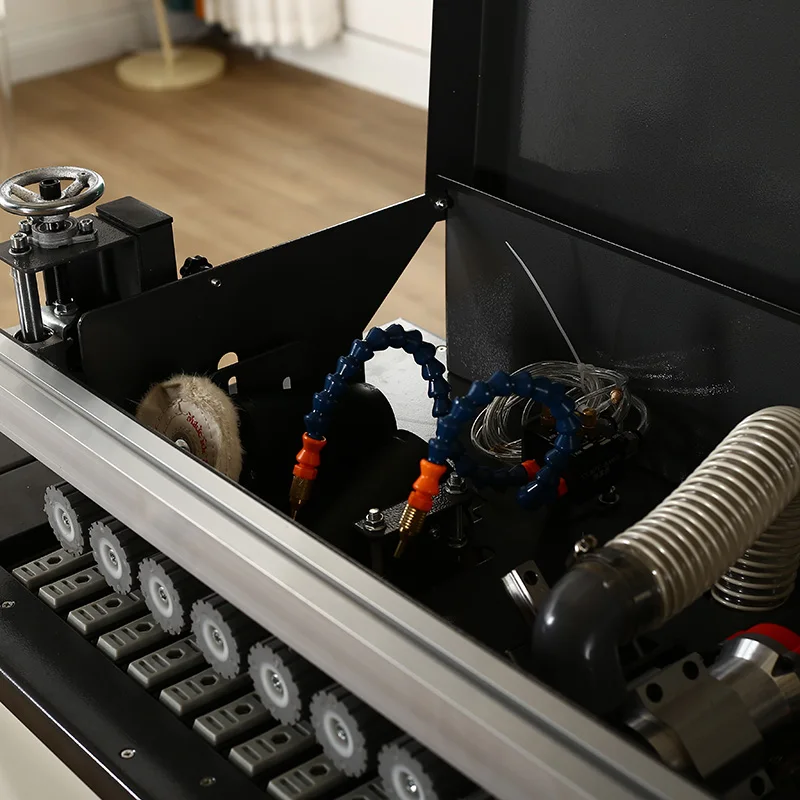
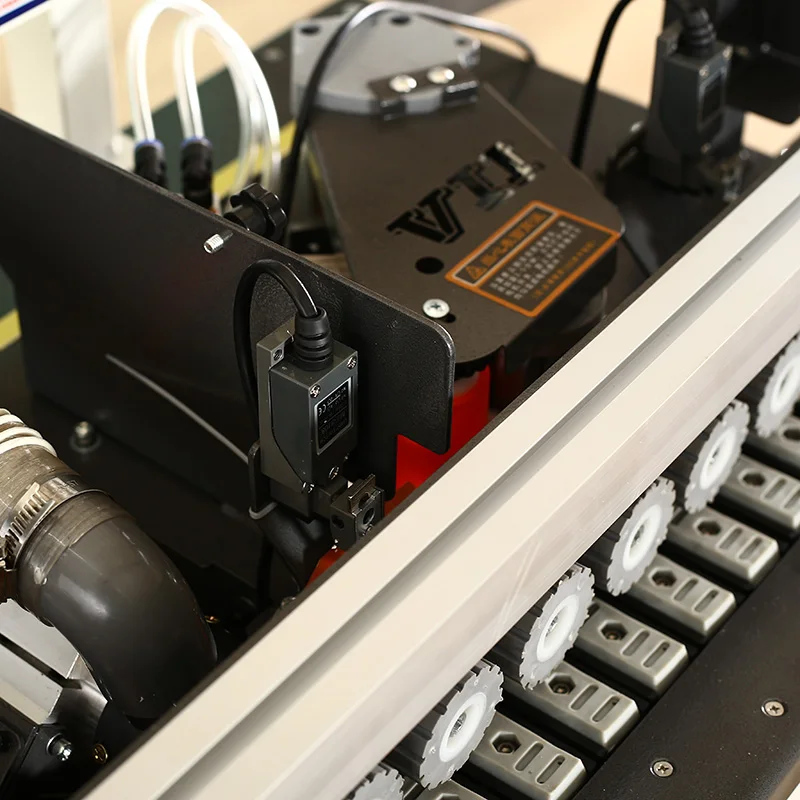
| Trimming Stations | 2 high-speed motors with large-diameter vacuum device |
| Cutter Head | 4-edge arc-shaped alloy cutter head |
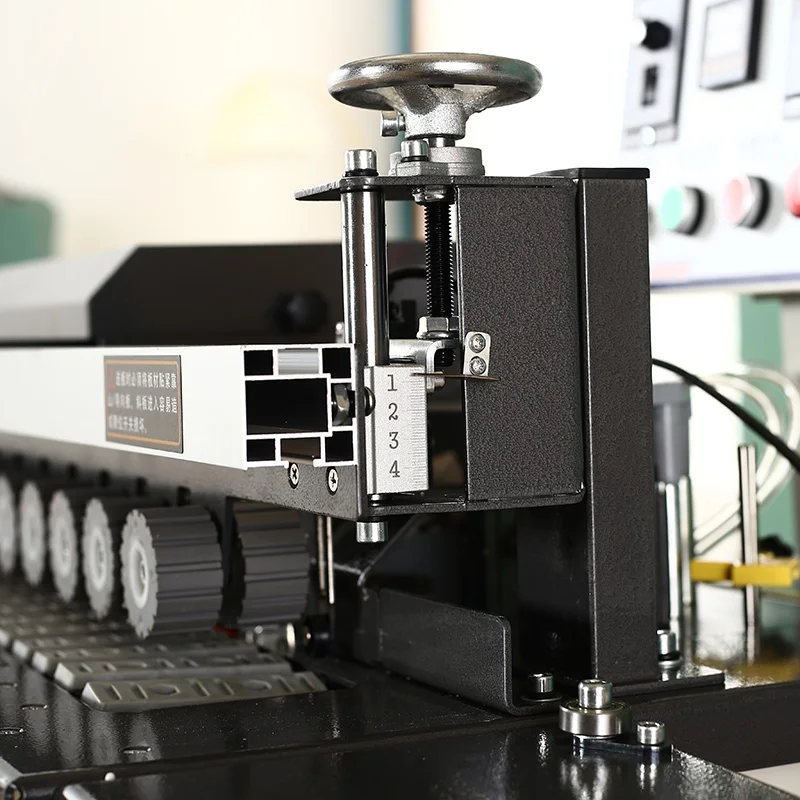
| Pressure Beam | Adjustable aluminum alloy |
| Overall Dimensions (L×W×H) | 1300 × 560 × 1090 mm |
| Net Weight | 120kg (source lists 140kg alternatively — verify against manufacturer catalog) |
Application Suitability
| Application | Material or Output |
|---|---|
| Custom furniture workshop edge finishing | MDF and particleboard panels with PVC edge banding |
| Small cabinet maker production | Plywood substrates with veneer or melamine strips |
| Joinery shop curved component processing | Solid wood panels with shaped contours requiring curved edge banding |
| Transition from manual to machine-assisted banding | Low to moderate volume batch processing on panels 10-50mm thick |
Why the Voltage Question Must Come Before the Dispatch Date
A Small Automatic Edge Banding Machine in stock fast delivery only matters if the electrical supply at your workshop matches what is wired inside the cabinet.
I have seen the aftermath of skipping that single confirmation step. A compact edge bander shipped to a facility running 380V three-phase arrived with a 440V motor configuration, and the local electrician could not bridge the gap without replacing the contactor and transformer. The machine sat under plastic wrap for nearly three weeks while the replacement components were sourced and air-freighted. The operator had cleared floor space, scheduled the first production run, and promised delivery dates to end customers — all of which slipped because nobody asked about the incoming supply before the crate was nailed shut [NEED_CITE: voltage and frequency standards by export market]. That is the kind of delay that no amount of stock availability can recover.
Stock Availability Without the Electrical Surprise
The 910H is held in our Shandong warehouse at 220V 50Hz configuration, which covers a broad range of single-phase markets across Southeast Asia, the Middle East, and parts of South America. Before any unit is released for packing, the warehouse team photographs the nameplate and cross-checks it against the confirmed order specification. This step exists because early in my logistics career I learned that a dispatch note and a nameplate do not always agree after a production batch changeover.
Footprint That Fits Where Floor Space Is Already Spoken For
At 1300 × 560 mm, the 910H occupies roughly the same floor area as a standard sliding table saw offcut bin, which means a Small Automatic Edge Banding Machine in stock fast delivery can typically be positioned without rearranging the existing production flow. Workshops running a panel saw and a manual trimming station can slot this unit between them and begin processing edges the same day it is uncrated and connected to a dedicated 4kW circuit.
Dual-Edge Capability Without a Second Machine
Curved and straight edge banding are handled on the same platform by rotating the feed table 180 degrees, which is relevant for joinery shops producing arched cabinet doors or rounded shelving alongside standard rectangular panels. Buying two dedicated machines is difficult to justify at low to moderate volumes, and the 910H eliminates that capital split [NEED_CITE: typical workshop capital allocation for edge finishing equipment]. The 1000ml glue pot with adjustable roller volume keeps adhesive application consistent whether the strip is following a tight radius or running along a straight MDF edge.
Reading the Numbers That Actually Matter on the Shop Floor
The 10-50mm sheet thickness range covers the full spectrum of common furniture board, from 10mm backing panels up to 50mm thick worktops, while the 0.5-2.5mm strip thickness range accommodates both thin PVC for cabinet carcasses and thicker veneer for visible furniture faces. The two 800W trimming motors paired with 4-edge arc-shaped alloy cutter heads remove overhang in a single pass, and the integrated 1200W vacuum extraction at the trimming stations pulls trim waste away from the edge before it can score the freshly banded surface. An adjustable aluminum alloy pressure beam stabilizes the panel through the feed path, which matters most when running thinner 10mm stock that tends to lift under the pressure wheels if the beam gap is set too wide. The double-row rubber pressure wheel feed mechanism grips the panel surface without leaving compression marks on melamine or pre-finished veneer.
The Cost of Skipping the Configuration Conversation
Ordering a compact edge bander from a stock listing without confirming the air supply requirement is a recurring source of commissioning delays. The 910H needs a stable 0.4-0.6 MPa feed from the workshop compressor, and a compressor sized only for a nail gun and a spray booth will cause the pressure beam to stutter mid-feed, leaving visible chatter marks along the edge [NEED_CITE: pneumatic supply requirements for small woodworking machinery]. The same applies to the dust extraction connection — a 1200W suction requirement means the existing shop vac designed for a hand sander will not move enough volume, and trim shavings will accumulate around the cutter heads until edge quality degrades visibly within the first hour of operation.
What Backs the Dispatch Promise
Voltage confirmation before release, not after packing, is the first check we run on every 910H order. Each unit undergoes a pre-shipment functional test where the glue pot reaches operating temperature, the feed wheels engage under load, and both trimming motors are verified against the 220V supply. The 910H sits within a broader product family that ranges from entry-level to full-function pre-milling models, so a workshop that starts with curved and straight banding at moderate volume can move to a higher-throughput unit from the same supplier as orders grow, without re-learning a different control interface. Engineer configuration support is available within 24 hours of an inquiry, including a formal quotation that specifies the confirmed voltage and frequency for the destination market.
Documentation & Verification
- CE declaration of conformity applicable to the 910H edge banding unit
- Factory test record confirming 220V 50Hz operation under load before dispatch
- Electrical schematic matching the as-shipped cabinet wiring configuration
- Operation manual in the agreed language covering curved and straight feed setup
- Spare parts list identifying consumable cutter heads and glue roller replacements
Installation, Commissioning & Support
- Dedicated 4kW circuit required; confirm breaker rating matches the 220V single-phase supply
- Compressor must sustain 0.4-0.6 MPa continuously to avoid pressure beam stutter during feed
- Connect 1200W dust extraction port before first run to prevent trim waste buildup at cutter heads
- Allow glue pot approximately 20 minutes to reach operating temperature before feeding the first panel
- Adjust aluminum alloy pressure beam gap to match sheet thickness within the 10-50mm range
- Rotate feed table 180 degrees and recalibrate guide fence when switching between curved and straight edges
What We Need to Confirm Before Releasing Your Unit
To move a 910H from stock to dispatch without delay, provide the incoming voltage and frequency at your workshop, the compressor capacity and line pressure available at the machine location, and the primary panel material and edge strip type you will be running first. If your operation handles both curved and straight components, let us know the typical contour radius so we can verify feed wheel tracking before shipment.
Frequently Asked Questions
Q: Can the 910H run on a 60Hz power supply if my workshop is in a 60Hz market?
A: The standard stock configuration is 220V 50Hz. A 60Hz supply will alter motor speeds across the trimming, polishing, and feed systems, affecting edge finish quality. Confirm your local frequency at inquiry stage so we can verify compatibility or specify an alternative configuration before dispatch.
Q: How do I switch between curved and straight edge banding on the same machine?
A: The feed table rotates 180 degrees to change between curved and straight modes. After rotation, recalibrate the guide fence and adjust the pressure beam to match your panel thickness. The glue roller and trimming stations function identically in both orientations.
Q: What compressor size do I need to run the 910H reliably?
A: The machine requires a continuous air supply at 0.4-0.6 MPa to operate the pressure beam and pneumatic controls. A compressor rated only for intermittent nail gun use will cause pressure drops during sustained feeding. Share your compressor specifications so we can advise before shipping.
Q: Is the glue pot large enough for a full production day on straight edges?
A: The 1000ml glue pot capacity supports continuous straight-edge banding at moderate volume. For higher throughput or full-day runs without refill pauses, a larger glue pot on a higher-tier model in the same product family may be more appropriate for your output level.
Q: What happens if the machine arrives and the voltage does not match my supply?
A: Every 910H unit undergoes nameplate verification and electrical testing against the confirmed order specification before dispatch. We photograph the nameplate and share it with you before crating, so any mismatch is caught at our warehouse rather than at your loading dock.