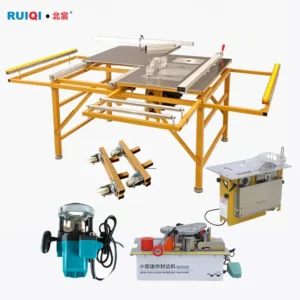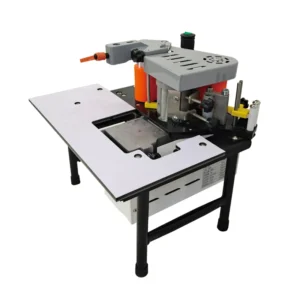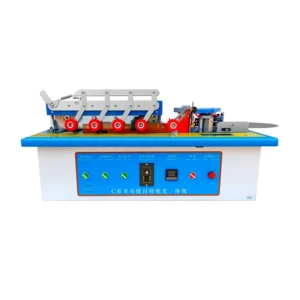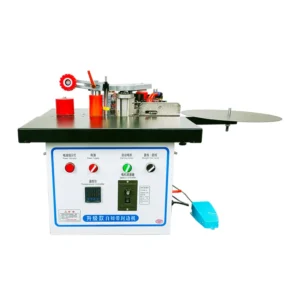
Description
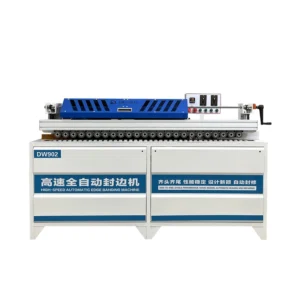
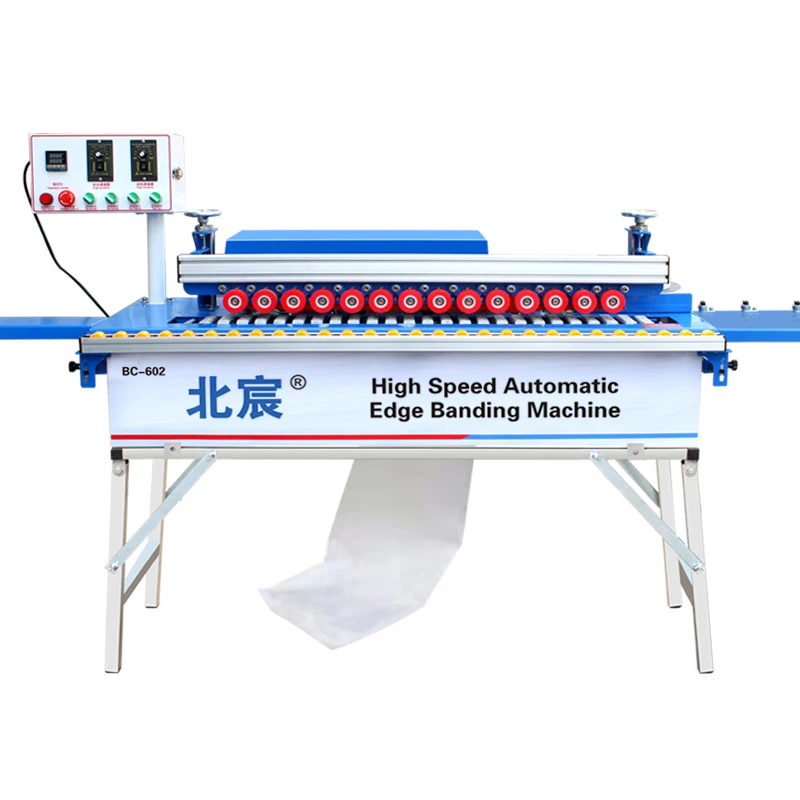
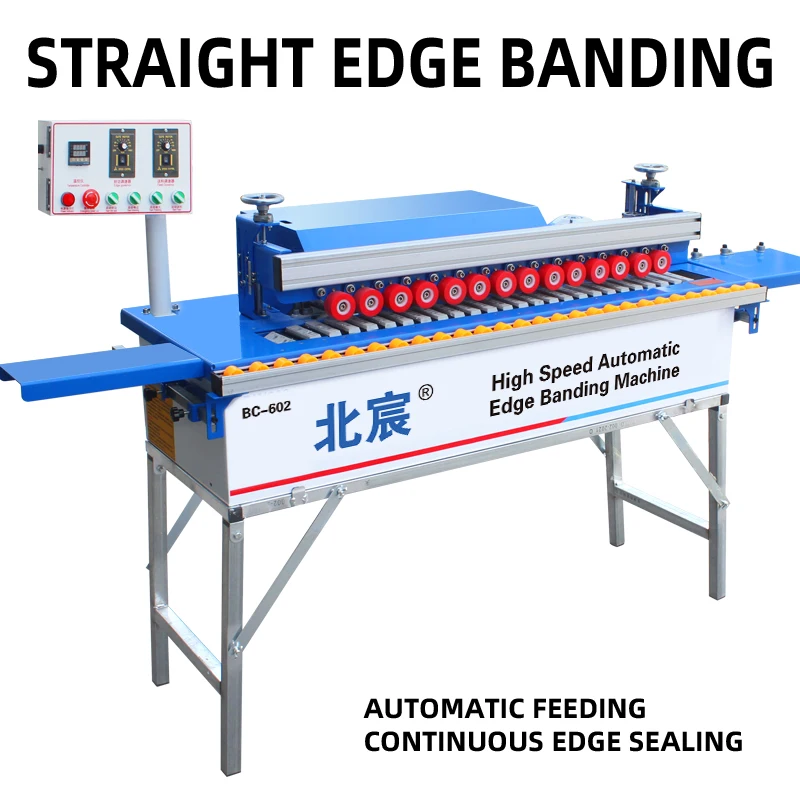
In-Stock Availability — The DW602 automatic edge banding machine is held in ready-to-dispatch inventory, meaning you lock voltage, plug format, and language before it leaves the floor instead of waiting through a full production cycle.
Technical Specifications
| Parameter | Value |
|---|---|
| Model | DW602 |
| Product Type | Automatic Edge Banding Machine |
| Total Power | 3800 W |
| Voltage | 220V / 380V / customization (frequency to confirm 50 Hz or 60 Hz) |
| Minimum Sheet Length | 250 mm |
| Minimum Sheet Width | 50 mm |
| Edge Banding Height | 0–50 mm |
| Edge Banding Thickness | 0.3–3 mm |
| Edge Feed Power | 20 W |
| Transmission Power | 60 W |
| Trimming Power | 650 W × 2 |
| Polishing Power | 180 W × 2 |
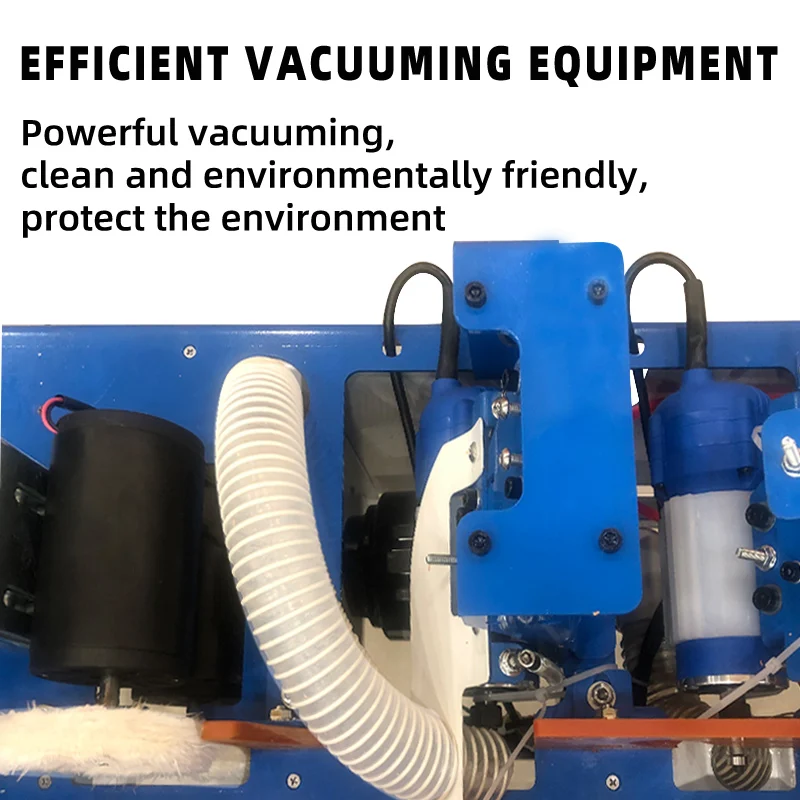
| Vacuum Power | 1200 W |
| Glue Pot Capacity | 1000 ml |
| Air Source Pressure | 0.5–0.8 MPa |
| Product Dimensions (L×W×H) | 128 × 47 × 69 cm |
| Net Weight | 90 kg |
| Control System | To be confirmed (PLC / relay / manual) |
| Feed Speed | To be confirmed (m/min) |
| Panel Thickness Range | To be confirmed (min–max mm) |
| Tolerance | To be confirmed (mm) |
| Glue Pot Temperature Range | To be confirmed (°C) |
| Dust Extraction Port | Diameter to be confirmed |
| Language Options | Chinese / English (other languages customizable) |
| Plug Options | EU / USA / AU / UK |
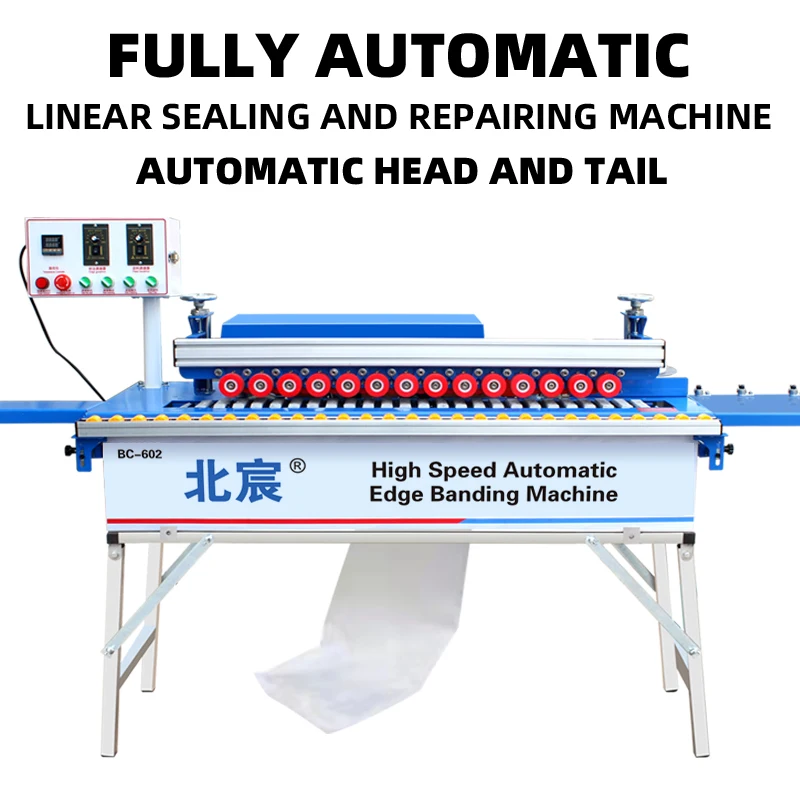
| Key Features | Edge banding, trimming, polishing, automatic head-and-tail cutting, vacuum hold-down |
| Standards | CE (implied), ISO 9001 (company-level) |
Application Suitability
| Application | Material or Output |
|---|---|
| Cabinet door edge finishing | MDF and particleboard with PVC edge banding 0.4–2 mm |
| Custom furniture panel banding | Plywood and blockboard with veneer or melamine strips |
| Small-batch workshop production | Straight and curve profiles on polymer door components |
| Sample or trial-order manufacturing | Single-panel runs for color and grain matching verification |
Why the Voltage Question Should Come Before the Price on Any Automatic Edge Bander in Stock
A machine built for 380 V/50 Hz that lands in a 440 V/60 Hz workshop is dead weight until a new control board ships across an ocean.
I watched that exact scenario unfold last year when a batch of edge banders left our Ningjin loading bay without a written voltage confirmation from the buyer. The destination workshop wired 440 V straight into a 380 V control panel, and the main board failed within the first hour. The customer sat idle for two weeks waiting on replacement electronics. Since then, every unit I sign off — including the DW602 — gets its voltage, frequency, and plug type locked in writing before the pre-shipment test. [NEED_CITE: IEC 60204-1 electrical safety requirements for industrial machinery]
Stock Configuration vs. Lead-Time Reality
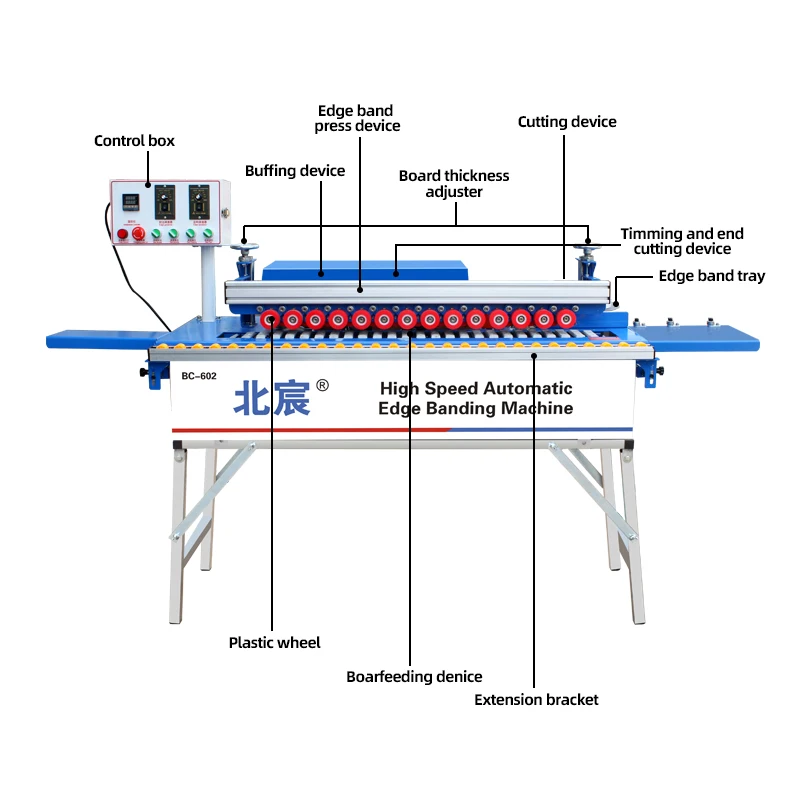
The DW602 automatic edge banding machine in stock means the mechanical build — frame, feed chain, trimming spindles, polishing wheels — is already assembled and aligned. What still needs your input is the electrical and interface configuration. Voltage must match the local supply within the tolerance band of the motor windings, and frequency determines whether the feed motor runs at its rated speed or slightly over. Getting both right on paper eliminates the most common commissioning failure I see on exported woodworking equipment.
Dispatch Speed Without Skipping the Checks
Ready inventory shortens the gap between order placement and container loading, but speed only matters if the machine actually runs when it arrives. Every stocked DW602 goes through a powered test cycle on the assembly floor before crating. I run a scrap MDF panel through the full sequence — glue application, band feed, head-and-tail snip, rough trim, fine trim, polish — and check the finished edge under a straight light. [NEED_CITE: CE machinery directive requirements for pre-shipment verification] Any anomaly sends the unit back to the bench, not to the packing station.
How the Spec Sheet Translates to Daily Output
The dual 650 W trimming motors handle the bulk of edge cleanup in a single pass, removing excess PVC or veneer above and below the panel surface. The 180 W × 2 polishing wheels then smooth the trimmed edge to a finish ready for assembly or packing. The 1000 ml glue pot holds enough adhesive for continuous short-to-medium production runs, and the 1200 W vacuum unit pulls the panel firmly against the feed chain so the band registers consistently along the entire sheet length. With an edge banding thickness window of 0.3–3 mm, the DW602 covers thin melamine strips through thicker PVC profiles without a tooling changeover. The 0.5–0.8 MPa air requirement falls within the output range of a standard workshop compressor, so no dedicated high-pressure line is needed. [NEED_CITE: typical compressed air supply standards for woodworking workshops]
The Cost of Skipping Configuration Verification
When a buyer focuses on unit price and skips the voltage and plug confirmation, the consequences are rarely limited to a blown fuse. A control board fried by overvoltage can damage the PLC or relay logic beneath it, meaning the repair extends beyond one component to a full electrical harness replacement. I have also seen workshops attempt to run a 60 Hz machine on a 50 Hz supply, which reduces motor speed and alters feed rate, producing uneven glue coverage and visible band gaps at the leading edge. Those defects only surface once production is already underway, making the downtime cost far higher than the time it would have taken to confirm specs before dispatch. [NEED_CITE: effects of frequency mismatch on induction motor speed and torque]
Why Buyers Source This Model Here
The DW602 benefits from in-house manufacturing with proprietary cutting mechanisms that hold tight trim tolerances on PVC and veneer alike. Voltage, plug type, and control panel language are configured to order even on stock units, so the machine matches the destination workshop from day one. A four-stage quality check — incoming material, in-process, finished product, and pre-shipment — catches alignment and electrical issues before the crate is sealed. Engineer-led configuration recommendations are provided with a formal quotation typically within 24 hours. Factory visits are welcome for buyers who want to see the unit run their own panel stock before committing to shipment.
Documentation & Verification
- CE declaration of conformity covering the DW602 mechanical and electrical assembly
- Electrical schematic matching the confirmed voltage and frequency for your market
- Pre-shipment test record documenting edge finish quality on your specified panel material
- Operation and maintenance manual supplied in English or an alternative agreed language
- Spare parts list with reorder codes for trimming cutters, polishing wheels, and glue pot seals
- Packing photographs showing crate condition and machine securing before container loading
Installation, Commissioning & Support
- Allocate a floor space of at least 150 × 80 cm to allow panel infeed and offfeed clearance around the 128 × 47 cm machine footprint
- Provide a dedicated 220 V or 380 V circuit rated for the 3800 W total draw plus startup surge
- Connect workshop compressed air at 0.5–0.8 MPa using the supplied push-fit connector on the machine’s inlet valve
- First power-on includes a no-load run to verify feed chain direction and vacuum hold-down before introducing panel stock
- Adjust glue pot temperature to match the adhesive manufacturer’s recommended range for your edge banding material
- Replace trimming cutters and polishing wheels at intervals specified in the maintenance manual to maintain edge finish consistency
What to Send with Your Inquiry
Share the panel materials you run most often — MDF, particleboard, plywood — along with the edge banding type and thickness so the correct consumables ship with the machine. Confirm your workshop voltage and frequency, preferred plug format, and the language you need on the control panel and in the manual. If you are evaluating this unit as a sample before a larger equipment order, let us know the production volumes you plan to scale to so the configuration can accommodate future throughput requirements.
Frequently Asked Questions
Q: Is the DW602 currently in stock and how soon can it ship?
A: The DW602 automatic edge banding machine in stock is held in our Ningjin warehouse ready for pre-shipment configuration. Once voltage, plug, and language are confirmed and the pre-shipment test is completed, the unit moves to crating and container loading within a short dispatch window. Exact timing depends on the configuration complexity and the shipping schedule available at the nearest port.
Q: Which voltage, frequency, and plug formats can I order?
A: The DW602 supports 220 V, 380 V, or custom voltage configurations at either 50 Hz or 60 Hz. Plug options include EU, USA, AU, and UK formats. We confirm these details in writing before the pre-shipment test to ensure the machine matches your local electrical supply and avoids on-site rewiring or control board damage.
Q: Can I order a single DW602 as a trial before committing to a larger purchase?
A: Single-unit orders are accepted and are common among importers who want to evaluate build quality and edge finish before placing a bulk order. The trial unit receives the same configuration confirmation, pre-shipment test, and documentation as any production-run machine.
Q: What packing and shipping options are available?
A: The DW602 is secured inside a wooden export crate with blocking and bracing to protect the feed chain and trimming spindles during transit. Shipping can be arranged by sea freight or international courier depending on urgency and destination. Packing photographs are provided before the crate leaves our facility.
Q: Which spare parts are included and how do I reorder consumables?
A: Each DW602 ships with a spare parts kit covering high-wear items such as trimming cutters and polishing pads. The included spare parts list provides reorder codes for these consumables as well as glue pot seals and feed chain components. Reorders can be placed through the same order channel used for the original machine purchase.