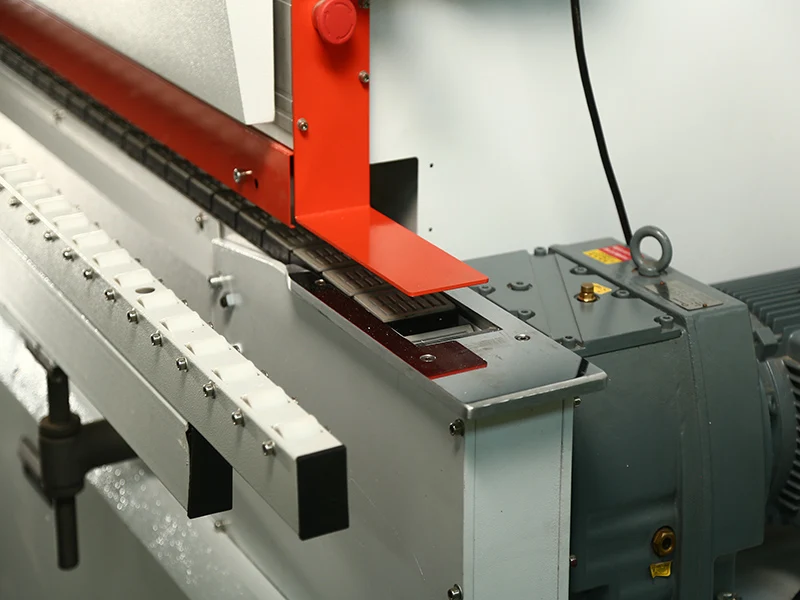
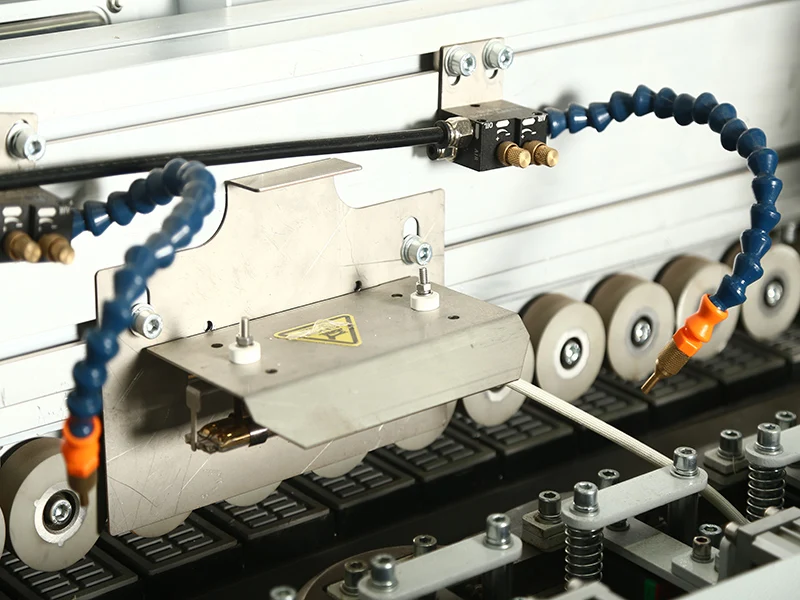
Description
Ready stock verification — voltage and frequency confirmed in writing before the ZDSJCX-880S leaves our Ningjin warehouse, so your workshop can run it the day it arrives.
Technical Specifications
| Parameter | Value |
|---|---|
| Model | ZDSJCX-880S |
| Product Type | Automatic Edge Bander |
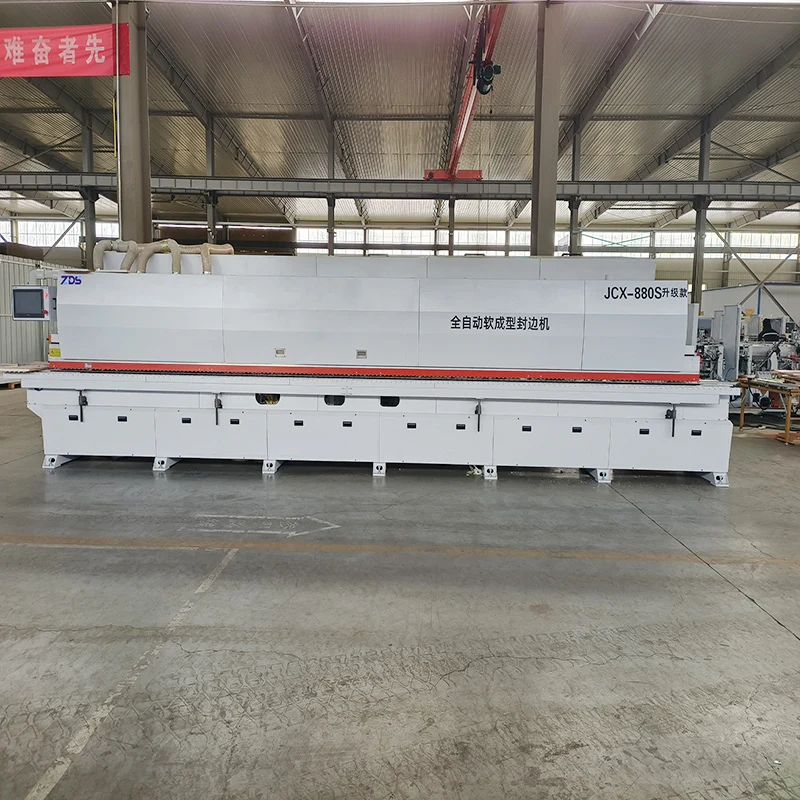
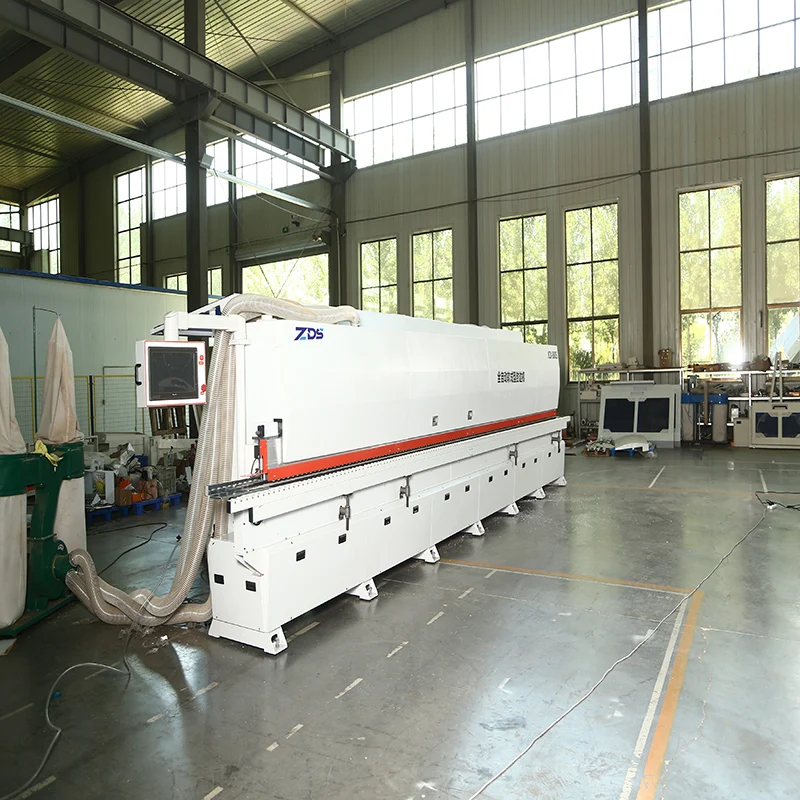
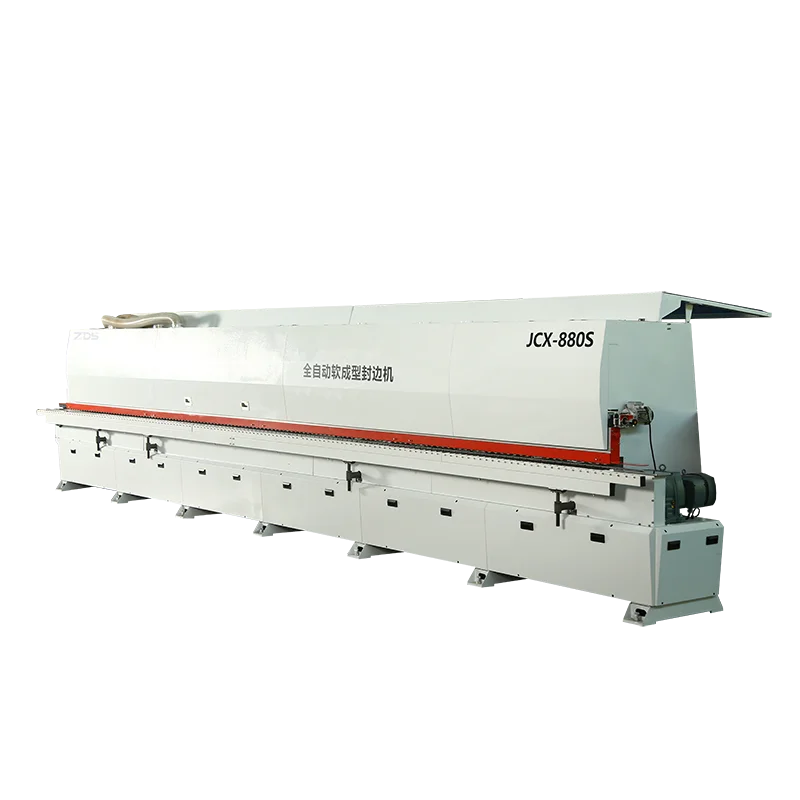
| Overall Dimensions (L×W×H) | 8.82×1.07×1.85 m |
| Net Weight | 3200 kg |
| Total Power | 47.1 kW |
| Voltage | 380 V (frequency to be confirmed per market) |
| Air Pressure Requirement | 0.6–0.8 MPa |
| Vacuum Port | Ф100×6 |
| Panel Thickness Range | 18–22 mm |
| Edge Banding Thickness Range | 0.5–0.8 mm |
| Max Edge Banding Width | 58 mm |
| Min Sheet Width | 150 mm |
| Min Sheet Length | 300 mm |
| Conveying Speed | 6–8 m/min |
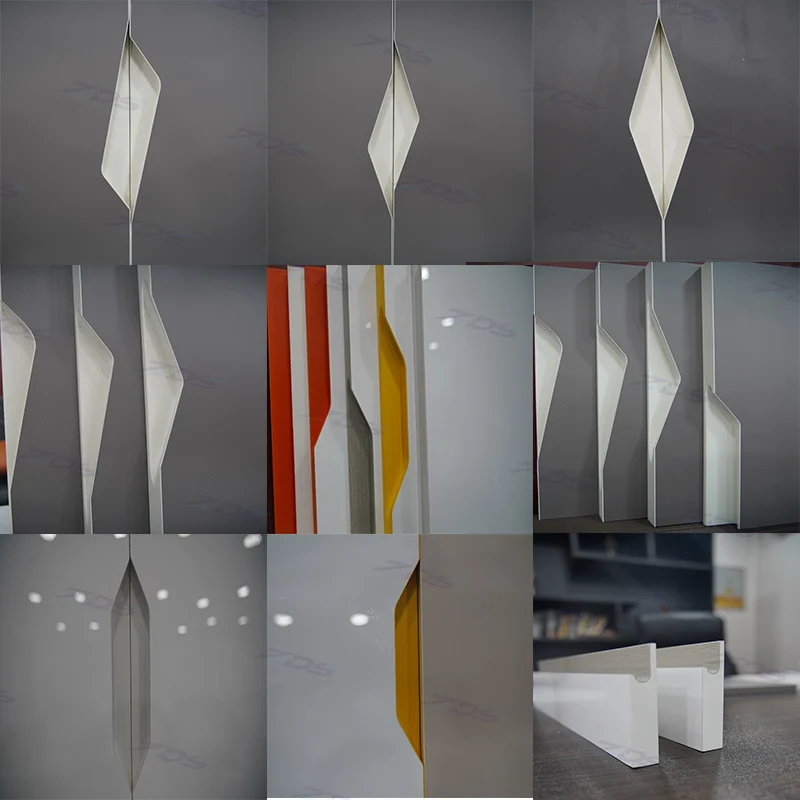
| Machining Shapes | J type, C type, oblique straight, semi-pass, water drop, rhombus, triangle, and 15+ profiles |
| Warranty | 1 year |
Application Suitability
| Application | Material or Output |
|---|---|
| Straight edge banding for cabinet carcasses | MDF, particleboard, plywood panels 18–22 mm thick |
| Contoured edge banding for custom furniture | Solid wood panels with J, C, or oblique profiles |
| Shaped panel edging for decorative components | PVC and veneer strips 0.5–0.8 mm thick, up to 58 mm wide |
| Small-batch production runs | Mixed board types in joinery workshops |
Why the Voltage Question Should Come Before the Price
Confirming your local electrical supply before dispatch prevents a machine that sits idle for weeks.
An automatic edge bander in stock means little if the motor windings are configured for a grid that does not match your workshop. I have watched containers arrive at port with 380V/50Hz motors destined for regions running 60Hz, and the overheating issues that follow usually show up within the first production shift [NEED_CITE: voltage and frequency standards by export market]. The ZDSJCX-880S ships with a default 380V configuration, but we verify your actual supply before the crate is sealed.
Availability and Dispatch Timing
Securing an automatic edge bander in stock eliminates the typical multi-week lead times that stall small production runs. The ZDSJCX-880S sits in our Ningjin warehouse ready for single-unit dispatch, which matters when a cabinet shop needs to replace a failing machine before the next delivery deadline. We hold stock on models that cover the most common panel thickness ranges, so a workshop moving from manual trimming to automated shaped banding does not have to wait for a custom build cycle.
Lead Time Versus Configuration Accuracy
Fast dispatch only works when the configuration matches your actual production conditions. We confirm air pressure availability, panel material type, and edge banding stock before the machine ships, because a glue pot set for standard PVC behaves differently on recycled particleboard than on clean MDF [NEED_CITE: adhesive compatibility with substrate porosity]. Rushing an order without these checks turns a quick delivery into a commissioning delay that costs more time than the production window you were trying to protect.
Spec Interpretation for Shaped Edging
The 18–22 mm panel thickness range covers standard board stock used in cabinet and furniture production, but it also defines the feed mechanism’s clamping pressure and the trimming station’s reach. When you run panels at the upper limit, the conveying speed of 6–8 m/min gives the glue adequate open time before the pressure roller engages. The Ф100×6 vacuum ports handle dust extraction across all six collection points, which matters when you switch between MDF and particleboard because the chip volume and particle size differ noticeably between substrates. Edge banding thickness of 0.5–0.8 mm with a maximum width of 58 mm means the machine handles both thin PVC for clean cabinet edges and wider veneer strips for visible furniture components, though the trimming stations must be adjusted between runs to maintain edge quality.
The Cost of Skipping Configuration Checks
Ordering a machine without confirming your board material leads to glue adhesion failures that only appear after the panels reach your assembly bench. Edge banding that peels off recycled particleboard looks like a machine defect when the actual cause is a glue temperature mismatch with the substrate’s surface porosity. Workshops that buy on availability alone sometimes discover that their compressed air supply cannot sustain the 0.6–0.8 MPa requirement during continuous runs, causing the pneumatic trimming cylinders to stutter mid-cycle [NEED_CITE: pneumatic pressure stability in workshop environments].
Why Source From This Warehouse
Every ZDSJCX-880S in our stock has passed a four-stage quality check before it enters the warehouse, covering incoming component inspection through to pre-shipment verification on actual panel material. We provide a factory test record showing edge banding results on your specified board thickness, so you see the output quality before the machine is crated. Voltage confirmation happens in writing before dispatch, not as an afterthought when the container is already at port. Our engineer configuration recommendation ensures the machine matches your production volume rather than selling you a model designed for lighter duty cycles.
Documentation & Verification
- CE declaration of conformity for the ZDSJCX-880S automatic edge bander
- Factory test record showing edge quality on your 18–22 mm panel stock
- Electrical schematic confirming 380V configuration and circuit protection ratings
- Operation and maintenance manual translated to your workshop’s language
- Spare parts list matched to the specific trimming and feed components installed
Installation, Commissioning & Support
- Foundation must support 3200 kg static load across the 8.82 m machine length
- Dedicated 47.1 kW circuit with appropriate breaker rating for 380V supply
- Machine ships fully assembled; connect vacuum ducting to Ф100×6 ports on arrival
- First-run calibration includes conveyor speed verification at 6–8 m/min
- Pneumatic system requires stable 0.6–0.8 MPa supply for all trimming stations
- Glue pot commissioning tests adhesion on your actual panel material and edge stock
What We Need to Confirm Before Dispatch
Send us your panel material type and thickness, your local voltage and frequency, and the edge banding stock you plan to run. If your workshop uses recycled particleboard or non-standard substrates, let us know so we can adjust the glue pot configuration before the machine leaves Ningjin.
Frequently Asked Questions
Q: Is this ZDSJCX-880S model currently in stock and what is the dispatch lead time?
A: The ZDSJCX-880S automatic edge bander is held in our Ningjin warehouse for single-unit dispatch. Once we confirm your voltage requirement and panel material, the machine can ship within a short preparation window. We do not release stock units until the electrical configuration matches your workshop’s supply.
Q: Can you confirm the voltage and frequency match my workshop’s electrical supply?
A: The default configuration is 380V, but we verify your local frequency and phase requirements before dispatch. You provide your workshop’s electrical specifications, and we confirm in writing that the motor windings and control components match your grid. This prevents overheating and commissioning failures after delivery.
Q: What shaped profiles does this edge bander handle out of the box?
A: The ZDSJCX-880S handles over 15 profiles including J type, C type, oblique straight, water drop, rhombus, and triangle contours. Each profile requires specific trimming station adjustments, which we set during the pre-shipment test based on your production requirements and edge banding material.
Q: Do you offer door-to-door shipping and customs clearance support?
A: We provide customs documentation and packing photographs for your freight forwarder. Door-to-door shipping depends on your destination and port infrastructure. We coordinate with your chosen logistics partner to ensure the 3200 kg crate is handled correctly during transit and final positioning.
Q: What spare parts are included and how do I order replacements after delivery?
A: Each shipment includes a spare parts list specific to your machine’s configuration, covering high-wear components in the feed and trimming systems. Replacement orders reference your machine’s serial number to ensure part compatibility with your installed components.