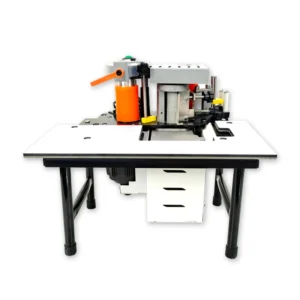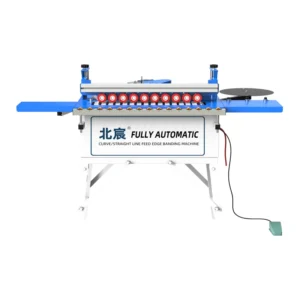
Description
Voltage-Confirmed Dispatch — every stocked edge banding machine ships only after the buyer signs off on local voltage and frequency, preventing weeks of dead time on the workshop floor.
Technical Specifications
| Parameter | Value |
|---|---|
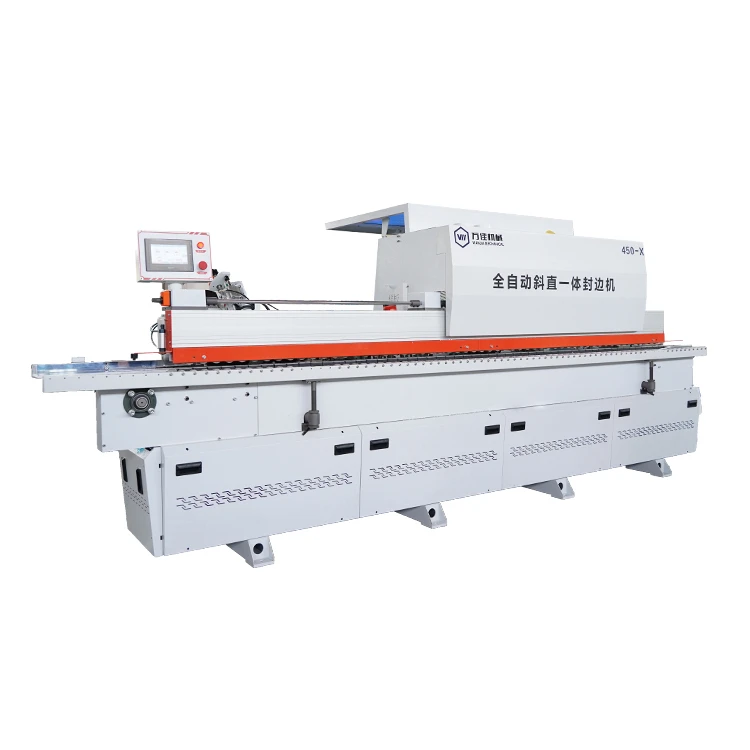
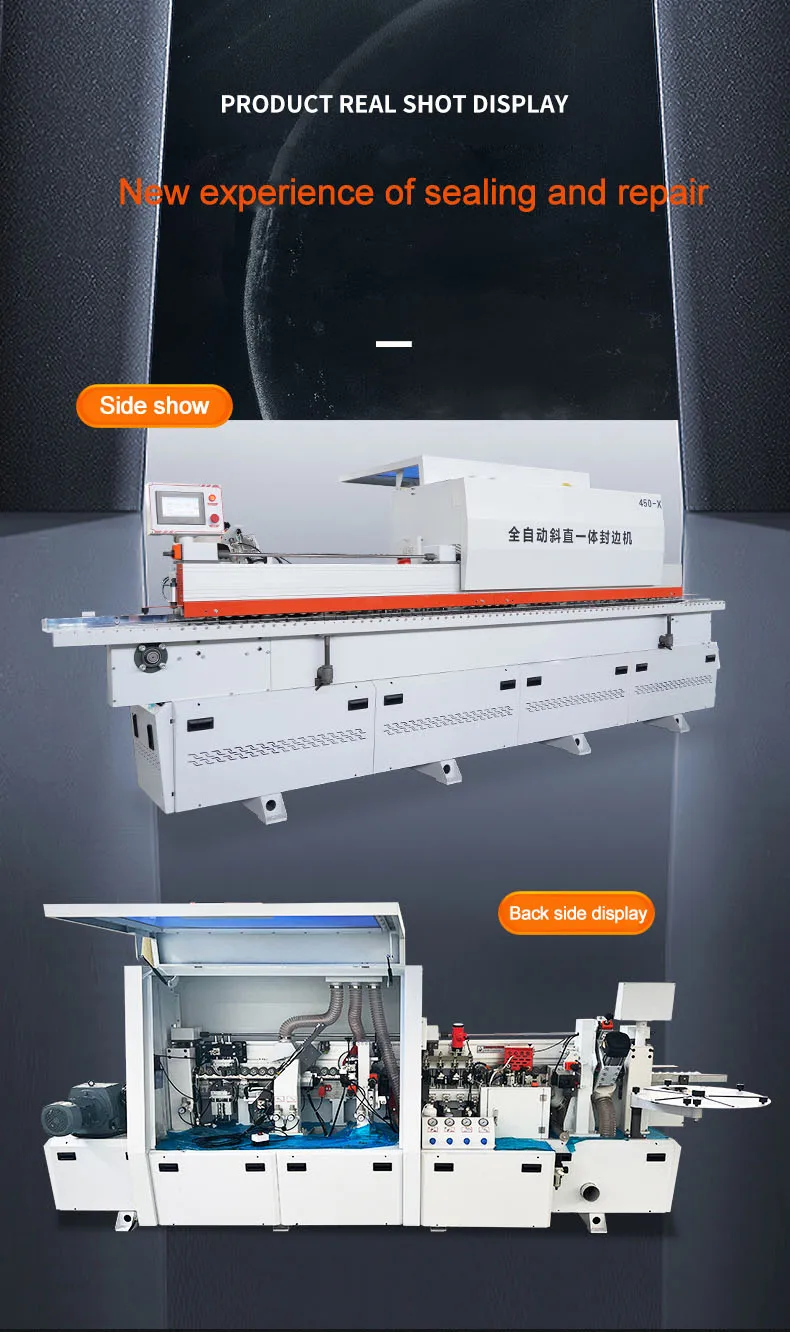
| Product Type | Automatic Edge Banding Machine |
| Overall Dimensions | 4350 × 920 × 1650 mm |
| Total Power | 17.5 kW |
| Voltage & Frequency | 380V / three-phase five-wire / 50Hz (configurable from 110V to 440V) |
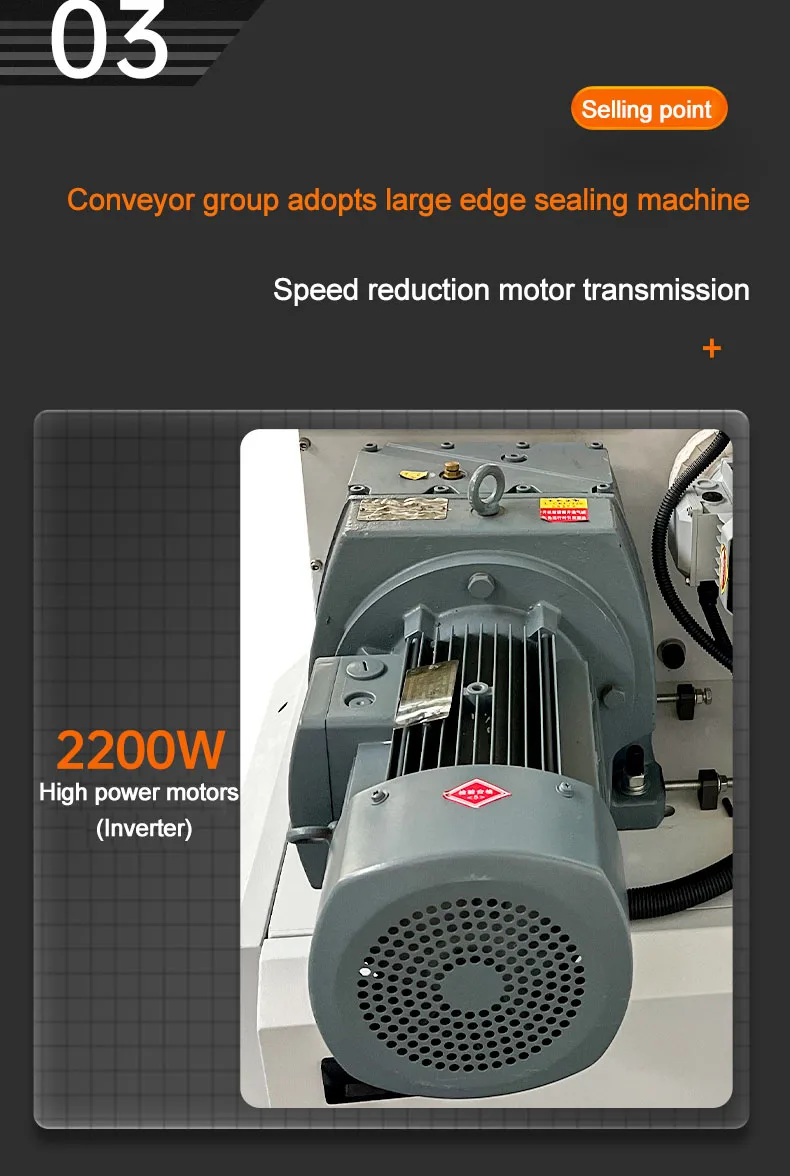
| Conveying Motor | 2.2 kW with frequency converter |
| Feed Speed | 0–12 m/min variable, straight and inclined edge |
| Panel Thickness Range | 18 / 22 / 25 mm |
| Minimum Panel Width | >100 mm |
| Minimum Panel Length | >250 mm |
| Edge Strip Width | 20–50 mm |
| Edge Banding Thickness | up to 1.2 mm (material dependent) |
| Edge Banding Material | PVC |
| Glue Pot Capacity | 2000 mL |
| Glue Pot Heating Power | 1.2 kW |
| Glue Pot Operating Temperature | 150–170 °C |
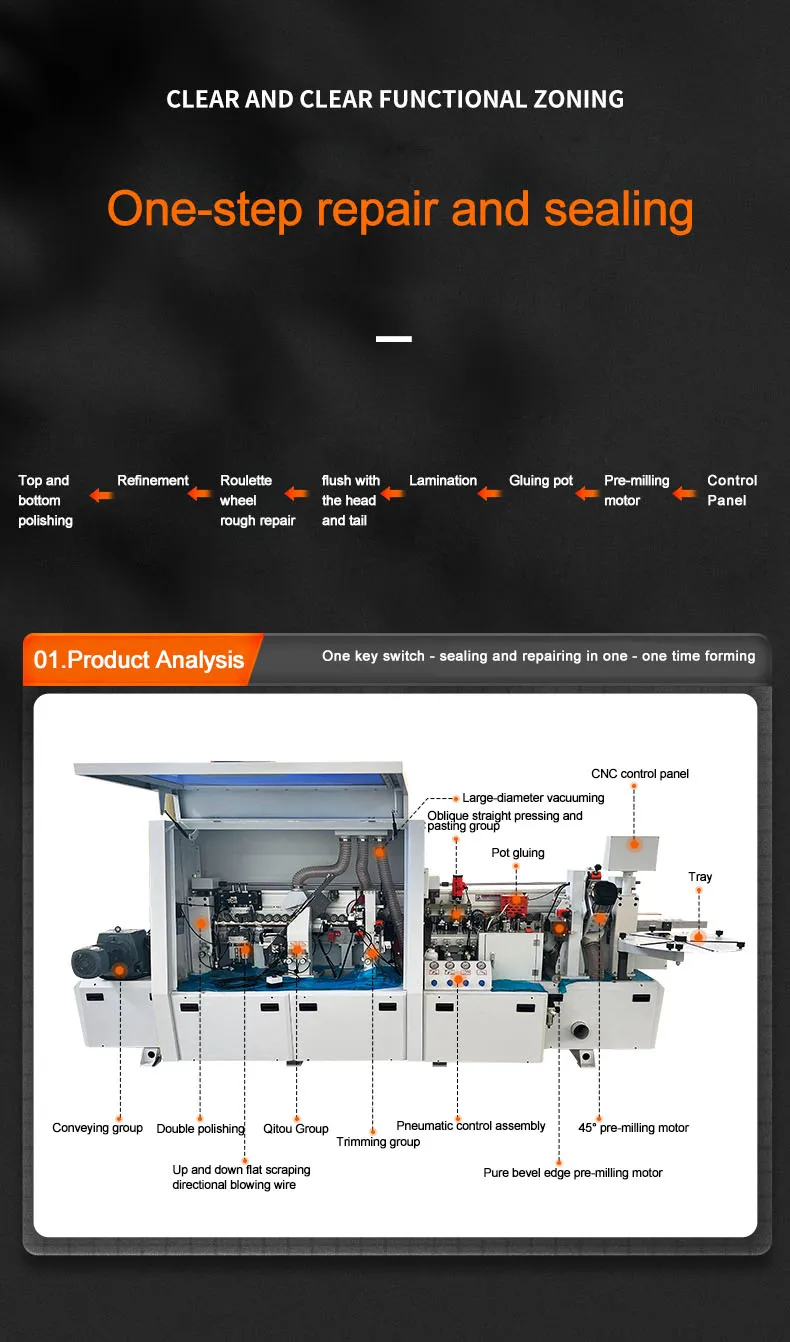
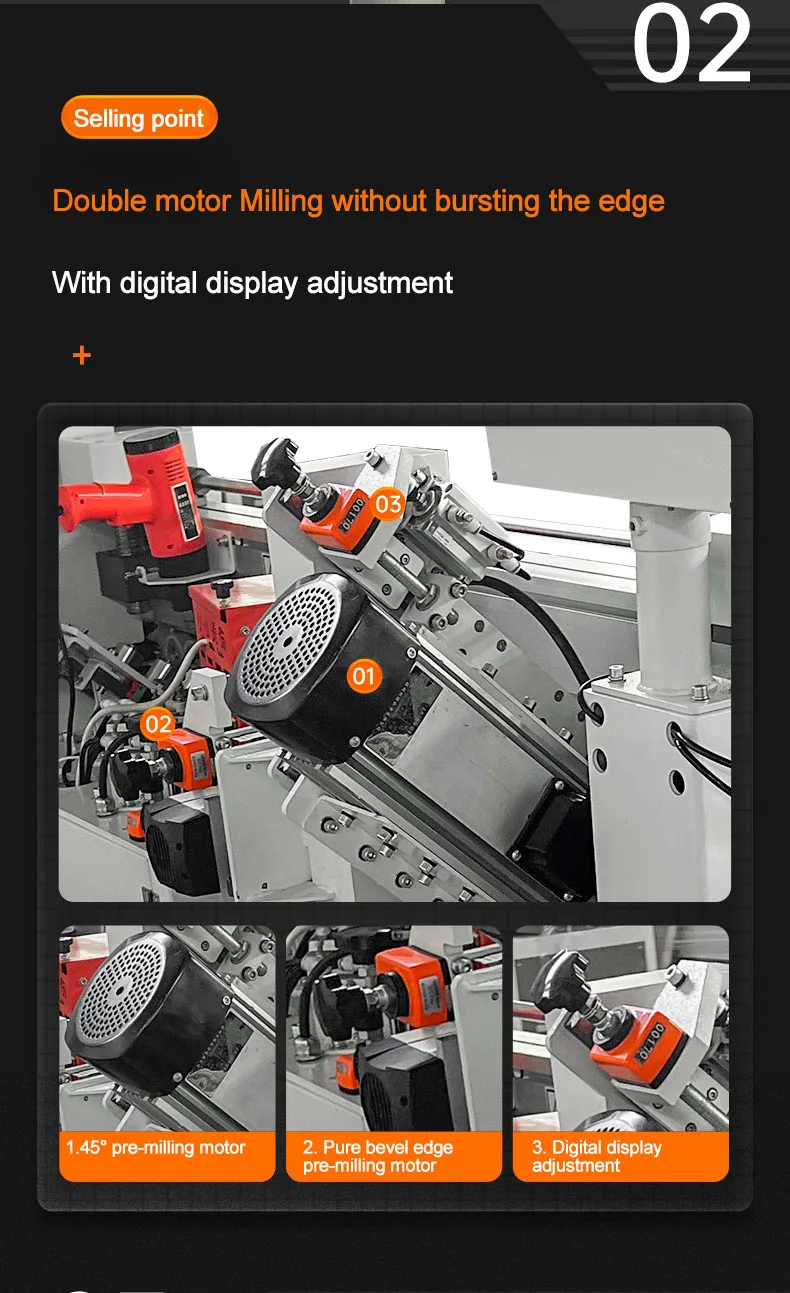
| Pre-Milling Motor | 3.5 kW |
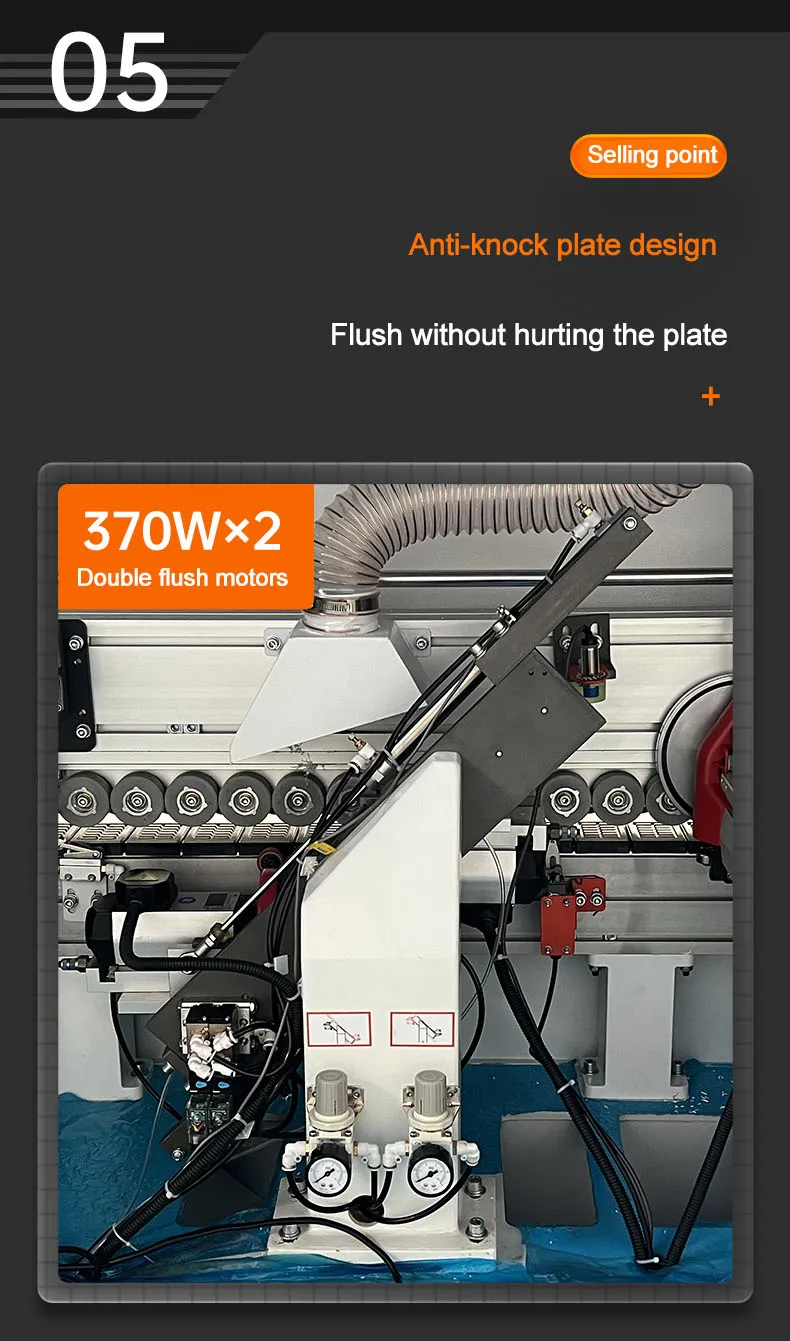
| Trimming Motor | 0.75 kW × 2 |
| End Trimming Motor | 0.37 kW × 2 |
| Edge Banding Feed Motor | 0.18 kW with inverter |
| Polishing Motor | 0.37 kW × 2 |
| Slotting Motor | 0.8 kW (220V) |
| Lifting Motor | 0.25 kW with inverter |
| Heat Gun Power | 2 kW |
| Control System | Xinjie industrial touch screen with Xinjie inverter |
| Air Supply Requirement | 0.6–0.8 MPa |
| Air Storage Tank Volume | 5 L |
| Dust Extraction Port | 100 mm diameter |
| Assembly State | fully assembled, KD packing for minor spare parts |
| Warranty | 1 year |
Application Suitability
| Application | Material or Output |
|---|---|
| Custom furniture panel edge banding | MDF, particleboard, plywood with PVC edge strip |
| Cabinet door and carcass production | 18–25 mm wood-based panels, straight and curved profiles |
| Joinery workshop upgrade from manual banding | Small to mid-batch runs on standard panel stock |
| Curved and slanted edge profile processing | PVC banding up to 1.2 mm on shaped panel edges |
Why the Voltage Question Should Come Before the Price on an Automatic Edge Banding Machine in Stock
A machine that cannot run on your local supply is not a bargain — it is a liability sitting on your floor.
I have watched a fully paid edge bander sit idle for three weeks in a Colombian workshop because the electrical cabinet was built for 380V 50Hz while the site ran 220V 60Hz. The customer had production deadlines. The machine had a nameplate that did not match reality. Rewiring the entire cabinet on-site cost more than the shipping [NEED_CITE: voltage and frequency standards by export market]. When buyers focus on lead time and price first, the electrical compatibility check gets pushed to the end of the conversation — or skipped entirely. That single oversight has stalled commissioning on workshops across Latin America and Southeast Asia more times than I care to count.
Stock That Ships With Your Grid in Mind
Every unit of this Automatic Edge Banding Machine in stock leaves the warehouse only after a signed voltage and frequency confirmation sheet matches the buyer’s local supply. The standard configuration is 380V three-phase five-wire at 50Hz, but the electrical system supports customization from 110V to 440V. This means a cabinet shop in Brazil running 220V 60Hz and a furniture factory in Thailand on 380V 50Hz both receive a machine wired correctly from day one. The Xinjie industrial touch screen and inverter are configured to match, so the operator powers up and runs panels instead of waiting for an electrician.
Dispatch Timing You Can Plan Around
The advantage of ordering an Automatic Edge Banding Machine in stock is that production lead time drops out of the equation. The machine is built, tested, and sitting in the warehouse. Once voltage is confirmed and shipping documents are prepared, dispatch follows within a typical short window. For a workshop that has just lost an old machine or landed a new contract, those saved weeks matter. Single-unit orders ship without waiting for a container to fill, and packing photographs are provided before the crate closes so the buyer sees exactly what is on the truck [NEED_CITE: pre-shipment inspection standards for woodworking machinery].
How Pre-Milling and Feed Speed Shape Panel Quality
The 3.5 kW pre-milling motor removes a thin layer from the panel edge before the glue station, eliminating saw marks and chip-out left by the panel saw. On MDF and particleboard, this directly affects how clean the glue line appears once the PVC strip is trimmed. Feed speed ranges from 0 to 12 m/min with inverter control on the 2.2 kW conveying motor, allowing the operator to slow down for curved or slanted profiles where the edge strip must conform to a changing contour. Running at full speed on a straight edge is fine; forcing that same speed around a radius invites banding lift and visible glue seams. The variable speed control lets the operator match throughput to geometry rather than choosing one or the other.
What Happens When the Configuration Is Wrong
A machine ordered without checking panel thickness range against the actual stock in the workshop leads to constant manual adjustment and inconsistent edge quality. Buying a unit with no pre-milling station to save budget, then discovering visible glue lines on every MDF door front, forces the workshop to add a manual sanding step that negates the automation investment. Ordering a control panel with text in a language the operator cannot read means commissioning stalls until someone translates every menu [NEED_CITE: operator interface language requirements in industrial machinery]. These are not theoretical problems — they appear on workshop floors every month because the specification conversation stopped at the price line.
Why Buyers Source This Machine Here
In-house manufacturing with patented cutting mechanisms means the pre-milling and trimming stations are not assembled from third-party sub-kits but built and tested under one roof. The four-stage quality control process — incoming material, in-process, finished product, and pre-shipment verification — catches wiring errors and tolerance drift before the machine is crated. Voltage, control panel language, and specification customization are treated as standard order steps, not special requests. Engineer-led configuration recommendations arrive as a formal quotation within 24 hours, and factory visits are welcomed so buyers can watch their exact panel stock run through the machine before it ships.
Documentation & Verification
- CE declaration of conformity matching the shipped configuration
- ISO 9001 certificate covering the manufacturing process
- Machine specification sheet with confirmed voltage and frequency
- Electrical schematic reflecting the actual wired voltage
- Factory test record on buyer’s panel thickness range
- Operation and maintenance manual in the agreed language
Installation, Commissioning & Support
- Requires a dedicated three-phase circuit matching confirmed voltage and the 17.5 kW total power draw
- 4350 mm length demands clear floor space plus operator access on the infeed and outfeed sides
- Machine arrives fully assembled; only minor KD-packed spare parts need unpacking
- First run should verify glue pot temperature at 150–170 °C on actual PVC stock before production begins
- 0.6–0.8 MPa air supply must be clean and dry to protect pneumatic valves in the trimming and polishing stations
- 100 mm dust extraction port connects to the workshop central system to keep the glue pot and sensors clean
What We Need From You to Move Forward
Share your local voltage and frequency, the panel materials and thicknesses you run most often, and whether your operators need the touch screen in a specific language. If you are adding this machine to an existing line, let us know the upstream panel saw model and downstream assembly setup so we can confirm feed height and throughput compatibility.
Frequently Asked Questions
Q: What lead time applies to stocked models and how is dispatch scheduled?
A: Stocked units are built and warehouse-ready, so the main variable is voltage confirmation and shipping documentation. Once your local voltage and frequency are signed off and the commercial invoice is settled, dispatch follows within a short window. Single-unit orders ship without waiting for consolidated containers.
Q: How is voltage and frequency confirmed before the machine ships?
A: We send a voltage and frequency confirmation sheet listing your site’s exact supply. You sign it before the electrical cabinet is finalized. The machine then ships with an electrical schematic that matches your local grid, and a factory test is run at that confirmed voltage.
Q: Can the control panel language be set to my operator’s language before delivery?
A: The Xinjie industrial touch screen supports multiple language options. Specify the required language at order stage, and the interface is configured and tested before the machine leaves the factory so the operator can navigate menus from the first shift.
Q: What panel thickness and edge strip width does this machine handle from stock?
A: The machine processes panel thicknesses of 18, 22, and 25 mm with PVC edge banding up to 1.2 mm thick and strip widths from 20 to 50 mm. Minimum panel dimensions are over 100 mm wide and over 250 mm long, covering standard cabinet and furniture components.
Q: How do I arrange single-unit shipping and what are the delivery options?
A: Single units ship as a dedicated crate without waiting for a full container. Packing photographs are shared before dispatch, and customs documentation is prepared to match the destination country’s import requirements. Your freight forwarder or ours can handle the booking.