
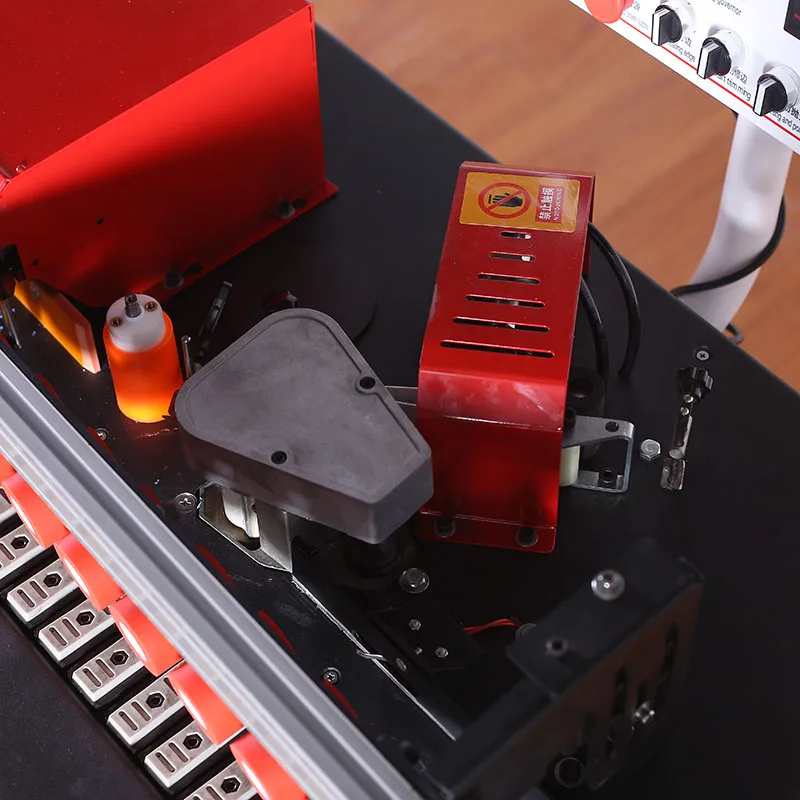
Description
Ready-to-Ship Dispatch — Model 802 edge bander stocked for immediate dispatch with voltage confirmed against your local grid before crating.
Technical Specifications
| Parameter | Value |
|---|---|
| Model | 802 |
| Product Type | Semi-Automatic Edge Banding Machine |
| Rated Voltage | 220V |
| Rated Power | 4kW |
| Heating Power | 1000W (5–10 min heat-up) |
| Trimming Power | 800W × 2 |
| Polishing Power | 180W × 2 |
| Suction Power | 1200W |
| Glue Capacity | 4000ml |
| Feed Speed | 0–10 m/min |
| Conveyor Belt Speed | 0–10 m/min |
| Sheet Thickness Range | 10–50mm |
| Strip Thickness Range | 0.5–2.5mm |
| Edge Type | Straight line |
| Rated Air Pressure | 0.4–0.6 MPa |
| Belt Breaking Method | Pneumatically controlled |
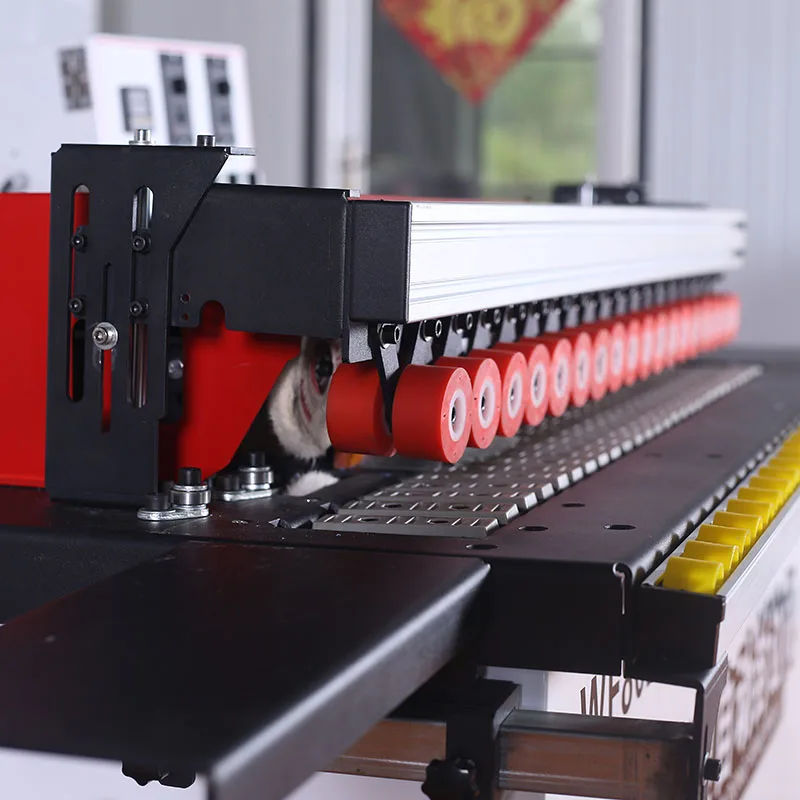
| Pressure Beam | One-piece integrated, double rows of pressure wheels |
| Conveyor Belt Material | Silicone |
| Control Panel | Digital display of glue pot temperature, independent switch |
| Dust Collection | Built-in vacuum device |
| Overall Dimensions | 130 × 65 × 75 cm |
| Machine Weight | 150 kg |
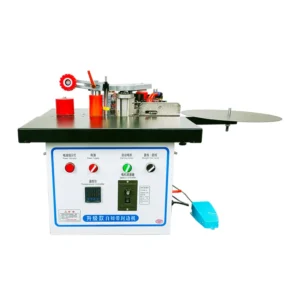
| Functions | Automatic plate feeding, end cutting, upper and lower polishing, automatic head and tail trimming |
Application Suitability
| Application | Material or Output |
|---|---|
| Custom furniture panel edge banding | MDF, particleboard, plywood with PVC or veneer strips |
| Cabinet door and carcass sealing | Melamine-faced board, 10–50mm thickness range |
| Small-batch joinery production | Solid wood panels with 0.5–2.5mm edge banding |
| Workshop upgrading from manual banding | Short to medium production runs on straight edges |
Why the Voltage Question Must Come Before the Price
A semi-automatic edge banding machine in stock means nothing if it arrives wired for the wrong grid.
Early in my career I signed off a half-auto edge bander bound for the Middle East. The order paperwork said 380V. The workshop was on 440V/60Hz. A step-down transformer took three weeks to source locally, and the customer’s line sat idle the entire time. That failure was mine — I had treated voltage as a footnote when it should have been the first line of the checklist [NEED_CITE: voltage and frequency standards by export market]. Every 802 unit we dispatch now ships only after the buyer’s local voltage and frequency are confirmed in writing and matched to the electrical schematic.
Dispatch Speed Without the Guesswork
When a workshop needs a semi-automatic edge banding machine in stock and ready to load, lead time is only half the story. The other half is whether the machine that arrives can actually run on day one. The 802 is held in inventory at 220V with a confirmed electrical configuration, so single-unit orders move straight from the warehouse to the freight forwarder without waiting for a production slot.
Compact Footprint, Full Function Sequence
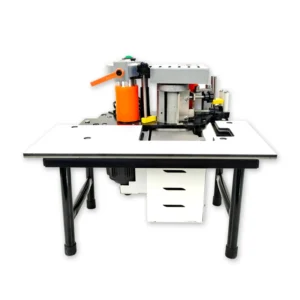
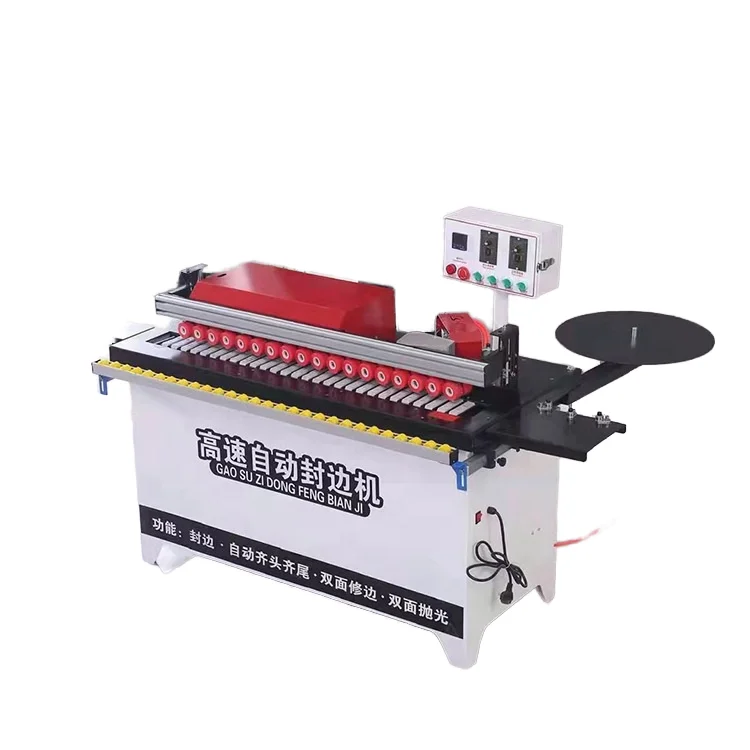
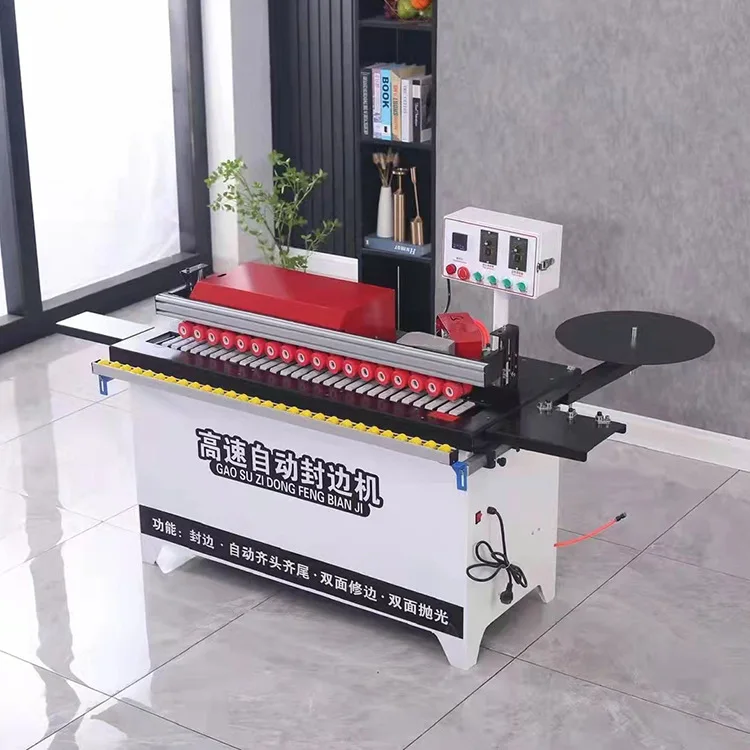
The 802 packs automatic plate feeding, end cutting, head and tail trimming, and upper and lower polishing into a 130 cm frame. For a joinery startup or a cabinet shop running short batches, that means one machine covers the complete straight-edge banding sequence — no separate trimming station, no external polishing rig, and no extra floor space surrendered to auxiliary equipment [NEED_CITE: CE machinery directive requirements for small woodworking equipment].
What the Numbers Actually Mean on the Shop Floor
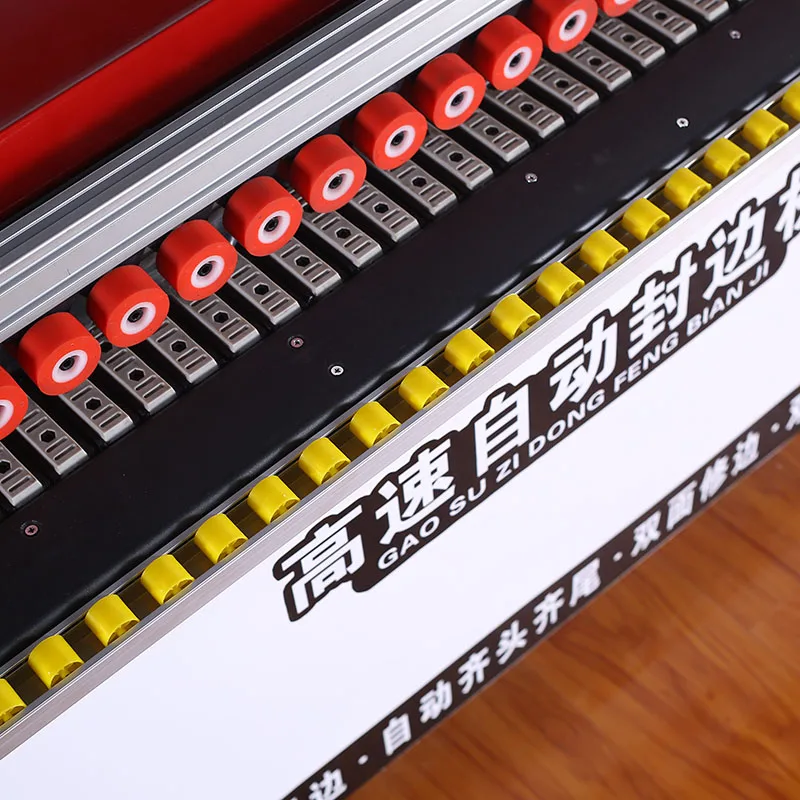
The 4000ml glue pot is sized to sustain continuous runs without frequent refills, which matters when you are banding dozens of cabinet sides in a single session. The 5–10 minute heat-up window gets the adhesive to working temperature fast enough that morning start-up does not eat into production time. Twin 800W trimming motors cut both the upper and lower edge overhang in one pass, leaving a clean finish on PVC and veneer alike. Panel thickness from 10 to 50mm covers the range most furniture and cabinet work demands, and the silicone conveyor belt grips melamine surfaces without marring the face. The built-in 1200W dust collector captures trimming debris at the source, so you avoid running a separate extraction duct for a machine this size.
The Hidden Cost of Skipping Configuration Checks
Buying a compact edge bander on price alone often surfaces problems only after the crate is opened. A unit wired for the wrong frequency will run its motors hot and shorten bearing life. An undersized glue pot forces mid-batch refills that cool the adhesive and weaken the bond line. A machine without integrated dust extraction pushes fine MDF dust back into the workshop air, where it settles on the very panels you are trying to finish clean. These are not defects — they are consequences of treating the spec sheet as optional reading [NEED_CITE: common commissioning failures in imported woodworking machinery].
Why Buyers Source This Model Here
In-house manufacturing means the 802 moves from assembly to stock under one roof, so dispatch timing is not at the mercy of a third-party production queue. Voltage confirmation is a mandatory step before crating — not an afterthought. Each machine ships with its own factory test record, so you see how it performed on your specified panel thickness before it leaves the floor. The four-stage quality check covers incoming components through to pre-shipment verification. Single-unit orders are accepted, and OEM branding is available if you are a distributor building your own equipment line.
Documentation & Verification
- Machine specification sheet covering all 802 parameters at order confirmation
- Electrical schematic matched to your confirmed voltage and frequency
- Factory test record run on your specified panel thickness and edge material
- Operation and maintenance manual written in your agreed language
- Packing photographs taken before crate closure for your visual check
Installation, Commissioning & Support
- Requires a dedicated 220V circuit rated for the 4kW total draw to avoid voltage drop during glue heating
- Allow a floor area of at least 150 × 85 cm around the 130 × 65 × 75 cm frame for panel infeed and operator movement
- Connect a compressed air supply within 0.4–0.6 MPa to operate the pneumatic belt breaker and pressure beam
- First power-on includes verifying glue pot digital readout against the actual adhesive temperature for your strip material
- Spare trimming cutters and polishing pads ship in the initial parts kit to cover early production runs
What to Include in Your Inquiry
Send your panel material type and thickness range, the edge strip material and thickness you plan to run, and your workshop’s confirmed voltage and frequency. If you already operate upstream saws or downstream boring stations, note their feed heights and cycle times so we can flag any throughput mismatch before the machine leaves our floor.
Frequently Asked Questions
Q: Is the Model 802 in stock and what is the typical dispatch timeline for one unit?
A: The 802 is held as a stocked model for single-unit orders. Once your voltage and panel specification are confirmed in writing, the machine moves through pre-shipment testing and is released to your chosen freight forwarder. Typical dispatch follows within days rather than weeks, since no production slot is required.
Q: How do I confirm the 220V rating matches my workshop supply?
A: Share your local voltage and frequency — for example 220V/50Hz or 220V/60Hz — at inquiry stage. We cross-check against the electrical schematic and motor nameplate before the machine is crated. If your supply falls outside this range, we advise on the correct configuration rather than shipping a mismatch.
Q: Which edge banding materials and strip thicknesses does the 802 accept?
A: The machine handles PVC and veneer edge banding from 0.5 to 2.5mm strip thickness on straight edges. Panel substrates include MDF, particleboard, plywood, and melamine-faced board between 10 and 50mm thick. Glue pot capacity of 4000ml supports continuous runs across these material combinations.
Q: What spare parts ship with the machine and how are consumables reordered?
A: An initial spare parts kit accompanies every 802, covering high-wear items identified during factory testing. The packing list details each item and part number. Reorder requests reference these same numbers for direct supply, keeping your production running without third-party sourcing delays.
Q: Can I arrange door-to-door shipping with customs documentation included?
A: Yes. We prepare the commercial invoice, packing list, and certificate of origin required for your destination port. Door-to-door freight can be quoted once your delivery address and any import licensing requirements are confirmed. Customs documentation support is included at no extra charge.