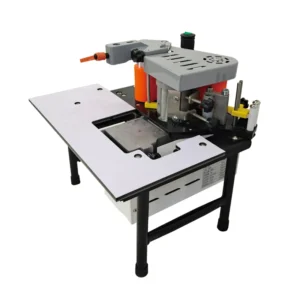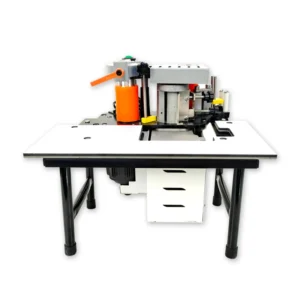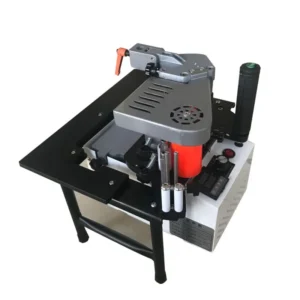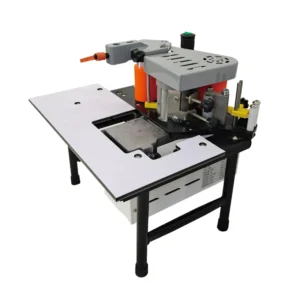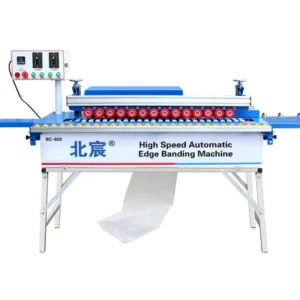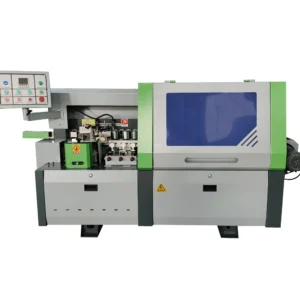

Description
Fast-Dispatch Verification — every DW3600 unit leaves the floor only after voltage, frequency, and plug-type are confirmed against your workshop’s local supply, eliminating the dead-on-arrival arrivals I have seen stall cabinet lines in Southeast Asia.
Technical Specifications
| Parameter | Value |
|---|---|
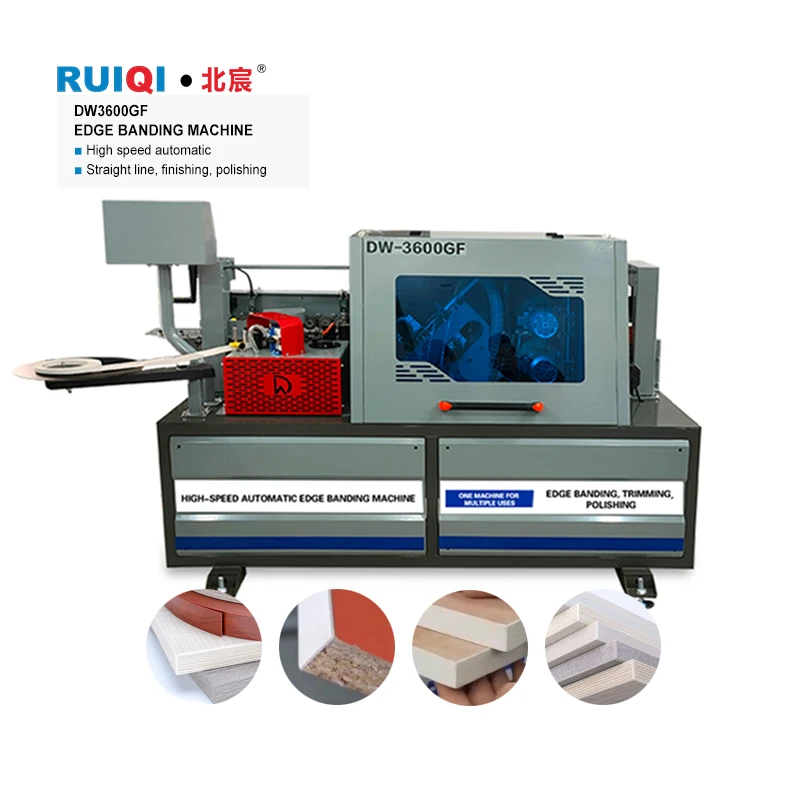
| Model | DW3600GF |
| Product Type | Automatic Edge Banding Machine |
| Total Installed Power | 4.9 kW |
| Electrical Supply | 380V, Three-Phase Four-Wire (50 Hz or 60 Hz to be confirmed at order) |
| Feed Speed Range | 0–14 m/min |
| Edge Band Height Range | 0–50 mm |
| Edge Band Thickness Range | 0.3–3 mm |
| Minimum Panel Length | 200 mm |
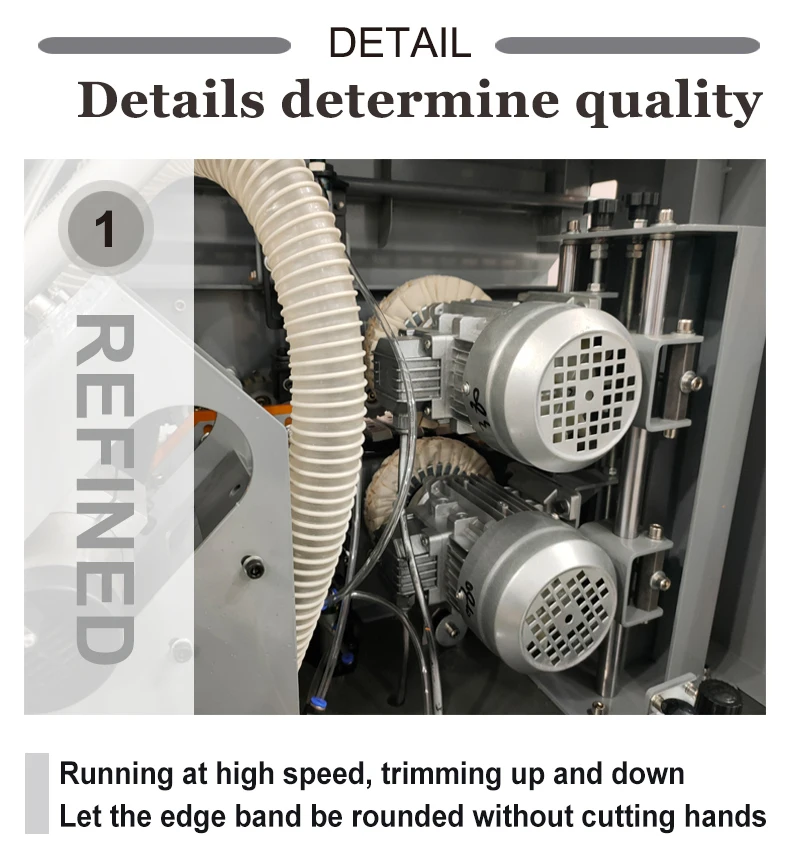
| Trimming Station | Dual 800 W heads, 24 000 r/min |
| Polishing Station | Dual 400 W heads |
| Edge Banding Drive | 160 W motor |
| Feed Transmission Drive | 180 W motor |
| Compressed Air Requirement | 0.4–0.6 MPa |
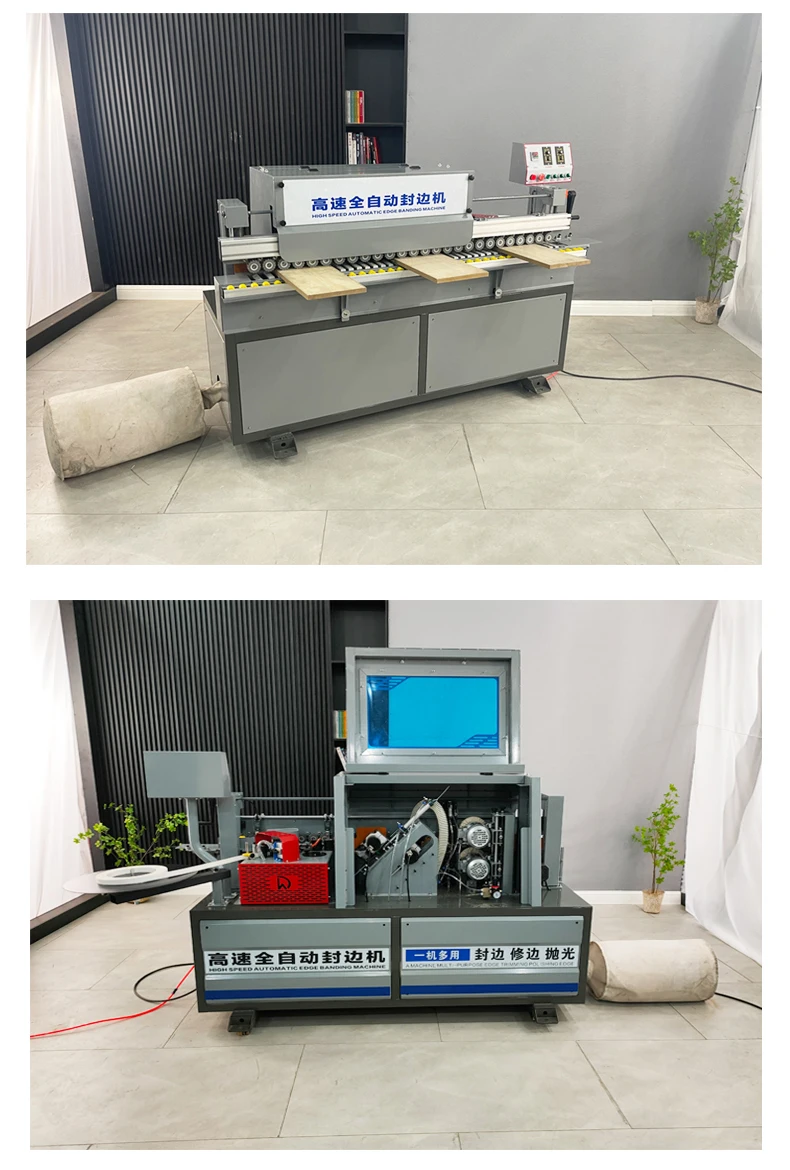
| Overall Dimensions (L × W × H) | 2200 × 650 × 1250 mm |
| Net Weight | 320 kg |
| Assembly State | Fully assembled at factory |
| Control Interface | PLC with Chinese / English display (other languages available on request) |
Application Suitability
| Application | Material or Output |
|---|---|
| Cabinet door and carcass panel edging | MDF and particleboard with PVC or ABS band |
| Shelving and wardrobe panel finishing | Plywood with melamine-faced band |
| Small-run custom furniture edging | Solid-wood panels with veneer band |
| Replacement machine for manual edge application | Straight-edge profiles up to 50 mm height |
Why the Voltage Question Should Come Before the Price
An automatic edge banding machine in stock fast delivery promise means little when the machine arrives wired for a supply your workshop does not have. I have watched a full container sit idle in Jakarta while an electrician spent two days re-terminating a feed motor because the nameplate read 380 V / 50 Hz and the local grid was 220 V three-phase. The cabinet line waited, and the customer lost more in delayed deliveries than the price difference between suppliers. [NEED_CITE: voltage and frequency standards by export market]
We document the exact supply at your site before the machine is crated. A photo of the confirmed voltage nameplate, a signed electrical schematic, and a plug-type declaration travel with the paperwork, so the first panel runs the day the machine is un-caged.
Ready Stock Without the Configuration Gamble
Most spot-stock edge banders are quoted as generic units, with the buyer discovering language, voltage, or air-fitting mismatches on arrival. The DW3600GF shipped from our dispatch floor carries a buyer-specific configuration sheet covering supply voltage, control-panel language, and edge-band material type. This keeps the automatic edge banding machine in stock fast delivery promise meaningful: the machine is physically ready, and the paperwork matches your actual installation conditions rather than a default export setting.
Dispatch Documentation You Can Hand to Your Electrician
The machine ships with an electrical schematic that matches the as-built wiring, not a generic diagram copied across a dozen models. For markets requiring CE documentation, the declaration of conformity is matched to the specific serial number, which matters when local inspectors ask for traceability [NEED_CITE: CE machinery directive requirements for industrial equipment]. The operation manual arrives in the language you nominated at order, so your operator can read the fault codes without waiting for a translation.
What the Trimming and Polishing Layout Actually Means for Your Panels
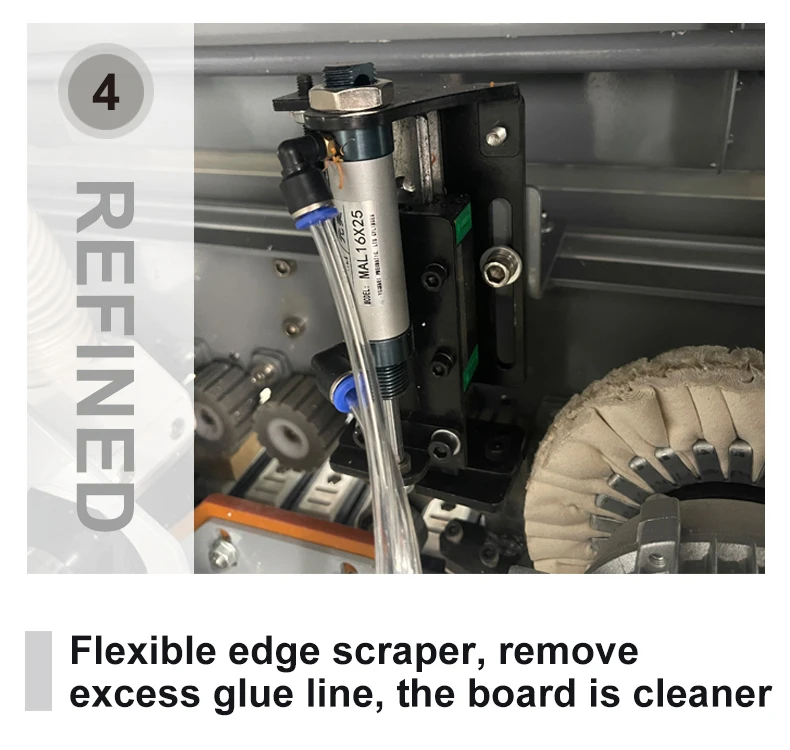
The dual 800 W trimming heads running at 24 000 r/min remove the band overhang in a single pass, which keeps the cutting force balanced on both faces of the panel and reduces chatter on thin MDF. The following dual 400 W polishing stations then burnish the trimmed edge before the glue has fully crystallised, leaving a clean radius that does not need hand-scraping downstream. Combined feed and transmission motors (180 W + 160 W) are independently driven, so the panel does not creep when the trimming load peaks at the leading edge.
The Cost of Skipping the Pre-Dispatch Voltage Check
When a 4.9 kW edge bander is energised on the wrong supply, the immediate symptom is usually a contactor that will not close, which looks like a faulty machine. The real problem is a wiring mismatch that can take days to trace in a workshop without an electrical drawing. Panels sit un-edged, the CNC router upstream runs out of storage, and downstream assembly stalls. That cascade is why we treat the pre-shipment electrical verification as a hold point, not a checkbox. [NEED_CITE: CE machinery directive requirements for industrial equipment]
Why Buyers Source This Model From Our Dispatch Floor
We hold DW3600GF units on the floor, not on paper, so a single-machine order does not wait for a production slot. Voltage and language are confirmed per order, with the nameplate photographed and shared before crating. The machine leaves fully assembled, so a small workshop does not need an installation contractor to re-align the feed rail. A factory test record on your actual panel thickness is included, not a generic pass stamp. Spare-parts lists and packing photographs travel with the shipment, which smooths customs clearance in markets that demand visual inspection evidence.
Documentation & Verification
- CE declaration matched to the machine serial number, not a blanket certificate
- Electrical schematic reflecting the confirmed 380 V or local-voltage build
- Factory test record on your specified panel thickness and band material
- Operation and maintenance manual in your nominated language
- Spare-parts list with part numbers cross-referenced to the as-built BOM
- Packing photographs supporting customs inspection where required
Installation, Commissioning & Support
- 2200 × 650 mm footprint fits a single standard workshop bay with side access for band loading
- Dedicated 380 V three-phase circuit required, sized for 4.9 kW continuous draw plus start-up margin
- Machine arrives fully assembled; feed rail alignment is verified before crating
- First-panel run supervised remotely against the factory test record
- Operator training on PLC fault codes in the agreed language
- Consumables list covers trimmer cutters, polishing wheels, and glue-pot seals
What to Share When You Request a Dispatch Quote
Tell us your local supply voltage and frequency, the panel materials you run most often, and the edge-band thickness range you need to cover. If you are replacing an existing machine, share its feed height and any upstream CNC router you need to keep in sync. For language, nominate the one your operator actually reads. If you want a sample panel edged and shipped back before the machine leaves, say so at inquiry stage and we will schedule the test before crating.
Frequently Asked Questions
Q: Is the DW3600GF genuinely in stock and how quickly can it ship?
A: Units are held on the dispatch floor and can be crated once your voltage, language, and plug type are confirmed in writing. That confirmation step typically adds one working day, which we prefer over shipping a machine that cannot start on arrival.
Q: How do you confirm voltage and plug type for my country before dispatch?
A: We ask for your workshop supply details at order, then issue an electrical schematic and nameplate photo for your sign-off. The machine is wired to that confirmed specification and the documentation travels with the shipment.
Q: What edge banding materials and thicknesses does this model handle?
A: The DW3600GF covers 0.3 mm to 3 mm band thickness and up to 50 mm height, running PVC, ABS, melamine, and veneer on MDF, particleboard, and plywood. Glue-pot settings are adjusted to the material you nominate at order.
Q: What documentation comes with the machine at delivery?
A: You receive the CE declaration, voltage-confirmed electrical schematic, factory test record, operation manual in your language, spare-parts list, and packing photographs. Customs documentation support is included for markets that require it.