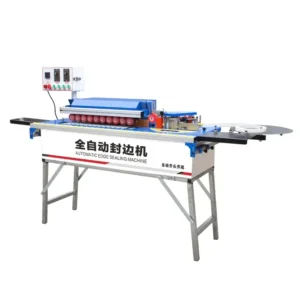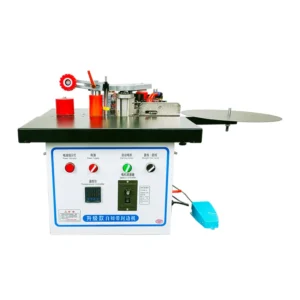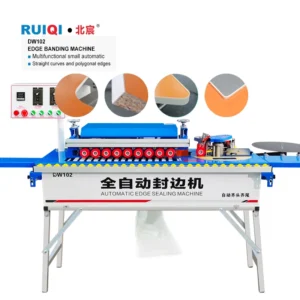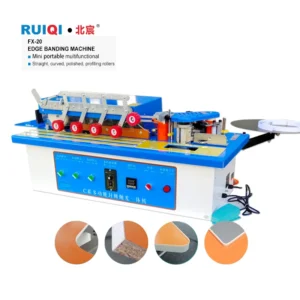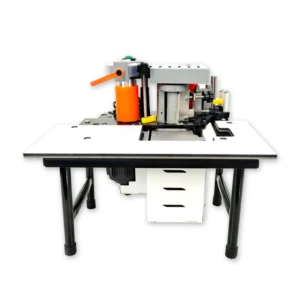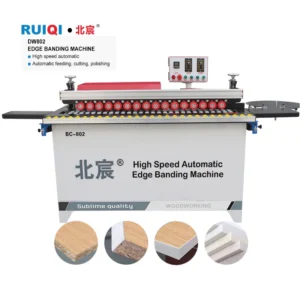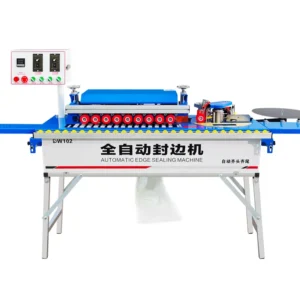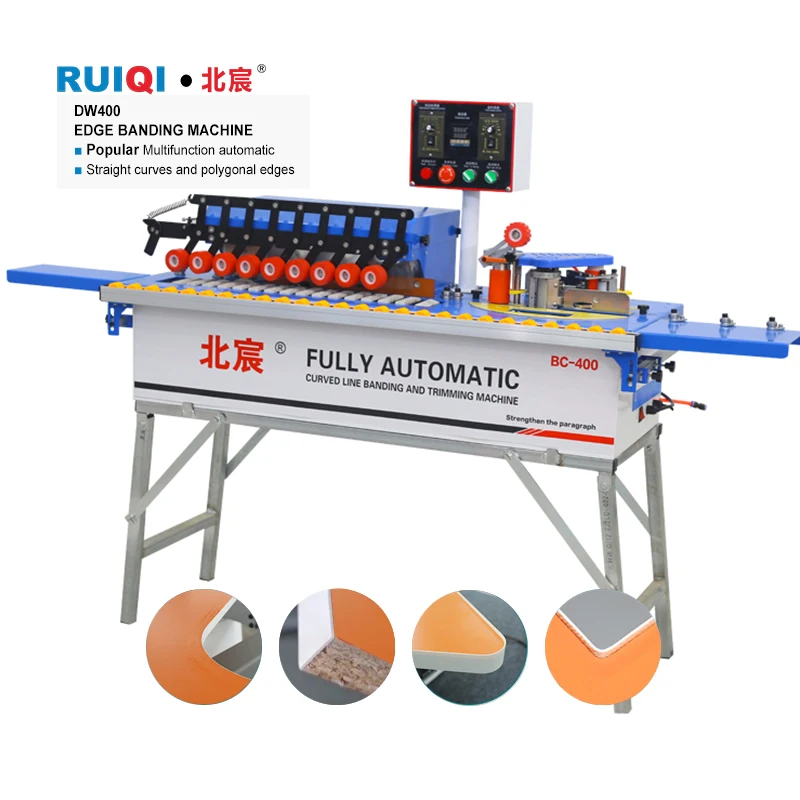


Description
Ready-stock dispatch — voltage and language verified on every DW400 before it leaves the Shandong floor.
Technical Specifications
| Parameter | Value |
|---|---|
| Model | DW400 |
| Product Type | Edge Banding Machine |
| Total Power | 3800W |
| Voltage & Frequency | 220V/380V/customization (basis not stated in source — confirm frequency) |
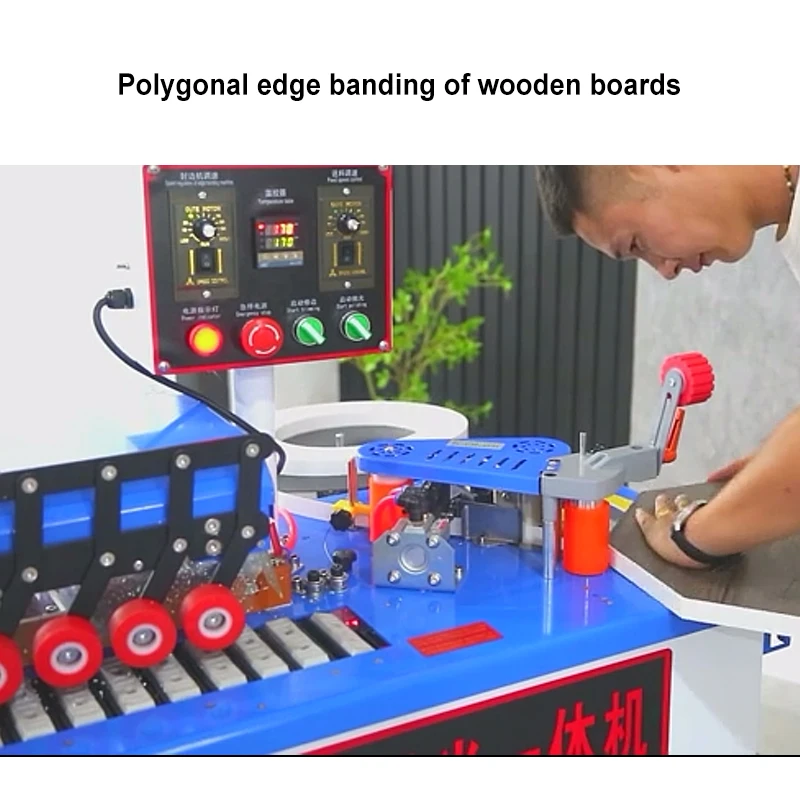
| Standard Features | Straight edge banding, trimming, polishing |
| Minimum Sheet Length | 25CM |
| Minimum Sheet Width | 10CM |
| Edge Banding Height | 0-50MM |
| Edge Banding Thickness | 0.3-3MM |
| Edge Power | 20W |
| Air Source Pressure | 0.5-0.8Mpa |
| Transmission Power | 60W |
| Glue Pot Capacity | 1000ml |
| Trimming Power | 650W*2 |
| Vacuum Power | 1200W |
| Polishing Power | 180W*2 |
| Product Size | 1164769CM |
| Product Weight | 70KG |
| Language Options | Chinese, English, Spanish, French, or other custom languages |
Application Suitability
| Application | Material or Output |
|---|---|
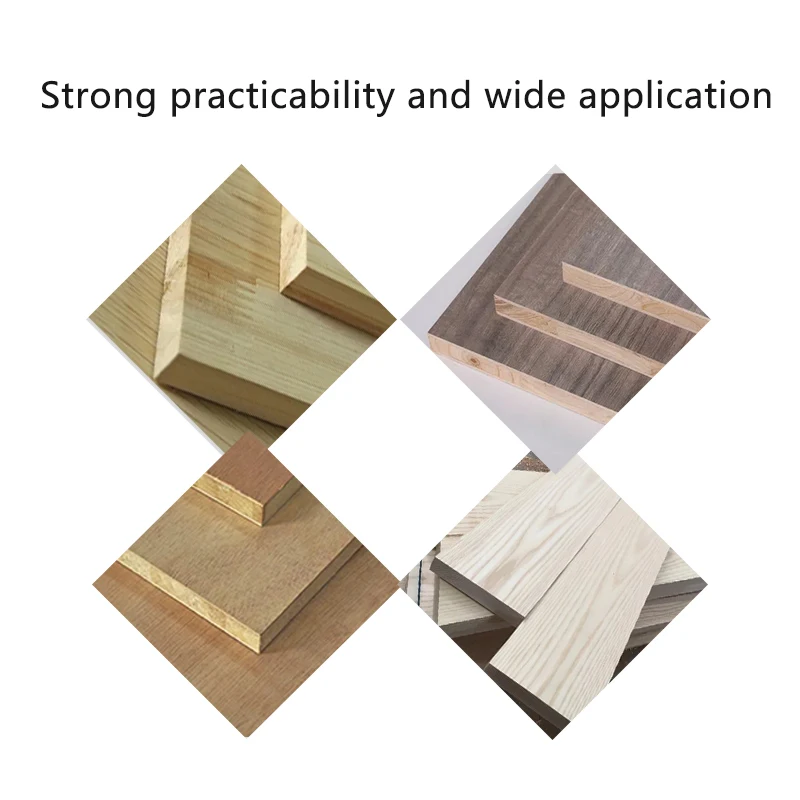
| Custom cabinet door production | MDF and particleboard with PVC or melamine edge banding |
| Office furniture panel edging | Plywood and blockboard with 0.3-3MM thickness banding |
| Small workshop straight-edge finishing | Solid wood panels and polymer door components |
| Joinery startup scaling from manual | Medium density fiber board and wood panels requiring trim and polish |
Why the Voltage Question Must Come Before the Shipping Label
We confirm your exact voltage and frequency before the DW400 is crated, not after it arrives at your port.
I spent years on the assembly floor before moving into dispatch, and the worst calls I ever received were from buyers whose Edge Banding Machine in stock sat on a dock for weeks because the motor was wired for 380V when their workshop ran 220V single-phase. The machine was perfect. The paperwork skipped one line. That line cost them a production delay they could not recover from. Every DW400 leaving our Shandong floor now carries a signed voltage confirmation sheet before it is bolted to the pallet [NEED_CITE: voltage and frequency standards by export market]. The control panel language is set to your operator’s reading language in the same check.
Stocked and Configured — Not Built to Order
When you need an Edge Banding Machine in stock on short notice, lead time is the first thing that matters. The DW400 is held in finished-goods inventory, meaning the mechanical build is complete and only the electrical configuration and panel language remain to be locked in. This is the difference between waiting for a production slot and waiting for a voltage swap.
Single-Unit Orders Without Negotiation
Many manufacturers treat single-machine orders as an afterthought. The DW400 ships as a single unit with the same pre-dispatch test protocol applied to container loads. Your shipping quote is calculated upfront based on the 116×47×69CM footprint and 70KG weight, so there are no surprises at the loading dock.
Reading the Numbers That Actually Matter on the Shop Floor
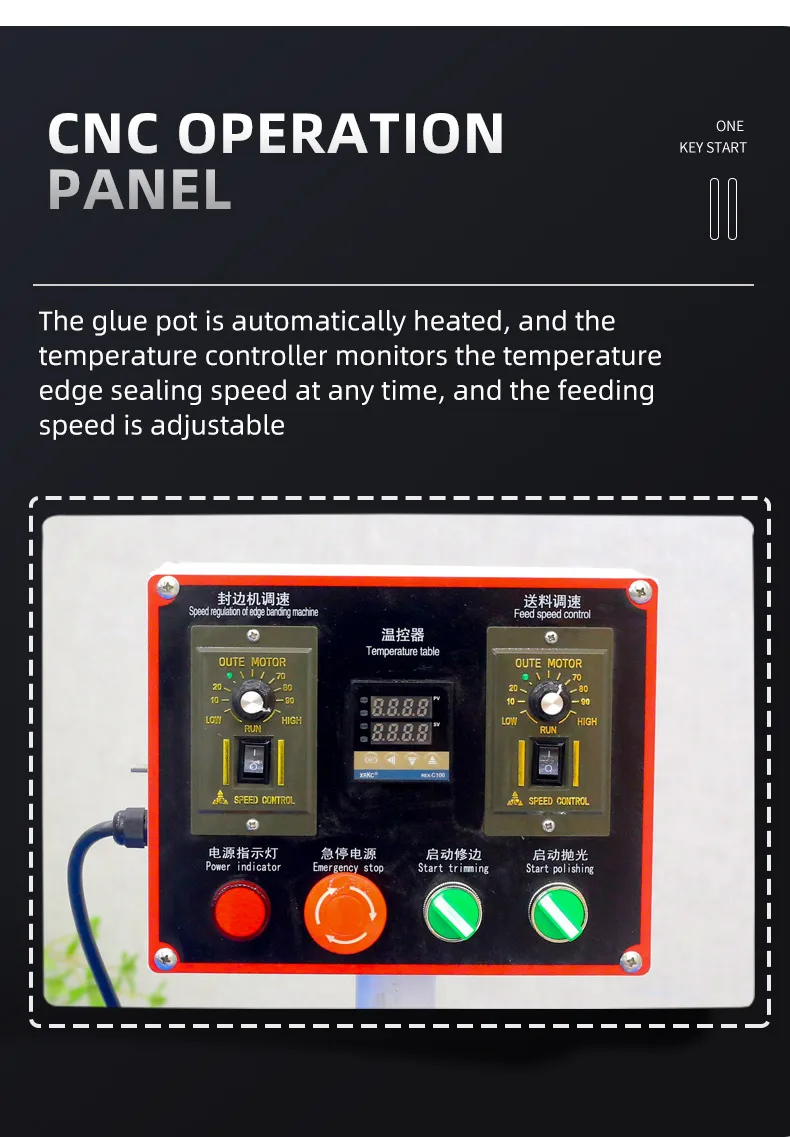
The 1000ml glue pot capacity determines how long you can run before stopping to refill — on a compact machine of this class, that translates to sustained operation through a typical batch of cabinet panels without interruption. The 0.3-3MM edge banding thickness range covers PVC, melamine, and thin veneer, which is what most small-to-medium furniture shops process daily. The dual 650W trimming motors handle the excess banding material on both top and bottom in a single pass, while the 180W×2 polishing wheels finish the edge to a clean surface. Air source pressure at 0.5-0.8Mpa must be stable; fluctuating pressure is the most common cause of inconsistent trimming on machines in this weight class [NEED_CITE: pneumatic pressure stability in small workshop environments].
The Cost of Skipping Pre-Dispatch Electrical Verification
A machine wired for the wrong frequency will run — for a while. Motors overheat, the glue pot element burns out faster than expected, and the vacuum fan loses suction gradually. The operator blames the machine. The real problem was a single unchecked line on the shipping order. I have seen edge banders of this class returned to port because the buyer assumed 380V three-phase was standard everywhere [NEED_CITE: CE machinery directive requirements for industrial equipment]. The DW400 dispatch checklist forces that conversation before the crate is closed.
What This Dispatch Point Does Differently
Engineers review your electrical requirements against the DW400 configuration and return a formal quotation within 24 hours. Voltage customization from 220V to 380V or other site-specific requirements is confirmed in writing before production finalization. A four-stage quality check covers incoming material, in-process assembly, finished product, and pre-shipment verification. Factory test records are photographed and sent to you before the machine is crated. The operation manual arrives in the language you specified, not a default that your operator cannot read.
Documentation & Verification
- CE declaration of conformity specific to the DW400 configuration shipped
- Electrical schematic reflecting your confirmed voltage and frequency
- Factory test record on your specified edge banding thickness before dispatch
- Operation and maintenance manual in your agreed language
- Packing photographs showing crating and pallet securing
Installation, Commissioning & Support
- 116×47×69CM footprint requires a level concrete floor with 70KG static load capacity
- Dedicated circuit matching confirmed 220V/380V rating with appropriate breaker sizing
- Arrives fully assembled; connect air supply at 0.5-0.8Mpa and power on
- Glue pot first heat cycle and feed speed calibration guided remotely
- Spare parts list with recommended backup polishing wheels and trimming blades
What to Include in Your Inquiry
Send your panel material type, typical board thickness, and the edge banding material you plan to run most often. Confirm your workshop voltage and frequency — not the national standard, but what is actually at your machine inlet. Tell us which language your operators read so the control panel is set correctly before crating.
Frequently Asked Questions
Q: What voltage options are available and how do you confirm compatibility?
A: The DW400 supports 220V, 380V, or custom configurations. Before dispatch, we require your workshop’s exact voltage and frequency at the machine inlet — not the national grid standard. We send you a signed electrical confirmation sheet and matching schematic so there is no mismatch when the machine arrives.
Q: How quickly can the machine ship after order confirmation?
A: Since the Edge Banding Machine in stock is held as finished goods, the primary pre-shipment steps are voltage configuration, language setting, and the final test run. Once your electrical details are confirmed and payment is settled, dispatch follows within a typical short turnaround window.
Q: Can I order a single unit or is there a minimum quantity?
A: Single-unit orders are standard practice here. The DW400 ships individually with the same pre-dispatch testing and documentation applied to bulk orders. Shipping dimensions and weight are quoted upfront so you can arrange freight without back-and-forth.
Q: What languages are available for the control panel?
A: The control panel is available in Chinese, English, Spanish, French, or other custom languages. We confirm the language during the order process so the panel is configured before the machine is crated, avoiding commissioning delays on your shop floor.
Q: Do you provide installation guidance after delivery?
A: Yes. The DW400 arrives fully assembled, requiring only power and air connections. Remote guidance covers the first glue pot heat cycle, feed calibration, and trimming alignment. The operation manual in your chosen language and a spare parts list are included in the crate.