

Description
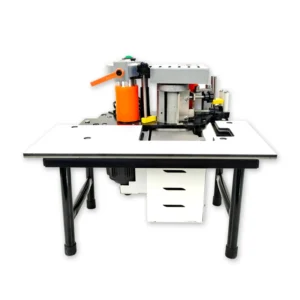
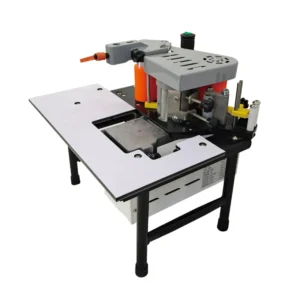
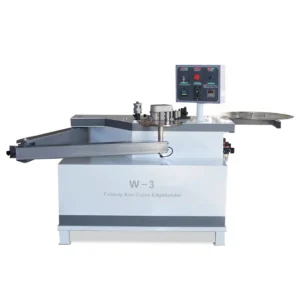
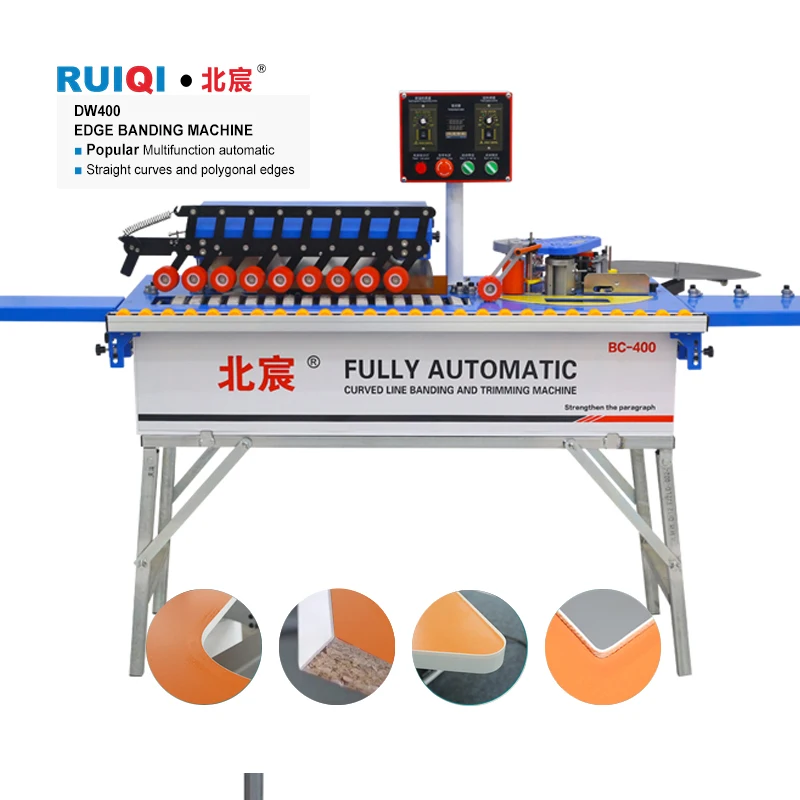
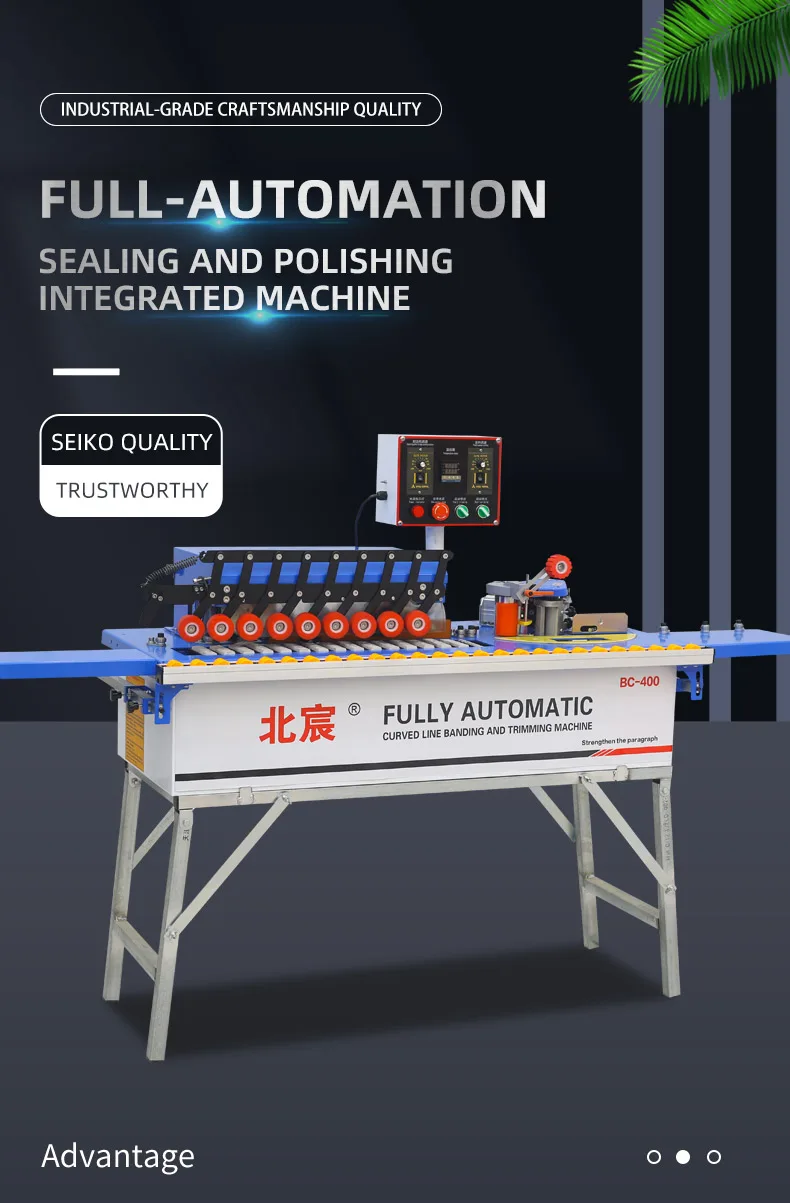
In-stock dispatch readiness — The DW400 manual straight edge bander ships from our Shandong facility within days of order confirmation, with voltage and plug type verified against your local grid before it leaves the loading dock.
Technical Specifications
| Parameter | Value |
|---|---|
| Product Type | Manual Straight Edge Bander |
| Model | DW400 |
| Rated Power | 3800W |
| Voltage & Frequency | 220V / 380V / customization (frequency to be confirmed per market) |
| Control System | Manual operation with push-button panel |
| Overall Dimensions (L×W×H) | 116 × 47 × 69 cm |
| Net Weight | 70 kg |
| Minimum Panel Length | 25 cm |
| Minimum Panel Width | 10 cm |
| Edge Banding Height Range | 0–50 mm |
| Edge Banding Thickness Range | 0.3–3 mm |
| Trimming Power | 650W × 2 |
| Polishing Power | 180W × 2 |
| Edge Feed Power | 20W |
| Transmission Power | 60W |
| Vacuum Power | 1200W |
| Air Source Pressure | 0.5–0.8 MPa |
| Glue Pot Capacity | 1000 ml |
| Language Options | Chinese and English standard; other languages customizable |
| Plug Options | EU / USA / AU / UK |
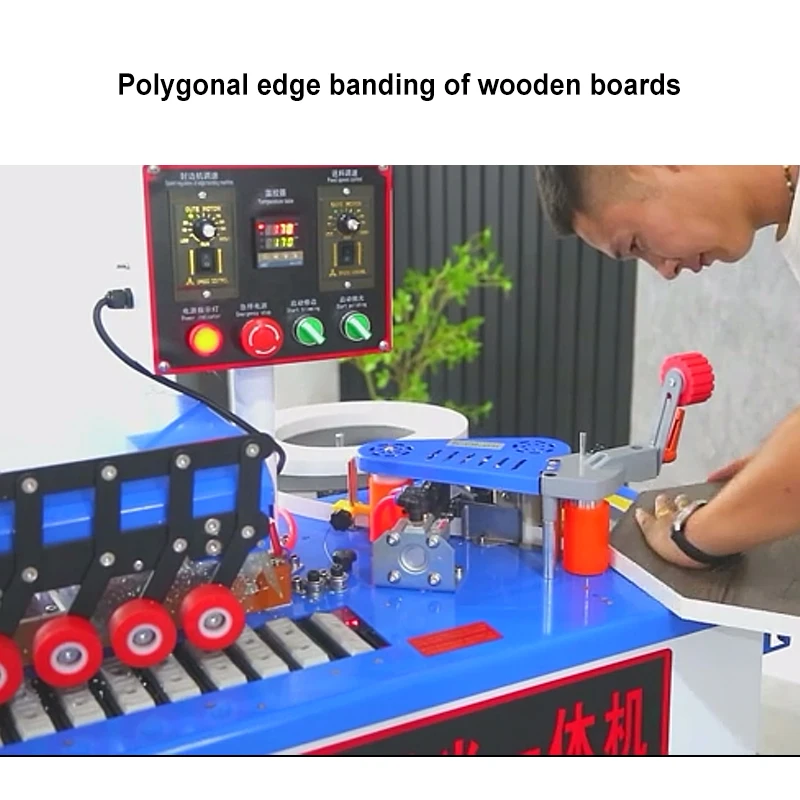
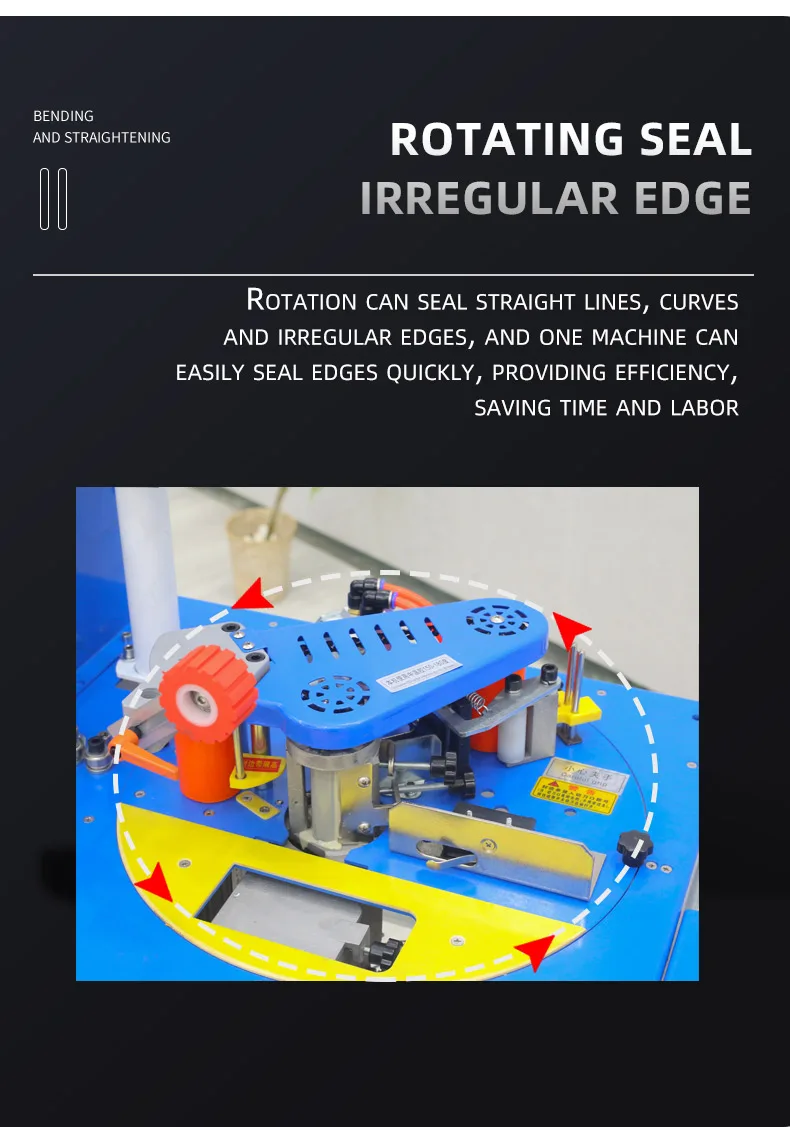
| Standard Functions | Straight edge banding, trimming, polishing |
| Assembly State | Fully assembled, single-unit machine |
Application Suitability
| Application | Material or Output |
|---|---|
| Cabinet door and drawer front finishing | MDF and particleboard with PVC or melamine edge banding |
| Small-batch plywood shelving production | Plywood panels with veneer or PVC straight-edge banding |
| Polymer door frame edge finishing | Polymer composite profiles within 50 mm banding height |
| Workshop prototyping and sample runs | Solid wood panels and blockboard up to 3 mm band thickness |
| Entry-level furniture factory edge processing | Mixed board types in custom furniture and joinery output |
Why Voltage Confirmation Must Happen Before the DW400 Leaves Our Dock
A machine wired for the wrong supply will not run — and may damage its motor before you discover the mistake.
Last year I watched a shipment go out to a Southeast Asian cabinet shop. The buyer needed 415V three-phase, but the paperwork showed 380V. The motor tripped on arrival, and the local electrician spent two weeks reworking the connection. Their production line sat idle the entire time [NEED_CITE: voltage and frequency standards by export market]. Since then, every manual edge bander in stock we prepare for export goes through a documented voltage checkpoint. The DW400 supports 220V and 380V configurations with further customization available, but only if we confirm your exact supply before the machine is crated. Getting this right at the ordering stage eliminates the most common cause of commissioning delays for imported woodworking equipment.
Stock Availability and Dispatch Timing for Small Workshops
When a joinery shop decides to move from hand-applied edge banding to machine-assisted finishing, waiting weeks for a production slot is rarely acceptable. The DW400 manual edge bander in stock is held as a fully assembled unit, not a bill of materials waiting to be built. This means your order enters the packing and testing queue directly, bypassing the fabrication lead time that applies to custom-line equipment. For small furniture makers running tight delivery schedules on cabinet orders, this difference in readiness can determine whether a new machine arrives before or after the next production deadline.
Plug Type, Language, and the Details That Block Commissioning
Beyond voltage, the physical plug and the language on the control panel are the two items most likely to stall a first-day startup. The DW400 ships with EU, USA, AU, or UK plug options selected at order, so the machine connects to your workshop outlet without an adapter search on day one [NEED_CITE: industrial plug standards for woodworking machinery imports]. The push-button control panel is available in English as standard, with additional languages configurable before dispatch. I have seen operators stand in front of a new edge bander unable to identify the emergency stop label because the panel was printed in a script they could not read. Confirming these details during the order process is a small step that prevents a large delay.
How the DW400 Specifications Translate to Workshop Results
The 0.3–3 mm edge banding thickness range covers the PVC, melamine, and veneer strips most commonly used in small-to-medium cabinet production. Staying within this range ensures the trimming motors — rated at 650W each — can cleanly shear the overhang without chipping brittle PVC or tearing wood veneer. The 1000 ml glue pot capacity supports continuous small-batch runs without frequent refills, which matters when a workshop is processing a run of thirty or forty cabinet sides in a single session. The 0.5–0.8 MPa air source pressure requirement is standard for pneumatic trimming and polishing actuators; confirming your compressor meets this range avoids weak trimming strokes that leave visible band overhang. At 70 kg net weight, the machine can be repositioned by two people if workshop layout changes, unlike heavier automatic line equipment that requires permanent floor placement.
What Happens When Configuration Details Get Skipped
Skipping the voltage confirmation step does not just delay startup — it can void warranty coverage if the motor burns out on an incompatible supply. Buyers who order a single machine without checking feed height against their panel thickness range discover incompatibility only when the first workpiece jams at the infeed. I have handled cases where the operator manual arrived in a language the shop floor could not read, turning a simple glue temperature adjustment into a multi-day troubleshooting exercise [NEED_CITE: common commissioning failures in imported woodworking machinery]. These are not engineering defects. They are configuration oversights that a structured pre-dispatch checklist eliminates entirely.
Why Procurement Through This Channel Reduces Risk
Every DW400 prepared for dispatch passes through a four-stage quality check covering incoming components, in-process assembly, finished-product testing, and pre-shipment verification. Voltage and plug configuration are confirmed in writing before crating, not assumed from a default setting. The machine ships with operation and maintenance documentation in your agreed language, a spare parts list specific to this model, and packing photographs for your records. Single-unit orders carry no minimum quantity barrier, so a startup cabinet shop can procure one machine now and add capacity later without renegotiating supplier terms. Engineer-led configuration review ensures the specification sheet matches your workshop conditions before production allocation is made.
Documentation & Verification
- CE declaration of conformity covering the DW400 manual edge bander assembly
- Voltage and plug type confirmation sheet signed before dispatch
- Factory test record on your specified panel material and banding thickness
- Operation and maintenance manual printed in your agreed language
- Electrical schematic matching the as-built voltage configuration
- Spare parts list with part numbers for trimming blades and polishing wheels
Installation, Commissioning & Support
- Requires a dedicated circuit matching confirmed 220V or 380V supply with correct breaker rating for 3800W total load
- Air compressor must deliver 0.5–0.8 MPa at the machine inlet for reliable trimming actuation
- Arrives fully assembled — position on level floor within the 116×47 cm footprint and connect power and air
- First-run glue temperature and feed speed calibration performed against your actual panel material
- Trimming and polishing alignment verified using sample pieces from your production stock
- Replacement trimming blades and polishing wheels listed in the included spare parts documentation
Before You Request a Quotation
To match the right DW400 configuration to your workshop, we need your local voltage and frequency, the plug type used in your facility, and the primary panel materials and edge banding types you process. If your operation runs panels shorter than 25 cm or narrower than 10 cm, note this so we can confirm suitability. Specify the control panel language your operators require and whether you need a sample processing test on your material before shipment.
Frequently Asked Questions
Q: How quickly can the DW400 ship after order confirmation?
A: As a ready-stock model, the DW400 enters the pre-shipment testing and packing queue once voltage, plug type, and language are confirmed. Dispatch timing depends on current stock levels and destination logistics, but the machine does not enter a production build queue. We provide a confirmed ship date at the quotation stage so you can plan your workshop schedule accordingly.
Q: Which voltage and plug configurations are available for my country?
A: The DW400 supports 220V and 380V configurations with further customization available for markets outside these ranges. Plug options include EU, USA, AU, and UK types. You provide your local supply specification at the inquiry stage, and we confirm the exact configuration in writing before the machine is crated, eliminating on-site electrical rework.
Q: What panel sizes and edge banding thicknesses does the DW400 handle?
A: The machine processes panels with a minimum length of 25 cm and minimum width of 10 cm. Edge banding height ranges from 0 to 50 mm, and thickness from 0.3 to 3 mm, covering PVC, melamine, and veneer materials commonly used in cabinet and furniture production. Panels outside these ranges should be confirmed at inquiry.
Q: Is the operation manual available in my language?
A: Chinese and English manuals are included as standard. Additional languages are configurable before dispatch. Specify your required language at the order stage so the printed manual, safety labels, and control panel annotations match your operator team’s needs when the machine arrives.
Q: How do I set up and commission the machine upon arrival?
A: The DW400 arrives fully assembled. You connect the confirmed power supply and an air source delivering 0.5–0.8 MPa. The included manual covers glue pot loading, temperature setting, and trimming alignment. We provide installation guidance and can support remote commissioning if your team encounters questions during first-run calibration on your panel stock.