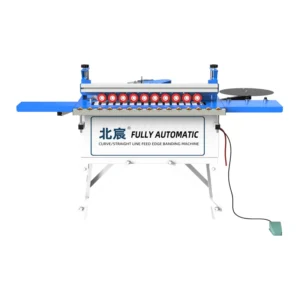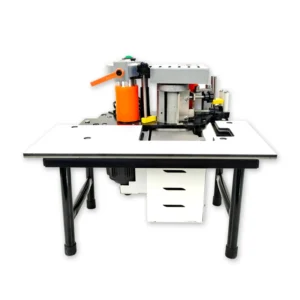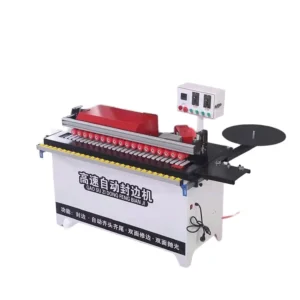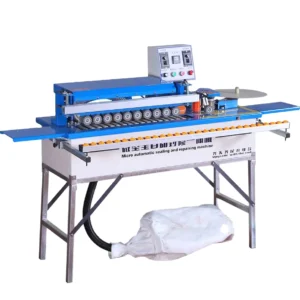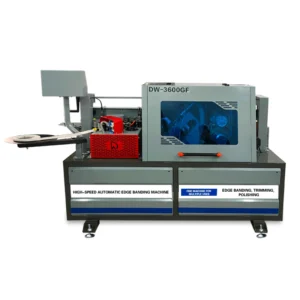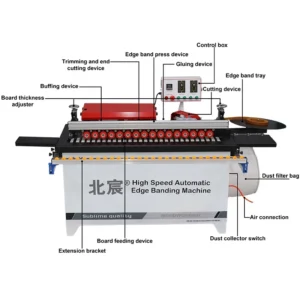
Description
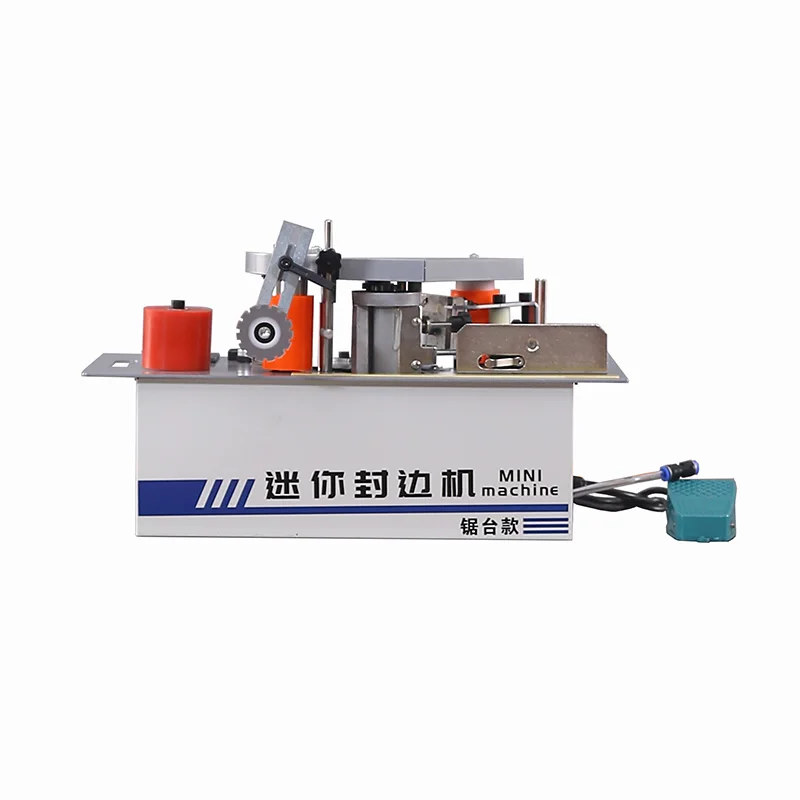
Stocked and dispatched fast — this portable automatic edge banding machine ships with confirmed 220V configuration so it runs the day it arrives, avoiding weeks of rewiring delays common with unchecked orders.
Technical Specifications
| Parameter | Value |
|---|---|
| Product Type | Portable Automatic Edge Banding Machine |
| Voltage | 220V |
| Rated Power | 825W |
| Heating Time | 5–10 min |
| Air Pressure Requirement | 0.4–0.6 MPa |
| Glue Pot Capacity | 1000 ml |
| Edge Banding Speed | 0–10 m/min |
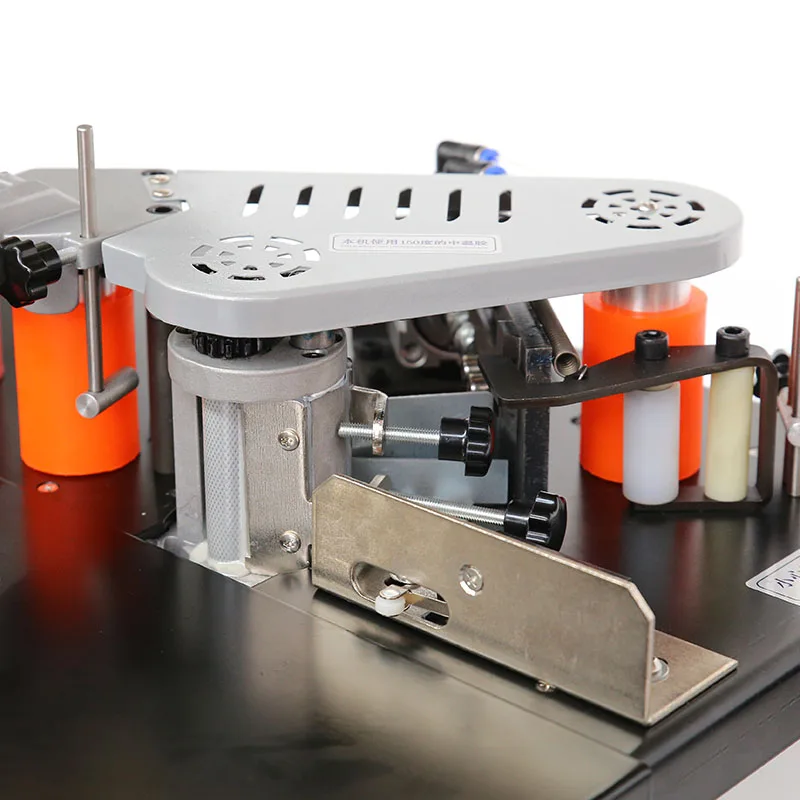
| Edge Pattern Compatibility | Curves, straight lines, special shaped lines |
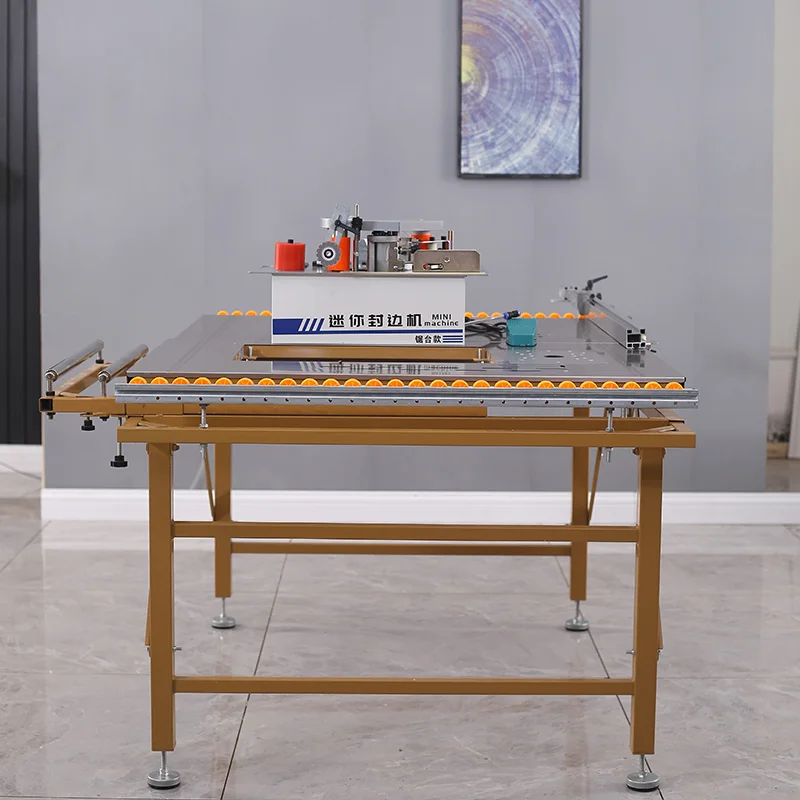
| Overall Dimensions (L×W×H) | 50×30×27 cm |
| Trimming Stations | Corner trimming |
| Warranty | 1 year |
Application Suitability
| Application | Material or Output |
|---|---|
| Small workshop edge banding on curved and straight panel edges | MDF, particleboard, plywood |
| Portable on-site edge banding for custom joinery | Solid wood panels, PVC edge banding |
| Low-volume custom furniture production and repair | Veneer edge banding on shaped profiles |
Why Voltage Confirmation Must Happen Before You Pay
A portable automatic edge banding machine in stock means nothing if the voltage does not match your workshop supply.
I once watched a customer lose nearly three weeks on a cabinet order because the edge bander arrived wired for 380V three-phase while the shop only had 220V single-phase. The electrician had to re-run circuits from the main panel, and the production schedule collapsed. That portable automatic edge banding machine sat idle in its crate the entire time. [NEED_CITE: voltage and frequency standards by export market]
This unit ships with 220V single-phase confirmed on the quotation. Before dispatch, the electrical specification is cross-checked against the buyer’s local supply so there is no on-site guesswork.
Fast Dispatch Without Minimum Order Pressure
Ordering a single portable automatic edge banding machine in stock is straightforward here. There is no requirement to bundle multiple units or wait for a consolidated container to fill. Once the voltage and plug configuration are confirmed, the unit is prepared for shipment from ready inventory. This suits small workshops that need one machine running quickly rather than planning a full line rollout.
Compact Footprint for Benchtop or Job-Site Use
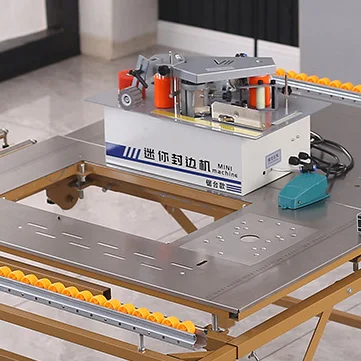
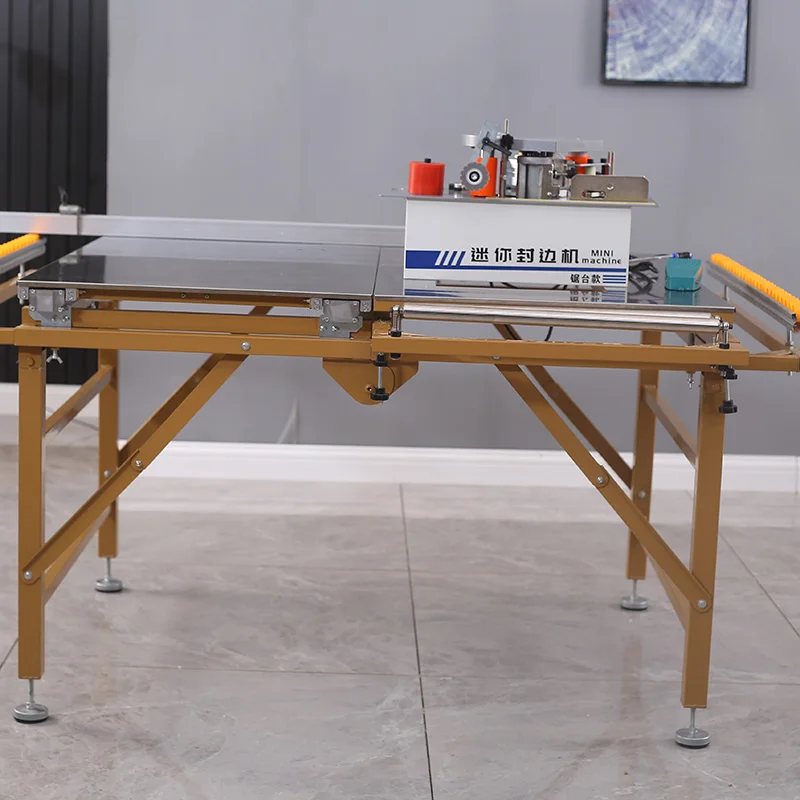
The 50×30×27 cm dimensions and benchtop-friendly weight let this machine sit on a standard workbench or travel to a job site in a utility vehicle. Startup joinery shops and cabinet makers working in rented spaces benefit from a unit that does not demand a dedicated floor zone or special foundation. [NEED_CITE: typical workshop space constraints in small furniture operations]
Reading the Numbers That Actually Matter
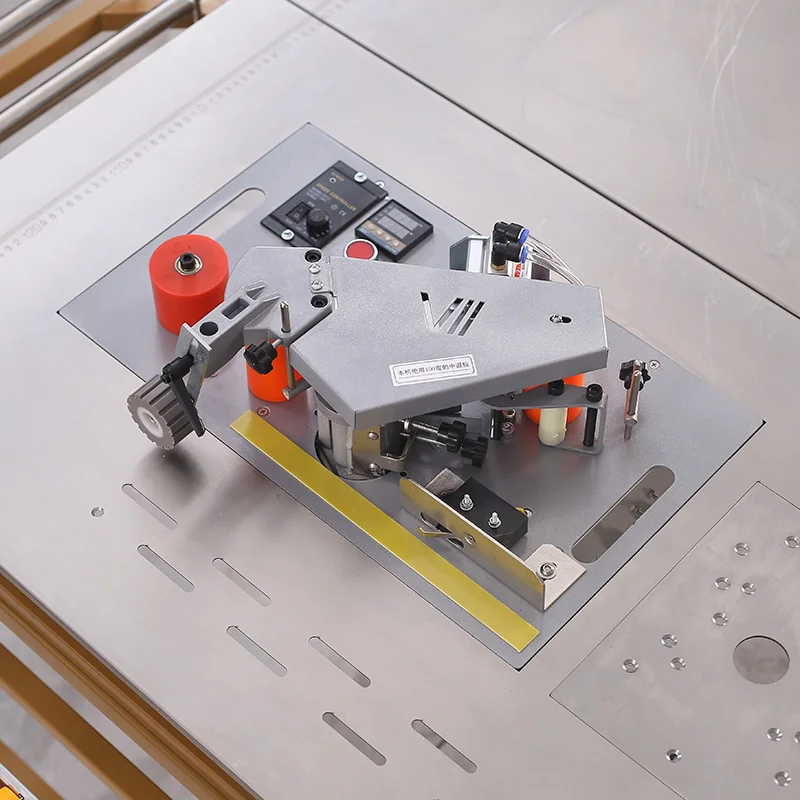
The 0–10 m/min feed speed range gives operators fine control when working curves and irregular profiles — slower speeds prevent the edge band from lifting on tight radii, while the upper range handles straight runs efficiently. The 1000 ml glue pot capacity supports extended runs without frequent refills, which matters when you are banding a batch of cabinet doors in one session. The 0.4–0.6 MPa air pressure requirement is compatible with standard reciprocating compressors found in most small workshops, so there is no need to invest in a separate high-pressure system. Corner trimming is included, meaning the operator can finish edges without switching to a hand trimmer for basic cleanup.
The Hidden Cost of Skipping Pre-Shipment Verification
Machines that arrive with the wrong voltage or missing documentation cause delays that compound quickly. A unit without a readable operation manual stalls commissioning while the operator searches for translations online. Spare parts lists that never ship with the machine mean the first breakdown becomes a week-long email exchange instead of a same-day fix. [NEED_CITE: common causes of commissioning delays in imported woodworking equipment]
Skipping a pre-shipment test record also means you cannot confirm the machine actually runs before it leaves the factory. By the time you discover a faulty heating element, the return logistics are far more complicated than a factory-floor correction would have been.
Why Source This Unit Here
In-house manufacturing means specification questions get answered by the engineers who built the machine, not a middleman relaying messages. Voltage and plug configuration are confirmed as part of the order process, not left to assumption. A four-stage quality check covers incoming materials through pre-shipment verification, so the unit you receive has been tested under load. The operation and maintenance manual is provided in the agreed language before dispatch. Engineer-led configuration advice ensures the machine matches your actual production volume rather than being oversold into a role it cannot fill.
Documentation & Verification
- CE declaration of conformity specific to this portable edge bander model
- Factory test record documenting heating cycle and banding run on your material
- Operation and maintenance manual provided in your requested language before dispatch
- Electrical schematic with voltage and wiring diagram matching your confirmed supply
- Spare parts list with part numbers for glue pot elements and feed rollers
- Packing photographs showing unit condition before crate closure
Installation, Commissioning & Support
- Place the 50×30×27 cm unit on a level workbench with at least 20 cm clearance on all sides
- Connect to a dedicated 220V circuit rated for the 825W load with proper grounding
- Allow 5–10 minutes for the glue pot to reach operating temperature before the first banding pass
- Set feed speed between 0–10 m/min depending on edge profile curvature and material
- Verify air compressor delivers 0.4–0.6 MPa through a regulated line with moisture trap
- Clean the 1000 ml glue pot after each session to prevent adhesive buildup on the roller
What to Share When Requesting a Quote
Provide your local voltage and frequency so the electrical configuration is locked in before production. Specify the panel materials and edge banding types you work with most often — MDF, plywood, PVC, veneer — so the correct glue and feed settings are recommended. Let us know your daily volume estimate so we can confirm this portable unit suits your throughput or suggest a larger model.
Frequently Asked Questions
Q: Is this portable automatic edge banding machine currently in stock and ready to ship?
A: Yes, this portable automatic edge banding machine in stock is held in ready inventory for fast dispatch. Single-unit orders are accepted without minimum quantity requirements. Once voltage and plug type are confirmed, the unit is prepared for shipment directly from available stock, typically within a short lead time.
Q: What voltage options are available, and can I get 110V or other local supply configurations?
A: The standard listing is 220V, but custom voltage configurations from 110V to 440V are available on request. The exact voltage and frequency of your workshop must be confirmed before the order is finalized so the machine arrives ready to plug in without electrical modifications on site.
Q: What is the dispatch lead time for a single-unit order?
A: Single-unit orders of this portable automatic edge banding machine in stock are dispatched quickly once voltage and documentation requirements are confirmed. There is no container consolidation delay, and packing photographs are shared before the crate leaves the warehouse so you can verify condition.
Q: Can the machine handle both curved and straight edge banding on MDF and plywood?
A: Yes, the feed speed range of 0–10 m/min and edge pattern compatibility cover curves, straight lines, and special-shaped profiles. MDF, particleboard, plywood, and solid wood panels are all suitable substrates. Slower feed speeds are recommended for tight radii to maintain consistent glue adhesion.
Q: What spare parts ship with the machine, and how do I order replacements?
A: A spare parts list is included with every shipment, covering common wear items like glue pot heating elements and feed rollers. Replacements can be ordered directly using the part numbers provided. The operation manual also includes maintenance intervals to help you plan restocking before components fail.